
Table of Contents
1. Answer First: What Does a Steel Structure and PEB Design Engineer Do?
A Steel Structure and PEB Design Engineer designs steel buildings. These buildings use steel frames and structural members. Their designs must meet safety requirements. They also help control construction costs.
PEB stands for Pre-Engineered Building. These buildings use factory-made steel components. They are designed for specific project requirements. Engineers prepare their designs using specialised software.
Main responsibilities include:
- Designing steel building frames.
- Calculating structural loads.
- Selecting suitable steel sections.
- Designing beams and columns.
- Checking structural connections.
- Preparing design calculations.
- Preparing fabrication drawings.
- Coordinating with fabrication teams.
- Checking structural safety.
- Reviewing design changes.
Typical salary ranges:
- India: ₹3–9 LPA for many entry-level and early-career roles.
- UAE: AED 3,000–9,000 monthly for many early-career roles.
- Experienced professionals can earn more.
These figures are indicative estimates. Actual salaries depend on experience. Software skills and location also matter.
Build A Career In Structural Engineering! Get Free Demo Classes!!

2. Introduction: Why Are PEB and Steel Construction Growing?
1: What is the primary purpose of structural design?
Steel construction is widely used today. Many industries need large buildings. Factories and warehouses are common examples.
Traditional construction methods can take longer. Steel structures can support faster project delivery. Their components can be manufactured in factories. They are then transported to construction sites.
PEB construction is also gaining attention. These buildings support different industrial requirements. Their designs can also reduce material waste.
Growing construction areas include:
Industrial Buildings
- Manufacturing factories.
- Industrial warehouses.
- Workshops.
- Production facilities.
- Storage buildings.
Commercial Buildings
- Shopping centres.
- Exhibition halls.
- Office buildings.
- Commercial warehouses.
- Logistics centres.
Infrastructure Projects
- Airport buildings.
- Railway facilities.
- Power plants.
- Maintenance facilities.
- Large storage structures.
These projects need skilled design engineers. Companies need professionals who understand steel structures. Software knowledge is also important.
Transform Your Career with Our Structural Design Course!
Unlock Your Potential in Structural Design! Gain expert knowledge in designing robust structures and advance your career in the construction and engineering fields. Limited spots available! 🌟
Know More3. What Is a PEB?
PEB means Pre-Engineered Building. It is a steel building system. Its components are designed before construction.
Most major components are factory-manufactured. They are transported to the project site. Workers then assemble them according to drawings.
Common PEB components include:
- Primary frames.
- Roof purlins.
- Wall girts.
- Bracing systems.
- Roof sheets.
- Wall cladding.
- Structural connections.
PEB vs Conventional Steel Construction
Both systems use structural steel. However, their design approaches can differ.
PEB systems often use tapered steel members. Conventional steel structures often use standard sections. The final selection depends on project requirements.
Main differences:
| Factor | PEB Structure | Conventional Steel Structure |
| Design | System-based design | Project-specific design |
| Members | Often tapered sections | Often standard sections |
| Manufacturing | Factory-based production | Different fabrication methods |
| Construction | Planned assembly | Depends on project details |
| Design approach | Often optimised systems | Flexible structural arrangements |
| Common uses | Factories and warehouses | Buildings, bridges and industries |
| Project changes | Depends on system design | Often easier to customise |
PEB systems suit many industrial buildings. Conventional steel suits different structural requirements. Engineers must select suitable systems carefully.
4. What Does a Steel Structure and PEB Design Engineer Do?
These engineers handle several design activities. Their work starts with project requirements. It continues through fabrication and construction.
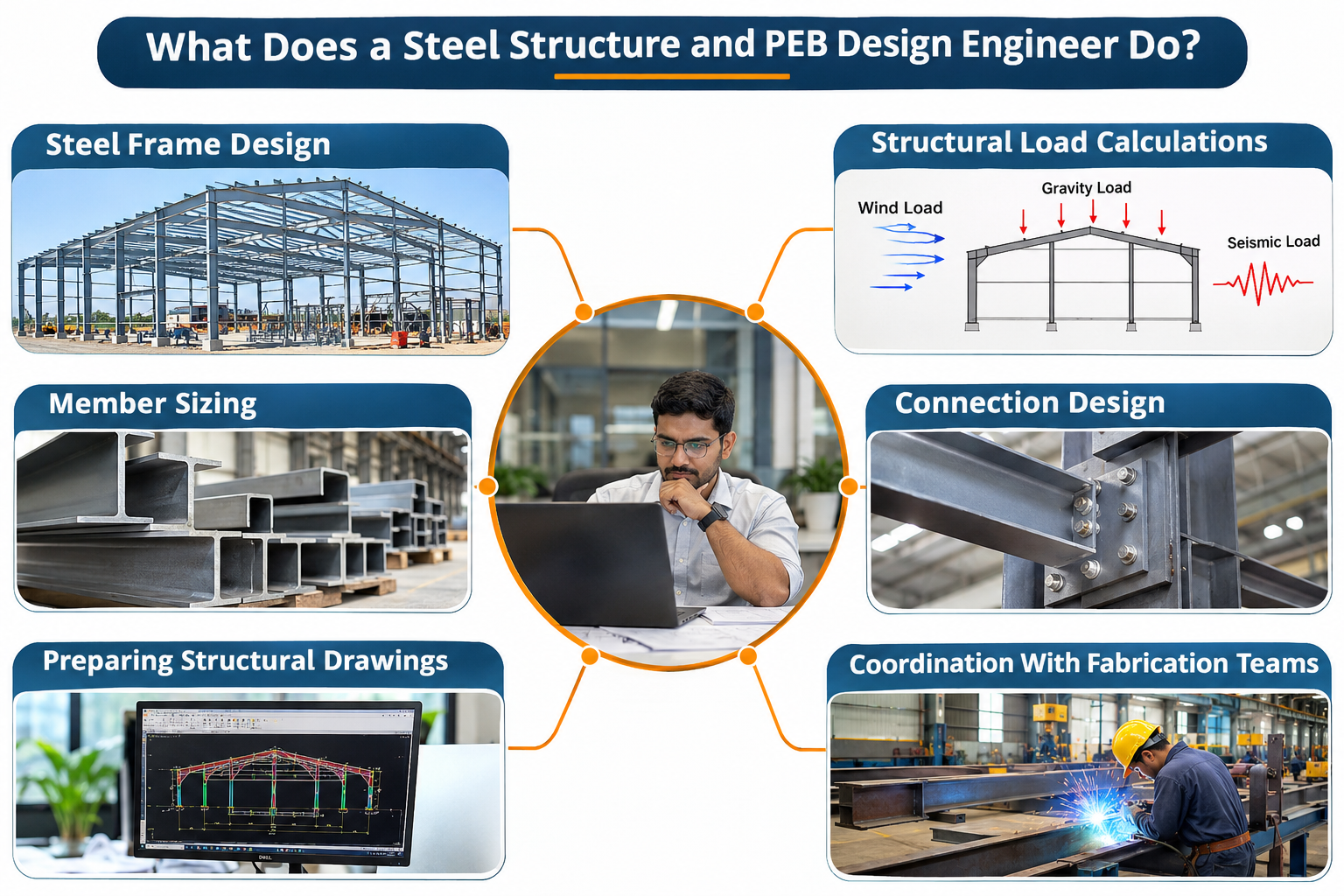
4.1 Steel Frame Design
The main building frame is designed. It supports the building’s structural loads.
Main activities:
- Understanding building layouts.
- Checking building dimensions.
- Selecting structural systems.
- Designing portal frames.
- Arranging columns and rafters.
- Designing roof support systems.
- Checking frame stability.
- Reviewing structural behaviour.
A portal frame supports many PEB buildings. It usually contains columns and rafters. These members support the roof structure.
4.2 Structural Load Calculations
Different loads affect steel buildings. Engineers must calculate these loads.
Common loads include:
- Dead loads.
- Live loads.
- Wind loads.
- Seismic loads.
- Roof loads.
- Crane loads.
- Equipment loads.
- Temperature effects.
Load combinations are also checked. These checks help ensure structural safety.
4.3 Member Sizing
Suitable steel sections are selected. Their sizes depend on structural requirements.
Common structural members include:
- Columns.
- Beams.
- Rafters.
- Purlins.
- Girts.
- Bracing members.
- Crane beams.
Engineers check strength. Stability is also checked. Deflection limits to be satisfied. Material use is reviewed.
4.4 Connection Design
Structural members need proper connections. These connections transfer forces.
Common connection types include:
- Bolted connections.
- Welded connections.
- Base plate connections.
- Beam-column connections.
- Moment connections.
- Bracing connections.
Connection details follow design requirements. Incorrect connections affect structural safety.
4.5 Preparing Structural Drawings
Drawings communicate design information. Fabrication teams use these drawings.
Common drawings include:
- General arrangement drawings.
- Structural framing plans.
- Connection details.
- Foundation loading plans.
- Fabrication drawings.
- Erection drawings.
- Anchor bolt plans.
All dimensions must be checked carefully. Drawings should match designs approved.
4.6 Coordination With Fabrication Teams
Steel members manufactured in factories. Design engineers support the manufacturing.
Main activities:
- Share approved drawings.
- Check fabrication requirements.
- Review member dimensions.
- Resolve technical questions.
- Check material specifications.
- Review fabrication changes.
- Support site teams.
Good coordination prevents errors. It supports smoother execution.
5. Design Codes Used by PEB Engineers
It provides engineering requirements. They guide calculations. And provides structural checks.
The applicable code depends on project location. Client requirements must also be followed.
5.1 IS 800
IS 800:2007 is an Indian steel design code. It covers general steel construction requirements.
Main areas:
- Structural member design.
- Steel strength checks.
- Stability requirements.
- Connection design.
- Serviceability checks.
It is an important reference in India.
5.2 AISC Standards
AISC standards are widely used internationally. AISC 360-22 covers structural steel buildings.
Main areas:
- Steel member design.
- Bolted connections.
- Welded connections.
- Structural stability.
- Design strength requirements.
Both LRFD and ASD methods are covered.
5.3 Eurocode 3
Eurocode 3 is also called EN 1993. It covers the design of steel structures.
Main areas:
- Steel member resistance.
- Structural stability.
- Connection design.
- Serviceability.
- Fire resistance.
It is used across European projects.
5.4 MBMA Standards
MBMA means Metal Building Manufacturers Association. Its manual supports metal building design.
Main areas:
- Metal building systems.
- Structural design guidance.
- Building loads.
- Engineering practices.
- Design examples.
The 2024 MBMA Manual available. It follows the 2024 International Building Code.
Engineers must follow them. The correct edition must be checked.
Build A Career In Structural Engineering! Get Free Demo Classes!!
Transform Your Career with Our Structural Design Course!
Unlock Your Potential in Structural Design! Gain expert knowledge in designing robust structures and advance your career in the construction and engineering fields. Limited spots available! 🌟
Know More6. Software Used by Steel Structure and PEB Design Engineers
Different software tools support steel design. Each tool handles specific engineering tasks.
6.1 STAAD.Pro
STAAD.Pro is used for structural analysis. Engineers create structural models with it.
Main uses:
- Create structural models.
- Apply different loads.
- Perform structural analysis.
- Checking member forces.
- Reviewing structural behaviour.
- Supporting design calculations.
6.2 STAAD.Pro Advanced
STAAD.Pro Advanced provides additional analysis features. It supports more advanced structural design work.
Main uses:
- Advanced structural analysis.
- Member design checks.
- Structural optimisation.
- Detailed engineering studies.
The required features depend on project needs.
6.3 MBS (Metal Building Software)
MBS is used in PEB engineering. It supports metal building design calculations.
Main uses:
- Design PEB frames.
- Checking structural members.
- Analysing building loads.
- Designing secondary members.
- Preparing engineering calculations.
It is used by several PEB manufacturers.
6.4 Tekla Structures
Tekla supports detailed steel modelling. It is useful during fabrication preparation.
Main uses:
- Create 3D steel models.
- Model steel connections.
- Preparing fabrication drawings.
- Creating material lists.
- Checking member details.
- Supporting erection planning.
6.5 Autodesk Advance Steel
Advance Steel supports steel detailing work. It works with AutoCAD.
Main uses:
- Create steel models.
- Prepare workshop drawings.
- Details connections.
- Create fabrication documents.
- Preparing material information.
6.6 SAP2000
SAP2000 is used for structural analysis. It supports different structural systems.
Main uses:
- Modelling steel structures.
- Applying structural loads.
- Performing analysis.
- Checking structural behaviour.
- Reviewing design results.
Software selection depends on company requirements. Engineers may need multiple tools.
7. Skills Required for Steel Structure and PEB Design Engineers
These engineers need technical knowledge. They also need good workplace skills.
| Technical Skills | Soft Skills |
| Structural engineering basics | Communication |
| Steel design calculations | Teamwork |
| Load calculations | Problem-solving |
| Member sizing | Time management |
| Connection design | Attention to detail |
| STAAD.Pro | Decision-making |
| MBS software | Adaptability |
| Tekla Structures | Organisation |
| Reading engineering drawings | Coordination |
| Knowledge of design codes | Learning ability |
7.1 Technical Skills
Technical skills support daily design activities.
Structural Knowledge
- Steel properties.
- Structural behaviour.
- Load transfer.
- Frame systems.
- Member stability.
- Connection design.
Software Knowledge
- STAAD.Pro.
- MBS.
- SAP2000.
- Tekla Structures.
- Advance Steel.
- AutoCAD.
Drawing Knowledge
- Structural plans.
- Fabrication drawings.
- Connection details.
- General arrangements.
- Erection drawings.
Code Knowledge
- IS 800.
- AISC 360.
- Eurocode 3.
- MBMA guidelines.
7.2 Soft Skills
Soft skills support better project coordination.
Communication
- Sharing design updates.
- Discussing technical issues.
- Understanding instructions.
- Reporting design changes.
Problem-Solving
- Identifying design errors.
- Reviewing structural problems.
- Finding suitable solutions.
- Supporting design improvements.
Time Management
- Following project schedules.
- Completing calculations.
- Meeting drawing deadlines.
- Managing design changes.
8. Qualifications and Courses
A suitable educational background is important. Structural engineering knowledge is especially useful.
8.1 Educational Qualifications
The following courses support entry:
- B.Tech in Civil Engineering.
- B.E. in Civil Engineering.
- Diploma in Civil Engineering.
- M.Tech in Structural Engineering.
- Related structural engineering qualifications.
A bachelor’s degree is commonly preferred. Diploma holders may find technician roles. Employer requirements can differ.
8.2 Professional Design Courses
Specialised courses develop practical engineering skills.
Important learning areas:
- Structural steel design.
- PEB design principles.
- Structural analysis.
- Load calculations.
- Connection design.
- STAAD.Pro training.
- MBS software.
- Tekla Structures.
- Design code applications.
- Fabrication drawing preparation.
Practical Training
- Create steel frame models.
- Calculate structural loads.
- Design steel members.
- Prepare connection details.
- Complete PEB projects.
- Prepare design reports.
Practical projects help develop confidence. They also support job applications.
9. Steel Structure and PEB Design Engineer Salary
Salaries depend on several factors. Experience and software knowledge matter. Project location also affects salary offers.

9.1 Salary in India
India has several PEB manufacturers. Structural engineering firms also recruit design engineers.
Common job locations:
- Chennai.
- Bengaluru.
- Hyderabad.
- Pune.
- Mumbai.
- Ahmedabad.
- Coimbatore.
- Gurugram.
Adecco’s 2026 salary guide reports broad engineering benchmarks. Its design engineer figures vary by experience. These figures are not specific to PEB roles.
9.2 Salary in Gulf Countries
Gulf countries offer steel design opportunities. UAE and Saudi Arabia have active construction markets.
Common job locations:
- Dubai.
- Abu Dhabi.
- Sharjah.
- Riyadh.
- Jeddah.
- Doha.
- Muscat.
UAE salary reports show wide variation. Structural design roles can pay differently. PEB experience may affect individual offers.
Salary Comparison by Experience
| Experience | India (Annual) | Gulf (Monthly, AED) |
| Entry-level, 0–2 years | ₹3–5 LPA | AED 3,000–5,000 |
| 2–5 years | ₹5–9 LPA | AED 5,000–9,000 |
| 5–8 years | ₹9–15 LPA | AED 9,000–14,000 |
| 8+ years | ₹15–25+ LPA | AED 14,000–20,000+ |
These are indicative market estimates. They are not guaranteed salary bands. Gulf figures mainly use UAE market references. Actual offers depend on the employer.
Factors Affecting Salary
- Years of experience.
- PEB design knowledge.
- Structural calculation skills.
- STAAD.Pro expertise.
- MBS software knowledge.
- Connection design experience.
- International project exposure.
- Project management skills.
10. Companies Hiring Steel Structure and PEB Design Engineers
Several companies work in steel construction. PEB manufacturers offer relevant career opportunities.
10.1 PEB Manufacturers
These companies manufacture steel building systems.
Examples include:
- Kirby Building Systems.
- Interarch Building Solutions.
- Pennar Industries.
- Zamil Steel Buildings India.
- Everest Industries.
- Phenix Construction Technologies.
- Tata Steel Colors.
- EPACK Prefab Technologies.
These companies handle different PEB projects. Their engineering teams support design and fabrication.
10.2 EPC and Construction Companies
EPC means Engineering, Procurement and Construction. These companies manage complete projects.
Examples include:
- Larsen & Toubro (L&T).
- Tata Projects.
- Technip Energies.
- Afcons Infrastructure.
- KEC International.
Steel design requirements depend on projects. Some positions focus on industrial structures.
10.3 Structural Engineering Consultants
Consultants provide engineering and design services.
Examples include:
- AECOM.
- AtkinsRéalis.
- Jacobs.
- WSP.
- Arup.
These firms handle different building projects. Steel design opportunities depend on project needs.
11. Career Path of a Steel Structure and PEB Design Engineer
This field offers different career opportunities. Professionals can move into senior roles.
Career Growth and Responsibilities
| Career Level | Experience | Main Responsibilities |
| Junior Design Engineer | 0–2 years | Basic calculations and modelling |
| PEB Design Engineer | 2–5 years | Frame and member design |
| Senior Design Engineer | 5–8 years | Complex designs and checking |
| Lead Design Engineer | 8–12 years | Design reviews and team guidance |
| Design Manager | 12+ years | Project and team management |
These experience ranges are estimates. Promotions depend on skills and performance.
11.1 Junior Design Engineer
This is usually an entry-level position.
Responsibilities:
- Preparing basic models.
- Applying structural loads.
- Checking design inputs.
- Preparing calculations.
- Supporting senior engineers.
11.2 PEB Design Engineer
More independent design work is assigned.
Responsibilities:
- Designing steel frames.
- Selecting structural members.
- Checking connections.
- Preparing design reports.
- Coordinating with fabrication teams.
11.3 Senior Design Engineer
Complex projects are handled at this level.
Responsibilities:
- Reviewing structural designs.
- Checking calculations.
- Optimising steel sections.
- Guiding junior engineers.
- Resolving technical issues.
11.4 Design Manager
This is a senior management position.
Responsibilities:
- Managing design teams.
- Reviewing project requirements.
- Planning design activities.
- Coordinating with clients.
- Monitoring project delivery.
- Maintaining design quality.
12. How to Become a Steel Structure and PEB Design Engineer
A step-by-step plan helps beginners. Practical training should be included.
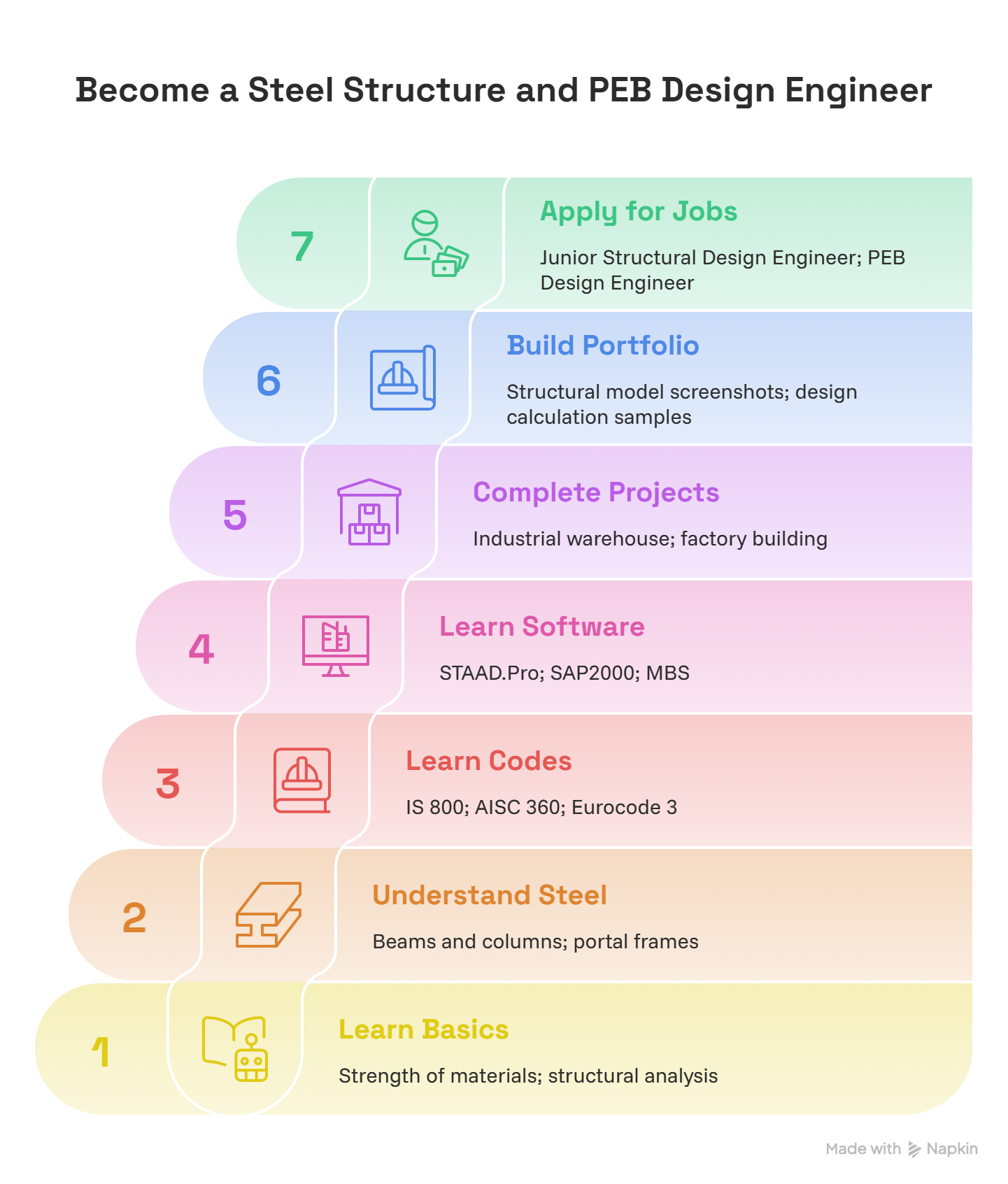
Step 1: Learn Structural Engineering Basics
Start with important engineering subjects.
Study:
- Strength of materials.
- Structural analysis.
- Steel structures.
- Load calculations.
- Structural stability.
- Engineering drawings.
These subjects support design work.
Step 2: Understand Steel Structures
Learn how steel buildings work.
Focus on:
- Beams and columns.
- Portal frames.
- Roof trusses.
- Purlins and girts.
- Bracing systems.
- Steel connections.
Step 3: Learn Design Codes
Understand the required engineering standards.
Start with:
- IS 800.
- AISC 360.
- Eurocode 3.
- MBMA guidelines.
Practise basic design calculations.
Step 4: Learn Structural Software
Start with one major analysis tool.
Recommended tools:
- STAAD.Pro.
- SAP2000.
- MBS.
- Tekla Structures.
- Advance Steel.
Practise with simple structures first.
Step 5: Complete Practical Projects
Project practice improves technical skills.
Suggested projects:
- Industrial warehouse.
- Factory building.
- Steel workshop.
- Commercial steel building.
- PEB storage facility.
Prepare calculations and drawings.
Step 6: Build a Professional Portfolio
A portfolio shows practical knowledge.
Include:
- Structural model screenshots.
- Design calculation samples.
- Steel frame drawings.
- Connection details.
- Fabrication drawings.
- Software used.
- Project descriptions.
Use authorised project information only.
Step 7: Apply for Suitable Jobs
Explore entry-level engineering opportunities.
Possible job titles:
- Junior Structural Design Engineer.
- PEB Design Engineer.
- Steel Design Engineer.
- Structural Engineer.
- Steel Detailing Engineer.
- Design Engineer.
Where to Apply:
- PEB manufacturers.
- EPC companies.
- Structural consultancies.
- Steel fabrication companies.
- Industrial construction firms.
A good portfolio supports applications. Companies may also conduct technical tests.
13. Conclusion: Build a Career in Steel Structure and PEB Design
Steel structures support modern construction projects. PEB systems are widely used industrially. Their design requires strong engineering knowledge. STAAD.Pro and MBS support design calculations. Tekla helps prepare detailed steel models. Design codes guide structural safety checks.
Beginners can start with engineering fundamentals. Software training builds practical knowledge. Project experience supports career growth. A specialised structural design course can help. Practical assignments improve software skills. A strong portfolio supports job applications.
Start building skills for structural design careers.
Explore professional structural design training. Learn important software and design methods. Practise with industry-related projects. Prepare for opportunities in steel construction.
Transform Your Career with Our Structural Design Course!
Unlock Your Potential in Structural Design! Gain expert knowledge in designing robust structures and advance your career in the construction and engineering fields. Limited spots available! 🌟
Know MoreFrequently Asked Questions
What Does a Steel Structure and PEB Design Engineer Do?
A Steel Structure and PEB Design Engineer designs steel buildings. Their work includes load calculations and member sizing. They also design structural connections. Drawings and fabrication details are prepared.
What Is the Difference Between PEB and Conventional Steel Structures?
PEB systems use pre-engineered building components. Many components are manufactured in factories. Conventional steel structures allow different design arrangements. Both systems serve different project requirements.
Which Software Is Used for PEB Design?
STAAD.Pro is used for structural analysis. MBS supports PEB design calculations. Tekla helps with steel modelling. SAP2000 and Advance Steel support other design tasks.
Is Civil Engineering Required for PEB Design Jobs?
Civil engineering is a common qualification. Structural engineering knowledge is also useful. Diploma holders can explore related technician roles. Requirements depend on each employer.
What Is the Salary of a PEB Design Engineer?
Salary depends on experience and location. Entry-level Indian roles may offer ₹3–5 LPA. UAE entry-level estimates range around AED 3,000–5,000 monthly. Experienced engineers may earn higher salaries.
Is PEB Design a Good Career Option?
PEB design offers opportunities in steel construction. Factories and warehouses need steel building systems. Skilled engineers can work with manufacturers. Senior professionals can move into management roles.