
Table of Contents
1. Answer First: What Does a Bridge Design Engineer Do?
They design bridges. Bridges help one cross rivers, roads, and valleys. Their designs should meet safety requirements. They must support different traffic loads.
Bridge design involves many engineering techniques. Engineers calculate loads.They study structural behaviour. They design bridge components. And also prepare drawings. They check designs before construction.
Main responsibilities include:
- Study bridge project requirements.
- Calculate traffic.
- Calculate loads.
- Design bridge deck
- Form girders.
- Design piers
- Prepare foundations.
- Select suitable materials.
- Perform structural analysis.
- Prepare bridge designs.
- Check safety.
- Review calculations.
- Coordinate construction teams.
Typical salary ranges:
- India: ₹3–6 LPA for entry-level roles.
- India: ₹6–12 LPA for experienced.
- UAE: AED 4,000–8,000 monthly for early-career roles.
- Experienced professionals earn higher salaries.
These figures are indicative. Actual salaries depend on experience.
Build A Career In Structural Engineering! Get Free Demo Classes!!
2. Introduction: Why Is Bridge Design a Specialised Structural Career?
1: What is the primary purpose of structural design?
They are important structures. They connect places separated by obstacles. Obstacles like rivers and valleys. They include roads and railway lines.
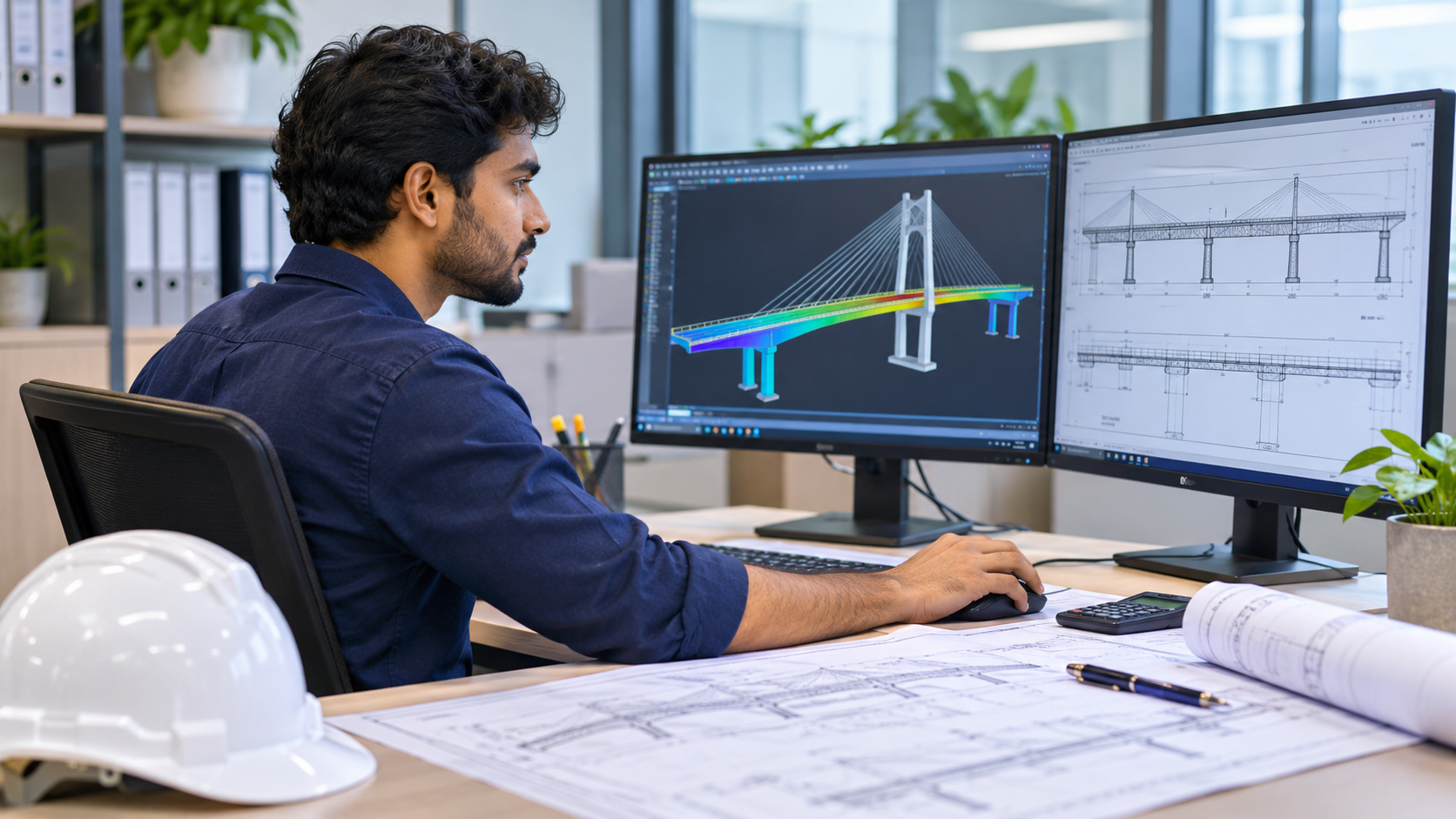
Bridge design requires special knowledge. Each bridge supports different loads. Engineers must study its location. They need to understand ground conditions.
Bridge projects involve many teams. Structural engineers handle main design. Geotechnical engineers study soil. Surveyors collect site measures. Construction teams follow approved drawings.
Bridge construction involves:
Road Infrastructure
- National highways.
- State highways.
- Urban roads.
- Expressways.
- Road overbridges.
Railway Infrastructure
- Railway bridges.
- Railway overbridges.
- Metro bridges.
- Railway viaducts.
- Pedestrian railway crossings.
Water Crossings
- River bridges.
- Canal bridges.
- Estuary bridges.
- Coastal bridges.
- Dam access bridges.
Urban Infrastructure
- Flyovers.
- Elevated roads.
- Metro corridors.
- Pedestrian bridges.
- Road junction structures.
These projects need skilled design engineers. They must understand structural behaviour. Knowledge of design codes is essential. Software skills also support daily work.
A bridge design career offers different opportunities. Engineers can work with consultants. They can also join construction companies. Infrastructure authorities offer related opportunities.
Transform Your Career with Our Structural Design Course!
Unlock Your Potential in Structural Design! Gain expert knowledge in designing robust structures and advance your career in the construction and engineering fields. Limited spots available! 🌟
Know More3. What Does a Bridge Design Engineer Do?
Bridge design engineers handle different design activities. Their work covers the complete bridge structure. They also check every important design detail.
3.1 Load Analysis
Bridges experience different types of loads. Engineers calculate these loads before designing.
Common loads include:
- Dead loads.
- Live loads.
- Vehicle loads.
- Pedestrian loads.
- Wind loads.
- Seismic loads.
- Temperature effects.
- Braking forces.
- Water pressure.
- Construction loads.
Engineers also study moving vehicle loads. These loads can change bridge behaviour. Proper calculations support safe structural designs.
3.2 Superstructure Design
The superstructure forms the upper bridge section. It carries traffic. It also transfers loads.
Main components include:
- Bridge decks.
- Beams.
- Girders.
- Slabs.
- Trusses.
- Bearings.
- Expansion joints.
- Parapets.
Engineers select suitable arrangements. They calculate sizes and strengths. Deflection limits are also checked.
3.3 Substructure Design
The substructure supports the upper bridge. It transfers loads into the ground.
Main components include:
- Abutments.
- Piers.
- Pier caps.
- Foundations.
- Piles.
- Footings.
- Retaining walls.
Engineers study soil conditions. Foundation designs depend on ground strength. Water levels affect designs.
3.4 Preparing Structural Drawings
Drawings explain the complete bridge design. Construction teams follow these drawings.
Common drawings include:
- General arrangement drawings.
- Bridge layout drawings.
- Deck reinforcement drawings.
- Girder drawings.
- Pier drawings.
- Foundation drawings.
- Section drawings.
- Connection details.
- Bearing arrangement drawings.
All dimensions to be checked carefully. Drawing details should match designs.
3.5 Design Checking and Review
Every bridge design is checked. Engineers review calculations.
Main checking activities:
- Review structural models.
- Check load combinations.
- Verify member strengths.
- Check deflection limits.
- Review foundation designs.
- Check reinforcement details.
- Identify design errors.
- Review drawing revisions.
They help reduce design mistakes. They also support construction.
4. Types of Bridges
Each bridge serves different purposes. Site conditions affect bridge selection.
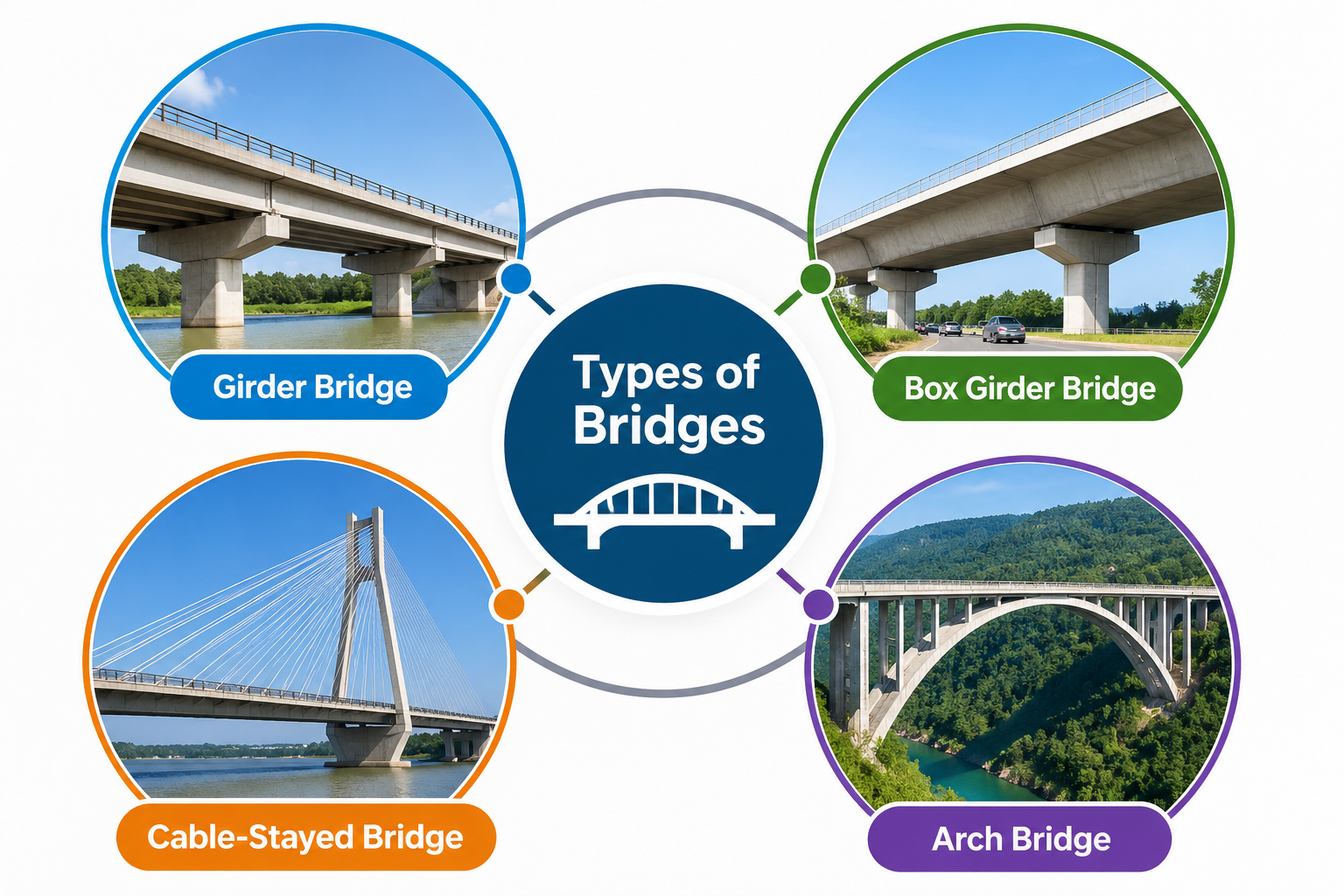
Common bridge types and their uses
| Bridge Type | Main Features | Typical Use |
| Girder Bridge |
|
|
| Box Girder Bridge |
|
|
| Cable-Stayed Bridge |
|
|
| Arch Bridge |
|
|
4.1 Girder Bridge
They use beams for support. The deck transfers loads to girders.
Main features:
- Simple arrangement.
- Concrete/steel girders.
- Different span options.
- Common highway applications.
4.2 Box Girder Bridge
Box girder bridges use hollow sections. Their cross-sections look like boxes.
Main features:
- Good structural stiffness.
- For curved bridges.
- Used in longer spans.
- Common in flyovers.
4.3 Cable-Stayed Bridge
They use strong cables. They connect the deck to towers.
Main features:
- Tall towers.
- Multiple cables.
- Long-span applications.
- Distinctive structural arrangements.
4.4 Arch Bridge
Arch bridges use curved supporting structures. Loads move towards the arch supports.
Main features:
- Curved structural shape.
- Strong compression behaviour.
- Concrete or steel construction.
- Suitable for selected valley crossings.
5. Design Codes Used by Bridge Engineers
Bridge design codes provide engineering requirements. They guide structural calculations.
The code depends on location. Client and authority requirements matter. Engineers must use approved code editions.
5.1 IRC Standards
IRC means Indian Roads Congress. Its standards guide Indian road bridge design.
Important standards include:
- IRC:5: General bridge design features.
- IRC:6: Loads and load combinations.
- IRC:112: Concrete road bridge design.
IRC:112 covers concrete bridge requirements. It includes reinforced and prestressed concrete.
Law Resource+1
5.2 IS Standards
IS means Indian Standards. These standards cover different engineering requirements.
Important references include:
- IS 456: Plain and reinforced concrete.
- IS 800: General steel construction.
- IS 1893: Earthquake-resistant design.
- IS 875: Design loads for buildings and structures.
The correct standard depends on the application. Bridge-specific IRC requirements must also be followed.
5.3 AASHTO Standards
AASHTO is widely used in America. It provides bridge design specifications.
AASHTO LRFD Bridge Design Specifications cover:
- Bridge loads.
- Concrete design.
- Steel design.
- Structural analysis.
- Foundation design.
- Bridge evaluation.
The tenth edition was published in 2024. It also includes later corrections.
AASHTO Store+1
5.4 Eurocodes
Eurocodes are European structural design standards. They cover different structural materials.
Important references include:
- EN 1990: Basis of structural design.
- EN 1991-2: Traffic loads on bridges.
- EN 1992-2: Concrete bridge design.
- EN 1993: Steel structure design.
- EN 1994: Composite structure design.
- EN 1997: Geotechnical design.
- EN 1998: Earthquake-resistant design.
They support bridge designs.
Build A Career In Structural Engineering! Get Free Demo Classes!!
Transform Your Career with Our Structural Design Course!
Unlock Your Potential in Structural Design! Gain expert knowledge in designing robust structures and advance your career in the construction and engineering fields. Limited spots available! 🌟
Know More6. Bridge Design Workflow
Bridge design follows several important stages. Each stage supports the next activity. Proper planning prevents design problems.
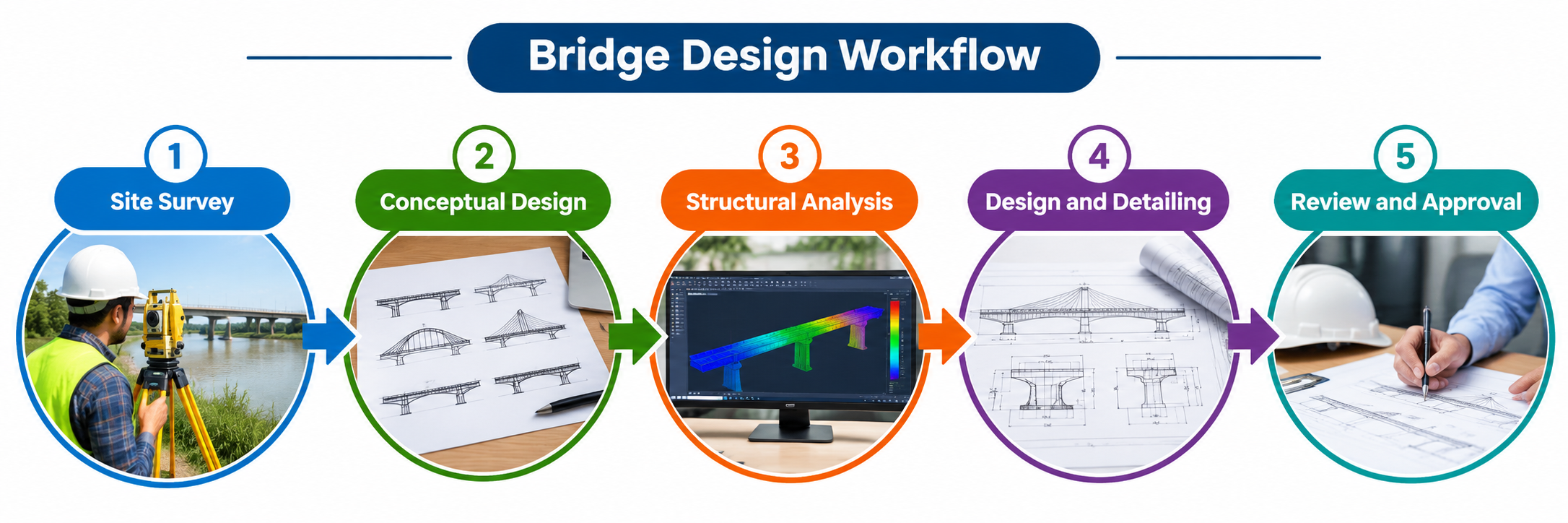
Step 1: Site Survey
The project location was studied.
Main activities:
- Collect measurements.
- Study ground conditions.
- Check river width.
- Measure road alignment.
- Review water levels.
- Identify nearby structures.
Survey information supports initial designs.
Step 2: Conceptual Design
Possible arrangements studied. Suitable bridge selected.
Main activities:
- Select bridge.
- Estimate spans.
- Plan decks.
- Select materials.
- Study limitations.
- Prepare layouts.
The most suitable concept developed.
Step 3: Structural Analysis
The selected bridge concept is analysed. Structural models created using software.
Main activities:
- Create structural models.
- Apply different loads.
- Check load combinations.
- Study structural behaviour.
- Calculate member forces.
- Check deflections.
- Review support reactions.
Analysis guide the design process.
Step 4: Design and Detailing
Structural components designed individually. Their dimensions and reinforcement finalised.
Main activities:
- Design bridge decks.
- Size structural girders.
- Design piers and abutments.
- Check foundation requirements.
- Prepare reinforcement details.
- Design structural connections.
- Prepare detailed drawings.
Step 5: Review and Approval
The completed design is checked.
Main activities:
- Review design calculations.
- Check code requirements.
- Verify structural safety.
- Review technical drawings.
- Correct design errors.
- Obtain required approvals.
Approved drawings are shared with teams.
7. Software Used by Bridge Design Engineers
Different software tools support bridge engineering. Each tool performs specific tasks.
7.1 STAAD.Pro
STAAD.Pro supports structural analysis and design. It can model different structural systems.
Main uses:
- Creating structural models.
- Applying different loads.
- Performing structural analysis.
- Checking member forces.
- Studying structural behaviour.
- Supporting design calculations.
Bentley identifies bridges among its applications. Moving-load analysis is also supported.
Infrastructure Software Company+1
7.2 MIDAS Civil
MIDAS Civil supports bridge engineering work. It provides specialised bridge analysis features.
Main uses:
- Modelling bridge structures.
- Performing moving-load analysis.
- Studying construction stages.
- Analysing cable-stayed bridges.
- Checking structural behaviour.
- Preparing design calculations.
It also supports seismic analysis.
Features+1
7.3 CSiBridge
CSiBridge is designed for bridge engineering. It supports modelling, analysis and design.
Main uses:
- Creating bridge models.
- Applying vehicle loads.
- Analysing bridge structures.
- Studying construction stages.
- Checking structural responses.
- Preparing analysis reports.
It supports different bridge systems.
CSI Knowledge Base+1
7.4 AutoCAD
AutoCAD supports technical drawing preparation. Engineers use it for detailed drawings.
Main uses:
- Preparing bridge layouts.
- Drawing structural sections.
- Creating reinforcement details.
- Preparing foundation drawings.
- Editing technical drawings.
- Adding dimensions and annotations.
7.5 Tekla Structures
Tekla supports detailed structural modelling. It helps create constructible bridge models.
Main uses:
- Creating 3D bridge models.
- Modelling structural components.
- Detailing steel connections.
- Preparing fabrication drawings.
- Reviewing model information.
- Supporting construction coordination.
Tekla also provides bridge modelling features.
Google Docs
Software selection depends on project requirements. Engineers may need several tools. Strong engineering knowledge remains important.
8. Skills Required for Bridge Design Engineers
Bridge design engineers need strong technical skills. They also need good workplace skills.
Technical Skills and Soft Skills
| Technical Skills | Soft Skills |
| Structural engineering | Communication |
| Bridge design calculations | Teamwork |
| Load analysis | Problem-solving |
| Concrete design | Time management |
| Steel design | Attention to detail |
| Structural modelling | Decision-making |
| STAAD.Pro | Adaptability |
| MIDAS Civil | Organisation |
| AutoCAD | Coordination |
| Knowledge of design codes | Learning ability |
8.1 Technical Skills
Technical skills support daily design activities.
Structural Knowledge
- Structural analysis.
- Load calculations.
- Bridge components.
- Concrete design.
- Steel design.
- Foundation design.
- Structural stability.
Software Knowledge
- STAAD.Pro.
- MIDAS Civil.
- CSiBridge.
- AutoCAD.
- Tekla Structures.
Drawing Knowledge
- Bridge layouts.
- Structural sections.
- Reinforcement drawings.
- Foundation details.
- General arrangements.
Code Knowledge
- IRC standards.
- IS standards.
- AASHTO specifications.
- Eurocodes.
8.2 Soft Skills
Soft skills support better project coordination.
Communication
- Sharing design updates.
- Discussing technical problems.
- Understanding project instructions.
- Explaining design changes.
Problem-Solving
- Identifying design errors.
- Reviewing structural problems.
- Finding suitable solutions.
- Supporting design improvements.
Time Management
- Following project schedules.
- Completing design calculations.
- Meeting drawing deadlines.
- Managing design revisions.
Attention to Detail
- Checking dimensions.
- Reviewing calculations.
- Verifying drawing details.
- Following design requirements.
9. Qualifications and Professional Courses
A suitable engineering qualification is important. Structural engineering knowledge is especially useful.
9.1 Educational Qualifications
The following courses support entry:
- B.Tech in Civil Engineering.
- B.E. in Civil Engineering.
- M.Tech in Structural Engineering.
- M.E. in Structural Engineering.
- Related postgraduate engineering qualifications.
A bachelor’s degree is commonly preferred. Some employers prefer postgraduate qualifications. Requirements depend on the position.
The Ministry of Road Transport and Highways recognises Civil Engineering degrees. Its bridge engineering requirements also recognise postgraduate qualifications.
Ministry of Road Transport & Highways+1
9.2 Professional Design Courses
Specialised courses develop practical engineering skills.
Important learning areas:
- Bridge design principles.
- Structural analysis.
- Load calculations.
- Concrete bridge design.
- Steel bridge design.
- Foundation design.
- Design code applications.
- Bridge detailing.
- Structural software training.
Practical Training
Practical projects help develop design knowledge.
Suggested projects:
- Small girder bridge.
- Concrete box girder bridge.
- Steel bridge structure.
- Road overbridge.
- Pedestrian bridge.
- Cable-stayed bridge model.
Practical activities:
- Create structural models.
- Apply different loads.
- Perform structural analysis.
- Design bridge components.
- Prepare reinforcement drawings.
- Complete design calculations.
Certifications can support professional development. Relevant software certificates may also help. However, certificates cannot replace engineering knowledge.
10. Bridge Design Engineer Salary in India and Abroad
Bridge design salaries depend on several factors. Experience and software skills matter. Project location also affects salary offers.
10.1 Salary in India
India has several infrastructure projects. These projects create bridge engineering opportunities.
Common job locations:
- Bengaluru.
- Chennai.
- Mumbai.
- Hyderabad.
- Pune.
- Delhi.
- Gurugram.
- Ahmedabad.
Indeed reported an average of ₹40,818 monthly. Its January 2026 figure used seven salary reports. Actual offers vary by experience.
Indeed
10.2 Salary Abroad
Bridge engineers can explore international opportunities. Gulf countries have infrastructure development projects.
Common job locations:
- Dubai.
- Abu Dhabi.
- Riyadh.
- Doha.
- Muscat.
- London.
- Singapore.
Indeed reported AED 10,966 monthly in UAE. This figure used nine salary reports. It was updated in September 2026.
Indeed
10.3 Salary and Career Growth by Experience
The following figures are indicative estimates. They are not guaranteed salary offers. India figures use available bridge engineering salary data. UAE figures provide a broad market reference.
| Experience | Career Level | India (Annual) | UAE (Monthly) |
| 0–2 years | Junior Bridge Engineer | ₹3–5 LPA | AED 3,000–5,000 |
| 2–5 years | Bridge Design Engineer | ₹5–9 LPA | AED 5,000–9,000 |
| 5–8 years | Senior Design Engineer | ₹9–15 LPA | AED 9,000–14,000 |
| 8–12 years | Lead Bridge Engineer | ₹15–22 LPA | AED 14,000–18,000 |
| 12+ years | Design Manager | ₹22–30+ LPA | AED 18,000–25,000+ |
Actual salaries can fall outside these ranges. Project complexity can affect earnings. Specialist bridge design experience also matters.
Factors Affecting Salary
- Years of experience.
- Bridge design knowledge.
- Structural analysis skills.
- Software expertise.
- Knowledge of international codes.
- Complex project experience.
- International project exposure.
- Project management skills.
11. Career Path of a Bridge Design Engineer
Bridge engineering offers different career opportunities. Professionals can move into senior positions.
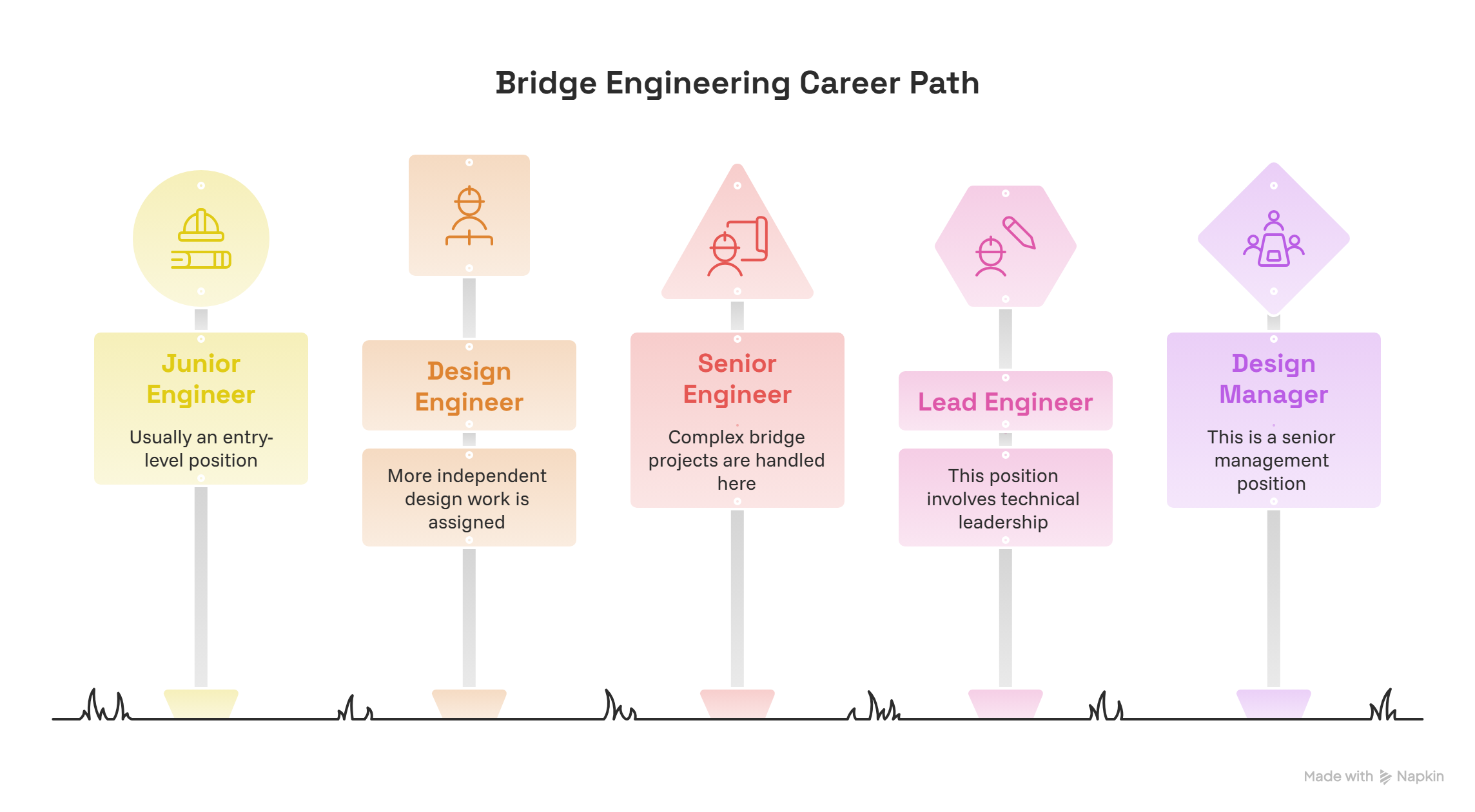
Career growth depends on technical knowledge. Project experience also supports promotions.
11.1 Junior Bridge Design Engineer
This is usually an entry-level position.
Responsibilities:
- Preparing basic structural models.
- Applying design loads.
- Supporting calculations.
- Preparing drawings.
- Assisting senior engineers.
11.2 Bridge Design Engineer
More independent design work is assigned.
Responsibilities:
- Designing bridge components.
- Performing structural analysis.
- Checking structural members.
- Preparing design reports.
- Coordinating with project teams.
11.3 Senior Bridge Design Engineer
Complex bridge projects are handled here.
Responsibilities:
- Reviewing structural designs.
- Checking design calculations.
- Handling complex structures.
- Guiding junior engineers.
- Resolving technical problems.
11.4 Lead Bridge Engineer
This position involves technical leadership.
Responsibilities:
- Leading design teams.
- Reviewing major calculations.
- Managing design activities.
- Coordinating with clients.
- Maintaining design quality.
11.5 Bridge Design Manager
This is a senior management position.
Responsibilities:
- Managing engineering teams.
- Planning project activities.
- Reviewing design submissions.
- Coordinating with clients.
- Monitoring project delivery.
12. How to Become a Bridge Design Engineer
A step-by-step plan helps beginners. Practical training should also be included.
Step 1: Complete Civil Engineering
Start with a suitable engineering degree.
Study:
- Structural analysis.
- Strength of materials.
- Concrete technology.
- Steel structures.
- Soil mechanics.
- Engineering mathematics.
These subjects support bridge design work.
Step 2: Learn Bridge Engineering Basics
Understand how bridges work.
Focus on:
- Bridge components.
- Bridge types.
- Load transfer.
- Superstructures.
- Substructures.
- Foundation systems.
- Structural behaviour.
Step 3: Understand Design Codes
Learn important engineering standards.
Start with:
- IRC standards.
- IS standards.
- AASHTO specifications.
- Eurocodes.
Practise basic design calculations.
Step 4: Learn Bridge Design Software
Start with one structural analysis tool.
Recommended tools:
- MIDAS Civil.
- CSiBridge.
- STAAD.Pro.
- AutoCAD.
- Tekla Structures.
Practise with simple bridge models.
Step 5: Complete Practical Projects
Project practice improves technical skills.
Suggested projects:
- Girder bridge design.
- Box girder modelling.
- Bridge deck design.
- Pier and foundation design.
- Reinforcement detailing.
Prepare calculations and drawings.
Step 6: Build a Professional Portfolio
A portfolio shows practical knowledge.
Include:
- Structural model screenshots.
- Design calculation samples.
- Bridge layout drawings.
- Reinforcement details.
- Software used.
- Project descriptions.
Use authorised project information only.
Step 7: Apply for Suitable Jobs
Explore entry-level engineering opportunities.
Possible job titles:
- Junior Bridge Design Engineer.
- Structural Design Engineer.
- Bridge Engineer.
- Bridge BIM Engineer.
- Assistant Bridge Engineer.
- Civil Design Engineer.
Where to Apply:
- Infrastructure companies.
- Structural consultancies.
- Engineering design firms.
- Highway construction companies.
- Government infrastructure projects.
- Bridge construction companies.
A good portfolio supports applications. Companies may also conduct technical tests.
14. Conclusion: Build a Career in Bridge Design
Bridge design supports important infrastructure projects. It requires strong structural engineering knowledge. Engineers must understand loads and materials. They must also follow design codes. MIDAS Civil and CSiBridge support bridge analysis. STAAD.Pro helps with structural calculations. AutoCAD and Tekla support detailed drawings.
Beginners can start with engineering fundamentals. Software training builds practical knowledge. Project experience supports career growth. A specialised structural design course can help. Practical assignments improve software skills. A strong portfolio supports job applications.
Start building skills for bridge engineering careers.
Explore professional structural design training. Learn important software and design methods. Practise with industry-related bridge projects. Prepare for opportunities in infrastructure engineering.
Transform Your Career with Our Structural Design Course!
Unlock Your Potential in Structural Design! Gain expert knowledge in designing robust structures and advance your career in the construction and engineering fields. Limited spots available! 🌟
Know MoreFrequently Asked Questions
What Does a Bridge Design Engineer Do?
A Bridge Design Engineer designs bridge structures. Their work includes load calculations and structural analysis. They also design bridge decks and foundations. Drawings and design reports are prepared.
Which Software Is Used for Bridge Design?
MIDAS Civil supports specialised bridge analysis. CSiBridge supports bridge modelling and design. STAAD.Pro supports structural analysis. AutoCAD and Tekla support drawing and modelling activities.
Is Civil Engineering Required for Bridge Design?
Civil engineering is a common qualification. Structural engineering knowledge is also important. A postgraduate degree can support specialisation. Employer requirements may differ.
What Is the Salary of a Bridge Design Engineer?
Salary depends on experience and location. Entry-level Indian roles may offer ₹3–5 LPA. Experienced engineers can earn higher salaries. International opportunities may offer different salary packages.
Which Design Codes Are Used for Bridges?
IRC standards are commonly used in India. IS standards cover additional engineering requirements. AASHTO is widely used in America. Eurocodes support structural design across Europe.
Is Bridge Design a Good Career Option?
Bridge design offers specialised engineering opportunities. Infrastructure projects need skilled design professionals. Engineers can work with consultancies. Experienced professionals can also lead design teams.