Table of Contents
Yoga gives one both physical and mental wellbeing. Regular practice supports flexibility. It also provides strength, balance, and mobility. It encourages relaxation. Focus, and body awareness improves.
Yoga combines two things. Physical poses and breathing techniques. Many practices include meditation and mindfulness. These elements create a balanced wellness practice.
The benefits can differ between individuals. Practice style and consistency also affect results. Beginners should choose practices matching their abilities.
Join the best online yoga teacher training program of 2026! Register in Entri Elevate now!
What is Yoga?
It is an old mind-body practice. It originated within Indian traditions. Modern yoga includes several different approaches. Most practices combine movement, breathing, and awareness. Some styles also include meditation and relaxation.
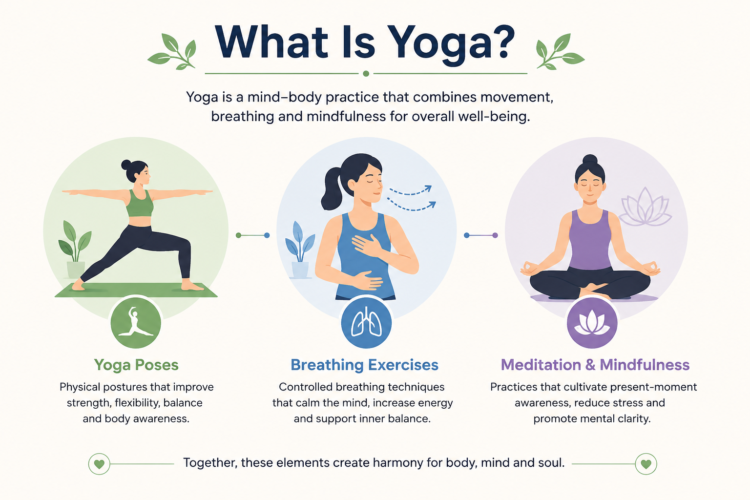
Yoga commonly includes three major components.
Asanas
Asanas refer to physical yoga postures. These poses involve controlled body positions. Some poses develop strength and stability. Others focus on flexibility and mobility. Many poses combine several physical benefits.
Pranayama
It refers to controlled breathing practices. It involve deliberate breathing patterns. Breathing connects with physical movements. It encourages relaxation. It improves concentration.
Meditation and Mindfulness
Yoga practices include meditation. It encourages focused & sustained attention. Mindfulness gives awareness of present experiences. Both complement physical yoga movements.
Common Types of Yoga
Different yoga styles offer different experiences. Some styles provide gentle physical movement. Others involve stronger and faster sequences.
- Hatha yoga
- uses slower controlled movements.
- suits beginners seeking foundational practice.
- Vinyasa yoga
- connects movements with breathing.
- usually creates a continuous movement sequence.
- Ashtanga yoga
- follows structured movement sequences.
- generally requires greater physical commitment.
- Yin yoga
- uses longer-held positions.
- focuses mainly on passive stretching.
- Restorative yoga
- emphasizes relaxation and recovery.
- usually uses supported body positions.
- Power yoga
- provides stronger physical challenges.
- can support strength and endurance.
Yoga does not require extreme flexibility. Beginners can use modified positions when necessary. Proper technique remains more important than difficulty.
Physical Benefits of Yoga
1: Which of these is the primary goal of yoga practice?
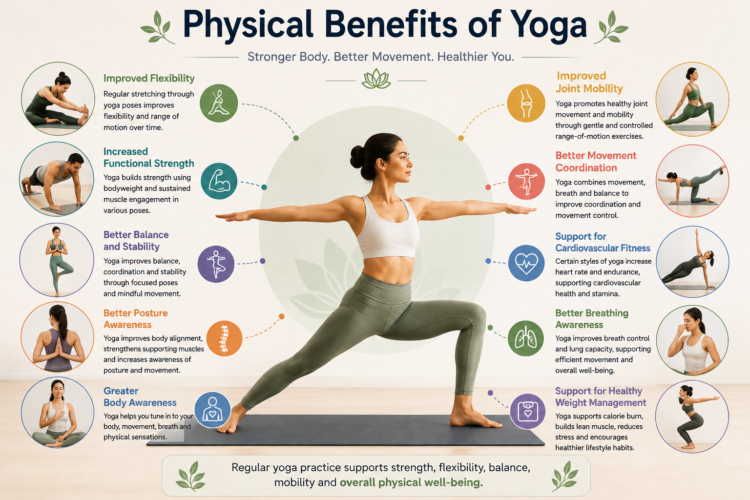
Yoga supports physical wellbeing. Regular practice improves movement quality. Different poses create different physical demands. Breathing also supports controlled physical movement.
1. Improved Flexibility
Yoga uses controlled stretching movements regularly. These movements can gradually improve flexibility. Better flexibility can support comfortable everyday movement. It can also complement other physical activities.
Yoga can support flexibility through several methods.
- Gentle poses gradually challenge muscle flexibility.
- Longer holds can encourage controlled stretching.
- Flowing sequences move joints repeatedly.
- Regular practice can improve movement ranges.
- Modified poses can suit different flexibility levels.
Extreme flexibility should not become the main goal. Comfortable and controlled movement should remain important.
2. Increased Functional Strength
Many yoga poses require sustained muscle engagement. Several poses also use bodyweight resistance. Holding positions can challenge different muscle groups. Flowing sequences can increase physical demands.
Common strength-focused poses include:
- Plank pose challenges the arms and core.
- Chair pose challenges the lower body.
- Bridge pose engages the hips and core.
- Boat pose challenges the abdominal muscles.
- Warrior poses challenge the legs and hips.
Yoga can develop strength through functional movements. It can also complement conventional strength training.
3. Better Balance and Stability
Balance require strength and coordination. One also need body awareness. Yoga includes several poses where one needs physical stability. These poses also require concentration and controlled breathing.
Useful balance poses include:
- Tree pose challenges single-leg stability.
- Eagle pose requires controlled body positioning.
- Warrior III challenges balance and core control.
- Half-moon pose combines balance and flexibility.
Regular balance practice can improve stability over time. Better stability can support everyday physical movement. Balance also becomes increasingly important with age.
4. Better Posture Awareness
Yoga gives awareness of body alignment. Many poses require controlled spinal positioning. Regular practice can improve posture awareness. Stronger supporting muscles may also help posture.
Yoga can support posture through several areas.
- Core exercises can strengthen supporting muscles.
- Shoulder movements can improve upper-body awareness.
- Hip movements can support better alignment.
- Spinal exercises can improve controlled mobility.
- Standing poses can improve body positioning.
Better posture can support efficient everyday movement. It may also reduce unnecessary physical strain.
5. Greater Body Awareness
Yoga requires attention during physical movement. Practitioners notice posture and muscle engagement. They also observe their breathing patterns. The awareness of physical sensations improves.
Body awareness support safer movement. It can also improve exercise technique. People may notice physical tension sooner. They can then modify uncomfortable movements.
6. Improved Joint Mobility
Yoga moves many joints through controlled positions. Regular movement can support comfortable joint mobility. Gentle poses encourage controlled movement patterns. This can support everyday physical activities.
Joint-focused yoga should remain gentle and controlled. Movements should never become forced or painful. Existing injuries may require specific modifications.
7. Better Movement Coordination
Yoga combines movement, breathing, and balance. These elements require coordination and concentration. Regular practice can improve movement control. It may also make movements feel more coordinated.
Better coordination can support everyday activities. It can also complement sports and other exercises. Controlled movement can improve awareness during physical activity.
8. Support for Cardiovascular Fitness
Some yoga styles involve continuous physical movement. Faster sequences can increase physical exertion. They may also raise the heart rate. However, yoga intensity varies between different styles. Gentle yoga provides less cardiovascular stimulation. More active styles create greater physical demands.
Yoga can complement regular aerobic exercise. Walking, cycling, and swimming provide additional options. A varied exercise routine supports broader physical fitness.
9. Better Breathing Awareness
Breathing plays an important role in yoga. Many practices coordinate breathing with movement. This encourages more conscious breathing patterns. It can also improve movement awareness.
Breathing practices may support relaxation and concentration. They can help practitioners slow their breathing. Some advanced techniques require qualified instruction.
10. Support for Healthy Weight Management
Yoga contributes to regular physical activity. Physical activity supports overall energy expenditure. More active yoga styles create greater physical demands. Yoga may also encourage healthier lifestyle habits. Mindfulness can improve awareness of daily behaviours. However, yoga alone cannot guarantee weight loss.
Healthy weight management involves several lifestyle factors.
- Balanced nutrition supports adequate nutrient intake.
- Regular activity increases overall movement levels.
- Adequate sleep supports physical recovery.
- Stress management supports healthier daily routines.
- Consistent habits support long-term progress.
Yoga can complement these healthy lifestyle practices.
11. Support for Certain Pain Conditions
Yoga has been studied for several pain conditions. Lower-back pain has received considerable research attention. Some studies suggest modest potential benefits. Yoga has also been studied for neck discomfort. Some research reports improved neck movement. Certain studies also report reduced pain intensity.
Yoga should not replace medical treatment. Persistent pain may require professional evaluation. Existing injuries may require modified yoga movements.
12. Physical Relaxation and Recovery
Yoga combines movement with controlled breathing. Some practices also include relaxation techniques. These methods can help reduce physical tension. Gentle yoga can support relaxation goals. Restorative yoga uses slower and supported positions. These practices can create a calmer physical experience.
Gentle sessions may suit recovery-focused routines. They may also help after prolonged inactivity. Recovery sessions should remain comfortable and controlled.
Become a Certified Yoga Instructor
Yoga Teacher Training Course by Entri App: Master authentic yoga techniques, earn certification, and build a successful career as a professional yoga instructor.
Join Now!Physical Benefits at a Glance
| Benefit | Potential Contribution |
|---|---|
| Flexibility | Supports comfortable movement ranges. |
| Strength | Challenges muscles through bodyweight movements. |
| Balance | Develops stability and movement control. |
| Mobility | Encourages controlled joint movement. |
| Posture | Improves alignment and body awareness. |
| Coordination | Connects movement, breathing, and balance. |
| Relaxation | Combines gentle movement with breathing. |
How Can Beginners Start Safely?
Beginners should focus on consistency first. Advanced poses are unnecessary during early practice. Proper alignment should remain the main priority.
A beginner-friendly approach can include these steps.
- Start with shorter sessions each week.
- Choose beginner-level classes initially.
- Learn basic yoga positions correctly.
- Focus on controlled and steady breathing.
- Avoid forcing tight muscles during stretches.
- Use modifications when certain poses feel difficult.
- Increase practice difficulty gradually over time.
- Allow sufficient recovery between demanding sessions.
Regular practice can produce gradual physical improvements. Individual progress will naturally differ between practitioners. Yoga works best within a balanced lifestyle. It should complement healthy nutrition, movement, and recovery.
Mental Health Benefits of Yoga
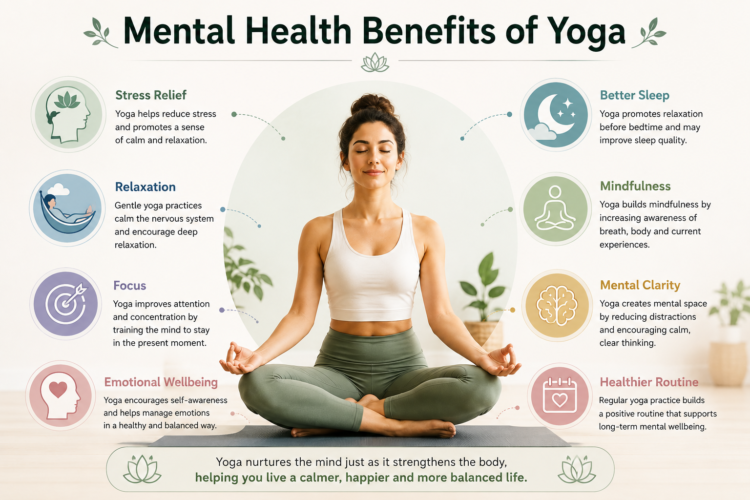
Yoga supports mental wellbeing through movement, breathing, and mindfulness. Regular practice may reduce stress and promote relaxation. It can also support focus, emotional balance, and sleep.
1. Stress Management
Yoga can help manage everyday stress. Slow movements may reduce physical tension. Controlled breathing can encourage relaxation and calmness. Regular practice can also provide mental breaks.
2. Relaxation
Gentle yoga can promote physical and mental relaxation. Restorative yoga focuses especially on relaxation. Useful practices include:
- Gentle stretching.
- Deep breathing.
- Restorative poses.
- Guided relaxation.
- Short meditation sessions.
3. Better Focus
Yoga requires attention during physical movements. Practitioners coordinate breathing with different poses. This encourages concentration and present-moment awareness. Short sessions can also provide useful mental breaks.
4. Emotional Wellbeing
Yoga creates opportunities for self-awareness. Mindful breathing can encourage calmer responses. Physical movement can also provide a healthy outlet. However, yoga does not replace professional mental healthcare.
5. Better Sleep
Gentle yoga may support relaxation before bedtime. Slow breathing can also encourage a calmer routine. Suitable evening practices include:
- Gentle stretching.
- Restorative poses.
- Slow breathing.
- Short meditation.
- Quiet relaxation.
6. Greater Mindfulness
Yoga encourages awareness of body sensations. Breathing also provides a useful focus point. This can support present-moment awareness.
Mindful yoga can improve awareness of:
- Breathing patterns.
- Body sensations.
- Muscle tension.
- Physical alignment.
- Movement quality.
- Emotional responses.
7. Improved Mental Clarity
Yoga provides time away from daily distractions. Breathing and mindfulness can create mental space. This may support clearer and calmer thinking.
8. A Healthier Relaxation Routine
Yoga can become part of daily routines. Short sessions can fit busy schedules. A simple routine may include:
- Five-minute breathing exercises.
- Ten-minute stretching sessions.
- Short morning yoga.
- Gentle evening sequences.
- Longer weekend practices.
Consistency makes yoga easier to maintain. The routine should remain realistic and comfortable.
Benefits of Yoga for Different Age Groups
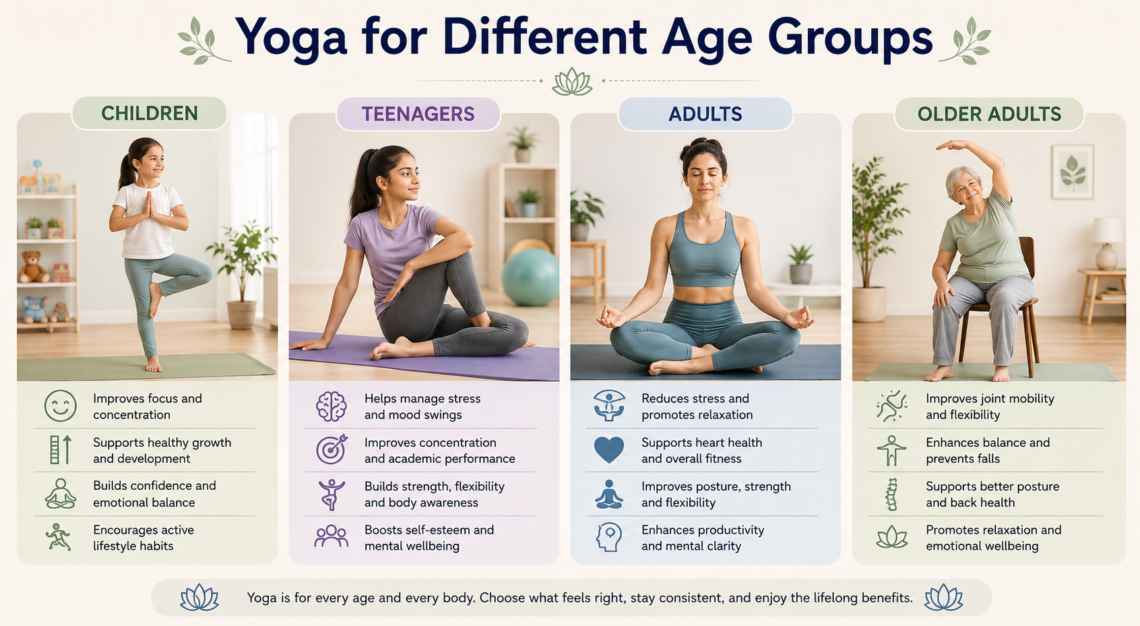
Yoga can suit people across different age groups. However, practice needs can change with age. Physical abilities and goals should guide practice choices.
Children and Teenagers
Young people can benefit from age-appropriate yoga. Gentle yoga can encourage body awareness and flexibility. Breathing exercises may also support relaxation.
Potential benefits include:
- Better body awareness.
- Improved flexibility.
- Greater movement confidence.
- Better balance.
- Relaxation opportunities.
- Mindfulness practice.
Sessions should remain engaging and age appropriate. Difficult poses are unnecessary for younger practitioners.
Young Adults
Young adults often manage study and work demands. Yoga can provide regular physical activity. It can also create opportunities for relaxation.
Potential benefits include:
- Improved flexibility.
- Better posture awareness.
- Stress management.
- Improved body awareness.
- Physical activity support.
- Relaxation after busy schedules.
Yoga can also complement gym and sports activities.
Working Adults
Long working hours can reduce physical movement. Extended sitting can also affect posture and mobility. Yoga can provide useful movement breaks.
Working adults may benefit from:
- Gentle stretching.
- Mobility exercises.
- Posture-focused poses.
- Breathing exercises.
- Stress management.
- Evening relaxation.
Short sessions can fit demanding work schedules. Consistency remains more practical than long sessions.
Older Adults
Older adults may benefit from gentle yoga practices. Balance and mobility become increasingly important with age. Yoga can support controlled movement and body awareness.
Suitable practices may include:
- Chair yoga.
- Gentle Hatha yoga.
- Restorative yoga.
- Balance-focused exercises.
- Controlled breathing practices.
Older adults should consider individual physical limitations. Medical guidance may help with existing health concerns.
Become a Certified Yoga Instructor
Yoga Teacher Training Course by Entri App: Master authentic yoga techniques, earn certification, and build a successful career as a professional yoga instructor.
Join Now!How Often Should You Practice Yoga?
Yoga frequency depends on personal goals and experience. Beginners can start with shorter sessions. Gradually increasing practice can improve consistency.
Beginner Practice
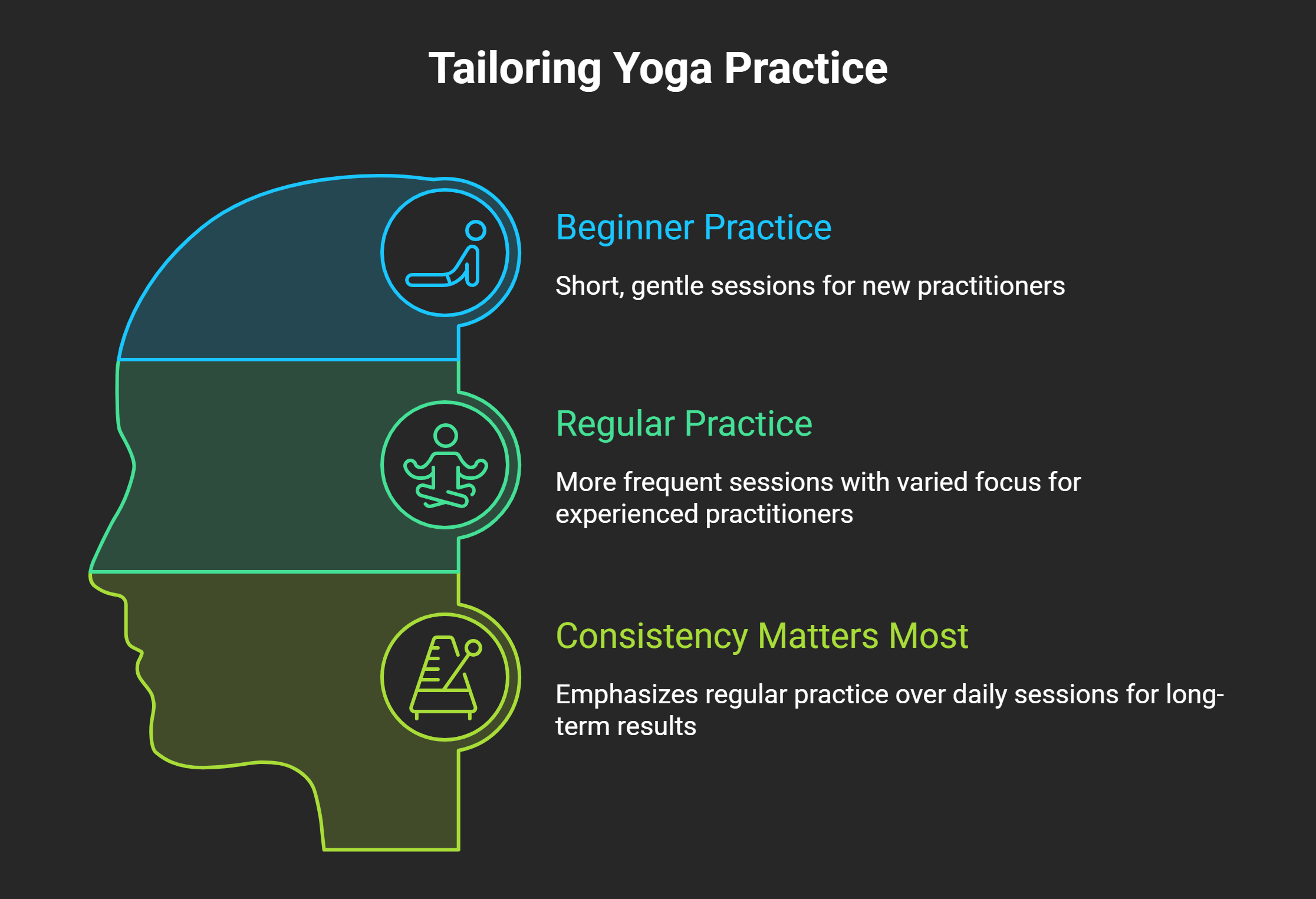
Beginners can start with two sessions weekly. Short sessions can make practice easier. Sessions can gradually become longer.
A simple beginner routine may include:
- Two or three weekly sessions.
- Fifteen-minute initial sessions.
- Gentle stretching movements.
- Basic breathing exercises.
- Simple relaxation practices.
The routine should remain comfortable and manageable.
Regular Practice
Experienced practitioners can practice more frequently. Several shorter sessions can work well. Longer sessions can also provide deeper practice.
A balanced routine can include:
- Three to five weekly sessions.
- Strength-focused yoga days.
- Mobility-focused sessions.
- Relaxation-focused sessions.
- Occasional longer practices.
Rest days can support physical recovery. Practice intensity should vary when necessary.
Join the best online yoga teacher training program of 2026! Register in Entri Elevate now!
Consistency Matters Most
Daily practice is not essential for everyone. Consistent practice often provides better long-term results. Overly demanding routines can become difficult to maintain.
A realistic routine should match daily responsibilities. It should also consider fitness level and recovery needs.
Conclusion
Yoga supports both physical and mental wellbeing. Regular practice can improve flexibility, strength, balance, and mobility. It can also support relaxation, focus, and stress management. Different styles suit different needs and abilities.
Consistency remains more important than advanced poses. Beginners should progress gradually with proper technique. Yoga works best alongside healthy lifestyle habits.
Become a Certified Yoga Instructor
Yoga Teacher Training Course by Entri App: Master authentic yoga techniques, earn certification, and build a successful career as a professional yoga instructor.
Join Now!Frequently Asked Questions
What are the main benefits of yoga for the body?
Yoga can improve flexibility, balance, mobility, strength, posture, coordination, and body awareness. Regular practice can also support physical relaxation and healthier movement patterns.
What are the mental health benefits of yoga?
Yoga may help manage stress, encourage relaxation, improve mindfulness, and support concentration. Regular practice can also promote emotional wellbeing and mental clarity.
How often should yoga be practiced for benefits?
Beginners can start with two or three sessions each week and gradually increase their practice. Consistency matters more than practicing for long hours or performing advanced poses.
Can yoga help reduce stress and anxiety?
Yoga may support stress management through controlled breathing, mindful movement, and relaxation techniques. It should not replace professional treatment for persistent anxiety or other mental health concerns.
Can yoga improve flexibility and strength?
Regular yoga practice can gradually improve flexibility while challenging muscles through bodyweight movements. Different yoga styles and poses can provide varying levels of strength and stretching benefits.
Is yoga suitable for beginners?
Yoga is suitable for beginners when they start with simple poses and suitable practice levels. Beginners should focus on proper technique and avoid forcing movements beyond their comfortable range.
Which age groups can benefit from yoga?
Children, teenagers, adults, and older adults can benefit from age-appropriate yoga practices. The intensity, poses, and duration should be adjusted according to individual abilities and needs.
Can yoga improve sleep quality?
Gentle yoga may encourage relaxation and help create a calming bedtime routine. Slow stretching, breathing exercises, and restorative poses can be particularly suitable for evening practice.
Can yoga help with back and neck pain?
Some research suggests yoga may provide modest benefits for certain types of lower-back and neck pain. People with persistent pain or existing injuries should seek professional guidance before starting yoga.
Is yoga enough for overall physical fitness?
Yoga can support flexibility, balance, strength, mobility, and body awareness, but it may not provide every type of exercise needed for complete fitness. Combining yoga with aerobic activity, resistance training, healthy nutrition, and adequate recovery can provide a more balanced approach.