Table of Contents
Key Takeaways
- Music makes learning fun.
- Singing helps children learn.
- Dancing keeps children active.
- Simple songs are enough.
- Music helps children grow.
- Parents can sing every day.
- Teachers can use songs in class.
- Music is good for every child.
Unlock your passion for education and shape young minds as a Montessori teacher!
What are the Best Musical Activities for Preschoolers?
Preschool children love music. They enjoy activities that are simple and fun.
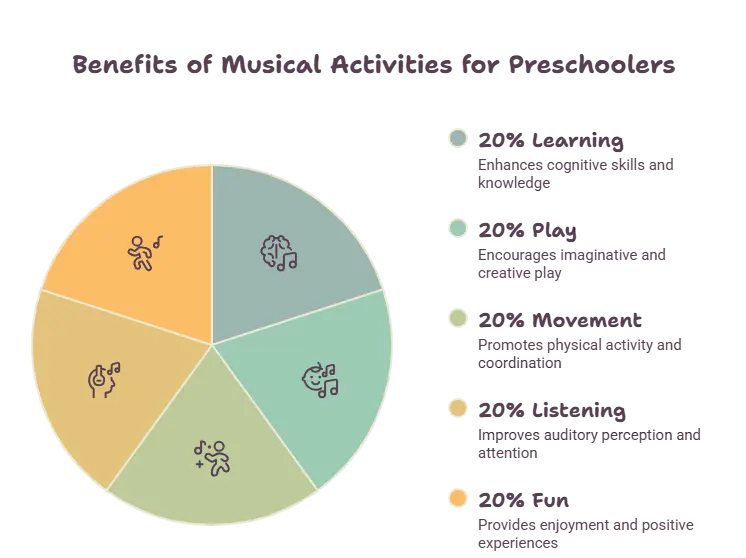
Music activities help children:
- Learn.
- Play.
- Move.
- Listen.
- Have fun.
Some of the best musical activities for preschoolers are:
- Singing simple songs.
- Clapping to music.
- Dancing to songs.
- Action songs.
- Nursery rhymes.
- Music and movement games.
- Playing simple instruments.
- Musical storytelling.
- Follow-the-beat activities.
- Freeze dance games.
These activities help children stay active and happy.
Music activities can also help children:
- Listen better.
- Remember words.
- Build confidence.
- Learn new skills.
- Play with others.
Children do not need expensive instruments. Simple items like:
- Bells.
- Shakers.
- Drums.
- Sticks.
can make music more exciting. Parents and teachers can use music:
- At home.
- In preschool.
- During playtime.
- During learning activities.
The best musical activities are the ones that make children smile, move, sing, and enjoy learning.
Introduction
Music is fun for preschool children. Most children enjoy:
- Singing.
- Dancing.
- Clapping.
- Playing simple music games.
Music is not only for fun. It also helps children:
- Learn new things.
- Stay active.
- Listen better.
- Build confidence.
- Enjoy learning.
Parents and teachers can use simple music activities every day.
Children do not need expensive instruments. Simple songs and easy games are enough.
In this blog, you will learn:
- The best musical activities for preschoolers.
- How music helps children learn.
- Easy music games to try.
- Simple tips for parents and teachers.
Everything is explained in very simple words and easy points.
Why Musical Activities Matter in Early Childhood
1: What is the primary focus of the first plane of development in the Montessori method?
2: According to Montessori practices, children are allowed to choose their work instead of the teacher choosing the work for them. Therefore:
3: There are totally ______ types and levels of Montessori education in practice.
4: Based on the Montessori Method, children have a natural desire to:
5: The Association Montessori Internationale has its headquarters at __________.
Ever wondered how much you really know? It's time to put your brain to the test!
Music is an important part of early learning. Children learn many new skills while enjoying music.
Music helps children:
- Learn faster.
- Stay active.
- Feel happy.
- Play with others.
- Enjoy learning.
Children do not feel like they are studying.
They learn while having fun.
Music can be used:
- At home.
- In preschool.
- During playtime.
- During group activities.
Even simple songs can help children grow.
Singing and Action Songs
Children love singing. They also enjoy moving while singing. Action songs make music even more fun.
Helps Children Learn New Words
Children hear many words in songs.
They slowly learn:
- New words.
- Easy sentences.
- Simple sounds.
Singing helps children speak better.
Improves Listening
Children listen carefully to:
- Song words.
- Music.
- Instructions.
Good listening helps children learn.
Helps Children Remember
Children like singing the same songs again.
They slowly remember:
- Words.
- Actions.
- Song order.
Repeating songs helps memory.
Makes Learning Fun
Teachers can teach through songs.
For example:
- ABC songs.
- Number songs.
- Colour songs.
- Animal songs.
Children learn without feeling bored.
Builds Confidence
Children enjoy singing with others. They slowly become comfortable:
- Singing alone.
- Singing in groups.
- Joining class activities.
Singing helps children feel confident.
Rhythm and Clapping Games
Children enjoy making sounds. Clapping games are simple and fun. They also help children learn.
Helps Children Follow Rhythm
Children learn to:
- Clap slowly.
- Clap quickly.
- Stop and start.
They learn to follow simple rhythms.
Improves Hand Movement
Clapping helps children:
- Move both hands.
- Improve hand control.
- Build coordination.
This also helps other daily activities.
Builds Attention
Children listen carefully.
Then they:
- Copy the clapping.
- Follow the beat.
- Wait for their turn.
This improves concentration.
Helps Children Work Together
Group clapping teaches children to:
- Listen.
- Wait.
- Follow others.
Children enjoy working together.
Easy Clapping Activities
Children can:
- Clap once.
- Clap twice.
- Clap fast.
- Clap slowly.
- Copy the teacher.
These games are easy and enjoyable.
Dance and Movement Activities
Children naturally enjoy moving. Music makes movement more exciting.
Keeps Children Active
Children can:
- Walk.
- Jump.
- Run.
- Spin.
- Stretch.
Movement keeps the body active.
Improves Body Balance
Dancing helps children:
- Stand properly.
- Balance better.
- Move smoothly.
These skills help every day.
Builds Confidence
Children enjoy showing their movements.
They feel happy when they:
- Dance.
- Smile.
- Join friends.
Dancing helps children feel proud.
Teaches Simple Instructions
Teachers may say:
- Jump.
- Turn.
- Stop.
- Sit.
- Walk.
Children learn by following these actions.
This improves listening.
Makes Group Activities Fun
Children enjoy dancing together.
They learn to:
- Share space.
- Follow others.
- Move together.
Group dancing builds friendship.
Easy Dance Activities
Children can enjoy:
- Freeze dance.
- Animal dance.
- Circle dance.
- Action dance.
Simple games make learning exciting.
Homemade Musical Instruments
Children do not need costly instruments. Simple things at home can become musical instruments.
Make Simple Shakers
Use:
- Empty bottles.
- Rice
- Beans.
- Small stones.
Close the bottle safely.
Shake it to make music.
Make Small Drums
Use:
- Empty boxes.
- Plastic containers.
- Small buckets.
Tap them gently.
Children enjoy making drum sounds.
Make Bell Sticks
Tie small bells to:
- A stick.
- A ribbon.
Children can shake them while singing.
This makes songs more fun.
Make Music with Everyday Things
Children can use:
- Spoons.
- Cups.
- Bowls.
- Wooden sticks.
Everyday items can make different sounds.
Let Children Explore Sounds
Ask children:
- Which sound is loud?
- Which sound is soft?
- Which sound is fast?
- Which sound is slow?
This helps children listen carefully.
Encourage Creativity
Let children decorate their instruments.
They can use:
- Colours.
- Stickers.
- Paper.
- Ribbons.
Children enjoy using something they made themselves.
Play Together
Parents and teachers can:
- Sing together.
- Shake instruments.
- Clap together.
- Dance together.
Playing together makes children happy.
Music Games for Groups
Group music games help children enjoy learning together.
Pass the Music
Children sit in a circle. Pass a small instrument while music plays.
When music stops:
- The child holding the instrument sings or claps.
This game is fun for everyone.
Copy the Leader
One person:
- Claps.
- Dances.
- Taps.
Other children copy.
Children learn by watching.
Guess the Sound
Hide a simple instrument. Play the sound.
Ask children:
- “Which instrument made the sound?”
This improves listening skills.
Music During Daily Activities
Music can be used throughout the day.
Morning Songs
Start the day with:
- Welcome songs.
- Good morning songs.
Children feel excited to begin the day.
Clean-Up Songs
Sing while children:
- Pick up toys.
- Arrange books.
- Clean the room.
Cleaning becomes fun.
Goodbye Songs
End the day with:
- Goodbye songs.
- Thank you songs.
Children finish the day happily.
Simple Tips for Parents and Teachers
Music should always be enjoyable.
Keep Activities Short
Children enjoy:
- 10 minutes.
- 15 minutes.
of music.
Short activities keep children interested.
Smile While Teaching
Children enjoy learning from happy adults.
A smile makes music more enjoyable.
Let Every Child Join
Some children sing loudly, some sing quietly and others only clap.
Let every child join in their own way.
Praise Every Small Effort
Say:
- Good job.
- Well done.
- Nice singing.
Simple praise builds confidence.
Keep Music Fun
The goal is not perfect singing. The goal is to help children:
- Smile.
- Learn.
- Play.
- Grow.
Happy music activities help preschool children enjoy learning every single day.
Tips for Using Music in Daily Learning
Music can be used every day. Children do not need a special music class. Simple songs can make learning easy and fun.
Music can be a part of everyday learning.
Use Music During Morning Time
Start day with music.
Sing a Good Morning Song
Begin the day with a simple song.
Children can:
- Smile.
- Sing.
- Clap.
This helps children start the day happily.
Welcome Every Child
Sing a welcome song when children arrive.
This helps children feel safe and comfortable.
Use Songs While Teaching
Many lessons can become songs.
Teach Numbers with Songs
Sing songs about:
- Counting.
- Number names.
- Simple number games.
Children remember numbers more easily.
Teach Letters with Songs
Use songs for:
- ABC.
- Letter sounds.
- Simple words.
Singing makes learning letters fun.
Teach Colours with Songs
Sing songs about:
- Red.
- Blue.
- Green.
- Yellow.
Children learn colours quickly.
Use Music During Playtime
Playtime is a good time for music.
Play Action Songs
Choose songs that ask children to:
- Clap.
- Jump.
- Walk.
- Turn.
Children learn while moving.
Dance Together
Play happy music.
Let children:
- Dance.
- Smile.
- Move freely.
Dancing keeps children active.
Use Music During Daily Routines
Music can be used during simple daily activities.
Sing During Clean-Up Time
Play a clean-up song.
Children can:
- Pick up toys.
- Arrange books.
- Keep things in place.
Cleaning becomes more enjoyable.
Sing Before Snack Time
A short song before eating helps children know what comes next.
Children learn daily routines.
Sing Before Bedtime or Rest Time
Play soft songs.
Or sing a quiet song.
Calm music helps children relax.
Repeat Songs Often
Children enjoy hearing the same songs.
Sing Favourite Songs Again
Do not worry if children ask for the same song.
Repeating songs helps children remember.
Practice Every Day
Sing a few songs every day.
Small practice helps children learn better.
Let Children Join
Children learn more when they take part.
Let Every Child Sing
Allow children to:
- Sing.
- Clap.
- Dance.
- Move.
Every child should have a chance.
Give Simple Choices
Ask:
- Which song shall we sing?
- Which action shall we do?
Children enjoy choosing.
Keep Music Simple
Music should be easy for children.
Choose Easy Songs
Pick songs with:
- Short words.
- Easy actions.
- Simple tunes.
Children learn them quickly.
Use Slow Songs for Beginners
Start with slow songs.
Later, try faster songs.
Children learn step by step.
Make Learning Fun
Children learn best when they enjoy the activity.
Smile While Singing
Parents and teachers should:
- Smile.
- Clap.
- Join the songs.
Happy adults make children happy.
Do Not Worry About Mistakes
Children may:
- Forget words.
- Sing slowly.
- Miss actions.
This is normal.
Praise Every Child
Kind words help children feel good.
Encourage Small Efforts
Say:
- Good job.
- Nice singing.
- Well done.
Small praise builds confidence.
Let Children Learn Slowly
- Every child learns differently.
- Some learn quickly.
- Some need more time.
Let every child learn at their own speed.
Use Music Every Day
Music does not have to be special. It can be part of everyday life.
Add Music to Simple Activities
Use songs while:
- Walking.
- Playing.
- Washing hands.
- Packing school bags.
- Saying goodbye.
Everyday songs make learning easy.
Keep Music Happy
Choose songs that make children:
- Smile.
- Laugh.
- Sing.
- Move.
Happy music helps children enjoy learning every day.
Unlock your passion for education and shape young minds as a Montessori teacher!
Conclusion
Music is a fun way to help children learn. It helps children:
- Learn new things.
- Stay active.
- Feel happy.
- Build confidence.
- Enjoy every day.
Parents and teachers can use music in simple ways. They can:
- Sing songs.
- Clap together.
- Dance together.
- Play simple music games.
Children do not need expensive instruments. Simple songs and fun activities are enough. A little music every day can help children learn, grow, and enjoy their early years.
Get Certified & Start Your Montessori Career
Montessori Teacher Training Course by Entri App: Gain expert skills, earn certification, and kickstart your teaching career.
Join Now!Frequently Asked Questions
Why are musical activities good for preschoolers?
Music helps children learn while having fun.
It helps children:
- Learn new things.
- Listen better.
- Speak better.
- Stay active.
- Feel happy.
👉 Music helps children grow in many ways.
What are some easy music activities for preschoolers?
Children can enjoy:
- Singing songs.
- Clapping hands.
- Dancing.
- Action songs.
- Music games.
- Playing simple instruments.
👉 Simple activities are enough.
Do preschool children need musical instruments?
No.
Children can enjoy music by:
- Singing.
- Clapping.
- Dancing.
- Using simple homemade instruments.
👉 Expensive instruments are not needed.
How much music should preschool children enjoy every day?
Children do not need long music time.
Even:
- 10 minutes.
- 15 minutes.
every day is enough.
👉 A little music every day is helpful.
Can music help children learn better?
Yes.
Music helps children:
- Remember words.
- Learn numbers.
- Learn letters.
- Listen carefully.
👉 Learning becomes easier with music.
Can parents use music at home?
Yes.
Parents can:
- Sing songs.
- Dance together.
- Read rhymes.
- Play music games.
👉 These activities make learning fun.
Can teachers use music in preschool?
Yes.
Teachers can use music for:
- Welcome time.
- Learning time.
- Playtime.
- Clean-up time.
👉 Music makes classroom learning more enjoyable.
What is the best way to introduce music to preschool children?
Start with simple songs.
Let children:
- Sing.
- Clap.
- Dance.
- Smile.
- Enjoy the activity.
👉 Keep music fun, simple, and part of everyday learning.