Table of Contents
Key Takeaways:
- Frankfurt’s monthly cost of living is around €900–€1,500 for students
- Accommodation is the highest expense, and shared housing is the cheapest option
- Cooking at home helps reduce food costs, while eating out is expensive
- Public transport is affordable with semester tickets for students
- Smart budgeting and part-time jobs help students manage living costs easily
Frankfurt is one of the most important cities in Germany, known as a major financial hub with many banks and international companies. It is also a popular choice for students because of its good universities and career opportunities. However, Frankfurt is considered one of the most expensive cities in Germany to live in.
For students planning to study here, it is important to understand the living costs in advance. On average, a student may need around €900 to €1,500 per month to cover expenses like accommodation, food, transport, and other daily needs. Proper planning can help students manage their budget and enjoy their student life comfortably in Frankfurt.
Learn German from the best mentors in the field! Join the Entri online course!
Average Monthly Cost Breakdown
Here is the average monthly cost breakdown for students in Frankfurt:
| Expense Category | Monthly Cost (€) |
|---|---|
| Rent | 400 – 800 |
| Food | 150 – 300 |
| Transport | 50 – 100 |
| Health Insurance | 110 – 130 |
| Miscellaneous | 100 – 200 |
- Students in Frankfurt spend most money on rent
- Rent is the highest monthly cost
- Food cost depends on eating habits and lifestyle
- Transport is cheap with student passes
- Health insurance is compulsory for all students in Germany
- Miscellaneous includes mobile bills, entertainment, and personal needs
- Good budgeting helps manage all expenses easily
Accommodation Costs in Frankfurt
1: How do you say "Good Morning" in German?
Accommodation is the biggest cost for students in Frankfurt. Finding a good place is not easy because demand is very high. So, it is better to start your search early.
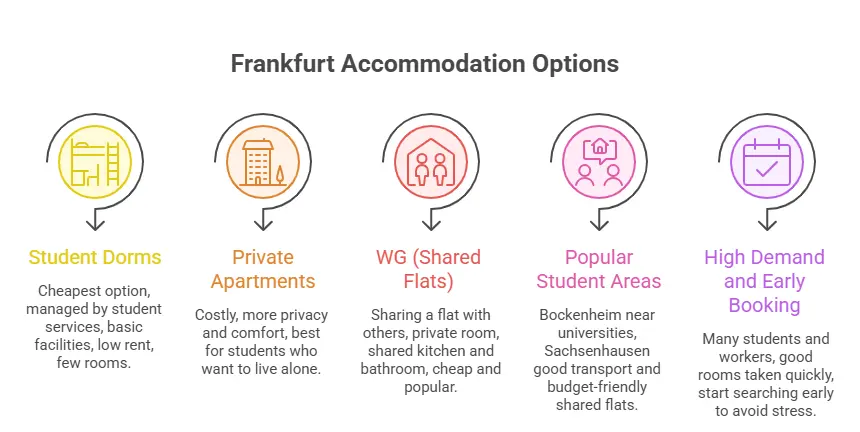
Student Dorms vs Private Apartments
- Student dorms are the cheapest option
- Managed by student services with basic facilities
- Rent is low, but rooms are few and fill fast
- Private apartments are costly
- They give more privacy and comfort
- Best for students who want to live alone
WG (Shared Flats)
- WG means sharing a flat with others
- Each person has a private room
- Kitchen and bathroom are shared
- It is a cheap and popular option
- Helps students make new friends easily
Popular Student Areas
- Bockenheim: near universities and very popular
- Sachsenhausen: good transport and budget-friendly shared flats
- These areas get booked very fast
High Demand and Early Booking
- Frankfurt has many students and workers
- Good and cheap rooms get taken quickly
- Start searching a few months early
- Early booking avoids stress and high rent
Free German A1 Mock Tests – Powered by AI!
Test your skills on our interactive platform. Get instant feedback from our AI to help you communicate better and track your progress. Start your free German mock test now.
Test Your German A1 for FreeFood & Grocery Expenses
Food is an important part of a student’s monthly budget. Your spending depends on your lifestyle and eating habits.
1. Cooking vs Eating Out
- Cooking at home helps save money
- Buy groceries and make simple meals
- It is cheaper and healthier
- Eating out costs more money
- Restaurants and food delivery increase expenses
- Better to cook most meals and eat out sometimes
2. Budget Supermarkets
- Frankfurt has many cheap supermarkets
- Aldi and Lidl are popular budget stores
- They offer good food at low prices
- You can buy fruits, vegetables, and daily items
- Overall, they help students save money
3. Cost of Eating Out
- Small meals cost around €8 to €15
- Mid-range restaurants cost €15 to €25 or more
- Fast food is a bit cheaper
- Still more expensive than home-cooked food
|
German A2 Exercises – Download Free PDF |
||
Transportation Costs
Transportation in Frankfurt is very easy and student-friendly. Students can travel to universities, jobs, and other places without needing a car. It saves time and money.
- Transport in Frankfurt is easy, safe, and student-friendly
- Students can travel to college, jobs, and shops without a car
- It saves time and money in daily life
Public Transport System Overview
- Frankfurt has buses, trams, U-Bahn, and S-Bahn trains
- These run many times a day
- They connect all parts of the city and nearby areas
- Travel is fast, safe, and reliable
- Even late-night travel is possible in some routes
- Tickets are easy to buy from machines or apps
- Very simple for new students to use
Semester Ticket Benefits
- Many universities give a semester ticket with fees
- It allows unlimited travel for 6 months
- No need to buy daily tickets
- Saves a lot of money
- Students can travel anytime freely
- Helps explore the city easily
- Makes daily travel stress-free
Cost Comparison with Other Cities
- Frankfurt transport is a bit costly than small towns
- Similar to big cities like Berlin and Munich
- Semester ticket makes it much cheaper for students
- Overall, transport is still affordable
👉 Transport is easy and useful for students
👉 Semester ticket saves money
👉 Daily travel becomes simple and stress-free
|
Goethe 2026 Exam Dates: Multiple Test Centers |
|
| Trivandrum Goethe Exam Dates | Kochi Goethe Exam Dates |
| Chennai Goethe Exam Dates | Coimbatore Goethe Exam Dates |
Health Insurance (Mandatory)
- Health insurance is compulsory for all students in Germany
- It is needed to study in Frankfurt and other cities
- You cannot get university admission or student visa without it
- It helps you get medical care when you are sick or injured
- It is a fixed part of monthly student expenses
Public vs Private Insurance
- Public insurance is the most common choice for students
- It covers doctor visits, hospital care, medicines, and basic treatment
- It is accepted everywhere in Germany
- It is safe, simple, and recommended for most students
- Private insurance is used by some students
- It may offer different plans and options
- Benefits can change based on the company
- You should read details carefully before choosing it
Average Cost
- Students usually pay around €110 per month
- The price may change slightly depending on the provider
- Public insurance often has a fixed student rate
- It is affordable compared to medical costs
Importance for Visa and Study
- Health insurance is required for student visa approval
- Without it, visa application can be rejected
- It is also needed during university admission and registration
- It proves you are financially and medically safe in Germany
- It protects you during illness, accidents, or emergencies
- It gives peace of mind while living and studying abroad
👉 Health insurance is not optional, it is a must for every student
👉 Public insurance is best for most students
👉 It ensures safety, support, and legal approval in Germany
Free German A1 Mock Tests – Powered by AI!
Test your skills on our interactive platform. Get instant feedback from our AI to help you communicate better and track your progress. Start your free German mock test now.
Test Your German A1 for FreeMiscellaneous Expenses
- Apart from rent, food, and transport, students have extra daily costs
- These are called miscellaneous expenses
- They may look small, but they add up every month
- So, it is important to plan for them
Internet and Mobile Plans
- Students need internet for study, assignments, and communication
- Mobile plans in Germany include calls, messages, and data
- On average, students spend €10 to €30 per month
- If Wi-Fi is not included in housing, extra internet cost may apply
- Good internet is important for online classes and daily use
Entertainment and Gym
- Students also spend money on relaxation and fun
- This includes movies, cafes, events, and outings with friends
- Gym or fitness membership costs around €20 to €50 per month
- These activities help reduce stress and keep students healthy
- Balance between study and fun is important for student life
- It also helps students stay active and social
Study Materials
- Students need money for study-related items
- This includes books, notebooks, pens, and stationery
- Some materials are given by universities, but not everything
- Online learning resources may also cost money
- On average, students spend €20 to €50 per month
- These expenses help in better learning and preparation
- Proper materials make studying easier and more effective
👉 Miscellaneous costs are small but important
👉 Planning these expenses helps avoid money problems
👉 Good budgeting makes student life easier and stress-free

Total Monthly Budget Estimate
Living in Frankfurt can be costly, but students can save money with simple habits. Small smart choices in daily life help reduce expenses without losing comfort.
1. Choose Shared Accommodation
- Stay in a shared flat (WG) or student dorm
- Rent becomes cheaper when shared with others
- Bills like electricity, water, and internet are also shared
- Helps you save a lot of money
- Also helps in meeting new people
2. Use Student Discounts
- Many places give discounts for students
- Includes transport, movies, museums, and shops
- Always carry your student ID
- Check offers before spending money
- Small savings add up over time
3. Cook at Home
- Cooking is cheaper than eating out
- Buy groceries from budget supermarkets
- Prepare simple meals at home
- It is healthy and saves money
- Eat out only sometimes for enjoyment
4. Use Public Transport Pass
- Avoid taxis and private transport
- Use buses, trams, and trains instead
- Semester ticket gives unlimited travel
- Fixed cost helps save money
- Easy and convenient for daily travel
👉 Shared living reduces rent cost
👉 Student discounts help save daily expenses
👉 Home cooking saves the most money
👉 Public transport is cheap and reliable
👉 Small habits make a big difference in budget management
Frankfurt vs Other German Cities
- Living cost in Germany depends on the city
- Frankfurt is more expensive than many student cities
1.Frankfurt vs Berlin
- Berlin is the capital city
- Rent in Berlin is often a bit cheaper than Frankfurt
- Food and daily costs are almost the same
- Shared rooms are easier to find in Berlin
- Overall, Berlin is slightly more affordable
2.Frankfurt vs Munich
- Munich is the most expensive city in Germany
- Rent and daily costs are higher than Frankfurt
- Frankfurt is cheaper than Munich in most cases
- Both cities are costly for students
- Housing is very expensive in Munich
3.Frankfurt vs Leipzig
- Leipzig is one of the cheapest cities in Germany
- Rent and food are much lower than Frankfurt
- Daily living is very budget-friendly
- Good choice for low-budget students
- Frankfurt is much more expensive
🔵Why Frankfurt is Expensive
- Many professionals live in the city
- It is a major business and finance hub
- High job opportunities increase demand
- More demand makes rent expensive
- City has good transport and facilities
- Well-developed infrastructure increases living cost
👉 Frankfurt is costly but offers many opportunities
👉 Other cities like Leipzig are cheaper
👉 Munich is even more expensive than Frankfurt
Learn German from the best mentors in the field! Join the Entri online course!
Is Frankfurt Affordable for Students?
- Frankfurt is a bit expensive for students
- But it is still manageable with good planning
- Rent and daily costs are higher than small cities
- Choosing shared rooms helps save money
- Careful spending makes life easier
How students manage costs
- Live in shared accommodation (WG or dorms)
- Cook food at home instead of eating out
- Use student transport pass to save money
- Avoid unnecessary shopping and expenses
Part-time job support
- Many part-time jobs are available in Frankfurt
- Jobs in shops, restaurants, and offices are common
- Students can earn extra money monthly
- Helps manage rent and daily expenses
Final point
- Frankfurt is expensive but still possible for students
- Smart budgeting is very important
- Part-time work helps reduce financial pressure
- Students can enjoy a good and balanced life with planning
Free German A1 Mock Tests – Powered by AI!
Test your skills on our interactive platform. Get instant feedback from our AI to help you communicate better and track your progress. Start your free German mock test now.
Test Your German A1 for FreeFrequently Asked Questions
How much does it cost to live in Frankfurt as a student?
On average, students need around €900 to €1,500 per month. This includes rent, food, transport, health insurance, and other daily expenses. The exact cost depends on lifestyle and accommodation choice.
Is Frankfurt expensive compared to other German cities?
Yes, Frankfurt is considered one of the more expensive cities in Germany, mainly due to high rent. However, it is still more affordable than Munich and slightly costlier than cities like Leipzig.
What is the cheapest accommodation option for students in Frankfurt?
Student dormitories and shared flats (WG) are the most affordable options. They help reduce rent and utility costs by sharing space with others.
Can students work part-time in Frankfurt?
Yes, international students can work part-time while studying. This helps them earn extra money to cover their living expenses and gain work experience.
How much do students spend on food in Frankfurt?
Students usually spend around €150 to €300 per month on food. Cooking at home is much cheaper than eating out regularly.
Is health insurance compulsory for students in Frankfurt?
Yes, health insurance is mandatory for all students in Germany. It costs around €110 per month and is required for both university admission and visa approval
How can students reduce their living costs in Frankfurt?
Students can save money by choosing shared accommodation, cooking at home, using student discounts, and traveling with a semester ticket for public transport.