Table of Contents
🎯 The Answer
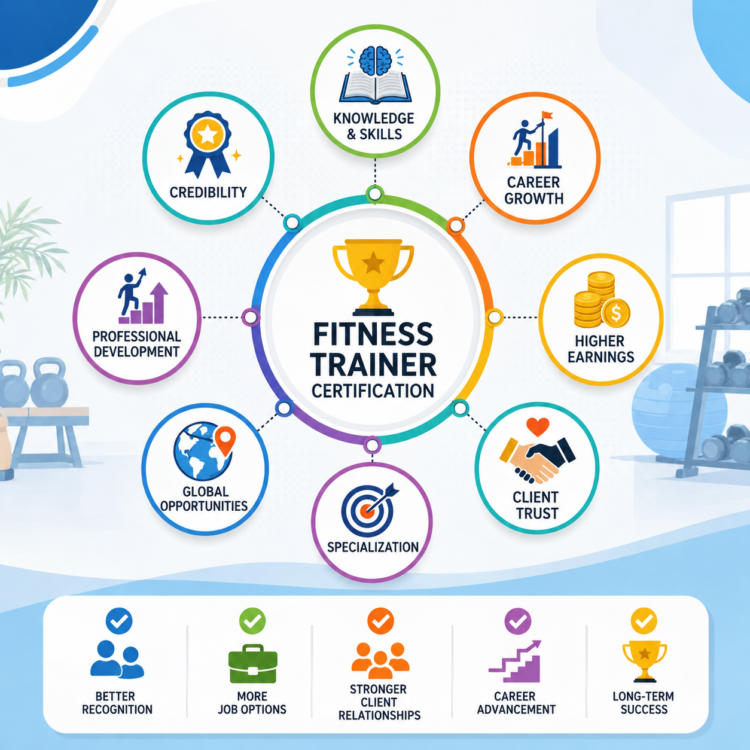
Fitness trainer certification offers many career advantages. It increases industry recognition and job opportunities. It also develops practical coaching skills. Certified trainers often attract more clients. They may also access better career pathways.
Certification does more than provide credentials. It builds a strong professional foundation. It prepares trainers for industry demands. Certification also creates opportunities for future growth. In today’s competitive fitness industry, certification provides a valuable advantage.
Also read: What is a Fitness Trainer? Roles and Responsibilities
Key Takeaways:
- Certification strengthens career prospects.
- Employers value qualified trainers.
- Industry recognition becomes easier.
- Job options increase significantly.
- Income opportunities may expand.
- Trainers develop practical skills.
- Certification enhances credibility.
- Career progression becomes smoother.
- Clients prefer qualified professionals.
- Long-term growth becomes more achievable.
Become a General Fitness Trainer and turn your passion into a Profession!
📝 Introduction
The fitness industry continues expanding rapidly. More people now pursue healthier lifestyles. Gyms and wellness centers continue growing. Demand for qualified trainers also increases. This creates exciting career opportunities. However, competition continues increasing as well.
Many people enjoy fitness and exercise. Some choose fitness as a career. Passion alone may not be enough. Employers often seek qualified professionals. Clients also expect expert guidance. Certification helps meet these expectations. It creates a strong starting point. It also supports long-term success.
Turn Your Passion for Fitness into a Profession
Learn practical skills, get certified, and step into the growing fitness industry with confidence.
Join the Course🏆 Why Does Fitness Trainer Certification Matter?
Certification provides formal training and recognition. It shows dedication to the profession. It also demonstrates industry readiness.
Creates a Strong Career Foundation
Every profession requires preparation.
Certification provides:
- Structured learning pathways.
- Industry-relevant knowledge.
- Practical coaching skills.
- Professional guidance.
A strong foundation supports future growth.
Demonstrates Serious Career Intentions
Certification reflects commitment.
It shows:
- Dedication to learning.
- Interest in professional growth.
- Career-focused thinking.
- Long-term motivation.
These qualities attract employers.
Introduces Industry Best Practices
Fitness professionals guide clients daily.
Certification teaches:
- Exercise safety.
- Coaching methods.
- Program planning.
- Client interaction.
Best practices improve service quality.
Encourages Professional Development
Learning should never stop.
Certification often encourages:
- Continuing education.
- Skill refinement.
- Industry awareness.
- Knowledge expansion.
Successful trainers continue learning.
Provides Career Direction
Many beginners feel uncertain.
Certification offers:
- Clear expectations.
- Defined learning goals.
- Professional standards.
- Career pathways.
Direction reduces confusion.
Develops Workplace Readiness
Workplace success requires preparation.
Certification introduces:
- Client management.
- Communication techniques.
- Professional conduct.
- Coaching responsibilities.
Preparation increases confidence.
Helps Meet Employer Expectations
Many employers prefer certified candidates.
Reasons include:
- Better preparedness.
- Reduced onboarding needs.
- Professional competence.
- Industry understanding.
Certification strengthens applications.
💡 Pro Tip
Certification begins the journey. Experience builds expertise.
🌟 Professional Credibility and Recognition
Credibility matters in every profession. Fitness training is no different. Recognition influences opportunities and trust.
Creates a Professional Image
Appearance matters professionally.
Certification demonstrates:
- Commitment.
- Preparation.
- Knowledge.
- Responsibility.
These qualities improve perception.
Shows Verified Knowledge
Clients seek knowledgeable trainers.
Certification verifies understanding of:
- Exercise principles.
- Human movement.
- Program design.
- Fitness fundamentals.
Verification increases credibility.
Strengthens Professional Reputation
Reputation develops over time.
Certification contributes through:
- Recognized qualifications.
- Industry standards.
- Professional conduct.
- Consistent learning.
A strong reputation attracts opportunities.
Increases Industry Recognition
Recognition creates visibility.
Benefits include:
- Greater awareness.
- Better networking.
- Increased referrals.
- Professional exposure.
Visibility supports career growth.
Enhances First Impressions
People often judge quickly.
Certification creates positive impressions during:
- Interviews.
- Consultations.
- Networking events.
- Client meetings.
Positive impressions create opportunities.
Demonstrates Accountability
Clients trust responsible professionals.
Certification highlights:
- Ethical behavior.
- Professional standards.
- Safe practices.
- Reliable guidance.
Accountability builds trust.
Supports Professional Identity
Identity matters in competitive industries.
Certification helps trainers become:
- Recognized professionals.
- Trusted advisors.
- Industry contributors.
- Career-focused individuals.
Identity influences perception.
Improves Competitive Positioning
Many trainers enter the industry.
Certification helps candidates stand out.
Advantages include:
- Stronger profiles.
- Better differentiation.
- Increased visibility.
- Greater recognition.
Standing out matters greatly.

💼 How Does Certification Create Better Career Opportunities?
Career opportunities often expand after certification. Qualified trainers can explore different paths.
Accesses More Employment Options
Many organizations prefer certified professionals.
Potential workplaces include:
- Commercial gyms.
- Boutique studios.
- Wellness centers.
- Sports clubs.
- Community facilities.
Certification broadens possibilities.
Improves Job Application Strength
Applications compete for attention.
Certification may strengthen:
- Resumes.
- Cover letters.
- Professional profiles.
- Interview opportunities.
Qualifications attract employers.
Supports Career Advancement
Growth opportunities often require credentials.
Potential pathways include:
- Senior trainer positions.
- Team leadership roles.
- Department management.
- Staff mentoring roles.
Advancement often rewards preparation.
Opens Doors to New Sectors
Fitness extends beyond gyms.
Other sectors include:
- Corporate wellness.
- Educational programs.
- Community health initiatives.
- Recreational facilities.
Certification increases flexibility.
Creates Independent Career Options
Many trainers become self-employed.
Potential services include:
- Personal training.
- Online coaching.
- Group sessions.
- Wellness consulting.
Independence creates freedom.
Expands Networking Opportunities
Professional connections matter.
Certification programs introduce:
- Educators.
- Industry experts.
- Fellow trainers.
- Potential employers.
Networking supports growth.
Encourages Entrepreneurial Ventures
Some trainers build businesses.
Certification strengthens business foundations.
Benefits include:
- Better credibility.
- Greater trust.
- Improved marketing.
- Stronger positioning.
Trust influences business success.
Provides Career Stability
Industries change constantly.
Certification offers advantages during changes.
Benefits include:
- Greater adaptability.
- More employment options.
- Better resilience.
- Expanded opportunities.
Flexibility supports stability.
Creates Long-Term Career Pathways
Fitness careers can evolve.
Future roles may include:
- Educator.
- Consultant.
- Manager.
- Business owner.
Career growth becomes more achievable.
Turn Your Passion for Fitness into a Profession
Learn practical skills, get certified, and step into the growing fitness industry with confidence.
Join the Course💰 Can Certification Increase Earning Potential?
Income potential often improves with qualifications. Certification creates several earning opportunities.
Supports Higher Service Value
Clients often value expertise.
Certification may justify:
- Premium services.
- Specialized programs.
- Professional consultations.
- Customized coaching.
Perceived value influences pricing.
Attracts Committed Clients
Some clients seek expertise.
These clients often value:
- Structured guidance.
- Professional knowledge.
- Long-term planning.
- Personalized support.
Committed clients improve business stability.
Creates Multiple Income Sources
Diversification increases earning potential.
Examples include:
- One-on-one coaching.
- Small-group training.
- Online coaching.
- Fitness workshops.
Multiple services create flexibility.
Increases Referral Potential
Referrals often drive growth.
Satisfied clients may recommend:
- Friends.
- Family members.
- Colleagues.
- Community members.
Word-of-mouth remains powerful.
Supports Premium Positioning
Positioning affects earning potential.
Certification strengthens:
- Professional image.
- Market reputation.
- Client confidence.
- Industry recognition.
Strong positioning attracts opportunities.
Encourages Specialized Services
Specialized services often command higher rates.
Examples include:
- Athletic training.
- Functional fitness.
- Performance coaching.
- Lifestyle coaching.
Expertise creates distinction.
Improves Business Opportunities
Business growth often depends on trust.
Certification contributes through:
- Professional credibility.
- Strong branding.
- Industry recognition.
- Client confidence.
These factors influence revenue.
Creates Long-Term Financial Growth
Financial growth develops gradually.
Contributing factors include:
- Experience.
- Reputation.
- Client retention.
- Service expansion.
Certification supports this journey.
💡 Pro Tip
Credentials open doors. Service quality keeps them open.
Become a General Fitness Trainer and turn your passion into a Profession!
📚 How Does Certification Improve Knowledge and Skills?
Knowledge forms the foundation of coaching. Trainers guide people toward goals. Good guidance requires proper understanding. Certification provides structured learning. It also develops practical abilities.
Builds Exercise Science Knowledge
Exercise science explains body responses.
Topics often include:
- Training principles.
- Energy systems.
- Recovery processes.
- Physical adaptations.
This knowledge improves coaching decisions.
Develops Anatomy Understanding
Anatomy explains how the body moves.
Important areas include:
- Muscles.
- Bones.
- Joints.
- Movement patterns.
This knowledge improves exercise selection.
Teaches Program Design
Every client has different goals.
Certification teaches how to create:
- Beginner programs.
- Strength programs.
- Weight loss plans.
- Endurance routines.
Well-designed programs improve client experiences.
Improves Exercise Demonstration Skills
Clients learn through observation.
Good demonstrations help clients:
- Understand movements.
- Learn technique.
- Avoid mistakes.
- Exercise safely.
Instruction quality matters greatly.
Develops Coaching Techniques
Coaching involves more than workouts.
Important coaching skills include:
- Listening carefully.
- Giving feedback.
- Providing motivation.
- Explaining concepts.
These skills improve interactions.
Improves Assessment Abilities
Assessments guide planning.
Trainers learn to evaluate:
- Mobility levels.
- Strength levels.
- Fitness capacity.
- Movement quality.
Assessments create better starting points.
Builds Problem-Solving Skills
Clients face different challenges.
Examples include:
- Busy schedules.
- Low motivation.
- Missed workouts.
- Training plateaus.
Solutions require practical thinking.
Encourages Learning Beyond Certification
Fitness continues evolving.
New information appears regularly.
Successful trainers often pursue:
- Workshops.
- Seminars.
- Courses.
- Certifications.
Continuous learning creates growth.
Creates Better Decision-Making
Knowledge supports good judgment.
Trainers make decisions about:
- Exercise choices.
- Progression methods.
- Training volume.
- Recovery needs.
Better decisions improve outcomes.
💡 Pro Tip
Learning should continue throughout careers.

🤝 Why Does Certification Improve Client Trust and Retention?
Trust influences coaching success. Clients stay longer with trusted trainers. Certification contributes to stronger relationships.
Creates Confidence During Consultations
New clients often feel uncertain.
They may worry about:
- Exercise safety.
- Training effectiveness.
- Goal achievement.
- Trainer knowledge.
Certification reduces uncertainty.
Demonstrates Professional Preparation
Clients notice qualifications quickly.
Certification shows:
- Formal education.
- Structured learning.
- Career commitment.
- Industry readiness.
Preparation creates reassurance.
Makes Communication More Effective
Clear communication builds trust.
Clients appreciate trainers who:
- Explain exercises clearly.
- Answer questions confidently.
- Provide useful feedback.
- Listen carefully.
Communication shapes experiences.
Creates More Professional Interactions
Professional behavior influences retention.
Examples include:
- Punctuality.
- Respectful communication.
- Organized sessions.
- Consistent support.
Professionalism encourages loyalty.
Helps Manage Expectations
Expectations influence satisfaction.
Certified trainers often discuss:
- Realistic timelines.
- Training commitments.
- Progress measurements.
- Long-term goals.
Clear expectations reduce frustration.
Encourages Client Engagement
Engaged clients remain motivated.
Engagement increases through:
- Progress tracking.
- Goal discussions.
- Positive feedback.
- Regular communication.
Participation improves consistency.
Creates Better Training Experiences
Experiences influence retention greatly.
Positive experiences often include:
- Structured sessions.
- Appropriate challenges.
- Clear instruction.
- Personalized attention.
Quality experiences encourage commitment.
Strengthens Long-Term Relationships
Strong relationships require trust.
Trust develops through:
- Reliability.
- Consistency.
- Knowledge.
- Professional conduct.
Relationships often drive retention.
Generates More Referrals
Satisfied clients share recommendations.
Referrals often come from:
- Positive experiences.
- Visible professionalism.
- Consistent service.
- Strong relationships.
Referrals support business growth.
💡 Pro Tip
People stay with trainers they trust.
🎯 What Specialization Opportunities Become Available?
Specialization creates unique career paths. It allows trainers to focus. It also creates differentiation.
Why Specialization Matters
Many trainers enter the industry.
Specialization creates:
- Distinct expertise.
- Stronger positioning.
- Unique services.
- Targeted audiences.
Focused knowledge attracts attention.
Strength and Conditioning
Athletes often seek specialized guidance.
Focus areas include:
- Strength development.
- Power production.
- Speed improvement.
- Performance enhancement.
This field remains highly respected.
Weight Management Coaching
Many clients pursue weight-related goals.
Specialists may focus on:
- Activity planning.
- Lifestyle habits.
- Goal management.
- Long-term consistency.
Demand remains steady.
Functional Fitness Training
Functional training improves movement quality.
Programs often target:
- Balance.
- Coordination.
- Mobility.
- Daily activities.
Many adults value these outcomes.
Senior Fitness
Older adults have unique needs.
Training may focus on:
- Mobility maintenance.
- Balance improvement.
- Independence.
- Healthy aging.
This market continues expanding.
Youth Fitness
Young people benefit from activity.
Programs often emphasize:
- Movement skills.
- Confidence building.
- Coordination.
- Physical literacy.
Parents value qualified instruction.
Group Fitness Instruction
Group settings offer different experiences.
Benefits include:
- Social interaction.
- Shared motivation.
- Community support.
- Dynamic environments.
Many trainers enjoy group coaching.
Corrective Exercise
Movement quality remains important.
Focus areas include:
- Posture awareness.
- Movement efficiency.
- Exercise modifications.
- Functional movement.
Knowledge becomes highly valuable.
Online Coaching
Technology creates new possibilities.
Services may include:
- Virtual coaching.
- Digital programs.
- Remote consultations.
- Online support.
This field grows yearly.
Creates Personal Career Direction
Not every trainer follows identical paths.
Specialization allows careers to match:
- Interests.
- Strengths.
- Experience.
- Goals.
Personal alignment increases satisfaction.
🌍 How Does Certification Support Global Career Prospects?
Fitness has become international. Opportunities exist worldwide. Certification increases professional mobility.
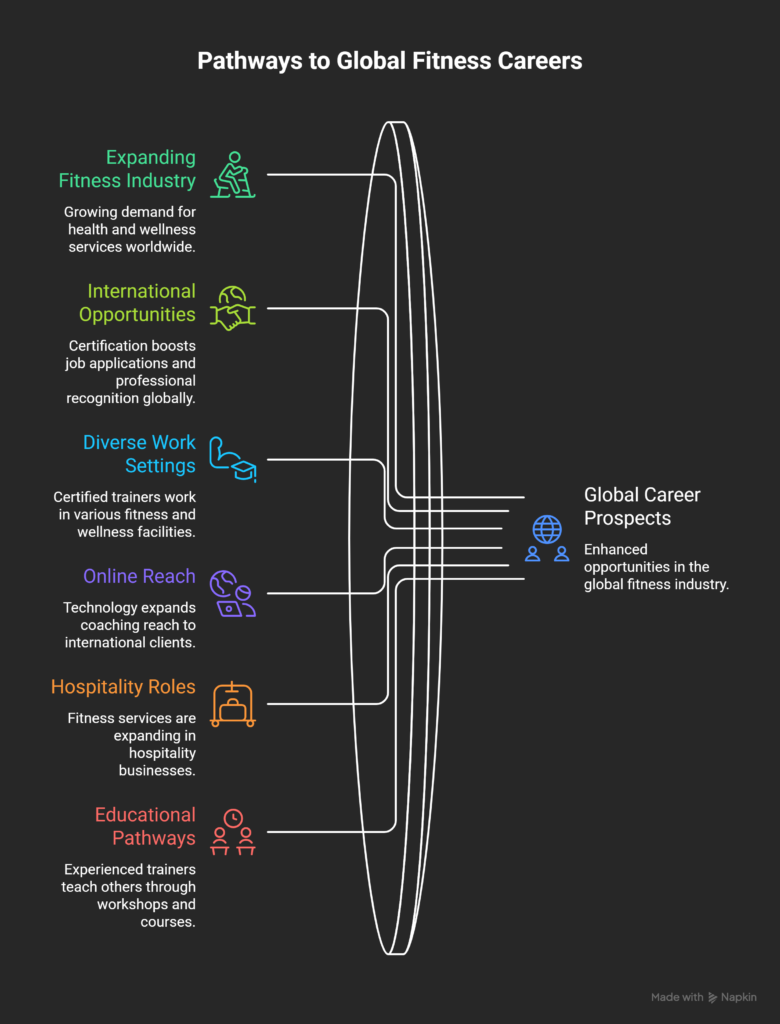
Expanding Global Fitness Industry
Health awareness continues increasing.
Many countries promote:
- Physical activity.
- Wellness programs.
- Preventive health.
- Healthy lifestyles.
Demand continues growing.
Creates International Opportunities
Many employers value qualifications.
Certification may assist with:
- Job applications.
- Professional recognition.
- Industry credibility.
- Career mobility.
Qualifications often influence hiring.
Supports Work in Different Settings
Certified trainers work in:
- Fitness centers.
- Sports clubs.
- Wellness facilities.
- Recreation centers.
Many settings value credentials.
Increases Online Reach
Technology removes geographical limits.
Online coaching allows access to:
- Different cities.
- Different countries.
- Diverse clients.
- Larger audiences.
Reach becomes much broader.
Creates Opportunities in Hospitality
Many hospitality businesses offer fitness services.
Potential workplaces include:
- Resorts.
- Hotels.
- Wellness retreats.
- Cruise ships.
Fitness services continue expanding.
Supports Educational Roles
Experienced trainers often teach others.
Possible opportunities include:
- Workshops.
- Seminars.
- Training courses.
- Mentorship programs.
Education creates additional pathways.
Encourages Global Networking
Connections create opportunities.
Networking may introduce:
- Industry leaders.
- Employers.
- Collaborators.
- Mentors.
Relationships support career development.
Provides Career Flexibility
Flexibility increases career satisfaction.
Possible pathways include:
- Coaching.
- Consulting.
- Education.
- Management.
Many options become available.
Supports Future Industry Trends
The industry continues changing.
Growing areas include:
- Digital fitness.
- Online coaching.
- Wellness services.
- Hybrid training models.
Adaptability becomes valuable.
Creates Long-Term Career Potential
Careers can evolve significantly.
Future opportunities may include:
- Leadership roles.
- Business ownership.
- Education positions.
- Consulting services.
Growth remains possible.
🏆 Conclusion
Fitness trainer certification offers valuable career advantages. It develops practical knowledge and coaching abilities. It also strengthens credibility within the industry. Many employers and clients value certified professionals.
Certification can also improve client relationships. Better communication often creates stronger trust. Trainers may explore specialized career paths. They may also access opportunities across different markets.
The fitness industry continues growing rapidly. Competition also continues increasing. Certification helps trainers stand out. It creates a strong foundation for future success. Combined with experience and continuous learning, certification can support a rewarding and long-lasting career.
Turn Your Passion for Fitness into a Profession
Learn practical skills, get certified, and step into the growing fitness industry with confidence.
Join the CourseFrequently Asked Questions
What is a fitness trainer certification?
A fitness trainer certification is a professional qualification for trainers. It teaches exercise principles, coaching methods, and client management skills. Certification also shows that a trainer has completed structured training.
Why is fitness trainer certification important?
Certification demonstrates knowledge and commitment to the profession. It helps trainers meet industry standards and improves their credibility with employers and clients. Many fitness organizations prefer certified professionals.
Can I become a fitness trainer without certification?
Some trainers start without certification. However, certification often improves job opportunities and professional recognition. Many gyms and fitness centers prefer qualified candidates.
Does certification help trainers earn more money?
Certification may increase earning potential over time. Qualified trainers can often charge higher rates, attract more clients, and offer specialized services. Income still depends on experience, skills, and reputation.
What skills do trainers learn through certification?
Certification programs usually cover anatomy, exercise science, program design, and coaching techniques. Trainers also learn communication, assessment, and client management skills. These skills are useful in daily coaching.
Does certification improve client trust?
Yes, many clients feel more comfortable working with certified trainers. Certification shows professional preparation and industry knowledge. This can help create stronger client relationships.
What career opportunities are available after certification?
Certified trainers can work in gyms, fitness studios, wellness centers, and sports facilities. Some also become online coaches, consultants, or group fitness instructors. Certification opens several career pathways.
Can certified trainers choose a specialization?
Yes, many trainers pursue specialized areas after certification. Popular options include strength training, weight management, sports performance, senior fitness, and corrective exercise. Specialization can help trainers stand out.
Are fitness trainer certifications recognized internationally?
Many certifications are respected across different countries and fitness organizations. Recognition depends on the certifying body and employer requirements. Internationally recognized certifications may create more career opportunities.
Is certification enough for long-term success?
Certification provides a strong starting point, but learning should continue. Successful trainers gain experience, develop coaching skills, and stay updated with industry trends. Continuous growth often leads to better career outcomes.