Table of Contents
Montessori hand washing exercises teach independence through meaningful practical activities. Children learn proper hygiene habits through daily practice. The activity strengthens coordination through purposeful movements. It also improves concentration during step-by-step tasks.
Responsibility develops as children care for themselves. Confidence grows through successful completion of routines. Children learn order, sequencing, and self-discipline naturally. Everyday hand washing becomes a valuable learning experience. Practical skills gained support lifelong independence and self-care.
Key Takeaways
- Teaches proper hygiene habits through daily practice.
- Develops strong independence skills through routine activities.
- Strengthens hand coordination through purposeful movements.
- Improves concentration levels during structured learning tasks.
- Builds responsibility through regular self-care routines.
- Supports practical life learning through real experiences.
- Encourages healthy self-care routines from childhood.
- Develops sequencing skills through step-by-step activities.
- Improves motor control through repeated practice.
- Prepares children for everyday life responsibilities.
Unlock your passion for education and shape young minds as a Montessori teacher!
🌟 Introduction
Hand washing seems simple. However, it teaches many skills. Children learn responsibility gradually. They develop healthy habits early. Daily routines become learning opportunities. Small tasks create meaningful growth.
Montessori education values practical life activities. Children learn through real experiences. Everyday tasks support development. Purposeful work builds confidence. Independence grows through practice. Learning feels useful and meaningful.
Hand washing exercises remain important. Children participate actively. They follow clear steps. They practice coordination daily. Repetition strengthens learning. Confidence develops naturally.
Unlike ordinary instruction, Montessori emphasizes process. Children learn every movement carefully. Each step has purpose. Activities encourage independence. Mistakes become learning opportunities. Growth occurs through experience.
Hand washing exercises require simple materials. They fit classrooms easily. Parents can use them at home. Children enjoy meaningful responsibilities. Learning remains practical. Benefits extend beyond hygiene.
🏡 Practical Life Activities in Montessori Education
1: What is the primary focus of the first plane of development in the Montessori method?
Practical life activities form Montessori foundations. They prepare children for independence. Everyday tasks become learning tools. Children participate actively. Real experiences build confidence. Learning connects with daily life.
Practical life activities appear simple. However, they develop many abilities. Children learn responsibility gradually. They gain self-confidence. Coordination improves through repetition. Independence develops naturally.
Montessori classrooms include many practical tasks. Children work with real materials. Activities reflect everyday routines. Learning feels meaningful. Purpose motivates participation. Engagement remains high.
🎯 What are Practical Life Activities?
Practical life activities teach everyday skills. Children perform useful tasks. Activities have clear purposes. Results remain visible. Success encourages participation. Confidence grows steadily.
These activities prepare children for life. They support independence. They improve concentration. These activities also strengthen motor control. Responsibility develops naturally. Learning remains relevant.
Common Practical Life Activities
- Pouring water.
- Sweeping floors.
- Folding cloths.
- Buttoning frames.
- Plant watering.
- Food preparation.
- Hand washing.
- Table cleaning.
🌱 Why are Practical Life Activities Important?
Children enjoy meaningful work. Real tasks feel valuable. Purpose increases motivation. Participation becomes voluntary. Learning feels natural. Confidence improves steadily.
Practical activities also support development. Movements become controlled. Focus improves gradually. Children complete tasks independently. Responsibility increases naturally. Success builds self-esteem.
Key Benefits
- Encourages independence.
- Builds responsibility.
- Develops concentration.
- Improves coordination.
- Strengthens confidence.
- Supports self-care skills.
🧠 How do Practical Life Activities Prepare Children?
Practical life activities develop readiness. Children follow instructions carefully. They complete tasks independently. They learn sequencing skills. Organization improves steadily. Self-discipline develops naturally.
These abilities support future learning. Classroom tasks become easier. Children manage responsibilities confidently. Daily routines feel familiar. Independence reduces frustration. Learning becomes smoother.
Skills Supported
- Task completion.
- Organization.
- Time awareness.
- Self-control.
- Problem-solving.
- Independence.
📊 Practical Life Activities Overview
| Activity | Main Purpose |
|---|---|
| Pouring | Coordination. |
| Sweeping | Responsibility. |
| Folding | Order and sequence. |
| Plant Care | Nurturing skills. |
| Hand Washing | Hygiene and independence. |
Get Certified & Start Your Montessori Career
Montessori Teacher Training Course by Entri App: Gain expert skills, earn certification, and kickstart your teaching career.
Join Now!🧼 Why Hand Washing is an Important Life Skill
Hand washing protects health. It removes dirt and germs. Good habits begin early. Children benefit greatly. Hygiene supports well-being. Healthy routines last longer.
Many children need guidance initially. Proper techniques require practice. Repetition improves understanding. Habits become automatic gradually. Consistency creates success. Learning begins early.
Hand washing also teaches responsibility. Children care for themselves. They understand personal hygiene. Awareness increases naturally. Independence becomes stronger. Confidence grows steadily.
Beyond hygiene, hand washing develops skills. Children follow sequences carefully. They complete tasks independently. Coordination improves through repetition. Concentration increases naturally. Learning extends beyond cleanliness.
🦠 Why is Hygiene Important for Children?
Young children explore constantly. They touch many surfaces. Germs spread easily. Good hygiene reduces risks. Healthy habits provide protection. Prevention remains important.
Children also interact closely. They share materials frequently. Classrooms encourage collaboration. Hygiene supports healthy environments. Communities benefit collectively. Good habits help everyone.
Hygiene Benefits
- Reduces germ spread.
- Supports good health.
- Encourages cleanliness.
- Builds healthy routines.
- Protects classmates.
- Supports well-being.
🎯 How does Hand Washing Build Responsibility?
Children learn self-care gradually. Hand washing teaches accountability. Actions produce visible results. Children understand consequences. Responsibility develops naturally. Independence increases steadily.
When children wash independently, confidence grows. Success encourages repetition. Habits become consistent. Daily routines feel manageable. Self-esteem improves naturally. Learning feels rewarding.
Responsibility Skills Developed
- Self-care awareness.
- Personal responsibility.
- Task completion.
- Routine building.
- Independence.
- Confidence.
🔄 Why is Sequencing Important?
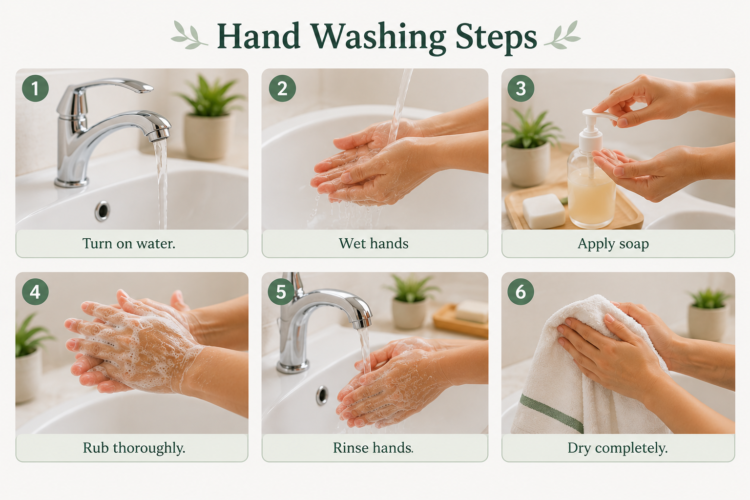
Hand washing follows clear steps. Children learn order naturally. Sequencing improves organization. Predictable routines reduce confusion. Learning becomes structured. Confidence increases gradually.
Following sequences also supports academics. Many learning activities require order. Step-by-step thinking becomes important. Practical experiences strengthen understanding. Transferable skills develop naturally. Future learning benefits greatly.
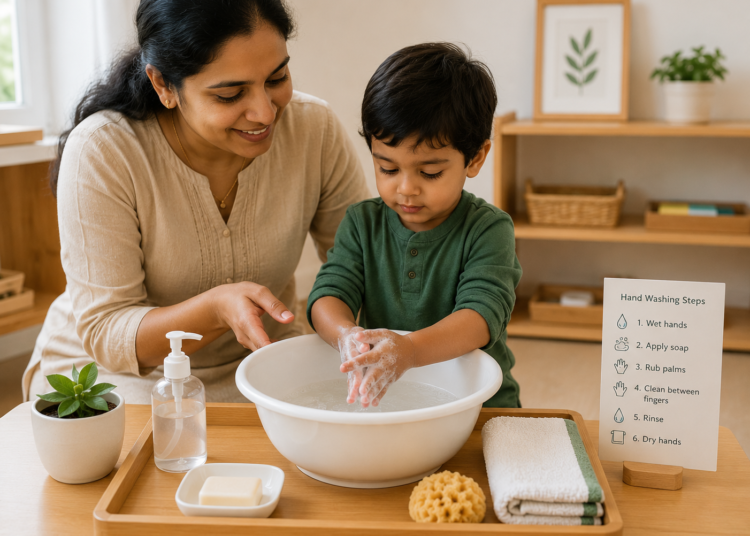
Hand Washing Sequence
- Turn on water.
- Wet hands.
- Apply soap.
- Rub thoroughly.
- Rinse hands.
- Dry completely.
🧠 Montessori Principles Behind Hand Washing Exercises
Montessori hand washing follows specific principles. Every movement has purpose. Children learn through experience. Independence remains the main goal. Activities encourage self-correction. Learning feels meaningful and practical.
The exercise is not rushed. Children complete each step carefully. Accuracy becomes more important. Process matters greatly. Repetition strengthens learning. Confidence develops naturally.
Montessori hand washing also promotes order. Materials remain organized. Steps follow a sequence. Children learn consistency. Predictable routines build security. Learning becomes more effective.
🎯 How does Independence Support Learning?
Independence remains central in Montessori education. Children complete tasks themselves. Adults provide guidance only. Responsibility develops naturally. Confidence grows steadily. Self-reliance becomes stronger.
When children work independently, motivation increases. Success feels rewarding. Learning becomes personal. Mistakes create opportunities. Problem-solving improves gradually. Growth becomes meaningful.
Independence Benefits
- Encourages self-care.
- Builds confidence.
- Supports responsibility.
- Promotes decision-making.
- Strengthens self-reliance.
- Develops initiative.
👐 Why is Learning through Action Important?
Children learn best through experience. Watching alone remains insufficient. Hands-on activities improve understanding. Practical experiences create stronger learning. Knowledge becomes meaningful. Skills develop naturally.
Montessori activities encourage movement. Children engage actively. Learning becomes memorable. Repetition improves mastery. Confidence grows through practice. Independence increases steadily.
Learning through Action Benefits
- Improves understanding.
- Encourages participation.
- Supports memory retention.
- Develops practical skills.
- Strengthens engagement.
- Makes learning meaningful.
🌱 Why does Montessori Emphasize Order?
Order helps children learn. Organized environments reduce confusion. Predictable routines create comfort. Children know expectations clearly. Independence becomes easier. Confidence improves steadily.
Order also supports concentration. Materials remain accessible. Activities follow sequences. Children complete tasks efficiently. Responsibility develops naturally. Learning becomes smoother.
Order Benefits
- Reduces distractions.
- Encourages organization.
- Improves concentration.
- Supports routine building.
- Builds confidence.
- Strengthens independence.
🧺 Materials Required
Montessori hand washing exercises require simple materials. Most items are inexpensive. Preparation remains easy. Materials should remain child-friendly. Accessibility supports independence. Organization remains important.
The setup should look inviting. Children should reach materials easily. Everything should have purpose. Simplicity supports learning. Clutter should remain minimal. Order improves success.
🚿 Essential Materials
Children need basic washing supplies. Real materials increase engagement. Practical experiences feel meaningful. Child-sized tools work best. Accessibility supports independence. Learning remains effective.
Hand Washing Materials
- Small basin.
- Water pitcher.
- Liquid soap.
- Soap dish.
- Hand towel.
- Small sponge.
- Drying cloth.
- Waste container.
🪑 Preparing the Activity Area
The activity area should remain organized. Children should move comfortably. Materials should stay visible. Accessibility supports independence. Safety remains important. Simplicity improves focus.
Setup Tips
- Use child-sized furniture.
- Arrange materials neatly.
- Keep supplies reachable.
- Maintain cleanliness.
- Provide adequate space.
- Ensure safety.
📊 Materials Checklist
| Item | Purpose |
|---|---|
| Basin | Water collection. |
| Pitcher | Pouring water. |
| Soap | Cleaning hands. |
| Towel | Drying hands. |
| Sponge | Cleaning workspace. |
| Waste Container | Disposal. |
Get Certified & Start Your Montessori Career
Montessori Teacher Training Course by Entri App: Gain expert skills, earn certification, and kickstart your teaching career.
Join Now!🌈 Benefits for Child Development
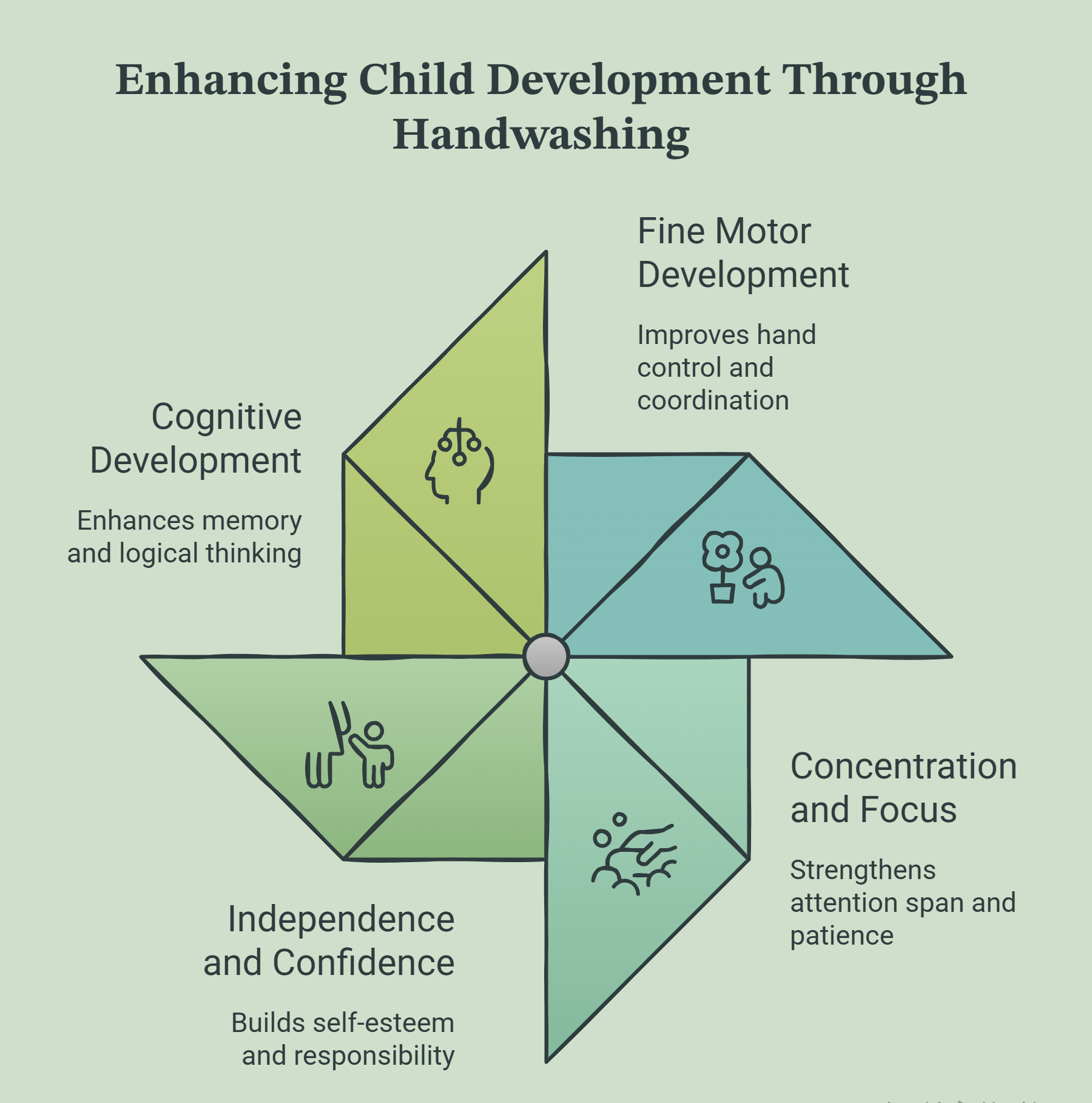
Montessori hand washing develops many abilities. Learning extends beyond hygiene. Children gain practical skills. Independence improves naturally. Confidence grows steadily. Development occurs holistically.
The exercise combines movement and thinking. Several abilities develop together. Progress becomes noticeable. Learning remains meaningful. Children enjoy participation. Benefits continue long-term.
✋ Fine Motor Development
Hand washing requires controlled movements. Children pour carefully. They squeeze soap gently. They rub hands thoroughly. Coordination improves steadily. Precision develops naturally.
Small movements strengthen muscles. Finger control becomes better. Hand-eye coordination improves. Daily tasks become easier. Writing readiness increases. Confidence grows gradually.
Fine Motor Benefits
- Improves hand control.
- Strengthens finger muscles.
- Supports writing readiness.
- Develops coordination.
- Improves precision.
- Encourages control.
🎯 Concentration and Focus
Hand washing requires attention. Children follow several steps. Focus becomes important. Repetition strengthens concentration. Attention spans improve gradually. Learning becomes more effective.
Children also learn patience. Activities cannot be rushed. Careful work produces results. Persistence develops naturally. Focus improves consistently. Confidence grows steadily.
Focus Benefits
- Improves concentration.
- Encourages patience.
- Develops persistence.
- Strengthens attention.
- Supports self-control.
- Builds discipline.
🤝 Independence and Confidence
Children enjoy completing tasks independently. Success feels rewarding. Responsibility increases naturally. Confidence grows through practice. Learning becomes self-directed. Motivation remains high.
Independent achievements create pride. Children trust their abilities. Self-esteem improves steadily. Daily routines become easier. Growth becomes visible. Learning feels meaningful.
Independence Benefits
- Builds self-confidence.
- Encourages responsibility.
- Promotes self-care.
- Supports decision-making.
- Strengthens independence.
- Improves self-esteem.
🧠 Cognitive Development
Hand washing involves sequencing. Children remember steps carefully. Organization improves naturally. Logical thinking becomes stronger. Memory develops steadily. Understanding becomes deeper.
Children also learn cause and effect. Actions create outcomes. Observation improves naturally. Thinking becomes more organized. Learning extends beyond hygiene. Academic readiness improves.
Cognitive Benefits
- Improves memory.
- Supports sequencing.
- Encourages logical thinking.
- Strengthens observation.
- Develops problem-solving.
- Builds organization skills.
📊 Child Development Benefits
| Development Area | Benefit |
|---|---|
| Fine Motor Skills | Better coordination. |
| Concentration | Improved focus. |
| Independence | Greater confidence. |
| Cognitive Skills | Stronger thinking. |
| Responsibility | Better self-care. |
Unlock your passion for education and shape young minds as a Montessori teacher!
👨🏫 Tips for Montessori Educators and Parents
Adults play supportive roles. Guidance should remain gentle. Children need opportunities. Independence should remain encouraged. Patience supports success. Learning happens gradually.
The goal is not perfection. The goal is growth. Children improve through practice. Mistakes remain valuable. Confidence develops over time. Encouragement remains important.
🌟 Create a Calm Environment
Children learn better calmly. Quiet spaces improve focus. Organized materials reduce distractions. Predictable routines create comfort. Learning feels enjoyable. Participation increases naturally.
Environment Tips
- Keep spaces organized.
- Reduce distractions.
- Use child-sized materials.
- Maintain cleanliness.
- Encourage independence.
🗣️ Give Simple Instructions
Young children need clarity. Short instructions work best. Demonstrations improve understanding. Confusion decreases significantly. Confidence increases naturally. Learning becomes smoother.
Instruction Tips
- Speak clearly.
- Demonstrate slowly.
- Use simple words.
- Encourage observation.
- Repeat when needed.
🎉 Encourage Effort
Every attempt deserves recognition. Progress matters most. Success develops gradually. Confidence grows through encouragement. Children feel motivated. Learning remains enjoyable.
Encouragement Ideas
- Praise effort.
- Celebrate progress.
- Encourage independence.
- Support persistence.
- Recognize improvements.
🎯 Conclusion
Montessori hand washing exercises teach much more than hygiene. Children develop independence through meaningful work. Practical experiences build confidence naturally. Coordination improves through repeated practice. Responsibility grows steadily over time. Learning remains useful and engaging.
The activity requires simple materials and clear routines. Homes and classrooms can implement it easily. Children gain lifelong self-care habits. Practical life skills support overall development. Consistent practice creates lasting benefits. Small daily actions produce meaningful growth.
Get Certified & Start Your Montessori Career
Montessori Teacher Training Course by Entri App: Gain expert skills, earn certification, and kickstart your teaching career.
Join Now!Frequently Asked Questions
What is a Montessori hand washing exercise?
A Montessori hand washing exercise is a practical life activity that teaches children how to wash their hands independently and correctly. The activity combines hygiene education with hands-on learning, helping children develop concentration, coordination, responsibility, and self-confidence through meaningful daily routines.
Why is hand washing included in Montessori education?
Hand washing is included because Montessori education values real-life experiences that help children become independent. Through this activity, children learn proper hygiene habits while also developing focus, sequencing skills, self-discipline, coordination, and a sense of responsibility for their own well-being.
At what age can children begin Montessori hand washing activities?
Most children can begin simple Montessori hand washing activities between two and three years of age. The setup and instructions can be adjusted according to the child’s developmental stage, allowing them to participate comfortably and build confidence at their own pace.
What skills do children develop through Montessori hand washing exercises?
Children develop a wide range of practical and developmental skills through this activity. These include fine motor coordination, concentration, sequencing, independence, self-care habits, responsibility, organization, problem-solving, and confidence in completing everyday tasks successfully.
How does hand washing support fine motor development?
Hand washing involves many small and controlled movements that strengthen hand and finger muscles. Tasks such as pouring water, pressing soap dispensers, rubbing hands together, rinsing carefully, and drying hands help improve coordination, precision, and hand-eye control.
What materials are needed for Montessori hand washing activities?
A typical Montessori hand washing setup includes a basin, water pitcher, soap, towel, sponge, waste container, and a small workspace. Child-sized materials are often preferred because they make the activity more accessible and encourage independent participation.
How does Montessori hand washing encourage independence?
Children are guided to complete each step of the hand washing process on their own. With regular practice, they learn to manage personal hygiene tasks independently, make decisions confidently, and take responsibility for their daily routines without constant adult assistance.
Can Montessori hand washing exercises be practiced at home?
Yes, Montessori hand washing activities can be easily practiced at home using simple household materials. Parents can create a dedicated hand washing station that allows children to practice self-care skills regularly while building confidence and responsibility.
How does hand washing improve concentration in children?
The activity follows a clear sequence of steps that requires children to pay attention and remain focused. Repeating the process regularly helps strengthen attention span, improves task completion skills, and teaches children to work carefully and methodically.
What makes Montessori hand washing different from regular hand washing?
Montessori hand washing focuses on the entire learning experience rather than simply cleaning hands. Children perform each step deliberately and independently, developing practical life skills, coordination, self-discipline, concentration, and responsibility while learning healthy hygiene habits that can last a lifetime.