Table of Contents
✅ Quick Answer
A certified fitness trainer helps people achieve fitness goals safely and effectively. Certification validates professional knowledge and skills. Most trainers complete a certification program, gain practical experience, and start working in gyms, fitness centers, or independently. Strong communication and fitness knowledge are essential for success.
Key Takeaways:
- Fitness trainers guide exercise programs professionally.
- Certification improves career opportunities significantly.
- Practical experience remains extremely important.
- Communication skills support client success.
- Multiple certification options are available.
- Fitness industry demand continues growing.
- Trainers can work independently or professionally.
- Specializations increase career opportunities.
- Continuous learning remains important.
- Fitness careers offer long-term growth.
Become a General Fitness Trainer and turn your passion into a Profession!
🌟 Introduction
The fitness industry continues growing rapidly. More people prioritize health today. Fitness awareness increases yearly. Professional guidance remains important. Qualified trainers help clients succeed. Demand continues expanding steadily.
Many individuals enjoy fitness activities. Some want professional careers. Becoming a certified fitness trainer provides opportunities. The profession combines passion and purpose. Trainers positively impact lives. Careers become rewarding and meaningful.
Certification establishes professional credibility. Clients trust certified trainers more. Employers prefer certified professionals. Industry standards remain important. Professional qualifications increase opportunities. Career growth becomes easier.
Fitness training involves more than exercise. Trainers educate clients effectively. They create personalized programs. They monitor progress regularly. Trainers encourage healthy habits. Success requires multiple skills.

Why Fitness Training Is Popular
- Growing health awareness worldwide.
- Increasing gym memberships annually.
- Rising demand for fitness guidance.
- Flexible career opportunities available.
- Opportunities for self-employment.
- Ability to help others.
Benefits of Certification
- Improves professional credibility.
- Increases employment opportunities.
- Enhances industry recognition.
- Strengthens client confidence.
- Expands career possibilities.
- Supports long-term growth.
Turn Your Passion for Fitness into a Profession
Learn practical skills, get certified, and step into the growing fitness industry with confidence.
Join the Course🏋️ Who Is a Certified Fitness Trainer?
A certified fitness trainer guides individuals safely. They design exercise programs. They assess fitness levels. A certified trainer monitor client progress. They encourage healthy lifestyles. They support fitness goals.
Fitness trainers work with diverse clients. Some clients seek weight loss. Others want muscle growth. Some improve athletic performance. Others pursue general health. Goals vary significantly.
Certified trainers understand exercise science. They know proper techniques. They reduce injury risks. These trainers provide safe instruction. Knowledge supports effective training. Results improve consistently.
Professional trainers motivate clients regularly. Consistency remains challenging. Encouragement supports progress. Accountability improves results. Trainers help maintain focus. Success becomes more achievable.

Main Responsibilities
- Conduct fitness assessments.
- Create workout programs.
- Demonstrate exercise techniques.
- Monitor client progress.
- Provide fitness education.
- Encourage healthy habits.
Work Environments
- Commercial gyms.
- Fitness centers.
- Sports facilities.
- Wellness centers.
- Corporate fitness programs.
- Independent training businesses.
💪 Skills Required to Become a Fitness Trainer
Successful fitness trainers need various skills. Technical knowledge remains essential. Communication skills matter greatly. Professionalism supports career success. Confidence improves client trust. Learning never stops.
Strong communication supports coaching. Trainers explain exercises clearly. Clients understand instructions better. Motivation improves consistency. Relationships become stronger. Results improve naturally.
Leadership skills also matter. Trainers guide clients daily. Positive attitudes encourage participation. Confidence builds trust. Professional behavior improves reputation. Success follows consistency.
Problem-solving supports client progress. Every client differs. Fitness plans require adjustments. Challenges appear regularly. Adaptability remains important. Results improve through flexibility.
Essential Technical Skills
- Exercise technique knowledge.
- Program design abilities.
- Anatomy understanding.
- Nutrition basics knowledge.
- Injury prevention awareness.
- Fitness assessment skills.
Important Soft Skills
- Communication abilities.
- Leadership qualities.
- Patience and understanding.
- Motivational skills.
- Time management abilities.
- Professional behavior.
🎓 Educational Requirements
Formal education requirements vary. Many trainers complete certifications directly. Others pursue related degrees. Education strengthens knowledge significantly. Learning supports career development. Professional opportunities increase.
Most fitness certifications require basic education. High school completion usually suffices. Some advanced roles prefer degrees. Requirements depend on employers. Opportunities remain diverse. Career paths vary.
Degrees provide deeper understanding. Exercise science remains popular. Sports science offers valuable knowledge. Physical education supports careers. Learning becomes comprehensive. Opportunities expand further.
However, certification remains essential. Employers value recognized credentials. Practical knowledge matters greatly. Education complements certification. Together they create strong foundations. Career success becomes more achievable.
Common Educational Backgrounds
- High school education.
- Exercise science degrees.
- Sports science programs.
- Physical education studies.
- Health science programs.
- Fitness training courses.
Benefits of Education
- Improves technical knowledge.
- Strengthens professional credibility.
- Expands career opportunities.
- Supports advanced specialization.
- Enhances client trust.
- Improves long-term growth.
Turn Your Passion for Fitness into a Profession
Learn practical skills, get certified, and step into the growing fitness industry with confidence.
Join the Course🏆 Choosing the Right Fitness Certification
Choosing certification requires careful consideration. Many options exist today. Quality varies significantly. Industry recognition remains important. Research supports better decisions. Career outcomes improve.
A recognized certification increases credibility. Employers trust established organizations. Clients prefer qualified trainers. Professional standards remain important. Opportunities become greater. Career growth improves.
Certification programs cover various topics. Exercise science receives emphasis. Program design becomes important. Safety remains essential. Client assessment receives attention. Knowledge becomes comprehensive.
Some certifications offer specializations. Trainers focus on specific areas. Opportunities become broader. Career paths expand. Professional value increases. Expertise develops further.
Factors To Consider
- Industry recognition.
- Course curriculum quality.
- Certification validity.
- Exam requirements.
- Continuing education requirements.
- Career support services.
Popular Specialization Areas
- Personal training.
- Strength training.
- Sports performance.
- Weight management.
- Senior fitness.
- Group fitness instruction.
📊 Fitness Trainer Certification Checklist
| Factor | Importance |
|---|---|
| Industry Recognition | High. |
| Practical Learning | High. |
| Certification Validity | Important. |
| Exam Structure | Important. |
| Continuing Education | Valuable. |
| Career Support | Helpful. |
Become a General Fitness Trainer and turn your passion into a Profession!
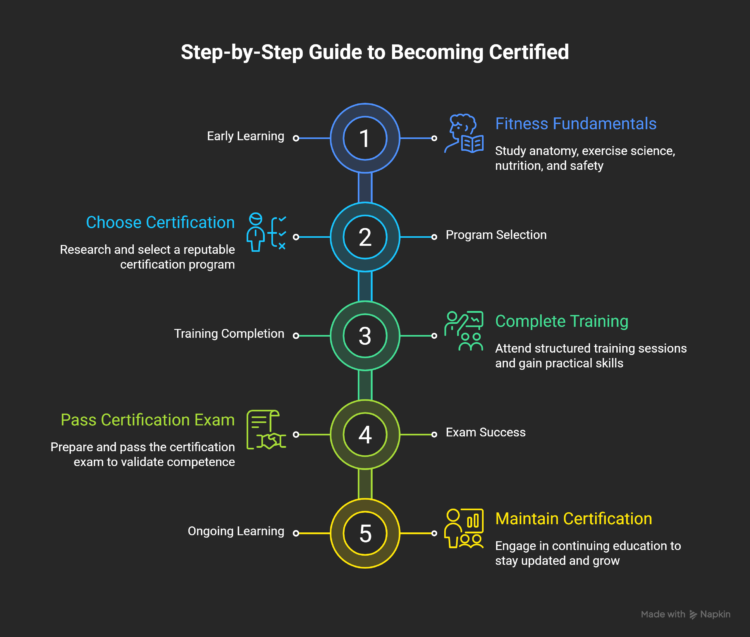
📝 Step-by-Step Guide to Becoming Certified
Becoming certified requires several important steps. Each step builds professional knowledge. Learning happens gradually. Practical skills improve steadily. Confidence develops through experience. Career readiness increases naturally.
Most successful trainers follow structured pathways. They learn fundamentals first. Certification comes next. Practical experience follows. Professional growth continues afterward. Success develops over time.
1️⃣ Learn Fitness Fundamentals
Strong foundations support professional success. Fitness trainers need technical knowledge. Exercise science remains important. Understanding anatomy improves coaching. Safety knowledge reduces risks. Confidence grows through learning.
Learning should begin early. Trainers study movement patterns. They understand muscle functions. They learn proper exercise techniques. Nutrition basics become important. Knowledge improves effectiveness.
Areas To Study
- Human anatomy.
- Exercise science.
- Basic nutrition.
- Injury prevention.
- Program design.
- Client assessment.
Why Fundamentals Matter
- Improve coaching quality.
- Build professional confidence.
- Support safe training.
- Strengthen client results.
- Improve communication.
- Create strong foundations.
2️⃣ Choose A Certification Program
Choosing certification requires careful research. Not all programs differ equally. Recognition remains important. Employers value respected certifications. Clients trust qualified professionals. Opportunities improve significantly.
A good certification covers essential topics. Practical applications should remain included. Industry recognition matters greatly. Continuing education opportunities help. Career support remains valuable. Long-term growth improves.
Selection Tips
- Verify industry recognition.
- Review course curriculum.
- Compare certification costs.
- Check exam requirements.
- Explore specialization options.
- Assess career support.
Benefits Of Quality Certifications
- Improves employability.
- Enhances professional reputation.
- Increases industry recognition.
- Builds client confidence.
- Supports career advancement.
- Expands opportunities.
3️⃣ Complete Certification Training
Certification training develops professional skills. Learning becomes more structured. Trainers gain practical knowledge. Concepts become easier. Confidence improves gradually. Career preparation becomes stronger.
Training programs cover various topics. Exercise techniques receive attention. Client assessment becomes important. Program design develops expertise. Safety principles remain essential. Professional standards improve.
Practical assignments strengthen understanding. Real-world examples improve learning. Trainers solve problems actively. Knowledge becomes meaningful. Learning remains engaging. Retention improves naturally.
Training Topics
- Exercise techniques.
- Program planning.
- Client safety.
- Fitness assessments.
- Coaching methods.
- Professional ethics.
Benefits Of Training
- Improves technical knowledge.
- Strengthens coaching abilities.
- Supports exam preparation.
- Enhances professionalism.
- Builds confidence.
- Improves effectiveness.
4️⃣ Pass The Certification Exam
Certification exams validate competence. They assess professional knowledge. Preparation remains essential. Consistent study improves performance. Confidence supports success. Certification follows completion.
Most exams cover several subjects. Anatomy remains important. Exercise science receives focus. Program design appears frequently. Safety principles remain essential. Preparation improves outcomes.
Effective study habits matter greatly. Consistency improves retention. Practice questions help. Revision strengthens understanding. Organized preparation reduces stress. Success becomes more likely.
Exam Preparation Tips
- Create study schedules.
- Practice sample questions.
- Focus on weak areas.
- Review materials regularly.
- Revise consistently.
- Stay organized.
Benefits Of Certification
- Demonstrates professional competence.
- Improves industry credibility.
- Expands career opportunities.
- Enhances client trust.
- Supports professional growth.
- Builds confidence.
5️⃣ Maintain Certification
Certification does not end learning. The fitness industry evolves continuously. Trainers must stay updated. New research emerges regularly. Professional growth requires effort. Learning never stops.
Continuing education strengthens expertise. Workshops provide new insights. Advanced courses improve skills. Specializations create opportunities. Knowledge remains current. Professional value increases.
Continuing Education Activities
- Attend workshops.
- Join seminars.
- Complete advanced courses.
- Earn specializations.
- Read industry resources.
- Network professionally.
Benefits
- Maintains certification validity.
- Improves professional knowledge.
- Expands opportunities.
- Enhances credibility.
- Supports career growth.
- Increases client confidence.
🤝 Practical Training and Internship
Practical experience remains extremely valuable. Knowledge alone proves insufficient. Trainers need real-world exposure. Experience develops confidence. Learning becomes practical. Professional readiness improves.
Internships provide excellent opportunities. Future trainers observe professionals. Coaching techniques become clearer. Communication improves naturally. Understanding deepens steadily. Confidence increases gradually.
Practical environments teach adaptability. Every client differs. Trainers solve unique challenges. Experience strengthens decision-making. Problem-solving improves naturally. Skills become refined.
Practical Activities
- Conduct fitness assessments.
- Observe training sessions.
- Assist experienced trainers.
- Design workout plans.
- Monitor client progress.
- Practice communication skills.
Internship Benefits
- Improves practical understanding.
- Strengthens coaching abilities.
- Builds professional confidence.
- Enhances communication skills.
- Creates networking opportunities.
- Improves employability.
💼 Career Opportunities After Certification
Certified trainers enjoy many career options. The fitness industry remains diverse. Opportunities continue expanding. Demand remains strong. Career flexibility attracts professionals. Growth potential remains promising.
Many trainers begin in gyms. Others work independently. Some specialize later. Career paths vary widely. Goals differ greatly. Opportunities continue increasing.
Specialization improves professional value. Trainers develop expertise. Clients seek specialists often. Earnings may increase. Opportunities become broader. Career progression accelerates.
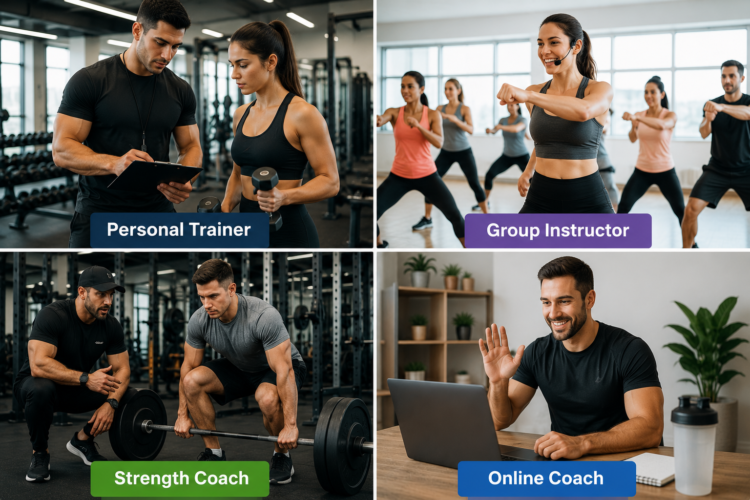
Common Career Paths
- Personal trainer.
- Group fitness instructor.
- Strength coach.
- Wellness coach.
- Sports trainer.
- Online fitness coach.
Additional Opportunities
- Corporate wellness programs.
- Health clubs.
- Sports academies.
- Fitness consultancy.
- Rehabilitation centers.
- Fitness entrepreneurship.
Career Benefits
- Flexible work schedules.
- Growing industry demand.
- Opportunities for specialization.
- Potential self-employment.
- Meaningful client impact.
- Long-term growth prospects.
💰 Salary and Growth Prospects
Fitness trainer salaries vary considerably. Experience influences earnings. Location affects compensation. Specializations improve opportunities. Client demand matters greatly. Career growth supports income.
Beginners usually earn modest salaries. Experience improves opportunities. Reputation increases value. Skills enhance earning potential. Growth occurs steadily. Success rewards dedication.
Independent trainers often earn higher incomes. Strong branding attracts clients. Specializations increase demand. Professional reputation matters. Quality service supports growth. Earnings improve gradually.
Factors Affecting Salary
- Experience level.
- Geographic location.
- Certifications earned.
- Specialized expertise.
- Client volume.
- Employment type.
Ways To Increase Earnings
- Earn advanced certifications.
- Develop specializations.
- Build personal branding.
- Expand professional networks.
- Offer online coaching.
- Continue professional learning.
Growth Advantages
- Higher earning potential.
- Better opportunities.
- Stronger professional reputation.
- Expanded client base.
- Greater industry recognition.
- Long-term stability.
🎯 Conclusion
Becoming a certified fitness trainer offers a rewarding career path. Certification validates professional knowledge and improves credibility. Practical experience strengthens coaching abilities and confidence. Trainers help clients achieve meaningful fitness goals. Continuous learning supports long-term growth and success. Opportunities continue expanding across the fitness industry.
Successful trainers combine knowledge, communication, and practical experience. They remain committed to professional development and client success. Certifications open doors to diverse career opportunities. Specializations further improve earning potential and expertise. The fitness industry continues growing steadily. Certification remains the first step toward a successful career.
Turn Your Passion for Fitness into a Profession
Learn practical skills, get certified, and step into the growing fitness industry with confidence.
Join the CourseFrequently Asked Questions
What does a certified fitness trainer do?
A certified fitness trainer helps clients achieve their health and fitness goals through structured exercise programs. They assess fitness levels, teach proper exercise techniques, monitor progress, provide motivation, and ensure workouts are performed safely and effectively.
Why is certification important for fitness trainers?
Certification demonstrates professional knowledge and competency in fitness training principles. It increases credibility with employers and clients, improves career opportunities, and shows commitment to maintaining industry standards and best practices.
What qualifications are required to become a fitness trainer?
Most fitness certification programs require a high school education or equivalent qualification. Some employers may prefer candidates with backgrounds in exercise science, sports science, physical education, or health-related fields.
How long does it take to become a certified fitness trainer?
The time required depends on the certification program and study schedule. Many individuals complete their certification within a few months, while others may take longer if they combine certification studies with work or education.
What skills are essential for a successful fitness trainer?
Successful trainers need strong communication skills, exercise knowledge, leadership abilities, patience, motivation techniques, and problem-solving skills. They should also understand anatomy, program design, client assessment, and injury prevention principles.
Can I become a fitness trainer without a degree?
Yes, many fitness trainers begin their careers without a college degree. A recognized fitness certification is often sufficient for entry-level positions, although additional education may provide broader career opportunities and specialized roles.
What career opportunities are available after certification?
Certified fitness trainers can work as personal trainers, group fitness instructors, strength coaches, wellness coaches, sports trainers, or online fitness coaches. They may also work in gyms, fitness centers, sports facilities, wellness programs, or start independent businesses.
How important is practical training and internship experience?
Practical experience is extremely valuable because it helps trainers apply theoretical knowledge in real situations. Internships improve coaching skills, client communication, confidence, problem-solving abilities, and overall professional readiness.
How can fitness trainers increase their earning potential?
Trainers can increase earnings by gaining experience, earning advanced certifications, specializing in specific fitness areas, building a strong professional reputation, expanding their client base, and offering online or premium coaching services.
Is fitness training a good long-term career choice?
Fitness training offers strong long-term potential due to growing health awareness and increasing demand for qualified professionals. Trainers can continue advancing through specializations, leadership positions, entrepreneurship, and continuing education opportunities throughout their careers.