Table of Contents
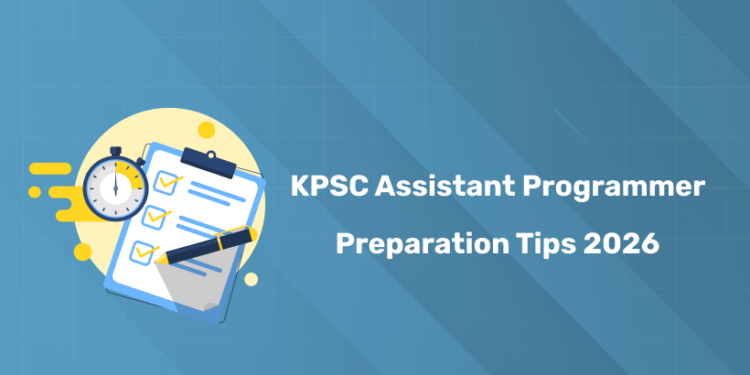
The Kerala PSC Assistant Programmer exam 2026 has been announced, and the latest syllabus is now available. Based on this syllabus, we’ve compiled effective preparation tips and tricks to help you study smartly in a short time. Follow these strategies to tackle tricky questions and maximize your score. For easy preparation tips and recommended study materials, scroll down.
Kerala PSC Assistant Programmer Exam 2026 Highlights
| Recruitment Highlights | Details |
|---|---|
| Exam Body | Kerala PSC |
| Post Name | Assistant Programmer |
| Category No. | 442/2025 |
| Organization | Kerala State Planning Board |
| Application Start Date | 28 November 2025 |
| Application Last Date | 31 December 2025 |
| Application Method | Online through One Time Registration (OTR) |
| Official Website | www.keralapsc.gov.in |
Kerala PSC Assistant Programmer Preparation Tips 2026
1: Between the period of 1858-1947, how many Viceroys ruled over India?
If you waIf you want to crack the exam in a short time, you need to study smartly with a strategic plan. Here, we share effective tips and tricks to help you score high in a short period for the Kerala PSC Assistant Programmer exam 2026. Explore these proven preparation strategies to maximize your results efficiently.
Common Preparation Tips Before You Start
Understand the Exam & Syllabus
- Download the official Kerala PSC Assistant Programmer syllabus PDF.
- Go through the exam pattern, marks distribution, and high-weightage topics.
Collect Study Materials
- Standard textbooks for each subject (C, C++, Java, DBMS, OS, Networks).
- Online tutorials, PDFs, and video lectures for reference.
- Previous years’ question papers (PYQs) and model question sets.
Make Notes
- Create concise notes for formulas, definitions, key commands, and shortcuts.
- Use highlighting and color-coding for easy revision.
Practice PYQs & Mock Tests
- Solve previous years’ question papers to understand trends.
- Take timed mock tests for speed and accuracy.
- Analyze mistakes and make a “weak topic list” for extra practice.
Supplemental Knowledge
- Read about general computer science concepts beyond the syllabus.
- Follow current affairs in IT, programming, networking, and tech policies.
Organize Your Study Space
- Keep a clean desk, well-lit environment.
- Keep all materials (books, notes, pens) within reach.
2. Preparation Tips by Daily Routine
| Time of Day | Strategy / Focus |
|---|---|
| Morning (6 AM – 9 AM) | – Focus on conceptually heavy topics like Data Structures, OS, Digital Electronics. – Revise previous day’s topics. – Avoid distractions; this is your peak energy period. |
| Late Morning / Noon (10 AM – 1 PM) | – Practice programming questions in C/C++/Java. – Solve PYQs related to the morning topic. |
| Afternoon (2 PM – 5 PM) | – Cover lighter or theory-based topics like DBMS, Software Engineering. – Take a short break between sessions to stay fresh. |
| Evening (6 PM – 8 PM) | – Revise key formulas, commands, algorithms. – Solve mock tests or practice questions under time constraints. |
| Night (9 PM – 11 PM) | – General reading: current affairs, IT news, updates in tech. – Quick review of the day’s topics; make short notes for tomorrow. |
3. Additional Preparation Strategies
Time Management & Study Blocks
- Use Pomodoro technique: 50 minutes study + 10 minutes break.
- Prioritize high-weightage topics first, weaker topics later.
Topic Rotation
- Rotate subjects daily to avoid monotony.
- Example: Morning – Programming, Afternoon – DBMS, Evening – Networks.
Revision Strategy
- Weekly revision: Every Sunday, revise all topics studied during the week.
- Maintain a revision log to track what needs more focus.
Group Study / Doubt Clearing
- Occasionally discuss complex topics with peers or online forums.
- Teaching someone else helps retain concepts better.
Use Flashcards, Recorded Audio & Short Notes
- For formulas, commands, network protocols, OS schedules, etc.
- Can be used during short breaks or travel time.
Maintain Health & Focus
- Take short walks or stretch every 2–3 hours.
- Eat light and nutritious meals to avoid drowsiness.
- Keep hydrated; avoid too much caffeine.
Stay Motivated
- Set weekly achievable goals.
- Reward yourself for daily or weekly targets completed.
4. Tools & Resources to Keep Handy
Books:
- Discrete Math: Kenneth Rosen
- C/C++: Let Us C / Programming in C
- Java: Java: The Complete Reference
- DBMS: Korth / Elmasri & Navathe
- Networks: Tanenbaum / Forouzan
- OS: Silberschatz
Web Resources:
- YouTube tutorial series for C, C++, Java.
- Online mock tests (Entri.app, Kerala PSC portals).
- PDF notes for Digital Electronics & Computer Organization.
Apps & Tools:
- Online pps apps for key formulas (Entri.app).
- Timer apps for scheduled study sessions.
- Note-taking apps for structured notes.