Table of Contents
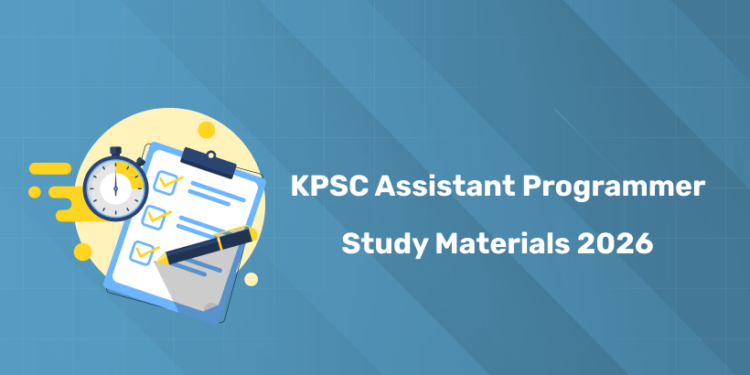
The Kerala PSC has announced recruitment for the Assistant Programmer post under the Kerala State Planning Board (Category No. 442/2025), and the exam date has been confirmed. Since the exam is approaching, it’s not mandatory to refer to all available study materials. Collecting and studying too many resources may not be feasible given the limited time. Instead, focus on selective and most important materials that can be covered in a short period. Below, we have provided a list of essential Kerala PSC Assistant Programmer study materials 2026 for your preparation.
Kerala PSC Assistant Programmer 2026 Highlights
| Recruitment Details | Information |
|---|---|
| Exam Body | Kerala PSC |
| Department | Kerala State Planning Board |
| Post Name | Assistant Programmer |
| Category No. | 442/2025 |
| Number of Vacancies | 1 (One) |
| Application Start Date | 28 November 2025 |
| Application Last Date | 31 December 2025 |
| Application Method | Online through One Time Registration |
| Ranked List Validity | 1–3 years |
| How to Apply | Register via Kerala PSC One Time Registration portal or apply through profile if already registered |
| Official Website | www.keralapsc.gov.in |
Kerala PSC Assistant Programmer Study Materials 2026
1: Between the period of 1858-1947, how many Viceroys ruled over India?
Starting with the syllabus, previous year questions (PYQs), and mock tests, we have listed only the most essential and high-priority materials below. You can choose and use other materials according to your preparation level and priority. Since these posts are highly competitive, it’s important to prepare smartly and efficiently to crack the exam. Access all the listed materials through the links provided below.
1. Official Syllabus
- Download the Kerala PSC Assistant Programmer syllabus PDF from the official website.
- Use it to plan your study schedule and mark important topics.
2. Previous Year Questions (PYQs)
- Collect past 5–10 years’ question papers.
- Focus on frequently asked questions and patterns.
- Solve them timed to replicate exam conditions.
3. MCQs & Practice Guides
- Use MCQ books and online question banks for practice.
- Attempt topic-wise MCQs to strengthen weak areas.
- Keep a mistake notebook to track repeated errors.
4. Reference Books
- Discrete Mathematics, Probability & Statistics – Standard textbooks
- Digital Electronics & Computer Architecture – Relevant engineering books
- Programming in C & C++/Java – Standard programming guides
- DBMS & Software Engineering – Academic references
5. Notes
- Make your own short notes while studying.
- Include formulas, definitions, diagrams, and important points.
- Use these for last-minute revisions.
| Subject | |
|---|---|
| Object Oriented Programming Through Java | |
| Data Communication | |
| Data Structures |
6. Video Classes & Online Tutorials
- Use platforms like YouTube, Entri App, Unacademy, or Gradeup.
- Watch topic-wise video lessons for difficult subjects.
7. Telegram Channels & WhatsApp Groups
- Join PSC-focused channels/groups for updates, PYQs, and discussion.
- Share and discuss doubts with peers.
8. Peer Discussion & Study Groups
- Form a small study group with friends/aspirants.
- Solve problems together, discuss strategies, and revise concepts.
9. Mock Tests
- Attempt online mock tests (free or paid).
- Analyze strengths and weaknesses and track progress.
10. Additional Resources
- Official notifications & exam updates from Kerala PSC website
- Previous exam cut-offs and analysis
- Flashcards or mind maps for quick revision
Prepare for Kerala PSC Technical Exams with Entri
സർക്കാർ ജോലി എന്ന സ്വപ്നം ഇനി സ്വപ്നം മാത്രമല്ല! Join Kerala's Top-rated PSC Coaching Programs
Join NowKerala PSC Assistant Programmer 2026 Study Tips
- Start with the official syllabus to plan your preparation.
- Solve previous year questions (PYQs) to understand patterns.
- Attempt mock tests regularly to track progress and improve speed.
- Make short notes for quick revision of formulas and key points.
- Focus on high-priority topics given limited preparation time.
- Practice MCQs and coding questions daily.
- Join study groups or online communities for discussion and doubt clearing.
- Revise consistently and correct mistakes from previous tests.
- Use online video tutorials for difficult subjects.
- Plan your schedule smartly to balance all topics efficiently.