
Table of Contents
The Montessori Binomial Cube has small blocks in different colours and sizes. The blocks fit together to make a cube. Children use their hands to take the blocks, look at them, and put them together. They learn by trying and checking where each piece goes.
Key Takeaways
- The Binomial Cube is a Montessori activity that children learn by doing.
- It has blocks of different colors and sizes that fit together.
- Children learn how to match and arrange the blocks.
- It helps build focus, hand control, and problem-solving skills.
- Children can learn to use the cube with simple guidance.
- Most children start using the Binomial Cube at around 3 to 4 years.
Register for the Entri Elevate Montessori Teacher Training Program! Join Now!
What is the Montessori Binomial Cube?
The Montessori Binomial Cube is a Montessori hands-on learning material. It is made for children to learn by using their hands.
The Montessori Binomial Cube is a learning activity. It gives children small blocks to arrange and fit together. While doing the activity, they learn to notice size, colour, and order. They also get a chance to work with the material on their own.
The cube is made of small coloured blocks. Children can take the blocks apart and put them back together. This helps them understand how different pieces fit into one whole shape.
The Binomial Cube also helps children improve their focus and thinking skills. They learn to notice colours, sizes, and patterns while working with the blocks. Children can work with the material on their own. They can try, check, and correct their work. This makes learning more active and enjoyable.
A Simple Learning Material
The Binomial Cube may look like a simple puzzle. But it helps children learn many things while they play and work with it. The child needs to look at each block carefully. The child also needs to find where each block fits.
This helps children learn about:
- Size.
- Colour.
- Shape.
- Order.
- Patterns.
How does the Cube Work?
The blocks are different in size and colour. Each block has a place. The child puts the blocks together one by one. When all the blocks are in place, they make a cube.
Why is it Used in Montessori?
The Binomial Cube is a hands-on activity. Children can touch the blocks and put them together. They can try different pieces and see what fits. This makes the activity easy to learn through practice.
What can Children Learn?
While using the Binomial Cube, children can practise:
- Looking carefully.
- Thinking about each piece.
- Using their hands.
- Following an order.
- Staying focused.
- Trying again when something is wrong.
The activity is simple, but it gives children a chance to learn at their own speed.
What does the Binomial Cube Teach Children?
The Binomial Cube helps children learn by using their hands. They learn about size, order, shapes, and patterns while putting the blocks together.
The activity also helps children focus and think. They can learn by trying, checking, and trying again.
Teaches about Size
The blocks come in different sizes. Children learn to notice which blocks are bigger or smaller. They also learn that each block has a proper place. This helps them understand size and order.
Helps Children Learn Patterns
The Binomial Cube has a simple pattern. Children need to follow this pattern when putting the blocks together. This helps them notice how the blocks fit. They slowly learn to understand and follow the order.
Teaches about Shapes
Children can see different shapes while using the cube. They learn how the blocks fit together to make one cube. This gives them a simple idea about shapes and space. They learn by looking, touching, and placing the blocks.
Builds Problem-Solving Skills
The blocks may not fit correctly on the first try. Children need to look at them and try again. This helps them learn how to solve a small problem. It also teaches them not to give up easily.
Improves Focus
Children need to look carefully at each block. They have to pay attention when placing each piece.
This helps them stay focused on one activity. Regular practice can also help improve their attention.
Improves Hand and Eye Coordination
Children use their eyes to find the right block. They then use their hands to place it in the correct place.
This helps children control their hand movements. It also helps them work more carefully.
Encourages Independent Learning
Children can try to complete the cube on their own. They can check their work and make changes when needed.
This gives them a chance to learn without always needing help. It can also help build confidence.
Benefits of the Montessori Binomial Cube
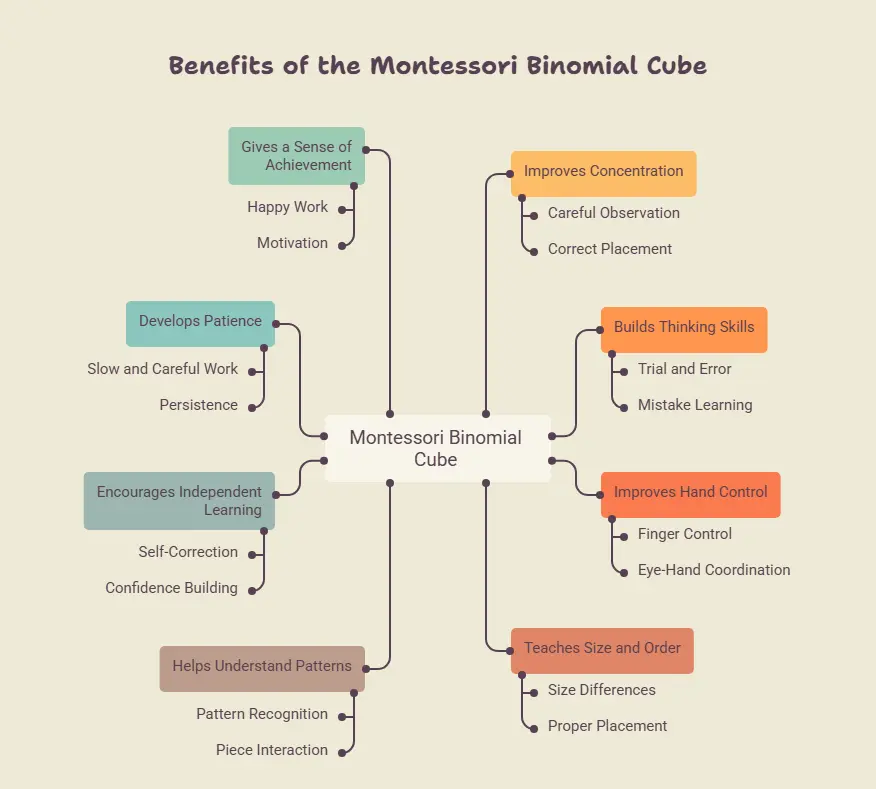
The Montessori Binomial Cube helps children learn through their hands. It supports focus, thinking, and careful movement.
The activity also helps children understand size, order, and patterns. It gives children a simple way to learn while working on their own.
Improves Concentration
Children need to look at each piece carefully. They need to find the correct place for every block. This helps children stay focused on the activity. It can also help improve their attention with regular practice.
Builds Thinking Skills
The child needs to think about how the pieces fit together. They can try different pieces until they find the right one.
This gives children simple problem-solving practice. It also helps them learn from their own mistakes.
Improves Hand Control
Children pick up, move, and place the blocks carefully. These small movements give their hands useful practice.
The activity can help improve:
- Finger control.
- Hand movement.
- Eye-hand coordination.
- Careful movement.
Teaches Size and Order
The blocks are different in size. Children learn to notice these differences while using the cube. They also learn that each piece has a proper place. This helps them understand size and order.
Helps Children Understand Patterns
The Binomial Cube follows a clear pattern. Children need to follow this pattern while putting the pieces together. This helps them notice small details. It also helps them understand how different pieces can work together.
Encourages Independent Learning
Children can try to complete the cube by themselves. They can check their work and make changes when needed.
This gives them a chance to learn without always depending on an adult. It can also help build confidence.
Develops Patience
The activity may take time to complete. Children learn to work slowly and carefully. They may need to try again when a piece does not fit. This helps them learn patience and persistence.
Gives a Sense of Achievement
Completing the cube can make children feel happy about their work. They can see what they have done by themselves. This can build confidence. It may also encourage them to try other Montessori activities.
How to Use the Binomial Cube in Montessori Education
The Binomial Cube is usually shown to the child by a Montessori teacher. The teacher first takes out the blocks and places them in front of the child.
The child watches how the pieces are arranged. After the demonstration, the child gets a chance to try the activity.
Start With a Simple Demonstration
The teacher takes the cube apart slowly. Each block is placed carefully on the table. The teacher then starts putting the pieces back together. The child can watch where each block goes.
There is no need to explain too much at this stage. The child learns mainly by watching the activity.
Let the Child Try the Cube
After watching the demonstration, the child can work with the blocks. They can take the pieces out and try to build the cube.
At first, the child may not put every block in the right place. This is normal. With more practice, the child starts to notice the size, colour, and shape of the pieces.
Place the Blocks Carefully
Start with the blocks one by one. Look at each piece before putting it in. The colours and sizes give clues about where the pieces go. Keep checking them as you build the cube.
Give the Child Enough Time
Some children may understand the activity quickly. Others may need a few tries. Let them take their time. If the cube is not right, they can take it apart and start again.
Allow the Child to Work Alone
After a few demonstrations, the child may be ready to do the activity alone. They can take the cube from the shelf, work with it, and return it after finishing.
Repeat the Activity
There is no problem with doing the same activity again. The pieces become easier to recognise with practice. Over time, putting the cube together may feel more familiar.
What Should Parents and Teachers Do?
Show the activity first and then step back a little. Give the child a chance to work it out. A mistake is okay. If one piece does not fit, another piece can be tried.
The activity is not about finishing quickly. The child needs time to explore the blocks and understand how they fit together.
What Age is the Montessori Binomial Cube For?
The Montessori Binomial Cube is usually introduced to children around 3 to 4 years. However, the right age can be different for each child.
Some children may be ready at 3 years. Others may need more time. The child’s interest and ability are more important than age alone.
The child should be able to sit, hold the blocks, and work with them carefully. The activity should be introduced slowly and without pressure.
Can a 3-Year-Old Use the Binomial Cube?
Yes, some 3-year-old children can use the Binomial Cube. It depends on how ready the child is for the activity. An adult can first show the child how to use the cube. The child can watch the steps before trying it.
At first, the child may need some help. With practice, the child can learn how the blocks fit together.
When is a Child Ready for the Binomial Cube?
Age is not the only thing to consider. The child should also show interest in the activity.
Some signs that a child may be ready are:
- Can sit and focus for a short time.
- Can hold small blocks carefully.
- Can follow simple steps.
- Shows interest in building activities.
- Enjoys matching and sorting objects.
- Can work with small pieces safely.
Every child develops at a different speed. So, there is no need to force the activity.
Should an Adult Help the Child?
An adult can show the activity first. After the demonstration, the child can try it alone. The child may make mistakes while learning. This is a normal part of the activity.
Give help only when needed. Let the child try and learn at their own pace.
Register for the Entri Elevate Montessori Teacher Training Program! Join Now!
Conclusion
The Montessori Binomial Cube is a simple learning material for children. It helps children learn through their hands and eyes.
Children can use the pieces to understand colors, sizes, order, and how things fit together. It also helps them improve focus and hand control.
The activity allows children to work at their own pace. They can try, check their work, and learn from small mistakes.
With simple guidance, the Binomial Cube can be a fun and useful part of Montessori learning. It helps children learn while they explore and enjoy the activity.
Get Certified & Start Your Montessori Career
Montessori Teacher Training Course by Entri App: Gain expert skills, earn certification, and kickstart your teaching career.
Join Now!Frequently Asked Questions
What is the purpose of the Binomial Cube?
The activity gives children a chance to work with size, colour, and patterns. It also gives them practice in careful work.
How does a child use the Binomial Cube?
The child takes the pieces out and puts them back together. They look at the blocks and find where each piece belongs.
What skills does the Binomial Cube develop?
The activity gives practice in concentration, hand control, and problem-solving. It also supports independent work.
How is the Binomial Cube different from a normal puzzle?
The Binomial Cube has a set pattern that the child needs to follow. The blocks also have different sizes and colours that help with the activity.
How do you introduce the Binomial Cube to a child?
First, show the child how the pieces are taken out and put back. Keep the demonstration slow and simple, then let the child have a turn.
Can a child use the Binomial Cube without help?
Yes. Once the child understands the activity, they can try it on their own.
How often can a child use the Binomial Cube?
There is no need to limit the activity to one use. A child can repeat it whenever they want to practise.
What should an adult do if the child makes a mistake?
Give the child some time to look at the pieces and try again. Help only when they really need it.
Is the Binomial Cube suitable for beginners?
Yes, it can be introduced as a simple hands-on activity. A short demonstration can make it easier for a child to understand.
What does a child learn from repeating the Binomial Cube activity?
Repeated use makes the pieces more familiar. The child may become more comfortable with the order and pattern over time.