Table of Contents
Answer First: Practical HR Training vs Theoretical Learning
Employers prefer candidates with practical HR skills. Theoretical knowledge is appreciated. Both need to be there in career preparation.
| Approach | Strength | Gap |
| Theoretical Learning | Knowledge of HR concepts and rules | Low practical experience. |
| Practical Training | HR tasks practised daily. | May miss basic concepts |
| Combined Learning | Knowledge & skills developed together. | It takes time. |
Is being an HR your dream? Enrol now for our course on Human Resource!
Introduction
An HR degree helps get interviews. Practical skills help candidates get selected. Employers want people who can handle tasks. Employee records to be maintained. Interviews to be arranged. Payroll details to be verified.
Theory provides basic knowledge. Training gives experience. Both are needed for HR careers. This guide explains it deeply. Employer preferences also discussed. Suitable learning steps are given.

Become an HR Expert – Enroll in Our HR Management Course Today!
Unlock the secrets to effective Human Resource Management with our expert-led course! Learn recruitment, employee relations, performance management, and more to build a thriving workplace. Start your journey toward a successful HR career today!
Know MoreWhat Is Theoretical HR Learning?
It focuses on HR knowledge. Important concepts & rules studied. Different HR topics explained through lessons. This knowledge helps HR duties be understood.
What Does It Cover?
Several important topics covered during training. Basic HR knowledge developed through these subjects.
- HR Concepts.
- Main HR functions are studied.
- Common HR duties are explained.
- Labour Laws.
- Employee rights are studied.
- Company responsibilities are explained.
- Organisational Behaviour.
- Workplace behaviour is understood.
- Employee relationships are discussed.
- Recruitment Principles.
- Hiring methods are studied.
- Selection processes are explained.
- Performance Management.
- Employee performance is reviewed.
- Evaluation methods are studied.
- Training and Development.
- Employee learning methods are covered.
- Training needs are discussed.
- Compensation.
- Salary structures are studied.
- Employee benefits are explained.
- HR Planning.
- Workforce needs are understood.
- Staffing methods are studied.
- Employee Relations.
- Workplace issues are discussed.
- Employee concerns are understood.
- HR Policies.
- Company rules are studied.
- Workplace procedures are explained.
These topics provide a basic understanding. Different HR activities can then be understood. Important terms and processes are also learned.
Where Is Theoretical HR Learning Delivered?
Theoretical learning is provided through different courses. Most programmes include classroom lessons.
Common learning options include:
- Degree Courses.
- HR subjects are taught.
- Basic management topics covered.
- MBA in HR.
- Advanced HR topics studied.
- Management subjects covered.
- PGDM in HR.
- HR and business subjects included.
- Management skills developed.
- Classroom Courses.
- Lessons explained by trainers.
- Written assignments given.
- Online Courses.
- Lessons provided digitally.
- Tests taken online.
- University Programmes.
- HR subjects included.
- Academic knowledge developed.
Assignments and written exams are included. Case studies also discussed. However, workplace practice is limited.
What Is Practical HR Training?
It focuses on daily activities. Tasks are learned through actual or sample work. Basic workplace skills are developed through practice.
This training helps common HR duties be understood. Office tasks are also introduced. Practical knowledge can support job applications.
What Does It Cover?
Different HR tasks are included in practical training. They are usually handled by HR teams.
Common training areas include:
- Recruitment.
- Candidates resumes screened.
- Selected applicants shortlisted.
- Interview Scheduling.
- Interview dates arranged.
- Shortlisted candidates called.
- Onboarding.
- Documents collected.
- Employee details recorded.
- Payroll.
- Salary details checked.
- Payment records prepared.
- Attendance.
- Employee working hours recorded.
- Leave details updated.
- Employee Records.
- Staff information maintained.
- Important documents organised.
- HRIS Tools.
- Employee details managed.
- Staff records updated.
- ATS Tools.
- Applications are tracked.
- Recruitment details maintained.
- HR Documentation.
- Letters and reports prepared.
- Important records saved.
- Case Work.
- Common workplace situations discussed.
- Suitable responses considered.
Practical tasks build confidence. Common HR processes can be understood. Basic workplace responsibilities are also learned.
Where Is Practical HR Training Delivered?
Practical training can be received through different methods. Workplace activities are usually included.
Common training options include:
- Internships.
- Daily HR tasks observed.
- Basic duties assigned.
- Live Projects.
- Practical assignments completed.
- Sample HR records prepared.
- Job-Oriented Courses.
- Workplace tasks included.
- Common HR processes practised.
- Company Training.
- HR activities demonstrated.
- Office procedures explained.
- Recruitment Projects.
- Candidate screening practised.
- Interview schedules prepared.
- Payroll Exercises.
- Sample salary records prepared.
- Attendance details checked.
- HR Software Training.
- Common tools used.
- Employee information entered.
Practical training can be provided online. Sample employee records are used. Simulated recruitment tasks can also be completed.
Practical vs Theoretical HR Learning: Key Differences
Both approaches provide useful HR knowledge. However, their learning methods are different. The main differences should be understood before choosing.

| Factor | Theoretical Learning | Practical Training |
| Focus | HR concepts and rules. | Daily HR tasks. |
| Learning Style | Lessons, books, and exams. | Projects, practice, and tasks. |
| Job Readiness | Basic knowledge is developed. | Workplace skills are developed. |
| Cost | Depends on the course or degree. | Depends on training and internship fees. |
| Duration | Usually follows a fixed course period. | Depends on the training programme. |
| Employer Value | Subject knowledge is demonstrated. | Practical ability is demonstrated. |
Main Differences to Understand
- Focus.
- HR concepts covered via theory.
- Daily tasks covered via practice.
- Learning Style.
- Lessons & written assignments used.
- Practical tasks completed in training.
- Job Readiness.
- Basic HR knowledge developed.
- Workplace skills developed via practice.
- Cost.
- Degree courses require more time & money.
- Short training courses cost less.
- Duration.
- Degrees take several years.
- Practical courses take weeks/months.
- Employer Value.
- Subject knowledge shown via qualifications.
- Practical ability shown via completed tasks.
Both approaches support job applications. A combination provides stronger preparation.
Become an HR Expert – Enroll in Our HR Management Course Today!
Unlock the secrets to effective Human Resource Management with our expert-led course! Learn recruitment, employee relations, performance management, and more to build a thriving workplace. Start your journey toward a successful HR career today!
Know MoreWhat Do Employers Actually Prefer?
Employers look for job-ready candidates. Practical skills are important in many HR roles. Basic theoretical knowledge is also expected.
A candidate may understand recruitment concepts. However, resumes must also be screened. Interview schedules must be prepared. Candidate details must be recorded. These tasks require practical knowledge.
Why Do Employers Value Hands-On Experience?
Practical experience helps daily work be understood. Less time may be needed for basic training. Common tasks can also be handled more confidently.
Important reasons include:
- Task Readiness.
- Basic duties are handled.
- Common tasks are completed.
- Tool Knowledge.
- Common HR software used.
- Employee records updated.
- Workplace Understanding.
- Daily processes understood.
- Office procedures followed.
- Time Management.
- Tasks completed on time.
- Work schedules followed.
- Communication.
- Candidates are contacted.
- Employee updates shared.
- Problem Handling.
- Common issues are identified.
- Suitable solutions can be discussed.
- Record Keeping.
- Employee details can be maintained.
- Important documents can be organised.
- Teamwork.
- Tasks can be completed with others.
- Updates can be shared with the team.
Practical experience also shows workplace exposure. Employers can understand the candidate’s abilities. Further training needs can also be identified.
Where Does Theory Still Matter?
Theoretical knowledge remains important in HR. Several responsibilities require an understanding of rules. Important decisions must also be supported by knowledge.
Theory is useful in these areas:
- Compliance.
- Labour laws must be understood.
- Company rules must be followed.
- Company Policies.
- Workplace rules must be applied.
- Employee procedures must be understood.
- Employee Relations.
- Workplace issues must be handled fairly.
- Employee concerns must be understood.
- HR Planning.
- Staffing needs must be identified.
- Workforce plans must be prepared.
- Performance Management.
- Evaluation methods must be understood.
- Employee performance must be reviewed.
- Compensation.
- Salary structures must be understood.
- Employee benefits must be reviewed.
- Senior HR Roles.
- Strategic decisions must be made.
- Wider business knowledge is required.
Practical skills alone may not be enough. Important decisions must be supported by knowledge. Both areas are needed for career growth.
Is being an HR your dream? Enrol now for our course on Human Resource!
Preference by Employer Type
Different employers may have different hiring needs. Their preferences depend on daily responsibilities.
| Employer | Prefers | Why |
| Startups | Practical skills and flexibility. | Small teams need immediate support. |
| Large MNCs | Theory and practical skills. | Formal processes and policies are followed. |
| Staffing Agencies | Recruitment experience. | Candidate screening is handled regularly. |
| Consultancies | HR knowledge and client skills. | Different client requirements are managed. |
Startups.
- Small HR teams are often maintained.
- Multiple duties may be assigned.
- Practical skills can be highly useful.
Large MNCs.
- Formal HR processes are usually followed.
- Policies and compliance are given importance.
- Both knowledge and practical skills are valued.
Staffing Agencies.
- Recruitment tasks are handled regularly.
- Candidate communication is also required.
- Screening and interview experience can be useful.
Consultancies.
- Different client needs are handled.
- HR knowledge is often required.
- Communication and problem-solving skills are valued.
Preference by Career Stage
Employer expectations may change with experience. Different skills are needed at each career stage.
| Stage | What Matters Most |
| Fresher | Basic HR knowledge and practical skills. |
| 1-3 Years | Work experience and task handling. |
| Mid-Level | HR operations and decision-making. |
| Senior HR | Strategy, compliance, and leadership. |
Fresher.
- Basic HR knowledge should be developed.
- Practical experience should also be gained.
- Internships and projects can be included.
1-3 Years.
- Work experience becomes more important.
- Daily HR tasks should be handled.
- Tool knowledge should also be developed.
Mid-Level.
- Wider HR responsibilities may be assigned.
- Employee issues must be handled.
- Team activities may also be managed.
Senior HR.
- Strategic knowledge becomes more important.
- Policies and workforce plans are managed.
- Leadership and decision-making skills are required.
Skills Employers Look for Beyond Qualifications
A degree alone may not show job readiness. Additional skills are also checked by employers. These skills are needed for daily HR work.
Important skills include:
- Tool Knowledge.
- Excel and HR software should be understood.
- Employee records should be managed.
- Communication.
- Clear messages should be shared.
- Questions should be answered properly.
- Judgement.
- Suitable decisions should be made.
- Important details should be considered.
- Compliance Awareness.
- Basic labour laws should be understood.
- Company rules should be followed.
- Record Management.
- Employee details should be maintained.
- Documents should be organised.
- Time Management.
- Tasks should be completed on schedule.
- Deadlines should be followed.
- Confidentiality.
- Private employee details should be protected.
- Records should be handled carefully.
- Teamwork.
- Work should be completed with others.
- Updates should be shared.
- Problem-Solving.
- Workplace issues should be identified.
- Suitable solutions should be discussed.
- Attention to Detail.
- Records should be checked properly.
- Errors should be corrected.
These skills can be developed through practice. Small projects can also be completed. Feedback can be used for improvement.
Pros and Cons of Each Approach
Both learning methods have useful features. Some limitations should also be considered.
Theoretical HR Learning
Advantages:
- Basic HR concepts are understood.
- Labour laws are introduced.
- HR terms are learned.
- Subject knowledge is developed.
- Academic qualifications can be earned.
Limitations:
- Practical exposure may be limited.
- Daily tasks may remain unfamiliar.
- Software practice may be missing.
- Workplace confidence may take time.
Practical HR Training
Advantages:
- Daily HR tasks are practised.
- Workplace skills are developed.
- Common tools are introduced.
- Practical confidence can be improved.
- Work samples can be prepared.
Limitations:
- Basic concepts may be missed.
- Training quality may vary.
- Some tasks may be simulated.
- Course fees may be high.
A balanced learning plan is recommended. Theory and practice should be combined.
How to Combine Both for the Best Results
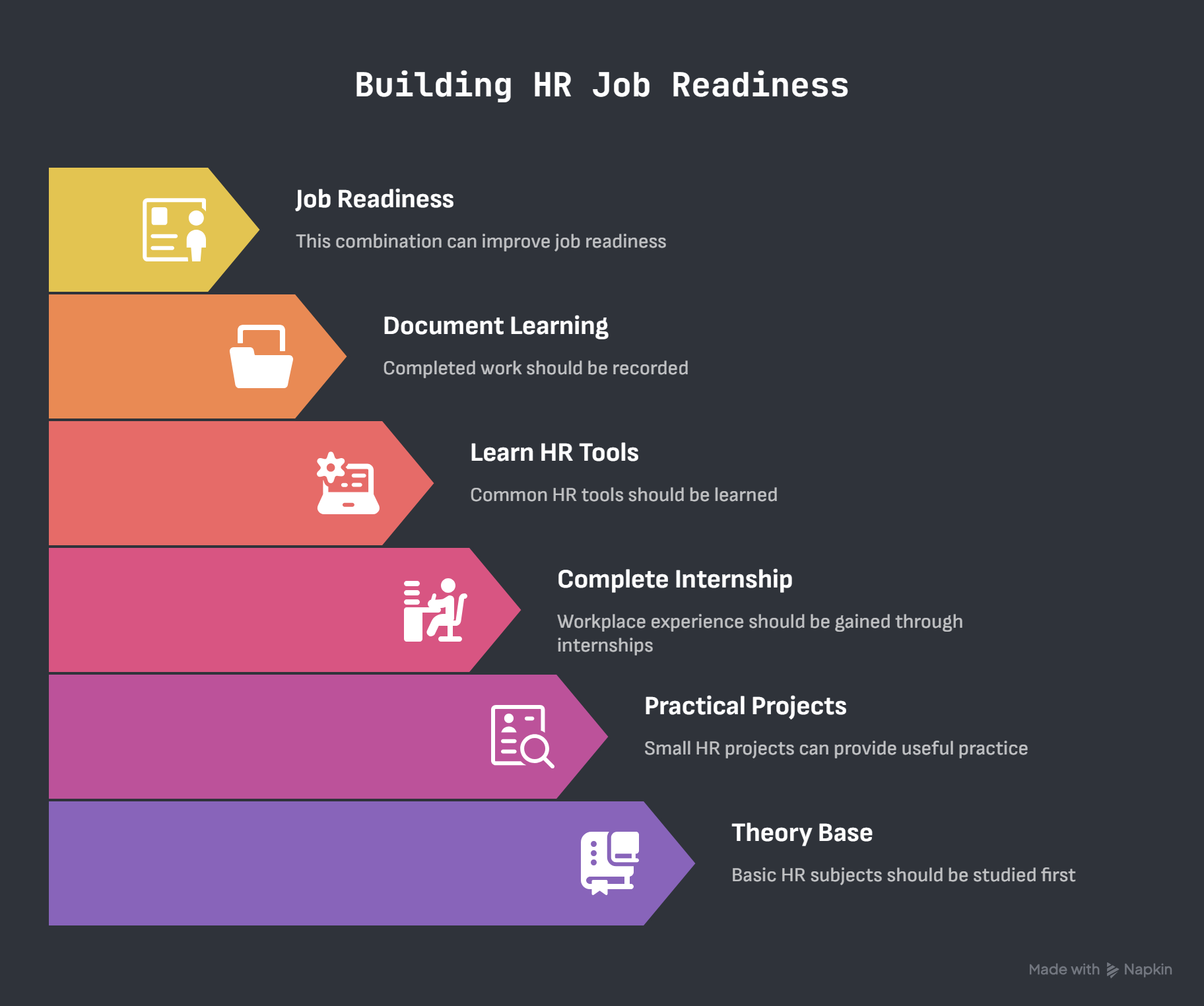
Both learning methods should be included. Basic knowledge should be developed first. Practical tasks should then be completed.
Step 1: Build a Theory Base
Basic HR subjects should be studied first.
- Recruitment concepts should be understood.
- Labour laws should be studied.
- Payroll basics should be learned.
- HR policies should be reviewed.
- Employee relations should be understood.
Step 2: Add Practical Projects
Small HR projects can provide useful practice.
- Sample resumes can be screened.
- Interview schedules can be prepared.
- Employee records can be organised.
- Attendance sheets can be created.
- Basic HR reports can be prepared.
Step 3: Complete an Internship
Workplace experience should be gained through internships.
- Suitable openings should be searched.
- Daily HR tasks should be observed.
- Basic duties should be completed.
- Work records should be maintained.
- Feedback should be collected.
Step 4: Learn HR Tools
Common HR tools should be learned. Basic software practice should also be completed.
- MS Excel.
- Google Sheets.
- HRIS software.
- Applicant Tracking Systems.
- Email and calendar tools.
Step 5: Document Learning Outcomes
Completed work should be recorded. Practical skills should be clearly listed.
- Project details should be saved.
- Internship duties should be recorded.
- Software skills should be listed.
- Course certificates should be collected.
- Work samples can be organised.
This combination can improve job readiness. Both knowledge and practical skills can be shown.
How to Show Practical Skills on Your Resume
Practical experience should be clearly presented. Employers should understand the completed tasks.
Useful details include:
- Internship Experience.
- Company name should be included.
- Training period should be mentioned.
- Recruitment Tasks.
- Resume screening should be listed.
- Interview scheduling should be included.
- Payroll Practice.
- Sample salary calculations can be shown.
- Practice records can be included.
- HR Projects.
- Completed assignments should be listed.
- Case studies can be mentioned.
- Software Skills.
- Excel knowledge should be included.
- HRIS and ATS tools can be listed.
- Certifications.
- Completed HR courses should be added.
- Relevant certificates should be included.
- Volunteer Work.
- HR-related activities should be listed.
- Assigned responsibilities should be explained.
- Project Results.
- Completed work should be described.
- Outcomes should be mentioned.
Practical tasks should be described clearly. Relevant details should be included. False work experience should never be added.
A simple resume should be prepared first. Important skills should be listed clearly. Course and internship details should also be included.
How to Choose the Right HR Course
A suitable course should provide useful knowledge. Practical training should also be included. Course details should be checked before enrolment.
Important points to check include:
- Course Content.
- Main HR topics should be covered.
- Basic concepts should be explained.
- Practical Projects.
- Realistic assignments should be included.
- Sample HR tasks should be provided.
- Internship Support.
- Internship opportunities should be offered.
- Practical exposure should be encouraged.
- Tool Training.
- Common HR software should be taught.
- Basic tool practice should be provided.
- Trainer Experience.
- Relevant experience should be checked.
- Subject knowledge should be reviewed.
- Placement Support.
- Job guidance should be available.
- Interview support may be provided.
- Course Duration.
- Training time should be suitable.
- Course schedules should be checked.
- Certificate.
- Course completion should be recognised.
- Certificate details should be confirmed.
- Student Feedback.
- Reviews should be checked.
- Past student experiences can be considered.
- Course Fees.
- Total costs should be understood.
- Additional charges should be checked.
A course should not be selected by name alone. The training method should also be checked. Practical assignments should be reviewed carefully.
Placement support can also be useful. However, job placement should not be assumed. Course providers should be asked about their support.
Conclusion
Practical HR training is valued by many employers. Theoretical knowledge is also needed for HR work. Both approaches support career preparation. Basic HR subjects should be studied first. Practical tasks should then be completed. Internships and projects can provide useful experience. Common HR tools should also be learned. A balanced approach can help freshers prepare for entry-level HR jobs.
| Related Links | |
| Top Human Resource Blogs to Follow | How to build a remote HR career |
| HR Certification vs HR Degree | Which one to choose? | 15 HR Intern Interview Questions and Sample Answers |
Become an HR Expert – Enroll in Our HR Management Course Today!
Unlock the secrets to effective Human Resource Management with our expert-led course! Learn recruitment, employee relations, performance management, and more to build a thriving workplace. Start your journey toward a successful HR career today!
Know MoreFrequently Asked Questions
Do Employers Prefer Practical HR Training or a Degree?
Employers often value practical HR skills. A degree also provides basic subject knowledge. Both can support job applications. Practical training can help daily tasks be handled. A suitable qualification can also show academic understanding.
Is a Theoretical HR Course Enough to Get a Job?
A theoretical course can provide basic HR knowledge. However, practical skills are also expected. Internships and projects can provide useful experience. Basic HR tools should also be learned. A combination can improve job readiness.
Which Is Better for Freshers, Practical or Theoretical HR Learning?
Both approaches are useful for freshers. Theoretical learning provides basic HR knowledge. Practical training helps with daily tasks. Internships and live projects can provide experience. A balanced learning plan is recommended.
Can Practical HR Training Replace an MBA?
Practical training cannot cover every MBA subject. An MBA includes wider management topics. Practical training focuses more on workplace tasks. Both serve different purposes. The required qualification also depends on the job and employer.
How Can I Gain Practical HR Skills Without a Job?
Practical skills can be developed through small projects. Sample recruitment tasks can be completed. Employee records can be prepared using spreadsheets. Online practice tasks can also be used. Volunteer work and internships can provide further experience.
What Should I Look for in a Practical HR Course?
Practical assignments should be included in the course. HR software training should also be provided. Internship support can be useful. Live projects should be included where possible. Course content, trainer experience, fees, and placement support should also be checked.