Table of Contents
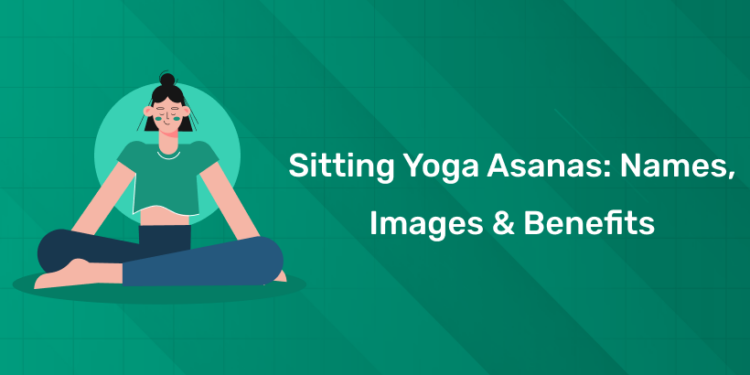
Sitting yoga asanas are practiced while sitting. These poses encourage mindful breathing. It provides body awareness. Many seated poses suit beginners and older adults. Some poses support meditation.
Regular practice improve comfortable movement over time. However, every pose should feel controlled and comfortable. Forcing a stretch can increase injury risk. Beginners progress slowly and use modifications.
Join the best online yoga teacher training program of 2026! Register in Entri Elevate now!
What are Sitting Yoga Asanas?
Sitting yoga asanas are seated yoga poses. They are performed while sitting on the floor. Some poses use straight or bent legs. Others involve twisting, stretching, or forward bending. Seated positions can provide greater physical stability. This makes them useful for many beginners.
These poses can support several yoga goals. One can prepare the body for meditation. Flexibility and joint mobility can also be improved. Some poses focus on relaxation. Others provide deeper stretching or strengthening.
How do Seated Yoga Poses Work?
Seated poses place the body in stable positions. This allows controlled movements and focused breathing. Many poses encourage an upright spine. Others involve gentle forward or sideways movements.
Seated poses can target different body areas.
- Some poses stretch the hips.
- Some poses stretch the hamstrings.
- Some improve spinal mobility.
- Few poses strengthen the back muscles.
- Some poses open the chest.
- Some improve shoulder mobility.
- Some encourage better posture.
The physical demands vary between different poses. Beginners should choose simpler poses initially.
What Makes Seated Yoga Useful?
Seated yoga can provide a stable starting position. It may feel easier than balancing poses. Many seated poses also require less standing strength. This makes them useful for different practice levels.
Seated yoga also support relaxation. Slow movements reduce physical tension. Controlled breathing improves concentration.
These poses can fit different routines.
- Morning mobility sessions.
- Evening relaxation routines.
- Meditation practices.
- Gentle stretching sessions.
- Beginner yoga routines.
- Desk-break movement sessions.
Benefits of Seated Yoga Poses
1: Which of these is the primary goal of yoga practice?
Seated yoga supports physical and mental health. Regular practice can improve flexibility< It also gives one body awareness. Benefits depends on pose selection and consistency.
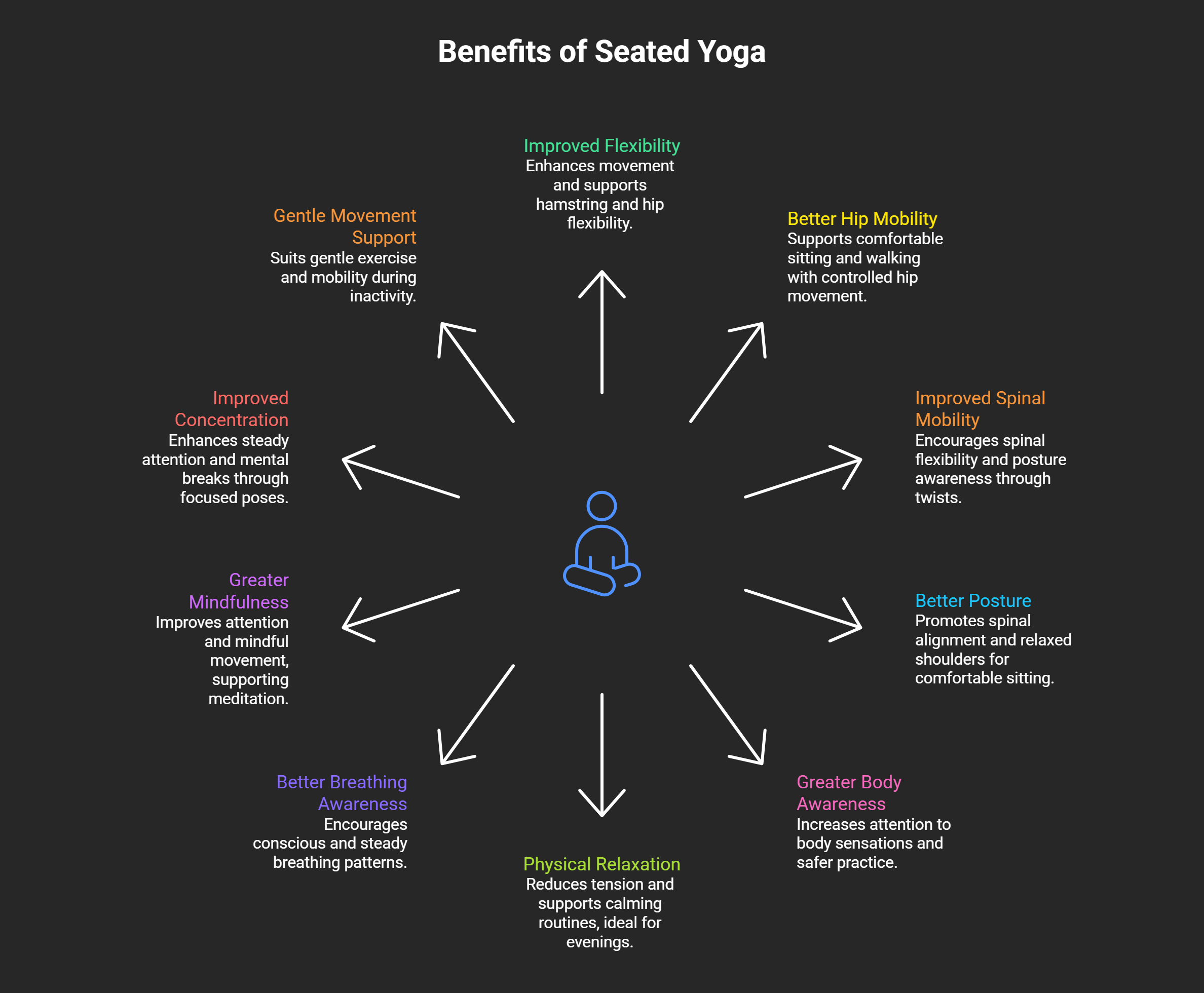
1. Improved Flexibility
Seated poses stretch the: hips, legs, and back.
- Improves comfortable movement.
- Supports hamstring flexibility.
- Encourages hip flexibility.
- Supports gentle back stretching.
- Promotes gradual flexibility gains.
2. Better Hip Mobility
Many seated poses target the hips.
- Supports comfortable sitting.
- Improves hip movement.
- Supports walking and bending.
- Helps with everyday mobility.
- Encourages controlled hip movement.
Avoid forcing the hips during stretches.
3. Improved Spinal Mobility
Seated twists encourage controlled spinal movement.
- Supports spinal flexibility.
- Encourages gentle rotation.
- Improves posture awareness.
- Supports comfortable back movement.
4. Better Posture
Many seated poses encourage an upright spine.
- Supports spinal alignment.
- Encourages relaxed shoulders.
- Improves posture awareness.
- Supports comfortable sitting.
- Encourages steady breathing.
5. Greater Body Awareness
Seated yoga encourages attention during movement.
- Improves awareness of body sensations.
- Helps identify muscle tension.
- Encourages controlled movements.
- Supports safer practice.
6. Physical Relaxation
Slow seated poses can promote relaxation.
- Reduces physical tension.
- Encourages slower breathing.
- Supports calming routines.
- Suits evening practice.
- Complements meditation.
7. Better Breathing Awareness
Seated positions provide a stable posture.
- Encourages conscious breathing.
- Supports steady breathing patterns.
- Promotes relaxation.
- Improves breathing awareness.
8. Greater Mindfulness
Seated yoga needs awareness of the present.
- Improves attention on breathing.
- Increases body awareness.
- Encourages mindful movement.
- Supports meditation practice.
- Reduces distractions during practice.
9. Improved Concentration
Many seated poses require focused attention.
- Encourages steady attention.
- Connects breathing with movement.
- Supports mindful concentration.
- Creates useful mental breaks.
10. Gentle Movement Support
Seated yoga provides controlled physical movement.
- Suits gentle exercise routines.
- Requires less standing balance.
- Supports mobility during inactivity.
- Can suit beginner practices.
- Offers useful pose modifications.
Individual needs can differ significantly. Existing conditions may require professional guidance.
Become a Certified Yoga Instructor
Yoga Teacher Training Course by Entri App: Master authentic yoga techniques, earn certification, and build a successful career as a professional yoga instructor.
Join Now!Best Sitting Yoga Asanas
Many seated yoga poses offer different benefits. Beginners should start with comfortable variations. The following poses provide useful options.
1. Sukhasana
Sukhasana is commonly called Easy Pose. It involves sitting comfortably with crossed legs. The spine remains naturally upright during practice.
It can support:
- Relaxed sitting.
- Better posture awareness.
- Mindful breathing.
- Meditation.
- Gentle hip mobility.
A cushion can support the hips comfortably. This can reduce unnecessary lower-back strain.
2. Padmasana
Padmasana is commonly called Lotus Pose. It involves placing each foot over opposite thighs. This position requires considerable hip flexibility.
It can support:
- Meditation.
- Postural awareness.
- Focused breathing.
- Hip flexibility.
- Stillness during practice.
Padmasana is not suitable for everyone. Beginners should never force the knees.
3. Ardha Padmasana
Ardha Padmasana means Half Lotus Pose. One foot rests over the opposite thigh. The other leg remains underneath.
This variation can feel more accessible. It still requires adequate hip mobility.
Potential benefits include:
- Improved hip flexibility.
- Better seated posture.
- Meditation support.
- Greater body awareness.
A cushion can provide additional sitting support.
4. Vajrasana
Vajrasana is commonly called Thunderbolt Pose. The practitioner sits back over the heels. The spine remains upright during the pose.
It can support:
- Upright posture.
- Mindful breathing.
- Meditation.
- Gentle body awareness.
- Relaxed seated practice.
Some people may experience knee discomfort. A cushion can provide additional support.
5. Dandasana
Dandasana is also called Staff Pose. The legs extend forward from the seated position. The spine remains upright throughout the pose.
It can support:
- Hamstring awareness.
- Spinal alignment.
- Posture.
- Leg engagement.
- Core awareness.
Beginners can sit on a folded blanket. This can make upright positioning easier.
 6. Paschimottanasana
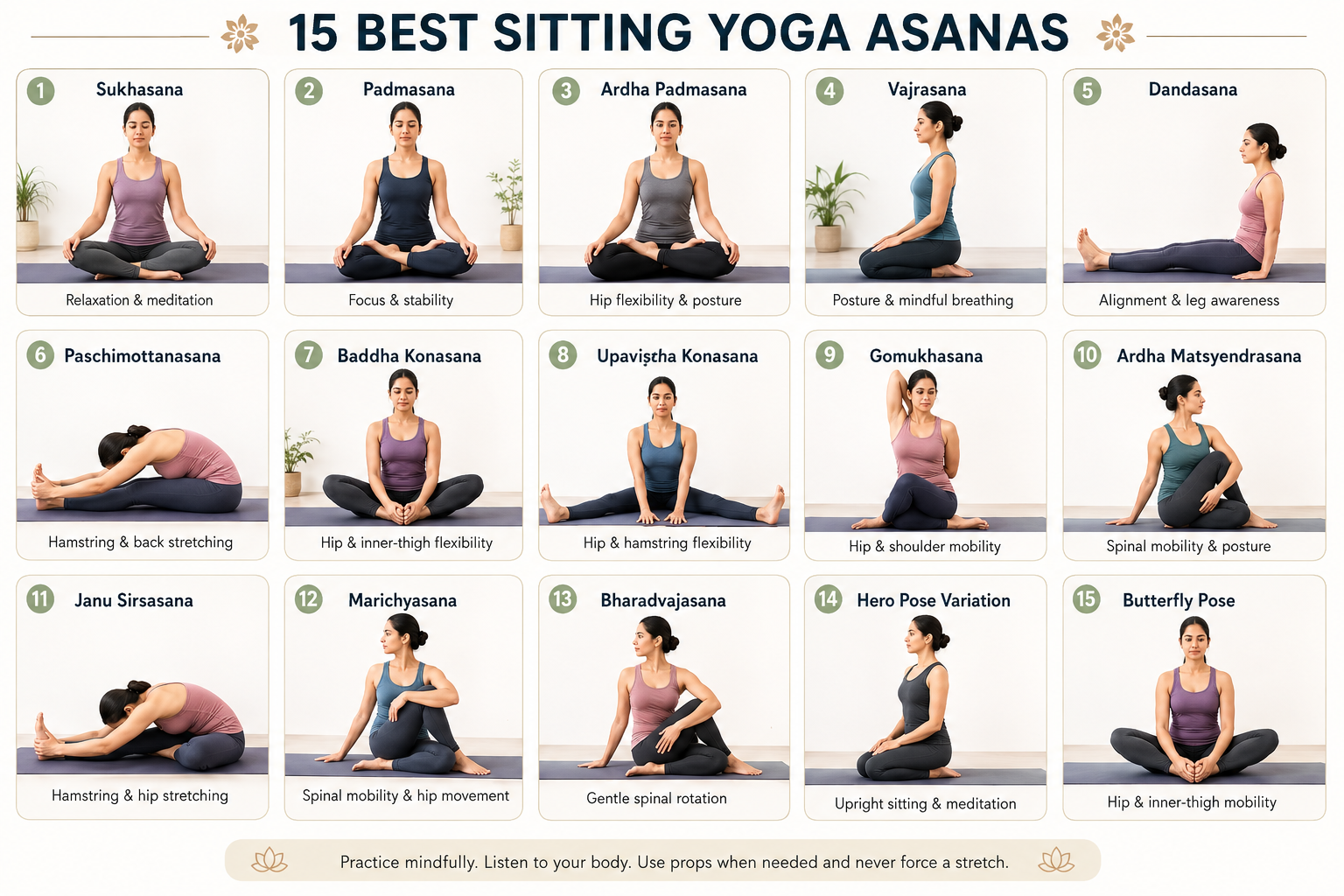 6. Paschimottanasana
Paschimottanasana is a seated forward bend. The legs extend forward during this pose. The upper body moves gently toward the legs.
It mainly targets the posterior body chain.
Potential benefits include:
- Hamstring stretching.
- Calf stretching.
- Back-body flexibility.
- Relaxation.
- Mindful movement.
The movement should begin from the hips. Avoid forcing the torso toward the legs.
7. Baddha Konasana
Baddha Konasana is called Bound Angle Pose. The soles of the feet come together. The knees move gently toward the floor.
It can support:
- Hip flexibility.
- Inner-thigh stretching.
- Groin mobility.
- Relaxation.
- Seated posture.
The knees should never be pushed downward. Props can support the knees comfortably.
8. Upavistha Konasana
Upavistha Konasana is a wide-legged seated pose. The legs extend apart while sitting upright. The pose can involve a gentle forward movement.
It can support:
- Inner-thigh flexibility.
- Hamstring mobility.
- Hip flexibility.
- Spinal awareness.
- Lower-body stretching.
Beginners should use a comfortable leg width. Excessive stretching should always be avoided.
9. Gomukhasana
Gomukhasana is known as Cow Face Pose. It combines seated hip and shoulder movements. The legs cross while the arms move behind.
It can support:
- Hip flexibility.
- Shoulder mobility.
- Upper-body stretching.
- Posture awareness.
- Body coordination.
The full position can feel challenging. Beginners can modify the arms or legs.
10. Ardha Matsyendrasana
Ardha Matsyendrasana is a seated spinal twist. The pose involves controlled rotation through the torso. It can encourage spinal mobility and body awareness.
Potential benefits include:
- Improved spinal rotation.
- Better posture awareness.
- Hip mobility.
- Shoulder movement.
- Mindful movement.
The twist should remain gentle and controlled. Avoid forcing the spine into deeper rotation.
11. Janu Sirsasana
Janu Sirsasana is a seated forward bend. One leg extends forward during this pose. The other leg remains bent.
It mainly stretches the back body.
- Supports hamstring flexibility.
- Encourages hip mobility.
- Stretches the back gently.
- Supports mindful forward bending.
- Encourages body awareness.
Keep the extended leg comfortable. Avoid forcing the forehead downward.
12. Marichyasana
Marichyasana includes seated twisting movements. Different variations create different physical demands. The pose combines twisting and forward movement.
Potential benefits include:
- Supports spinal mobility.
- Encourages hip movement.
- Improves posture awareness.
- Promotes controlled movement.
- Encourages mindful breathing.
Beginners should learn simpler variations first. Avoid forcing the torso into rotation.
13. Bharadvajasana
Bharadvajasana is a gentle seated twist. It involves controlled rotation through the torso. The pose can support spinal mobility.
Potential benefits include:
- Supports gentle spinal rotation.
- Encourages better posture.
- Improves body awareness.
- Supports hip mobility.
- Promotes mindful movement.
Keep the twist smooth and comfortable. Avoid sudden or forceful movements.
14. Hero Pose Variation
Hero Pose uses a kneeling seated position. It can provide a stable meditation posture. Some practitioners find it comfortable for breathing.
Potential benefits include:
- Supports upright sitting.
- Encourages mindful breathing.
- Promotes body awareness.
- Supports meditation practice.
- Encourages focused attention.
A cushion can support the sitting position. Avoid this pose with knee discomfort.
15. Butterfly Pose
Butterfly Pose resembles Bound Angle Pose. The feet come together while sitting. The knees move outward naturally.
Potential benefits include:
- Supports inner-thigh flexibility.
- Encourages hip mobility.
- Promotes gentle stretching.
- Supports relaxed sitting.
- Encourages body awareness.
Do not push the knees downward. Let the movement remain natural.
Seated Asanas and Their Main Benefits
| Sitting Asana | Main Benefits |
|---|---|
| Sukhasana | Relaxation and meditation. |
| Padmasana | Focus and seated stability. |
| Ardha Padmasana | Hip flexibility and posture. |
| Vajrasana | Posture and mindful breathing. |
| Dandasana | Alignment and leg awareness. |
| Paschimottanasana | Hamstring and back stretching. |
| Baddha Konasana | Hip and inner-thigh flexibility. |
| Upavistha Konasana | Hip and hamstring flexibility. |
| Gomukhasana | Hip and shoulder mobility. |
| Ardha Matsyendrasana | Spinal mobility and posture. |
| Janu Sirsasana | Hamstring and hip stretching. |
| Bharadvajasana | Gentle spinal rotation. |
| Butterfly Pose | Hip and inner-thigh mobility. |
Conclusion
Sitting yoga asanas offer many useful benefits. They support flexibility, mobility, posture, and relaxation. Many poses also encourage mindfulness and body awareness. Beginners can choose simple seated positions first.
Safe practice requires patience and proper technique. Props can improve comfort during challenging poses. Regular practice can gradually improve movement quality. Always respect personal limitations during yoga practice.
Become a Certified Yoga Instructor
Yoga Teacher Training Course by Entri App: Master authentic yoga techniques, earn certification, and build a successful career as a professional yoga instructor.
Join Now!Frequently Asked Questions
What are sitting yoga asanas?
Sitting yoga asanas are yoga poses performed from seated positions. They can support flexibility, mobility, posture, relaxation, breathing, and body awareness.
What are the benefits of sitting yoga asanas?
Seated yoga poses can improve flexibility, hip mobility, spinal movement, posture, and balance. They can also support relaxation, mindfulness, concentration, and controlled breathing.
Which sitting yoga asanas are best for beginners?
Sukhasana, Dandasana, Vajrasana, and Butterfly Pose are suitable starting options for many beginners. These poses provide simple movements without requiring advanced flexibility.
Can sitting yoga improve flexibility?
Yes, regular seated yoga can gradually improve flexibility in the hips, legs, hamstrings, and back. Poses should be practiced gently without forcing the body into deeper positions.
Can sitting yoga help improve posture?
Many seated poses encourage an upright spine and better body alignment. Regular practice can improve posture awareness and support healthier sitting habits.
Can sitting yoga help with stress and relaxation?
Seated yoga can promote relaxation through gentle movement, controlled breathing, and mindfulness. Restorative poses and breathing exercises can be especially useful during relaxing routines.
Is Padmasana suitable for beginners?
Padmasana requires significant hip flexibility and may not suit beginners immediately. Sukhasana or Ardha Padmasana can provide simpler alternatives for seated meditation.
Can older adults practice sitting yoga?
Many older adults can practice modified seated yoga based on their mobility and comfort levels. Chair support, cushions, and gentle variations can make several poses more accessible.
Should sitting yoga poses cause pain?
Sitting yoga should not cause sharp or severe pain during practice. Anyone experiencing persistent pain, numbness, dizziness, or unusual joint pressure should stop and seek appropriate professional guidance.
How often should sitting yoga be practiced?
Beginners can start with two or three sessions weekly and gradually increase their practice. Short, consistent sessions can be more sustainable than occasional long sessions.