Table of Contents
SRM University 2026 — Answer First
SRM is a major private education group. Its institutions offer diverse academic programmes. SRM Institute of Science and Technology is the flagship institution. It is widely known for engineering and technology education. SRM also operates universities across several states.
SRM can be a good choice for students. It offers many courses and campus options. Students also get access to modern facilities. Industry exposure is another major advantage.
Popular courses include engineering and technology. Management, medicine, science, and humanities are available. Law, architecture, and design are also offered. Course availability differs between campuses.
Admission depends on the selected programme. Engineering admissions commonly involve SRMJEEE. Other programmes use different admission methods. These can include merit and national examinations.
Fees vary significantly between courses. Engineering fees differ by specialisation and campus. Medical and professional courses can cost more. Hostel and other expenses are separate.
Placement opportunities are available across major fields. Technology companies recruit students from several programmes. Outcomes depend on course, campus, and performance.
SRM University 2026: Quick Facts
| Particular | Details |
|---|---|
| Major institution | SRM Institute of Science and Technology |
| Institution type | Private deemed university |
| Main campus | Kattankulathur, Tamil Nadu |
| Major fields | Engineering, management, medicine, science |
| Popular UG courses | B.Tech, BBA, BCA, B.Sc and others |
| Popular PG courses | M.Tech, MBA, MCA and others |
| Engineering admission | SRMJEEE and applicable routes |
| Other admission routes | Merit and programme-specific examinations |
| Major locations | Tamil Nadu, NCR, Andhra Pradesh, Sikkim |
| Academic levels | UG, PG and doctoral |
Is SRM University Good?
SRM can be a strong option for many students. It offers extensive academic and campus facilities.
Key advantages include:
- Wide course selection.
- Multiple campus options.
- Modern infrastructure.
- Industry exposure.
- Research opportunities.
- International academic connections.
- Diverse student community.
The experience depends heavily on campus and programme. Students should compare these before applying.
What Are the Fees?
SRM does not have one common fee structure. Fees depend on course, specialisation, and campus.
Engineering fees can vary considerably. Professional courses can have higher costs.
Students should also budget for:
- Hostel fees.
- Food expenses.
- Examination charges.
- Transportation.
- Books.
- Personal expenses.
How Can Students Get Admission in 2026?
Engineering applicants can use SRMJEEE. Other programmes can follow different admission procedures.
Depending on the programme, admission can involve:
- SRMJEEE.
- National-level entrance scores.
- Merit-based selection.
- Programme-specific tests.
- NEET-based admission.
- Interviews.
Applicants should check the requirements for their course.
Does SRM Offer Good Placements?
SRM has an established placement ecosystem. Recruiters come from technology and other industries. Placement results differ between programmes. Student skills also strongly influence outcomes.
Which SRM Campus Is the Best?
Kattankulathur is generally considered the flagship campus. It is also the largest SRMIST campus. However, the best campus depends on priorities. Course availability should be the first consideration.
About SRM University
The name SRM University refer to different institutions. This distinction is important when comparing courses.
SRM Institute of Science and Technology is in Tamil Nadu. It was formerly known as SRM University. Its flagship campus is Kattankulathur.
The broader SRM education group includes multiple universities. These include institutions in Haryana, Andhra Pradesh, and Sikkim.
What Makes SRM Popular?
SRM attracts students from across India. Its large academic ecosystem supports different interests.
Major strengths include:
- Engineering education.
- Technology programmes.
- Medical education.
- Management studies.
- Science programmes.
- Research opportunities.
- Modern campus facilities.
SRM also promotes industry interaction. Research and innovation form important academic areas.
What Academic Areas Are Available?
Students can explore many disciplines.
These include:
- Engineering.
- Technology.
- Management.
- Medicine.
- Health sciences.
- Science.
- Humanities.
- Law.
- Architecture.
- Design.
Programme availability differs between campuses.
SRM University Campuses
SRM has several campuses across India. These campuses differ in size and academic offerings.
Kattankulathur — Main Campus
Kattankulathur is the flagship SRMIST campus. It is located near Chennai in Tamil Nadu.
The campus offers extensive academic options.
Major areas include:
- Engineering.
- Technology.
- Medicine.
- Health sciences.
- Science.
- Humanities.
- Management.
- Architecture.
- Law.
It has a large student community. Research facilities are also extensive.
Students seeking a broad campus experience often consider Kattankulathur. It also provides access to Chennai’s industrial ecosystem.
Ramapuram
The Ramapuram campus is located in Chennai. It provides an urban campus experience.
The campus offers programmes across several fields. Engineering, management, science, and humanities are among its academic areas.
Its Chennai location provides accessibility advantages. Students can also benefit from nearby industries.
Vadapalani
The Vadapalani campus is located in central Chennai. It provides a more urban learning environment.
The campus offers selected programmes. Engineering, management, and science-related studies are available.
Its location can benefit students preferring city access. However, programme availability should be checked carefully.
Delhi-NCR
SRM has campuses serving the Delhi-NCR region. These include the Modinagar campus and Sonepat campus.
The campuses provide access to the northern Indian market. Students can benefit from the surrounding corporate ecosystem.
Course availability differs between institutions. Applicants should identify the exact campus first.
Andhra Pradesh
SRM University-AP is located in Amaravati. It operates as a separate university within the SRM group.
The university focuses on modern academic programmes. Research and interdisciplinary learning are important areas.
Students seeking a newer campus environment can consider it.
Sikkim
SRM University Sikkim is located in East Sikkim. It offers a different campus environment from the Chennai campuses.
The location provides a distinctive regional setting. Course choices differ from SRMIST’s flagship campus.
Students should compare programmes before choosing this campus.
Courses Offered at SRM University
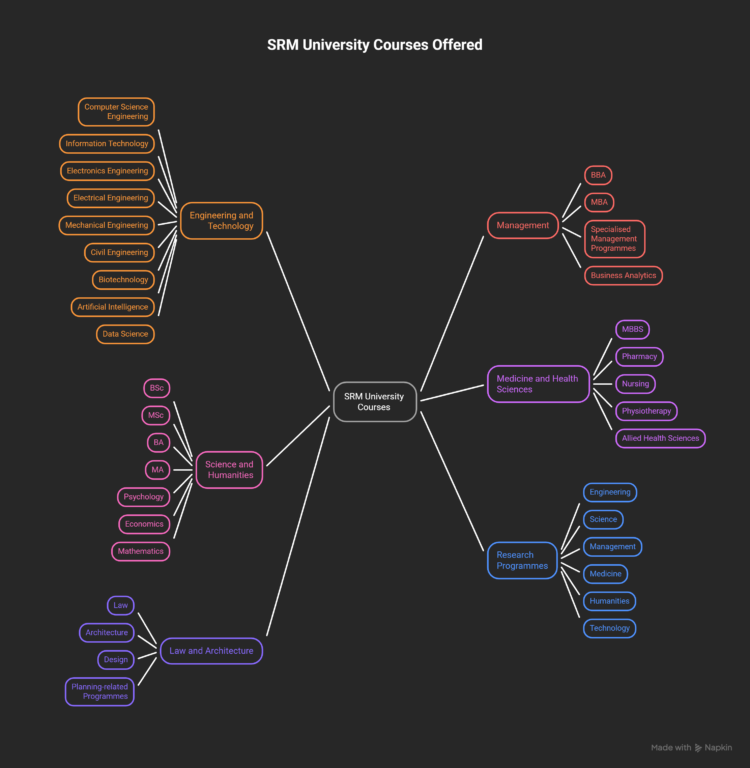
SRM offers programmes across undergraduate, postgraduate, and doctoral levels. Exact offerings depend on the institution and campus.
Engineering and Technology
Engineering remains one of SRM’s strongest areas.
Popular choices include:
- Computer Science Engineering.
- Information Technology.
- Electronics Engineering.
- Electrical Engineering.
- Mechanical Engineering.
- Civil Engineering.
- Biotechnology.
- Artificial intelligence.
- Data science.
Specialisations can differ between campuses.
Management
Management programmes are also popular.
Common options include:
- BBA.
- MBA.
- Specialised management programmes.
- Business analytics.
These courses cover business and organisational skills.
Science and Humanities
Students can also pursue science and humanities.
Options may include:
- BSc.
- MSc.
- BA.
- MA.
- Psychology.
- Economics.
- Mathematics.
- Biotechnology.
These courses can support higher studies and professional careers.
Medicine and Health Sciences
SRM has a significant medical education presence. Available programmes depend on the specific institution.
Options can include:
- MBBS.
- Pharmacy.
- Nursing.
- Physiotherapy.
- Allied health sciences.
Medical admissions follow separate eligibility requirements.
Law and Architecture
SRM also offers professional programmes in other fields.
These include:
- Law.
- Architecture.
- Design.
- Planning-related programmes.
Admission requirements differ across these disciplines.
Research Programmes
Research opportunities are available at postgraduate level. Doctoral programmes cover multiple disciplines.
Students can pursue research in:
- Engineering.
- Science.
- Management.
- Medicine.
- Humanities.
- Technology.
Research suitability depends on the department and supervisor availability.
SRM University Fees 2026
The fees vary by campus, programme, and specialisation. For 2026, students can broadly expect tuition fees from around ₹55,000 to ₹4 lakh or more per year, depending on the course and institution. For example, SRM University Delhi-NCR lists several undergraduate programmes below ₹2 lakh annually, while some B.Tech programmes are around ₹2.5–₹3 lakh per year.
SRM University-AP, B.Tech tuition can range from about ₹2.5 lakh to ₹4.6 lakh per year, depending on the specialisation.
| Course Category | Estimated Annual Tuition Fee |
|---|---|
| BA / BSc | ₹55,000–₹1.5 lakh |
| BCom | ₹70,000–₹1 lakh |
| BBA / BCA | ₹75,000–₹1.5 lakh |
| B.Tech | ₹1.5–₹4.5 lakh |
| MBA | ₹1.5–₹2.5 lakh |
| MCA / M.Tech | ₹1–₹2 lakh |
| Professional programmes | ₹1.5–₹5 lakh+ |
Note: These are indicative ranges, not a single fee applicable to every SRM campus. Tuition fees, hostel charges, examination fees, and other expenses can change according to the institution and academic year. Current published fee structures show substantial differences between SRM campuses.
This format would fit your previous university blogs better because it gives readers a quick estimated range while avoiding the impression that every SRM campus follows the same fee structure.
What Factors Affect SRM Fees?
Several factors influence the total cost.
- Selected programme.
- Specialisation.
- Campus.
- Course duration.
- Admission category.
- Hostel requirements.
- Examination charges.
- Other academic expenses.
General Fee Categories
Students may need to pay:
- Tuition fees.
- Registration charges.
- Examination fees.
- Hostel fees.
- Food charges.
- Laboratory charges.
- Library charges.
- Other institutional fees.
Professional programmes can require larger budgets. Students should calculate the complete yearly expense.
What About Hostel Expenses?
Hostel costs depend on the campus. Room type can also affect the final amount.
Students should consider:
- Room category.
- Food arrangements.
- Hostel location.
- Residential facilities.
- Additional services.
Living expenses should also be included. Bengaluru, Chennai, Delhi-NCR, and other locations differ in cost.
Are Scholarships Available?
SRM offers scholarship opportunities for eligible students. Scholarships can depend on merit, entrance performance, sports, or other criteria.
Students should check the applicable scholarship conditions. Financial assistance can reduce the overall education cost.
SRM University Admission Process 2026
SRM follows different admission procedures. The process depends on the chosen programme.
SRMJEEE Admission
SRMJEEE is mainly associated with engineering admissions. It is an important route for eligible B.Tech applicants.
The general process includes:
- Check engineering eligibility.
- Register for SRMJEEE.
- Complete the application.
- Attend the examination.
- Check the result.
- Participate in counselling.
- Select preferred choices.
- Receive seat allocation.
- Complete admission formalities.
Students should carefully check the applicable 2026 requirements.
Who Needs SRMJEEE?
SRMJEEE primarily applies to selected engineering admissions. Other programmes may follow different admission routes.
Students should not assume that every SRM course requires SRMJEEE.
Other Admission Routes
Depending on the programme, admission can involve:
- Merit-based selection.
- National entrance examinations.
- NEET.
- Programme-specific examinations.
- Entrance scores.
- Interviews.
- Academic performance.
Medical programmes follow separate admission requirements.
General Eligibility
Eligibility varies between courses.
UG applicants may need:
- Class 12 qualification.
- Required subjects.
- Minimum qualifying marks.
- Programme-specific conditions.
PG applicants generally need a relevant bachelor’s degree.
Documents Usually Required
Students should prepare:
- Academic certificates.
- Mark sheets.
- Identity proof.
- Passport photographs.
- Entrance examination details.
- Transfer certificate.
- Community certificate.
- Other programme-specific documents.
Applicants should keep digital copies ready.
What Should Students Check Before Applying?
Students should verify:
- Course eligibility.
- Admission method.
- Application deadline.
- Entrance examination.
- Fee structure.
- Scholarship options.
- Campus location.
- Hostel availability.
This can prevent application mistakes.
Placements at SRM University
SRM has an established placement ecosystem. Students receive opportunities across several industries.
Placement outcomes differ between programmes. Campus and academic specialisation also matter.
Which Industries Recruit Students?
Common sectors include:
- Information technology.
- Software development.
- Consulting.
- Banking.
- Finance.
- Automobile.
- Electronics.
- Healthcare.
- Biotechnology.
- Manufacturing.
- Telecommunications.
Technology-related courses attract many recruiters.
What Job Roles Are Available?
Roles depend on the student’s qualification.
Common positions include:
- Software developer.
- Data analyst.
- Business analyst.
- Design engineer.
- Systems engineer.
- Financial analyst.
- Marketing executive.
- Management trainee.
- Research associate.
- Product specialist.
What Affects Placement Outcomes?
Several factors influence individual results.
These include:
- Academic performance.
- Technical skills.
- Communication skills.
- Internships.
- Projects.
- Certifications.
- Interview performance.
- Specialisation.
Students should begin placement preparation early.
Are High Packages Guaranteed?
No, placement outcomes are not guaranteed. Highest salary figures represent selected offers.
Students should consider broader placement data. Average and median figures provide better context.
Course-specific placement information is also useful. It gives a clearer picture of career outcomes.
How Can Students Improve Placement Chances?
Students should build practical skills.
Useful preparation includes:
- Internships.
- Technical projects.
- Coding practice.
- Aptitude preparation.
- Communication training.
- Mock interviews.
- Resume development.
Industry exposure can strengthen career readiness.
Rankings & Accreditations
SRM has strong recognition in Indian higher education. Rankings can differ between individual SRM institutions.
What Do Rankings Measure?
Ranking organisations may consider:
- Teaching resources.
- Research output.
- Faculty.
- Academic reputation.
- Graduation outcomes.
- Industry links.
- Infrastructure.
- Innovation.
Therefore, rankings should be interpreted carefully.
Is SRM Highly Ranked?
SRM Institute of Science and Technology has received recognition in national rankings. Its engineering and overall institutional performance have contributed to its reputation.
However, ranking positions can change annually. Students should check the latest ranking edition.
What About Accreditation?
Accreditation can vary by programme and institution. Individual programmes may have separate professional recognition.
Students should verify accreditation for their selected course. This is especially important for professional programmes.
Should Rankings Decide The Choice?
Rankings should support the decision. They should not be the only deciding factor.
Students should also compare:
- Course quality.
- Faculty.
- Fees.
- Placements.
- Infrastructure.
- Campus environment.
- Industry exposure.
Campus Life at SRM
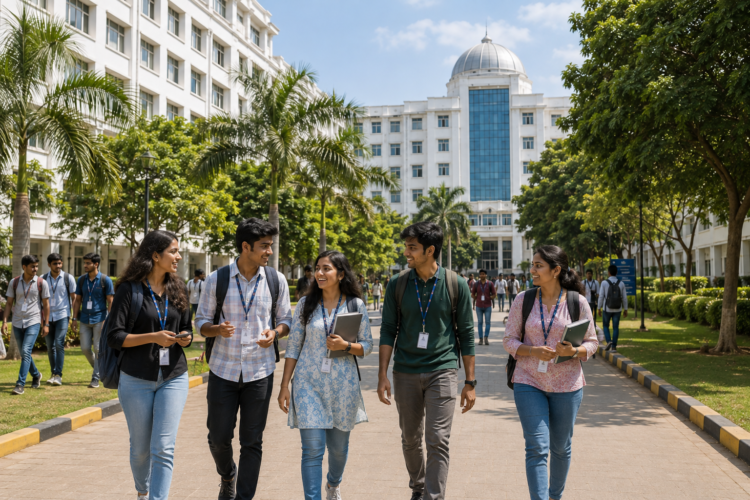
SRM campuses provide diverse student experiences. Campus facilities vary by location.
What Facilities Are Available?
Students can access facilities such as:
- Libraries.
- Laboratories.
- Hostels.
- Sports facilities.
- Cafeterias.
- Auditoriums.
- Computer centres.
- Student activity spaces.
Larger campuses generally offer broader facilities.
What Activities Can Students Join?
Students can participate in many activities.
These include:
- Technical clubs.
- Cultural clubs.
- Sports.
- Student societies.
- Workshops.
- Competitions.
- Festivals.
- Conferences.
These activities support personal development.
What Is Student Life Like?
SRM has a diverse student community. Students come from different parts of India.
The larger campuses provide extensive student interaction. Cultural and technical events are common.
Kattankulathur offers the broadest campus experience. Smaller campuses can provide a more compact environment.
Are Hostels Available?
Yes, hostel facilities are available at several SRM campuses. Options and charges depend on the institution.
Students should check accommodation details before admission.
Who Should Choose SRM University?
SRM can suit students seeking private university education. It is particularly suitable for students wanting multiple course choices.
It can benefit students seeking:
- Engineering education.
- Technology careers.
- Professional courses.
- Modern facilities.
- Industry exposure.
- Research opportunities.
- Campus-based student activities.
Students should choose the campus based on their course.
Final Verdict
SRM University can be a strong private education option. It offers extensive academic and campus choices. Engineering and technology remain major strengths. Management, medicine, science, and other fields are also available.
Kattankulathur is generally the strongest overall campus. However, another campus may suit specific programmes better. Admission routes also vary considerably between courses.
Fees can be higher than public universities. Scholarships can help eligible students manage costs. Placement opportunities are available across multiple industries. Individual outcomes still depend on skills and performance.
Overall, SRM is worth considering for students seeking modern infrastructure, professional programmes, industry exposure, and diverse campus choices. The final decision should depend on the specific course, campus, total cost, admission route, and career goals, rather than the SRM name alone.
Frequently Asked Questions
Is SRM University good in 2026?
Yes, SRM is a popular private education group with strong programmes in engineering, technology, management, and other fields. The quality and experience can vary by campus and course.
Which SRM campus is the best?
Kattankulathur is generally considered the flagship SRMIST campus. However, the best campus depends on the chosen course, location, facilities, and career goals.
What is SRMJEEE?
SRMJEEE is the entrance examination used for eligible engineering admissions at SRM. Students seeking B.Tech admission should check the current examination requirements.
Is SRMJEEE compulsory for every SRM course?
No, SRMJEEE is mainly associated with engineering admissions. Other programmes can use merit, national examinations, NEET, or programme-specific selection methods.
What are the fees at SRM University?
SRM fees vary according to the course, specialisation, campus, and admission category. Hostel, food, examination, and other expenses are usually additional.
Does SRM University offer good placements?
Yes, SRM has an established placement ecosystem with recruiters from technology, consulting, finance, healthcare, and other sectors. Placement outcomes vary by programme and student performance.
Does SRM provide scholarships?
Yes, eligible students can receive scholarships based on factors such as academic merit, entrance performance, sports, or other criteria. Scholarship availability and conditions differ by programme.
Does SRM University provide hostel facilities?
Yes, hostel facilities are available across several SRM campuses. Accommodation options, fees, and facilities vary between campuses.
What are the popular courses at SRM?
Engineering and technology programmes are among the most popular choices. Management, medicine, science, computer applications, law, and architecture are also available.
Which students should choose SRM University?
SRM can suit students seeking modern infrastructure, professional courses, industry exposure, and diverse campus options. Students should compare the specific course, campus, fees, and career opportunities before applying.