Table of Contents
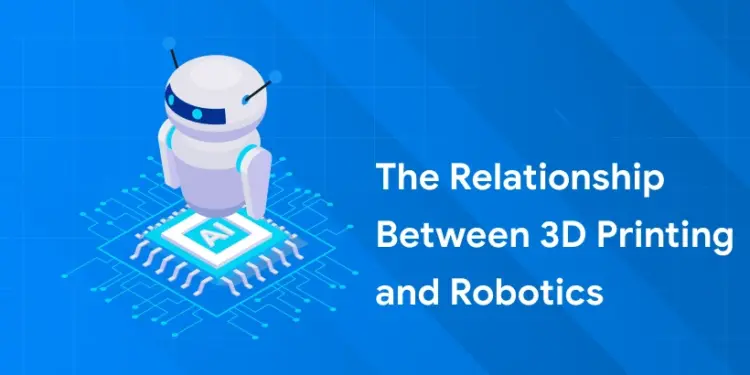
The world is now technologically oriented. Industries are depending upon robotics for the best outputs. 3D printing has recently gained currency as it allows the rapid creation of products and prototypes. Both 3D printing and robotics are innovations that play a very essential part in the transformation of the outlook of career opportunities.
-Robotics and 3D printing complement each other.
-Integration of 3D printing and robotics helps in cost-effective production
– Skills in robotics, CAD, programming, and 3D modelling open up new career possibilities
The product development and modern manufacturing processes now reshape themselves with the advent of 3D printing and robotics. Robotics provides automation, precision and movement, while 3D printing enables the massive production of customised products.
Prototyping will be accelerated with the combination of both 3D printing and robotics. The combination of 3D printing with robotics can also help in the reduction of production costs and development of systems that are more error-free, efficient, and flexible.
3D printing and robotics complement each other. 3D printing can be effectively used to create robotic tools, parts, prototypes, and components, whereas the robots can enhance the pace of the 3D printing process. Faster and more efficient production, prototyping, customised components, designing, and manufacturing will be easily done.
Why 3D Printing and Robotics Are Becoming Closely Connected
The lengthy production process is the major challenge of traditional manufacturing processes. The complex and complicated production processes are simplified with the introduction of 3D printing.
The advent of 3D printing, thus, created a massive change in the production process. We no longer require specialised machines or moulds for the production of customised products.
The application-specific system works with robotics. It works in precise working conditions by interpreting the machine language. Designing, testing, modifying, applying, analysing, manufacturing and researching the components will be easier and more accessible with the combination of 3D printing and robotics.
The rapid prototyping, automation and research became more easily accessible by the combination of 3D printing along with robotics. The combination of 3D printing and robotics facilitates smart manufacturing.
Start learning robotics today! Build strong fundamentals with expert-led training.
How 3D Printing Supports Robotics
3D printing can support robotics in various ways, which include the following:
Rapid prototyping
The development and testing of the robotic components become easier
Lightweight structures
Lightweight structures help in the reduction of robotic weight. Optimised printed parts can play a key role in the development of the robotics system.
Custom parts
Based on the specific robotic applications, the components can be developed, designed, and tested.
Cost-effective development process
Without spending much on expensive tools, small-scale production can be easily done
Complex geometries
The shapes that are traditionally difficult to manufacture can now be easily manufactured with the aid of 3D printing.
The robotic brackets, gears, covers, and mounts can be printed in 3D and tested for working efficiency without compromising on quality.
Master Robotics and AI!
Ready to build the future? Join our comprehensive robotics course to bridge the gap between complex code and physical motion. You’ll gain hands-on experience giving you the technical edge needed to lead in the age of automation.
Know MoreHow Robotics Enhances 3D Printing
The automation feature of robotics supports the 3D printing process. Manufacturing becomes easier with automation techniques. The system of robotics can handle various stages of the 3D printing process, which involves post-processing, quality inspection, large-structure printing, material deposition, part removal and so on. The flexibility is provided in great deal by robotic arms which aid in the large-scale productions.
Start learning robotics today! Build strong fundamentals with expert-led training.
Major Applications Across Industries
Several industries are making use of the combination of robotics with 3D printing.
| Industry | Major Application |
| Health care | Customised wearable products, prosthetics, robotic components |
| Manufacturing | Customised fixtures, toolings |
| Aerospace | Complex lightweight components |
| Education | Robotic experiments and development |
| Construction | 3D printing of large-scale structures |
3D Printing vs Traditional Manufacturing for Robotics
3D printing has more advantages over traditional printing. Traditional printing requires more time and effort from the human side. Whereas the automatic features of 3D printing make a huge difference. However, massive or high-volume production can still depend on traditional methods.
| Features | 3D Printing | Traditional Manufacturing |
| Prototyping | Fast | Slow |
| Tooling | Minimal | Required |
| Customisation | Flexible | Limited |
| Mass Production | Less suitable | Efficient |
| Material | Growing | Extensive |
Master Robotics and AI!
Ready to build the future? Join our comprehensive robotics course to bridge the gap between complex code and physical motion. You’ll gain hands-on experience giving you the technical edge needed to lead in the age of automation.
Know MoreAdvantages of Combining 3D Printing and Robotics
The integration of robotics with 3D printing comes with more advantages in the production and manufacturing sector. Here are the key advantages of their integration.
- Development of lightweight structures
- Robot components customisation
- More flexibility in designing
- Prototyping cost reduction
- Product development pace increase
- Reduction of material waste in production
- The production workflow becomes automated
The Industry 4.0 concept and the smart manufacturing goals will be achieved through the integration of 3D printing with robotics.
Challenges and Limitations
Combining 3D printing with robotics has its own challenges along with the benefits. Addressing the challenges is part of growth and more visionary thought on future developments. The durability and strength of the printed materials should be taken into account.
The limitation in understanding the true nature of the surface finish and material properties should be considered as well. The manufacturing tolerance should be taken care of.
The engineers ought to work on the printing accuracy along with the development aspects. Complex programming is one major challenge with regard to robotic 3D printing. The limitations with respect to motion planning, quality control, material handling, and calibration should be considered.
Start learning robotics today! Build strong fundamentals with expert-led training.
Skills Needed to Work in This Field
The fusion of 3D printing with robotics requires skill sets to ensure career growth. Since it is a multidisciplinary sector, skill sets should be upgraded at particular intervals.
- Python
- C++
- 3D modelling
- CAD
- Additive manufacturing
- ROS
- Actuators
- Sensors
- Embedded systems
- Electronics
- Robotics programming
- Automation
- 3D printer operations
- Mechanical design
- Automation
Across the manufacturing, engineering, automation and product development sectors, having a grip on both 3D printing and robotics can be beneficial.
Conclusion
New possibilities are being created in the technological revolution of the world with the integration of 3D printing and robotics.
Customised robotic prototypes can be invented, developed, designed and produced with the aid of 3D printing, whereas the automation functionality of robotics helps in the smooth delivery and transaction process.
Qualified professionals with knowledge of both robotics and 3D printing technology are in high demand. The career opportunities for the integration of 3D printing and robotics are limited. Learning both technologies can accelerate your career growth and assist you in becoming a successful engineer.
Master Robotics and AI!
Ready to build the future? Join our comprehensive robotics course to bridge the gap between complex code and physical motion. You’ll gain hands-on experience giving you the technical edge needed to lead in the age of automation.
Know MoreFrequently Asked Questions
What is the major perk of inventing 3D printers?
The advent of 3D printing thus created a massive change in the production process. We no longer require specialised machines or moulds for the production of customised products.
How is the integartion of 3D printing and robotics help in prototyping?
Prototyping will be accelerated with the combination of both 3D printing and robotics. The combination of 3D printing with robotics can also help in the reduction of production costs and develop systems that are more error-free, efficient, and flexible.
What is 3D printing in robotics?
3D printing can be effectively used to create robotic tools, parts, prototypes, and components, whereas the robots can enhance the pace of the 3D printing process. Faster and more efficient production, prototyping, customised components, designing, and manufacturing will be easily done.
What are the core difference between traditional manufacuturing and 3D printing?
3D printing has more advantages over traditional printing. Traditional printing requires more time and effort from the human side. Whereas the automatic features of 3D printing make a huge difference.
Why is 3D printing and robotics show high connection?
The application-specific system works with robotics. It works in precise working conditions by interpreting the machine language. Designing, testing, modifying, applying, analysing, manufacturing and researching the components will be easier and more accessible with the combination of 3D printing and robotics.
What is the major challenge of traditional printing?
The lengthy production process is the major challenge of traditional manufacturing processes. The complex and complicated production processes are simplified with the introduction of 3D printing.