
Table of Contents
Introduction: Understanding the Traditional Art of Kalamkari
Kalamkari is a traditional Indian textile art. Beautiful designs are created on cotton fabric. Natural dyes are used in traditional methods. Flowers, animals, and stories are often shown. Each design carries a special meaning.
Kalamkari is mainly linked with Andhra Pradesh. Two famous styles are widely known. These are Srikalahasti and Machilipatnam Kalamkari. Different methods are used in each style. Some designs are painted by hand. Others are printed using wooden blocks.
This art has been practised for many generations. Traditional skills are passed down through families. Today, Kalamkari is also used in fashion. Sarees, dresses, kurtas, and home fabrics are made. Its traditional designs remain popular.
Key Takeaways
- Kalamkari is a traditional Indian textile art.
- Cotton fabric is commonly used.
- Natural dyes are used in traditional methods.
- Srikalahasti Kalamkari is painted by hand.
- Machilipatnam Kalamkari is mainly block-printed.
- Nature and mythology inspire many designs.
- Kalamkari is used in modern fashion.
- Genuine fabric should be checked carefully.
Learn Advanced Designing & Boutique Skills with Experts. Join Now!
What Is Kalamkari Fabric?
Kalamkari is a type of printed fabric. It is known for its detailed designs. Traditional patterns are created using special methods. The word Kalamkari comes from Persian words.
- Kalam means pen.
- Kari means work or craftsmanship.
Together, the word refers to pen work. A special pen is used for painting. Wooden blocks are also used in printing.
Cotton is commonly used for Kalamkari. The fabric is prepared before printing. Designs are added using dyes and colours. Traditional methods involve several steps.
Main Features of Kalamkari Fabric
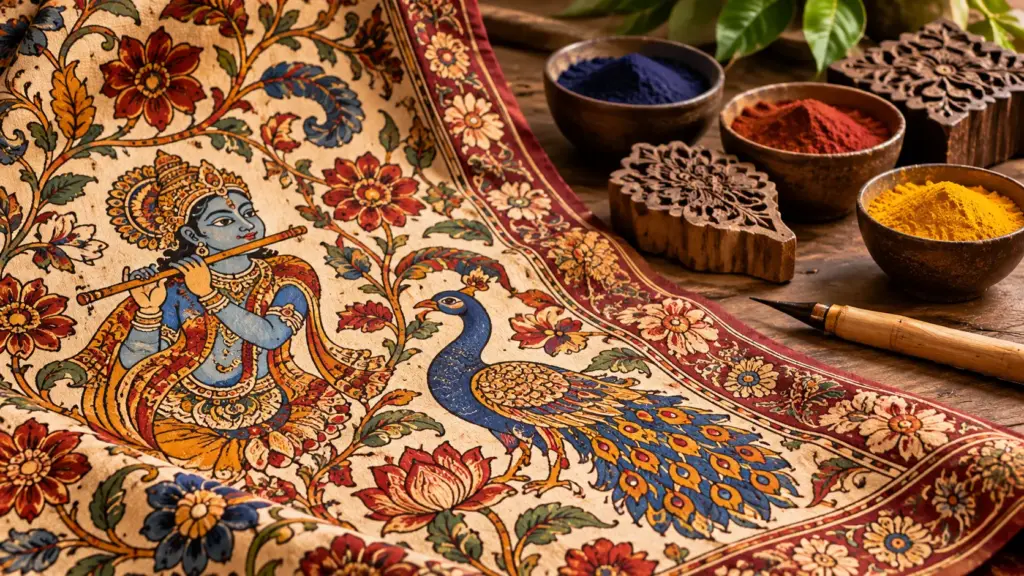
Kalamkari fabric has many special features.
- Detailed designs.
- Floral and animal patterns.
- Mythological stories.
- Traditional colour combinations.
- Hand-painted or block-printed designs.
- Cotton fabric.
- Natural dyes in traditional processes.
Red, black, blue, and yellow are common colours. Green and other shades may also be used. The colours depend on the design.
Materials Used
Different materials are used during production.
- Cotton fabric.
- Wooden printing blocks.
- Bamboo or date-palm pens.
- Natural dyes.
- Alum and other fixing materials.
- Wax or other resist materials in some processes.
The materials depend on the printing method. Each step needs careful handling.
Master Fashion Designing and Create Your Signature Style
Unlock your creative potential with our expert-led Fashion Designing course. Build in-demand skills and step confidently into the world of fashion!
Begin Your Fashion Career Today!History and Origin of Kalamkari Art in India
Kalamkari has a long history in India. It developed through traditional textile practices. Andhra Pradesh became an important centre. The art was used for many purposes.
In earlier times, Kalamkari cloth was used in temples. Religious stories were shown through painted fabrics. These cloth pieces were also used as decorations. Some were carried by travelling storytellers.
The designs helped stories reach more people. Scenes from Hindu epics were commonly shown. Figures of gods and goddesses were also painted. Nature-inspired patterns were used too.
Growth of Kalamkari
Kalamkari developed through different stages.
Temple Traditions
- Religious stories were painted on cloth.
- Temple decorations were created.
- Gods and goddesses were shown.
- Traditional symbols were included.
Trade and Markets
- Printed fabrics were traded.
- Textile designs reached other regions.
- New patterns were developed.
- Different colour styles were introduced.
Regional Styles
- Srikalahasti became known for hand painting.
- Machilipatnam became known for block printing.
- Different methods were followed.
- Regional designs were developed.
Modern Use
- Kalamkari sarees became popular.
- Dress materials were created.
- Home decoration products were introduced.
- New colours and designs were explored.
Kalamkari continues to be made today. Traditional methods are still practised by artisans. Modern production methods are also used.
Learn Advanced Designing & Boutique Skills with Experts. Join Now!
Different Types of Kalamkari Printing Techniques
Two major Kalamkari styles are widely recognised. They are Srikalahasti and Machilipatnam Kalamkari. Both are associated with Andhra Pradesh. Their printing methods are different.
Srikalahasti Kalamkari
Srikalahasti Kalamkari is known for hand painting. Designs are drawn using a special pen. This pen is called a kalam. Each design is created by an artisan.
The style is strongly linked with temple art. Religious stories are often shown. Figures of gods are commonly painted. Floral and animal designs are also used.
How Is Srikalahasti Kalamkari Made?
Several steps are followed during production.
Fabric Preparation
- Cotton fabric is selected.
- The cloth is washed.
- Starch and dirt are removed.
- The fabric is dried.
Drawing the Design
- The design is planned first.
- A kalam is used for drawing.
- Figures and patterns are outlined.
- Each detail is added carefully.
Adding Colours
- Natural dyes are prepared.
- Different colours are applied.
- Each section is coloured separately.
- The fabric is dried between steps.
Finishing
- The fabric is washed.
- Extra colour is removed.
- The cloth is dried.
- Final details are checked.
This method needs patience and skill. Large designs may take several days. Each piece can show small differences.
Machilipatnam Kalamkari
Machilipatnam Kalamkari is known for block printing. Wooden blocks are used for designs. The blocks are carved with patterns. Colours are transferred onto the fabric.
This style is associated with Machilipatnam. It is also called Pedana Kalamkari. Floral and decorative patterns are commonly used. Persian-inspired designs have also influenced this style.
How Is Machilipatnam Kalamkari Made?
The process involves several steps.
Fabric Preparation
- Cotton fabric is selected.
- The cloth is washed.
- It is treated before printing.
- The fabric is dried.
Block Preparation
- Designs are drawn on wooden blocks.
- The patterns are carved.
- Separate blocks may be made for colours.
- Each block is prepared for printing.
Printing
- Colour is applied to the block.
- The block is pressed onto the fabric.
- The design is repeated carefully.
- Different blocks are used for details.
Dyeing and Finishing
- Colours are fixed on the fabric.
- The cloth is washed.
- Extra dye is removed.
- The fabric is dried.
This method allows repeated patterns. The same block can be used many times. Care is needed to keep designs aligned.
Srikalahasti vs Machilipatnam Kalamkari
| Feature | Srikalahasti Kalamkari | Machilipatnam Kalamkari |
| Main Method | Hand painting | Block printing |
| Main Tool | Kalam or pen | Wooden blocks |
| Common Designs | Stories and figures | Floral and decorative patterns |
| Process | Designs are drawn by hand | Designs are printed using blocks |
| Appearance | Detailed painted look | Repeated printed patterns |
| Main Centre | Srikalahasti | Machilipatnam and Pedana |
Both styles are important textile traditions. Their methods and designs are different. Skilled artisans are involved in both.
Traditional Motifs and Designs Used in Kalamkari
Many traditional motifs are used in Kalamkari. These designs are inspired by nature. Religious stories are also represented. Some patterns are linked with local traditions.
Floral Motifs
Flowers are widely used in Kalamkari.
- Lotus flowers.
- Jasmine patterns.
- Leaf designs.
- Creeper patterns.
- Tree branches.
These motifs are used in borders. They are also added across the fabric.
Animal and Bird Motifs
Animals and birds are common designs.
- Peacocks.
- Elephants.
- Parrots.
- Deer.
- Swans.
- Horses.
These figures are often drawn with fine details. They may be placed around floral patterns.
Mythological Motifs
Stories from Indian epics are often shown. Religious figures are also included.
- Krishna stories.
- Scenes from the Ramayana.
- Scenes from the Mahabharata.
- Images of gods and goddesses.
- Temple-inspired figures.
These designs are often seen in Srikalahasti Kalamkari. Large scenes may be painted on cloth.
Geometric and Decorative Patterns
Simple patterns are also used.
- Circles.
- Lines.
- Diamonds.
- Checks.
- Repeated borders.
- Small decorative shapes.
These patterns are often used in printed fabrics. They help create balanced designs.
Common Kalamkari Motifs and Their Uses
| Motif | Common Appearance | Use in Designs |
| Lotus | Flower pattern | Borders and central designs |
| Peacock | Bird figure | Sarees and decorative fabrics |
| Elephant | Animal figure | Traditional and festive designs |
| Tree | Branches and leaves | Large fabric panels |
| Floral vines | Repeated flowers and leaves | Borders and all-over patterns |
| Mythological figures | Gods and story scenes | Painted cloth panels |
Master Fashion Designing and Create Your Signature Style
Unlock your creative potential with our expert-led Fashion Designing course. Build in-demand skills and step confidently into the world of fashion!
Begin Your Fashion Career Today!Natural Dyes Used in Kalamkari Printing
Natural dyes are an important part of traditional Kalamkari. They are made from natural materials. Plants, roots, and minerals are used. Different materials produce different colours.
The dyeing process needs careful preparation. Colours are applied in stages. Some fixing materials are also used. Alum is commonly used as a mordant. It helps certain dyes attach to fabric.
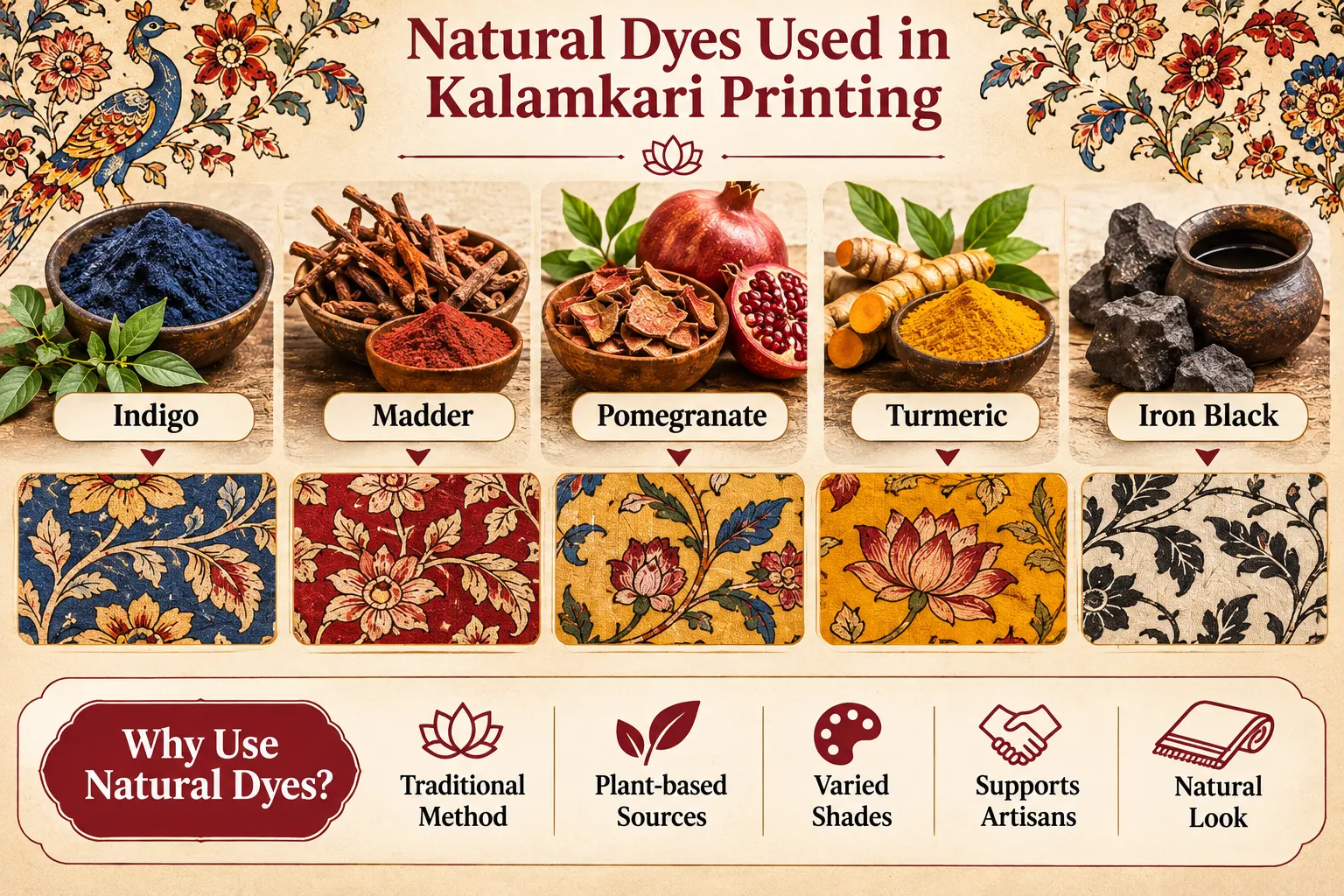
Common Natural Dyes
Indigo
- It is used for blue shades.
- It comes from indigo plants.
- It is used in traditional dyeing.
Madder
- It is used for red shades.
- It comes from plant roots.
- It is used in traditional textiles.
Pomegranate
- The rind can produce yellow tones.
- It is used in some dye processes.
- Different shades can be created.
Turmeric
- It produces yellow shades.
- It comes from turmeric roots.
- It is used in traditional colouring.
Iron-Based Black
- Iron solutions are used.
- Dark black shades can be created.
- They are used for outlines and details.
Why Are Natural Dyes Used?
Natural dyes are valued for several reasons.
- They are linked with traditional methods.
- Many are obtained from plants.
- Different shades can be created.
- They support traditional dyeing skills.
- They give fabrics a natural appearance.
Traditional dyeing can take time. Colours may also vary between batches. Modern Kalamkari may use synthetic dyes. Therefore, every Kalamkari fabric is not necessarily made with natural dyes.
How Kalamkari Fabric Is Used in Modern Fashion Designing
Kalamkari is now used in many fashion designs. Traditional motifs are added to modern clothing. Different fabrics and styles are explored. Its patterns are also used in accessories.
Kalamkari in Traditional Clothing
Kalamkari is commonly used for ethnic wear.
- Sarees.
- Kurtas.
- Salwar suits.
- Dupattas.
- Blouses.
- Long skirts.
Kalamkari sarees are popular for their designs. Dupattas are also widely used. Traditional motifs add a special look.
Kalamkari in Western Clothing
Modern garments are also made with Kalamkari.
- Dresses.
- Tops.
- Shirts.
- Jackets.
- Skirts.
- Shrugs.
Printed fabric can be used for many styles. Small panels can also be added. This creates a mix of traditional and modern designs.
Kalamkari in Accessories
The fabric is also used for accessories.
- Handbags.
- Pouches.
- Scarves.
- Stoles.
- Footwear.
- Fabric jewellery.
These products help traditional designs reach new buyers. Small fabric pieces can also be reused.
Kalamkari in Home Decoration
Kalamkari is used beyond clothing.
- Cushion covers.
- Curtains.
- Table covers.
- Wall hangings.
- Bed covers.
- Decorative panels.
Large patterns can be used for home interiors. Smaller motifs can be used for accessories.
Kalamkari and Modern Fashion Design
Different design ideas are being explored.
- Traditional motifs are used on modern dresses.
- Printed panels are added to jackets.
- Floral designs are used on shirts.
- Kalamkari borders are added to sarees.
- Small patterns are used on bags.
Traditional skills are also being supported. Many designers work with local artisans. This helps keep the craft in use.
Kalamkari vs Other Traditional Indian Printing Techniques
India has many traditional textile printing methods. Each method has its own style. Different tools and materials are used. Their patterns and colours also vary.
Kalamkari is mainly known for pen work and block printing. Other printing traditions use different methods. Some use carved blocks. Others use resist dyeing or tied fabric.
Difference Between Kalamkari and Other Printing Styles
| Printing Style | Region | Main Technique | Common Designs |
| Kalamkari | Andhra Pradesh | Hand painting or block printing | Floral and mythological motifs |
| Bagru Print | Rajasthan | Wooden block printing | Floral and geometric patterns |
| Ajrakh Print | Gujarat and Rajasthan | Resist and block printing | Geometric and repeated patterns |
| Sanganeri Print | Rajasthan | Fine block printing | Floral and delicate designs |
| Dabu Print | Rajasthan | Mud-resist printing | Natural and geometric patterns |
Kalamkari vs Bagru Printing
Bagru printing is linked with Rajasthan. Wooden blocks are used for printing. Natural dyes are used in traditional methods. Floral and geometric designs are common.
Kalamkari includes hand painting and block printing. Mythological figures are also widely shown. Both traditions use detailed patterns.
Kalamkari vs Ajrakh Printing
Ajrakh is known for repeated geometric designs. Resist printing is used in its production. Indigo and other dyes are common.
Kalamkari designs may include stories and figures. Hand painting is used in Srikalahasti. Block printing is used in Machilipatnam.
Kalamkari vs Sanganeri Printing
Sanganeri printing is known for fine floral patterns. Wooden blocks are used for printing. Light backgrounds are often selected.
Kalamkari has a wider range of designs. Mythological and nature-inspired motifs are common. Both styles are used in clothing.
How to Identify Authentic Kalamkari Fabric
Kalamkari fabric is available in many markets. Different production methods are also used. Some products are handmade. Others are produced using machines.
A few checks can help identify the fabric. The seller and product details should be checked. The printing method should also be understood.
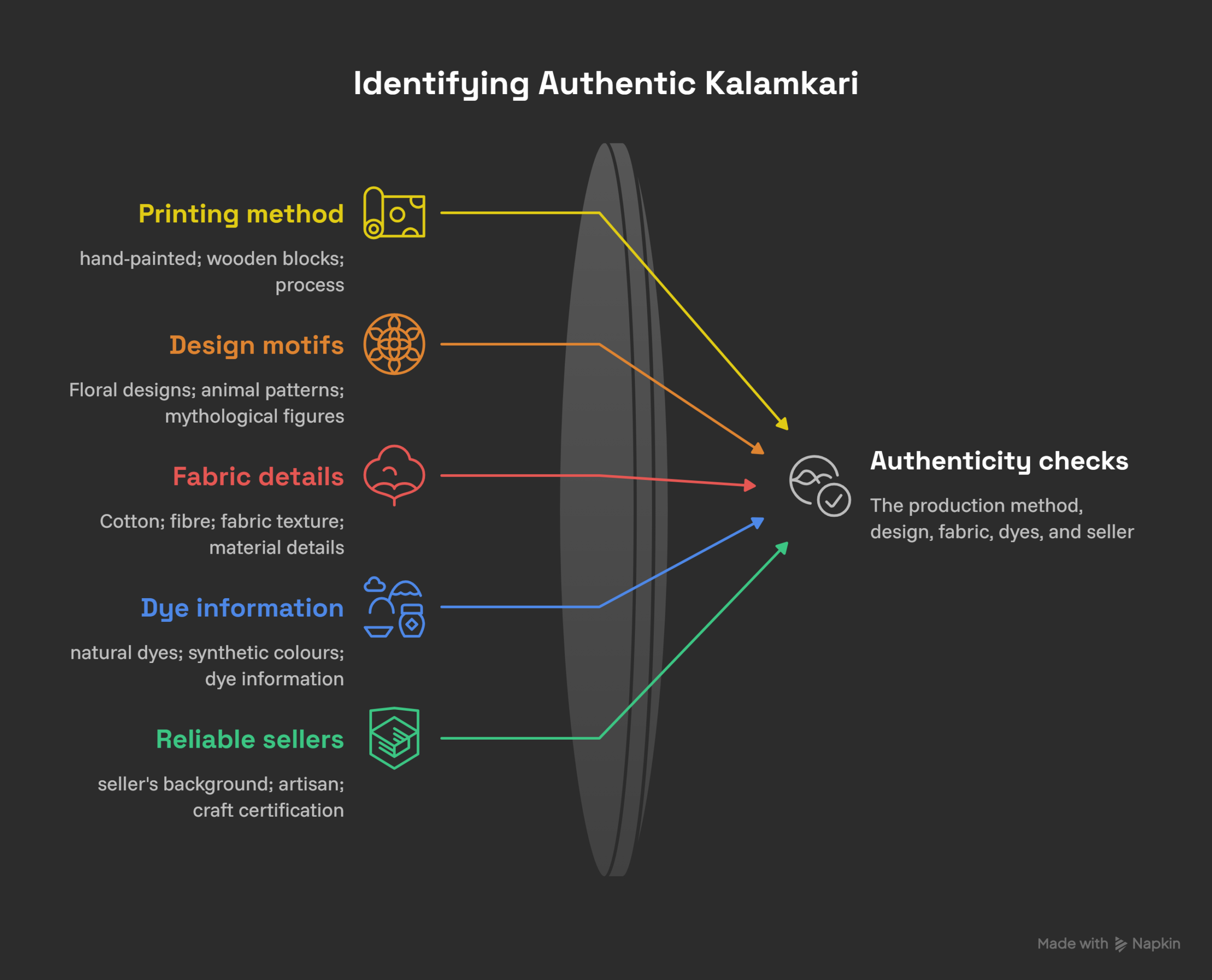
Check the Printing Method
The production method should be confirmed.
- Ask whether the fabric is hand-painted.
- Check whether wooden blocks were used.
- Look for details about the process.
- Ask where the fabric was made.
Hand-painted Srikalahasti work may show small variations. Block-printed designs may show repeated patterns.
Look at the Design
Traditional Kalamkari often has detailed motifs.
- Floral designs.
- Animal patterns.
- Mythological figures.
- Traditional borders.
- Nature-inspired shapes.
The design alone cannot prove authenticity. Similar patterns can be printed by machines.
Check the Fabric
Cotton is commonly used in traditional Kalamkari.
- Check the fabric label.
- Ask about the fibre.
- Feel the fabric texture.
- Look for clear material details.
Some products may use silk or blends. The material should be confirmed before buying.
Ask About the Dyes
Traditional Kalamkari uses natural dyes. However, modern products may use synthetic colours.
- Ask which dyes were used.
- Check the product description.
- Look for dye information.
- Confirm whether natural dyes were used.
A natural appearance does not prove natural dye use.
Buy From Reliable Sellers
The seller should provide clear details.
- Check the seller’s background.
- Ask about the artisan or weaving centre.
- Read the product description.
- Look for craft certification when available.
- Request care instructions.
A GI tag or other certification may support origin claims. It should be checked for the specific product. A printed design alone is not proof of authenticity.
Conclusion
Kalamkari is an important Indian textile art. It is known for detailed traditional designs. Hand painting and block printing are used. Srikalahasti and Machilipatnam are its main styles.
Natural dyes are used in traditional processes. Flowers, animals, and stories inspire its motifs. Today, Kalamkari is used in modern clothing. It is also used for home decoration.
The craft carries many years of knowledge. Its skills are preserved by artisans. Traditional Kalamkari continues to inspire designers. Its value is seen in Indian fashion.
Master Fashion Designing and Create Your Signature Style
Unlock your creative potential with our expert-led Fashion Designing course. Build in-demand skills and step confidently into the world of fashion!
Begin Your Fashion Career Today!Frequently Asked Questions
What is Kalamkari fabric?
Kalamkari is a traditional Indian textile art. Designs are painted or printed on fabric. Cotton is commonly used.
Where did Kalamkari originate?
Kalamkari is strongly associated with Andhra Pradesh. Srikalahasti and Machilipatnam are important centres. The art developed through traditional textile practices.
What are the two main types of Kalamkari?
The two main styles are Srikalahasti and Machilipatnam. Srikalahasti uses hand painting. Machilipatnam mainly uses wooden blocks.
What is used to make Kalamkari designs?
A special pen is used for hand painting. Wooden blocks are used for block printing. Dyes and fixing materials are also used.
Which fabric is commonly used for Kalamkari?
Cotton is commonly used. Some products may use silk. Blended fabrics are also available.
Are natural dyes used in Kalamkari?
Natural dyes are used in traditional methods. Indigo, madder, and turmeric are examples. Some modern products use synthetic dyes.
What designs are commonly found in Kalamkari?
Floral and animal motifs are common. Mythological stories are also shown. Geometric patterns and traditional borders are used too.
Is Kalamkari suitable for daily wear?
Yes, many Kalamkari fabrics can be used daily. Cotton garments are often comfortable. The fabric weight and care needs should be checked.
How should Kalamkari fabric be washed?
Care depends on the dyes and fabric. Follow the seller’s washing instructions. Gentle washing may be recommended. Harsh chemicals should be avoided when advised.
How can genuine Kalamkari be identified?
The printing method should be checked. Fabric and dye details should be confirmed. Reliable sellers should be preferred.