Table of Contents
Between 12 and 30 months, your focus must be on practical life skills, sensory exploration, language through short, child-led activities. Along with that, social as well as emotional development are equally important.
Montessori prioritizes independence and self-regulation at this stage while teaching vocabulary as well as movement. Typically, numbers, letters, and phonics are introduced around 2.5 years.
Key Takeaways
- Ages 1 to 2.5 focus on movement, order, and language, not academics.
- Practical life activities build independence.
- Sensorial activities prepare children for maths and reading.
- Talking, reading, and rhymes support language development.
- Letters and numbers are usually introduced around age 2.5.
- Sharing means guided turn-taking at this age.
- Activities should be simple, clear, and repeatable.
Register for the Entri Elevate Montessori Teacher Training Program! Join Now!
Why 1 to 2.5 Years is a Distinct Teaching Window
1: What is the primary focus of the first plane of development in the Montessori method?
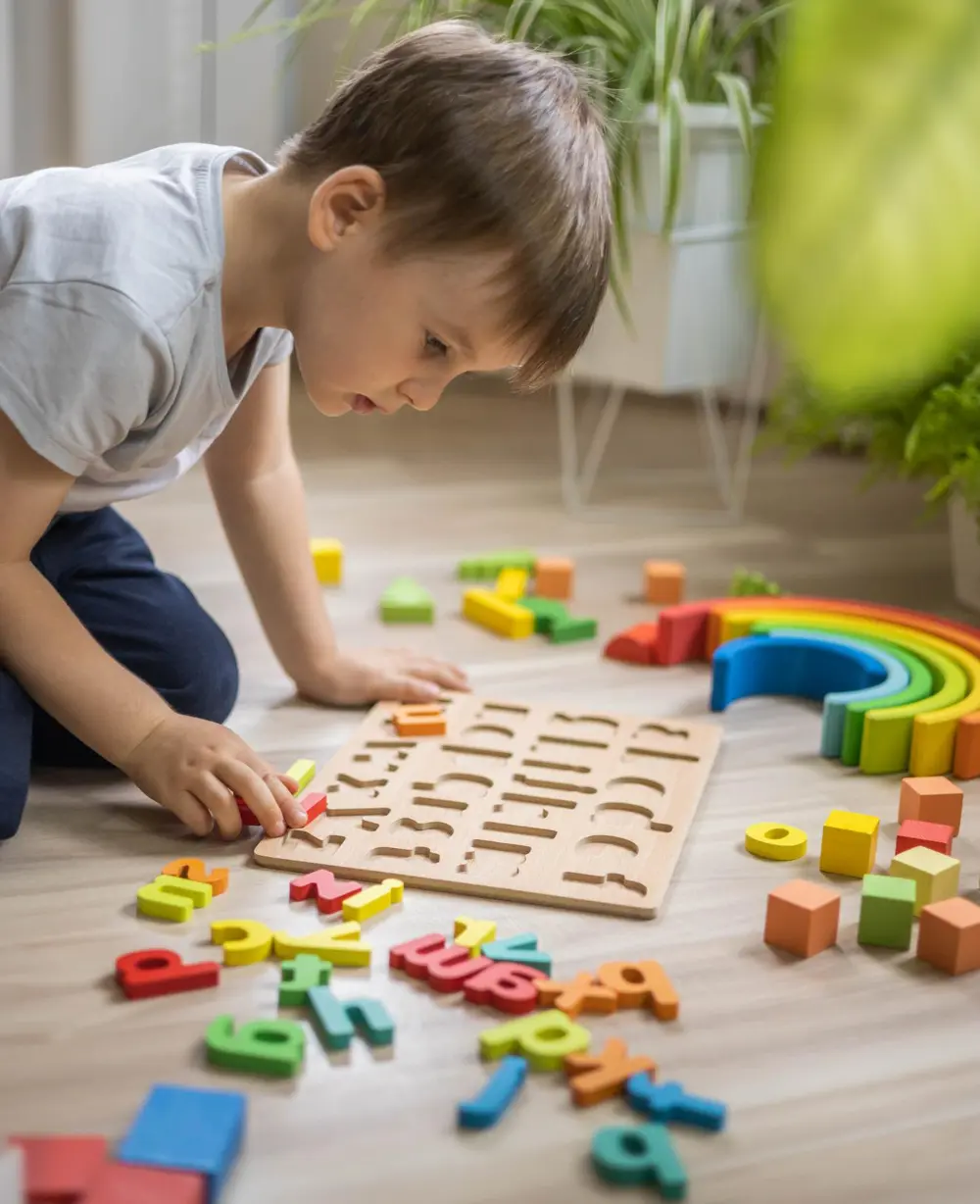
This stage isn’t a “mini preschool”. It is a window where children learn primarily through:
-
Movement and Order:
Toddlers are constantly refining their motor control and have a thing for knowing what is coming next. Predictable routines and tidy spaces are a must, to avoid unsettling them more than most adults probably expect.
-
A Language Explosion:
Vocabulary just takes off and before you know it most kids have moved on from single words to two or three word phrases. That often happens between the ages of 18 and 30 months.
-
Sensorial Refinement:
Kids learn a whole lot through getting their hands on real objects, sorting, matching, and comparing rather than just looking at pictures on a screen.
-
Early Social Beginnings:
Playtime is still pretty much just parallel. When we talk about “sharing” well it is more like turn-taking with an adult there to guide the whole thing.
Note:
Plan activities that are super simple, concrete, and can be repeated over and over, with a clear start and finish. Don’t forget to include a clear routine for the kids.
Get Certified & Start Your Montessori Career
Montessori Teacher Training Course by Entri App: Gain expert skills, earn certification, and kickstart your teaching career.
Join Now!Core Learning Areas for 1 to 2.5 Years
1. Practical Life: Independence and Daily Skills
Toddlers wish to do most of the things by themselves. But their motor control and attention span are still developing. So every task needs to be broken into small, manageable steps.
Practical life work builds independence and coordination. This includes:
-
Self-Help:
Shoes and socks, elastic-waist pants, washing and drying hands, wiping the face after meals.
-
Care of Environment:
Returning toys to low shelves, wiping a table, watering plants, sweeping with a child-sized broom.
-
Food Prep:
Peeling a banana or boiled egg, spreading with a blunt knife, pouring water, spooning snacks onto a plate.
| Age band | Example activity | Skill focus |
| 12–18 months | Posting objects into a box; transferring items by hand | Hand-eye coordination, cause and effect |
| 18–24 months | Spooning rice or beans; pouring small amounts of water | Fine motor control, concentration |
| 24–30 months | Wiping a small table; simple food prep like peeling a banana | Multi-step sequencing, independence |
Present it Montessori-Style:
- Invite the child at eye level (“I will show you”).
- Demonstrate once slowly with minimal talking.
- Offer “Your turn” and step back.
- Then reset calmly and re-demonstrate if it falls apart rather than correcting mid-action.
2. Sensorial and Early Cognitive Skills
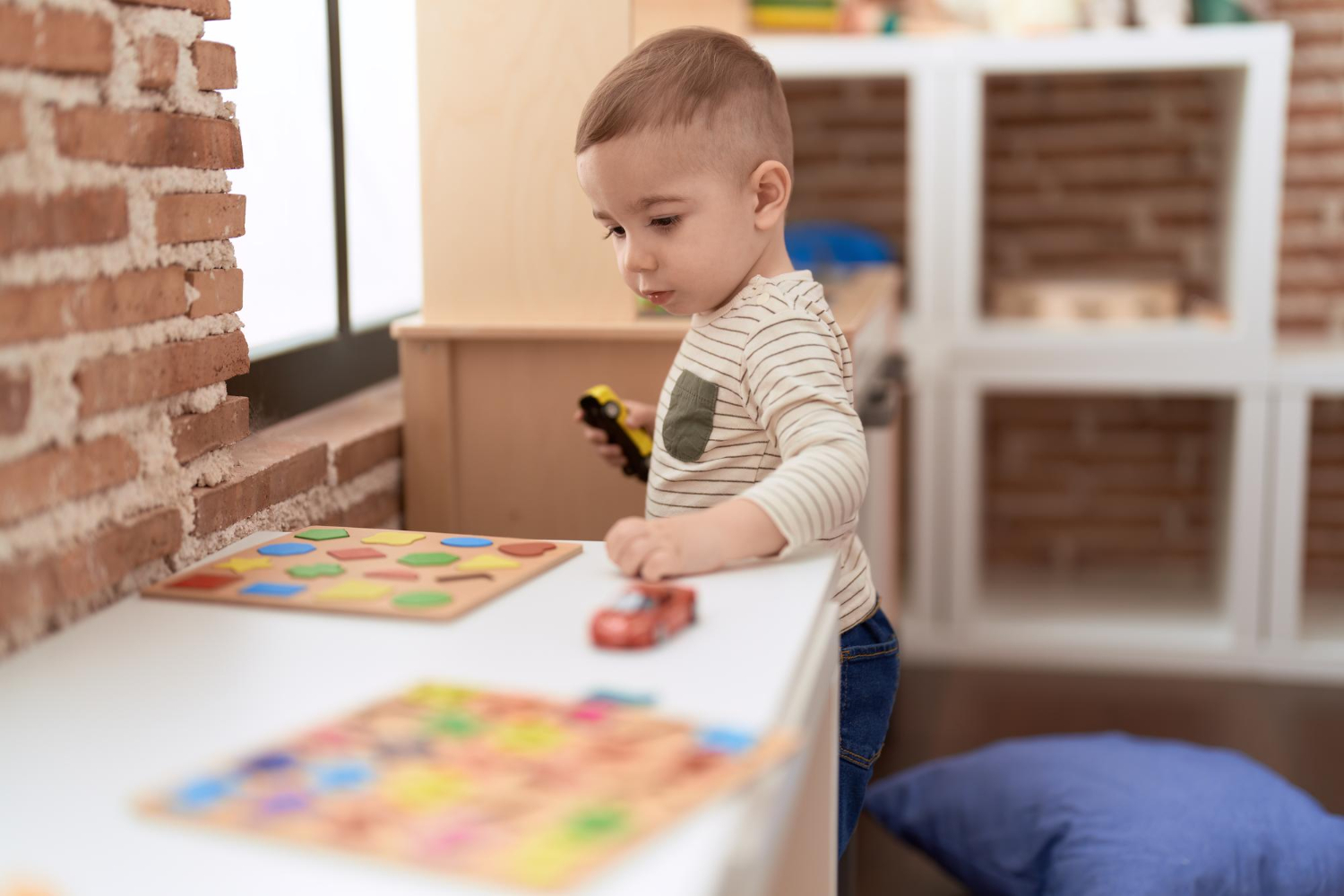
Sensorial activities such as sorting, matching, and keeping things in order. All these help to refine the senses and lay down some early cognitive skills.
Kids make sense of the world by touching, seeing and hearing. So trust that sensorial materials will help them figure out what they’re experiencing before they even know what to call it
- Sorting by one attribute colour, size, or object type (buttons vs. beads).
- Matching a 3D object to its 2D picture card, or identical pairs.
- Ordering big-to-small or long-to-short, using nesting cups, stacking rings, or 2 to 4 piece puzzles.
All this stuff lays the groundwork for later on – long before formal letters and numbers even make sense in their world.
TTC trainees should observe which attribute a child is naturally drawn to. Then extend that interest with a slightly harder material.
3. Language and Communication
Focus on naming everyday objects and actions, simple sound games, and short stories, rhymes, and songs with repetition. Rich, responsive conversation matters far more than formal lessons at this stage.
-
Narrate daily routines:
“Now we are washing our hands. First water, then soap.”
-
Read daily:
One short picture book, pausing to ask “What do you see?” and letting the child turn the pages.
-
Use first/then language:
“First shoes, then outside”. This builds a sense of sequence and expectation.
-
Play with sound and rhyme:
Simple alliteration (“m…m…moon, m…m…mama”) and nursery rhymes with actions.
Single words appear around 12 to 18 months. Two-word phrases like “more milk” by 18 to 24 months, while two- to three-word sentences by 24 to 30 months. Individual variation, including in bilingual homes, is totally normal.
4. Early Math Foundations (Indirect Preparation)
At this age, mathematics is indirect. It involves:
- Sorting
- Ordering
- One-to-one correspondence
- Noticing quantity through everyday life
Children build a “mathematical mind” through comparison and pattern long before they meet a numeral.
- More/fewer/same – “Do you want more chips or fewer?”
- Simple patterns – red-blue-red-blue with blocks or beads.
- Meaningful counting – counting spoons, claps, or steps during play, not rote recitation.
The real math curriculum for kids under 3 years of age are:
- Sorting laundry
- Setting a small table with one plate per person
- Handing out “one biscuit for you, one for me”
5. Social-Emotional and Behaviour Foundations
Focus on adult-supported turn-taking, simple grace and courtesy, and naming feelings. True cooperative sharing and complex empathy develop later. At this age, children need more supportive presence.
-
Turn-taking:
“My turn, your turn soon,” paired with a visual timer or simple counting for waiting.
-
Grace and courtesy:
Greetings, “please” and “thank you” woven into routines, brief waiting while an adult finishes speaking.
-
Emotion vocabulary:
“You are angry because the toy was taken”. Naming feelings helps children move from tantrums toward words over time.
Practising these scripts until it’s automatic makes a real difference at home or in class.
Age-Wise Focus: A Quick Reference
| Age band | Key focus areas | Example activities |
| 12–18 months | Movement, object permanence, early practical life, first words | Posting objects, naming things, simple picture books |
| 18–24 months | Practical life peak, sensorial sorting, two-word phrases, turn-taking | Spooning, pouring, sorting by colour, “more/less” games |
| 24–30 months | Multi-step practical life, early patterns and counting, longer phrases, social scripts | Wiping a table, simple food prep, counting to 5–10, “please/thank you” routines |
Formal phonics and numeral symbols typically begin from around 2.5 years. The 1 to 2.5 window is about indirect preparation for both.
Setting Up the Environment
A prepared environment matters as much as the activity. Low shelves, child-sized tools, and one uncluttered activity per tray let a toddler choose, work, and return materials independently.
Register for the Entri Elevate Montessori Teacher Training Program! Join Now!
Get Certified & Start Your Montessori Career
Montessori Teacher Training Course by Entri App: Gain expert skills, earn certification, and kickstart your teaching career.
Join Now!Common Mistakes to Avoid
-
Over-structuring play:
Back-to-back activities with no free exploration. Leave long, uninterrupted play blocks and observe before stepping in.
-
Pushing letters and numbers too early:
Flashcards or worksheets for under-3s. Lean on sensorial and language-rich routines; introduce symbols only when the child shows interest, generally from 2.5 years.
-
Expecting adult-like sharing:
Forcing an immediate handover or calling a toddler “selfish.” Support turn-taking with predictable language and accept parallel play as normal.
Conclusion
Between 1 and 2.5 years, the thing that is most valuable to teach isn’t really a curriculum at all. It is setting up a nice prepared environment, calmly showing them things, and daily routines that are just bursting with language and opportunities for independence.
Practical life, sensorial work, chatting, indirect maths, and gentle social scripts cover all the basics a toddler really needs – all before we even get to the stage of formal letters and numbers.
The goal for everyone – parents and TTC trainees alike, is to follow the child’s natural rhythms and sensitive periods, and not rush them along.
Get Certified & Start Your Montessori Career
Montessori Teacher Training Course by Entri App: Gain expert skills, earn certification, and kickstart your teaching career.
Join Now!Frequently Asked Questions
What should I teach my 1.5-year-old at home?
Focus on practical life tasks, sensorial sorting, and rich language through daily routines and picture books. Short, repeatable activities build independence and vocabulary better than formal academics.
Is it too early to start numbers and letters at 2 years?
Yes. Formal letters and numerals are usually introduced from around 2.5 years. Before that, indirect preparation through sorting, patterns, and meaningful counting builds a stronger foundation.
How long should a toddler activity last?
Most toddler activities last 2 to 10 minutes depending on age and interest. Younger toddlers manage only a few minutes. Children closer to 2.5 years can sustain longer, multi-step tasks.
What if my child isn't talking much at 2 years?
Many children show a language spurt between 18 to 30 months, but the range of “normal” is wide. If there are no words by 18 months or no two-word phrases by 2.5 years, check with a pediatrician.
Should toddlers be forced to share their toys?
No. “Sharing” at this age is really adult-supported turn-taking, not spontaneous generosity. Use consistent language like “your turn soon” instead of insisting on an immediate handover.
How can I encourage language development in a toddler?
Narrate daily routines, read one picture book daily, and play simple sound and rhyme games. Responsive, everyday conversation builds vocabulary better than structured lessons.
How should I introduce a new activity to a toddler?
Invite the child, demonstrate once slowly with minimal talking, then let them try independently while you observe. If it falls apart, reset calmly and demonstrate again.
What is a common mistake parents make with toddlers?
Over-structuring the day with back-to-back activities, or pushing early academics too soon. Long, unhurried blocks of free play are usually more valuable.
How can I teach grace and courtesy to a toddler?
Model greetings, “please,” and “thank you” within everyday routines rather than as isolated lessons. Toddlers absorb social scripts through repetition and imitation.
What age should formal Montessori materials for numbers and letters begin?
Most guidance places direct work with numerals and phonics from around 2.5 to 3 years. Before that, indirect preparation through sorting and language-rich play is considered appropriate.