Table of Contents
A good AI outfit maker prompt mainly names the garment first. It is then that it adds fit, fabric, colour, details and camera setup in a fixed order. The same structure works for both menswear and womenswear.
What changes between the two is the vocabulary. While menswear prompts lean on structure and hardware, womenswear prompts lean on drape, trims and sheen.
Fashion prompt guides published through 2026 keep landing on the same garment, silhouette, fabric, colour, lighting sequence. This is because specific inputs stop AI tools from falling back on generic, repetitive images.
Learn Advanced Designing & Boutique Skills with Experts. Join Now!
Key Takeaways
- Start with the exact garment name. Skip vague style words.
- Follow the 7-part formula – garment, fit, fabric, colour, details, view/lighting, one style word.
- Use 2 to 3 colours and 2 to 3 details only.
- Menswear – stress structure, weight, hardware.
- Womenswear – stress drape, sheen, trims.
- Change one variable at a time when refining.
- DALL·E 3 retired 12 May 2026. ChatGPT now uses GPT Image 2.
What is an AI Outfit Maker Prompt?
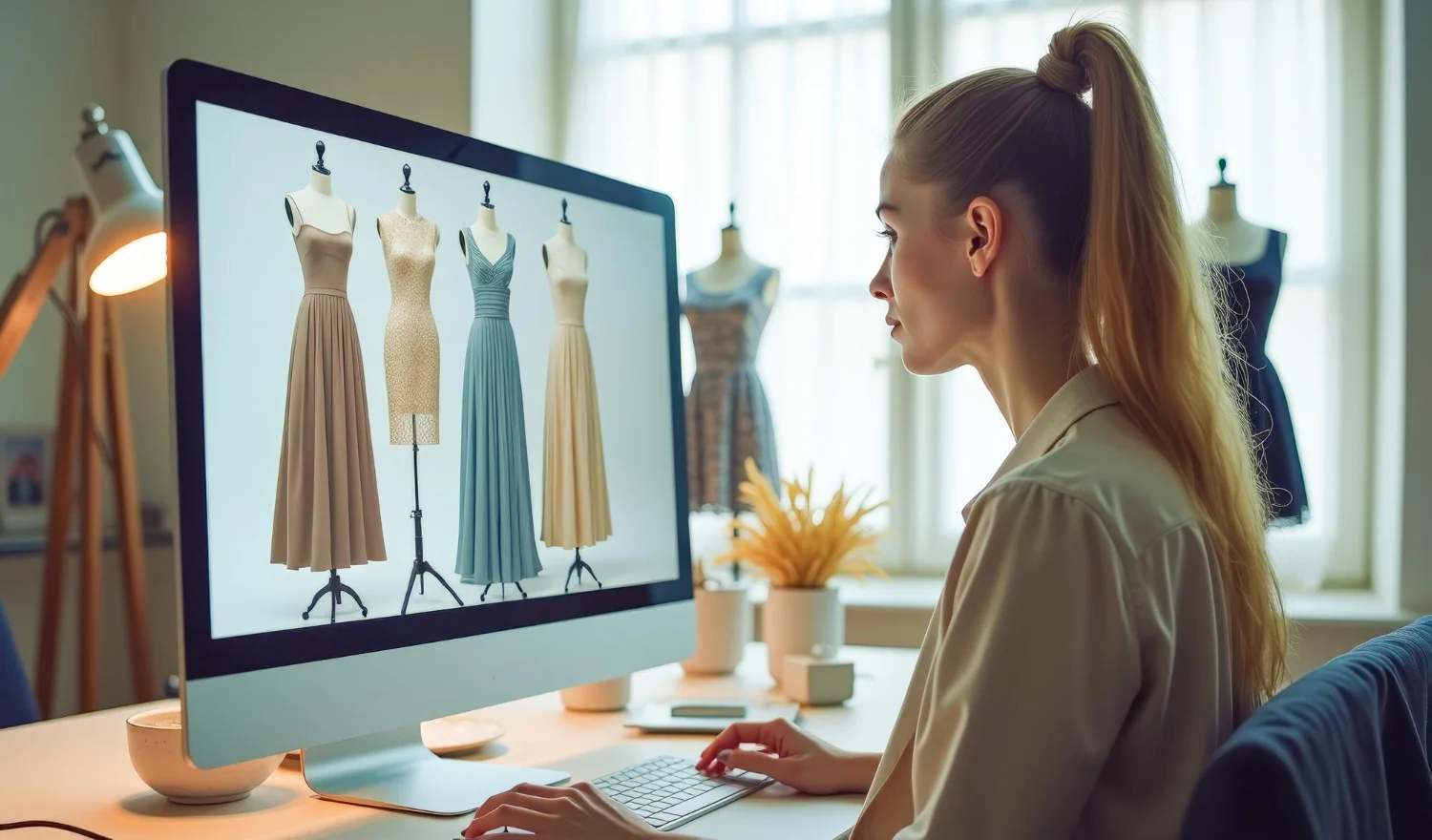
An AI outfit maker prompt is a structured text instruction that tells an image generator
- which garment to draw
- how it fits
- what it is made of
- what colour it is
- how the shot is framed
Unlike a casual image prompt, it uses fashion and textile vocabulary such as “raglan sleeves”, “ribbed knit” or “structured wool crepe”. The reason is simple.
When you write “emerald silk evening gown”, the model links emerald to colour, silk to a flowing sheen and evening gown to a formal category. Then it blends them into one image.
Master Fashion Designing and Create Your Signature Style
Unlock your creative potential with our expert-led Fashion Designing course. Build in-demand skills and step confidently into the world of fashion!
Begin Your Fashion Career Today!Why Prompt Structure Matters for Fashion Designers
A fixed structure gives you repeatable results, and repeatability is what turns AI from a toy into a design tool for lookbooks, mood boards and product mockups. The industry is moving in this direction fast.
Reports suggest that automation and generative AI are set to reshape fashion roles and skills at a pace comparable to the early days of computers and the internet.
It is also estimated that generative AI could add $150-275 billion to apparel, fashion and luxury operating profits over three to five years. Real brands already show the gains.
The Core Prompt Formula (Your Master Skeleton)
Use this skeleton for every outfit, men’s or women’s:
[Garment type] + [Silhouette/Fit] + [Fabric/Texture] + [Colour palette] + [Design details] + [View + Lighting + Background] + [One style word]
| Element | What to specify | Example words |
| Garment type | The exact item | cropped bomber jacket, chore coat, wrap midi dress |
| Silhouette/fit | Shape on the body | slim-tapered, oversized boxy, A-line, cinched-waist |
| Fabric/texture | Material and surface | liquid satin, heavy denim, ribbed knit, matte leather |
| Colour palette | 2 to 3 colours and placement | deep emerald with gold tonal stitching |
| Design details | 2 to 3 construction features | tie waist, kangaroo pocket, contrast piping |
| View, lighting, background | Framing and mood | full-length front view, softbox light, seamless white |
| Style word | One vibe word | minimalist, streetwear, haute couture |
Women’s example:
“Fitted wrap midi dress, A-line silhouette, liquid satin with subtle sheen, deep emerald with gold tonal stitching, asymmetric hem and tie waist, full-length front view on model, softbox studio lighting on seamless white, minimalist editorial.”
Men’s example:
“Oversized boxy blazer, dropped-shoulder cut, structured wool crepe, charcoal with black contrast piping, two-button closure and flap pockets, waist-up on male model, Rembrandt lighting, dark grey backdrop, modern streetwear.”
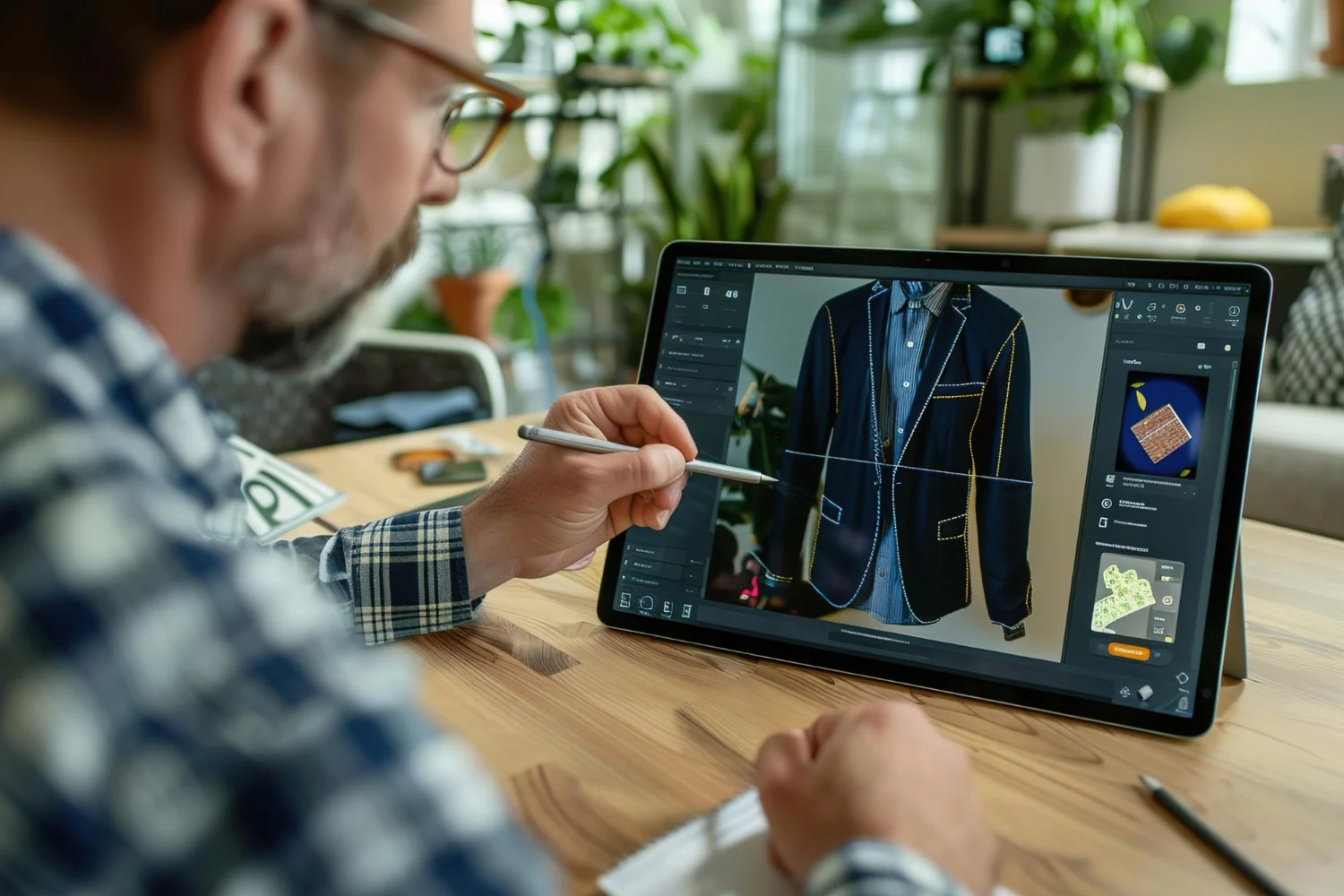
The 7 Elements at a Glance
-
Garment:
Name the exact item in your first words. Opening with “minimalist outfit” pushes the garment too far back and lowers accuracy.
-
Fit:
Fit words change drape and proportion more than colour words do.
-
Fabric:
Without material and surface cues, AI often renders flat, plastic-looking clothing. For men, stress weight and finish. For women, stress drape and glow.
-
Colour:
Name two or three colours and where they appear, such as “sky blue with chalk-white collar”.
-
Details:
Pick two or three only. Too many instructions and the model quietly drops some.
-
View and light:
This layer decides whether you get a product shot, a lookbook page or an editorial spread.
-
Style word:
Use one. Stacking several (“minimalist vintage streetwear couture”) sends conflicting signals.
Ready-to-Use Prompt Templates
Women’s template:
“[Garment], [fit], [fabric + texture], [colours with placement], [2 to 3 details], [view + female model], [lighting], [background], [one style word].”
Men’s template:
“[Garment], [fit], [fabric + texture], [colours], [construction details], [view + male model], [lighting], [background], [one style word].”
Example
“Unstructured blazer, slim-tapered fit, lightweight cotton twill, navy with matte black buttons, two-button closure and flap pockets, waist-up on male model, softbox studio lighting, light grey backdrop, modern business casual.”
Master Fashion Designing and Create Your Signature Style
Unlock your creative potential with our expert-led Fashion Designing course. Build in-demand skills and step confidently into the world of fashion!
Begin Your Fashion Career Today!Men vs Women: What to Emphasize in Prompts
| Element | Men’s prompts | Women’s prompts |
| Garment type | Tailoring and outerwear (blazer, chore coat, cargo pant) | Dresses, skirts, draped tops, layered sets |
| Fit | Structure: boxy, tapered, athletic fit | Shape and drape: A-line, cinched-waist, flowy |
| Fabric | Weight and finish: heavy denim, wool crepe, matte leather | Sheen and drape: liquid satin, silk chiffon, fluid crepe |
| Colour | Neutral or tonal plus one accent | Richer or experimental: emerald and gold, pastel and metallic |
| Details | Hardware, seams, pockets, contrast stitching | Trims, ties, ruffles, embroidery, necklines |
| Style word | streetwear, business casual, tech wear | boho chic, haute couture, minimalist editorial |
Common Mistakes and How to Fix Them
| Mistake | Why it fails | Fix |
| Starting with style, not garment | The AI does not know what to draw first | Lead with the exact garment name |
| No fabric or texture | Clothing looks flat or plastic | Add material plus surface, like “ribbed knit, matte” |
| Too many colours or styles | Output turns muddy | Limit to 2-3 colours and one style word |
| Asking for “flawless” results | Skin and fabric look airbrushed | Ask for natural skin texture and slight fabric creasing |
Which AI Tools Work Best in 2026?
The image-generation landscape changed a lot this year, so check your tool before you copy an old prompt.
| Tool | Best for | Good to know |
| ChatGPT (GPT Image 2) | Conversational edits and multi-part instructions | Launched 21 April 2026, and DALL·E 3 was retired on 12 May 2026 |
| Google Gemini (Nano Banana) | Editing and character consistency | Nano Banana Pro accepts up to 14 reference images |
| Midjourney | Artistic, stylized editorial looks | Paid plans only, with no free trial |
| Adobe Firefly | Commercial client work | Trained on licensed or original data |
Learn Advanced Designing & Boutique Skills with Experts. Join Now!
Workflow: From Prompt to Production-Ready Visuals
- Define the use case: e-commerce page, lookbook, social media or client pitch.
- Pick the template: men’s or women’s, then casual, occasion or streetwear.
- Fill the skeleton with garment and fit in the first line, then generate 10-20 variations and shortlist three to five.
- Refine one variable at a time, keeping the garment fixed.
- Lock your model descriptor across a campaign so faces and mood stay consistent.
- Review before publishing. Check fit, hems, hands and fabric detail, since AI still gets these wrong.
Conclusion
The best AI outfit prompts are not longer, but only more specific. Lead with the garment, and then define fit and fabric. Keep colours and details to two or three.
Frame the shot and close with one style word. Use the same skeleton for men and women. Adjusting the vocabulary, and refining one variable at a time are two wise steps to take. Practice on a few real briefs and random outputs become consistent, usable visuals.
Master Fashion Designing and Create Your Signature Style
Unlock your creative potential with our expert-led Fashion Designing course. Build in-demand skills and step confidently into the world of fashion!
Begin Your Fashion Career Today!Frequently Asked Questions
What is the best prompt structure for AI clothing design?
Use garment, fit, fabric, colour, details, view and lighting, then one style word. This order puts the most important information first, which helps the model prioritize it.
Which AI tools work best for outfit generation?
ChatGPT, Google Gemini, Midjourney, Adobe Firefly and Flux all handle detailed fashion prompts well. Choose based on your goal, such as editing, artistic style or commercial safety.
Is DALL·E 3 still available for outfit prompts?
No, OpenAI retired DALL·E 3 on 12 May 2026. ChatGPT now uses GPT Image 2, and your existing prompts should work with it.
How long should an outfit prompt be?
Keep it to roughly 30 to 60 words with key details in the first 15 to 20. Overlong prompts often make the model ignore later details.
Why does my AI outfit look flat or plastic?
You probably left out fabric words. Add a material and a surface cue, such as “raw-edge denim, matte”.
Should I include a model description?
Yes, if you want the outfit on a person. Specify age, body type and hair, or the tool may default to a narrow look.
How do I keep the same model across a campaign?
Reuse an identical model descriptor and style block in every prompt. Reference photos in image-to-image tools also help.
Can AI outfit prompts help with e-commerce product images?
Yes, clean studio lighting and neutral backgrounds give catalogue-style visuals fast. Always check that the colour and cut match the real product.
What are the best style words for men and women?
Men’s prompts work well with streetwear, business casual and techwear. Women’s prompts suit boho chic, minimalist editorial and haute couture.
How do I refine an image without starting over?
Keep the garment and fit fixed and change only one variable, such as lighting, colour or background. This shows you exactly which change improved the result.