Table of Contents
Yoga stretches ease stiffness. Gentle movement improves flexibility. It also helps in joint mobility. It can also support better posture and movement. Yoga may provide modest pain relief for some conditions.
The best approach involves regular practice. Stretching should gentle. It should never cause sharp or severe pain. Consistency matters more. Difficulty of the yoga poses not that important.
Beginners should start slowly. They must then progress gradually.
Join the best online yoga teacher training program of 2026! Register in Entri Elevate now!
Why Daily Yoga Stretches Matter
Stiffness can develop during everyday routines. Long sitting can reduce regular body movement. Inactivity can also make muscles feel tight. Repeated movements can create tension in some areas.
Daily stretching encourages regular physical movement. It gently moves muscles through comfortable ranges. It can also improve awareness of body positioning.
Common Causes of Everyday Stiffness
Several daily habits can contribute to stiffness.
- Sitting for extended periods.
- Maintaining the same posture.
- Limited physical activity.
- Repetitive movements.
- Poor movement habits.
- Insufficient recovery.
- Muscle tension from daily stress.
These factors affect different body areas. The following are often tighten: neck,, shoulder, back, hip. Legs can also feel stiff after inactivity.
How does Yoga Help Stiffness?
Yoga combines stretching with controlled movement. Many poses move several joints together. This can encourage greater movement throughout the body.
Gentle yoga can support:
- Muscle flexibility.
- Joint mobility.
- Spinal movement.
- Hip movement.
- Shoulder mobility.
- Body awareness.
- Posture control.
Regular movement can make everyday activities feel easier. It can also support better physical comfort.
Why does Consistency Matter?
Flexibility develops through practice. Occasional stretching provide relief for a while. Regular practice creates more consistent movement opportunities.
A daily routine does not require long sessions. Even short routines encourage regular movement. Beginners start with simple stretches.
A practical routine may include:
- Five minutes of gentle movement.
- Several basic stretching poses.
- Slow and controlled breathing.
- Brief relaxation afterward.
The routine should remain realistic and comfortable.
Stiffness and Pain are Different
Stiffness often feels like restricted movement. Pain can involve different sensations and causes. These sensations should not always be treated similarly.
Gentle stretching may suit everyday stiffness. Persistent or severe pain needs more attention. Necessary medical care cannot be replaced by yoga.
When Should Stretching be Avoided?
Stretching is not suitable always. Certain symptoms require professional assessment.
Avoid forcing stretches during:
- Sharp or sudden pain.
- Significant swelling.
- Recent serious injuries.
- Severe joint discomfort.
- Numbness or unusual weakness.
- Unexplained persistent pain.
Existing conditions may require modified yoga. Older adults need additional precautions. Pregnant people also need pose modifications.
Benefits of Daily Stretching with Yoga
1: Which of these is the primary goal of yoga practice?
Daily yoga stretching support several areas. Benefits depend on the poses. It also depends on practice. Individual results vary.
1. Improved Flexibility
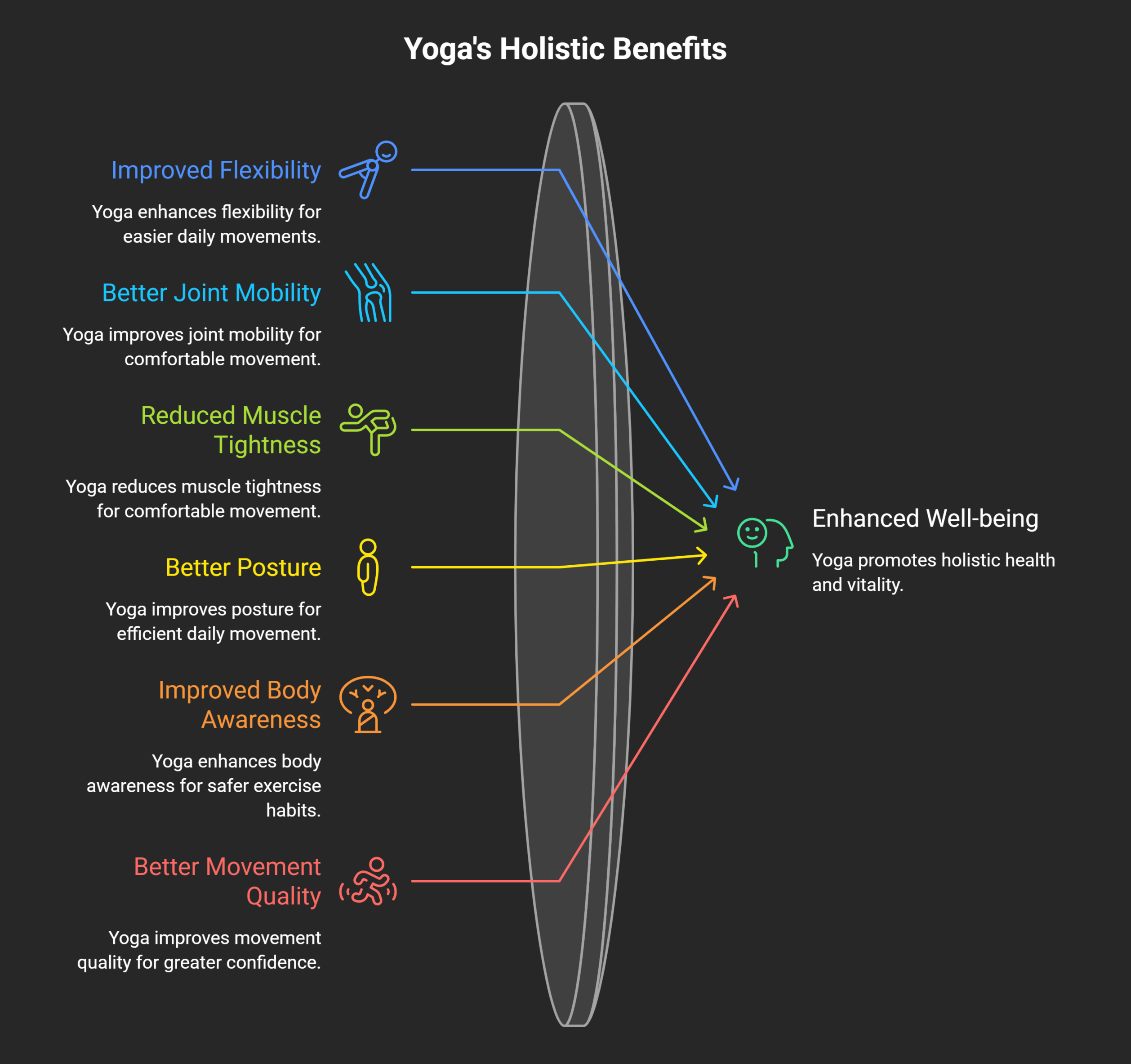
Regular stretching gradually improve flexibility. Yoga uses controlled movements. It also includes sustained positions.
Flexibility can support:
- Easier bending.
- Better reaching.
- Comfortable walking.
- Easier daily movements.
- Improved exercise performance.
Flexibility should develop without forcing the body.
2. Better Joint Mobility
Yoga moves joints through controlled positions. Regular movement can support comfortable joint mobility.
It can support movement in:
- Hips.
- Shoulders.
- Knees.
- Ankles.
- Wrists.
- Spine.
Better mobility can make everyday movements easier.
3. Reduced Muscle Tightness
Gentle stretching can help address muscle tightness. It encourages controlled movement through comfortable ranges.
Common tight areas include:
- Neck muscles.
- Shoulder muscles.
- Lower back.
- Hip muscles.
- Hamstrings.
- Calf muscles.
Regular stretching can help maintain comfortable movement.
4. Better Posture
Yoga encourages awareness of body alignment. Many poses require controlled spinal positioning.
Regular practice can support:
- Better posture awareness.
- Stronger supporting muscles.
- Improved spinal mobility.
- Better sitting habits.
- Controlled body positioning.
Good posture can support efficient daily movement.
5. Improved Body Awareness
Yoga requires attention during every movement. Practitioners notice tension and body positioning.
This awareness can help identify:
- Tight muscles.
- Poor posture.
- Uncomfortable movements.
- Excessive stretching.
- Uneven body positions.
Better awareness can encourage safer exercise habits.
6. Better Movement Quality
Stiffness can affect everyday movement patterns. Regular stretching can support smoother movement.
It can help with activities such as:
- Walking.
- Bending.
- Reaching.
- Sitting.
- Standing.
- Climbing stairs.
Improved mobility can support greater movement confidence.
7. Support for Pain Management
Yoga may help manage certain pain conditions. Research has examined several types of pain. Benefits can vary between different conditions.
Research has explored yoga for:
- Chronic low-back pain.
- Neck pain.
- Knee osteoarthritis symptoms.
- Some headache conditions.
The benefits are not always large. Yoga should complement appropriate medical care.
8. Better Relaxation
Yoga combines movement with controlled breathing. Gentle stretching can reduce physical tension. Relaxation may also support mental wellbeing.
Relaxation-focused practice can include:
- Slow stretching.
- Gentle forward folds.
- Restorative poses.
- Controlled breathing.
- Short meditation.
9. Improved Breathing Awareness
Yoga often connects breathing with movement. This encourages more conscious breathing patterns.
Controlled breathing can support:
- Relaxed movement.
- Better concentration.
- Mindful practice.
- Physical relaxation.
- Body awareness.
Breathing should remain comfortable during stretching.
10. Better Daily Mobility
Regular stretching can support everyday physical activity. Improved mobility can make movements feel more comfortable.
Daily mobility can help with:
- Getting out of bed.
- Sitting comfortably.
- Reaching objects.
- Walking around.
- Performing household tasks.
Small improvements can support daily independence.
11. Support for Physical Recovery
Gentle yoga can provide light movement after inactivity. It can also support relaxation after busy days.
Recovery-focused sessions should remain gentle. They should avoid aggressive stretching or deep poses.
A recovery session can include:
- Gentle spinal movements.
- Easy hip stretches.
- Light hamstring stretches.
- Shoulder mobility exercises.
- Relaxed breathing.
Recovery also requires adequate rest and sleep.
12. Supports a Consistent Movement Habit
Daily yoga can create a regular movement routine. This routine can make physical activity more manageable.
Short practices may be easier to maintain. Consistency can also make movement feel more natural.
A simple daily routine might include:
- Morning mobility exercises.
- Short daytime stretches.
- Evening relaxation poses.
- Gentle breathing practice.
The goal is sustainable movement. Intense sessions are not required.
Become a Certified Yoga Instructor
Yoga Teacher Training Course by Entri App: Master authentic yoga techniques, earn certification, and build a successful career as a professional yoga instructor.
Join Now!Best Yoga Stretches for Everyday Practice
Daily stretching support comfortable body movement. The best stretches feel gentle and controlled. Choose pose based on comfort. Also consider your flexibility.
1. Cat-Cow Stretch
Cat-Cow gently moves the spine through different positions. It works well during morning routines.
Benefits:
- Improves spinal mobility.
- Reduces back stiffness.
- Encourages gentle movement.
- Supports better body awareness.
- Prepares the spine for movement.
Practice tip: Move slowly with your breathing. Avoid forcing the spine into extreme positions.
2. Child’s Pose
Child’s Pose provides a gentle resting stretch. It mainly targets the back, hips, and shoulders.
Benefits:
- Relaxes the back.
- Gently stretches the hips.
- Releases shoulder tension.
- Encourages slower breathing.
- Supports physical relaxation.
Practice tip: Place a cushion under your hips. This can improve comfort during practice.
3. Downward-Facing Dog
Downward-Facing Dog stretches several muscle groups together. It also involves gentle weight-bearing movement.
Benefits:
- Stretches the hamstrings.
- Stretches the calves.
- Opens the shoulders.
- Supports spinal lengthening.
- Improves whole-body mobility.
Practice tip: Keep the knees slightly bent. Avoid forcing the heels toward the floor.
4. Low Lunge
Low Lunge targets the hips and front thighs. It can be useful after prolonged sitting.
Benefits:
- Stretches the hip flexors.
- Opens the front hips.
- Improves lower-body mobility.
- Supports better posture.
- Reduces sitting-related tightness.
Practice tip: Keep the front knee controlled. Support the hands when necessary.
5. Seated Forward Fold
Seated Forward Fold targets the back of the legs. It can gently stretch the hamstrings and back.
Benefits:
- Improves hamstring flexibility.
- Stretches the lower body.
- Supports back-body mobility.
- Encourages relaxation.
- Promotes mindful stretching.
Practice tip: Bend the knees when needed. Avoid pulling the body forward forcefully.
6. Butterfly Pose
Butterfly Pose gently opens the hips. It also stretches the inner thighs.
Benefits:
- Improves hip flexibility.
- Stretches the inner thighs.
- Supports groin mobility.
- Encourages relaxed sitting.
- Complements meditation practices.
Practice tip: Keep the spine comfortably upright. Never press the knees downward.
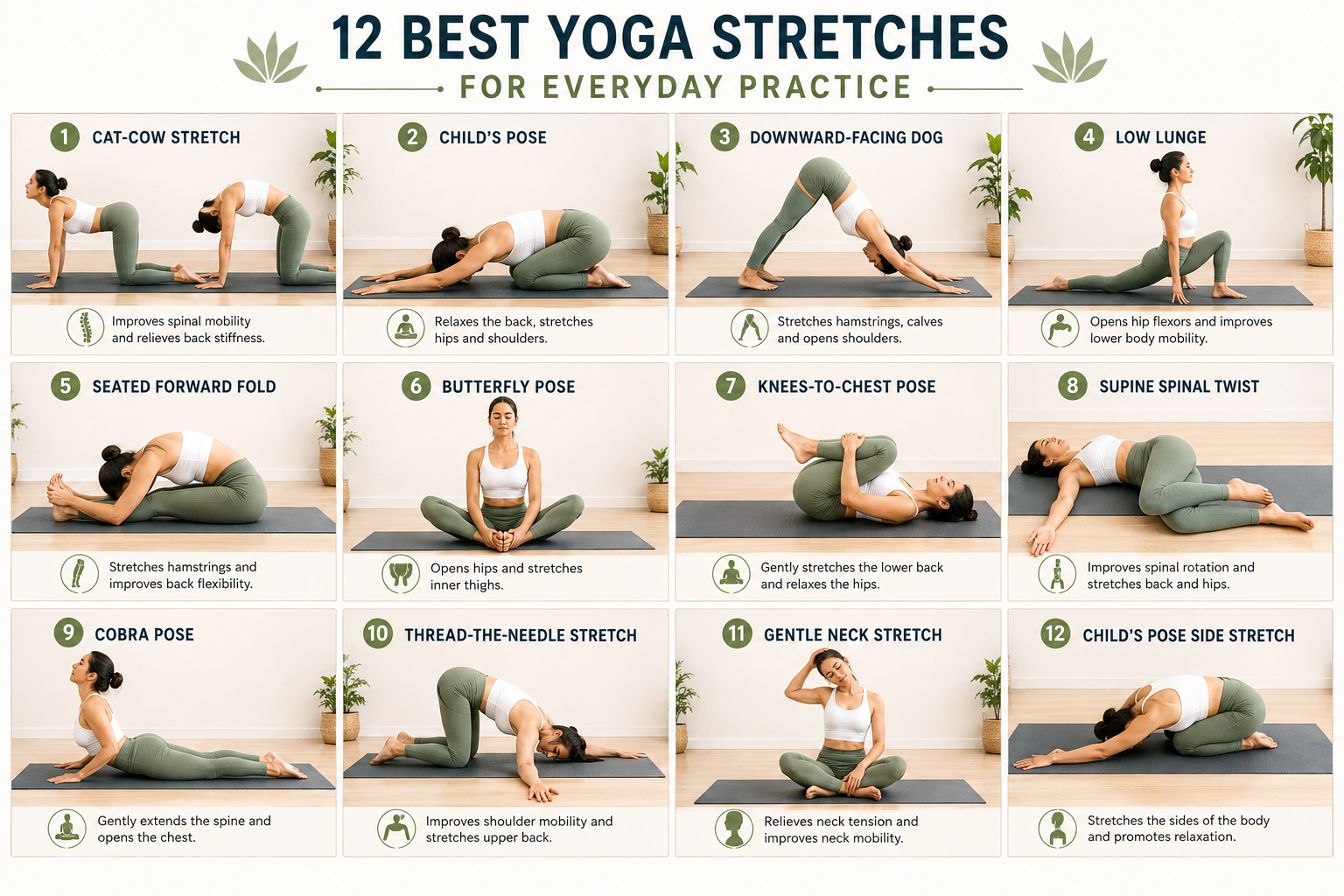
7. Knees-to-Chest Pose
Knees-to-Chest is a gentle floor stretch. It can relax the lower back and hips.
Benefits:
- Gently stretches the lower back.
- Supports hip mobility.
- Encourages physical relaxation.
- Releases some lower-body tension.
- Supports comfortable spinal movement.
Practice tip: Keep the movement slow. Avoid pulling the knees excessively.
8. Supine Spinal Twist
This pose gently rotates the spine. It also provides movement through the hips.
Benefits:
- Supports spinal mobility.
- Encourages gentle rotation.
- Stretches the lower back.
- Improves hip movement.
- Promotes relaxation.
Practice tip: Keep both shoulders comfortable. Reduce the twist when needed.
9. Cobra Pose
Cobra Pose gently extends the spine. It also opens the chest and shoulders.
Benefits:
- Encourages spinal extension.
- Opens the chest.
- Stretches the abdominal area.
- Improves shoulder awareness.
- Supports better posture.
Practice tip: Keep the movement gentle. Avoid pushing the chest too high.
10. Thread-the-Needle Stretch
Thread-the-Needle targets the shoulders and upper back. It creates gentle rotational movement.
Benefits:
- Improves shoulder mobility.
- Stretches the upper back.
- Reduces shoulder tightness.
- Supports spinal rotation.
- Encourages controlled movement.
Practice tip: Keep the supporting shoulder comfortable. Use a cushion when necessary.
11. Gentle Neck Stretch
Neck stretches can help with everyday neck stiffness. They work well after prolonged sitting.
Benefits:
- Supports neck mobility.
- Reduces mild muscle tightness.
- Improves body awareness.
- Encourages relaxed shoulders.
- Supports comfortable head movement.
Practice tip: Move the neck slowly. Never pull the head forcefully.
12. Child’s Pose Side Stretch
This variation adds gentle side-body movement. It can stretch the back and waist.
Benefits:
- Stretches the side body.
- Improves shoulder mobility.
- Relaxes the back.
- Encourages deeper breathing.
- Supports whole-body relaxation.
Practice tip: Keep both hips comfortable. Move only within an easy range.
Simple Daily Stretching Routine
A short routine can cover major body areas. The routine should remain gentle and manageable.
Morning Routine
Start with gentle spinal movements. Add stretches for the hips and legs.
A simple sequence can include:
- Cat-Cow Stretch.
- Child’s Pose.
- Low Lunge.
- Downward-Facing Dog.
- Gentle Neck Stretch.
Hold each pose comfortably. Focus on smooth and steady breathing.
Evening Routine
Evening practice can focus on relaxation. Choose slower stretches with comfortable positions.
A simple sequence can include:
- Butterfly Pose.
- Seated Forward Fold.
- Knees-to-Chest Pose.
- Supine Spinal Twist.
- Child’s Pose.
Keep the movements slow and relaxed. Finish with several comfortable breaths.
Join the best online yoga teacher training program of 2026! Register in Entri Elevate now!
Morning vs Evening Yoga Stretches
These routines can serve different purposes. Morning practice can encourage mobility and movement. Evening practice can encourage relaxation and recovery.
| Morning Yoga | Evening Yoga |
|---|---|
| Focuses on mobility. | Focuses on relaxation. |
| Uses gentle activation. | Uses slower movements. |
| Opens stiff joints. | Releases daily tension. |
| Supports morning movement. | Supports bedtime relaxation. |
| Can feel more energising. | Can feel more calming. |
Best Morning Stretches
Morning stiffness often follows overnight inactivity. Gentle movement can gradually loosen the body.
Good morning choices include:
- Cat-Cow Stretch.
- Low Lunge.
- Downward-Facing Dog.
- Gentle Neck Stretch.
- Child’s Pose.
Start slowly after waking up. Avoid aggressive stretches immediately after sleep.
Best Evening Stretches
Evening sessions can focus on releasing tension. Slower poses can support a calming routine.
Good evening choices include:
- Butterfly Pose.
- Seated Forward Fold.
- Knees-to-Chest Pose.
- Supine Spinal Twist.
- Child’s Pose.
Gentle breathing can accompany these stretches. Avoid highly demanding sessions before bedtime.
Become a Certified Yoga Instructor
Yoga Teacher Training Course by Entri App: Master authentic yoga techniques, earn certification, and build a successful career as a professional yoga instructor.
Join Now!How Long Should Daily Yoga Stretching Last?
Daily stretching does not require long sessions. A short routine can still encourage regular movement.
Beginners can start with ten minutes. Longer sessions can develop gradually with comfort.
A simple schedule can include:
- Five minutes during busy mornings.
- Ten minutes during normal days.
- Fifteen minutes during relaxed evenings.
- Longer sessions during available free time.
Consistency matters more than session length. Regular gentle movement can support long-term flexibility.
Tips for Safe Daily Stretching
Safe stretching requires patience and body awareness. Every body has different flexibility levels.
Follow these simple guidelines:
- Warm up before deeper stretching.
- Move slowly into every position.
- Keep breathing naturally.
- Avoid bouncing during stretches.
- Never force restricted movements.
- Use props when needed.
- Modify difficult poses.
- Stop when sharp pain appears.
- Allow recovery when necessary.
- Progress gradually over time.
Mild stretching tension can be normal. Sharp pain requires immediate attention.
When Should Professional Guidance Be Considered?
Not every type of pain suits stretching. Some symptoms can indicate underlying problems.
Professional guidance may help with:
- Persistent pain.
- Severe stiffness.
- Recent injuries.
- Joint swelling.
- Numbness.
- Unusual weakness.
- Repeated pain during movement.
Yoga should complement appropriate medical care. It should not replace necessary treatment.
Conclusion
Daily yoga stretches can support flexibility and mobility. They can also reduce everyday muscle tightness. Gentle practice may improve posture and relaxation. Consistency matters more than intense stretching sessions.
Choose stretches based on comfort and ability. Morning routines can improve mobility after inactivity. Evening routines can promote relaxation and recovery. Always avoid painful or forced movements.
Become a Certified Yoga Instructor
Yoga Teacher Training Course by Entri App: Master authentic yoga techniques, earn certification, and build a successful career as a professional yoga instructor.
Join Now!Frequently Asked Questions
What are the best yoga stretches for daily practice?
Cat-Cow, Child’s Pose, Low Lunge, Butterfly Pose, and Downward-Facing Dog are useful daily stretches. Seated Forward Fold, Knees-to-Chest, and Supine Spinal Twist can also support flexibility and mobility.
Can daily yoga stretches reduce stiffness?
Regular gentle stretching can help improve flexibility and comfortable movement. It may also reduce feelings of stiffness caused by inactivity or prolonged sitting.
Can yoga stretches help with body pain?
Yoga may support relief from certain types of pain, especially some forms of back and neck discomfort. Persistent or severe pain should receive appropriate medical evaluation rather than relying only on stretching.
How long should yoga stretches be done every day?
Beginners can start with around ten minutes of gentle stretching each day. Practice duration can gradually increase as comfort, flexibility, and experience improve.
Is morning or evening better for yoga stretching?
Morning stretching can help loosen the body after overnight inactivity and prepare it for daily movement. Evening stretching can help release accumulated tension and support relaxation.
Should yoga stretches hurt?
Yoga stretches should create gentle tension rather than sharp or severe pain. Any painful movement should be reduced, modified, or stopped immediately.
Can yoga improve flexibility when practiced daily?
Consistent yoga practice can gradually improve flexibility in areas such as the hips, hamstrings, shoulders, and back. Progress depends on individual flexibility, practice consistency, technique, and physical condition.
Which yoga stretches are best for lower-back stiffness?
Cat-Cow, Child’s Pose, Knees-to-Chest, and gentle Supine Spinal Twists can support comfortable lower-back movement. These poses should remain gentle, especially when stiffness is accompanied by pain.
Can beginners do yoga stretches every day?
Beginners can practice gentle yoga stretches daily when the routine remains comfortable and manageable. Starting with shorter sessions and simpler poses can help the body gradually adapt.
Can yoga stretching help after sitting for long hours?
Gentle yoga can counter some effects of prolonged sitting by moving the hips, spine, shoulders, and legs. Low Lunges, Cat-Cow, Downward-Facing Dog, and gentle neck stretches can provide useful movement breaks.