Table of Contents
Does protein powder increase weight? On its own, no. Protein powder is a food, and like any food it adds calories. Your weight goes up when you take in more calories than your body uses, whether those calories come from a shake, a plate of rice or an evening snack. What protein powder can change is the kind of weight you gain. With regular strength training, more of the gain can be muscle. Without training, and on top of a full diet, the extra calories are more likely to be stored as fat.
This guide explains how a scoop fits into your daily calories, what research shows about fat and muscle, what the ICMR-National Institute of Nutrition advises for Indians, and how to use protein powder based on your own goal.
The Short Answer: It Depends on How You Use It
Protein powder does not have a special weight-gaining effect. The result depends on your total calories and your activity. Here is a quick view of common situations.
| How you use protein powder | What usually happens to your weight |
|---|---|
| Added on top of your usual meals, with little exercise | Weight can rise slowly, mostly as fat, if total calories go above your needs |
| Added to extra food while doing strength training | Weight rises, and a larger share of it can be muscle |
| Used in place of other calories while eating less overall | Weight usually falls, and protein helps you hold on to muscle |
| Used within your normal daily calories | Little or no change in weight |
How Protein Powder Affects Your Calorie Balance
Protein gives your body energy, just like carbohydrates and fat. The ICMR-NIN Dietary Guidelines for Indians 2024 state that protein provides 4 kcal per gram. So a scoop that gives 25 g of protein adds about 100 kcal from the protein alone, before you count any carbohydrate, fat or sugar in the powder.
What you mix it with matters too. A shake made with water stays light. The same scoop blended with full-fat milk, a banana and a spoon of peanut butter becomes a small meal. If that shake is added to three regular meals and snacks, the extra calories add up over weeks. If you want to understand how intake and output decide your weight, read our guide on how a calorie deficit works.
Read the Label Before You Scoop

Not all powders are the same. The ICMR-NIN guidelines note that protein powders may also contain added sugars, non-caloric sweeteners and additives such as artificial flavouring. Check three numbers on the pack:
- Calories per serving, so you can count the shake in your daily total.
- Protein per serving, so you know how much of your daily need it covers.
- Carbohydrates and sugar per serving, because products sold as weight or mass gainers are built for a calorie surplus and can carry far more calories than a plain protein powder.
Turn Your Passion for Fitness into a Profession
Learn practical skills, get certified, and step into the growing fitness industry with confidence.
Join the CourseDoes Protein Powder Increase Weight as Fat? What Research Shows
A well-known trial in JAMA (2012) tested this directly. Researchers housed 25 healthy adults aged 18 to 35 in a metabolic unit and overfed them by about 40% (roughly 954 extra kcal a day) for 8 weeks. The diets differed only in protein: 5%, 15% or 25% of calories. This was a small, tightly controlled study, so treat it as an explanation of how the body handles extra food, not as a diet plan.
The findings are useful for anyone worried about protein shakes:
- Body fat rose by a similar amount in all three groups. The extra calories, not the protein, drove fat gain.
- The groups eating normal or high protein gained more lean mass (about 2.9 to 3.2 kg), while the low-protein group did not.
- The low-protein group gained the least total weight (about 3.2 kg against about 6 to 6.5 kg), but it was not leaner. It gained a similar amount of fat and no lean tissue.
The lesson: a lower number on the scale is not always better. Protein mainly decides whether some of the extra weight is lean tissue. Calories decide how much fat you store.
Protein Powder and Muscle Gain
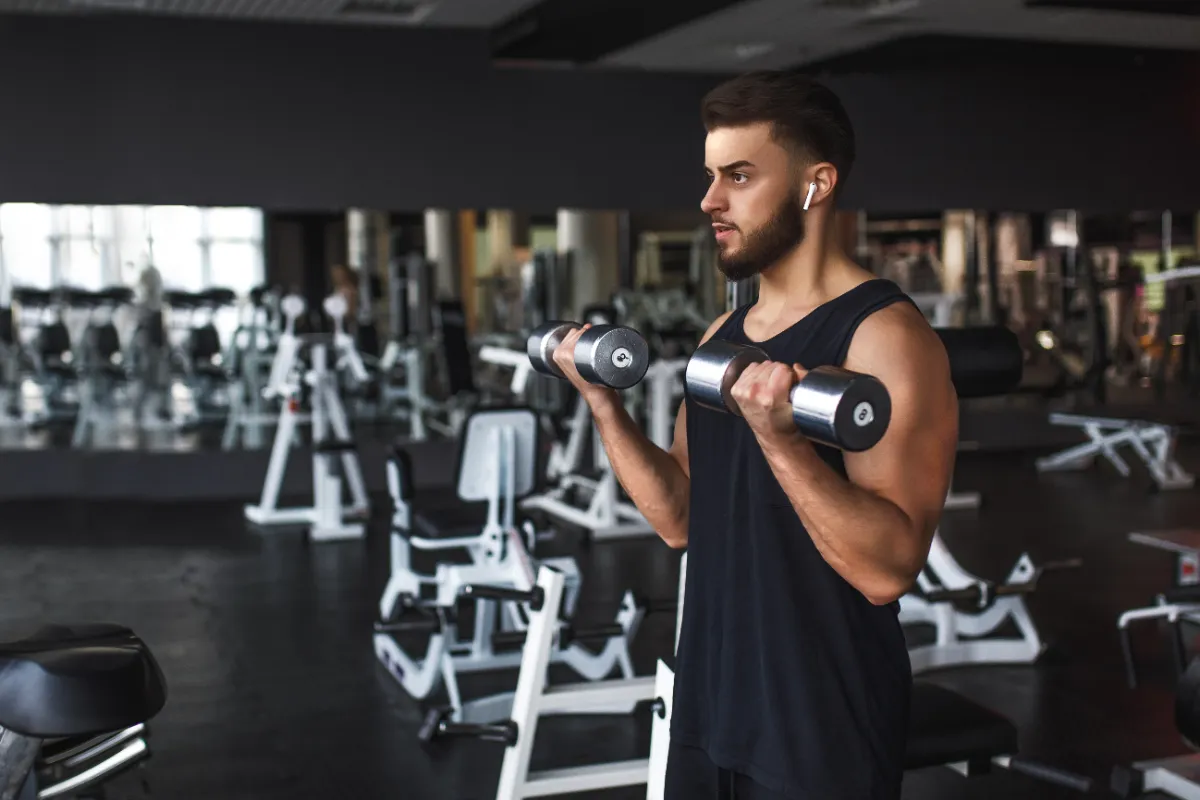
If your goal is to build muscle or gain healthy weight, protein powder can help, but its effect is smaller than many advertisements suggest. A review of 49 trials with 1,863 adults in the British Journal of Sports Medicine (2018) looked at people doing resistance training for at least six weeks. Adding protein supplements led to:
- about 0.3 kg more fat-free mass on average than training without the supplement
- about 2.5 kg more on a one-rep maximum strength test
- no further muscle gain once total protein intake passed roughly 1.6 g per kg of body weight per day
The benefit was smaller in older adults and larger in people who already trained regularly. The key condition in all of these trials was training. A shake without a training plan gives your body protein and calories, but no reason to build new muscle. If you are new to the gym, start with our guide on how to start weight training safely, and see how goals differ in fat loss vs muscle gain training.
Want to guide clients on training and nutrition the right way? Entri’s General Fitness Trainer Course in Kerala is an NCVET-aligned programme with live classes, 80+ practical gym sessions, a module on anatomy and nutrition, and placement support across Kerala.
Protein Powder and Weight Loss

Protein powder can also support weight loss, when it replaces calories instead of adding them. A meta-analysis of nine trials in adults who were overweight or obese (Journal of the American College of Nutrition, 2018) found that whey protein groups lost slightly more body weight (about 0.56 kg) and body fat (about 1.1 kg) than control groups. These are small differences, and the studies covered only people with overweight or obesity.
In practice, a protein shake can work well as a planned snack or a quick breakfast that keeps you full while you eat less overall. It will not cause fat loss on its own. Many people reach their protein needs through everyday foods instead. Our list of high-protein Indian foods for weight loss shows how to do this with dal, paneer, eggs, curd and more.
Turn Your Passion for Fitness into a Profession
Learn practical skills, get certified, and step into the growing fitness industry with confidence.
Join the CourseWhat ICMR-NIN Advises for Indians
India’s official dietary guidelines take a cautious view of protein powders. According to the ICMR-NIN Dietary Guidelines for Indians 2024 (Guideline 8):
- The recommended dietary allowance for protein is 0.83 g per kg of body weight per day for healthy adults. For a 65 kg adult, that is about 54 g a day.
- A balanced vegetarian or non-vegetarian diet can meet amino acid needs, and the guidelines advise avoiding protein supplements to build muscle mass.
- Prolonged intake of large amounts of protein, especially as powders, is linked to possible risks such as bone mineral loss and worsening kidney function, so high intakes are not advised.
Quality is a second concern. In the Citizens Protein Project (Medicine, 2024), researchers tested 36 popular protein supplements sold in India and found that 25 of them (69.4%) contained less protein than their labels claimed. This means you may count protein you are not actually getting, while still taking in the calories.
If you have kidney disease, diabetes, are pregnant or breastfeeding, or take regular medication, speak to your doctor before adding protein powder to your diet.
Want to learn healthy diet planning before you spend on supplements? Entri’s Free Diet Planning Course in Malayalam covers healthy eating basics, diet planning, intermittent fasting and practical fat loss strategies, with no prior nutrition knowledge needed.
How to Use Protein Powder Without Unwanted Weight Gain

If you decide a protein powder suits you, these habits keep it working for your goal rather than against it.
- Start with food. Check how much protein your meals already give. You may need only a small top-up, or none at all. Our guide to pre-workout and post-workout meals has simple food-based options.
- Count the shake as food. Add its calories, and those of the milk or fruit you mix in, to your daily total.
- Stick to the serving size. Extra scoops add calories, and total protein above about 1.6 g per kg a day did not add more muscle in the research above.
- Choose a simple product. Prefer powders with a clear label, little added sugar and published lab test results.
- Pair it with training. Protein supports muscle only when your muscles are being challenged.
- Track more than the scale. Waist measurement, how your clothes fit and your strength tell you whether you are gaining muscle or fat.
Thinking of turning your interest in fitness into a career? Entri’s Diploma in Personal Training, recognised by REPS India and accredited by PD:Approval, covers anatomy, client assessment, nutritional planning and programme design, with 84+ hours of practical training.
Which Approach Suits You?
There is no single right answer for everyone. Match the choice to your goal:
- If you want to lose fat: use a shake to replace a snack or a meal, not to add to them, and keep your total calories below your needs.
- If you want to build muscle or gain healthy weight: eat a little more than you burn, follow a strength training plan, and use protein powder only if food alone does not meet your protein target.
- If you simply want to stay healthy: a balanced diet is usually enough, and ICMR-NIN advises against relying on protein supplements.
- If you have a health condition: get advice from your doctor or a qualified dietitian first.
Protein powder is a convenience food, not a weight-gain or weight-loss product. Calories decide how much your weight changes, and training decides how much of that change is muscle. To learn how trainers plan nutrition and workouts for clients, explore Entri’s Fitness Trainer Course.
Sources
- ICMR-National Institute of Nutrition. Dietary Guidelines for Indians 2024.
- Bray GA, et al. Effect of dietary protein content on weight gain, energy expenditure, and body composition during overeating. JAMA, 2012.
- Morton RW, et al. Protein supplementation and resistance training-induced gains in muscle mass and strength. British Journal of Sports Medicine, 2018.
- Wirunsawanya K, et al. Whey protein supplementation in overweight and obese patients: a meta-analysis. Journal of the American College of Nutrition, 2018.
- Philips CA, et al. Citizens Protein Project: analysis of popular protein supplements sold in the Indian market. Medicine, 2024.
Turn Your Passion for Fitness into a Profession
Learn practical skills, get certified, and step into the growing fitness industry with confidence.
Join the CourseFrequently Asked Questions
Is plant protein powder less fattening than whey protein?
Not because of the protein itself. All protein gives 4 kcal per gram, according to the ICMR-NIN Dietary Guidelines for Indians 2024. Differences between products come from the carbohydrate, fat and sugar they add, so compare the calories per serving on the labels rather than the protein source.
Will I gain weight if I stop taking protein powder?
Stopping does not cause weight gain by itself, because weight follows your total calories. If you drop the shake and keep your meals the same, you actually take in slightly fewer calories. To keep the muscle you built, continue strength training and get enough protein from foods like dal, eggs and paneer. See our list of high-protein Indian foods.
How can I check whether my protein powder is genuine?
Buy from the brand’s own store or an authorised seller, check the batch number and expiry date, and look for independent lab test reports published by the brand. Independent testing of protein supplements sold in India has found products whose label claims did not match their contents.
Can I take protein powder on days I do not work out?
Yes, if you need it to reach your daily protein target, since your total protein across the day matters more than the timing. On rest days you usually burn fewer calories, so count the shake carefully if you are trying to avoid gaining fat. Our guide on calorie deficit explains how to balance intake and output.