Table of Contents
Fashion designing is not always about making beautiful clothes. It is mainly understanding how different elements and ideas work together. These basics help designers to create good, stylish, and attractive designs. Elements such as colors, texture, and shape form the base of any design.
Principles like balance, proportion, and harmony may bring everything together. When used effectively, they make a design look complete and professional. This blog explains the essential elements and principles of adaptive fashion designing in a simple way.
Key Takeaways:
- Fashion design is not always the easiest thing about beauty but also about creating plans and structure correctly.
- Elements such as color, line, shape, texture, pattern, and space form the foundation of each layout.
- Elements and ideas are used together to create a holistic and attractive outfit.
- These ideas are a great help to increase creativity and design layout.
- Designers use them at every stage from idea to final garment.
- Beginners can easily lerarn with practice and simple steps.
Learn Advanced Designing & Boutique Skills with Experts. Join Now!
What are the Elements of Fashion Design?
The elements of fashion design are the primary components used to create any outfit. They are like the building blocks of a layout. Designers use these elements to make clothes look attractive and elegant.
Color
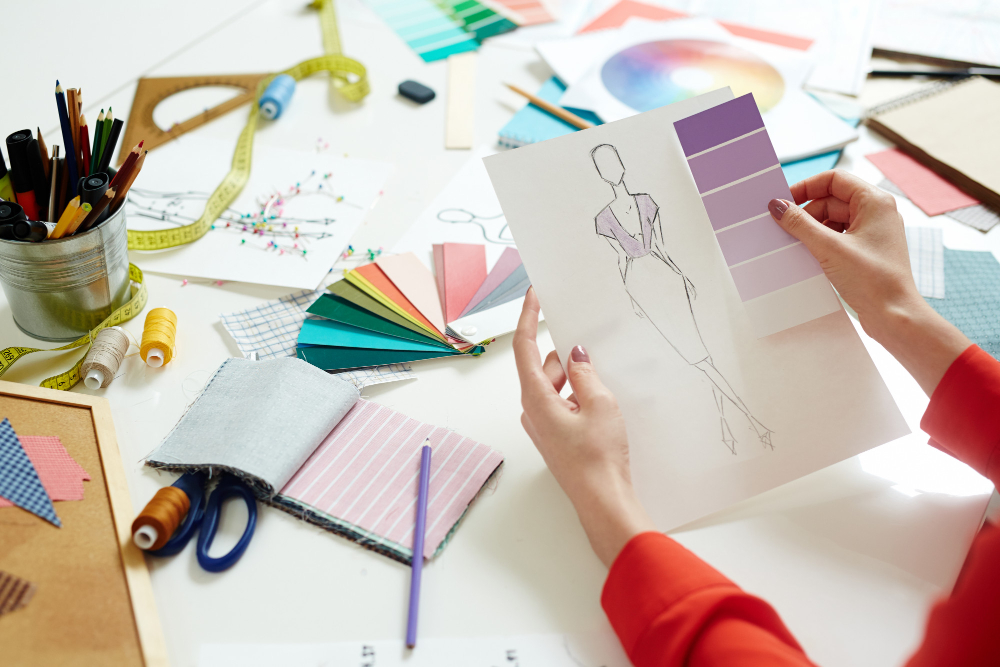
Color is one of the most important factor in designing garments. It brings life to a layout. Different colors can create distinctive moods and feelings. Bright colors look bold, while soft colors seem calm. Choosing the appropriate color makes the design extra attractive.
Line
The lines help to define the shape and size of the garment. They guide the eye and create visual interest. Straight Lines can make the design look simple and clean. Curved lines could add softness and move with the flow.
Shape or Silhouette
Shape maintain the overall appearance of the garment. It shows how the constume may looks like. Common shapes include A-line, straight, or tailored patterns. Proper shape improves overall appearance and comfort.
Texture
The texture is ready for how the fabric feels and looks. Some fabrics are smooth, while others are rough or soft. Texture adds intensity to the design. In addition, it affects how it looks when you wear clothes.
Pattern or Print
Patterns are designs on the fabric, such as floral or stripes. They make clothes extra exciting and unique. Simple patterns look stylish, just as sharp prints look appealing.
Space
Space refers to how elements are arranged in a design. There are empty and narrow spaces. Proper use of the space keeps the layout form neat and clear.
Key Principles of Fashion Design.
The principles of adaptive design are the guidelines that help to organize the design elements. They make your garments look balanced, attractive, and complete. When designers look at these principles, their designs look extra specialized and attractive.
Balance
Equal Distribution of of design elements means balance. This makes the appearance of the garment strong and sleek. Balanced designs feel neat to look at. There are two types of balance: symmetrical and asymmetrical.
Proportion
Proportion is determined by the size and scale of the different elements in the fabric. It ensures that every single part looks coherent. For example, the length of a top should suits the bottom wear.
Emphasis
A way of perception that highlights a specific part of the design and it draws interest to a focal point. This can be done by using color, pattern, or design information. This makes the outfit more interesting.
Rhythm
Rhythm gives a design a sense of movement. It is completed with the help of repetitive factors such as lines, colors, or pattern. This repetition makes the design look accessible and relatable.
Harmony
Harmony is all the elements work beautifully together. It ensures that the layout looks complete and unified. Colors, shapes, and textures should match perfectly. The harmony gives a pleasant look to overall design.
Unity
Unity is when all the elements of the design come together as one. Each element contributes to the overall design. It makes the dress look well-planned and finished beautifully.
Master Fashion Designing and Create Your Signature Style
Unlock your creative potential with our expert-led Fashion Designing course. Build in-demand skills and step confidently into the world of fashion!
Begin Your Fashion Career Today!Importance of Elements and Principles in Design
The elements and ideas of fashion design are the foundation for each detailed outfit. They help designers create designs that look balanced, attractive, and well thoughtful. Without them, the design layout will also look messy or confusing.
Build the Base of Design
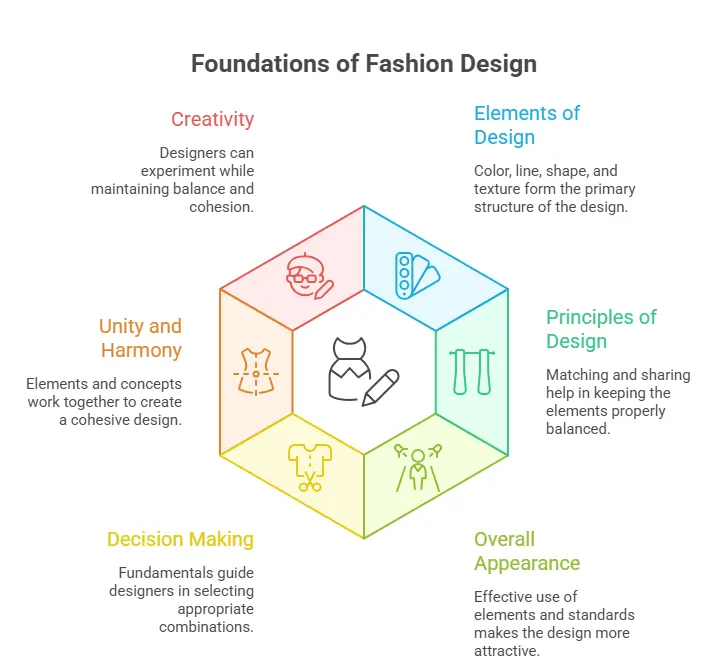
Elements such as color, line, shape, and texture form the primary structure of the design. They give existence and meaning to the garment. Without these elements, it is impossible to create a complete design configuration.
Create Balance and Neatness
Principles like matching and sharing help in keeping the elements properly. They ensure that no part of the design looks too heavy or too plain. This creates a sleek and perfectly groomed look.
Improve Overall Appearance
When elements and standards are used effectively, the design looks more attractive. The colors match well, the shapes look proper and the fabric appears stylish. This makes the outfit extra attractive to others.
Help in Better Decision Making
These fundamentals guide designers in selecting appropriate combinations. They help in choosing the appropriate color, pattern, and style. This reduces confusion and makes the designing process easier.
Bring Unity and Harmony
The elements and concepts work together to create a team spirit. All the parts of the garment fix together well. N This gives the design pattern a complete and polished look.
Support Creativity
They also help designers discover new ideas. Designers can experiment while maintaining balance and cohesion. This leads to unique and creative designs.
How Designers Apply these Concepts
Fashion designers use design elements and ideas at all stages of garment production. These principles help them turn their ideas into stylish and balanced outfits.
Planning the Design
Designers start by considering and using general ideas. They decide the style, purpose and audience. At this stage, they choose basic factors such as color, shape, and type of fabric. This helps create a clear path for the design.
Choosing Colors and Fabrics
Designers carefully choose colors that match to the theme. They also choose clothes primarily based on texture and comfort. For example, soft fabrics create a smooth appearance, while hard fabrics give structure. These options enhance the overall look.
Creating Shape and Structure
Designers use lines and shapes to create garments. They determine silhouettes, including fitted or loose styles. Proper use of shape and line helps create a flattering look for the frame.
Applying Design Principles
The principles like balance, proportion and harmony are used to plan the layout. Designers ensure that all the elements of the garment are balanced. They also make sure that the sizes and lengths match well. This creates a sleek and expert finishes to the design.
Adding Details and Focus
Designers add specific detailing to highlight certain areas. This adds strength to the setup. It can be accomplished by using patterns, colors, or decorative factors. This makes the costume more exciting and unique.
Checking and Improving the Design
Finally, designers check the layout carefully. They check that all factors and considerations are used effectively. Minor changes have been made to enhance the balance and overall appearance. This makes the final outfit is complete and attractive.
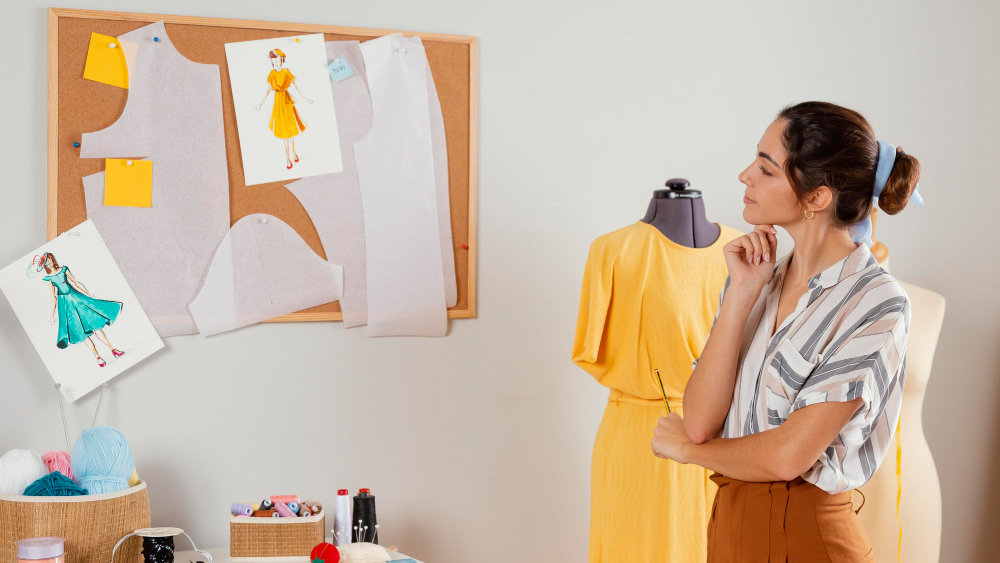
Tips for Beginners
Starting a journey in the field of fashion designing can feel exciting and confusing. With the right approach and simple steps, beginners can learn easily and build strong skills gradually.
Start with the Basics
- Start by learning the basic ideas of design.
- Should understand the color, shape, and texture.
- Understanding the basics help to create good designs from the start.
Practice Sketching Daily
- Start with sketching simple outfit ideas daily.
- No worries about perfection at the beginning.
- Drawing the design regularly, which improves creativity and self-confidence.
Learn About Fabrics
- Should try to understand the types of fabrics.
- Always check how the material feels and behaves.
- This will help you to choose the right material for your design.
Start with Simple Designs
- Should start with simple designs like skirts or tops.
- Avoid complicated styles in the beginning.
- Simple projects may help you to develop faster and better.
Observe Fashion Trends
- Check out the modern trends and styles.
- Should follow fashion magazines, shows or social media.
- This allows you to stay updated and inspired.
Practice Draping or Pattern Making
- Try to find simple draping or pattern making technique.
- Work slowly and improve gradually.
- Hands-on experiences build your designing skills.
Learn from Mistakes
- Mistakes are part of the learning process.
- No worries if something goes wrong.
- Every failure helps you to improve your talent.
Stay Consistent
- Practice regularly by sketching the simple designs.
- Stability helps to increase your basic skills faster.
- Doing small efforts every day lead to big changes.
Keep Your Work Organized
- Should maintain a clean and organized workspace.
- Keep your tools and materials in a good manner.
- This habit will highlight your work simpler and more efficient.
Keep Learning and Exploring
- Fashion designing is constantly evolving.
- Keep learning new ideas and design techniques.
- Be curious and open to new styles and trends.
Learn Advanced Designing & Boutique Skills with Experts. Join Now!
Conclusion
Master Fashion Designing and Create Your Signature Style
Unlock your creative potential with our expert-led Fashion Designing course. Build in-demand skills and step confidently into the world of fashion!
Begin Your Fashion Career Today!Frequently Asked Questions
What are the elements of fashion design?
Elements of fashion design are the basic parts used to create a garment. These include color, line, shape, texture, pattern, and space. They form the foundation of every design and help give it structure and style.
What are the principles of fashion design?
Principles are the rules used to arrange design elements. They include balance, proportion, harmony, rhythm, emphasis, and unity. These principles help make a design look organized and visually appealing.
Why are elements and principles important in fashion design?
They help create balanced and attractive designs. Without them, a garment may look confusing or incomplete. They guide designers in making better design decisions.
How do elements and principles work together?
Elements provide the building blocks of a design. Principles help arrange these elements in a proper way. Together, they create a complete and well-structured garment
Can beginners easily understand these concepts?
Yes, beginners can learn these concepts step by step. With practice and simple examples, they become easy to understand. Regular practice improves clarity and skills.
How do designers use these concepts in real life?
Designers use elements to create the look of a garment. They apply principles to balance and organize the design. This helps create stylish and professional outfits.
Do these concepts improve creativity?
Yes, they support creativity by giving a clear direction. Designers can experiment while still maintaining balance. This leads to unique and appealing designs.