Table of Contents
Introduction
Focus can be developed through simple play. Attention can be improved through puzzles. Colours are learned through sorting games. Creativity is encouraged with blocks. Short activities can keep toddlers interested.
Focus can be supported through daily play. Ten simple activities are shared below. Easy indoor games are also included. Creative and Montessori activities are explored. Helpful tips are provided for parents. Better play habits are developed gradually.
Key Takeaways
- Focus can be built through play.
- Thinking skills can be improved gradually.
- Colours can be learned through sorting.
- Shapes can be recognised through games.
- Attention can be practised daily.
- Memory is strengthened through repetition.
- Problem-solving to be developed through puzzles.
- Short activities keep toddlers engaged.
Unlock your passion for education and shape young minds as a Montessori teacher!
Why Is Focus Important for Toddlers?
1: What is the primary focus of the first plane of development in the Montessori method?
Focus helps new things get noticed. Learning can be supported through attention. New skills are developed through practice. Attention usually grows with age. Short attention spans are normal.

How Focus Supports Development
Learning and thinking.
- New skills can be learned.
- Details can be noticed.
- Problems can be solved.
- Curiosity can be encouraged.
Language and memory.
- New words can be learned.
- Listening can be practised.
- Familiar objects can be remembered.
- Instructions can be followed.
Independence and confidence.
- Simple tasks can be attempted.
- Confidence can be developed.
- Skills can be practised.
- Small successes can be celebrated.
What Affects a Toddler’s Attention?
Several factors can affect concentration.
- Age:
- Short activities are often preferred.
- Sleep:
- Focus can be reduced by tiredness.
- Noise:
- Attention can be interrupted by noise.
- Interest:
- Favourite toys can attract attention.
- Mood:
- Comfort may be needed first.
Expectations should be kept realistic. Breaks should be allowed when needed. Effort should be praised. Comparisons should be avoided.
Get Certified & Start Your Montessori Career
Montessori Teacher Training Course by Entri App: Gain expert skills, earn certification, and kickstart your teaching career.
Join Now!10 Focus-Building Activities for Toddlers
Focus can be practised through play. Activities should match each toddler’s abilities. Sessions should be kept short. Supervision should always be provided.
Sorting Objects by Colour
Colours can be learned through sorting. Observation skills can also be improved.
How to play.
- Large coloured blocks can be gathered.
- Matching containers can be placed nearby.
- One colour can be selected first.
- Sorting can be demonstrated.
- The toddler can try independently.
- More colours can be added gradually.
Skills developed.
- Colour recognition.
- Visual attention.
- Hand control.
- Simple decision-making.
Small objects should be avoided.
Building with Blocks
Focus can be encouraged through block play. Creativity can also be developed.
How to play.
- Large, safe blocks can be provided.
- A small tower can be built.
- Stacking can be demonstrated.
- More blocks can be added.
- Fallen towers can be rebuilt.
- Creative attempts can be praised.
Skills developed.
- Creative thinking.
- Coordination.
- Problem-solving.
- Patience.
Blocks without small parts should be chosen.
Completing Simple Puzzles
Observation can be improved through puzzles. Thinking skills can also be developed.
How to play.
- A simple puzzle can be chosen.
- The completed picture can be shown.
- One piece can be fitted.
- The toddler can try next.
- Help can be offered when needed.
- Every attempt can be praised.
Skills developed.
- Shape recognition.
- Visual attention.
- Problem-solving.
- Concentration.
Puzzles with few pieces should be chosen.
Matching Similar Objects
Similar objects can be matched during play. Observation skills can also be improved.
How to play.
- Familiar objects can be gathered.
- Matching pairs can be prepared.
- Matching can be demonstrated.
- Pairs can be found together.
- Objects can be named aloud.
- More pairs can be added later.
Skills developed.
- Object recognition.
- Visual attention.
- Early memory.
- Comparison skills.
Small household objects should be avoided.
Reading Picture Books Together
Listening can be encouraged through picture books. New words can also be introduced.
How to play.
- A simple picture book can be chosen.
- The story can be read slowly.
- Familiar objects can be pointed out.
- Pictures can be found together.
- Pages can be turned independently.
- Favourite stories can be repeated.
Skills developed.
- Listening.
- Vocabulary.
- Visual attention.
- Communication.
Reading time should remain enjoyable.
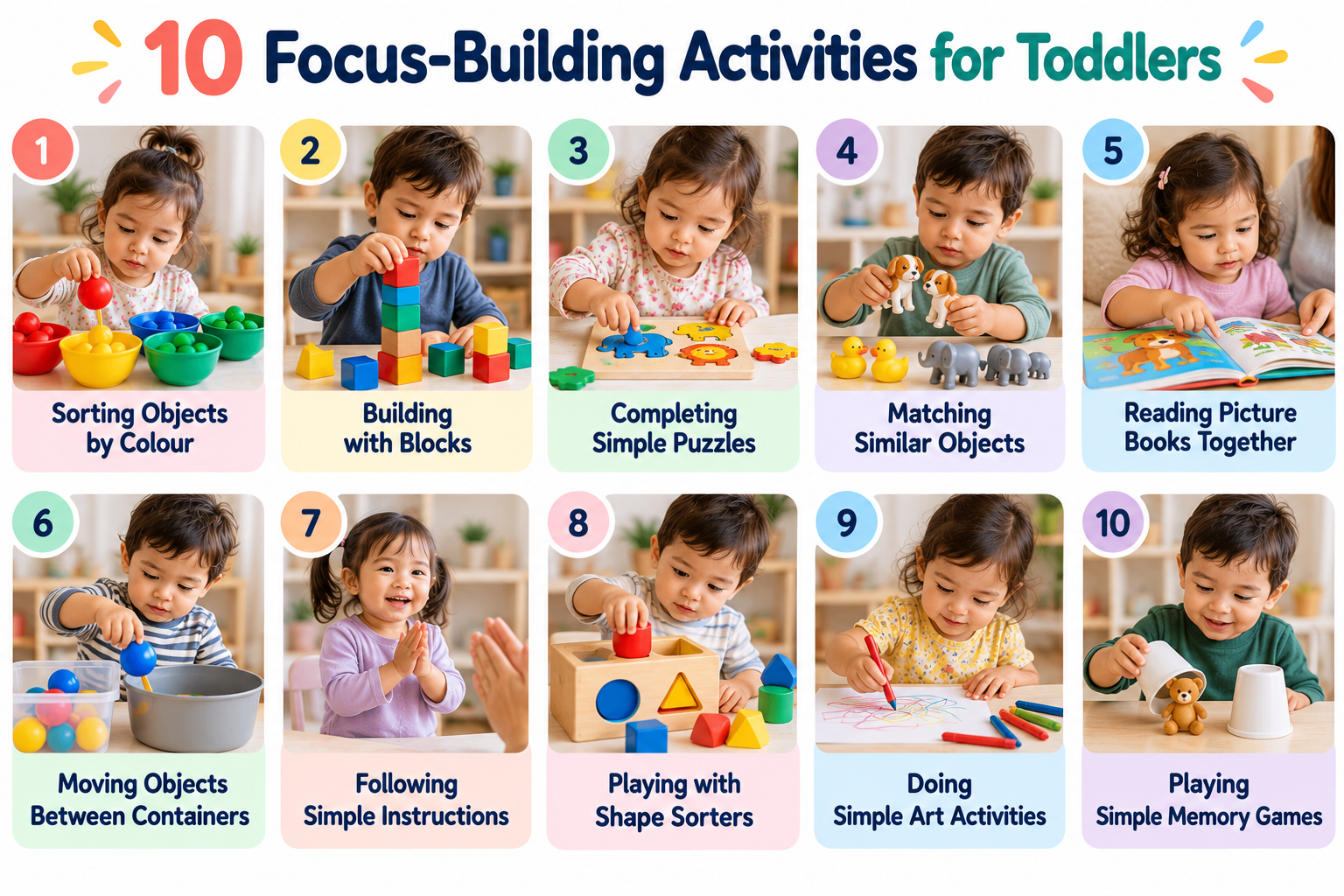
Moving Objects Between Containers
Careful movements can be practised this way. Focus can also be improved through repetition.
How to play.
- Two wide containers can be placed nearby.
- Large objects can fill one container.
- Object transfer can be demonstrated.
- The movement can be copied.
- Transfers can be repeated.
- Play can stop when interest fades.
Skills developed.
- Coordination.
- Hand control.
- Visual attention.
- Independent play.
Small objects should not be used.
Following Simple Instructions
Attention can be practised through listening games. Understanding can also be improved.
How to play.
- One simple instruction can be given.
- Clapping can be requested.
- Nose-touching can be encouraged.
- A toy can be requested.
- More steps can be added slowly.
- Effort can be praised.
Skills developed.
- Listening.
- Language understanding.
- Memory.
- Confidence.
Instructions should be kept short.
Playing with Shape Sorters
Basic shapes can be learned through play. Matching skills can also be improved.
How to play.
- One shape can be introduced.
- Its matching opening can be shown.
- Shape placement can be demonstrated.
- The toddler can try.
- Shapes can be named aloud.
- More shapes can be added gradually.
Skills developed.
- Shape recognition.
- Visual matching.
- Problem-solving.
- Concentration.
Safe, age-appropriate toys should be chosen.
Doing Simple Art Activities
Creativity can be encouraged through art. Hand control can also be developed.
How to play.
- Washable crayons can be provided.
- Paper can be placed on a table.
- Simple lines can be drawn together.
- Free drawing can be encouraged.
- Colours can be named aloud.
- Artwork can be displayed afterward.
Skills developed.
- Creative thinking.
- Colour recognition.
- Hand control.
- Confidence.
Perfection should not be expected.
Playing Simple Memory Games
Observation can be practised through memory games. Familiar objects can make learning easier.
How to play.
- Two familiar objects can be placed nearby.
- Both objects can be observed.
- One object can be covered.
- The hidden object can be guessed.
- The answer can be revealed.
- The game can be repeated.
Skills developed.
- Visual attention.
- Object recognition.
- Early memory.
- Observation.
Games should remain simple and fun.
Simple Indoor Activities to Improve Focus
Focus can be practised through indoor games. Familiar household items can be used.
Everyday Activities
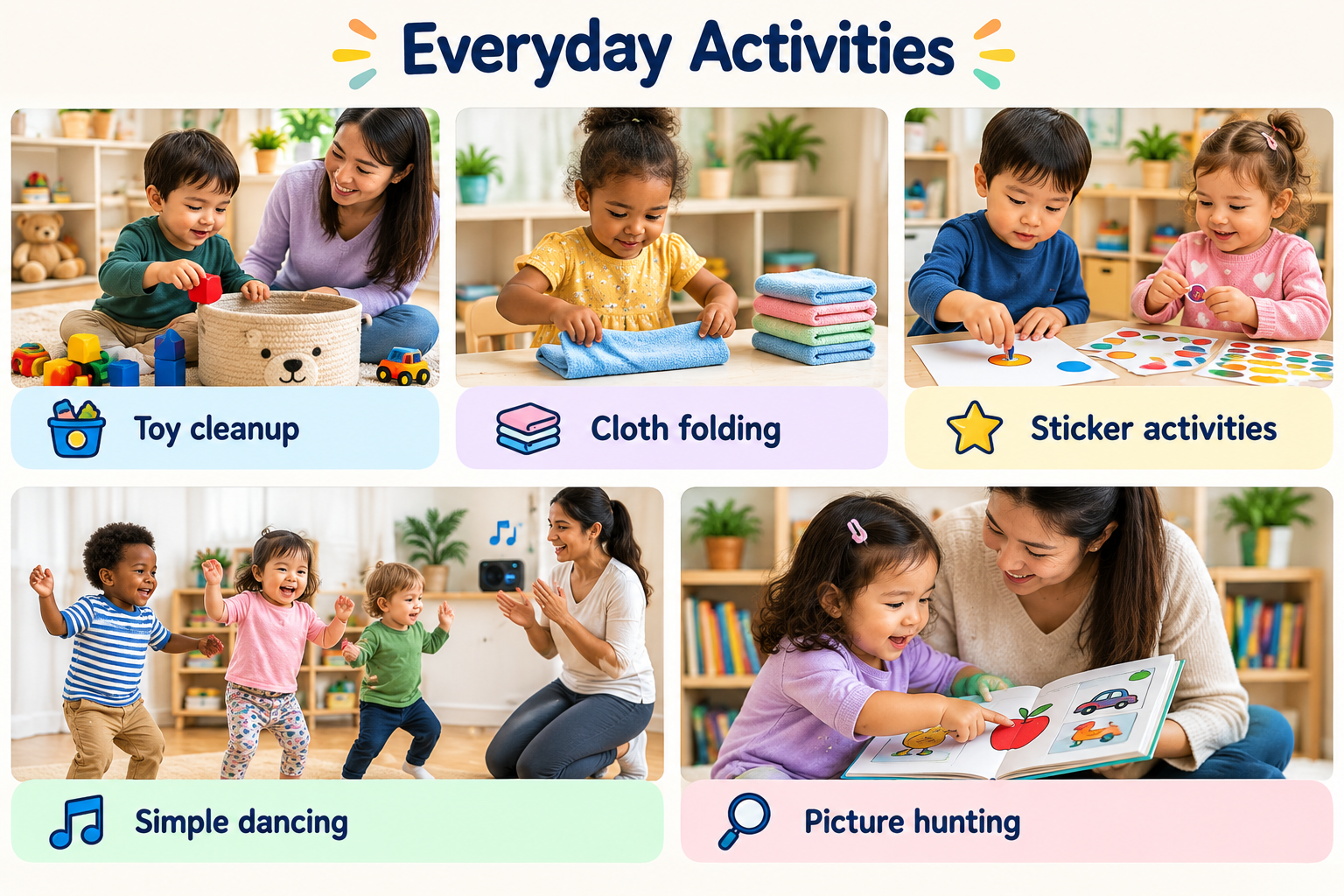
Toy cleanup.
- A toy basket can be prepared.
- A few toys can be selected.
- Toy placement can be demonstrated.
- Cleanup can be done together.
Cloth folding.
- Clean washcloths can be gathered.
- One simple fold can be shown.
- The fold can be copied.
- The activity can be repeated.
Sticker activities.
- Large toddler-safe stickers can be used.
- Plain paper can be provided.
- Sticker placement can be demonstrated.
- Sticker positions can be chosen freely.
Simple dancing.
- A favourite song can be played.
- Easy movements can be demonstrated.
- Movements can be copied.
- Music can be paused for listening games.
Picture hunting.
- A picture book can be opened.
- A familiar object can be selected.
- The picture can be found.
- The object can be named.
Making Indoor Play More Effective
Better focus can be supported through small changes.
- Less noise:
- Background sounds can be reduced.
- Prepared materials:
- Supplies can be kept nearby.
- Favourite games:
- Enjoyable activities can be chosen.
- Regular breaks:
- Movement can be encouraged.
- Short sessions:
- Frustration can be prevented.
- Gentle help:
- Support can be offered when needed.
Prioritize safety. Avoid tiny objects. keep away sharp tools. Select safe materials. Maintain supervision always.
Unlock your passion for education and shape young minds as a Montessori teacher!
Creative Activities to Build Toddler Attention
Creative play is made enjoyable. Curiosity is encouraged through new materials. Attention is supported through simple tasks. Activities to be matched to each toddler’s abilities.
Finger Painting
Sensory exploration can be encouraged through painting. Colours can attract attention. Different textures can be explored. Finger movements can also be practised.
How to play.
- Safe paints can be provided.
- Paper can be spread.
- Different colours can be introduced.
- Finger movements can be demonstrated.
- Simple patterns can be created.
- Colours can be named.
- Different marks can be explored.
- Finished artwork can be displayed.
Skills developed.
- Sensory awareness.
- Colour recognition.
- Creative thinking.
- Finger control.
- Visual attention.
- Hand coordination.
Close supervision should always be provided. Only child-safe paints should be used. Paint should never be swallowed. Hands should be washed afterwards.
Playdough Activities
Hands-on learning can be encouraged. Different shapes can be created. Concentration can be supported through repetition. Interest can be maintained through simple tasks.
How to play.
- Safe playdough can be provided.
- A flat mat can be used.
- Rolling movements can be demonstrated.
- Small balls can be created.
- Flat shapes can be made.
- Different colours can be named.
- Simple shapes can be compared.
- New designs can be explored.
Skills developed.
- Fine motor control.
- Sensory exploration.
- Creative thinking.
- Hand strength.
- Shape recognition.
- Better concentration.
Close supervision must always be provided. Small pieces can cause choking. Playdough should never be swallowed.
Get Certified & Start Your Montessori Career
Montessori Teacher Training Course by Entri App: Gain expert skills, earn certification, and kickstart your teaching career.
Join Now!Montessori Activities for Focus and Concentration
Hands-on learning to be encouraged through Montessori activities. Attention is supported through simple tasks. Independence is developed. Skills to be practised through repetition. Materials should be matched to abilities.
Practical Life Activities
Useful practice can be provided through everyday tasks. Attention can be encouraged through familiar actions. Independence can be developed through small responsibilities. Tasks should be introduced slowly.
Activity ideas.
- Toys can be arranged.
- Washcloths can be folded.
- Large blocks can be sorted.
- Safe spoons can be arranged.
- Picture books can be organised.
- Soft cushions can be arranged.
- Toys can be returned.
- Simple cleaning can be practised.
Skills developed.
- Independence.
- Hand coordination.
- Task completion.
- Better concentration.
- Responsibility.
- Following instructions.
Age-appropriate tasks should always be chosen. Help should be provided when needed. Sharp objects must be avoided. Household chemicals must remain inaccessible.
Object Sorting Activities
Careful observation can be encouraged through sorting. Similar objects can be grouped. Differences can also be noticed. Simple categories should be introduced first.
How to play.
- Large objects can be provided.
- Two groups can be chosen.
- Different colours can be selected.
- Simple sorting can be demonstrated.
- Objects can be sorted together.
- Each group can be named.
- Similar objects can be compared.
- New groups can be added gradually.
Skills developed.
- Visual attention.
- Matching skills.
- Early thinking.
- Decision-making.
- Colour recognition.
- Object recognition.
Small objects should always be avoided. Choking risks must be considered. Adult supervision must be maintained.
Tips to Improve a Toddler’s Attention Span
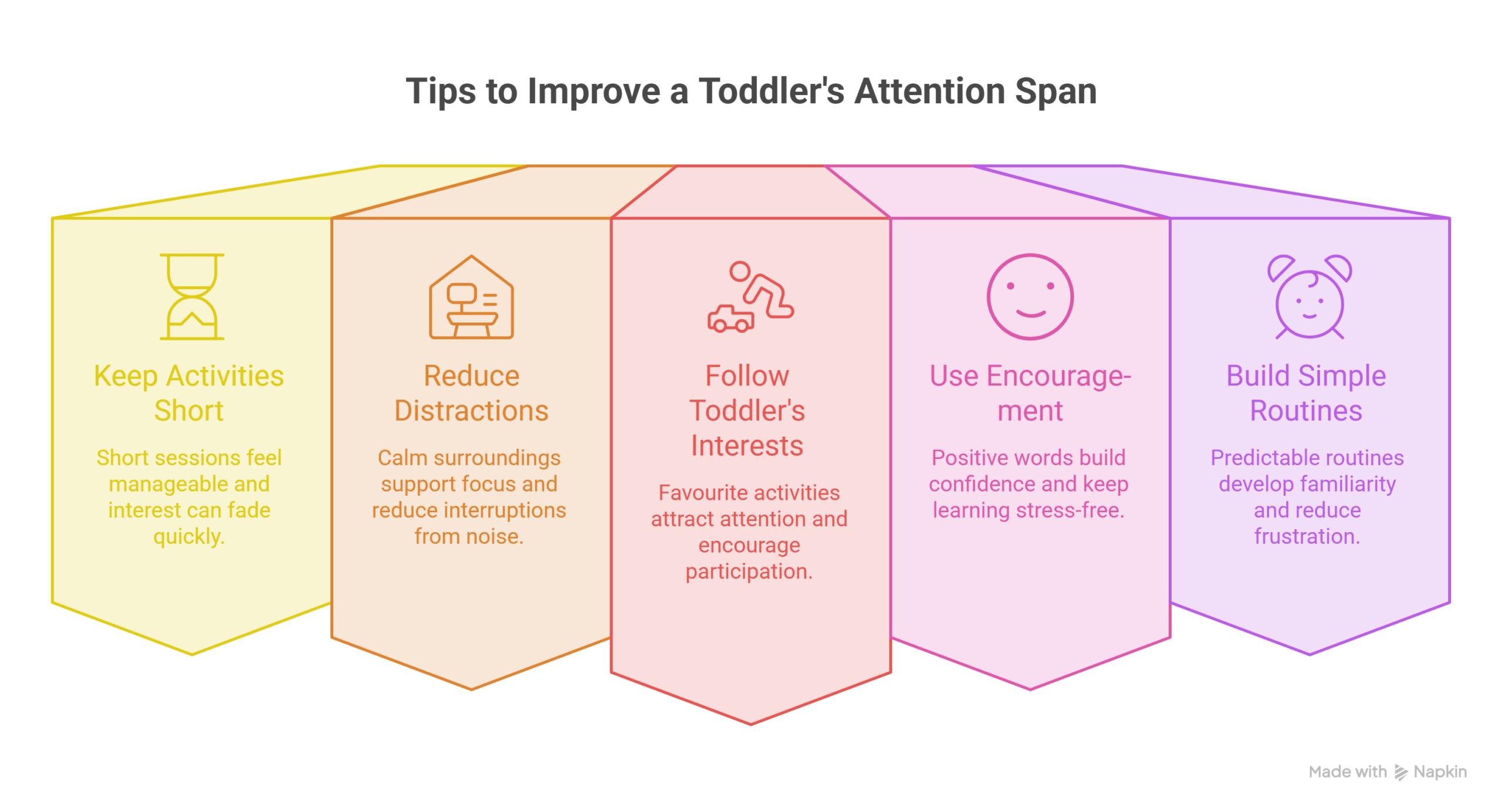
Attention develops gradually in toddlers. Different development speeds are expected. Patience to be practised. Pressure is avoided during activities. Regular practice is supported through routines.
Keep Activities Short
Interest can fade quickly. Short sessions can feel manageable. Activity times can be increased gradually.
- A few minutes can be enough.
- One activity should be selected.
- Regular breaks should be provided.
- Tiredness should be noticed.
- Activities should stop when interest fades.
Reduce Distractions
Attention can be interrupted by noise. Focus can be supported through calm surroundings. Fewer distractions should be provided. Materials should be prepared beforehand.
- Television should be switched off.
- Loud sounds should be reduced.
- Toys should be organised.
- Unnecessary items should be removed.
- A quiet corner can be prepared.
Follow Your Toddler’s Interests
Attention can be attracted by favourite activities. Participation can be encouraged through familiar games. New tasks should be introduced slowly. Simple choices can also be provided.
- Favourite toys should be observed.
- Preferred games can be repeated.
- New activities can be introduced gradually.
- Simple choices should be offered.
- Interests should be considered.
Use Encouragement
Confidence can be built through positive words. Small efforts should be recognised. Mistakes should be treated gently. Learning should remain stress-free.
- Small attempts should be praised.
- Completed tasks should be celebrated.
- Gentle guidance should be offered.
- Small progress should be noticed.
- Negative comparisons should be avoided.
Build Simple Routines
Familiarity can be developed through regular play. Frustration may be reduced through predictable routines. Quiet activities should be included daily. Enough rest should also be provided.
- Regular playtimes should be chosen.
- Simple routines should be followed.
- Quiet play should be included.
- Rest breaks should be provided.
- Bedtime routines should be maintained.
Benefits of Focus-Building Activities for Toddlers
Early development can be supported through focus-building activities. Different skills can be practised through play. Progress can happen gradually. Different development speeds should be expected. Useful learning opportunities can be provided regularly.
Better Learning Skills
Early learning can be supported through attention. Useful ideas can be introduced. Colours and shapes can be explored. Instructions can also be practised.
- Different colours can be recognised.
- Simple shapes can be identified.
- New words can be learned.
- Simple instructions can be followed.
- Familiar objects can be understood.
Improved Problem-Solving
Careful thinking can be encouraged through games. Small challenges can be introduced through puzzles. Decision-making can be practised through sorting. Different solutions can be explored.
- Different shapes can be matched.
- Familiar objects can be compared.
- Simple problems can be explored.
- Missing pieces can be found.
- Possible solutions can be discovered.
Stronger Motor Skills
Movement can be encouraged through hands-on activities. Coordination can be supported through repetition. Fingers and hands can be exercised. Different movements can be practised.
- Blocks can be stacked.
- Finger movements can be practised.
- Sorting objects can be handled.
- Soft playdough can be squeezed.
- Puzzle pieces can be placed.
Growing Independence
Independent attempts can be encouraged through simple tasks. Confidence can be built through small successes. Familiar activities can be repeated. Help can be reduced gradually.
- Toys can be put away.
- Shapes can be matched independently.
- Book pages can be turned.
- Simple tasks can be completed.
- Small choices can be made.
Better Communication
Communication opportunities can be created through shared play. Familiar words can be introduced through stories. Instructions can be heard and practised. Responses can be encouraged through questions.
- New words can be learned.
- Familiar objects can be named.
- Simple instructions can be followed.
- Easy questions can be answered.
- Feelings can be expressed.
Conclusion
Focus can be developed through simple activities. Useful practice can be provided through puzzles. Careful observation can be encouraged through sorting. Hands-on learning can be supported through blocks. Exploration can be encouraged through creative tasks. Everyday skills can be practised through Montessori activities.
Interest can be maintained through short sessions. Distractions can be reduced in calm spaces. Confidence can be built through encouragement. Activities should be matched to abilities. Breaks should be provided when needed. Progress should never be rushed.
Learning should always remain playful. Every small effort should be encouraged. Gradual development can be supported through regular practice. Useful skills can be developed with patience.
Get Certified & Start Your Montessori Career
Montessori Teacher Training Course by Entri App: Gain expert skills, earn certification, and kickstart your teaching career.
Join Now!Frequently Asked Questions
What activities improve focus in toddlers?
Puzzles, sorting games, and building blocks can support focus. Simple activities can also improve attention through regular practice.
How long should toddlers spend on activities?
Short sessions are usually best for toddlers. Activity times can be adjusted according to their interest.
Why is focus important for toddlers?
Focus supports early learning and thinking skills. It also helps toddlers follow simple instructions.
Can sorting games improve toddler concentration?
Sorting games encourage careful observation and matching. Colours, shapes, and objects can be grouped during play.
Are Montessori activities helpful for toddlers?
Montessori activities encourage hands-on learning and independence. Simple everyday tasks can also support concentration.
How can attention be improved at home?
Attention can be practised through simple daily activities. A calm space can also reduce distractions.
Do creative activities improve toddler attention?
Creative activities encourage exploration and active participation. Painting and playdough can support attention and coordination.
What should be avoided during focus-building activities?
Long sessions and unnecessary pressure should be avoided. Small objects and unsafe materials should also be kept away.
How can toddlers be encouraged during activities?
Small efforts should be praised and encouraged. Gentle guidance can help toddlers build confidence.
How often should focus-building activities be practised?
Short activities can be included in daily routines. Regular practice can support gradual skill development.