Table of Contents
India’s data centre construction boom is being driven by the increasing demand in AI and cloud computing, aggressive state-level policy incentives, and also record capital commitments from hyperscalers and infrastructure conglomerates.
Cloud-native firms and global tech giants are anchoring this capacity expansion. The foundation of the workforce is strengthened by the parallel demand for skilled technicians, engineers, and cloud operations needed to build and run these facilities.
Be assured that this is not a short-term trend. It is a structural shift in how India builds, staffs, and powers its digital economy. In fact, it is opening career pathways that did not really exist five years ago.
Kickstart Your Embedded Systems Career and Turn Your Tech Passion into High-Demand Skills!
Key Takeaways
- Capacity up ~30% in 2026 and +~500 MW on 1,700 MW (2025).
- AI GPUs need 30 kW to 80 kW vs 5kW to 10 kW, driving liquid cooling and bigger power.
- Mega bets – Adani $100B, Google $15B, Microsoft $17.5B.
- States compete with duty waivers, power subsidies, single-window clearances.
- Hubs – Mumbai, Chennai, Bengaluru, Hyderabad, Delhi NCR.
Tier II – Jaipur, Ahmedabad, Kochi, Lucknow.
- Strong hiring for technicians, electrical/HVAC, network, and cloud/SRE roles.
- Data localisation rules push firms to host in India.
What is Fuelling the Demand: Cloud, AI, and Enterprise Digitalisation
1: What is the main purpose of a Bill of Quantities (BoQ)?

The answer is pretty straightforward. AI and cloud workloads are the single biggest force behind India’s data centre expansion. Hyperscalers like Google, Microsoft, and Amazon, along with domestic cloud providers, need low-latency capacity close to users and GPU-dense clusters to train and run AI models.
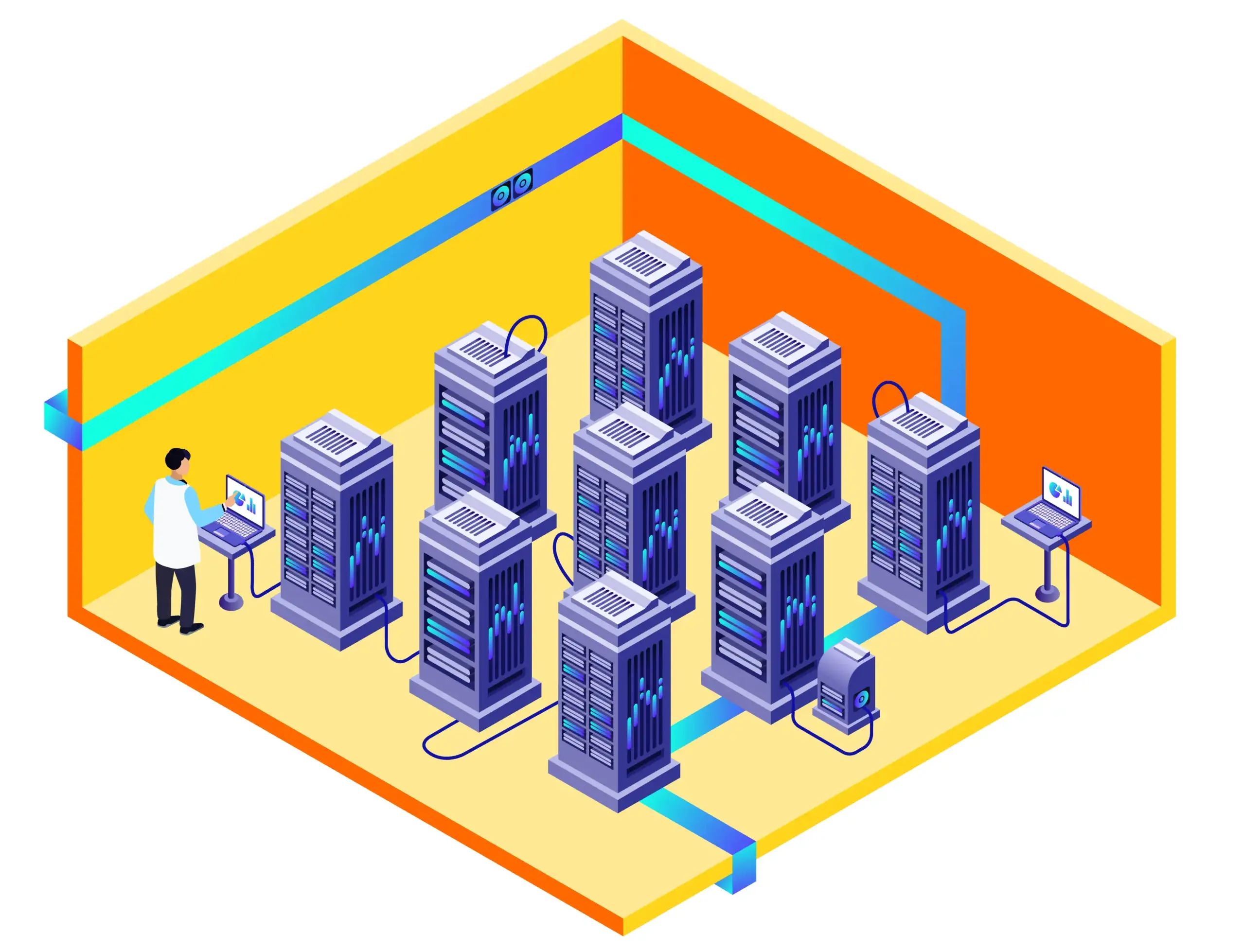
AI infrastructure does not behave like traditional IT infrastructure. It consumes far more power per server rack. A conventional server rack draws 5 kW to 10 kW, whereas AI-ready racks running GPU clusters can draw 30 kW to 80 kW. This is fundamentally changing how facilities are engineered.
Developers are now designing campuses around liquid cooling, higher-capacity substations, and multi-phase build-outs of 10 MW to 20 MW blocks that scale up to 50 MW to 100 MW campuses.
Enterprise Digitalization
Enterprise digitalization contributes towards greater demand. The factors that are moving workloads to the cloud faster than before include:
- Banking
- Financial services
- Government
- Telecom
- E-commerce companies
On the other hand, there are other factors that push operators to build regional edge facilities closer to end users. They are:
- OTT platforms
- Gaming
- Content delivery networks
Data localisation requirements under the Digital Personal Data Protection Act, 2023, indicate that many of these workloads must physically reside within India. This in turn adds further urgency to domestic capacity building.
Master Quantity Surveying – Build a Rewarding Career Today!
Gain in-demand skills in cost estimation, project budgeting, and contract management with our Quantity Surveying Course. Learn from industry experts and boost your career in construction and infrastructure. Enroll now and take the first step toward success!
Know MorePolicy and Infrastructure: What is Enabling Supply-Side Growth
State governments have been actively competing to attract data centre developers. This competition has translated into faster approvals and lower entry costs for operators.
| State | Key Incentives | Notes |
| Maharashtra | Subsidised power tariffs, stamp duty exemptions up to 100%, single-window clearance, extra incentives for green integrated DC parks | Leads the country in upcoming capacity, anchored by Mumbai |
| Tamil Nadu | Incentives for projects above ₹500 crore, stamp duty concessions, land cost subsidies, uninterrupted water supply for DC parks | Strong hub around Chennai with subsea cable proximity |
| Telangana | R&D grants, labour inspection exemptions, infrastructure status benefits | Growing hyperscale presence around Hyderabad |
| Karnataka | Financial incentives, uninterrupted power supply, single-window clearance under its 2022-27 policy | Anchored by Bengaluru’s GCC and AI/ML demand |
| Uttar Pradesh | Concessional land rates, capital subsidies, stamp duty exemptions, dual power grid access | Expanding around Noida and NCR |
Central-level support has reinforced this momentum. There has been improved access to lower-cost and long-tenure financing with the government’s move to grant data centres infrastructure status Ministry of Electronics and IT (MeitY) guidelines have standardised technical requirements across states. This eases compliance for operators building across multiple locations.
Capital Flows: Why Developers are Scaling so Fast
The scale of recent capital commitments illustrates how seriously investors are treating this sector. Adani Group announced a $100 billion plan to build renewable-powered, AI-ready hyperscale data centres by 2035.
This expands its AdaniConneX platform from roughly 2 GW to a 5 GW target. They have got campuses planned in Visakhapatnam (with Google) and Hyderabad and Pune (with Microsoft).
Google separately committed $15 billion to AI infrastructure in India. This includes new subsea cable gateways connecting India to Singapore, South Africa, and Australia. On the other hand, Microsoft pledged a record $17.5 billion investment. Meta and Reliance Industries have also partnered on a planned 168 MW AI-ready facility in Jamnagar, Gujarat.
Data centres have effectively become a mainstream asset class in India. This draws institutional capital, private equity, and debt financing at a pace previously reserved for traditional infrastructure sectors like roads and power.
This isn’t speculative capital but backed by long-term lease agreements with hyperscaler tenants, which makes the sector attractive for investors seeking stable, contracted returns.
Regional Hotspots and Emerging Hubs
Mumbai remains India’s largest data centre market. This is made possible by its subsea cable connectivity and financial sector demand. It is followed closely by Chennai, which benefits from proximity to international cable landing stations and a growing base of OTT and CDN tenants.
Bengaluru continues to attract capacity linked to Global Capability Centres (GCCs) and AI/ML workloads. Hyderabad and Delhi NCR, on the other hand, are scaling rapidly on the back of hyperscaler campus announcements.
Beyond the top metros, Tier II cities including Jaipur, Ahmedabad, Kochi, Visakhapatnam, and Lucknow are seeing rising data centre activity. This is driven by 5G rollout, OTT consumption, and enterprise demand for disaster recovery sites outside the traditional metro corridor.
Master Quantity Surveying – Build a Rewarding Career Today!
Gain in-demand skills in cost estimation, project budgeting, and contract management with our Quantity Surveying Course. Learn from industry experts and boost your career in construction and infrastructure. Enroll now and take the first step toward success!
Know MoreJobs and Skills: Where the Opportunities are
This is where the construction boom translates into real career pathways. Data centre technician roles are now among the fastest-growing job titles in India. The sheer number of new facilities under construction and the specialised nature of mission-critical infrastructure marks this.
Unlike a typical commercial building, a data centre project involves redundant power systems, precision cooling, and strict uptime compliance. All of these require technically trained personnel.
| Role | Core Skills Needed | Typical Entry Point |
| Data Centre Technician | Rack operations, monitoring systems, electrical safety basics | Diploma or ITI + short technician training |
| Electrical/UPS Engineer | Power distribution design, UPS and generator maintenance | Electrical engineering degree/diploma + vendor certification |
| Cooling (HVAC) Engineer | Chilled-water systems, precision cooling, liquid cooling for AI racks | HVAC certification + hands-on site experience |
| Network Engineer/NOC | Routing, fiber operations, peering and connectivity management | Networking certification (e.g., CCNA-level) + practical labs |
| Cloud Engineer/SRE | Infrastructure-as-code, container orchestration, system observability | Cloud certification + project portfolio |
Entry-level technician roles typically require three to six months of focused, hands-on training covering electrical safety, rack operations, and monitoring systems. Whereas mechanical, electrical, and plumbing (MEP) or commissioning roles benefit from six to twelve months of structured training with lab and field exposure.
Cloud and site reliability engineering (SRE) roles, which sit closer to software operations, generally need six to twelve months of applied learning backed by real project work.
Sustainability: The New Non-Negotiable
Renewable energy is no longer optional for large data centre developers. It has become a core part of how projects get financed. Long-term power purchase agreements (PPAs) for solar and wind are combined with rising investor demand for ESG-linked financing.
It indicates that new campuses increasingly target high renewable energy shares alongside energy-efficient cooling and water-conscious design. For instance,Tamil Nadu’s policy ties incentives to meeting at least 30% of energy needs through renewable sources. Similar expectations are becoming standard across other state frameworks.
Risks and Headwinds
The pace of growth does cause some friction. There are some reasons that might slow individual projects even when the overall sector momentum remains strong. They are:
- Grid capacity constraints
- Land and water availability
- A shortage of specialised technical talent
Power availability, in particular, is becoming a critical bottleneck as AI-ready campuses demand far higher energy density than earlier generations of facilities. This makes state-level power planning and renewable integration essential to keeping construction timelines on track.
Kickstart Your Embedded Systems Career and Turn Your Tech Passion into High-Demand Skills!
Conclusion
India’s data centre construction boom isn’t a passing investment cycle. It is the physical infrastructure layer underpinning the country’s cloud, AI, and digital economy ambitions.
With capacity set to grow roughly 30% in 2026 alone and cumulative investment commitments running into hundreds of billions of dollars, the sector is moving from potential to execution at scale.
For the workforce, this translates into sustained demand for technicians, engineers, and cloud professionals across every stage of a data centre’s lifecycle. This can range from power and cooling to networking and operations.
AI workloads continue to reshape the technical requirements of these facilities. So, the professionals who build hands-on expertise in power systems, precision cooling, and cloud operations today are positioning themselves at the centre of one of India’s fastest-growing infrastructure sectors.
Master Quantity Surveying – Build a Rewarding Career Today!
Gain in-demand skills in cost estimation, project budgeting, and contract management with our Quantity Surveying Course. Learn from industry experts and boost your career in construction and infrastructure. Enroll now and take the first step toward success!
Know MoreFrequently Asked Questions
What is driving India's data centre construction boom?
The boom is driven primarily by surging AI and cloud computing demand, combined with strong state government incentives and record hyperscaler investment. Data localisation requirements under India’s data protection law are adding further momentum.
Which companies are leading India's data centre expansion?
Adani Group, Google, Microsoft, Amazon, Reliance, and Meta are among the largest investors. Adani alone has committed $100 billion toward AI-ready data centres by 2035 through partnerships with Google and Microsoft.
Which Indian cities have the most data centre activity?
Mumbai, Chennai, Bengaluru, Hyderabad, and Delhi NCR are the leading hubs. Tier II cities like Jaipur, Ahmedabad, Kochi, and Lucknow are emerging as new growth areas.
Why does AI increase power demand in data centres?
AI workloads require GPU-dense server racks that consume 30-80 kW of power, compared to just 5-10 kW for traditional servers. This drives the need for liquid cooling and higher-capacity electrical infrastructure.
What government policies support India's data centre growth?
States including Maharashtra, Tamil Nadu, Telangana, Karnataka, and Uttar Pradesh offer incentives such as stamp duty exemptions, power subsidies, and single-window clearances. Data centres have also been granted infrastructure status, improving access to long-term financing.
What jobs are available in India's data centre sector?
Common roles include data centre technicians, electrical and UPS engineers, HVAC/cooling engineers, network engineers, and cloud/SRE professionals. Demand spans entry-level technician positions to senior cloud architecture roles.
How can I become a data centre technician in India?
Most entry-level technician roles require a diploma or ITI qualification combined with three to six months of focused, hands-on training in electrical safety, rack operations, and monitoring systems. Vendor-specific certifications can further improve hiring prospects.
What skills are most in demand for data centre careers?
Power systems and electrical engineering, precision cooling and HVAC, networking and fiber operations, and cloud/SRE skills are the most sought-after. Certifications combined with hands-on lab or field experience significantly improve employability.