Table of Contents
Introduction: The Rich Heritage of South Indian Handloom Fabrics
South India is known for its rich textile history. Many traditional fabrics are made here. These fabrics are woven by skilled artisans. Special methods are used for weaving. Each region has its own style.
Traditional handloom fabrics are valued across India. They are worn during festivals and weddings. They are also used for daily clothing. Beautiful colours and patterns are often added. Each fabric has its own identity.
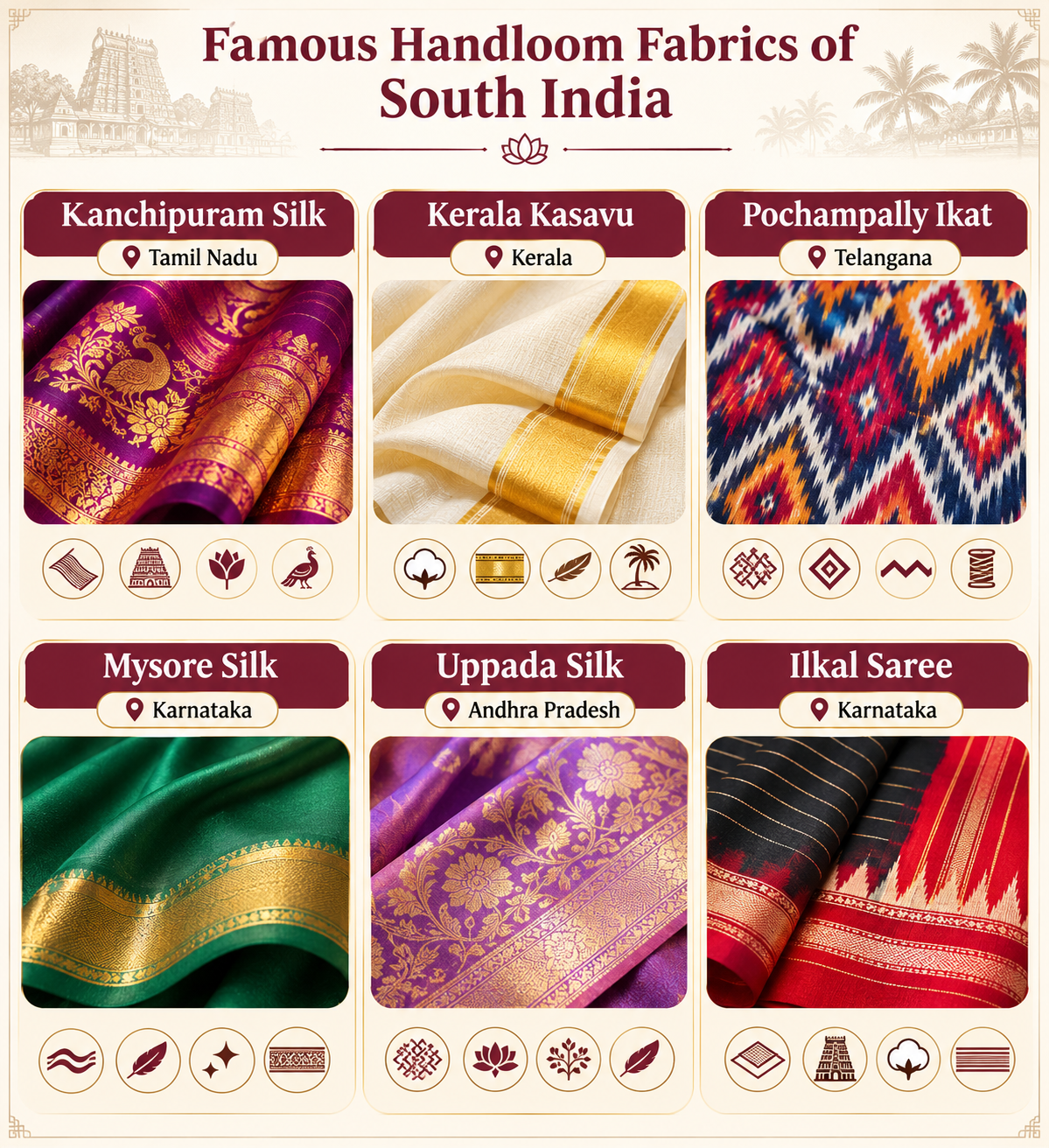
Tamil Nadu is famous for Kanchipuram silk. Kerala is known for Kasavu sarees. Pochampally Ikat comes from Telangana. Mysore silk is made in Karnataka. Uppada silk is known in Andhra Pradesh. Ilkal sarees are also made in Karnataka.
These fabrics carry many years of tradition. Weaving skills are passed down through generations. Traditional designs are still being used. Many modern clothes are also made with them.
Key Takeaways
- South India has many traditional handloom fabrics.
- Each region has its own weaving style.
- Cotton and silk are commonly used.
- Special patterns are added during weaving.
- Traditional colours and motifs are widely used.
- Handloom fabrics support skilled artisans.
- Traditional designs are used in modern fashion.
- Handloom and powerloom fabrics are made differently.
Learn Advanced Designing & Boutique Skills with Experts. Join Now!
What Are Handloom Fabrics and How Are They Made?
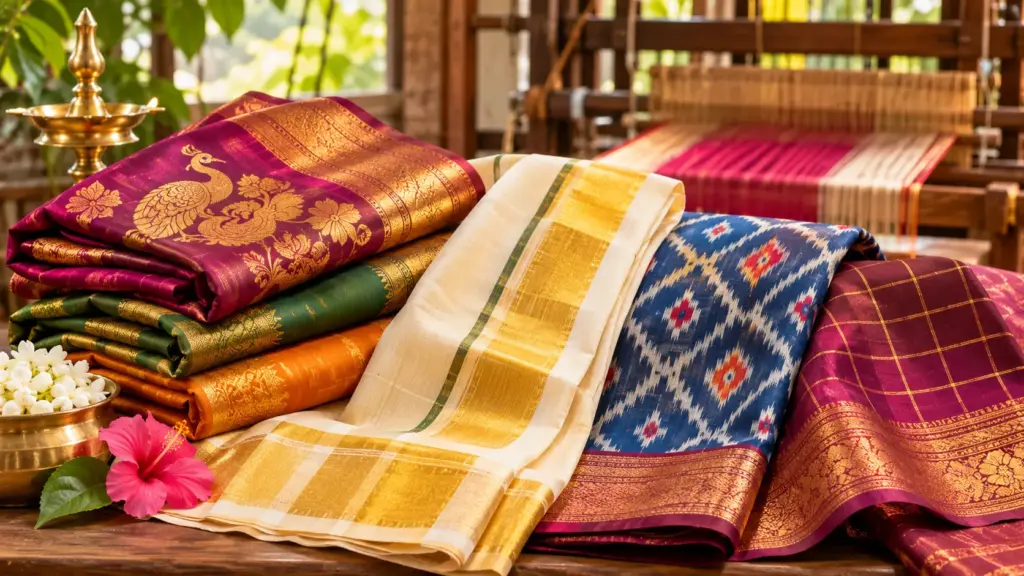
Handloom fabrics are woven by hand. A special tool called a loom is used. Threads are arranged on the loom. The fabric is made by weaving them together.
The loom is usually operated manually. Each thread is placed carefully. The design is created during weaving. Different colours and patterns can be added.
How Are Handloom Fabrics Made?
Several steps are followed during weaving.
Yarn Preparation
- Cotton or silk yarn is selected.
- The yarn is cleaned when needed.
- Weak threads are removed.
- The yarn is prepared for weaving.
Dyeing
- Colours are selected for the fabric.
- The yarn is dyed.
- Different shades may be used.
- The yarn is dried before weaving.
Warping
- Long threads are arranged together.
- These threads are called the warp.
- They are placed across the loom.
- Proper spacing is maintained.
Weft Preparation
- Another set of threads is prepared.
- These threads are called the weft.
- They are passed across the warp.
- The fabric starts taking shape.
Weaving
- The loom is operated by the weaver.
- The threads are joined together.
- Patterns are created during weaving.
- Borders and designs are added.
Finishing
- The finished fabric is removed.
- Loose threads are cut.
- The fabric is checked.
- It is prepared for sale.
The time needed depends on the design. Simple fabrics may take less time. Detailed sarees may take several days. Complex designs may take even longer.
Master Fashion Designing and Create Your Signature Style
Unlock your creative potential with our expert-led Fashion Designing course. Build in-demand skills and step confidently into the world of fashion!
Begin Your Fashion Career Today!Famous Traditional Handloom Fabrics of South India
Many famous handloom fabrics are made in South India. Each fabric has special features. Different colours and patterns are used. Traditional weaving methods are also followed.
Kanchipuram Silk from Tamil Nadu
Kanchipuram silk is famous across India. It is traditionally woven in Tamil Nadu. The fabric is known for its rich look. It is mostly used for special occasions.
Pure silk yarn is used in traditional sarees. Gold or silver zari is added. Broad borders are commonly seen. Beautiful designs are added to the pallu.
Main Features
- Rich silk fabric.
- Shiny zari borders.
- Bright colour combinations.
- Traditional temple designs.
- Floral and peacock patterns.
Kanchipuram sarees are known for their strength. They are often worn at weddings. Traditional designs are still preferred. These sarees are also passed down through families.
Kerala Kasavu from Kerala
Kasavu is a famous Kerala handloom fabric. It is commonly seen in traditional clothing. The fabric is usually cream or white. A gold border is added.
Kasavu sarees are worn during festivals. They are also used for weddings. They are especially popular during Onam. Traditional Kerala clothing is often made with Kasavu.
Main Features
- Cream or white fabric.
- Gold-coloured borders.
- Simple traditional designs.
- Cotton is commonly used.
- Light and comfortable texture.
The gold border is called Kasavu. It gives the fabric its name. Traditional versions use metallic zari. Some modern versions use other materials.
Pochampally Ikat from Telangana
Pochampally Ikat is famous for its patterns. It is traditionally made in Telangana. Special dyeing methods are used. The threads are dyed before weaving.
Some parts of the yarn are tied. These parts are protected from dye. Different colours are added to the yarn. Patterns are formed during weaving.
Main Features
- Bright colour combinations.
- Diamond-shaped patterns.
- Zigzag designs.
- Cotton and silk varieties.
- Special Ikat patterns.
Pochampally sarees are known for their designs. Their patterns may look slightly blurred. This effect comes from the dyeing method. The designs are planned before weaving.
Mysore Silk from Karnataka
Mysore silk is known for its softness. It is made in Karnataka. The fabric has a smooth surface. A natural shine is also seen.
Pure silk is used in traditional varieties. Zari borders may also be added. These sarees are worn during festivals. They are also chosen for weddings.
Main Features
- Smooth silk texture.
- Soft and light feel.
- Rich colours.
- Simple zari borders.
- Elegant appearance.
Mysore silk sarees are known for their finish. Bright colours are commonly used. Designs are usually kept simple. This gives them a graceful look.
Uppada Silk from Andhra Pradesh
Uppada silk is a traditional Andhra fabric. It is woven in Uppada. The fabric is known for its fine texture. Detailed designs are often added.
Fine silk threads are used for weaving. Zari work is also included in many sarees. Floral and traditional patterns are commonly seen. Skilled work is needed for these designs.
Main Features
- Fine silk fabric.
- Light texture.
- Detailed zari work.
- Floral patterns.
- Rich colour combinations.
Uppada sarees are popular at weddings. They are also worn during celebrations. Detailed patterns are often preferred. Each design needs careful weaving.
Ilkal Sarees from Karnataka
Ilkal sarees are traditionally woven in Karnataka. They are named after the town of Ilkal. These sarees are known for their borders. Their pallus also have special designs.
Cotton and silk may be used together. The body and pallu are woven separately. They are joined using a special method. Traditional colours are commonly selected.
Main Features
- Contrasting borders.
- Red traditional pallus.
- Cotton and silk combinations.
- Temple-inspired patterns.
- Distinctive weaving style.
Ilkal sarees are worn on many occasions. They are also used during festivals. Their designs are linked with local culture. Traditional patterns are still popular.
Famous South Indian Handloom Fabrics
| Fabric | Region | Main Feature |
| Kanchipuram Silk | Tamil Nadu | Silk with zari borders |
| Kerala Kasavu | Kerala | Cream fabric with gold borders |
| Pochampally Ikat | Telangana | Colourful geometric patterns |
| Mysore Silk | Karnataka | Smooth and soft silk |
| Uppada Silk | Andhra Pradesh | Fine silk and detailed designs |
| Ilkal Sarees | Karnataka | Special borders and pallu |
Traditional Weaving Techniques Used in South Indian Textiles
Different weaving methods are used across South India. Each method creates a special design. Some methods are used for borders. Others are used for colourful patterns.
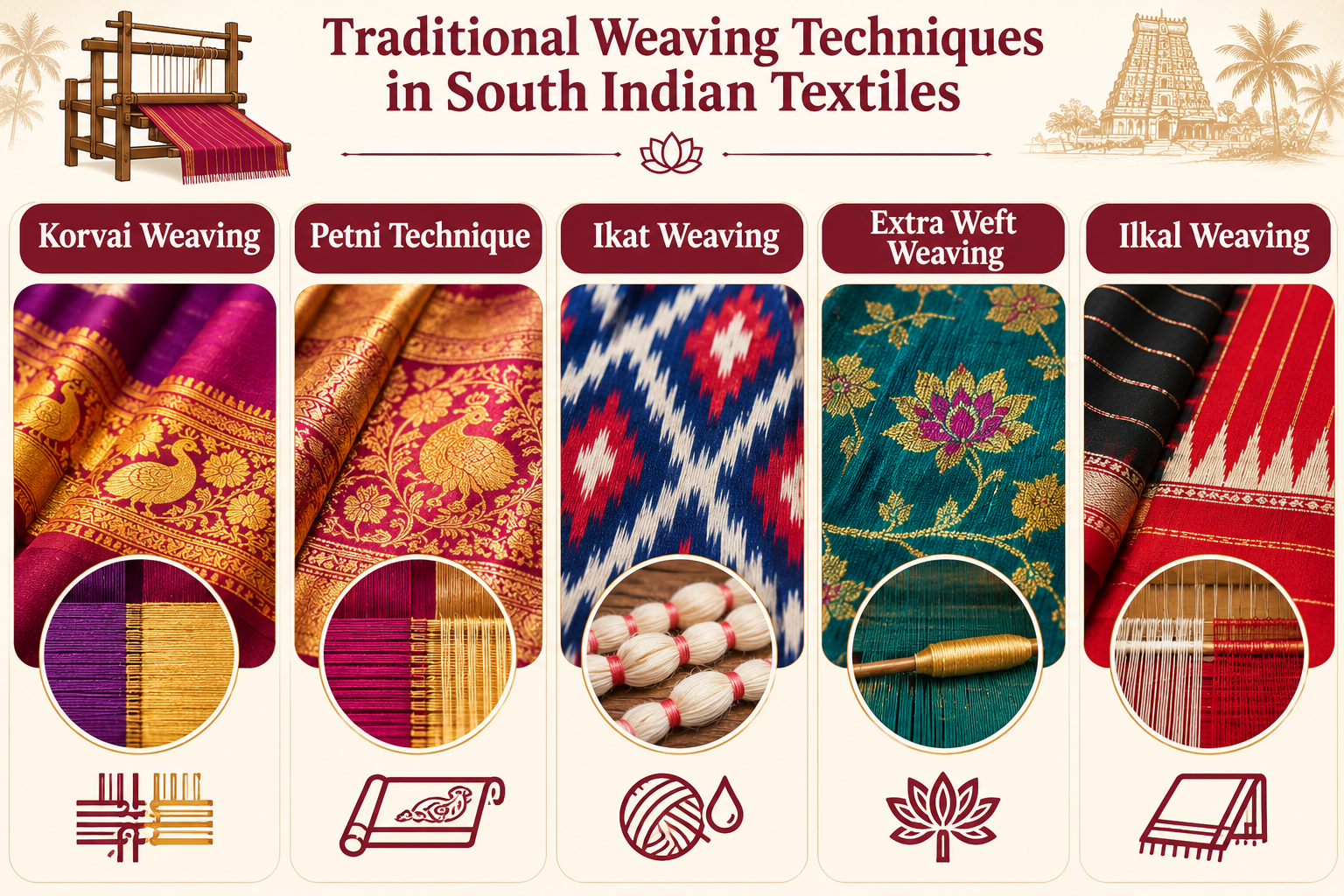
Korvai Weaving
Korvai is used in Kanchipuram sarees. It is mainly used for contrasting borders.
- The body and border are woven separately.
- Different colours are selected.
- The sections are joined during weaving.
- Strong colour differences are created.
- Skilled weaving is required.
This method gives the saree its look. It also helps create detailed borders.
Petni Technique
Petni is another traditional weaving method. It is used in Kanchipuram silk sarees.
- The pallu is prepared separately.
- Different colours are selected.
- The sections are joined carefully.
- The joining is done during weaving.
- Decorative designs are created.
This method is used for detailed pallus. It adds beauty to traditional silk sarees.
Ikat Weaving
Ikat is known for its dyeing method. It is used in Pochampally textiles.
- Yarn is tied in selected areas.
- Some parts are protected from dye.
- Colours are added in stages.
- The yarn is placed on the loom.
- Patterns appear during weaving.
The designs are planned before weaving. Careful preparation is required.
Extra Weft Weaving
Extra weft is used for decorative designs. Additional threads are added during weaving.
- Extra threads are used.
- Small motifs are created.
- Floral designs can be added.
- Geometric patterns can be formed.
- Detailed work is required.
This method helps create beautiful fabric designs.
Ilkal Weaving
Ilkal sarees are known for their joining method.
- The body is woven first.
- The pallu is prepared separately.
- Both sections are joined.
- Contrasting patterns are added.
- The saree is checked after weaving.
This method gives Ilkal sarees their special look.
Common Motifs, Patterns and Designs in South Indian Handlooms
Many traditional designs are used in South Indian fabrics. These designs are called motifs. They are often inspired by nature. Temples and local traditions are also represented.
Temple Motifs
Temple designs are commonly seen in sarees.
- Temple borders.
- Gopuram shapes.
- Triangle patterns.
- Repeated lines.
- Traditional building designs.
These motifs are often added to silk sarees. They are especially common in borders.
Floral Motifs
Flowers are widely used in handloom designs.
- Lotus patterns.
- Jasmine flowers.
- Small flower shapes.
- Leaf designs.
- Creeper patterns.
These designs give fabrics a soft look. They are used on borders and pallus.
Peacock and Animal Motifs
Bird and animal designs are also used.
- Peacock patterns.
- Parrot designs.
- Elephant motifs.
- Swan shapes.
- Deer patterns.
These designs are often linked with tradition. They are commonly seen in silk sarees.
Geometric Patterns
Geometric designs are found in many fabrics.
- Diamond shapes.
- Checks.
- Stripes.
- Zigzag lines.
- Square patterns.
Pochampally Ikat is famous for these designs. Similar patterns are also used elsewhere.
Traditional Symbols
Some designs have cultural meaning.
- Conch shapes.
- Lotus symbols.
- Chakra patterns.
- Mango designs.
- Traditional symbols.
These designs are often used for ceremonies. Their use depends on local customs.
Learn Advanced Designing & Boutique Skills with Experts. Join Now!
Master Fashion Designing and Create Your Signature Style
Unlock your creative potential with our expert-led Fashion Designing course. Build in-demand skills and step confidently into the world of fashion!
Begin Your Fashion Career Today!Natural Fibres and Dyes Used in Handloom Fabrics
Natural fibres are widely used in traditional textiles. Cotton and silk are the most common. Other fibres may also be used. The fabric type depends on the yarn.
Cotton
Cotton is used in many South Indian fabrics.
- It feels soft on the skin.
- Air can pass through easily.
- It is suitable for warm weather.
- Different textures can be created.
- It is used for daily clothing.
Kerala Kasavu is often made with cotton. Cotton is also used in Ilkal sarees.
Silk
Silk is used for rich traditional fabrics.
- It has a natural shine.
- It feels smooth and soft.
- Detailed designs can be added.
- It is used for festive clothing.
- Zari can be added to it.
Kanchipuram, Mysore, and Uppada sarees use silk.
Other Natural Fibres
Other fibres may also be used.
- Linen.
- Wool.
- Jute.
- Natural fibre blends.
Their use depends on the fabric. The required texture is also considered.
Natural Dyes
Natural dyes are made from natural materials. They have been used for many years.
- Turmeric is used for yellow shades.
- Indigo is used for blue shades.
- Madder is used for red shades.
- Pomegranate rind can give yellow tones.
- Some leaves can produce green shades.
Traditional dyeing methods differ by region. Synthetic dyes are also used today. The choice depends on the fabric.
Fibres and Materials Used in Handlooms
| Material | Main Feature | Common Use |
| Cotton | Soft and breathable | Kasavu and Ilkal fabrics |
| Silk | Smooth and shiny | Kanchipuram and Mysore sarees |
| Linen | Light and textured | Modern clothing |
| Zari | Shiny metallic thread | Borders and designs |
| Indigo | Natural blue dye | Traditional dyed fabrics |
How Traditional Handloom Fabrics Influence Modern Fashion
Traditional fabrics are also used in modern fashion. Their colours and patterns remain popular. Many new designs are created with them. Traditional weaving is also being used by designers.
Use in Modern Clothing
Handloom fabrics are used for many clothes.
- Kurtas.
- Dresses.
- Blouses.
- Jackets.
- Skirts.
- Dupattas.
- Shirts.
- Modern sarees.
Traditional fabrics can be used in many styles. Simple changes can create new looks.
Traditional Borders in Modern Designs
Traditional borders are used in new ways.
- Saree borders are added to blouses.
- Zari is used on sleeves.
- Temple designs are added to dresses.
- Contrast borders are used on skirts.
- Traditional patterns are used on jackets.
These details add a traditional touch. Modern clothes are given a different look.
Handloom Fabrics and Sustainable Fashion
Handloom fabrics are often linked with sustainable fashion. Local weaving work is supported. Traditional skills are also preserved.
- Local artisans are supported.
- Traditional skills are kept alive.
- Small-scale production is encouraged.
- Natural fibres may be used.
- Long-lasting clothes can be made.
The environmental impact depends on production. Dyeing and fabric processing also matter.
Modern Design Ideas
Traditional fabrics can be used creatively.
- Dresses can be made with Kasavu.
- Shirts can be made with Ikat.
- Jackets can be made with silk.
- Skirts can be made with Ilkal fabric.
- Traditional motifs can be used on bags.
These designs help traditional fabrics reach more people.
Difference Between Handloom and Powerloom Fabrics
Handloom and powerloom fabrics are made differently. The main difference is the weaving method. Handlooms are operated by hand. Powerlooms are operated by machines.
Both methods are used in textile production. Their production speed is different. Their costs may also vary. Fabric quality depends on many factors.
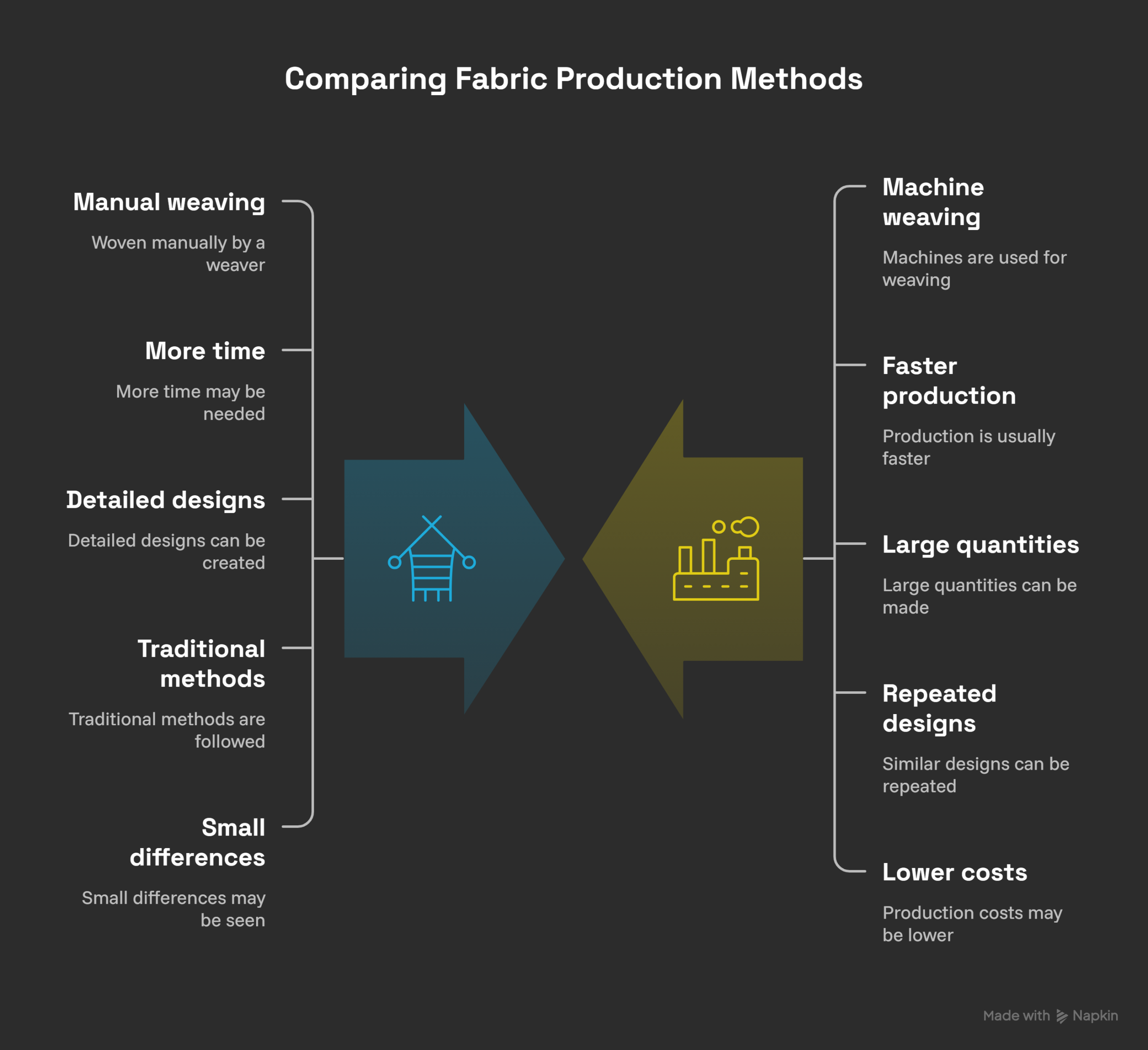
Handloom Fabrics
Handloom fabrics are woven manually.
- The loom is operated by a weaver.
- More time may be needed.
- Detailed designs can be created.
- Traditional methods are followed.
- Small differences may be seen.
Handloom weaving supports skilled artisans. Traditional weaving methods are also preserved.
Powerloom Fabrics
Powerloom fabrics are made using machines.
- Machines are used for weaving.
- Production is usually faster.
- Large quantities can be made.
- Similar designs can be repeated.
- Production costs may be lower.
Powerlooms are widely used in textile factories. They help produce fabrics in large numbers.
Handloom vs Powerloom: Key Differences
| Feature | Handloom | Powerloom |
| Operation | Done manually | Done by machines |
| Speed | Usually slower | Usually faster |
| Production | Often smaller quantities | Often larger quantities |
| Designs | Detailed manual work | Repeated designs |
| Cost | May be higher | May be lower |
| Weaving | Done by artisans | Done using powered machines |
Both methods can produce useful fabrics. Quality depends on the materials and work. Buyers should check the fabric carefully. Authentic handloom products may have certification labels.
Conclusion
South India has a rich handloom tradition. Each region has its own special fabric. Kanchipuram silk is known for zari. Kasavu is known for gold borders. Pochampally Ikat is known for patterns. Mysore and Uppada silk are valued for their texture. Ilkal sarees are known for their borders.
These fabrics carry traditional weaving skills. Their designs have been passed down. Many artisans still make these fabrics. Their use is also seen in modern fashion.
Traditional handloom fabrics should be valued. Their use helps support local weavers. It also keeps old weaving methods alive.
Master Fashion Designing and Create Your Signature Style
Unlock your creative potential with our expert-led Fashion Designing course. Build in-demand skills and step confidently into the world of fashion!
Begin Your Fashion Career Today!Frequently Asked Questions
Which is the most famous handloom fabric in South India?
Kanchipuram silk is widely recognised. It is known for silk and zari work. Kerala Kasavu and Pochampally Ikat are famous too.
Which South Indian fabric is best for weddings?
Kanchipuram silk is a popular choice. Uppada and Mysore silk are also selected. The choice depends on personal taste.
What is special about Kerala Kasavu?
Kerala Kasavu has a simple traditional look. Cream fabric and gold borders are commonly used. It is often worn during Onam.
What makes Pochampally Ikat different?
Its patterns are created through a special dyeing method. The yarn is dyed before weaving. This creates its unique designs.
Are South Indian handloom fabrics made from natural fibres?
Many are made using cotton or silk. Some fabrics use blended yarns. The material depends on the weaving style.
Are handloom sarees suitable for daily wear?
Some handloom sarees can be worn daily. Cotton sarees are usually comfortable. Heavy silk sarees are often used for special occasions.
How can genuine handloom fabrics be identified?
The product label should be checked. Seller details should also be verified. Handloom certification can help identify genuine products.
How should traditional handloom fabrics be maintained?
Care depends on the fabric type. Cotton fabrics can be washed gently. Silk fabrics need extra care. The care label should always be checked.
Why are traditional handloom fabrics important?
They help preserve old weaving skills. They also support local artisans. Their designs carry cultural value.
Are handloom fabrics used in modern fashion?
Yes, many modern clothes use handloom fabrics. Dresses, kurtas, jackets, and bags are made. Traditional patterns are also used in new designs.