Table of Contents
Vintage and retro fashion are often seen together. Both styles take inspiration from earlier decades. However, they have different meanings. Vintage fashion usually refers to older clothing. Retro fashion refers to newer clothing inspired by past styles.
These styles are often used in modern outfits. Old garments can be worn with newer pieces. Retro designs can also be added to everyday clothing. Different decades offer many styling ideas. Each period has its own colours, shapes, and details.
Understanding the difference can make fashion choices easier. It can also help with clothing design. Vintage pieces can be selected more carefully. Retro-inspired outfits can be created with simple changes.
Key Takeaways
- Vintage fashion includes older clothing and accessories.
- Retro fashion uses styles inspired by past decades.
- Vintage garments are usually original older pieces.
- Retro garments are usually newly produced.
- Each decade has its own fashion trends.
- Vintage clothing often includes unique details.
- Retro styles are commonly used in modern clothing.
- Both styles can be mixed with modern outfits.
Learn Advanced Designing & Boutique Skills with Experts. Join Now!
Introduction: Understanding Vintage and Retro Fashion
Fashion changes with every generation. However, older styles often return. Clothing from earlier decades continues to inspire designers. Some original garments are also worn today.
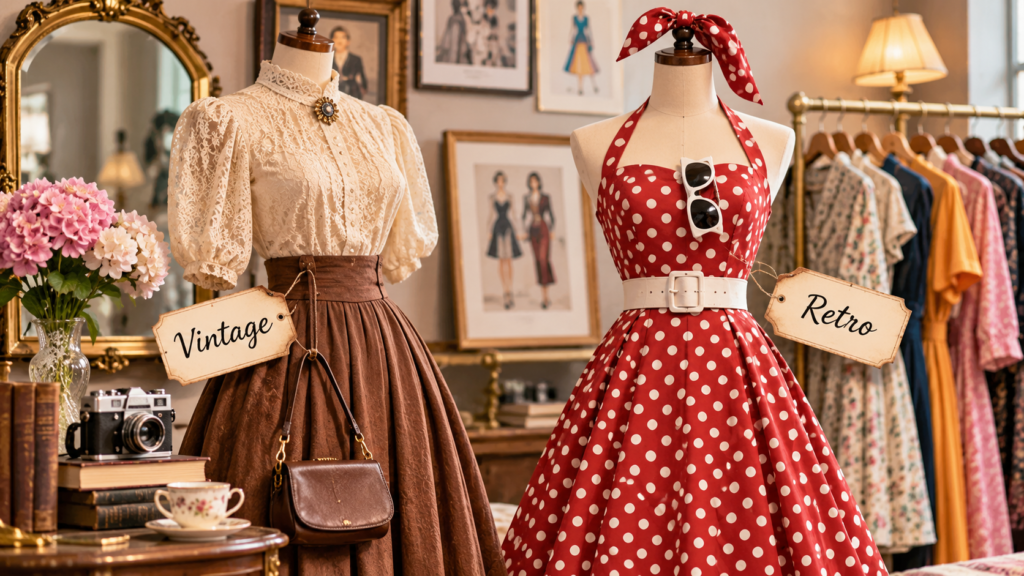
Two terms are commonly used for these styles. They are vintage and retro fashion. Both are linked to the past. However, their meanings are different.
Vintage fashion usually includes original older garments. These pieces may come from earlier decades. Their age, design, and condition are considered. Original fabrics and construction details may be preserved.
Retro fashion is based on older styles. New clothing is created with past designs. Modern materials and methods may be used. The finished garments look inspired by earlier periods.
For example, an original 1950s dress is vintage. A new dress with a similar shape is retro. Both may look similar. Their age and production are different.
These styles are popular in clothing and accessories. They are also used in fashion designing. Their details can be seen in modern collections.
What Is Vintage Fashion?
Vintage fashion refers to clothing from an earlier period. Original garments are usually included. Many fashion guides use twenty years as a general starting point. However, the exact age rule can vary.
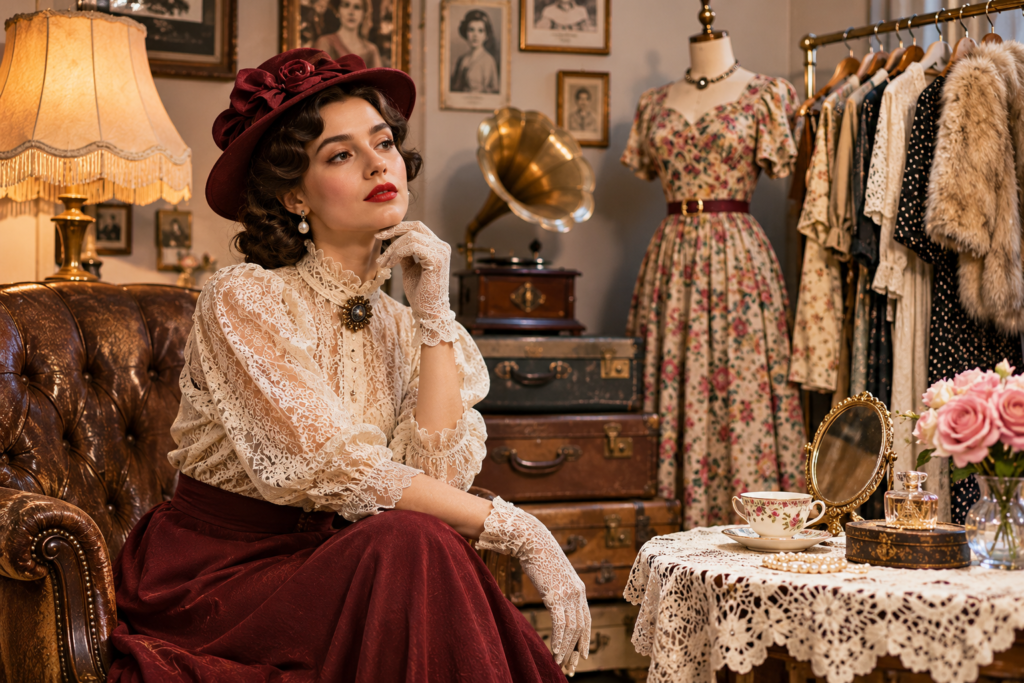
A vintage garment carries details from its period. Its fabric, cut, and stitching may show its age. Buttons, labels, and patterns can also provide clues.
Vintage clothing may be found in many places. Second-hand shops are common sources. Thrift stores and vintage boutiques may also stock them. Some pieces are collected from family wardrobes.
Main Features of Vintage Fashion
Vintage clothing often has distinctive features.
- Original designs.
- Older fabric types.
- Period-specific cuts.
- Traditional stitching methods.
- Unique buttons and fasteners.
- Old labels and tags.
- Designs linked to past decades.
Each garment may carry its own history. Some pieces may have been worn often. Others may have been carefully stored.
Types of Vintage Clothing
Different types of garments are included.
Vintage Dresses
Older dresses are often collected. Their shapes may show the fashion of their period.
- Flared skirts.
- Fitted waists.
- Lace details.
- Floral prints.
- High necklines.
Vintage Shirts and Blouses
Older shirts may include special details.
- Peter Pan collars.
- Puff sleeves.
- Decorative buttons.
- Embroidered patterns.
- Soft fabric finishes.
Vintage Trousers and Skirts
Different waistlines and shapes can be found.
- High-waisted trousers.
- Wide-leg pants.
- Pleated skirts.
- Pencil skirts.
- A-line skirts.
Vintage Outerwear
Coats and jackets are also collected.
- Leather jackets.
- Wool coats.
- Denim jackets.
- Cropped jackets.
- Tailored blazers.
Why Is Vintage Fashion Popular?
Vintage fashion is valued for several reasons.
- Original designs can be found.
- Older garments may have special details.
- Rare pieces can be collected.
- Different styles can be explored.
- Existing clothing can be reused.
Vintage clothing can also support reuse. Wearing older garments can reduce the need for new purchases. However, the condition and care needs should be checked.
Master Fashion Designing and Create Your Signature Style
Unlock your creative potential with our expert-led Fashion Designing course. Build in-demand skills and step confidently into the world of fashion!
Begin Your Fashion Career Today!What Is Retro Fashion?
Retro fashion refers to newer clothing inspired by older styles. Garments are usually made in recent years. Their designs are based on past fashion trends.
The term retro is often used for clothing. It can also describe shoes and accessories. Prints, colours, and garment shapes may be copied or adapted.
For example, a new dress may have a 1960s-style shape. It can be made using modern fabric. Such a garment is considered retro-inspired.
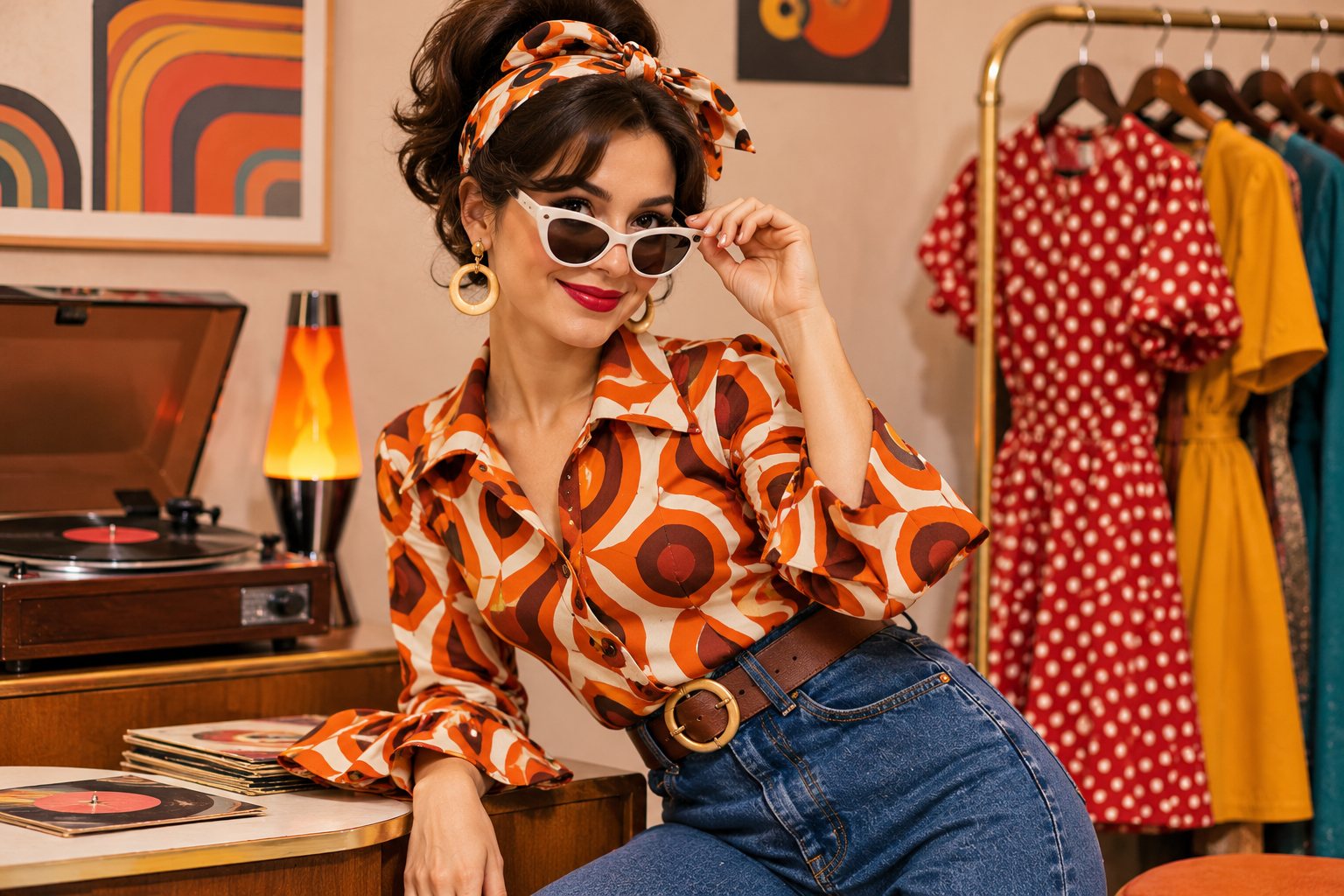
Main Features of Retro Fashion
Retro clothing uses details from earlier decades.
- Old-fashioned silhouettes.
- Bright or classic colours.
- Vintage-inspired prints.
- Traditional garment shapes.
- Decorative buttons.
- Wide collars.
- Flared trousers.
The design may look old-fashioned. However, the garment itself is usually new.
Popular Retro Clothing Styles
Several past styles are used today.
Retro Dresses
Modern dresses may use older shapes.
- Polka-dot prints.
- Flared skirts.
- Fitted waists.
- Puff sleeves.
- Square necklines.
Retro Shirts
Shirts may be designed with older details.
- Large collars.
- Bold prints.
- Colour blocks.
- Short sleeves.
- Relaxed fits.
Retro Trousers
Past trouser styles are often recreated.
- Flared jeans.
- Wide-leg trousers.
- High-waisted pants.
- Straight-leg jeans.
- Printed trousers.
Retro Accessories
Accessories are also designed with older influences.
- Cat-eye sunglasses.
- Chunky jewellery.
- Printed scarves.
- Wide belts.
- Platform shoes.
Why Is Retro Fashion Popular?
Retro fashion brings older styles into modern clothing. It can be worn without finding original garments.
- New sizes are available.
- Modern fabrics can be used.
- Different colours can be selected.
- Current fits can be included.
- Older trends can be adapted.
Retro fashion also allows creative combinations. A past style can be changed for modern use. This makes it suitable for different tastes.
Vintage vs Retro Fashion: Key Differences Explained
Vintage and retro fashion may look similar. However, their age and production are different. The main differences can be understood through their features.
| Comparison point | Vintage Fashion | Retro Fashion |
| Meaning | Original older clothing | New clothing inspired by older styles |
| Age | Usually from an earlier period | Usually recently produced |
| Design | Original period design | Past styles recreated or adapted |
| Availability | Often found in second-hand shops | Available in regular clothing stores |
| Condition | May show signs of age | Usually new |
| Materials | Original older materials | Modern or traditional materials |
| Price | Depends on age, rarity, and condition | Depends on brand and quality |
| Production | Made during its original period | Made in recent times |
Age and Origin
Vintage clothing comes from an earlier period. Its original production date matters. Retro clothing is usually made recently. Its design is based on older fashion.
Design and Appearance
Vintage garments show original period details. Their cuts and finishes may reflect older methods. Retro garments recreate those details. Modern changes may also be included.
Fabric and Quality
Older fabrics may feel different. Their condition can vary with age. Retro garments may use newer fabrics. Their quality depends on the manufacturer.
Availability
Vintage pieces may be difficult to find. Certain sizes and designs may be rare. Retro clothing is often easier to purchase. Similar styles may be produced in many sizes.
Price
Vintage prices depend on several factors. Age and rarity can affect value. Brand and condition may also matter.
Retro clothing is priced differently. Brand, fabric, and production costs are considered. Some retro-inspired pieces can be affordable. Designer versions may cost more.
Popular Vintage Fashion Trends Across Different Decades
Every decade has its own fashion identity. Clothing shapes and details changed over time. These styles continue to inspire modern fashion.
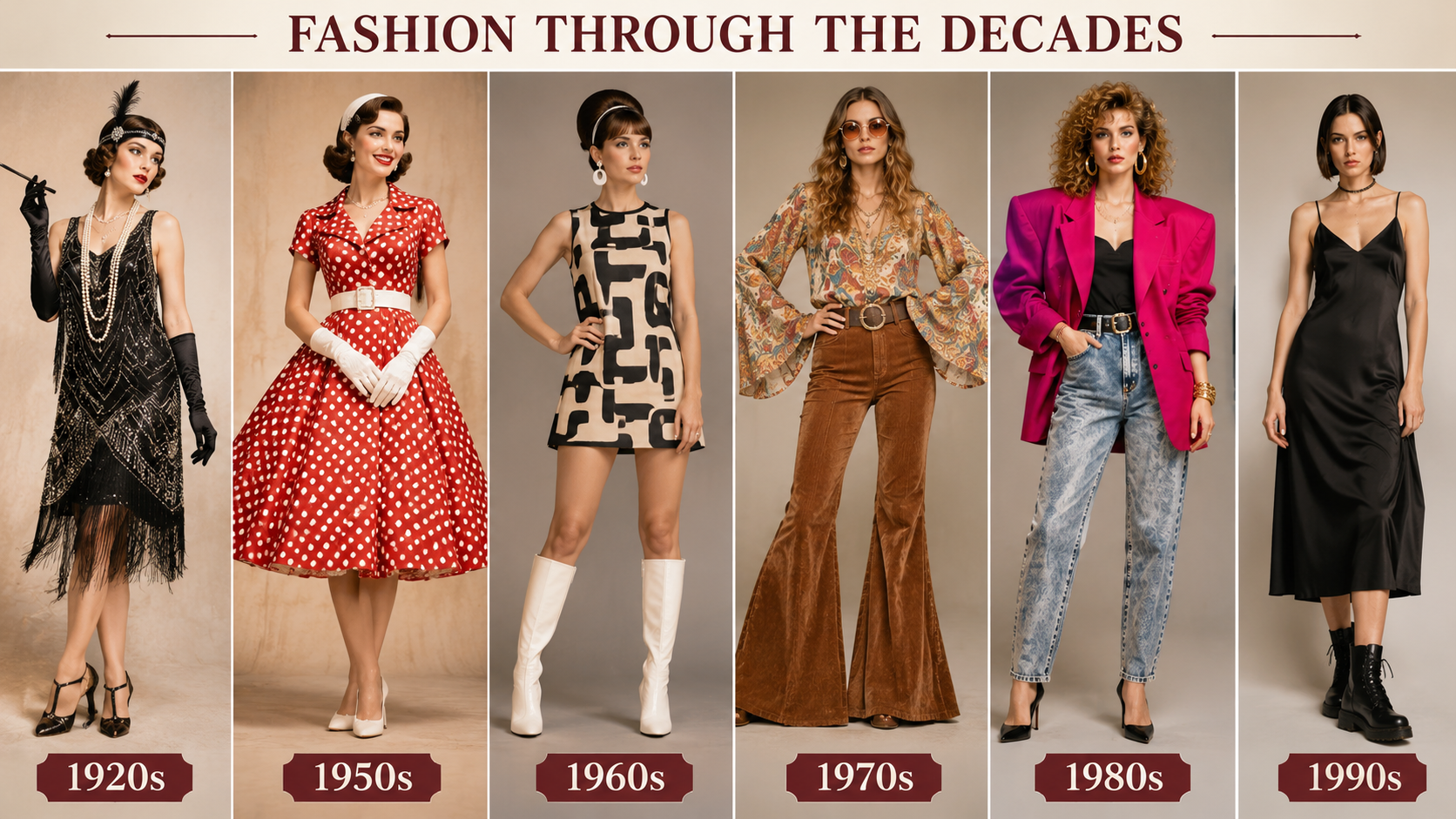
1920s Flapper Fashion
The 1920s were known for flapper clothing. Dresses were often designed with loose shapes. Shorter hemlines became popular.
Common features included:
- Straight dress shapes.
- Drop-waist designs.
- Beaded decorations.
- Fringe details.
- Headbands and hair accessories.
- Long necklaces.
The look was often finished with decorative shoes. Cloche hats were also worn. These details are still used in vintage-inspired outfits.
1950s Classic Silhouettes
The 1950s were known for fitted shapes. Waistlines were often highlighted. Skirts were commonly made with volume.
Popular details included:
- Full circle skirts.
- Fitted bodices.
- Pencil skirts.
- Polka-dot prints.
- Peter Pan collars.
- Cardigans.
- Waist belts.
The hourglass shape was widely seen. Dresses were often styled with heels. Small handbags were also used.
1960s Mod Fashion
The 1960s brought bold and simple designs. Shorter hemlines became popular. Geometric patterns were widely used.
Common features included:
- Shift dresses.
- Mini skirts.
- Bold prints.
- Colour blocking.
- Go-go boots.
- Large sunglasses.
- Simple jewellery.
Bright colours were often selected. Black and white combinations were also popular. These styles continue to appear in modern collections.
1970s Bohemian Fashion
The 1970s were strongly linked to bohemian fashion. Loose shapes and natural fabrics were common. Earthy colours were also widely used.
Popular clothing details included:
- Flared trousers.
- Maxi dresses.
- Peasant blouses.
- Crochet tops.
- Fringe jackets.
- Floral prints.
- Wide belts.
Accessories were also important. Long necklaces and large hats were used. Sandals were commonly paired with loose outfits.
1980s Bold Fashion
The 1980s were known for bold clothing. Bright colours and large shapes were popular. Clothing was often designed to stand out.
Common features included:
- Shoulder pads.
- Oversized jackets.
- Neon colours.
- Leg warmers.
- High-waisted trousers.
- Statement belts.
- Large earrings.
Denim and leather were also widely used. Bold makeup often completed the look. These details are still seen in retro collections.
1990s Minimalist Fashion
The 1990s brought simple clothing styles. Relaxed fits became popular. Neutral colours were also widely used.
Common clothing pieces included:
- Slip dresses.
- Straight-leg jeans.
- Plain T-shirts.
- Denim jackets.
- Simple skirts.
- Oversized shirts.
- Basic sneakers.
Minimal accessories were often selected. Simple silhouettes became important. These styles remain common in modern wardrobes.
Master Fashion Designing and Create Your Signature Style
Unlock your creative potential with our expert-led Fashion Designing course. Build in-demand skills and step confidently into the world of fashion!
Begin Your Fashion Career Today!Popular Retro Fashion Trends in Modern Clothing
Retro fashion is often included in modern collections. Older styles are recreated with new materials. Some designs are also changed for daily use.
Retro Denim
Denim styles from past decades are popular.
- Flared jeans.
- Wide-leg jeans.
- High-waisted jeans.
- Denim jackets.
- Straight-leg trousers.
These styles can be paired with modern tops. Simple footwear can also be used.
Retro Prints
Older prints are often used again.
- Polka dots.
- Floral patterns.
- Geometric prints.
- Checks.
- Stripes.
- Abstract designs.
These prints may be used on dresses. Shirts, skirts, and trousers are also included.
Retro Dresses
Past dress shapes are recreated. Modern fabrics may be used.
- Fit-and-flare dresses.
- Shirt dresses.
- Shift dresses.
- A-line dresses.
- Puff-sleeve dresses.
These styles can be worn casually. They may also be styled for special occasions.
Retro Sportswear
Older sportswear styles are also popular.
- Track jackets.
- Colour-blocked tops.
- High-waisted shorts.
- Retro sneakers.
- Printed sweatshirts.
These pieces can be paired with modern clothing. The result can create a relaxed outfit.
Retro Accessories
Accessories help complete retro outfits.
- Cat-eye sunglasses.
- Chunky earrings.
- Printed scarves.
- Wide belts.
- Platform shoes.
- Small shoulder bags.
A few accessories can change an outfit. Too many details may look crowded. A balanced combination is usually easier to style.
Learn Advanced Designing & Boutique Skills with Experts. Join Now!
Key Clothing Pieces and Accessories in Vintage Fashion
Vintage wardrobes often include special clothing pieces. These garments can be styled in many ways. Accessories also help complete the look.
Dresses and Skirts
Older dresses can be used for different occasions.
- A-line dresses.
- Full circle skirts.
- Pencil skirts.
- Maxi dresses.
- Shirt dresses.
The garment’s condition should be checked. Seams and fasteners should also be inspected.
Shirts and Blouses
Vintage tops may include decorative details.
- Lace collars.
- Puff sleeves.
- Embroidered fronts.
- Button-down designs.
- Peter Pan collars.
These pieces can be paired with modern trousers. Simple skirts can also be selected.
Trousers and Jackets
Older trousers and jackets can add character.
- High-waisted trousers.
- Flared pants.
- Denim jackets.
- Leather jackets.
- Tailored blazers.
These garments can be used in layered outfits. Their fit should be checked before styling.
Vintage Accessories
Accessories can complete a vintage look.
- Brooches.
- Pearl necklaces.
- Headbands.
- Cloche hats.
- Leather handbags.
- Classic watches.
- Silk scarves.
Accessories should match the clothing style. A simple outfit can be changed with one detail.
How Vintage and Retro Styles Influence Modern Fashion Designing
Past fashion styles continue to inspire designers. Old garments are often studied for ideas. Their shapes, prints, and details are reused.
Inspiration from Earlier Decades
Fashion designers often study older clothing. Details from different periods are selected.
- 1950s skirt shapes.
- 1960s geometric prints.
- 1970s flared trousers.
- 1980s oversized jackets.
- 1990s simple silhouettes.
These elements can be adapted for modern use. New colours and fabrics may also be selected.
Reusing Old Design Details
Older design features can be added to new garments.
- Vintage collars.
- Decorative buttons.
- Puff sleeves.
- Pleated skirts.
- Embroidered details.
- Wide waistbands.
These details can create a familiar look. Modern fitting can also be included.
Mixing Old and New Styles
Past and present designs can be combined. A vintage jacket may be paired with jeans. A retro dress may be styled with modern shoes.
Designers can also mix different decades. The selected pieces should still look balanced.
Supporting Clothing Reuse
Vintage clothing can also support reuse. Existing garments may be repaired or altered. Their life can be extended.
- Old dresses can be restyled.
- Jackets can be altered.
- Buttons can be replaced.
- Damaged seams can be repaired.
- Unwanted garments can be reused.
This approach can reduce clothing waste. It can also encourage more careful buying.
How to Create Vintage and Retro-Inspired Outfits
Vintage and retro outfits can be created easily. A few suitable pieces are enough. Colours and accessories should be selected carefully.
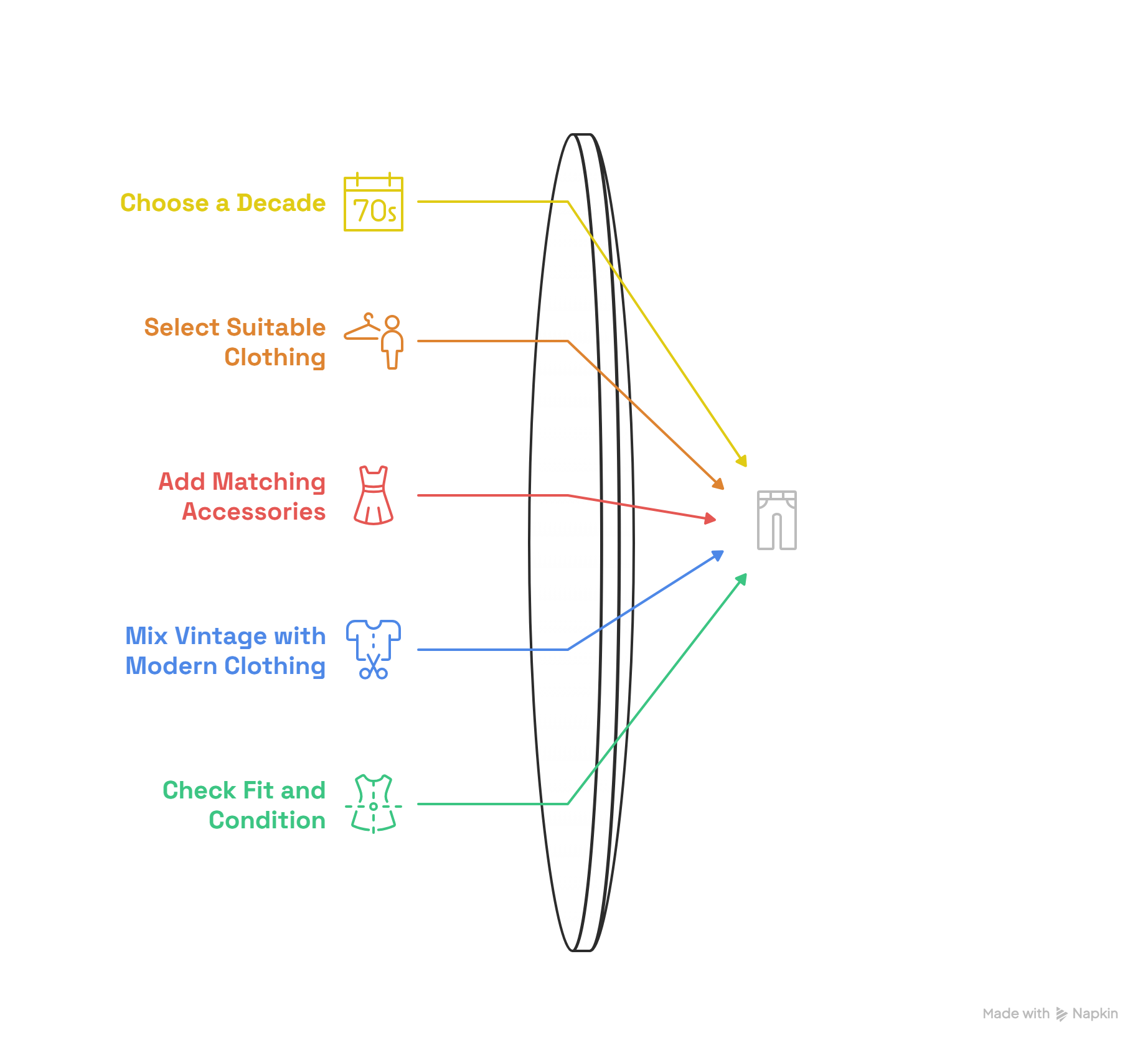
Choose a Decade
A decade can be selected as inspiration. Its main clothing features can be studied.
For example:
- 1950s for full skirts.
- 1960s for mini dresses.
- 1970s for flared trousers.
- 1980s for oversized jackets.
- 1990s for simple outfits.
One main style can be followed. Different decades can also be mixed carefully.
Select Suitable Clothing
Clothing should match the chosen decade.
- Flared jeans for 1970s looks.
- Shift dresses for 1960s looks.
- Full skirts for 1950s looks.
- Oversized jackets for 1980s looks.
- Slip dresses for 1990s looks.
The fit should also be comfortable. Modern pieces can be included.
Add Matching Accessories
Accessories can help complete the outfit.
- Sunglasses.
- Belts.
- Scarves.
- Handbags.
- Jewellery.
- Hats.
- Shoes.
The accessories should match the main style. A few selected pieces are usually enough.
Mix Vintage with Modern Clothing
Old and new garments can be combined. This creates a balanced outfit.
- Vintage shirts with modern jeans.
- Retro dresses with simple sneakers.
- Old jackets with plain tops.
- Vintage skirts with modern blouses.
The outfit should feel comfortable. Colours and shapes should also work together.
Check Fit and Condition
Vintage garments may need small changes. Their condition should be checked before wearing.
- Check seams.
- Inspect buttons.
- Review zippers.
- Check fabric damage.
- Adjust loose or tight areas.
- Clean garments carefully.
Some old fabrics need special care. Washing instructions should be checked first.
Conclusion
Vintage and retro fashion are inspired by the past. However, their meanings are different. Vintage clothing comes from earlier periods. Retro clothing is newly made with older styles.
Different decades offer many design ideas. Colours, fabrics, shapes, and accessories can be explored. These details can also be used in modern outfits.
Vintage pieces can be worn with modern clothing. Retro designs can be created with simple changes. Both styles offer many ways to express creativity.
Explore different fashion decades. Try vintage and retro styles. Create outfits with your own personal touch.
Master Fashion Designing and Create Your Signature Style
Unlock your creative potential with our expert-led Fashion Designing course. Build in-demand skills and step confidently into the world of fashion!
Begin Your Fashion Career Today!Frequently Asked Questions
What is the main difference between vintage and retro fashion?
Vintage fashion usually includes original older garments. Retro fashion includes newer clothing inspired by past styles. Their appearance may be similar. Their age and production are different.
How old does clothing need to be vintage?
Many fashion guides use twenty years as a general starting point. However, the exact definition can vary. The garment’s period and design are also considered.
Is retro clothing newly made?
Yes, retro clothing is usually newly produced. Older styles are used as inspiration. Modern fabrics and production methods may be included.
Is vintage fashion always expensive?
No, vintage clothing is available at different prices. Cost depends on age and condition. Brand and rarity may also affect the price. Some second-hand pieces can be affordable.
Can vintage and modern clothes be worn together?
Yes, both styles can be combined. Vintage jackets can be paired with modern jeans. Old skirts can also be worn with simple tops. The outfit should remain balanced.
Is vintage fashion sustainable?
Vintage clothing can support reuse. Existing garments can be worn for longer. This may reduce the need for new clothing. However, care and transport also affect environmental impact.
Which decades are popular in vintage fashion?
The 1920s to 1990s offer many popular styles. Flapper dresses, full skirts, and flared trousers are common examples. Each decade has its own design features.
How can beginners create retro outfits?
A decade can be selected first. Clothing and accessories can then be chosen. Simple combinations can be tried. Modern pieces can also be included.