Table of Contents
Creating unique clothing designs begins with small ideas. A special design need not have expensive materials. It can be created via colours, fabrics, shapes, and small details. Even a basic outfit can look different. The right combination can make it stand out.
Fashion designing is a skill that develops with practice. New ideas can be explored every day. Inspiration can be collected from many places. Simple sketches can then be turned into garments. With patience, a personal design style can also be developed.
Key Takeaways
- Unique designs can be created through simple ideas.
- Inspiration can be collected from everyday life.
- Mood boards help organise design ideas.
- Fabrics and colours should be selected carefully.
- Fashion sketches help present clothing ideas.
- Patterns are used to prepare garments.
- Sample garments should be checked before completion.
- Regular practice helps develop a personal style.
Learn Advanced Designing & Boutique Skills with Experts. Join Now!
What Makes a Clothing Design Unique?
A clothing design becomes unique through its details. Its shape, colour, fabric, and finish are considered. Small changes can create a different look.
Original Ideas
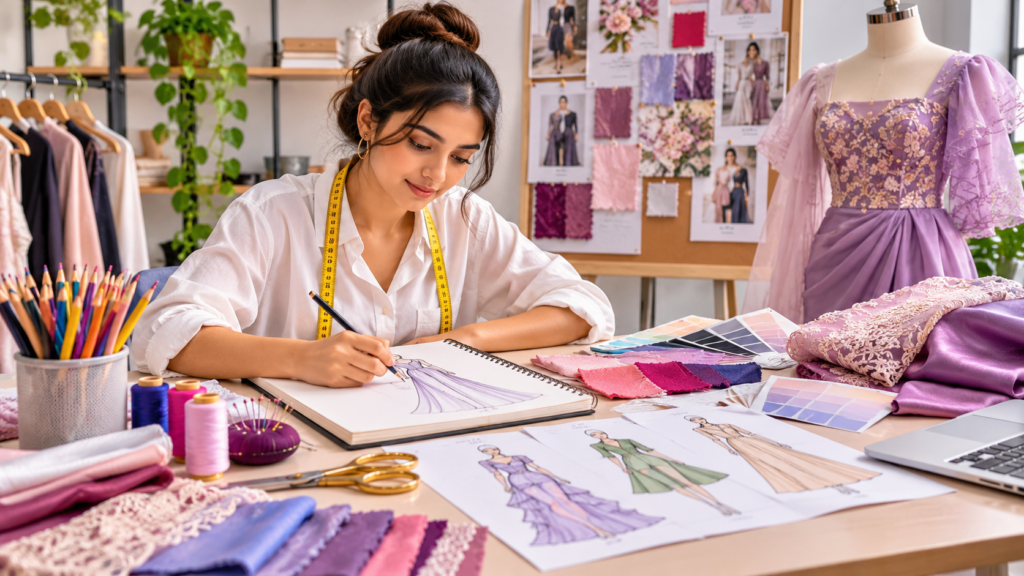
Fresh ideas can be used in clothing designs. Inspiration may come from different places.
- Nature and flowers.
- Traditional clothing.
- Local art.
- Buildings and architecture.
- Everyday objects.
- Different cultures.
- Old fashion styles.
An existing design can also be studied. Its colours or shapes may provide inspiration. New details should then be developed. This helps create a different design.
Special Details
Small details can make clothing stand out. These can be added during design development.
- Unique collars.
- Different sleeve shapes.
- Decorative buttons.
- Unusual pockets.
- Embroidery details.
- Special necklines.
- Interesting hems.
For example, a simple shirt can be changed. A different collar may be added. The sleeves can also be reshaped. These small changes can create a fresh look.
Fabric Combinations
Different fabrics can be combined carefully. Their texture and appearance should match.
- Cotton with lace.
- Denim with printed fabric.
- Linen with embroidery.
- Silk with light net fabric.
- Plain fabric with patterned fabric.
The fabric should suit the garment. Its weight and comfort should also be checked.
Personal Touch
A personal detail can make a design special. A favourite colour may be included. A traditional pattern may also be used.
A small design feature can become recognisable. It may later become part of a personal style.
Essential Skills Needed to Create Original Clothing Designs
Basic fashion skills are needed for clothing design. Some skills can be learned through practice. Others may require proper training.
Drawing and Sketching
Fashion ideas are usually drawn first. Simple sketches can be used by beginners.
- Basic garment shapes are drawn.
- Sleeve styles are explored.
- Necklines are changed.
- Lengths are adjusted.
- Design details are added.
Perfect drawing skills are not required initially. Clear sketches are enough for basic ideas.
Colour Knowledge
Colours affect the appearance of clothing. Suitable combinations should be selected.
- Light and dark shades.
- Warm and cool colours.
- Matching colour groups.
- Contrast combinations.
- Seasonal colour choices.
A colour wheel can be used for practice. Different combinations can be tested before selection.
Fabric Knowledge
Different fabrics behave in different ways. Their properties should be understood.
- Cotton is commonly used for daily wear.
- Linen is light and breathable.
- Denim is thick and strong.
- Silk has a smooth finish.
- Chiffon is light and flowing.
- Wool provides warmth.
Fabric knowledge helps with better design choices. The garment’s purpose should always be considered.
Measurement Skills
Correct measurements are needed for good fitting. Basic body measurements should be learned.
- Shoulder width.
- Bust measurement.
- Waist measurement.
- Hip measurement.
- Sleeve length.
- Garment length.
Measurements should be recorded carefully. They should be checked before cutting fabric.
Sewing and Stitching
Basic stitching knowledge is useful. Simple garments can be practised first.
- Straight stitching.
- Hemming.
- Seam finishing.
- Button attachment.
- Zipper fixing.
- Basic alterations.
These skills help during sample making. They also make design changes easier.
Pattern-Making
Patterns are used to cut fabric correctly. They provide the shape of each garment part.
- Bodice patterns.
- Sleeve patterns.
- Skirt patterns.
- Collar patterns.
- Trouser patterns.
Basic patterns can be practised first. More complex patterns can be learned later.
Master Fashion Designing and Create Your Signature Style
Unlock your creative potential with our expert-led Fashion Designing course. Build in-demand skills and step confidently into the world of fashion!
Begin Your Fashion Career Today!Step-by-Step Guide to Creating Unique Clothing Designs
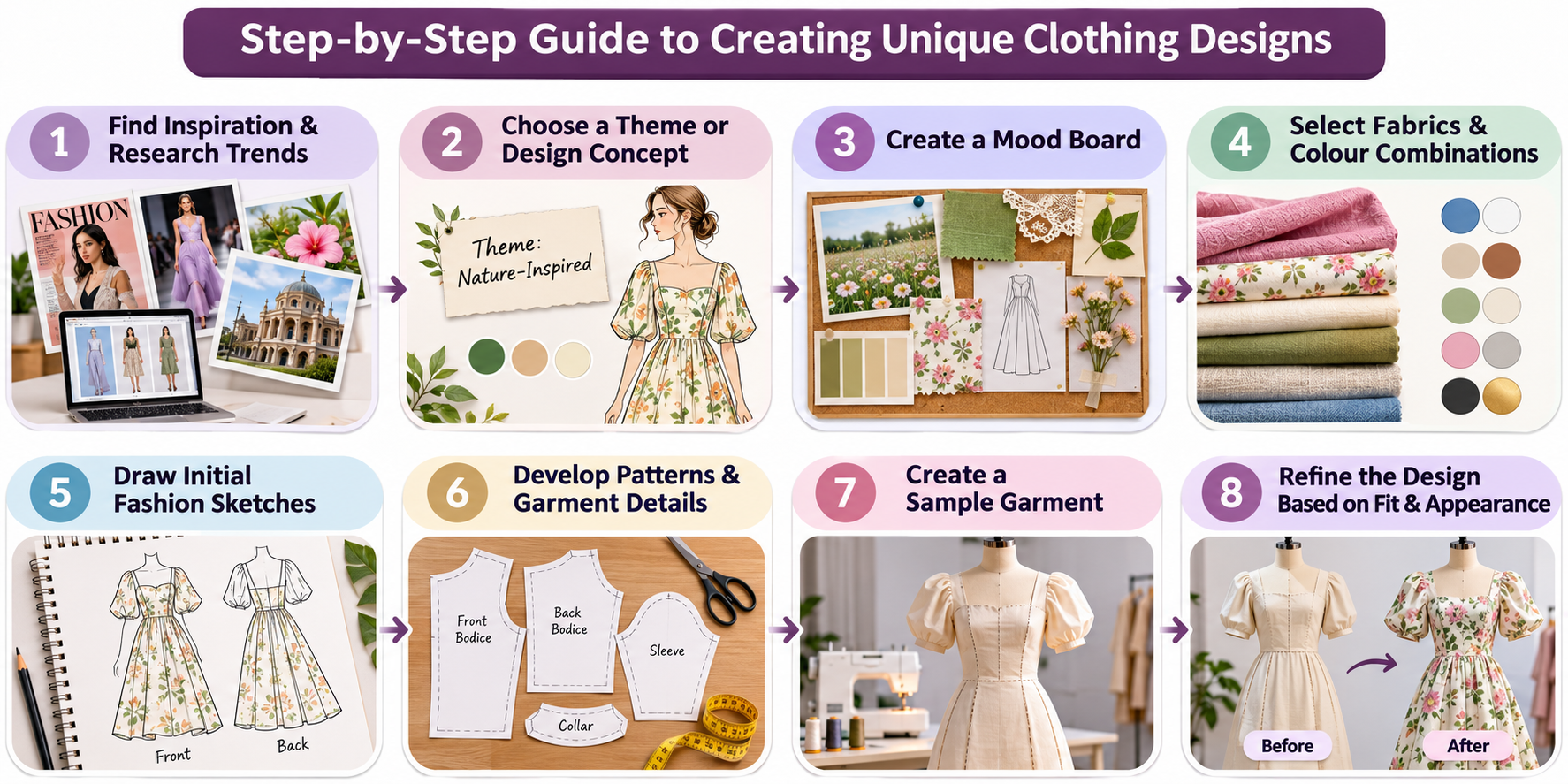
A clear process makes clothing design easier. Each stage should be completed carefully. Ideas can then be developed into garments.
Find Inspiration and Research Fashion Trends
Every clothing design begins with inspiration. Ideas can be collected from many sources.
- Fashion magazines.
- Clothing stores.
- Fashion shows.
- Social media.
- Traditional garments.
- Nature and surroundings.
- Art and architecture.
Current fashion trends can also be studied. Popular colours and garment shapes can be observed. However, trends should only guide ideas.
A design should still have a personal touch. Different elements can be combined creatively.
For example, floral prints may be studied. A simple floral pattern can be selected. It can then be used on a modern dress. A different sleeve style may also be added.
Research should be organised carefully. Useful pictures and notes can be saved. This makes the next step easier.
Choose a Theme or Design Concept
A theme gives direction to the design. It helps keep the ideas connected.
Some beginner-friendly themes include:
- Nature-inspired clothing.
- Traditional fashion.
- Minimalist outfits.
- Vintage clothing.
- Summer collections.
- Streetwear.
- Festival clothing.
- Casual daily wear.
A single theme can be selected first. Colours and fabrics can then be chosen. Garment details should also match the theme.
For example, a nature theme can be used. Green and brown shades may be selected. Floral patterns can be included. Light cotton fabrics may also be preferred.
A clear concept prevents random design choices. It also makes the collection look organised.
Create a Mood Board
A mood board is a collection of design references. It helps organise the chosen theme.
Pictures, colours, and fabric samples can be included. Sketches and pattern references may also be added.
A mood board can be created using:
- Paper sheets.
- Fashion magazines.
- Fabric samples.
- Printed pictures.
- Pinterest references.
- Digital design tools.
The mood board should match the concept. Too many unrelated pictures should be avoided.
For example, a summer clothing mood board may include:
- Light cotton fabrics.
- Soft colour shades.
- Floral prints.
- Loose garment shapes.
- Simple accessories.
The board can be reviewed before sketching. Changes can be made when needed.
Select Fabrics and Colour Combinations
Fabric and colour choices affect the final garment. Both should match the design concept.
The purpose of the clothing should be considered. Daily wear needs comfortable fabrics. Party wear may need decorative materials.
| Fabric | Common use | Main feature |
| Cotton | Shirts and dresses | Soft and breathable |
| Linen | Summer clothing | Light and airy |
| Denim | Jeans and jackets | Strong and durable |
| Silk | Occasion wear | Smooth and rich finish |
| Chiffon | Dresses and overlays | Light and flowing |
| Velvet | Party wear | Soft and textured |
Colour combinations should also be tested. Different shades can be placed together. Fabric samples can be compared before selection.
Some simple combinations include:
- Blue and white.
- Beige and brown.
- Green and cream.
- Pink and grey.
- Black and gold.
- Yellow and white.
The colours should suit the theme. They should also match the intended wearer.
Draw Initial Fashion Sketches
Fashion sketches show how a garment may look. They are usually prepared before stitching.
A basic outline can be drawn first. The main garment shape should be shown. Necklines, sleeves, and lengths can then be added.
Important details may include:
- Front design.
- Back design.
- Sleeve shape.
- Neckline.
- Waistline.
- Pocket placement.
- Hemline.
- Decorative details.
Different versions can be drawn. This allows several ideas to be compared.
Beginners can start with simple sketches. Basic body outlines can be used. Fashion sketch templates may also help.
The final sketch should show the main design clearly. Important details should be marked.
Develop Patterns and Garment Details
Patterns are prepared after the design is finalised. They are used as guides for cutting fabric.
Each garment part needs the correct pattern. Measurements should be checked carefully.
Common pattern pieces include:
- Front bodice.
- Back bodice.
- Sleeves.
- Collar.
- Skirt panels.
- Trouser legs.
- Pockets.
Seam allowances should also be included. These are extra fabric edges used for stitching.
Design details should be planned at this stage. Buttons, zippers, and decorative parts are marked. Their positions should be checked.
A paper pattern can be prepared first. It should be reviewed before fabric cutting.
Create a Sample Garment
A sample garment is made before final production. It helps check the design and fitting.
An affordable fabric can be used initially. Cotton or muslin is often suitable for practice.
The garment is prepared according to the pattern. Each section is stitched carefully.
During sample making, the following should be checked:
- Stitching quality.
- Garment measurements.
- Sleeve fitting.
- Shoulder fitting.
- Neckline shape.
- Overall garment length.
- Ease of movement.
A sample helps reveal design problems. Changes can be made before final fabric is used.
Refine the Design Based on Fit and Appearance
The sample should be checked after stitching. Its fit and appearance should be reviewed.
Some changes may be needed.
- Sleeves may need adjustment.
- Length may need correction.
- Waist fitting may need improvement.
- Necklines may need reshaping.
- Extra fabric may need removal.
- Decorative details may need changing.
The garment should also be worn during fitting. Comfort should be checked while sitting and moving.
Once the required changes are made, the design can be finalised. The final garment can then be prepared.
How to Use Colour, Texture and Patterns Creatively
Colour, texture, and patterns affect clothing appearance. They can be combined in many ways. Careful selection helps create balanced designs.
Use Colours Carefully
Colours can change the mood of clothing. Light shades can create a soft appearance. Dark shades can create a bold look.
Different combinations can be tested.
- Pastel shades for soft designs.
- Bright colours for bold outfits.
- Neutral shades for simple clothing.
- Dark colours for formal wear.
- Contrast colours for striking details.
Too many colours may make designs look crowded. A small colour group is often easier to manage.
Combine Different Textures
Texture refers to how fabric feels and looks. Different textures can add interest.
- Smooth silk.
- Rough denim.
- Soft cotton.
- Sheer chiffon.
- Embroidered fabric.
- Ribbed knit fabric.
Two textures can be combined carefully. For example, a smooth fabric may be paired with lace. The result can look more detailed.
The fabric weight should also be considered. Heavy and light materials may behave differently.
Experiment with Patterns
Patterns can make plain clothing more interesting.
Common pattern choices include:
- Floral prints.
- Stripes.
- Checks.
- Polka dots.
- Geometric shapes.
- Abstract prints.
- Traditional motifs.
Different patterns can be tested together. However, the overall design should remain balanced.
A large print can be paired with plain fabric. Small patterns can also be used with simple details.
How to Develop Your Own Fashion Design Style
A personal style develops through regular practice. It may take time to discover. Different designs should be explored first.
Study Different Styles
Many fashion styles can be observed.
- Minimalist fashion.
- Traditional clothing.
- Vintage designs.
- Streetwear.
- Casual fashion.
- Formal clothing.
- Contemporary fashion.
Different elements can be tested. Preferred colours and shapes can be identified.
Keep a Design Notebook
Ideas should be recorded regularly.
- Sketches.
- Colour combinations.
- Fabric samples.
- Design notes.
- Fashion references.
- New garment ideas.
A notebook helps ideas stay organised. Earlier designs can also be reviewed.
Experiment with Details
Small changes can create different looks.
- Change sleeve shapes.
- Try new necklines.
- Add pocket details.
- Use different buttons.
- Experiment with garment lengths.
- Combine fabric textures.
Different versions should be compared. The most suitable design can then be selected.
Create Small Collections
A small collection can be developed around one theme. Three or four garments may be enough initially.
The designs should share some features. Similar colours or patterns can be used. This creates a connected appearance.
Learn from Feedback
Feedback can help improve designs. Opinions may be collected from teachers and others.
Fit, comfort, and appearance should be reviewed. Useful changes can then be made.
A personal style develops gradually. It should be based on regular practice. New ideas should also be explored.
Learn Advanced Designing & Boutique Skills with Experts. Join Now!
Master Fashion Designing and Create Your Signature Style
Unlock your creative potential with our expert-led Fashion Designing course. Build in-demand skills and step confidently into the world of fashion!
Begin Your Fashion Career Today!Common Fashion Designing Mistakes Beginners Should Avoid
Mistakes are common during early practice. Many can be corrected with careful planning.
Following Trends Without a Clear Idea
Trends can provide inspiration. However, every trend may not suit the design.
- Choose trends carefully.
- Match them with the theme.
- Add personal details.
- Avoid copying complete designs.
Choosing the Wrong Fabric
A fabric may look attractive. However, it may not suit the garment.
- Check fabric weight.
- Check fabric stretch.
- Consider comfort.
- Test the fabric before cutting.
Ignoring Measurements
Incorrect measurements can affect fitting.
- Record measurements carefully.
- Check them twice.
- Include seam allowance.
- Review patterns before cutting.
Adding Too Many Details
Too many design features can look confusing.
- Keep the main idea clear.
- Use fewer decorative details.
- Maintain colour balance.
- Review the complete design.
Skipping the Sample Garment
A final garment may have fitting problems. A sample helps identify these issues.
- Prepare a test garment.
- Check the fitting.
- Review stitching.
- Make corrections before final cutting.
Not Practising Enough
Fashion designing improves through regular practice.
- Draw simple garments.
- Practise basic stitching.
- Study different fabrics.
- Try new patterns.
- Review completed work.
Tips to Improve Your Fashion Designing Skills
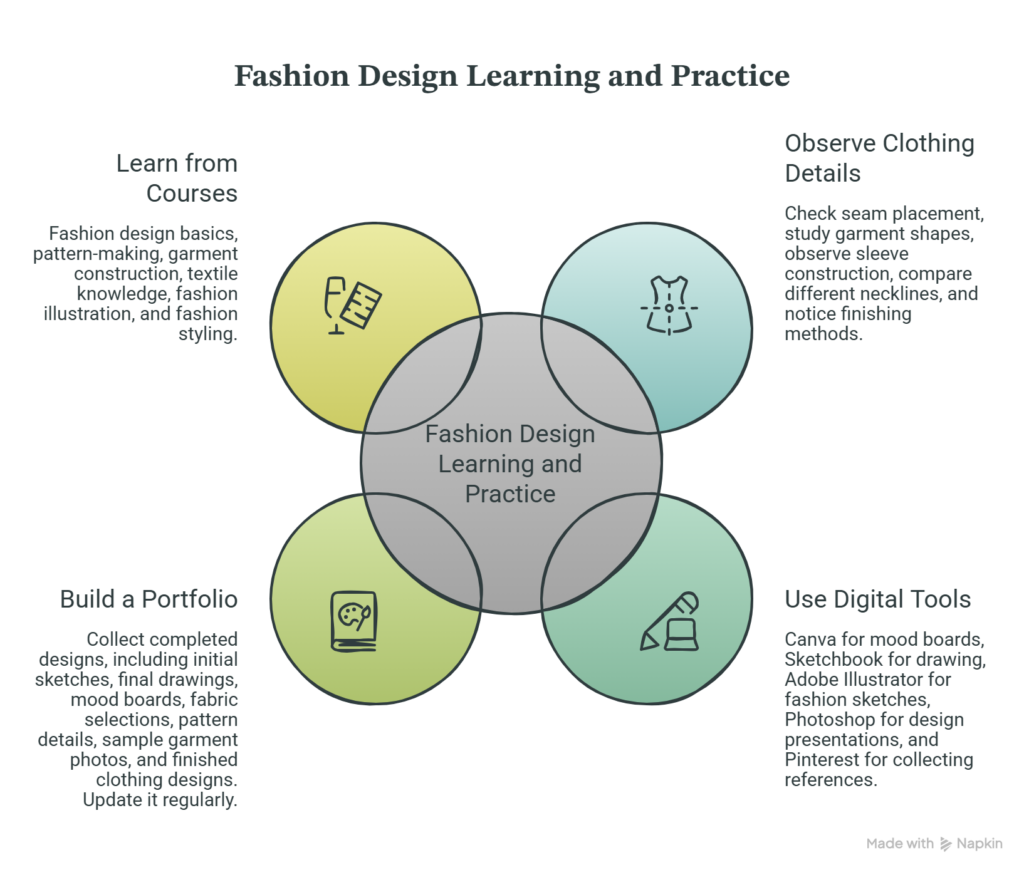
Fashion skills improve through steady learning. Small practice tasks can be completed regularly.
Practise Sketching Every Day
Simple sketches can be drawn daily. Different garment styles can be explored.
- Draw shirts.
- Sketch dresses.
- Practise sleeve designs.
- Try different necklines.
- Draw front and back views.
Visit Fabric Stores
Different fabrics can be studied closely.
- Compare fabric textures.
- Check fabric thickness.
- Observe colour shades.
- Learn fabric names.
- Collect small samples.
Learn Basic Stitching
Simple stitching skills are useful. Small garments can be made for practice.
- Stitch simple tops.
- Practise hems.
- Attach buttons.
- Make basic skirts.
- Learn zipper fixing.
Study Existing Garments
Clothing details can be observed carefully.
- Check seam placement.
- Study garment shapes.
- Observe sleeve construction.
- Compare different necklines.
- Notice finishing methods.
Use Digital Design Tools
Digital tools can support design work.
- Canva for mood boards.
- Sketchbook for drawing.
- Adobe Illustrator for fashion sketches.
- Photoshop for design presentations.
- Pinterest for collecting references.
Build a Fashion Portfolio
Completed designs should be collected. A portfolio shows progress and skills.
It may include:
- Initial sketches.
- Final drawings.
- Mood boards.
- Fabric selections.
- Pattern details.
- Sample garment photos.
- Finished clothing designs.
The portfolio can be updated regularly. It may also support future course applications.
Learn from Fashion Courses
Structured training can provide useful guidance.
- Fashion design basics.
- Pattern-making.
- Garment construction.
- Textile knowledge.
- Fashion illustration.
- Fashion styling.
Practical assignments should be completed. New techniques can then be tested.
Conclusion
Unique clothing designs can be created through simple ideas. Inspiration can be collected from many places. Colours, fabrics, and patterns can be combined. Sketches can then be developed into garments.
Basic skills should be learned step by step. Measurements and patterns should be checked carefully. Sample garments should also be prepared. Changes can be made before final stitching.
A personal design style takes time to develop. Regular practice can improve creative skills. New ideas should be explored often. Every completed design can provide useful experience.
Start with simple clothing designs. Practise regularly and build a fashion portfolio.
Master Fashion Designing and Create Your Signature Style
Unlock your creative potential with our expert-led Fashion Designing course. Build in-demand skills and step confidently into the world of fashion!
Begin Your Fashion Career Today!Frequently Asked Questions
How can beginners start designing clothes?
Basic sketches can be prepared first. Simple garment styles can be selected. Fabric and colour choices can then be explored. Small sample garments can be made for practice.
Do fashion designers need drawing skills?
Drawing skills are useful in fashion design. They help present clothing ideas. Basic sketches are enough for beginners. Drawing skills can improve with regular practice.
Which software is useful for fashion designing?
Adobe Illustrator is used for fashion drawings. Photoshop is used for design images. Canva can be used for mood boards. Other tools may also be learned.
How can a clothing design be made unique?
Different colours and fabrics can be combined. Special sleeves and necklines can be added. Personal details can also be included. A clear design theme helps create a unique look.
Which fabric is best for beginners?
Cotton is a useful fabric for beginners. It is easy to handle. Muslin is also used for sample garments. Fabric choice depends on the design.
Can clothes be designed without sewing experience?
Yes, initial designs can be created without sewing. Sketches and digital tools can be used. Basic stitching should be learned later. It helps during sample making.
How long does it take to learn fashion designing?
Learning time depends on the course and practice. Basic skills can be learned gradually. More advanced skills need regular training. Practical experience also takes time.
How can a beginner build a fashion portfolio?
Initial sketches can be collected first. Mood boards and fabric choices can be added. Sample garment photos can also be included. Finished designs should be arranged clearly.