Table of Contents
An MEP Estimation Engineer calculates project costs. The role covers mechanical, electrical and plumbing systems. Material quantities and labour costs are calculated. Project estimates and tender documents are prepared.
In India, freshers may earn ₹2.5–₹4 lakh yearly. Experienced professionals may earn ₹6–₹10 lakh yearly. Senior professionals may earn ₹10–₹15 lakh or more. Gulf salaries may range from AED 3,500–15,000 monthly. Actual salaries depend on experience and location.
Key Takeaways
- Darts are used to shape garments.
- Extra fabric is folded and stitched.
- Different darts suit different body areas.
- Bust and waist darts are commonly used.
- Darts help improve garment fitting.
- Correct marking is important before sewing.
- Fabric should be handled carefully.
- Proper stitching gives a smooth finish.
Get Career oriented MEP training with Expert Mentors! Get Free Demo Here!

Introduction: Why Accurate Estimates Win or Lose MEP Tenders
Every construction project requires proper cost planning. Different MEP materials and equipment are required. Labour and installation costs are also included.
These costs are calculated before construction. This work is handled by MEP Estimation Engineers.
MEP stands for Mechanical, Electrical and Plumbing. These systems are used in buildings.
- Mechanical: Air conditioning and ventilation systems.
- Electrical: Power supply and lighting systems.
- Plumbing: Water supply and drainage systems.
Different requirements are included in each project. Therefore, accurate estimates are very important.
Why Are Accurate Estimates Important?
Construction companies submit tenders for projects. Proposed project costs are included in tenders. These prices are compared by clients. Contractors are selected after this evaluation.
Incorrect estimates can create several problems.
- High estimates: Tenders may be rejected.
- Low estimates: Company profits may be reduced.
- Missing materials: Additional expenses may be created.
- Wrong quantities: Material shortages may occur.
- Incorrect prices: Project budgets may be affected.
Accurate estimates help control project costs. Better tender prices can also be prepared.
What Does an MEP Estimation Engineer Do?
Several tasks are handled during estimation work. Project drawings are studied first. Material quantities are then measured. Prices and labour costs are also calculated.
Quantity Take-Off
Required material quantities are measured from drawings. Different MEP components are counted or measured.
- Pipe lengths are measured.
- Electrical fixtures are counted.
- Ductwork quantities are calculated.
- Cable lengths are measured.
- Air conditioning units are counted.
- Pumps and valves are identified.
- Cable tray lengths are measured.
- Material quantities are recorded.
All measurements are added to quantity sheets. These quantities are later used for pricing.
Collecting Vendor Quotations
Material prices are collected from suppliers. Different products and equipment are compared.
- Supplier quotations are requested.
- Material prices are compared.
- Product details are checked.
- Delivery charges are reviewed.
- Warranty details are checked.
- Supplier offers are recorded.
Suitable suppliers are selected after comparison. Their prices are used during estimation.
Preparing Project Pricing
Different project expenses are calculated. Material and labour costs are included.
- Material costs are calculated.
- Labour charges are estimated.
- Equipment expenses are included.
- Transportation costs are considered.
- Installation charges are calculated.
- Testing expenses are included.
- Overhead costs are added.
- Profit margins are included.
All expenses are added to the estimate. The final project price is then calculated.
Preparing Tender Documents
Tender documents are prepared before submission. All important calculations are checked.
- Bill of Quantities (BOQ) is prepared.
- Material cost sheets are completed.
- Labour costs are recorded.
- Supplier quotations are collected.
- Cost summaries are prepared.
- Technical documents are checked.
- Commercial proposals are completed.
- Supporting documents are organised.
The final tender is submitted to clients. Project prices are then evaluated.
Master MEP Design with Industry-Leading Training!
Gain in-depth knowledge of Mechanical, Electrical, and Plumbing (MEP) Design with expert-led courses. Learn HVAC, fire safety, sustainable building strategies, and BIM applications to excel in the construction industry.
Know MoreMEP Estimation Process
MEP estimation is completed through several steps. Each step is followed in order. The process begins with tender documents. It ends with the final submission.
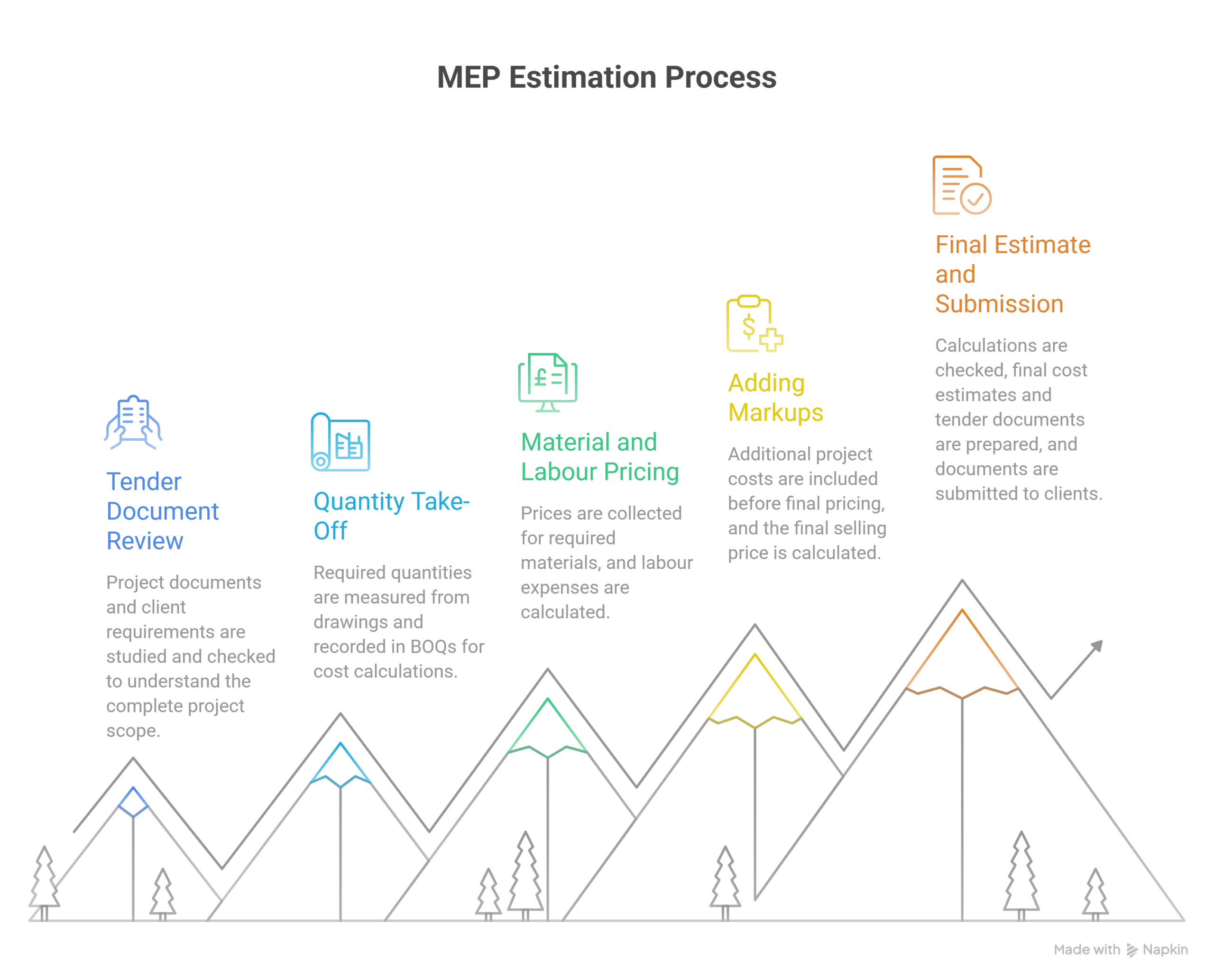
Step 1: Tender Document Review
Project documents are studied first. Client requirements are carefully checked.
- Project specifications are reviewed.
- Mechanical drawings are studied.
- Electrical drawings are examined.
- Plumbing drawings are checked.
- Equipment details are identified.
- Project deadlines are reviewed.
- Missing information is identified.
- Tender conditions are checked.
The complete project scope is understood. This information is used for estimation.
Step 2: Quantity Take-Off
Required quantities are measured from drawings. Each important component is included.
- Pipe lengths are measured.
- Ductwork quantities are calculated.
- Electrical fixtures are counted.
- Cable trays are measured.
- Equipment quantities are recorded.
- Insulation quantities are calculated.
- Material sheets are prepared.
- Measurements are checked.
All quantities are recorded in BOQs. These quantities are used for cost calculations.
Step 3: Material and Labour Pricing
Prices are collected for required materials. Labour expenses are also calculated.
- Supplier prices are collected.
- Check equipment costs.
- Material costs are calculated.
- Labour charges are estimated.
- Installation expenses are included.
- Transportation costs are considered.
- Market rates are checked.
- All prices are recorded.
The estimated project cost is calculated. These details are used for final pricing.
Step 4: Adding Markups
Additional project costs are included in estimates. These costs are added before final pricing.
- Company overhead charges.
- Transportation costs.
- Site expenses.
- Insurance charges.
- Contingency allowances.
- Profit margins.
- Applicable taxes.
- Other project expenses.
All additional costs are included. The final selling price is then calculated.
Step 5: Final Estimate and Submission
All calculations are checked before submission. Final cost estimates are prepared. Tender documents are also completed. These documents are then submitted to clients.
- Quantity sheets are checked.
- Material rates are verified.
- Labour costs are reviewed.
- Total expenses are calculated.
- Final BOQs are prepared.
- Commercial documents are completed.
- Internal approvals are obtained.
- Tender documents are submitted.
The completed estimate is sent to clients. It is then considered during tender evaluation.
MEP Estimator vs Quantity Surveyor vs Design Engineer
Different professionals are employed in construction projects. Their duties are related in some areas. However, different responsibilities are assigned.
| Comparison | MEP Estimator | Quantity Surveyor | Design Engineer |
| Main focus | Cost estimation | Cost management | Technical design |
| Main work | MEP costs are calculated | Project expenses are managed | MEP designs are prepared |
| Drawings | Drawings are studied | Quantities are checked | Drawings are created |
| BOQ | Quantities are prepared | BOQs are managed | Design details are provided |
| Pricing | Tender prices are calculated | Project costs are controlled | Technical inputs are provided |
| Suppliers | Quotations are collected | Procurement is supported | Product suitability is checked |
| Main tools | Excel, Bluebeam | Excel, CostX | AutoCAD, Revit |
| Main goal | Accurate bids are prepared | Project costs are controlled | Building systems are designed |
MEP Estimator
Project costs are calculated by estimators.
- Material quantities are measured.
- Supplier prices are collected.
- Labour expenses are calculated.
- Tender documents are prepared.
Quantity Surveyor
Project expenses are managed by quantity surveyors.
- Project budgets are monitored.
- Contractor payments are checked.
- Material quantities are verified.
- Contract costs are managed.
Design Engineer
Building systems are designed by engineers. Technical drawings are also prepared.
- MEP layouts are created.
- Equipment requirements are identified.
- System calculations are completed.
- Technical drawings are prepared.
These professionals work together on projects. Their work is coordinated during construction.
Tools and Software Used by MEP Estimators
Different software tools are used during estimation. Drawings, quantities, and costs are managed. The selected tools depend on company requirements.
Microsoft Excel
Excel is widely used for calculations. Project details are recorded in spreadsheets.
- BOQ sheets are prepared.
- Material costs are calculated.
- Labour expenses are recorded.
- Compare vendor quotations.
- Create cost summaries.
Bluebeam Revu
Bluebeam supports PDF drawing measurements. It helps extract quantities from drawings.
Main uses:
- Measure pipe lengths.
- Count drawing components.
- Measure areas and volumes.
- Add drawing markups.
- Revised drawings are compared.
CostX
CostX is used for digital take-offs. Construction cost details are also managed.
- Drawing quantities are measured.
- Quantity reports are prepared.
- Cost information is recorded.
- Measurements are linked with estimates.
- Drawing revisions are reviewed.
Other Estimation Tools
Other software is also used for estimation.
- Candy: Construction costs are estimated.
- PlanSwift: Digital quantity take-offs are completed.
- AutoCAD: Technical drawings are reviewed.
- Revit MEP: Three-dimensional MEP models are studied.
- Navisworks: Building models are reviewed.
Basic software skills can be learned first. Advanced features can be studied later.
Get Career oriented MEP training with Expert Mentors! Get Free Demo Here!
Master MEP Design with Industry-Leading Training!
Gain in-depth knowledge of Mechanical, Electrical, and Plumbing (MEP) Design with expert-led courses. Learn HVAC, fire safety, sustainable building strategies, and BIM applications to excel in the construction industry.
Know MoreSkills Required to Become an MEP Estimation Engineer
Technical and commercial skills are required. Both are used during estimation work. Communication and problem-solving skills are also needed.
| Technical skills | Commercial skills |
| MEP system knowledge | Cost calculation |
| Drawing reading | Supplier comparison |
| Quantity take-off | Price negotiation |
| BOQ preparation | Budget preparation |
| Excel knowledge | Profit calculation |
| Software knowledge | Tender preparation |
| Material knowledge | Rate analysis |
| Measurement skills | Cost reporting |
Technical Skills
These skills are used during estimation work.
- Drawing Reading: Mechanical and electrical drawings are studied.
- Quantity Calculation: Material quantities are measured.
- MEP Knowledge: Building systems are understood.
- Material Knowledge: Equipment and materials are identified.
- BOQ Preparation: Quantity sheets are organised.
- Software Skills: Estimation tools are operated.
Commercial Skills
These skills are used during cost preparation.
- Material prices are compared.
- Labour costs are calculated.
- Supplier communication is handled.
- Rate analysis is completed.
- Project budgets are prepared.
- Tender documents are organised.
- Profit margins are calculated.
- Cost reports are prepared.
Communication Skills
Regular communication is required during projects.
- Supplier discussions are handled.
- Client requirements are understood.
- Project details are explained.
- Team coordination is maintained.
- Cost updates are shared.
Attention to detail is also required. Small errors can affect project estimates.
Common MEP Estimation Mistakes
Several mistakes can occur during estimation. These mistakes can affect project costs. Careful checking can help prevent them.
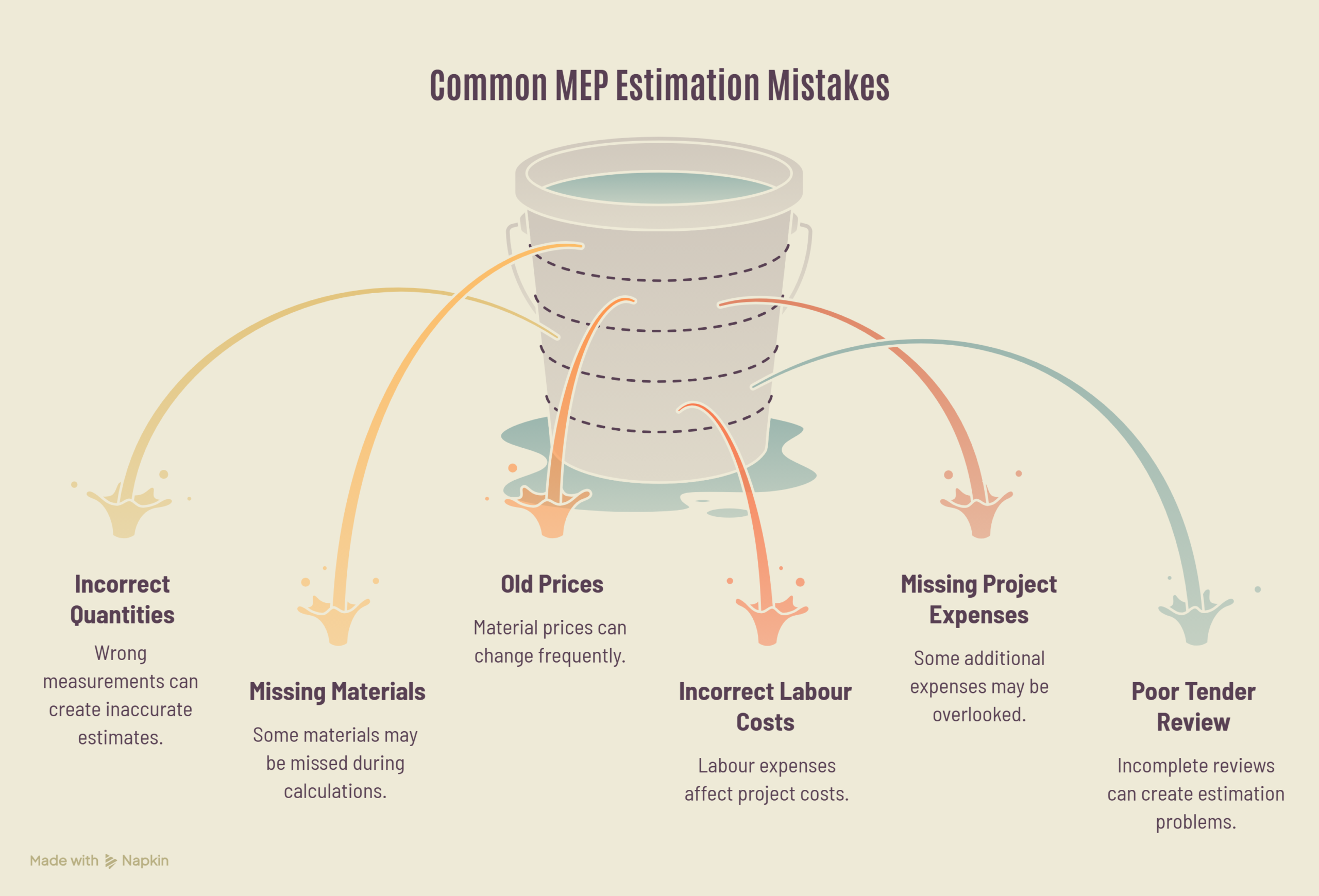
Incorrect Quantity Calculations
Wrong measurements can create inaccurate estimates.
- Pipe lengths may be missed.
- Cable quantities may be incorrect.
- Electrical fixtures may be overlooked.
- Duct measurements may be wrong.
- Equipment quantities may be incomplete.
Prevention: All drawing measurements should be checked.
Missing Materials
Some materials may be missed during calculations.
- Pipe fittings.
- Cable accessories.
- Valves and supports.
- Duct insulation.
- Electrical accessories.
- Installation materials.
Prevention: Complete material lists should be followed.
Using Old Prices
Material prices can change frequently.
- Old supplier quotations.
- Outdated equipment prices.
- Incorrect labour rates.
- Missing delivery charges.
Prevention: Updated quotations should be collected.
Incorrect Labour Costs
Labour expenses affect project costs.
- Installation rates may be incorrect.
- Working hours may be underestimated.
- Overtime charges may be missed.
- Additional workers may be required.
Prevention: Labour requirements should be checked.
Missing Project Expenses
Some additional expenses may be overlooked.
- Transportation charges.
- Equipment rental.
- Testing expenses.
- Site expenses.
- Insurance costs.
Prevention: All project expenses should be included.
Poor Tender Document Review
Incomplete reviews can create estimation problems.
- Technical details may be missed.
- Drawing revisions may be overlooked.
- Project requirements may be misunderstood.
- Submission documents may be incomplete.
Prevention: Tender documents should be reviewed carefully.
Qualifications and Training Required
An engineering background is generally preferred. Relevant technical courses can also help. Practical training is equally important.
Educational Qualifications
Different educational routes are available.
Degree Courses
- B.Tech in Mechanical Engineering.
- B.Tech in Electrical Engineering.
- B.Tech in Civil Engineering.
- Other relevant engineering degrees.
Diploma Courses
- Diploma in Mechanical Engineering.
- Diploma in Electrical Engineering.
- Diploma in Civil Engineering.
Qualification requirements may differ between employers. Mechanical graduates may be preferred. Electrical and civil graduates may also be accepted.
Technical Training
Specific estimation skills can be learned.
- MEP system fundamentals.
- HVAC estimation.
- Electrical estimation.
- Plumbing estimation.
- Firefighting system estimation.
- Quantity take-off.
- BOQ preparation.
- Rate analysis.
- Tender documentation.
Software Training
Common estimation tools should be learned.
- Microsoft Excel.
- Bluebeam Revu.
- CostX.
- AutoCAD.
- Revit MEP.
- Navisworks.
Basic tools should be learned first. Advanced features can be explored later.
Practical Training
Practical experience is also required.
- Sample BOQs can be prepared.
- Project drawings can be studied.
- Material quantities can be measured.
- Supplier quotations can be compared.
- Cost estimates can be prepared.
- Site activities can be observed.
Job-related skills can be developed through practice.
Eligibility
Mechanical, electrical, and civil graduates can apply. Relevant diploma holders may also qualify. Requirements may differ between companies. Previous experience may be required for some positions.
MEP Estimation Engineer Salary in India and the Gulf
MEP estimation salaries vary across locations. Experience and company size also matter. Software knowledge can affect salary offers.
Salary by Experience
The following figures show estimated salary ranges.
| Experience | India: Annual salary | UAE: Monthly salary | Career stage |
| 0–2 years | ₹2.5–₹4 lakh | AED 3,500–5,500 | Junior Estimator |
| 2–5 years | ₹4–₹7 lakh | AED 5,000–7,500 | MEP Estimator |
| 5–9 years | ₹6–₹10 lakh | AED 7,000–10,000 | Senior Estimator |
| 9+ years | ₹10–₹15 lakh or more | AED 10,000–15,000+ | Estimation Manager |
These are approximate salary estimates. Actual offers may differ.
Salary in India
Indian salaries are affected by several factors.
- Work experience.
- Software knowledge.
- Engineering qualifications.
- Project size.
- Company reputation.
- City and location.
- Specialised estimation skills.
Higher salaries may be offered by large companies. More responsibilities are usually assigned to senior professionals.
Salary in Gulf Countries
Gulf countries offer estimation opportunities. MEP professionals are hired in several countries.
- UAE: Estimation jobs are available.
- Saudi Arabia: Large construction projects are undertaken.
- Qatar: MEP professionals are required.
- Oman: Estimators are hired by construction companies.
Housing and transport allowances may be provided. Benefits depend on employment contracts. Living expenses should also be considered.
Factors That Affect Salary
Several factors can affect earnings.
- Experience: Larger projects may be handled.
- Location: Higher salaries may be offered.
- Software: Specialised tools can improve job prospects.
- Industry: Better packages may be offered.
- Project Type: Specialised knowledge may be required.
- Qualifications: Relevant training can be helpful.
Career Path of an MEP Estimation Engineer
Different career stages are available. More responsibilities are assigned with experience. Technical and commercial knowledge can support career growth.
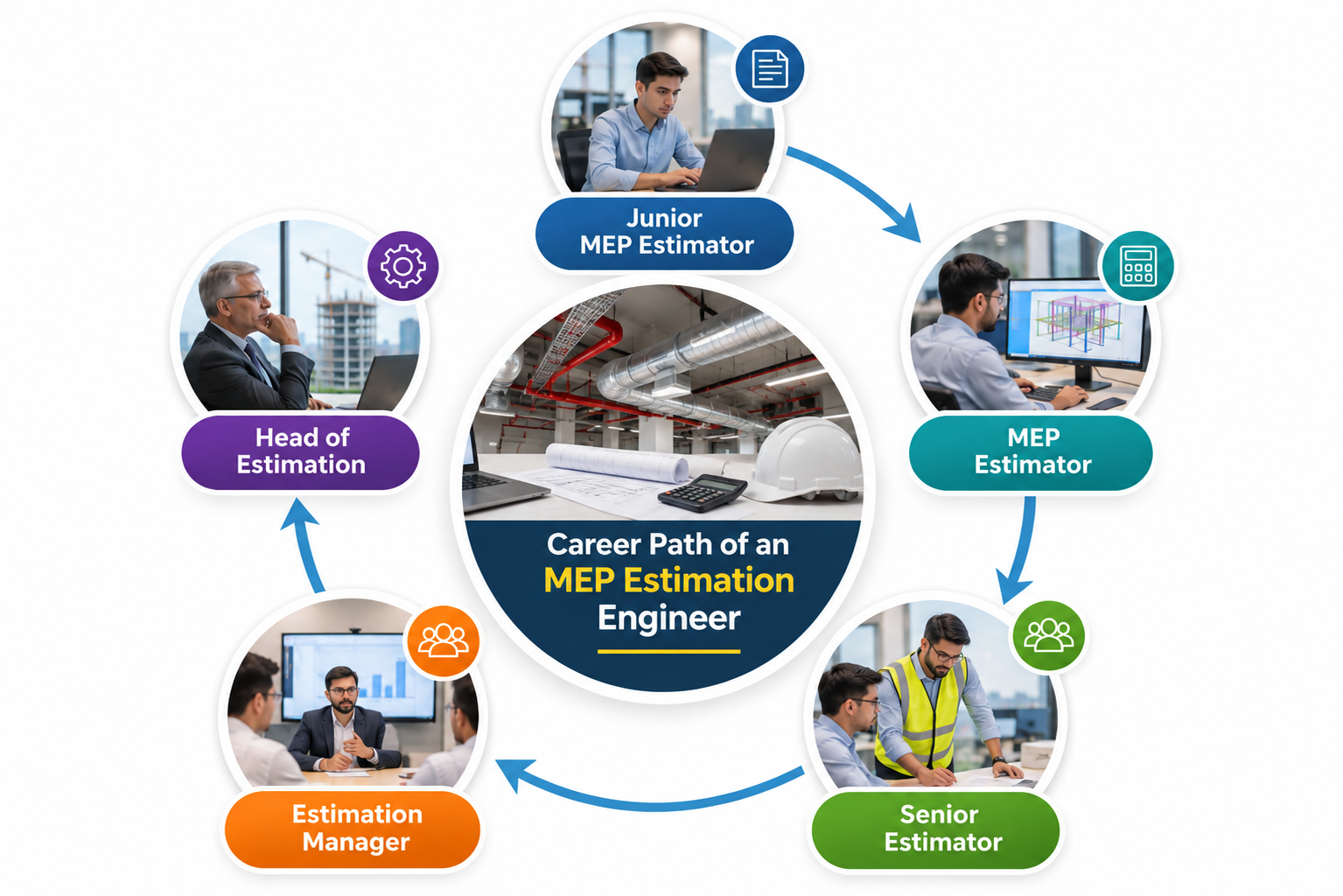
| Career stage | Main responsibility |
| Junior MEP Estimator | Estimation work is supported |
| MEP Estimator | Project estimates are prepared |
| Senior Estimator | Large estimates are managed |
| Estimation Manager | Estimation teams are guided |
| Head of Estimation | Estimation operations are managed |
Junior MEP Estimator
Basic estimation tasks are completed under guidance.
- Drawing quantities are measured.
- BOQ sheets are prepared.
- Material prices are collected.
- Cost calculations are supported.
- Senior estimators are assisted.
MEP Estimator
More estimation work is handled independently.
- Quantity take-offs are completed.
- Supplier quotations are compared.
- Project costs are calculated.
- Tender documents are prepared.
- Estimation records are maintained.
Senior Estimator
Larger projects may be handled.
- Complex estimates are prepared.
- Tender costs are reviewed.
- Junior staff are guided.
- Supplier discussions are managed.
- Final pricing is checked.
Estimation Manager
Estimation teams are managed. Major project estimates are also reviewed.
- Estimation teams are guided.
- Project costs are monitored.
- Tender submissions are reviewed.
- Company pricing is managed.
- Client discussions are handled.
Career growth does not follow one fixed timeline. Skills and experience are important. Management knowledge can also be useful.
How to Become an MEP Estimation Engineer
– Step 1: Complete an Engineering Qualification.
- Mechanical Engineering.
- Electrical Engineering.
- Civil Engineering.
- Relevant diploma courses.
– Step 2: Learn MEP Fundamentals.
- HVAC systems.
- Electrical systems.
- Plumbing systems.
- Firefighting systems.
– Step 3: Learn Engineering Drawings.
- Mechanical layouts.
- Electrical layouts.
- Plumbing layouts.
- Equipment schedules.
– Step 4: Learn Estimation Methods.
- Quantity take-off.
- BOQ preparation.
- Material calculations.
- Labour calculations.
- Rate analysis.
– Step 5: Learn Estimation Software.
- Excel.
- Bluebeam.
- CostX.
- AutoCAD.
- Revit MEP.
– Step 6: Practise Sample Projects.
- Project drawings are studied.
- Material quantities are measured.
- Sample BOQs are prepared.
- Cost estimates are calculated.
– Step 7: Apply for Entry-Level Jobs.
- Junior MEP Estimator.
- Estimation Trainee.
- Assistant Estimator.
- MEP Quantity Estimator.
- Junior Cost Engineer.
Conclusion
MEP estimation combines technical and commercial knowledge. Project costs are calculated before construction. Material quantities and labour expenses are included. Tender documents are also prepared.
Several career opportunities are available. MEP estimators are employed by construction companies. Gulf countries also offer job opportunities. Senior positions can be reached through experience.
The right course can build useful skills. Software training can improve job readiness. Practical projects can support career growth. Drawing knowledge is also important.
Explore an MEP Design Course. Build the skills needed for this career.
Master MEP Design with Industry-Leading Training!
Gain in-depth knowledge of Mechanical, Electrical, and Plumbing (MEP) Design with expert-led courses. Learn HVAC, fire safety, sustainable building strategies, and BIM applications to excel in the construction industry.
Know MoreFrequently Asked Questions
What is an MEP Estimation Engineer?
Project costs are calculated by MEP Estimation Engineers. Material quantities and labour expenses are measured. Supplier quotations are also collected. BOQs and tender documents are prepared. Project prices are calculated before submission.
What is the salary of an MEP Estimation Engineer in India?
Freshers may earn around ₹2.5–₹4 lakh yearly. Experienced professionals may earn ₹6–₹10 lakh yearly. Senior professionals may earn ₹10–₹15 lakh. Actual salaries depend on experience and location.
Which software is used for MEP estimation?
Excel is widely used for cost calculations. Bluebeam is used for drawing measurements. CostX supports digital quantity take-offs. AutoCAD is used for drawing reviews. Software requirements may differ between companies.
Can freshers become MEP Estimation Engineers?
Yes, freshers can enter this field. An engineering qualification is generally preferred. Software training can support job applications. Practical projects can improve estimation knowledge. Junior positions can provide a starting point.
Can MEP Estimation Engineers work in Gulf countries?
Yes, job opportunities are available in Gulf countries. The UAE and Saudi Arabia hire estimators. Qatar also offers construction-related opportunities. Experience and software skills can improve prospects.
Is MEP estimation a good career?
Several career opportunities are available. Construction companies require accurate project estimates. Technical and commercial skills are developed. Senior estimation and management roles are possible. Overseas opportunities can also be explored.