Table of Contents
A professional hair spa cleanses the scalp, restores moisture, and makes hair softer and easier to manage. It combines cleansing, massage, conditioning, and aftercare. But it is a cosmetic service, not a treatment for hair loss or scalp disease. Hair spa benefits include less buildup, better hydration, a relaxed scalp, easier styling, and personalised aftercare.
Key Takeaways
- A hair spa combines scalp cleansing, massage, conditioning, and aftercare.
- It can improve softness, hydration, shine, and manageability.
- It does not cure hair loss or treat persistent dandruff.
- Sudden shedding or ongoing scalp problems need a dermatologist.
- Scalp massage may support hair thickness, but evidence is limited.
- Use gentle fingertip massage and follow product instructions.
- Rinse thoroughly to remove all product residue.
- Use heat sparingly and avoid it on irritated or broken skin.
- Appointment frequency depends on your hair type and stylist’s advice.
- Good home care helps results last longer.
Master Advanced Skincare, Makeup, Hair, and Salon Management. Enrol Now!
What is a Hair Spa Treatment?
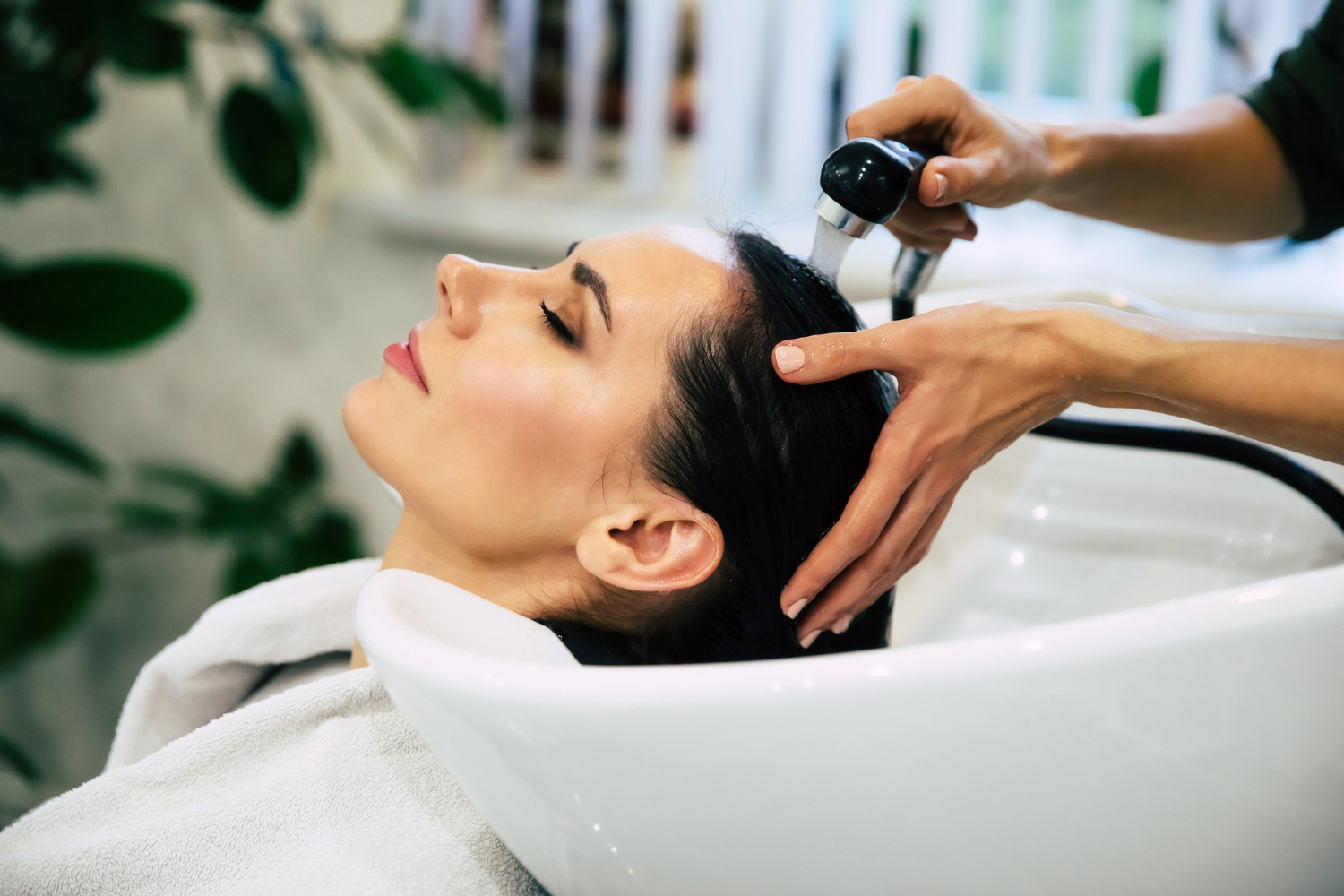
A hair spa is a professional scalp-and-hair service that cleanses buildup, conditions the hair and includes a relaxing massage.
Unlike a regular wash, it starts with a consultation and uses products chosen for your concern, such as dryness, frizz, oiliness, colour damage or dullness.
A typical session includes:
- Scalp and hair assessment
- Gentle cleansing
- Scalp massage
- Mask, serum or deep conditioner
- Warm towel or steam, when suitable
- Thorough rinsing and gentle drying
- Aftercare advice
Treatments vary by salon, so ask what products and steps your session includes.
Master Makeup, Hair & Skincare to Build Your Beauty Identity
Unlock your creative potential with our expert-led Beauty & Wellness course. Build in-demand beauty skills and step confidently into the world of beauty!
Your Beauty Career Starts Here!Hair Spa Benefits: What You Can Realistically Expect
A hair spa can improve softness, hydration, shine, scalp comfort and manageability. It works best for dry ends, frizz, colour-treated hair and hair roughened by frequent heat styling.
| Benefit | What you may notice | Why it happens |
| Scalp cleansing | Fresher scalp, less residue | Shampooing and massage loosen oil and product buildup |
| Hydration | Softer, less brittle-feeling hair | Conditioners and masks coat and moisturise the hair shaft |
| Relaxation | A calmer, less tense feeling | Slow massage and a comfortable setting |
| Easier styling | Less tangling and frizz | Conditioned hair is smoother and detangles more easily |
| Shine | Less dull-looking hair | Smoother hair surfaces reflect light better |
| Guidance | A routine suited to you | Stylists review hair type, history and scalp condition |
These results are cosmetic and temporary. They fade as you wash, style and expose your hair to heat.
Does a Hair Spa Help Hair Growth?
No. A hair spa does not regrow hair, though massage may support a comfortable scalp. The most-cited research is a small study with only nine healthy men who received four minutes of standardized scalp massage a day for 24 weeks.
Average hair thickness rose from 0.085 mm to 0.092 mm.Three limits matter. The study was tiny, its participants did not have hair loss, and hair count did not change significantly. A salon massage is also not the same as a daily, device-based protocol.
Treat massage as a relaxing extra, not a growth treatment.If you notice sudden shedding, patchy bald spots, a widening parting or persistent hair fall, see a dermatologist.
Can a Hair Spa Reduce Dandruff?
A hair spa can help keep the scalp clean, but dandruff often needs a targeted shampoo. Gentle washing and light massage can loosen flakes.
If flaking, itching or redness continues, a medicated shampoo or dermatologist visit is the safer route. Always follow the product label for contact time.
Master Makeup, Hair & Skincare to Build Your Beauty Identity
Unlock your creative potential with our expert-led Beauty & Wellness course. Build in-demand beauty skills and step confidently into the world of beauty!
Your Beauty Career Starts Here!Professional Hair Spa Techniques
Professionals adapt each step to your scalp sensitivity, hair texture and treatment history. The table below summarises the main stages.
| Stage | Technique | Purpose |
| Consultation | Ask about colour, chemical services, allergies, scalp symptoms | Avoid irritation; choose the right treatment |
| Scalp check | Look for oiliness, dryness, flakes, redness | Match products to the scalp |
| Detangling | Wide-tooth comb, working from the ends up | Reduce pulling and breakage |
| Cleansing | Shampoo at the roots with fingertips | Remove buildup without roughing the lengths |
| Massage | Light, slow circular movements | Relaxation and comfort |
| Treatment | Mask, serum or conditioner where needed | Moisture, smoothing or repair |
| Heat (optional) | Warm towel or low steam, per product label | Help conditioning products work |
| Rinse and dry | Full rinse; blot with a soft towel | Prevent residue and friction |
| Aftercare | Home routine advice | Help results last |
The Hair Spa Process Step by Step
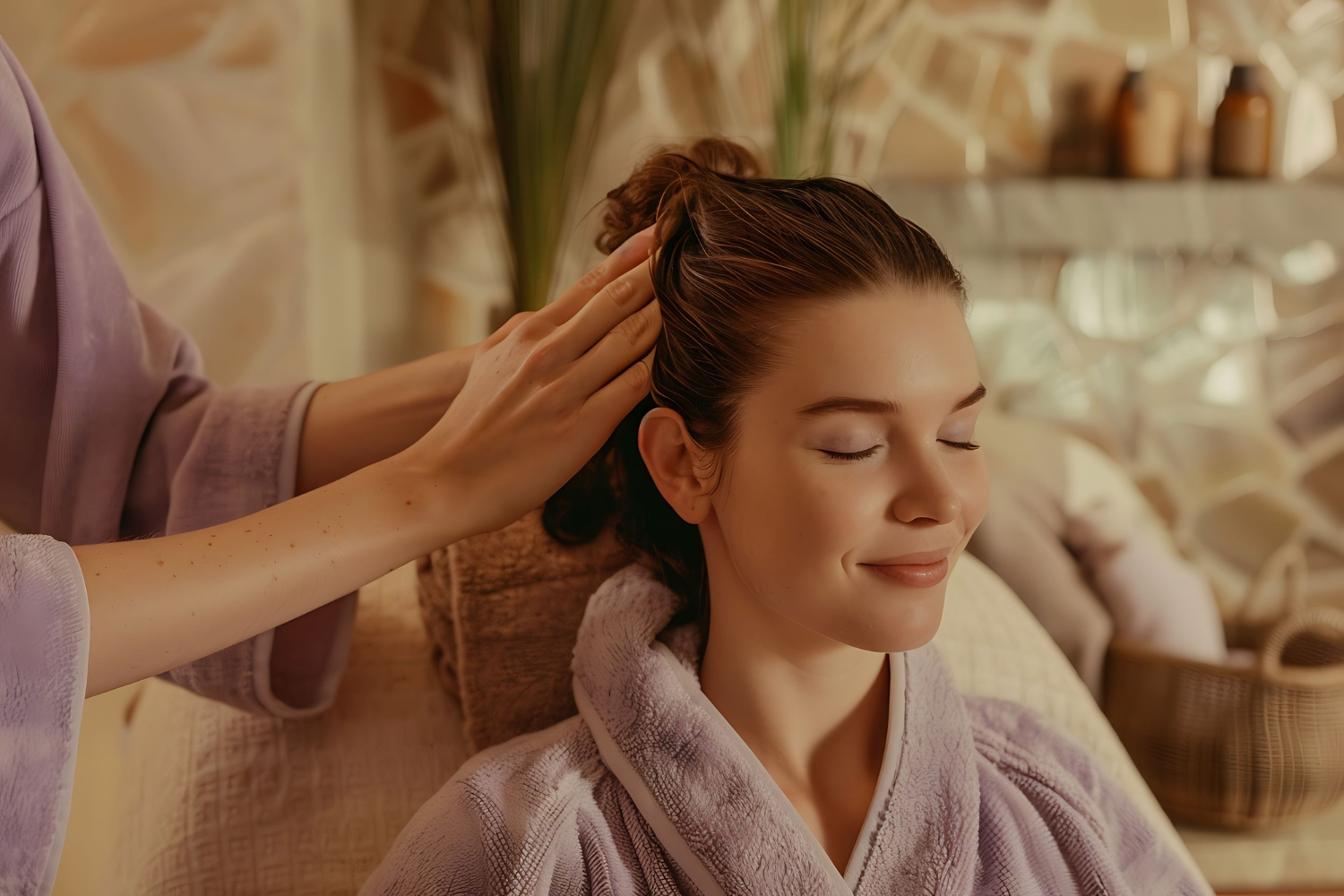
1. Consultation and scalp assessment
A good session begins with questions, not products. Tell your stylist about recent colouring, smoothing or keratin services, heat styling, allergies, itching and hair fall.
Mention any burning, scaling, open sores or bleeding before the service. Intensive scalp treatments should wait if the skin is broken or inflamed.
2. Detangling and sectioning
Detangling before washing reduces breakage. The stylist works from the ends upward and sections long, thick or curly hair so products reach every area evenly.
3. Gentle cleansing
Shampoo goes mainly on the scalp, and the rinse water carries it through the lengths. Fingertips, never nails, loosen oil and flakes. Lukewarm water is more comfortable than very hot water, especially on a sensitive scalp.
4. Scalp massage
Massage should feel soothing, never painful. Expect light to moderate fingertip pressure across the temples, hairline, crown, sides and nape. Aggressive scratching is a red flag, particularly on flaky or red skin.
5. Conditioner or mask
Fine or straight hair usually needs conditioner on the ends, while dry or curly hair benefits from it along the full length. The stylist then picks a treatment for your main concern:
| Concern | Treatment focus | Where it goes |
| Dryness and frizz | Moisturising mask | Mid-lengths to ends |
| Heat or colour damage | Repair or bond-supporting product | Mid-lengths to ends |
| Oily roots | Lightweight conditioner, balancing scalp product | Ends for conditioner; scalp only for scalp products |
| Dullness and buildup | Clarifying product, used selectively | Scalp and roots |
| Curly or coily hair | Rich mask and leave-in care | Full length, away from the scalp if heavy |
| Fine hair | Lightweight or volumising conditioner | Ends and mid-lengths |
6. Steam or warm towel, when suitable
Gentle heat can help some conditioning products absorb. It is optional, and it should follow the product label. Heat is a poor idea on an irritated scalp, and any burning or stinging means stop immediately.
7. Processing time and rinse
Leave the treatment on for the time the label states, no longer. Then rinse until the hair no longer feels slippery or heavy, because leftover product can leave hair limp or greasy.
8. Gentle drying and minimal-heat styling
Blot hair with a soft or microfibre towel instead of rubbing. AAD advice is to wrap hair in a towel or T-shirt, since rough rubbing can cause damage. For styling, dermatologists suggest letting hair partly air-dry first and cutting back on how often you blow-dry. They also recommend low or medium heat plus a heat-protection product.
9. Review and aftercare
Before you leave, check that your scalp feels comfortable and the hair is free of residue. A good salon keeps notes on products used and any reactions, then gives you aftercare advice.
How Often Should You Get a Hair Spa?
There is no medical standard. Salon schedules vary with scalp oiliness, dryness, colour history and budget, so ask your stylist for a plan.
For reference, AAD guidance for tightly coiled hair mentions a deep-conditioning or oil treatment once or twice a month. That is a home-care benchmark, not a salon rule.
| Factor | What it suggests |
| Oily scalp, fine hair | Lightweight products; scalp-focused cleansing |
| Dry or frizzy hair | Moisture-focused treatments |
| Colour-treated hair | Colour-safe products; avoid harsh clarifying |
| Curly or coily hair | Richer conditioning; gentle detangling |
| Heat-damaged hair | Repair-focused products and less styling heat |
| Sensitive scalp | Minimal products; follow stylist or dermatologist advice |
Safety: When to Delay or Avoid a Hair Spa
Postpone a hair spa if you have an open wound, suspected scalp infection, severe irritation, unexplained sudden hair loss or a known ingredient allergy.
Ask the salon to patch-test unfamiliar products, and speak up if anything burns or itches. A stylist can adjust a service, but only a dermatologist can diagnose a scalp condition.
Common Mistakes to Avoid
- Skipping the consultation and choosing products by fragrance alone
- Scrubbing with nails instead of fingertips
- Leaving products on longer than the label says
- Using steam or heat on an irritated scalp
- Layering several strong treatments in one visit
- Expecting a spa to fix hair fall or persistent dandruff
- Returning to heavy heat styling right after the service
Master Advanced Skincare, Makeup, Hair, and Salon Management. Enrol Now!
Best Practices for Making Results Last
- Wash with lukewarm water and a shampoo that suits your scalp.
- Use conditioner after every shampoo, focusing on the lengths.
- Detangle gently with a wide-tooth comb or fingers.
- Use heated tools less often, aiming for once a week or less, at the lowest heat setting.
- Avoid tight styles that pull constantly on the scalp.
- See a dermatologist for sudden, patchy or persistent hair loss and stubborn flaking.
Conclusion
A professional hair spa is worth considering if your hair feels dry, rough or weighed down by buildup, or if you simply want a relaxing, well-planned care session. Its strengths are cleansing, hydration, comfort and personalised guidance, not growth or medical treatment.
Choose a salon that begins with a proper consultation, follows product labels, uses gentle technique and asks how your scalp feels throughout. Then protect the results at home with mild washing, regular conditioning and less heat. If you notice persistent flaking, soreness, sudden shedding or bald patches, treat that as a medical question and see a dermatologist.
Master Makeup, Hair & Skincare to Build Your Beauty Identity
Unlock your creative potential with our expert-led Beauty & Wellness course. Build in-demand beauty skills and step confidently into the world of beauty!
Your Beauty Career Starts Here!Frequently Asked Questions
What are the main hair spa benefits?
Typical benefits include less buildup, better moisture, a relaxed scalp, reduced frizz and improved shine. Results are temporary and depend on your hair type and aftercare.
Does a hair spa help hair growth?
No, it does not regrow hair or treat hair loss. A small 2016 study on nine healthy men found slightly thicker strands after daily massage, but not more hairs.
Does a hair spa reduce hair fall?
It may reduce breakage by making hair smoother and easier to detangle. It cannot treat the medical causes of hair fall, which need a dermatologist’s assessment.
How often should you get a hair spa?
No clinical guideline sets a frequency, and salon advice varies by hair type, scalp condition and budget. Ask your stylist for a schedule that suits your hair.
How long does a hair spa take?
The duration depends on the salon, the products and the extras included, so confirm it when booking. A full session with consultation, massage and processing time generally takes longer than a regular wash.
Can I do a hair spa at home?
You can do a simplified version with gentle shampoo, a conditioner or mask, and a light massage. A salon adds a trained assessment and more tailored product choices.
Is a hair spa safe for colour-treated hair?
Usually yes, if the products are suitable for coloured hair and the stylist knows your colour history. Tell them about recent bleaching, colouring or smoothing services before they start.
Who should avoid a hair spa?
People with open wounds, suspected scalp infections, severe irritation or known ingredient allergies should delay it. Anyone with sudden or patchy hair loss should see a dermatologist first.
Can a hair spa damage hair?
Poor technique can, through rough handling, excessive heat, wrong products or too-long processing times. A careful stylist who follows product labels keeps that risk low.
What should I do after a hair spa?
Wash with a gentle shampoo, condition the lengths, blot dry and keep heat styling to a minimum. Follow your stylist’s product advice and avoid tight, tension-heavy hairstyles.