Table of Contents
TL;DR
Choosing Online or Offline Accounting courses depends solely on the preferences of the students. Here is a simple breakdown:
- Choose online if you are self-motivated, need flexible timings, want to avoid daily commutes, and want to limit your budget.
- Choose offline if you need in-person tests and teaching, prefer a fixed routine, and live near a well-reviewed institute with labs and placement.
- Choose hybrid if you want online teaching but still crave offline, in-person practicals on weekends.
Introduction
1: Accounting provides information on
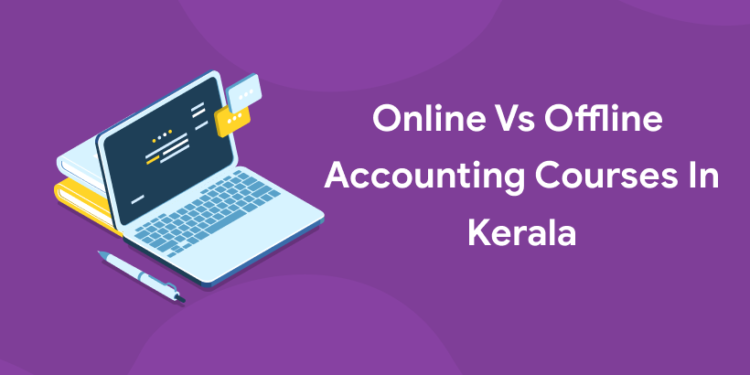
Choosing between online and offline accounting courses in Kerala often comes down to your learning style, budget, schedule, and career goals. Both modes can deliver strong outcomes if you pick the right provider and stay consistent, but they suit different kinds of learners. Below is a practical, Kerala-focused guide to help you decide.
Placement Oriented PWC Business Accounting Course
PWC Certified Business Accounting Course by Entri App: Master in-demand skills, ace interviews, and secure top-tier jobs.
Join Now!What you can learn in Accounting courses in Kerala
Accounting training in the state typically covers a clear skill ladder:
- basics of bookkeeping
- Tally Prime with GST
- Excel
- MIS reporting
- advanced modules like SAP FICO for corporate and Gulf roles
Many institutes also offer diplomas and PG diplomas in professional accounting, often with NSDC accreditation and placement support. This range exists in both online and offline formats, so the “what” is similar; the “how” is where the real difference lies.
Online accounting courses: how they work and who they suit
Online accounting courses in Kerala are usually delivered as live classes, recorded lectures, or a hybrid of both. You access content from home, follow a structured syllabus, and complete assignments and mock tests on a learning platform.
Key advantages of online courses
- Lower fees and no travel cost: Structured online programs for intermediate-level accounting and professional courses often cost far less than full-time residential or classroom programs in cities like Kochi or Kozhikode.
- Flexible timing: Recorded lectures let you pause, rewind, and rewatch complex topics like journal entries, ledger adjustments, or GST calculations at your own pace.
- Access to specialised trainers: You can learn from experts based in other cities or even outside Kerala without relocating.
- Easy to fit around work or college: If you’re working, doing B.Com/M.Com, or preparing for competitive exams, online modes make it easier to study early morning, late night, or on weekends.
Common challenges with online learning
- Self-discipline is critical: Without fixed class timings and a physical classroom, some learners procrastinate or fall behind.
- Limited face-to-face interaction: Doubt-solving may happen via chat, email, or scheduled Q&A sessions instead of instant, in-person clarification.
- Tech and connectivity issues: Unstable internet or device problems can disrupt live classes and test attempts.
Online courses tend to work best for self-motivated learners, working professionals, and students who already have basic accounting knowledge and want to upskill in Tally, GST, SAP, or international certifications.
Also read: Top Online Accounting Courses in Kerala
Learn SAP courses with Entri’s specialised certifications!
Offline accounting courses: how they work and who they suit
Offline accounting courses in Kerala are conducted in physical classrooms at institutes in cities and towns like Ernakulam, Kozhikode, Malappuram, Thiruvananthapuram, and Perumbavoor. Classes follow a fixed timetable, with in-person lectures, computer-based practical sessions, and regular tests.
Key advantages of offline classes
- Structured routine and accountability: Fixed class hours, attendance, and regular tests create a disciplined study environment, which helps many students stay on track.
- Immediate doubt resolution: You can raise your hand and get instant clarification from the trainer, especially useful for practical subjects like Financial Accounting and Corporate Accounting.
- Hands-on practical exposure: Many institutes offer lab sessions on Tally, SAP, and Excel, along with real-case scenarios and projects.
- Peer learning and networking: Studying alongside other commerce students builds a support system, study groups, and sometimes even job referrals.
Common challenges with offline classes
- Higher overall cost: Apart from course fees, you have travel costs, possible hostel or PG expenses if you’re studying outside your hometown, and daily commute time.
- Fixed schedule: If you’re working or have irregular college hours, it can be hard to attend every class consistently.
- Location dependence: Quality and specialisation vary by city; some smaller towns may have fewer options for advanced courses like SAP FICO or international certifications.
Offline classes suit learners who need external discipline, prefer face-to-face teaching, and can commit to a fixed schedule, especially fresh B.Com/M.Com graduates aiming for campus-style training and placement drives.
Placement Oriented PWC Business Accounting Course
PWC Certified Business Accounting Course by Entri App: Master in-demand skills, ace interviews, and secure top-tier jobs.
Join Now!Online, offline, or both? Choosing a provider that offers both modes
Many learners in Kerala don’t just want a single mode of learning; they want the freedom to choose between online and offline based on their situation. Some prefer fully online classes for flexibility, while others want the structure and face-to-face interaction of offline classrooms. The ideal training provider is one that offers both options clearly, so you can pick what suits you best. Platforms like Entri, for instance, run accounting courses in separate online and offline formats. If you are a working professional or a student with a tight schedule, you can enrol in their online batch and study from home at convenient timings. If you learn better in a physical classroom with fixed hours and in-person guidance, you can opt for their offline batch at a nearby centre instead. This kind of setup is especially helpful if:
- You are unsure which mode suits you and want the option to choose after comparing both.
- Your circumstances change over time—for example, you may start with online classes during exam season and later switch to offline when you have more time.
Having both online and offline options under one roof means you don’t have to compromise on content quality or certification just because of your preferred learning mode. You can focus on building strong accounting, Tally, and GST skills while studying in the environment that works best for you.
Step into the world of Practical Accounting with Entri’s specialised courses!!
Side-by-side: online vs offline accounting courses in Kerala
| Factor | Online Accounting Courses | Offline Accounting Courses |
|---|---|---|
| Fees (typical range) | Often lower; no travel or hostel cost | Higher when you include travel, stay, and daily expenses |
| Schedule flexibility | High; learn at your own pace with recorded/live options | Low; fixed class timings and attendance |
| Discipline & routine | Self-driven; easy to delay if not organised | Institute-driven; regular classes and tests enforce routine |
| Doubt resolution | Via chat, email, scheduled Q&A, forums | Immediate, in-person clarification during or after class |
| Practical exposure | Virtual labs, screen-share demos, assignments | Computer labs, in-person projects, on-site training |
| Networking | Online peer groups, discussion forums | Physical classmates, local alumni, institute events |
| Best for | Working professionals, self-motivated learners, remote students | Fresh graduates, learners needing structure, those near good institutes |
Cost and Time: a Kerala-specific view
For many families in Kerala, the fee difference is significant. Online coaching for professional accounting courses can cost a fraction of full residential or classroom programs in major cities. When you add daily bus fare, fuel, or hostel charges to offline fees, the total investment can be two to three times higher than a good online program. Time is another hidden cost. A student travelling 1–2 hours each way to an institute in Ernakulam or Kozhikode may lose 10–15 hours a week in commute alone, time that could otherwise go into revision, projects, or part-time work.
Explore Entri’s free Accounting courses now!
Placement and certification: does mode matter?
Employers in Kerala and the Gulf generally care more about your skills, certifications, and practical exposure than whether you studied online or offline. What matters is:
- Recognised certification: NSDC-accredited diplomas, SAP partner certifications, or courses aligned with bodies like ACCA, CMA USA, or EA add value.
- Practical projects: Real invoices, GST filings, Tally projects, SAP simulations, and Excel MIS reports make your profile stronger.
- Placement support: Internships, tie-ups with CA firms, and active placement cells are available in both online and offline institutes, but you must verify claims before joining.
Many reputable Kerala institutes now run hybrid models: core theory online, with optional weekend practical labs or doubt-clearing sessions offline.

How to choose the right option for you
Ask yourself these questions:
- Do I need external discipline?
- If you struggle to study without a fixed timetable, offline or a hybrid model may suit you better.
- If you can follow a weekly plan and stick to deadlines, online can save time and money.
- What is my budget?
- If fees, travel, and stay are tight, online courses give you access to quality content at lower cost.
- If you can afford it and live near a good institute, offline can provide a more immersive experience.
- What is my current level?
- Beginners with little accounting background may benefit from the hand-holding and peer support of offline classes.
- Those with B.Com/M.Com or work experience may find online upskilling in Tally, GST, SAP FICO, or international certifications more efficient.
- What are my career goals?
- For local roles in SMEs, trading firms, and CA offices, strong Tally + GST + Excel skills from either mode can be enough.
- For corporate or Gulf roles, advanced courses like SAP FICO or international certifications from recognised institutes (online or offline) add significant value.
A simple decision framework
- Choose online if:
- You need flexible timings due to work or college.
- Your budget is limited, and you want to avoid travel/hostel costs.
- You are self-motivated and comfortable learning via videos and digital materials.
- Choose offline if:
- You learn best with face-to-face teaching and immediate doubt-solving.
- You want a fixed routine and regular in-person tests.
- You live near a well-reviewed institute with strong practical labs and placement support.
- Consider hybrid (or platforms offering both modes) if:
- You want the flexibility of online theory but still crave occasional in-person practical sessions and networking.
- You’d like the option to switch between online and offline depending on your schedule and location, as offered by some providers.
Final word
There is no single “best” mode for everyone in Kerala. The right choice depends on your discipline, budget, location, and career plan. If you clearly define your goals and honestly assess your learning style, you can build a strong accounting career through either online or offline courses—or a smart mix of both.
|
Related Articles |
|
| Top Accounting Courses in India | Which Accounting Course is the Best? |
Placement Oriented PWC Business Accounting Course
PWC Certified Business Accounting Course by Entri App: Master in-demand skills, ace interviews, and secure top-tier jobs.
Join Now!Frequently Asked Questions
Which is better for accounting courses in Kerala: online or offline?
Neither mode is universally “better.” Online courses suit self-motivated learners, working professionals, and those who need flexible timings and lower costs. Offline courses work well for students who prefer fixed schedules, face-to-face teaching, and hands-on practical sessions. The best choice depends on your learning style, budget, and location.
Are online accounting courses in Kerala recognised by employers?
Yes, employers in Kerala and the Gulf mainly look at your skills, certifications, and practical exposure rather than the mode of learning. NSDC-accredited diplomas, SAP partner certifications, and courses aligned with bodies like ACCA or CMA USA carry value whether you study online or offline, as long as the institute is reputable.
Can I get practical training in Tally, GST, and SAP through online courses?
Many online accounting courses provide practical training through virtual labs, screen-share demonstrations, live projects, and assignments on Tally Prime, GST filing, Excel MIS, and SAP FICO. However, if you strongly prefer hands-on computer lab sessions, you may want to choose an offline batch or a provider that offers separate offline practical classes.
Are offline accounting classes available in smaller towns in Kerala?
Offline accounting classes are available in major cities like Ernakulam, Kozhikode, Thiruvananthapuram, and Malappuram, and in some smaller towns as well. However, the range of advanced courses (such as SAP FICO or international certifications) may be limited in smaller locations, so many learners from towns like Perumbavoor opt for online or hybrid providers that offer both modes.
How do fees compare between online and offline accounting courses in Kerala?
Online accounting courses generally have lower fees because there are no classroom, travel, or hostel costs. Offline courses often cost more when you include daily commute, fuel or bus fare, and possible PG or hostel expenses. For many students, the total cost of an offline program in a big city can be two to three times higher than a good online program.
Can I switch from online to offline (or vice versa) during my course?
It depends on the institute. Some providers, including platforms like Entri, offer separate online and offline batches for the same course, which may allow you to choose the mode that fits you at the time of enrolment. If flexibility is important to you, check in advance whether the institute allows mode changes and under what conditions.
Do offline classes give better placement support than online classes?
Not necessarily. Placement support depends more on the institute’s industry connections, track record, and placement cell than on the mode of delivery. Both online and offline institutes can offer internships, tie-ups with CA firms, and job assistance. Always verify placement claims, ask for recent placement data, and speak to past students before joining.
Is an online accounting course suitable for complete beginners?
Beginners with little or no accounting background can succeed in online courses if they are disciplined and follow a structured plan. However, if you feel you need constant guidance, regular in-person tests, and peer support, starting with an offline batch or a provider that offers strong mentor support in online mode may be more comfortable.
How long do accounting courses in Kerala usually take?
Duration varies by course type. Basic accounting and Tally with GST courses may run for 3–6 months, while diplomas and PG diplomas in professional accounting can last 6–12 months or more. Advanced courses like SAP FICO or international certifications may have their own timelines. Both online and offline institutes offer short-term and long-term programs.
Can I pursue accounting courses while working or doing B.Com/M.Com?
Yes, many learners in Kerala pursue accounting courses alongside jobs or degree programs. Online modes are especially popular for this because they allow you to study early morning, late night, or on weekends. Some offline institutes also offer weekend or evening batches for working professionals and college students.