Table of Contents
Embedded systems are specialized computers inside larger devices. They perform specific functions within those devices. These systems appear across many everyday technologies. They support automation, monitoring, control, communication, and safety.
Automotive systems depend on embedded controllers. Healthcare devices also rely on specialized computing. Industrial machines use embedded systems for automation. Smart devices use them for connected functionality.
Their main strengths include reliability and efficiency. Low power usage supports portable applications. Real-time processing supports safety-critical functions.
Kickstart your embedded systems career and turn your tech passion into high-demand skills!
What are Embedded Systems?
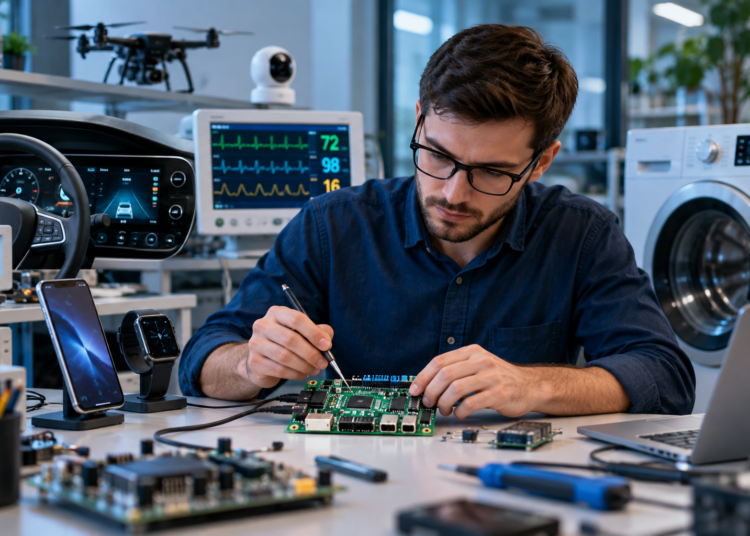
An embedded system combines hardware and software. It performs a specific function inside another device. Unlike computers, it has a focused purpose.
These systems can operate automatically. They can also respond to sensor inputs. Many embedded systems operate within strict time limits. Such systems are called real-time embedded systems.
Embedded systems are commonly used in:
- Automotive: Engine control and driver assistance systems.
- Healthcare: Patient monitors and medical equipment.
- Consumer electronics: TVs, washing machines, and cameras.
- Industrial automation: Robots, controllers, and monitoring equipment.
- Telecommunications: Routers, switches, and communication equipment.
- Aerospace: Flight controls and navigation systems.
- Smart devices: Wearables, appliances, and security systems.
- Transportation: Railway controls and traffic systems.
- Energy: Smart meters and power management equipment.
Embedded systems are important because they work reliably. They also consume relatively little power. Their dedicated design improves device performance. Many modern products depend on these systems.
Key Characteristics of Embedded Systems
- Dedicated purpose: Each system performs defined tasks.
- Real-time operation: Systems can respond quickly.
- Compact design: Hardware often occupies limited space.
- Low power usage: Many devices require efficient operation.
- High reliability: Systems often operate continuously.
- Limited resources: Hardware has specific processing capabilities.
- Hardware-software integration: Both parts work together.
- Automatic operation: Many systems require minimal interaction.
Main Components of Embedded Systems
An embedded system contains several important components.
- Microcontroller or processor: Executes program instructions.
- Memory: Stores programs and temporary information.
- Sensors: Collect information from surrounding environments.
- Actuators: Perform physical actions based on commands.
- Input interfaces: Receive user or sensor information.
- Output interfaces: Send information or control signals.
- Embedded software: Controls the system’s functions.
- Power supply: Provides required electrical energy.
For example, a washing machine uses several components. Its controller manages different washing operations. Sensors detect water levels and temperature. Actuators control valves and motor movement.
Top 15 Real-World Applications of Embedded Systems
Embedded systems appear across numerous industries today. Their applications range from simple devices to complex machinery.
1. Automotive Control Systems
Modern vehicles contain numerous embedded systems. These systems control several vehicle functions.
Common applications include:
- Engine control units
- Transmission control
- Anti-lock braking systems
- Airbag control systems
- Electronic power steering
- Climate control systems
- Tire pressure monitoring
Engine controllers manage fuel injection and engine timing. Brake controllers monitor wheel movement continuously. Airbag systems detect sudden vehicle impacts.
These systems improve vehicle performance and safety. They also support better fuel efficiency.
2. Advanced Driver Assistance Systems
Modern vehicles increasingly use intelligent assistance systems. Embedded controllers process information from multiple sensors.
Common applications include:
- Adaptive cruise control
- Lane departure warnings
- Parking assistance
- Blind-spot detection
- Collision warnings
- Automatic emergency braking
These systems process sensor information rapidly. They then generate appropriate control signals. Embedded processing supports quick responses while driving.
3. Medical Monitoring Devices
Healthcare relies heavily on embedded technology. Medical devices need accurate and reliable operation.
Common examples include:
- Patient monitoring systems
- Blood pressure monitors
- Pulse oximeters
- Glucose monitoring devices
- Portable ECG machines
- Digital thermometers
- Infusion pumps
Embedded controllers process measurements from medical sensors. They can display readings for healthcare professionals. Some devices also trigger alerts when readings change.
4. Patient-Care Equipment
Embedded systems also support direct patient treatment. These systems help automate specific medical functions.
Applications include:
- Ventilators
- Dialysis machines
- Infusion systems
- Imaging equipment
- Surgical equipment
- Laboratory analyzers
Such equipment requires controlled and predictable operation. Embedded software manages many internal processes. Safety features also monitor system conditions.
5. Washing Machines
Washing machines contain small embedded controllers. These controllers manage complete washing cycles.
They can control:
- Water intake
- Water temperature
- Drum rotation
- Washing duration
- Rinsing cycles
- Spin speed
- Door locking
Sensors provide information during each cycle. The controller adjusts operations accordingly. This enables automatic washing programs.
6. Smart Televisions
Modern televisions contain embedded computing systems. These systems manage many entertainment functions.
Common functions include:
- Display control
- Audio processing
- Remote control input
- Network connectivity
- Streaming applications
- Power management
- Screen settings
Embedded processors help coordinate these functions. They also support smart television operating systems.
7. Smartphones and Wearable Devices
Mobile devices contain many embedded controllers. These controllers manage specialized hardware functions.
Examples include:
- Camera control
- Touchscreen processing
- Sensor management
- Power management
- Wireless communication
- Fitness tracking
- Biometric authentication
Wearables also depend on embedded systems. Smartwatches process movement and health-related sensor data. They must operate efficiently on small batteries.
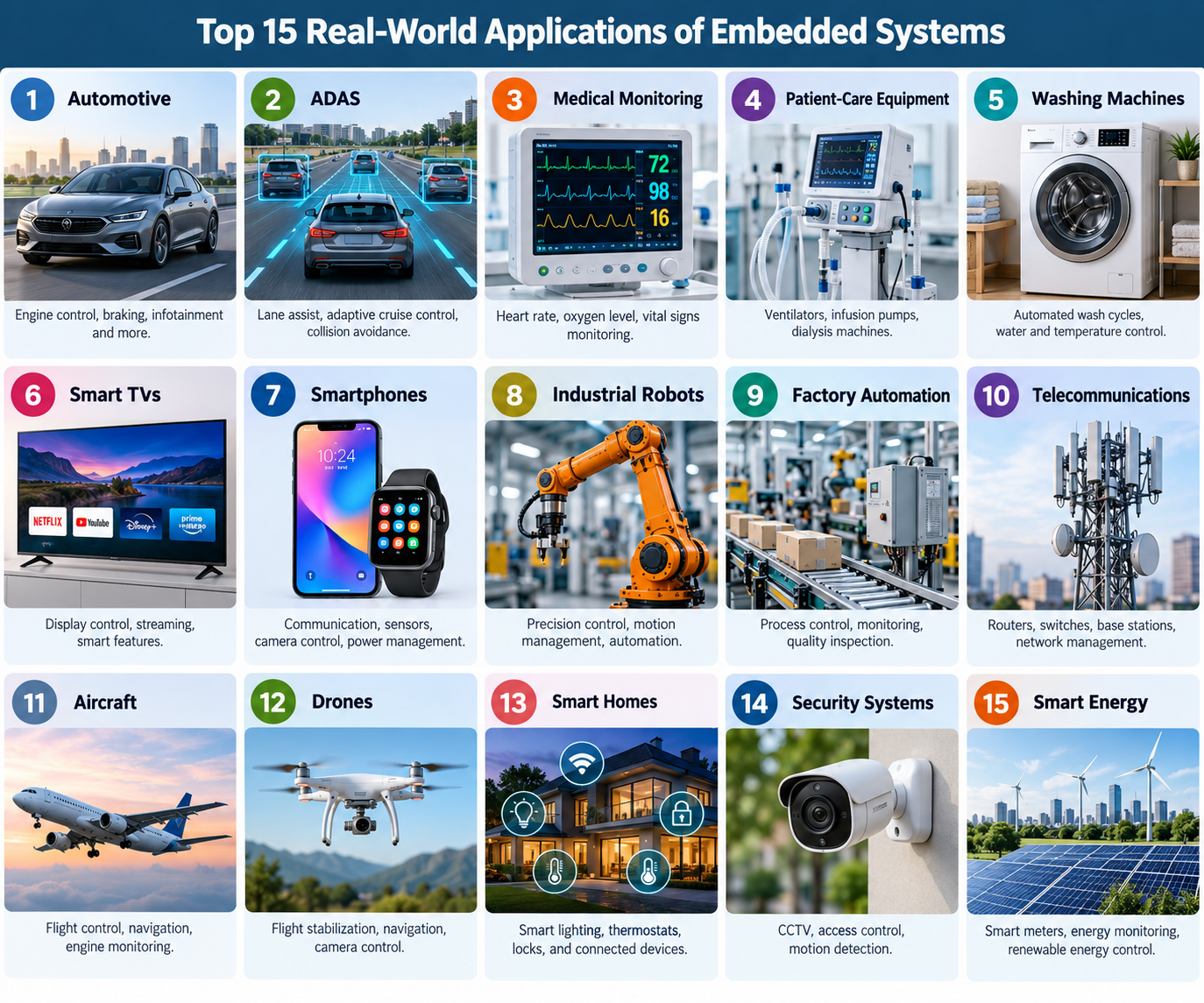
8. Industrial Robots
Industrial robots require precise control systems. Embedded controllers coordinate robotic movements.
They manage:
- Motor movement
- Position sensing
- Robotic arms
- Speed control
- Safety mechanisms
- Tool operation
- Production sequences
Embedded systems enable repeatable industrial operations. They also support accurate movement and timing.
9. Factory Automation Systems
Factories use embedded controllers across production lines. These controllers manage machines and industrial processes.
Applications include:
- Programmable logic controllers
- Conveyor systems
- Temperature controllers
- Motor controllers
- Machine monitoring
- Automated inspection
- Process control
These systems reduce manual intervention. They also improve production consistency.
10. Telecommunications Equipment
Communication infrastructure uses embedded technology extensively. Network equipment needs continuous and reliable operation.
Examples include:
- Routers
- Network switches
- Modems
- Wireless access points
- Base station equipment
- Communication gateways
Embedded processors manage network traffic and connections. They also support configuration and security functions.
11. Aircraft Control Systems
Aviation depends on reliable embedded systems. Aircraft contain many specialized electronic controllers.
Applications include:
- Flight control
- Navigation
- Engine monitoring
- Communication
- Landing systems
- Environmental controls
- Aircraft instrumentation
These systems process information from numerous sensors. They help pilots monitor aircraft conditions. They also support automated aircraft functions.
12. Drones and Unmanned Systems
Drones use embedded systems for autonomous operation. Their controllers process sensor information continuously.
Common applications include:
- Flight stabilization
- Navigation
- Motor control
- Obstacle detection
- Camera control
- Position tracking
- Battery monitoring
Embedded controllers help drones maintain stable flight. They also coordinate multiple motors simultaneously.
13. Smart Home Devices
Smart homes increasingly depend on embedded technology. Devices can sense conditions and perform automated actions.
Examples include:
- Smart thermostats
- Smart lighting
- Smart locks
- Smart doorbells
- Smart plugs
- Smart smoke detectors
- Smart security cameras
These devices often connect through wireless networks. Embedded controllers manage sensing and device communication.
14. Security and Surveillance Systems
Security equipment uses embedded processing extensively. These systems monitor environments continuously.
Applications include:
- CCTV cameras
- Access control systems
- Alarm systems
- Biometric scanners
- Motion detectors
- Smart locks
- Security sensors
Embedded systems process sensor or camera information. They can trigger alerts based on detected conditions.
15. Smart Energy Systems
Energy infrastructure also uses embedded systems. These systems monitor and control electricity usage.
Common applications include:
- Smart electricity meters
- Solar power controllers
- Battery management systems
- Energy monitoring devices
- Power converters
- Charging stations
- Grid monitoring equipment
Embedded controllers can measure energy consumption. They can also manage power distribution automatically. This supports efficient energy management.
Master Embedded Systems Programming!
Launch your tech career with our Embedded Systems Course, designed for hands-on learning and industry readiness.
Know MoreEmbedded Systems Across Different Industries
Embedded systems serve different purposes across industries. Their specific functions depend on application requirements.
Automotive Industry
Vehicles use embedded systems for safety and control. Controllers manage engines, braking, and driver assistance.
Healthcare Industry
Medical equipment uses embedded systems for monitoring. These systems also support treatment and diagnostics.
Consumer Electronics
Household products use embedded systems for automation. They make devices easier to operate and control.
Industrial Automation
Factories use embedded controllers for machine control. These systems improve production speed and consistency.
Telecommunications
Network equipment uses embedded processors continuously. They manage communication, connectivity, and data processing.
Aerospace
Aircraft use embedded systems for critical operations. These include navigation, monitoring, and flight control.
Smart Devices and IoT
Connected devices use embedded systems extensively. They collect data and perform automated actions.
Overall, embedded systems provide focused computing capabilities. They make complex devices more intelligent and responsive. Their compact design also supports modern product development.
Why are Embedded Systems Used in these Applications?
Embedded systems are designed for specific device functions. Their focused design makes them highly efficient. Many applications need reliable and predictable performance.
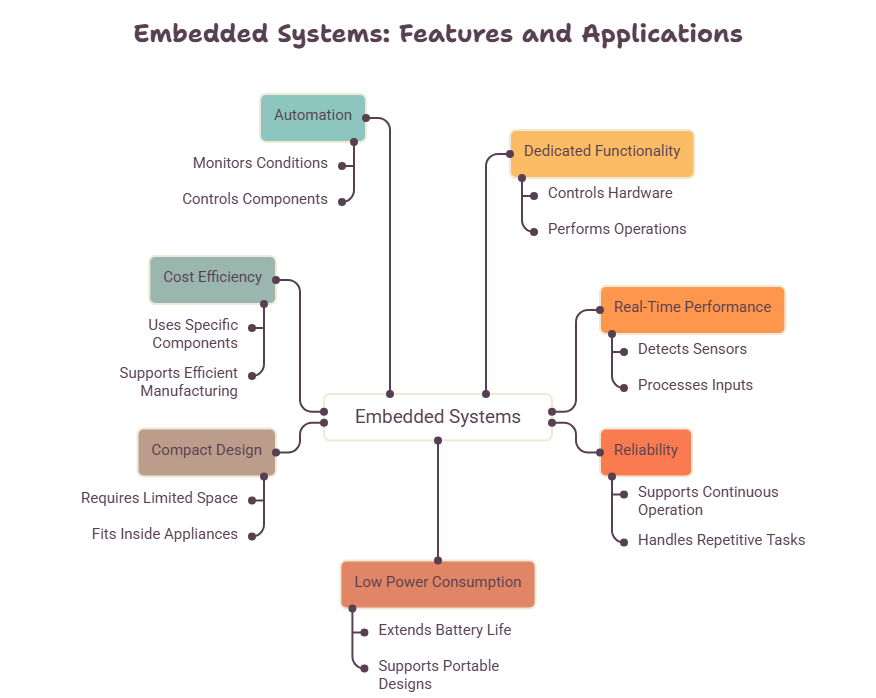
1. Dedicated Functionality
Embedded systems perform specific tasks within devices. This focused purpose improves system efficiency.
- Controls specific hardware functions.
- Performs predefined operations.
- Reduces unnecessary processing.
- Supports consistent device performance.
- Simplifies system design.
2. Real-Time Performance
Many devices need immediate system responses. Embedded systems can process inputs quickly.
- Detects sensor changes.
- Processes inputs immediately.
- Produces timely control signals.
- Supports safety-critical operations.
- Reduces response delays.
Vehicles and medical devices need fast responses. Embedded controllers help meet these timing requirements.
3. Reliability
Many embedded devices operate continuously. They often work without frequent human intervention.
- Supports continuous operation.
- Reduces unnecessary system interruptions.
- Handles repetitive tasks consistently.
- Supports automated monitoring.
- Improves operational reliability.
4. Low Power Consumption
Many embedded devices use limited power. Wearables and sensors need efficient energy usage.
- Extends battery life.
- Reduces energy consumption.
- Supports portable device designs.
- Enables smaller power supplies.
- Improves overall efficiency.
5. Compact Design
Embedded systems can fit inside small devices. Their hardware supports compact product designs.
- Requires limited physical space.
- Supports portable products.
- Fits inside household appliances.
- Enables wearable technologies.
- Supports smaller electronic devices.
6. Cost Efficiency
Embedded systems can reduce product complexity. Manufacturers can design hardware for specific requirements.
- Uses application-specific components.
- Reduces unnecessary hardware.
- Supports efficient manufacturing.
- Enables affordable electronic products.
- Simplifies device architecture.
7. Automation
Embedded systems allow devices to work automatically. Sensors provide inputs for automated decisions.
- Monitors operating conditions.
- Processes sensor information.
- Controls connected components.
- Performs programmed actions.
- Reduces manual intervention.
These features explain their widespread use. Embedded systems balance performance, size, cost, and efficiency.
Embedded Systems vs General-Purpose Computer Systems
Computers and embedded systems serve different purposes. Their designs reflect different performance requirements.
| Feature | Embedded Systems | General-Purpose Computers |
|---|---|---|
| Primary purpose | Performs specific functions | Performs many functions |
| Flexibility | Usually limited | Highly flexible |
| Operating environment | Built into another device | Standalone device |
| Power usage | Usually lower | Usually higher |
| Hardware | Application-specific | General-purpose |
| User interaction | Often limited | Usually extensive |
| Real-time operation | Often important | Not always required |
| Size | Usually compact | Generally larger |
| Software | Task-specific | Supports many applications |
| Examples | Washing machines, sensors | Laptops, desktop computers |
Purpose
Embedded systems target specific applications. Computers support many different applications.
Hardware
Embedded hardware matches the device’s requirements. Computer hardware supports broader computing needs.
Software
Embedded software controls specific device functions. General-purpose software supports many user tasks.
Power Requirements
Embedded devices often need low power consumption. Computers usually require more electrical power.
Flexibility
General-purpose computers offer greater flexibility. Embedded systems prioritize dedicated performance instead.
User Interaction
Computers typically provide extensive user interfaces. Embedded devices may operate automatically.
Real-Time Requirements
Many embedded applications require immediate responses. General computers may not have these requirements.
Both systems remain important today. Their differences reflect their intended applications.
Master Embedded Systems Programming!
Launch your tech career with our Embedded Systems Course, designed for hands-on learning and industry readiness.
Know MoreFuture Scope of Embedded Systems
Embedded technology continues expanding across industries. Connected devices are increasing worldwide.
Growth of the Internet of Things
IoT devices depend heavily on embedded systems.
- Smart sensors
- Connected appliances
- Industrial monitoring
- Smart energy systems
- Connected vehicles
These devices collect and exchange information. Embedded controllers manage many device functions.
AI-Enabled Embedded Systems
Artificial intelligence is entering embedded devices. Local processing can support faster responses.
Potential applications include:
- Smart cameras
- Voice-enabled devices
- Driver assistance
- Industrial inspection
- Wearable technologies
Edge AI can process information locally. This can reduce dependence on remote servers.
Autonomous Vehicles
Future vehicles will require advanced embedded controllers. These systems will manage increasingly complex functions.
- Sensor processing
- Vehicle control
- Navigation
- Driver assistance
- Automated parking
- Safety monitoring
Smart Healthcare
Embedded systems will support connected healthcare devices. Remote monitoring can improve patient data collection.
Wearable devices can track several measurements. Medical equipment can also become more intelligent.
Industrial Automation
Factories will increasingly use intelligent embedded controllers. These systems can support connected production environments.
- Predictive maintenance
- Robotic automation
- Machine monitoring
- Process optimization
- Quality inspection
Connected Smart Devices
Homes will contain more intelligent electronic products. Embedded systems will enable their automated functions.
The future combines embedded systems with connectivity. AI, sensors, and automation will expand applications.
How Embedded Systems Impact Everyday Life
Embedded systems influence many daily activities. Most users rarely notice these systems directly.
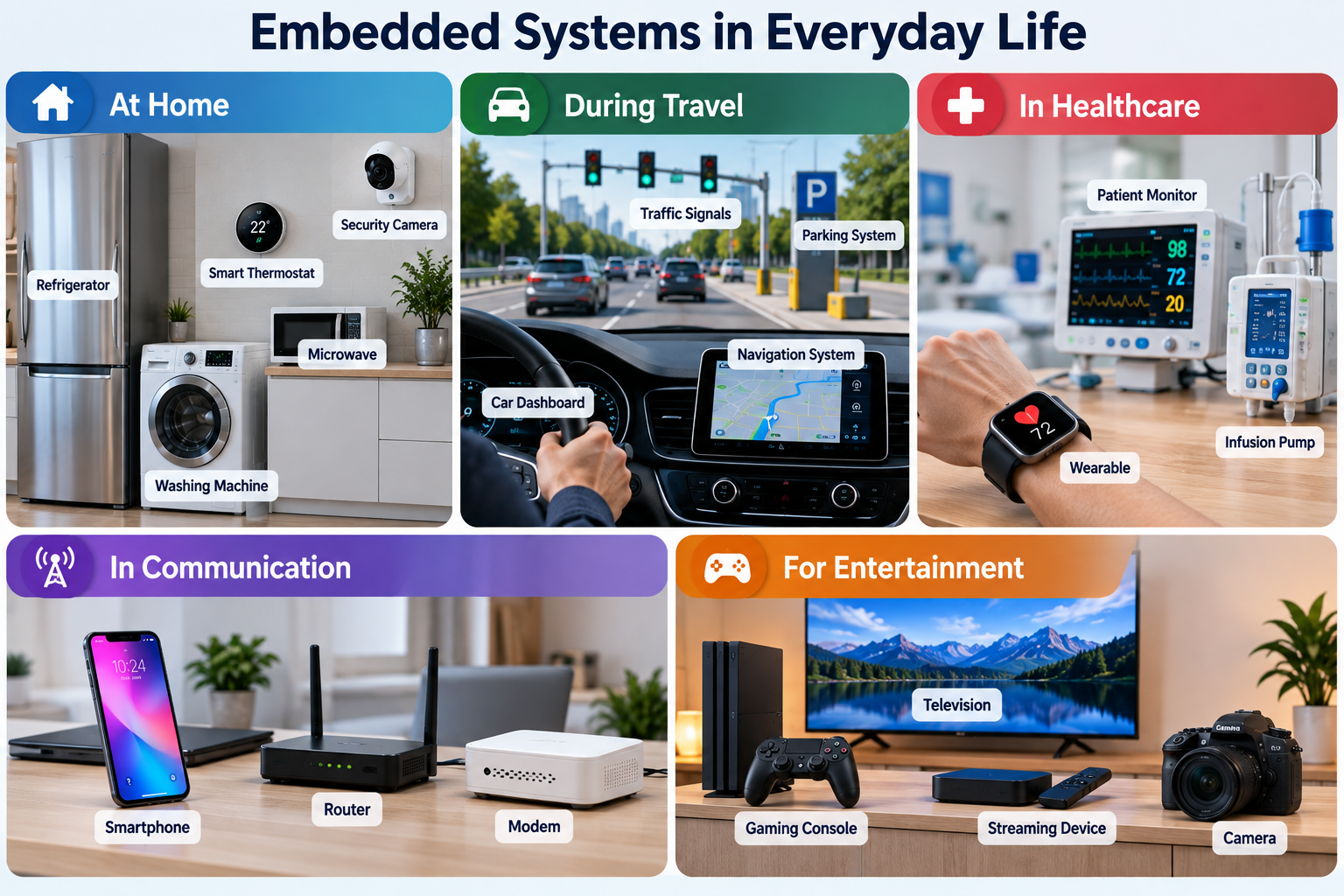
At Home
- Washing machines automate cleaning cycles.
- Refrigerators monitor temperature conditions.
- Microwaves control heating operations.
- Smart thermostats manage room temperatures.
- Security cameras monitor surrounding areas.
During Travel
- Cars use embedded safety controllers.
- Traffic signals manage road movement.
- Navigation systems process location information.
- Parking systems assist vehicle positioning.
- Railway systems support operational control.
In Healthcare
- Wearables monitor selected body measurements.
- Digital devices record health information.
- Medical equipment supports patient treatment.
- Monitoring devices provide timely readings.
In Communication
- Smartphones manage multiple hardware functions.
- Routers control network connections.
- Wireless devices process communication signals.
- Modems manage data transmission.
Kickstart your embedded systems career and turn your tech passion into high-demand skills!
For Entertainment
- Televisions process audio and video.
- Cameras control image capture.
- Gaming devices process user inputs.
- Streaming devices manage media playback.
Embedded systems therefore support everyday convenience. They also improve automation, safety, and efficiency.
Conclusion
Embedded systems power many modern technologies. They perform specialized functions inside larger devices. Their applications span numerous industries and products.
Future technologies will expand embedded system applications. IoT and edge computing will create opportunities. AI will also improve embedded device capabilities. Autonomous systems will require advanced embedded controllers.
Embedded systems will remain technology’s hidden foundation. They will continue making devices smarter and more efficient.
Master Embedded Systems Programming!
Launch your tech career with our Embedded Systems Course, designed for hands-on learning and industry readiness.
Know MoreFrequently Asked Questions
What are embedded systems?
Embedded systems are specialized computing systems. They perform specific functions within larger devices.
Where are embedded systems used?
Embedded systems are used across many industries. Common examples include cars, medical devices, appliances, and smart devices.
What are the most common applications of embedded systems?
Common applications include automotive systems and healthcare equipment. They are also used in industrial automation, telecommunications, aerospace, and consumer electronics.
Are smartphones considered embedded systems?
Smartphones contain several embedded systems. These systems manage cameras, sensors, power, connectivity, and other hardware functions.
How are embedded systems used in cars?
Cars use embedded systems for many control functions. Examples include engine management, braking, airbags, and driver assistance.
How are embedded systems used in healthcare?
Medical devices use embedded systems for monitoring and control. Examples include patient monitors, infusion pumps, and diagnostic equipment.
Why are embedded systems important?
Embedded systems provide reliable and efficient device control. They also support automation, real-time processing, and low-power operation.
What is the difference between embedded systems and computers?
Embedded systems usually perform dedicated functions. General-purpose computers support many different applications and tasks.
What industries use embedded systems?
Many industries use embedded technology today. These include automotive, healthcare, aerospace, manufacturing, telecommunications, and consumer electronics.
What is the future of embedded systems?
Embedded systems will become more intelligent and connected. IoT, artificial intelligence, edge computing, and automation will drive future growth.