Table of Contents
The average Robotics Engineer salary in India is bound to be in the region of ₹4.3 to ₹6.5 LPA, depending on which statistics you look at – but the range can vary wildly. New Graduates often start off in the ₹3.9 to ₹4.3 LPA ballpark, while senior specialists and leads can command a pretty penny in the form of ₹18 LPA to ₹45+ LPA. And you know what the biggest factor in all of this is? Not the degree you got – it’s the specific skill stack you have. If you have ROS, computer vision, and embedded systems under your belt, then you’re commanding a premium over your general robotics engineer buddies.
KEY TAKEAWAYS
- The Reality on the Ground: Entry-level robotics engineers typically earn something in the region of ₹3.9–4.3 LPA on average, but top offers can reach way up for those from top institutes or who have some seriously impressive project portfolios.
- Mid Career Growth: If you’ve got 2-5 years of experience under your belt, then you can expect to earn anything from ₹8–18 LPA, especially if you are working in automation or ROS-focused roles.
- Specialisation really does pay: If you specialise in ROS/Computer Vision, then you can expect to earn ₹15–30 LPA with 3-6 years of experience, which is a pretty significant jump over your generalist colleagues.
- Cities pay differently: Bengaluru and Pune are the real money makers – they lead in compensation, with salaries that are 25-40% higher than in smaller cities thanks to all the automation and R&D going on there.
- Data is all over the place: Salary survey sites like SalaryExpert report averages as high as ₹18 LPA, but these are often skewed towards senior or specialist roles and should be taken with a pinch of salt.
INTRODUCTION
Robotics engineering in India is just starting to get really exciting. Automation is spreading from automotive manufacturing into logistics, healthcare, agriculture and defence in a big way. Startups are building all sorts of autonomous mobile robots, drone delivery systems and industrial cobots. Global capability centres are setting up robotics R&D teams in Bengaluru and Pune.
This growth creates a lot of demand, but it also creates a lot of confusion about how to get paid. A robotics engineer in one company might earn ₹4 LPA while another with the same title is earning ₹15 LPA. The difference comes down to skills, specialisation, and the type of employer. This guide is going to break down the salary landscape by experience, city, employer type, and specialisation – and we will be using data from multiple sources to give you a realistic picture of things.
Master Robotics and AI!
Ready to build the future? Join our comprehensive robotics course to bridge the gap between complex code and physical motion. You’ll gain hands-on experience giving you the technical edge needed to lead in the age of automation.
Know MoreROLE AND DEMAND IN INDIA
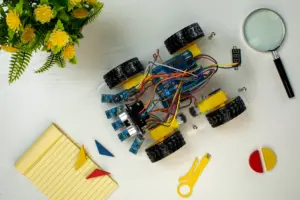
A robotics engineer is someone who designs, builds, tests, and programs robotic systems. In India, the demand is concentrated in a few key sectors :
Industrial Automation: Manufacturing plants are deploying all manner of robotic arms, automated guided vehicles (AGVs) and cobots. Engineers who can program and integrate these systems are in steady demand.
Automotive: Vehicle manufacturers and Tier-1 suppliers use robotics for welding, painting, and assembly. This is one of the biggest employers of robotics engineers.
Logistics and Warehousing: Companies like Amazon and Flipkart are automating warehouses with sorting robots and autonomous movers – and this sector is growing in leaps and bounds.
Defence and Aerospace: DRDO and private defence companies are developing autonomous systems, drones, and robotic surveillance platforms.
Healthcare and Agriculture: Surgical robots, rehabilitation devices, and agricultural drones are emerging as new areas of interest.
Startups: A growing number of Indian robotics startups are building things for the global market – and these companies often pay pretty well for people with special skills.
SALARY BY EXPERIENCE LEVEL
The data below synthesizes multiple sources. Payscale provides the most conservative and reliable entry-level figures. SalaryExpert and Vocale provide higher figures that likely skew toward specialized or senior roles.
| Experience Level | Typical Annual Salary (INR) | Source Notes |
|---|---|---|
| Fresher (0–1 year) | ₹3.9–4.3 LPA | Payscale average total compensation |
| Early Career (1–4 years) | ₹4.2–4.8 LPA | Payscale average |
| Mid-Career (5–9 years) | ₹5.5–6.5 LPA | Payscale average, conservative |
| Specialist (3–6 years, ROS/CV) | ₹15–30 LPA | Uddisha career guide |
| Senior/Lead (8+ years) | ₹18–45+ LPA | SalaryExpert, Uddisha |
Important caveat: The gap between Payscale’s mid-career figure (₹5.5 LPA) and Uddisha’s specialist figure (₹15–30 LPA) is enormous. The difference reflects specialization and employer type. A general robotics engineer in a manufacturing plant earns less than a ROS/computer vision specialist at a product startup or MNC.
SALARY BY CITY
City-wise data varies by source, but the trend is consistent: Bengaluru and Pune pay the most.
| City | Typical Range (Fresher to Mid) | Notes |
|---|---|---|
| Bengaluru | ₹5–15 LPA | Highest salaries, driven by startups and R&D |
| Pune | ₹8–12 LPA | Strong automation and automotive base |
| Hyderabad | ₹7–11 LPA | Growing robotics and AI ecosystem |
| Chennai | ₹6–10 LPA | Automotive and manufacturing focus |
| Delhi NCR | ₹6–10 LPA | Defence and industrial automation |
| Kochi | Lower than metros | Limited dedicated robotics roles |
Tier-2 cities pay 10–20% less but offer lower living costs.
Master Robotics and AI!
Ready to build the future? Join our comprehensive robotics course to bridge the gap between complex code and physical motion. You’ll gain hands-on experience giving you the technical edge needed to lead in the age of automation.
Know MoreSALARY BY EMPLOYER TYPE
| Employer Type | Typical Salary Signal | Notes |
|---|---|---|
| Automation firms | ₹4–10 LPA | Steady demand, moderate pay |
| Auto OEMs and Tier-1s | ₹5–12 LPA | Structured roles, good benefits |
| Robotics startups | ₹6–25 LPA | Higher pay for specialized skills, but variable stability |
| Research labs (DRDO, CSIR) | ₹4–8 LPA | Lower pay but strong research exposure |
| MNCs and GCCs | ₹8–30+ LPA | Highest pay for ROS, CV, and embedded specialists |
A live Indeed listing for a “Physical AI & ARM Robotics Engineer” in Bengaluru offers ₹1.3–2 lakh per month (₹15.6–24 LPA), requiring ROS/ROS2 and computer vision skills . This is at the high end and reflects a specialized role.
SALARY BY SPECIALIZATION
Specialization is the single biggest lever for salary growth.
| Specialization | Typical Range (3–6 years) | Notes |
|---|---|---|
| ROS/ROS2 Development | ₹15–30 LPA | High demand in startups and research |
| Computer Vision | ₹15–30 LPA | Perception roles in autonomous systems |
| Controls and Motion Planning | ₹8–18 LPA | Industrial automation and robotics |
| Embedded Systems | ₹4–8 LPA (junior) | Foundation skill, lower ceiling without specialization |
The pattern is clear: software-heavy specializations (ROS, computer vision) command significantly higher salaries than generalist or hardware-focused roles.
INDIA VS ABROAD COMPARISON
| Country | Typical Mid-Level Salary (INR Equivalent) | Notes |
|---|---|---|
| India | ₹6–18 LPA | Wide range based on specialization |
| Germany | ₹45–65 LPA | Strong automotive and industrial robotics |
| USA | ₹70–1.2 Cr | Highest pay, especially in Silicon Valley and Boston |
| UAE | ₹25–45 LPA | Growing logistics and automation sector |
The gap is substantial. Indian robotics engineers with specialized skills often consider international roles for significant pay increases, though cost of living and visa complexity are factors.
SKILLS AND CERTIFICATIONS THAT RAISE PAY
-
ROS/ROS2: The single most requested skill in high-paying robotics roles.
-
Python and C++: The standard languages for robotics software development.
-
Computer Vision (OpenCV, YOLO): Perception skills command a premium.
-
PLC Programming: Essential for industrial automation roles.
-
Motion Planning and Control: Core robotics algorithms.
-
Machine Learning: Increasingly important for perception and decision-making.
Certifications from robotics platforms (e.g., ROS certification) and online specializations can signal competence, but project portfolios matter more than certificates.
EDUCATION AND COURSES THAT HELP
-
B.Tech in Robotics and Automation or Robotics and AI from institutions like Toc H, Saintgits, or RIT Kottayam.
-
M.Tech in Robotics for research or advanced industry roles.
-
Online specializations in ROS, computer vision, and embedded systems.
-
Project portfolios demonstrating working robots or automation systems.
CAREER PATH AND GROWTH
| Stage | Role | Typical Experience | Salary Signal |
|---|---|---|---|
| Entry | Robotics Engineer / Junior Engineer | 0–2 years | ₹3.9–4.3 LPA |
| Mid | Robotics Engineer / Automation Engineer | 2–5 years | ₹8–18 LPA |
| Senior | Senior Robotics Engineer / Specialist | 5–9 years | ₹15–30 LPA (specialized) |
| Lead | Robotics Lead / Architect | 8+ years | ₹25–45+ LPA |
PROS AND CHALLENGES
Pros: There’s a growing need for skilled Robotics Engineers across all sorts of industries; the pay for specialized skills is pretty high; you get the chance to work with cutting-edge tech; and with the right skills, you’ll be in demand all over the world.
Challenges: Entry-level pay isn’t all that great; the pay gap between generalist and specialist roles is pretty wide; getting access to the hardware you need to learn on can be pricey; and a lot of the best roles require you to move to cities like Bengaluru, Pune, or Hyderabad.
New to Robotics? Start from the Basics. Join Now!
CONCLUSION
The salary for a Robotics Engineer in India isn’t a simple figure – it’s a wide-ranging number that’s greatly influenced by things like your level of experience, where in the country you’re based, who you’re working for, and most importantly – what specific area you specialise in. A fresh grad with a general robotics degree might start on about 4 Lakhs a year, whereas someone with 3 years’ experience in a ROS specialism can be earning up to 20 Lakh per Annum. It’s not really down to talent – it’s more about what specific set of skills you’ve developed and the types of problems you’re able to solve.
If you’re just starting out in this field, then focus on the software side of things – learn ROS, Python, and computer vision – and build projects that show you’ve got working systems in place. Target startups and MNCs that actually value people with specialist skills. The fact is, there is a real demand for good Robotics Engineers, and there’s a pretty high ceiling for those who get themselves in the right position.
Master Robotics and AI!
Ready to build the future? Join our comprehensive robotics course to bridge the gap between complex code and physical motion. You’ll gain hands-on experience giving you the technical edge needed to lead in the age of automation.
Know MoreFrequently Asked Questions
What is the average salary of a Robotics Engineer in India?
The average Robotics Engineer salary in India is around ₹4.3 to ₹6.5 LPA, depending on the data source. Freshers typically start at ₹3.9–4.3 LPA, while mid-career engineers with 5–9 years earn ₹5.5–6.5 LPA. Specialists in ROS and computer vision earn significantly more.
What is the starting salary for a fresher robotics engineer?
Freshers earn approximately ₹3.9–4.3 LPA on average. Top offers can be higher for candidates from premier institutes or with strong project portfolios. Startups and MNCs may pay more than traditional manufacturing firms for the same entry-level role.
Which city pays robotics engineers the most in India?
Bengaluru pays the most, with salaries ranging from ₹5–15 LPA. Pune follows with ₹8–12 LPA, driven by automation and automotive clusters. Hyderabad (₹7–11 LPA) and Chennai (₹6–10 LPA) also offer strong opportunities. Tier-2 cities pay 10–20% less.
Which specialization pays the highest for robotics engineers?
ROS/ROS2 development and computer vision are the highest-paying specializations, with 3–6 years of experience commanding ₹15–30 LPA. Controls and motion planning roles pay ₹8–18 LPA. Embedded systems roles have a lower ceiling without further specialization.
How much do robotics engineers earn in startups vs MNCs?
Robotics startups pay ₹6–25 LPA for specialized skills, though stability varies. MNCs and global capability centres pay ₹8–30+ LPA for ROS, computer vision, and embedded specialists. Auto OEMs and automation firms pay ₹5–12 LPA with structured roles.
What skills increase a robotics engineer's salary?
ROS/ROS2, Python, C++, computer vision (OpenCV, YOLO), PLC programming, and motion planning are the highest-value skills. Specializing in perception or autonomous systems commands a premium over generalist roles. Project portfolios matter more than certificates.
How does India's robotics salary compare to abroad?
India pays ₹6–18 LPA for mid-level roles. Germany pays ₹45–65 LPA, the USA pays ₹70 LPA–1.2 Cr, and the UAE pays ₹25–45 LPA. The gap is substantial, though cost of living and visa complexity are factors to consider.
What is the career growth path for a robotics engineer?
The path moves from Robotics Engineer (0–2 years, ₹3.9–4.3 LPA) to Mid-level Engineer (2–5 years, ₹8–18 LPA) to Senior Specialist (5–9 years, ₹15–30 LPA) to Lead/Architect (8+ years, ₹25–45+ LPA). Specialization accelerates growth.
Do robotics engineers in research labs earn less than industry?
Yes. Research labs like DRDO and CSIR pay ₹4–8 LPA, lower than industry roles. However, they offer strong research exposure, which can lead to higher-paying industry or international roles later. The trade-off is stability and learning versus immediate compensation.
Is a robotics engineering career worth it in India?
Yes, if you specialize. Generalist roles pay modestly (₹4–6 LPA), but ROS and computer vision specialists earn ₹15–30 LPA with 3–6 years of experience. The demand is growing across automation, logistics, defence, and startups. Focus on software-heavy skills for the best returns.