Table of Contents
The best course after Electrical Engineering in Chennai in 2026 is one that adds a job-ready skill, such as MEP design, PLC automation, EV systems, embedded IoT, VLSI, solar PV or AutoCAD/Revit.
With demand across construction, automotive, semiconductors and renewable energy, skilled freshers can earn ₹3.5 LPA to ₹8 LPA, while experienced specialists may earn ₹15 LPA to ₹25 LPA.
Master EV architecture with Hands-On Training at Entri App. Join Now!
Key Takeaways
- An Electrical Engineering degree alone may not be enough; practical software skills are essential.
- MEP design offers reliable entry-level opportunities in Chennai and the Gulf.
- EV, battery systems and VLSI offer strong salary growth.
- PLC/SCADA and embedded IoT suit hands-on problem-solvers.
- Course fees range from a few thousand rupees to over ₹2 lakh.
- Prioritize practical projects, placement support and recognised certifications.
Why You Need a Specialized Course After Electrical Engineering
Your degree builds the fundamentals – circuits, machines, power systems, control theory. Chennai employers in 2026 want more on top of that:
- working knowledge of design software
- automation platforms
- renewable-energy tools
- plus familiarity with the codes that govern real projects
The gap between degree and job:
- Theory vs. application
College teaches why a system works; employers need you to design, simulate and troubleshoot it using current tools like AutoCAD, Revit, PLC ladder logic, PVsyst or MATLAB/Simulink.
- Code and standards awareness
NFPA, National Building Code, IE Rules and grid codes govern real projects, and clients expect compliance from day one.
- Faster hiring
Candidates with a relevant certification get shortlisted quicker and can access niche roles such as MEP designer, EV battery engineer or automation specialist that aren’t open to generalist freshers.
Master MEP Design with Industry-Leading Training!
Gain in-depth knowledge of Mechanical, Electrical, and Plumbing (MEP) Design with expert-led courses. Learn HVAC, fire safety, sustainable building strategies, and BIM applications to excel in the construction industry.
Know MoreCourse Comparison at a Glance
| Course | Typical Duration | Fee Range | Fresher Salary (Chennai) |
| MEP Electrical Design | 3–7 months | ₹15,000 – ₹2.75 lakh | ₹3.5–5.5 LPA |
| PLC & SCADA Automation | 3–6 months | ₹10,000 – ₹60,000 | ₹4–6 LPA |
| EV Technology & Battery Systems | 1–9 months | ₹9,000 – ₹60,000+ | ₹4–6 LPA |
| Embedded Systems & IoT | 3–6 months | ₹20,000 – ₹50,000 | ₹4–7 LPA |
| VLSI Design & Verification | 6–12 months | ₹50,000 – ₹2 lakh+ | ₹4–7 LPA |
| Solar PV Systems Design | Weeks to 3 months | ₹8,500 – ₹25,000 | ₹4–6 LPA |
| AutoCAD Electrical & Revit MEP | 1–4 months | ₹5,000 – ₹60,000 | ₹2.5–4.5 LPA |
Note:
Fees and salaries are indicative 2026 ranges compiled from institute listings and industry salary trackers; always confirm current fees directly with the provider before enrolling.
1. MEP Design Course (Mechanical, Electrical, Plumbing)
MEP sits at the heart of modern buildings. It brings together mechanical air systems, electrical power networks, and smart plumbing setups so everything works safely and efficiently. For electrical engineers, this field feels like a natural fit. The electrical side handles real power work:
- laying out distribution boards
- planning lighting that saves energy
- designing solid earthing to prevent shocks
- sizing transformers and backup generators
- calculating loads so nothing overheats or fails.
Chennai keeps building. New apartments rise in every neighborhood. IT companies keep expanding campuses. Hospitals and hotels demand reliable systems. All of it needs MEP professionals who know international codes like NFPA and the National Building Code inside out.
A Program that Stands Out
One program stands out strongly: the MEP Design Course in Tamil from Entri.app. This six-month online course teaches everything in Tamil, which removes language barriers for many students who think and learn best in their mother tongue. The content dives deep. It starts with HVAC basics—how air moves, duct sizing, chilled water systems, heat load math using HAP software, and equipment choices. Plumbing covers water supply, drainage, stormwater, even gas lines. Fire safety includes sprinklers, hydrants, and hose reels per strict codes.
The electrical modules feel tailor-made for your background. They cover building wiring and cable routing, modern lighting controls, full power distribution from main panels down, earthing plus lightning protection, high-tension transformers and generators, and accurate load calculations that keep systems balanced.
Students master AutoCAD for clean MEP drawings, shop layouts, and coordination plans. They tackle real projects drawn from Middle East buildings—places where standards run high and pay matches. That exposure teaches global best practices early.
Finish the course and earn an NSDC certificate that employers respect. Placement help goes beyond basic tips. It includes resume tweaks, interview coaching, LinkedIn profile polish, soft skills sessions, and direct links to companies hiring. Many alumni step into jobs as MEP Electrical Engineer, Junior Designer, Coordinator, or Draftsman. Salaries often start between ₹20,000 and ₹40,000 a month in India, with much higher figures possible in Gulf countries. No design experience needed beforehand—just basic technical sense and comfort with computers.
What it does
This path matches electrical engineering strengths perfectly. It takes classroom power knowledge and turns it into hands-on building expertise. Other solid choices exist too. M3 Engineering Academy, SMEClabs, Conserve Academy, Novatr, and others run strong MEP programs in Chennai. They emphasize Revit for 3D modeling, live projects, and job placement. MEP demand stays steady, so skills here lead to employment faster than many other paths.
2. PLC and SCADA Automation Training
Factories and plants run on automation. PLCs act as the brains controlling machines, while SCADA systems watch everything from a central screen. Electrical engineers pick this up quickly because it builds on control theory and electrical interfacing already studied.
Chennai’s auto giants, electronics factories, and heavy industries need these experts constantly. Courses teach ladder logic, programming real hardware, building HMIs, setting up networks, and fixing faults fast.
Places like CADD Centre and Wiztech Automation offer three- to six-month programs using Siemens or Allen-Bradley gear. Graduates move into automation engineer or control technician roles with pay jumps over plain electrical starting positions.
3. Embedded Systems and Internet of Things (IoT)
Embedded work means creating smart devices with tiny computers inside. IoT links those devices so they talk to each other and the cloud.
Smart homes, electric cars, factory sensors—all rely on this. Training covers C coding, ARM chips, sensors, Bluetooth, Wi-Fi, and sometimes entry-level VLSI ideas.
Greens Technologies, IntelliMindz, and VIT-linked programs in Chennai deliver solid training. Jobs pop up in product design, R&D labs, and auto electronics teams around the city’s tech hubs.
4. VLSI Design and Semiconductor Work
VLSI shrinks entire circuits onto chips. It draws electrical engineers who love micro-level detail.
Maven Silicon, Greens Technologies, and ACTE run courses on digital logic, Verilog, simulation, and verification. India’s semiconductor push opens doors at big firms and startups for design or testing engineers.
5. Advanced Power Systems and Renewable Energy
Deeper power study covers generation plants, long-distance transmission, smart grids, relay protection, and tying in solar farms or wind turbines.
IIT Madras, Anna University, and VIT Chennai provide master’s tracks or focused certificates. With India’s clean energy goals, Tata Power, Adani, and public utilities hire steadily.
6. AutoCAD Electrical and BIM Tools (Revit MEP)
Software rules design offices now. AutoCAD Electrical draws schematics and panels quickly. Revit MEP builds 3D models where all services coordinate without clashes.
CADD Centre and MEP academies run short, intensive courses full of projects. Almost every design job lists these tools as must-haves.
7. Electric Vehicle (EV) Technology
EV training explores batteries, powerful motors, charging setups, power converters, and vehicle brains.
Chennai’s car makers like Hyundai push hard into electric models. Specialized courses prepare grads for the shift to greener transport.
Other Strong Choices Worth Considering
Solar system design teaches panel layout, inverter matching, and grid connection. Industrial drives cover speed control for big motors. Basic project management helps when leading teams on site.
Match the course to what excites you most. Love machines and factories? Go automation. Buildings and big projects call your name? MEP fits. Tiny chips intrigue you? VLSI awaits.
How to Pick the Right Course in Chennai
Weigh these points carefully:
- How long it takes and whether classes happen online, in person, or both.
- Amount of real project work and access to current tools.
- How much the certificate means to employers—NSDC or global ones carry weight.
- Placement history—check success stories and company names.
- Cost compared to the salary boost it brings.
(And why Entri’s Online MEP Design Course in Tamil stands out)
How you choose your course is a matter of choosing the right one in Chennai, especially in technical fields such as MEP (Mechanical, Electrical, Plumbing). Here’s a quick checklist to help you decide, and then a course that ticks all the right boxes.
What to Look For
Industry need Pick skills that are actively recruiting for companies. MEP designers are needed for construction, real estate, and infrastructure projects.
Training practical and job-ready to perform Theory alone will not get you hired. Look for courses that focus on real-world projects, drawings, and software tools.
Language comfort Learn complex concepts in your native language. Telugu lessons can help build confidence and understandability.
Placement support A good course doesn’t end with a certificate; it’s a course that helps you find employment.
Flexible learning Online classes allow working professionals and students to learn without moving or leaving the classroom.
Why Choose Entri MEP Design Course (Online – Tamil)
MEP Design – Tamil – easy to understand, clear explanations. A curriculum that is industry-relevant – focusing on real-world project requirements. Hands-on training – experience, not just theory. Placement assistance – help with placement after the class has finished. Online and flexible – learn in Chennai or anywhere else.
If you’re looking for a stable, technical career that has great potential to grow, then Entri’s Online MEP Design Course in Tamil is definitely for you.
Learn online. Build real skills. Put on a position.
Join our MEP Course Online and Build a Successful Career!
How to Choose the Right Course
Don’t pick a course on hype alone. Match it to your interests, aptitude and constraints:
- Industry demand: is the skill actively hired for in Chennai or the Gulf right now? (MEP, EV and automation currently lead.)
- Hands-on exposure: does the course include live projects or realistic simulations, not just recorded lectures?
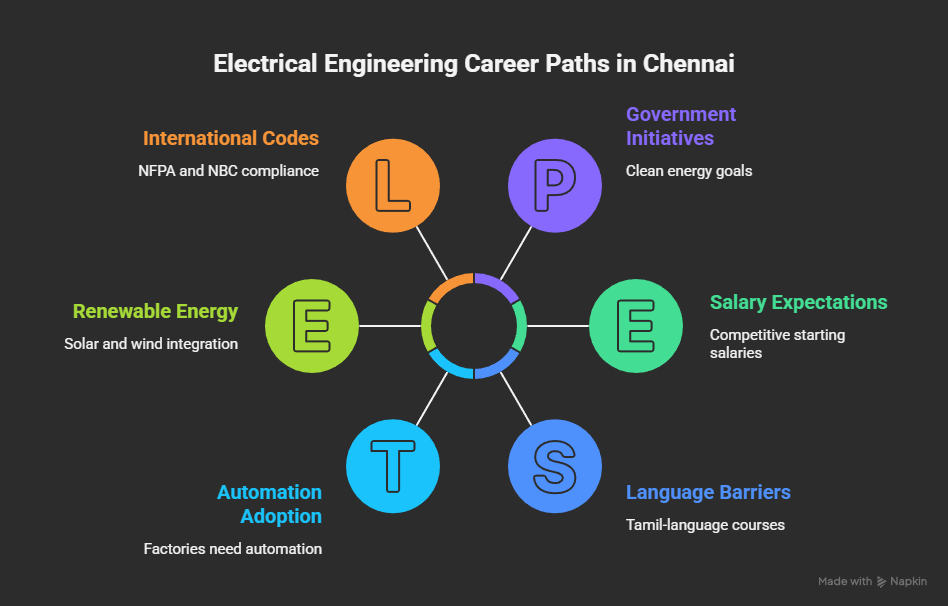
- Language comfort: Tamil-medium options can improve retention for many learners on technically dense topics.
- Placement support: ask for recent hiring outcomes — companies and roles — rather than relying on generic “100% placement” claims.
- Flexibility: online, weekend or hybrid formats let you upskill alongside GATE prep or a current job.
- Certification value: NSDC, AICTE or IIT-affiliated certifications, and recognised industry badges, tend to carry more weight with recruiters.
Conclusion
Your electrical engineering degree is the foundation; in Chennai’s 2026 job market, a focused specialisation is what turns that foundation into an offer letter.
Whether you are drawn to MEP design for buildings, PLC and automation for factories, EV and battery systems for the future of mobility, or VLSI for chip design, the right course closes the gap between what you learned in college and what employers actually need on day one.
Pick the domain that genuinely interests you, evaluate providers on placement outcomes and hands-on project quality rather than marketing claims, and commit three to nine months to building real, demonstrable skills. That investment is what will get you into interviews as a job-ready engineer, not just another fresher with a degree.
Master MEP Design with Industry-Leading Training!
Gain in-depth knowledge of Mechanical, Electrical, and Plumbing (MEP) Design with expert-led courses. Learn HVAC, fire safety, sustainable building strategies, and BIM applications to excel in the construction industry.
Know MoreFrequently Asked Questions
I just finished my B.Tech. Why isn't my degree enough to land a good core electrical job in Chennai anymore?
Your degree is absolutely essential. It is the non-negotiable foundation that proves you can grasp complex engineering principles. The challenge in today’s Chennai market is one of specialization and immediate applicability. The city is a hub with intense competition from numerous top-tier colleges. Companies, especially in high-stakes fields like construction (MEP), manufacturing (automation), and infrastructure, face tight project deadlines and cannot afford extensive, months-long training for fresh graduates. They need candidates who can contribute meaningfully within weeks.
What exactly is MEP, and why is it highlighted as such a strong option for electrical engineers?
MEP stands for Mechanical, Electrical, and Plumbing. The three technical disciplines that bring a building to life. Think of a modern IT park, hospital, or luxury apartment: the air is cool (Mechanical/HVAC), the lights and servers have flawless power (Electrical), and water flows reliably (Plumbing). These systems must be designed in tight coordination within the building’s structure.
How do I choose between a hardware-focused course like PLC/SCADA and a design-focused course like MEP?
This choice hinges on your inherent interests and preferred work environment.
-
Choose PLC/SCADA & Industrial Automation if: You love machinery, hands-on troubleshooting, and the dynamic environment of factories and plants. Choose MEP Design if: You are drawn to architecture, construction, and large-scale projects. Your work is more office and design-studio based, involving detailed drawings, 3D modelling (in Revit), coordination with architects, and compliance with building codes.
Both paths are excellent. Reflect on whether you see yourself more in a factory hard hat or on a construction site/design office.
Are online professional courses, especially those in regional languages like Tamil, as effective as traditional classroom training?
This is a paradigm shift. A well-structured online course in Tamil can be more effective for many learners. The traditional classroom offers peer interaction, but a quality online program delivers superior flexibility, accessibility, and personalized pacing. When the course is in Tamil, it removes a significant cognitive barrier.
Effectiveness depends on the course design. Look for programs that offer:
-
Live or interactive sessions for doubt clearing.
-
Recorded lectures you can revisit.
-
Hands-on project work with software licenses provided (e.g., AutoCAD, SIMATIC).
-
Mentor support and access to a community forum.
I'm interested in the global market. How do these courses prepare me for opportunities in the Gulf or Europe?
Courses with a global curriculum and project portfolio are your gateway. For instance, a top-tier MEP course won’t just teach Indian standards (like the National Building Code) but will deeply integrate international codes like NFPA (USA), BS (British Standards), and ASHRAE. They often use real project case studies from Dubai or Saudi Arabia—teaching you the specific material specifications, design philosophies, and client expectations of those markets.
What is the realistic salary expectation after completing a course like the MEP Design course?
It’s important to have a tiered expectation. As a fresh graduate with a B.Tech and a specialized certification, you are entering the market as a “skilled fresher.”
-
Entry-Level in Chennai: You can expect a starting salary range of ₹3.5 to ₹5.5 lakhs per annum (≈ ₹30,000 – ₹45,000 per month) for roles like Junior MEP Design Engineer, CAD Draftsman, or Site Coordinator. This is typically 25-50% higher than a plain graduate role.
-
With 1-3 Years of Experience: After gaining project experience, salaries in Chennai can quickly rise to ₹6-9 lakhs per annum for a competent Design Engineer or Coordinator.
-
Middle East Opportunity: This is where the significant jump occurs. Entry-level positions for skilled Indian engineers in the Gulf can start from ₹8-15 lakhs per annum (or more), often with tax-free benefits and accommodation. Your specialized Tamil-medium training, combined with knowledge of Gulf projects, makes you a particularly strong candidate for firms executing or outsourcing work from that region.
How long do these courses typically take, and can I pursue them while doing a job or preparing for GATE?
Most professional upskilling courses are designed for efficiency. They range from 3 months (for intensive software tools like AutoCAD Electrical) to 6-9 months (for comprehensive fields like MEP or VLSI). This is a strategic investment of time versus the 2 years required for an M.Tech.
A key advantage of reputable online or weekend-hybrid models is flexibility. They are specifically structured for working professionals and active students. You can attend live sessions in the evenings or weekends, access recorded lectures after your GATE study hours, and complete project work in scheduled blocks. This allows you to parallel-track your career preparation—building industry skills while also aiming for higher academic qualifications.
. Beyond the certificate, what kind of placement support should I genuinely expect from a good training institute?
Move beyond the generic promise of “100% placement.” Demand concrete details. Genuine support includes:
-
Profile Building: One-on-one resume crafting that highlights your projects and skills over just academics, and LinkedIn profile optimization.
-
Skill Gateway Preparation: Mock interviews conducted by industry professionals, not just trainers, focusing on technical grilling and behavioral questions.
-
Portfolio Creation: Guidance on compiling a professional portfolio of the drawings, designs, or code you developed during the course. This is your most powerful interview tool.
-
Industry Connect: Direct referrals or recruitment drives with partner companies, not just a list of “placement companies.” Ask for specifics about recent hires and the roles they secured.
A good institute acts as your first career mentor, not just a course provider.
I see options like EV Technology, IoT, and Renewable Energy. Are these just trends, or are they sustainable career paths in India and Chennai?
These are structural shifts, not passing trends. Government policy (FAME II, Solar Mission), global climate commitments, and economic imperatives are driving massive, long-term investment.
-
EV Technology: Chennai is “The Detroit of India.” With every major automaker (Hyundai, Nissan, BMW) investing billions in EV manufacturing locally, the demand for engineers who understand battery management systems, motor drives, and charging infrastructure is set to explode for the next decade.
-
Renewable Energy: Tamil Nadu is a national leader in wind and solar capacity. The need is for engineers who can move beyond theory to handle grid integration, performance analysis, and plant design—skills not covered in depth in a typical B.Tech.
-
IoT/Embedded Systems: As automation and smart infrastructure become standard, the hardware and software that enable them (sensors, microcontrollers, communication protocols) will see entrenched demand.
Choosing one of these paths is about aligning with a macro-economic wave that promises decades of growth and innovation.
I'm feeling overwhelmed by the choices. What is the single most important factor to decide my first step?
The single most important factor is Aligning with Your Aptitude and Passion. Start with honest self-reflection. Ask yourself:
-
“Do I enjoy detailed drawing and spatial planning?” -> Lean towards MEP/BIM Design.
-
“Am I fascinated by machines and logical process control?” -> Explore PLC/SCADA Automation.
-
“Do I love tinkering with circuits and coding small devices?” -> Consider Embedded Systems & IoT.
-
“Am I driven by large-scale energy systems and sustainability?” -> Look into Power Systems & Renewables.
Once you have a direction, then apply the practical filters: course duration, mode (online/offline), language, placement record, and cost. But the foundation must be a field that excites you. A career built on genuine interest, fueled by a foundational degree, and accelerated by targeted skills is the most durable and successful path forward. Your first step is not to pick the “best” course, but to pick the best course for you.