
Table of Contents
Kanchipuram silk is the handwoven pure mulberry silk saree from Tamil Nadu. It has GI protection, and for a good reason. It is a stunner to behold, with real silver and gold zari and contrast korvai borders in temple-inspired motifs that’ll make your jaw drop.
And it is no wonder this Saree has earned its prestige. Its artisans have been weaving magic for over four centuries, with the support of temples and royal patronage in Kanchipuram. Yes, even today, the art of interlocking body and border by hand is still a going concern here.
Protected with a GI tag from back in June 2005, the real deal weighs in at a healthy 700g to 900g – much heavier than those ordinary silk sarees. A legitimate Kanchipuram saree with real zari is a beast of a thing to haul around.
Learn Advanced Designing & Boutique Skills with Experts. Join Now!
Key Takeaways
- Kanchipuram silk is handwoven in Kanchipuram, Tamil Nadu, using pure mulberry silk from Karnataka.
- GI-tagged since 2 June 2005, among Tamil Nadu’s earliest protected handlooms.
- Signature feature – real zari (silver-wrapped, gold-finished silk-core thread).
- Korvai technique interlocks separately woven body and border by hand.
- Authentic sarees weigh ~700g to 900 g, drape structurally, and take weeks to weave.
- Prices range from budget imitations to premium pure-zari pieces over ₹1 lakh.
- Silk Mark and GI labels are the most reliable authenticity checks.
What exactly is Kanchipuram Silk?
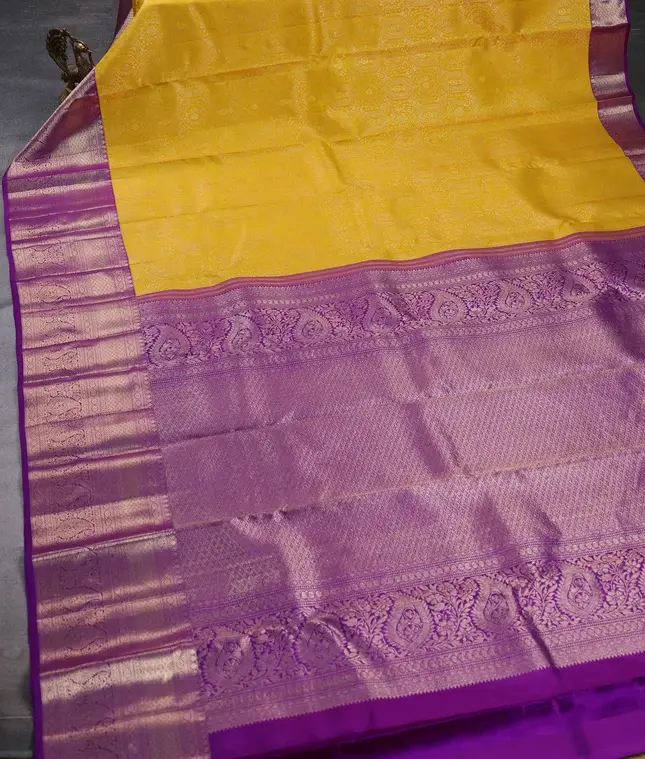
Kanchipuram silk is a handwoven saree made in and around the temple town of Kanchipuram, near Chennai. It is also known as Kanjivaram or Kancheepuram silk.
What separates it from other silk sarees is not just where, but the way of its making. Pure mulberry silk yarn, traditional metallic zari, and the korvai border technique, all combined under one legally protected name.
Since 2nd June 2005, “Kancheepuram Silk” has held Geographical Indication status under Classes 24 and 25. It means that only sarees woven in the designated region, using the specified materials and methods, can legally use the name.
This is a direct response to powerloom imitations sold under the Kanchipuram label. GI protection does not just help buyers. It also safeguards the livelihoods of weaving families who have practised this craft for generations.
Master Fashion Designing and Create Your Signature Style
Unlock your creative potential with our expert-led Fashion Designing course. Build in-demand skills and step confidently into the world of fashion!
Begin Your Fashion Career Today!A Brief History: From Temple Looms to Global Bridal Wear
Kanchipuram’s silk weaving tradition is pretty much inextricably linked to the temple culture that’s such a big part of South India. The weaving communities that ended up there generations ago started out producing these Sarees for temple deities.
The craft really took off under royal patronage when families from Andhra Pradesh came over, refined the techniques, and made them what they are today.
As time went on, what was originally a ceremonial textile became the go-to fabric for all the best weddings, and later, the whole of India was clamouring after it. Kanchipuram now supports tens of thousands of these weaving families. People just call it India’s “Silk City”.
Why is Kanchipuram Silk so Famous?
1. Pure Mulberry Silk Base
Pure mulberry silk gives the fabric a heavier, more structured drape than lighter silk varieties, and helps it hold pleats and last for decades.
2. Real Zari, not Imitation Metallic Thread
Traditional zari is a silk-core thread that wraps in flattened silver and finished with gold. They are not printed or plastic metallic thread. This is why pure-zari sarees command far higher prices than imitation-zari versions.
3. The Korvai Technique
The body and border are woven separately, often by two weavers, and interlocked by hand. This produces a crisp, contrasting border, and a faint join line is often visible on the reverse. It is one way to spot a handwoven original.
4. Temple-Inspired Motifs
Peacocks, elephants, mango (paisley) patterns, temple gopurams and mythological scenes recur on the pallu, drawn directly from South Indian temple sculpture, giving the saree cultural weight beyond fashion.
5. Durability and Heirloom Value
The quality of silk and zari, combined with dense weaving, means a well-maintained saree can remain wearable for decades. This is why many families treat it as both a cultural heirloom and an investment piece.
Kanchipuram vs Banarasi Silk: A Quick Comparison
| Feature | Kanchipuram Silk | Banarasi Silk |
| Origin | Kanchipuram, Tamil Nadu (GI-tagged, 2005) | Varanasi, Uttar Pradesh (GI-tagged) |
| Base Silk | Heavy pure mulberry silk | Finer katan/organza/georgette silk |
| Border Technique | Korvai – border woven separately, interlocked | Brocade – motifs woven directly into fabric |
| Motifs | Temple, peacock, mango, mythological pallu | Floral, jaal, Mughal-inspired patterns |
| Drape | Structured, heavier, crisp fall | Softer, more fluid |
| Best Suited For | Bridal wear, temple functions, festivals | Bridal wear, festive and formal occasions |
Master Fashion Designing and Create Your Signature Style
Unlock your creative potential with our expert-led Fashion Designing course. Build in-demand skills and step confidently into the world of fashion!
Begin Your Fashion Career Today!How is a Kanchipuram Silk Saree Made?
- Sourcing and dyeing – Pure mulberry silk yarn, mainly from Karnataka, is dyed in rich, saturated colours.
- Warp and weft preparation – Threads are set up on the loom, determining the base colour and density.
- Zari preparation – Silver-and-gold zari is readied separately for the border and pallu, following traditional motif patterns.
- Handloom weaving – Master weavers use pit looms to weave the body, border and pallu, joining them using the korvai interlock technique.
- Finishing and certification – Completed sarees are checked for defects and, where applicable, tagged with Silk Mark holograms confirming pure silk content.
A single saree, particularly one with heavy zari work and intricate motifs, can take anywhere from a few weeks to over a month to complete.
Price Range: What Affects the Cost
The price of a Kanchipuram silk saree depends almost entirely on the quality of zari and the complexity of the weave, not the fabric alone.
| Tier | Zari Type | Typical Price Range (INR) | Best Suited For |
| Premium Heirloom | Pure silver-and-gold zari | ₹50,000 – ₹1,50,000+ | Bridal trousseau, investment pieces |
| Mid-Range | Half-fine / tested zari | ₹15,000 – ₹40,000 | Festive wear, pre-wedding functions |
| Budget/Imitation | Metallic or synthetic zari | ₹5,000 – ₹12,000 | Everyday festive wear, trend pieces |
Very low prices for a saree marketed as “pure Kanchipuram” are usually a red flag for blended fabric or imitation zari.
How to Spot an Original Kanchipuram Silk Saree
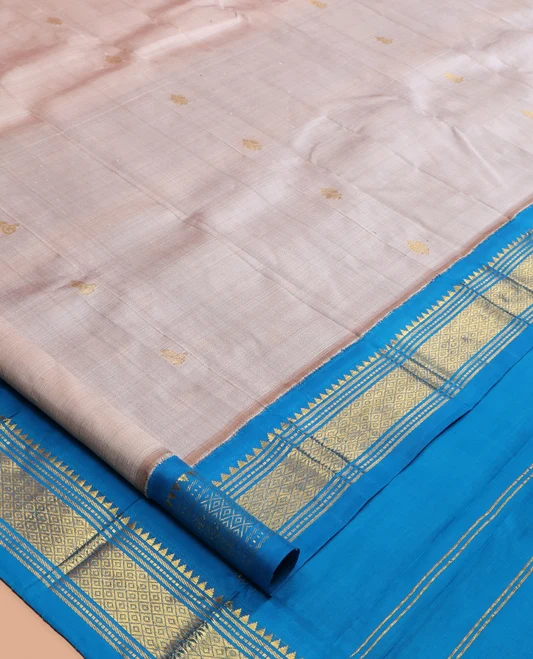
- Check for Silk Mark and GI labels
Its the only way you can be 100% sure of your silk content and origin.
- Examine the border join
Flip the saree over and look for a faint ridge or join line where the korvai border meets the body. Check to see if it is a seamless border. If it looks too perfect it must be some machine work.
- Feel the weight and drape
A genuine silk saree is a pretty heavy piece (think 700g to 900g) and has a structured way of hanging. That is about as natural as you can get.
- Ask about the zari
Zari is that fancy silver thread that weaves into the fabric. If it’s real it’s going to feel a bit heavy and maybe a little less shiny than the fake stuff.
- Be cautious of unusually low prices
Authentic materials and actual human labour taking weeks to create just don’t go hand in hand with super cheap prices.
Caring for Your Kanchipuram Silk Saree
- Store it in something breathable that is not plastic.
- Keep it away from direct sunlight. It’s bad for the fabric, and the zari.
- For anything that is really decorative go for dry cleaning, you don’t wanna take any chances.
- No perfume or deo spraying on the fabric.
Learn Advanced Designing & Boutique Skills with Experts. Join Now!
Conclusion
Kanchipuram silk is looked up at for all the right reasons. It is not just about how old it is or how “traditional”. It is about real zari, proper mulberry silk, and some serious craftsmanship. And to top it off there is a GI tag that protects all that authenticity.
Whether you are studying textiles or picking out your dream wedding dress, learning these basics is a good idea. Not just because you want to save yourself some cash, but because you want to make sure you are buying something with real value.
Master Fashion Designing and Create Your Signature Style
Unlock your creative potential with our expert-led Fashion Designing course. Build in-demand skills and step confidently into the world of fashion!
Begin Your Fashion Career Today!Frequently Asked Questions
Why is Kanchipuram silk so expensive?
It uses pure mulberry silk and real silver-and-gold zari, combined with weeks of handloom labour using the korvai technique. This combination of premium raw material and skilled craftsmanship keeps production costs high.
What does GI tag mean for Kanchipuram silk?
The Geographical Indication tag, granted in 2005, legally certifies that a saree was woven in the Kanchipuram region using specified materials and methods. It protects both buyers from imitations and weavers’ livelihoods.
How can I tell if my Kanchipuram saree is original?
Look for Silk Mark and GI labels, check the korvai border join on the reverse side, and assess the weight and drape of the fabric. A genuine piece with real zari typically feels noticeably heavier than an imitation.
How long does it take to weave one Kanchipuram saree?
Depending on the complexity of the motifs and zari work, weaving can take anywhere from a few weeks to over a month. Heavily worked bridal pieces generally take the longest.
Why do some Kanchipuram sarees feel lighter than others?
Lighter sarees usually use less zari, imitation metallic thread, or a lower silk density. Heavier, real-zari sarees generally sit at the premium end of the price range.
Where does the silk for Kanchipuram sarees come from?
The pure mulberry silk yarn is largely sourced from Karnataka and other South Indian silk-producing regions. It is then dyed, prepared and woven in Kanchipuram itself.
What motifs are commonly found on Kanchipuram sarees?
Common motifs include peacocks, elephants, mango or paisley patterns, temple gopurams, and mythological scenes on the pallu. These designs are directly inspired by South Indian temple architecture and sculpture.
How should I store a Kanchipuram silk saree?
Wrap it in cotton or muslin cloth and store it in a cool, dry place away from direct sunlight. Avoid plastic covers, as they can trap moisture and damage the fabric over time.