Table of Contents
Tai chi walking is a slow and gentle way to walk. You shift your weight first. Then you step, heel first. Your knees stay soft and your breath stays calm. It comes from tai chi, an old Chinese practice.
People take it up for many reasons. Some want better balance. Some want to feel calmer. Others want a gentle way to stay active as they age. It needs no gym, no gear and very little space. A hallway is enough.
This blog explains the main benefits in plain words. It covers overall health, balance, stress, older adults and joints. It also shows how often to practise. Where research is limited, the blog says so clearly. This helps separate the benefits supported by research from those that still need more study.
Key Takeaways
- Tai chi walking is slow, gentle and low impact.
- It may help balance, coordination and leg strength.
- Slow breathing and steady focus can ease stress.
- It suits many older adults, with a doctor’s advice.
- It is easy on the joints.
- Try it three to five days a week, for a few minutes each time.
- It supports your health. It does not replace your doctor.
Become a General Fitness Trainer and turn your passion into a Profession!
Top Benefits of Tai Chi Walking for Overall Health
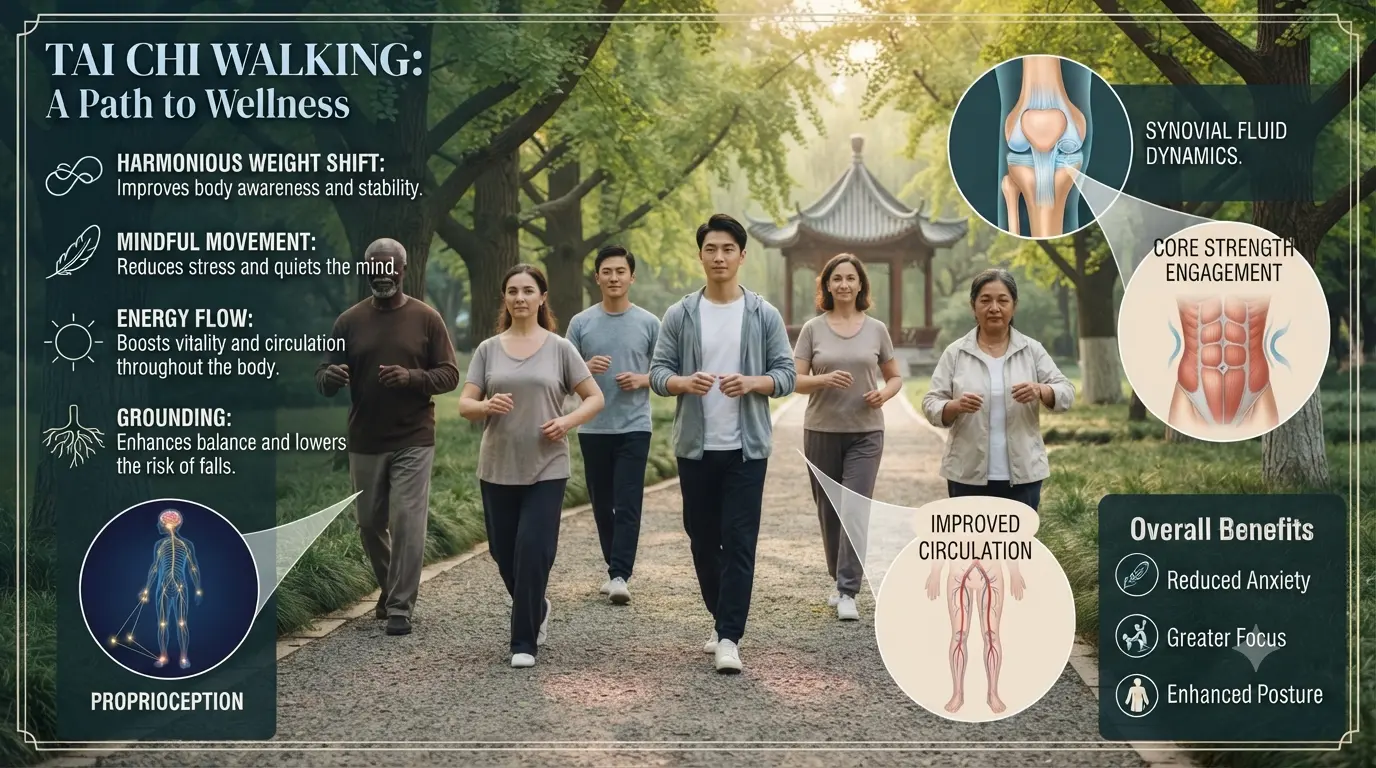
Tai chi walking works on the body and the mind together. Each benefit is small on its own. Together, they add up over weeks and months.
Better Balance
You move your weight onto one leg before each step. This trains your body to stay steady. Over time, many people feel more secure on their feet.
Stronger Legs
Slow steps ask your legs to hold you for longer. The thighs, calves and ankles do gentle work. You do not need weights or machines.
Better Posture
The practice asks you to stand tall with relaxed shoulders. Doing this often can turn good posture into a habit. Many people notice they slouch less at their desk.
A Calmer Mind
You focus on your steps and your breath. This slows down busy thoughts. A short Tai Chi session may help some people feel calmer, but the effect can vary from person to person.
Better Focus
Slow walking asks for steady attention. You notice your foot, your weight and your breath. This kind of practice can help you stay focused on other tasks too.
Gentle Movement
Tai chi walking keeps the body moving without strain. It suits days when you feel stiff, tired or low on energy.
Low Risk of Injury
There is no jumping, twisting or racing. It uses gentle movements, which put less pressure on the body. This makes it a safe choice for many beginners.
Possible Help for Blood Pressure
Some studies on tai chi suggest it may lower blood pressure a little.There are still only a few studies that focus specifically on Tai Chi walking. If you have high blood pressure, follow your doctor’s plan. Treat tai chi walking as an extra, not a replacement.
Better Sleep
Slow, calm movement in the evening can help the body wind down. Some studies on tai chi link it to better sleep quality. Results vary from person to person.
Body Awareness
You learn to notice how your feet land and how your body leans. This helps you spot habits like slouching or stiff knees.
Easy to Fit Into Your Day
You can practise for five minutes in a hallway. You can do it before breakfast or after dinner. Starting with a simple routine can make it easier to practise regularly.
Quick Summary
| Benefit | How it helps |
|---|---|
| Balance | Weight shifts train steadiness |
| Leg strength | Slow steps use the leg muscles |
| Posture | A tall, relaxed stance becomes a habit |
| Calm mind | Focus on breath and steps |
| Focus | Steady attention to each move |
| Gentle movement | Low strain on the body |
| Sleep | Slow movement helps you wind down |
What It Does Not Do
Tai chi walking is gentle. It does not give the strong heart workout of brisk walking. Most health guidelines suggest regular moderate exercise each week. Tai chi walking can sit alongside it.
How Tai Chi Walking Improves Balance and Coordination
Balance is the best-known benefit. The way you step explains why.
Why Balance Gets Better
One Leg at a Time
Before each step, one leg carries your full weight. Your body must find its centre and hold it. Repeating this builds control.
Slow Speed
Fast steps let momentum do the work. Slow steps do not. Your muscles must stay active the whole time.
Stronger Ankles and Feet
Heel-first steps and slow rolls make the small muscles in your feet and ankles work. Strong ankles help you recover from small slips.
A Steadier Core
The muscles around your belly and lower back keep your body upright. In tai chi walking, they stay lightly active. This supports your balance.
Better Body Sense
Experts call this proprioception. It means knowing your body’s position and how it moves around you. Slow walking makes you notice each small shift.
How Coordination Improves
Coordination means parts of the body working together. In tai chi walking, many things happen at once:
- Your legs shift and step.
- Your arms stay loose and balanced.
- Your eyes look ahead.
- Your breath moves in a slow rhythm.
Learning to join these gives smoother movement.
What Research Suggests
Studies on tai chi show better balance and fewer falls, mostly in older adults. Tai chi walking uses the same ideas. But studies on the walking alone are fewer. So the benefit is likely, not guaranteed.
Everyday Gains
Better balance may show up in daily life:
- Stepping off a kerb with more ease.
- Standing on a moving bus with less wobble.
- Putting on trousers while standing.
- Walking on uneven paths with more care.
- Catching yourself after a small trip.
A Simple Balance Practice
Try this short drill:
- Stand tall near a wall.
- Shift your weight onto your left leg.
- Hold for three slow breaths.
- Shift to the right leg.
- Repeat five times on each side.
- Then take ten slow tai chi steps.
How Long Until You Notice a Change?
Most people feel a small change within three to four weeks of regular practice. Others take longer. Keep going, and keep it gentle.
Tips for Better Balance
- Keep your steps short.
- Shift your weight fully before lifting a foot.
- Look ahead, not down.
- Stay near a wall or chair at first.
- Slow down if you feel unsteady.
Turn Your Passion for Fitness into a Profession
Learn practical skills, get certified, and step into the growing fitness industry with confidence.
Join the CourseCan Tai Chi Walking Help Reduce Stress and Anxiety?
It may help. Many studies on tai chi suggest it can ease stress and low mood. Tai chi walking shares the same slow pace, focus and breathing. Few studies look at the walking alone. So the evidence is promising, but not final.
Why It May Ease Stress
Slow Breathing
Slow, steady breaths help the body relax. They can calm a racing heart and loosen tight muscles.
Focus on the Present
You think about your next step, not tomorrow’s worries. This kind of focus is a form of mindfulness.
Gentle Movement
Light activity can lift mood. It also gives the body a way to let go of tension.
A Quiet Routine
A few calm minutes each day gives your mind a pause. Pauses add up.
Body Signs of Stress It May Ease
Stress often shows up in the body. Slow walking asks you to check in with these areas:
- Tight shoulders.
- A clenched jaw.
- Shallow breathing.
- Tense hands.
- A racing heartbeat.
When you relax these on purpose, the whole body can settle.
A Simple Calming Method
- Stand still and take three slow breaths.
- Walk slowly for five minutes.
- Match your breath to your steps.
- Notice how your feet feel.
- Stand still again for a minute.
A Simple Breathing Count
Breathe in for three steps. Breathe out for three steps. If that feels hard, use two steps. The count gives your mind something simple to follow.
When It Helps Most
- After a busy workday.
- Before bed.
- On a restless morning.
- Between long periods of sitting.
What to Expect
You may feel calmer right away. Or you may notice changes after a few weeks. Every person is different.
Important Limits
Tai chi walking is not a treatment for anxiety disorders or depression. If you have constant worry, panic, poor sleep or low mood, please see a doctor or counsellor. You can use tai chi walking alongside their advice.
Tips to Get More Calm from It
- Practise at the same time each day.
- Switch off your phone.
- Choose a quiet spot.
- Let thoughts pass without judging them.
- Start with five minutes.
Benefits of Tai Chi Walking for Older Adults
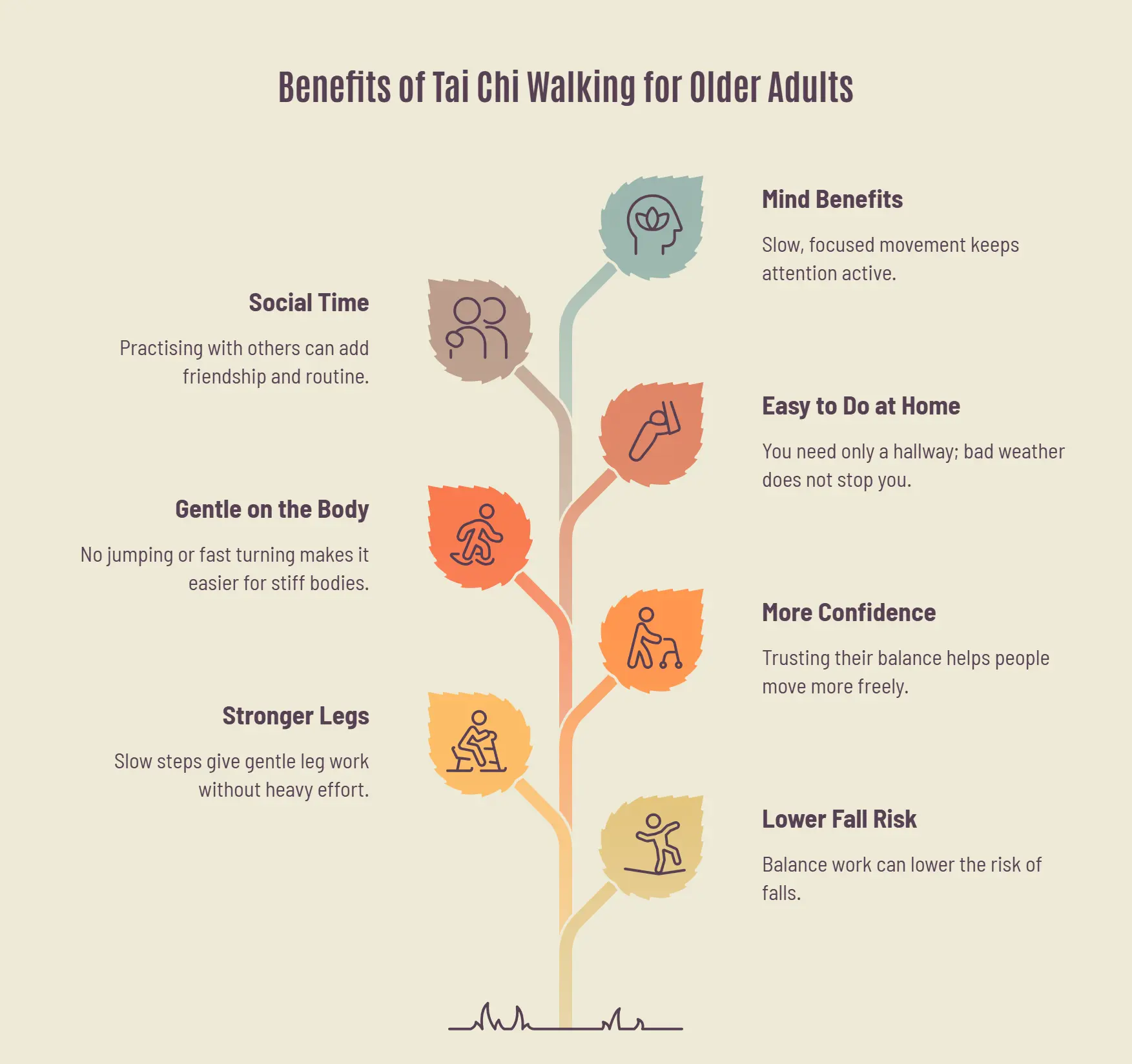
Many older adults like tai chi walking. It is slow, low impact and easy to adjust.
Lower Fall Risk
Falls are a major concern with age. Studies on tai chi show it can lower the risk of falls. The balance work in tai chi walking follows the same idea.
Stronger Legs
Strong legs help with standing up from a chair and climbing stairs. Slow steps give gentle leg work without heavy effort.
More Confidence
When people trust their balance, they move more freely. Some older adults say they feel less afraid of walking after a few weeks of practice.
Gentle on the Body
There is no jumping or fast turning. This makes it easier for stiff bodies. You can also do it in short sessions.
Easy to Do at Home
You need only a hallway. Bad weather does not stop you. This helps people who cannot go out much.
Social Time
Many parks have tai chi groups. Practising with others can add friendship and routine.
Mind Benefits
Slow, focused movement keeps attention active. Some studies on tai chi suggest benefits for thinking skills in older adults. The evidence is still growing.
A Chair-Support Version
If standing feels risky, try this:
- Stand behind a sturdy chair.
- Rest your hands lightly on the back.
- Shift your weight side to side.
- Take small, slow steps along a wall.
You can let go of the chair later, when you feel ready.
Set Small Goals
Goals keep practice steady. For example:
- Week one: five minutes, three days.
- Week three: ten minutes, four days.
- Week six: walk without holding the chair.
Safety Tips for Older Adults
- Ask your doctor before starting.
- Wear flat, non-slip shoes.
- Keep a wall or sturdy chair close.
- Remove rugs and wires.
- Start with five minutes.
- Stop if you feel dizzy, short of breath or have chest pain.
- Practise with a family member or friend if you can.
Who Should Be Extra Careful
Take extra care if you have:
- Severe balance problems.
- A heart condition.
- Very low or high blood pressure.
- A recent surgery or fracture.
- Weak vision.
- Dizziness when you stand up.
Your doctor can tell you what is safe.
How Tai Chi Walking Supports Joint Health and Mobility
Tai chi walking is low impact. That means your feet never slam into the ground. This is kind to the knees, hips and ankles.
Why It Is Gentle on Joints
Soft Knees
You keep a slight bend in your knees. This absorbs shock and avoids locking.
Slow, Smooth Steps
There are no jerks or sudden turns. Joints move through an easy range.
Even Weight Shifts
Weight moves from one leg to the other in a controlled way. This avoids sudden loads on one joint.
How It Supports Mobility
Mobility means how freely you can move. Gentle, regular movement keeps joints from feeling stiff. Muscles around the joints also grow stronger. Strong muscles take some load off the joint.
Help With Morning Stiffness
Many people feel stiff after waking. A few minutes of slow walking can warm up the legs. Keep the pace easy. Do not push through pain.
Joint Areas It Works On
| Joint | What happens in tai chi walking |
|---|---|
| Ankles | Roll through each step and hold your weight |
| Knees | Stay slightly bent and take weight slowly |
| Hips | Shift side to side in a smooth way |
| Spine | Stays tall and upright |
| Shoulders | Stay loose and relaxed |
What Research Says
Some studies on tai chi suggest it may ease pain and stiffness in knee arthritis. Studies on tai chi walking alone are few. So treat it as gentle, helpful movement. It is not a cure for arthritis.
Tips for Healthy Joints
- Keep your knees soft, never locked.
- Take short steps.
- Wear flat, cushioned shoes.
- Warm up with a minute of slow breathing.
- Stop if you feel sharp pain.
- Build time slowly.
When to See a Doctor
Speak to a doctor if you have:
- Swollen joints.
- Pain that does not go away.
- Pain that wakes you at night.
- A joint that locks or gives way.
Turn Your Passion for Fitness into a Profession
Learn practical skills, get certified, and step into the growing fitness industry with confidence.
Join the CourseHow Often Should You Practise Tai Chi Walking?
There is no fixed rule. But a gentle, regular plan works well. Short and regular sessions are better than long, rare ones.
A Good Starting Plan
- Days: three to five a week.
- Time: five to ten minutes per session.
- Pace: slow and easy.
Four-Week Build-Up
| Week | Sessions per week | Time per session |
|---|---|---|
| 1 | 3 | 5 minutes |
| 2 | 3 to 4 | 10 minutes |
| 3 | 4 | 15 minutes |
| 4 and after | 4 to 5 | 20 to 30 minutes |
A Sample Week
| Day | Plan |
|---|---|
| Monday | 10 minutes, morning |
| Tuesday | Rest or a normal walk |
| Wednesday | 10 minutes, evening |
| Thursday | Rest |
| Friday | 15 minutes, morning |
| Saturday | 15 minutes in a park |
| Sunday | Rest or a gentle stretch |
Can You Do It Daily?
Yes. Tai chi walking is gentle. Many people practise every day. If you feel tired or sore, take a rest day.
Best Times
- Morning: wakes the body gently.
- Evening: helps you wind down.
- Work breaks: a two-minute slow walk clears the mind.
For Older Adults
Start with five minutes, three days a week. Add time only when it feels easy. Ask your doctor for a plan that suits you.
Combine With Other Exercise
Tai chi walking is gentle. Most adults also need regular moderate exercise, like brisk walking, for heart health. You can add tai chi walking before or after.
Signs You Should Slow Down
- Sore joints that last a day or more.
- Dizziness.
- Unusual tiredness.
- Sharp pain.
Signs You Are Ready for More
- Steps feel smooth.
- You do not need a wall for support.
- You finish a session feeling calm, not drained.
How Long Before You See Results?
Calm and focus may come in the first week or two. Balance and leg strength often take a few weeks. Joint comfort may take longer. Keep a simple note of how you feel each week.
Stay Consistent
Benefits come with regular practice. A few minutes each day can help more than one long session on a weekend.
Become a General Fitness Trainer and turn your passion into a Profession!
Conclusion
Tai chi walking is a gentle habit with several possible benefits. It may improve balance and coordination, ease stress and support joints. It also suits many older adults, with the right care.
Research on tai chi is strong in some areas, like balance. Research on tai chi walking alone is smaller. So see it as a helpful practice, not a medical treatment. Check with your doctor if you have a health concern.
Start with five minutes, three days a week. Add time slowly. Keep your knees soft, your steps short and your breath calm. A few quiet minutes each day can make a real difference.
Turn Your Passion for Fitness into a Profession
Learn practical skills, get certified, and step into the growing fitness industry with confidence.
Join the CourseFrequently Asked Questions
What are the main benefits of Tai Chi walking?
Tai Chi walking has many health benefits. It helps improve balance, body movement, and muscle strength. It also supports better posture and flexibility. Regular practice may help reduce stress and make the body feel more relaxed.
Is Tai Chi walking good for weight loss?
Tai Chi walking can support weight loss when combined with a healthy diet and regular physical activity. It involves slow and controlled movements that help the body stay active. However, it burns fewer calories than many high-intensity exercises.
Can Tai Chi walking improve balance?
Yes. Improving balance is one of the main benefits of Tai Chi walking. It teaches you to move your body slowly and shift your weight from one leg to another. This can improve body control and help reduce the risk of falls.
Is Tai Chi walking good for older adults?
Yes. Tai Chi walking is a gentle exercise that many older adults can practise. It helps improve balance, flexibility, and leg strength. It may also help older people feel more confident while walking and doing daily activities.
How does Tai Chi walking help reduce stress?
Tai Chi walking combines slow movements with controlled breathing. This helps calm the mind and relax the body. Practising it regularly may reduce stress and improve mental well-being.
How long should I practise Tai Chi walking every day?
Beginners can start with 10 to 15 minutes a day. As they become comfortable, they can slowly increase the practice time to 20 or 30 minutes. Regular practice is more important than doing it for a long time at once.
Is Tai Chi walking better than normal walking?
Both exercises have health benefits. Normal walking helps improve heart health and overall fitness. Tai Chi walking focuses more on balance, body control, posture, and slow movements. The better choice depends on your fitness level and health goals.
Can beginners practise Tai Chi walking at home?
Yes. Beginners can practise Tai Chi walking at home. Start with simple movements in a safe and open space. Move slowly and focus on your posture, breathing, and balance. You can also follow beginner-friendly video lessons to learn the basic steps.