
Table of Contents
Walking is a simple way to keep your body moving every day. You do not need a gym. You do not need a plan. You just need a little time and a safe path.
But not all walking is the same. Some people walk fast to burn calories. Others walk very slowly to feel calm and steady. The second style is called tai chi walking. The first is what most of us call regular walking.
Both are good for you. They just do different jobs. One builds stamina. The other builds control. So which one should you pick?
This blog gives you a clear answer. You will learn what each style is and how they differ. You will also see the benefits of each. Then we look at weight loss, balance and flexibility. At the end, you will learn how to use both in one week.
Key Takeaways
- Tai chi walking is slow, calm and focused on balance.
- Regular walking is natural, steady and focused on distance.
- Regular walking burns more calories.
- Tai chi walking is better for balance and body control.
- Tai chi walking puts very little strain on your knees and hips.
- Brisk walking is better for the heart.
- You can do both in the same week.
- If you feel dizzy or unsteady, talk to a doctor first.
What Is Tai Chi Walking?
Tai chi walking is a slow and gentle way to walk. It comes from tai chi, an old Chinese practice. You move with care. You think about each step.
A Simple Meaning
Imagine walking in slow motion. You do not rush. You feel your foot touch the ground. You feel your weight move from one leg to the other. Your body stays soft and calm.
Where It Comes From
Tai chi started in China many years ago. At first, it was a martial art. Over time, it became a gentle exercise for health. Today, people practise it in parks across the world.
Tai chi walking takes one small part of tai chi, the slow step. It turns that step into its own exercise.
How a Step Works
Every step has a fixed order. It looks like this:
- Shift your weight onto one leg.
- Lift the other foot slowly.
- Place the heel down first.
- Roll the foot flat.
- Move your weight forward.
- Repeat on the other side.
The weight shift comes first. That is the key idea. You never step before your body is steady.
The Main Rules
A few simple rules guide this walk.
- Stand tall with relaxed shoulders.
- Keep your knees a little bent.
- Take short steps.
- Look straight ahead.
- Breathe slowly and evenly.
- Stay aware of your body.
Become a General Fitness Trainer and turn your passion into a Profession!
What Is Regular Walking?
Regular walking is the walk you already know. You step forward at your own natural speed. Your arms swing. Your body moves in a smooth rhythm. Walking feels automatic, so you can do it without effort.
A Simple Meaning
You walk to the shop. You walk to the bus stop. You walk in the park after dinner. All of this is regular walking. It is part of daily life.
Different Speeds
Regular walking is not one speed. It has levels.
- Slow walk: Easy pace. Good for a gentle start.
- Normal walk: Comfortable pace. You can talk easily.
- Brisk walk: Fast pace. Your breathing gets heavier, but you can still speak in short sentences.
Brisk walking is the style most health advice talks about.
How a Regular Step Works
In a normal walk, your body moves forward all the time. You step and your weight moves with you. One heel lands, the foot rolls, and the other leg is already on its way. It is quick and smooth. You do not stop to shift your weight.
Turn Your Passion for Fitness into a Profession
Learn practical skills, get certified, and step into the growing fitness industry with confidence.
Join the CourseTai Chi Walking vs Regular Walking: Key Differences
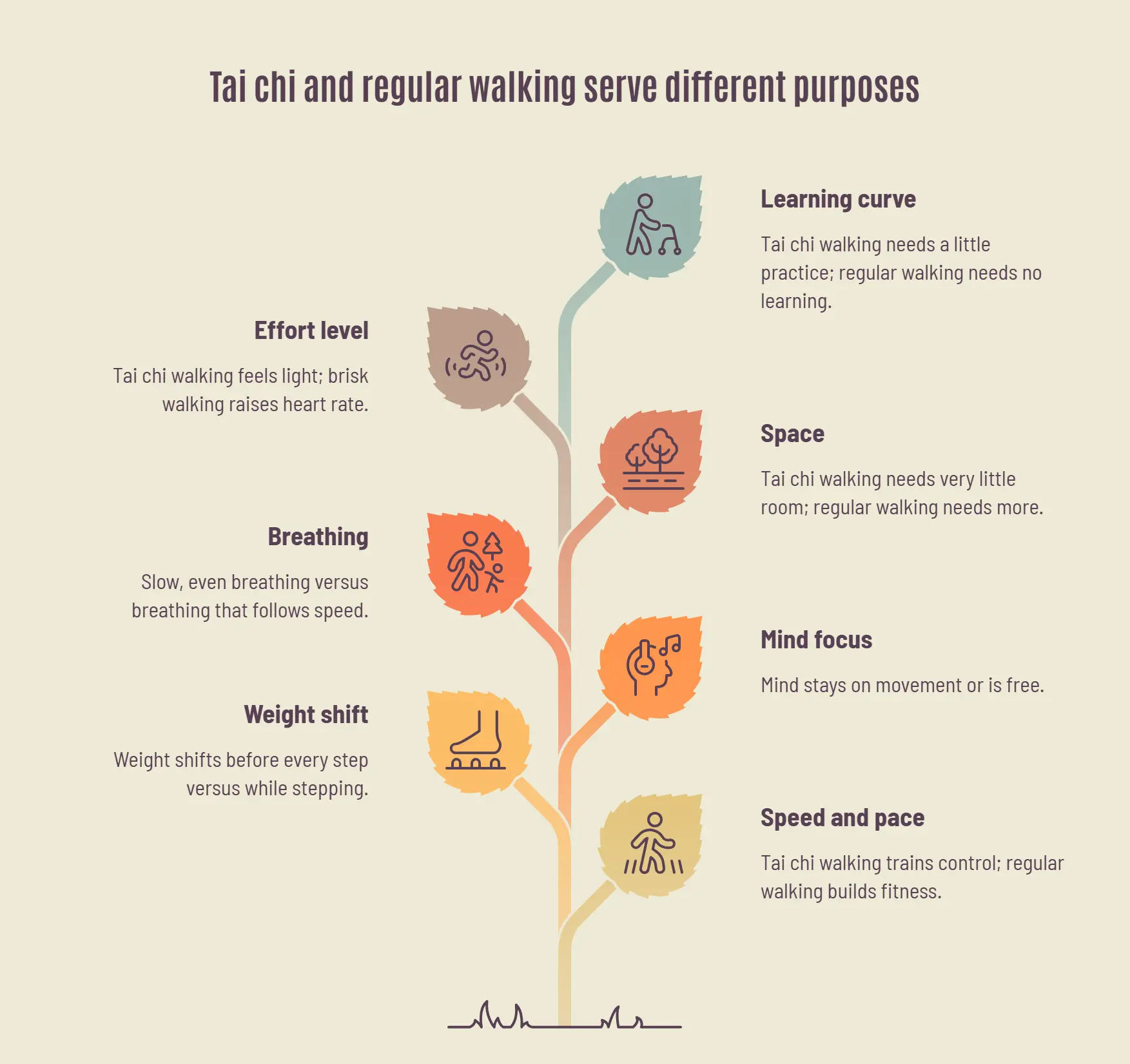
Both styles use the same basic movement. Yet each one is meant for a different purpose. Tai chi walking trains control. Regular walking builds fitness.
| Point | Tai Chi Walking | Regular Walking |
|---|---|---|
| Speed | Very slow | Normal or fast |
| Main focus | Balance, breath and mind | Distance, time and pace |
| Weight shift | Before every step | Happens while stepping |
| Step size | Short | Natural or long |
| Breathing | Slow and matched to steps | Natural |
| Heart workout | Gentle | Stronger, mainly when brisk |
| Calories burned | Lower | Higher |
| Joint impact | Very low | Low to moderate |
| Space needed | Small | Larger |
| Best for | Balance, calm, control | Stamina, fitness, weight care |
Speed and Pace
This is the biggest difference. Tai chi walking moves slowly by design. Regular walking is about keeping a steady pace. A slow pace gives you time to feel your body. A faster pace gives your heart and lungs more work.
The Way You Shift Weight
In tai chi walking, you move your weight first. Then you step. In regular walking, the step and the weight shift happen together. This small change makes tai chi walking feel very different. Your leg muscles work for longer on each step.
Where Your Mind Goes
In tai chi walking, your mind stays on the movement. You notice your feet, your breath and your balance. In regular walking, your mind is free. You can listen to music, chat or think about your day.
Breathing
Tai chi walking uses slow, even breathing. Many people match breath to steps. In regular walking, breathing follows your speed. It gets faster as you walk faster.
Space
Tai chi walking needs very little room. A short hallway is enough. Regular walking needs more space. You usually need a street, a park or a treadmill.
Effort Level
Tai chi walking feels light. Your heart rate stays low. Regular walking can feel light or hard, depending on your pace. A brisk walk raises your heart rate. That gives you more cardio benefit.
Learning Curve
Regular walking needs no learning. Tai chi walking needs a little practice. The slow steps feel strange at first. But most people get comfortable in a week or two.
Benefits of Tai Chi Walking
Tai chi walking is gentle, but it offers real value.
Better Balance
When you move slowly, your body must work harder to stay upright. The small muscles in your feet, legs and core all help. Over time, this can make you feel steadier. Research on tai chi in general shows it can help older adults with balance and lower the risk of falls. Studies on tai chi walking alone are fewer, so treat it as a helpful practice, not a cure.
Stronger Legs and Core
Each step holds your weight on one leg for longer. This builds quiet, steady strength. It is not heavy muscle work. But it helps your legs and core stay active.
Less Stress
Slow steps and slow breathing calm the mind. You focus on one thing at a time. Many people feel more relaxed after a few minutes.
Better Body Awareness
You learn how you stand and move. You notice if you lean, stiffen or rush. This awareness can help you fix bad habits.
Gentle on the Joints
The heel lands softly. The knees stay bent. The pace is slow. So the joints face very little strain. This makes it a good choice for people who find fast walking hard.
Works in a Small Space
You can practise at home. You do not need a park or a track. This helps on rainy days or when you are short on time.
Good for Older Adults
It is simple and slow. It can help older adults practise safe movement. They can start near a wall or chair for support.
Helps You Focus
Because you must pay attention, it works like a short mind break. It can help you slow down after a busy day.
Benefits of Regular Walking
Regular walking is simple. But it has many proven benefits.
Heart Health
Brisk walking makes your heart work harder. This is good for your heart and blood flow. Health bodies suggest that most adults get regular moderate activity each week. Brisk walking is one easy way to do this.
Burns More Calories
Walking at a normal or fast pace uses more energy than slow steps. The longer and faster you walk, the more calories you burn.
Builds Stamina
If you walk often, you tire less. Your breathing becomes easier. Stairs feel less hard. Over weeks, your fitness grows.
Stronger Legs and Bones
Walking is a weight-bearing activity. Your legs carry your body weight. This helps keep your muscles and bones active.
Better Mood
A walk outside can lift your mood. Fresh air and daylight help. Walking with a friend adds a social boost.
Better Sleep
Regular activity can help you sleep better. Many people find that an evening walk helps them wind down.
Helps Blood Sugar and Blood Pressure
Regular movement helps the body manage sugar and pressure. This is useful over the long term. If you have a health condition, ask your doctor how much walking is right for you.
Easy to Start
You need no skill, no gear and no fee. You can begin today. You can also build it into daily life. Walk to the shop. Take the stairs. Get off the bus one stop early.
Turn Your Passion for Fitness into a Profession
Learn practical skills, get certified, and step into the growing fitness industry with confidence.
Join the CourseWhich Is Better for Weight Loss?
Regular walking is better for weight loss. The reason is simple. It burns more calories.
Why Regular Walking Wins
Weight loss depends on energy. When you burn more energy than you take in, weight can drop over time. A brisk walk uses more energy than slow tai chi steps. A longer walk uses even more.
What About Tai Chi Walking?
Tai chi walking burns fewer calories. The pace is slow. Your heart rate stays low. So it is not a strong weight loss tool by itself.
But it can still help in small ways.
- It teaches you to move more.
- It can reduce stress. Stress can affect eating habits.
- It is easy to add on busy days.
Quick Comparison
| Point | Tai Chi Walking | Regular Walking |
|---|---|---|
| Calories burned | Lower | Higher |
| Heart rate | Low | Moderate to high |
| Good for weight loss | Only as a small helper | Yes |
| Easy to increase effort | Harder | Easy: walk faster or longer |
Tips to Lose Weight with Walking
- Walk briskly for 30 minutes on most days.
- Start with 10 minutes if you are new.
- Add a few minutes each week.
- Try short hills or stairs.
- Walk after meals.
- Pair walking with healthy eating.
Walking alone may not be enough. Food habits, sleep and daily routine also play a big part.
The Smart Choice
If weight loss is your main goal, choose regular walking. Use tai chi walking as a cool-down or a calm break. That way you get the best of both.
Which Walking Style Is Better for Balance and Flexibility?
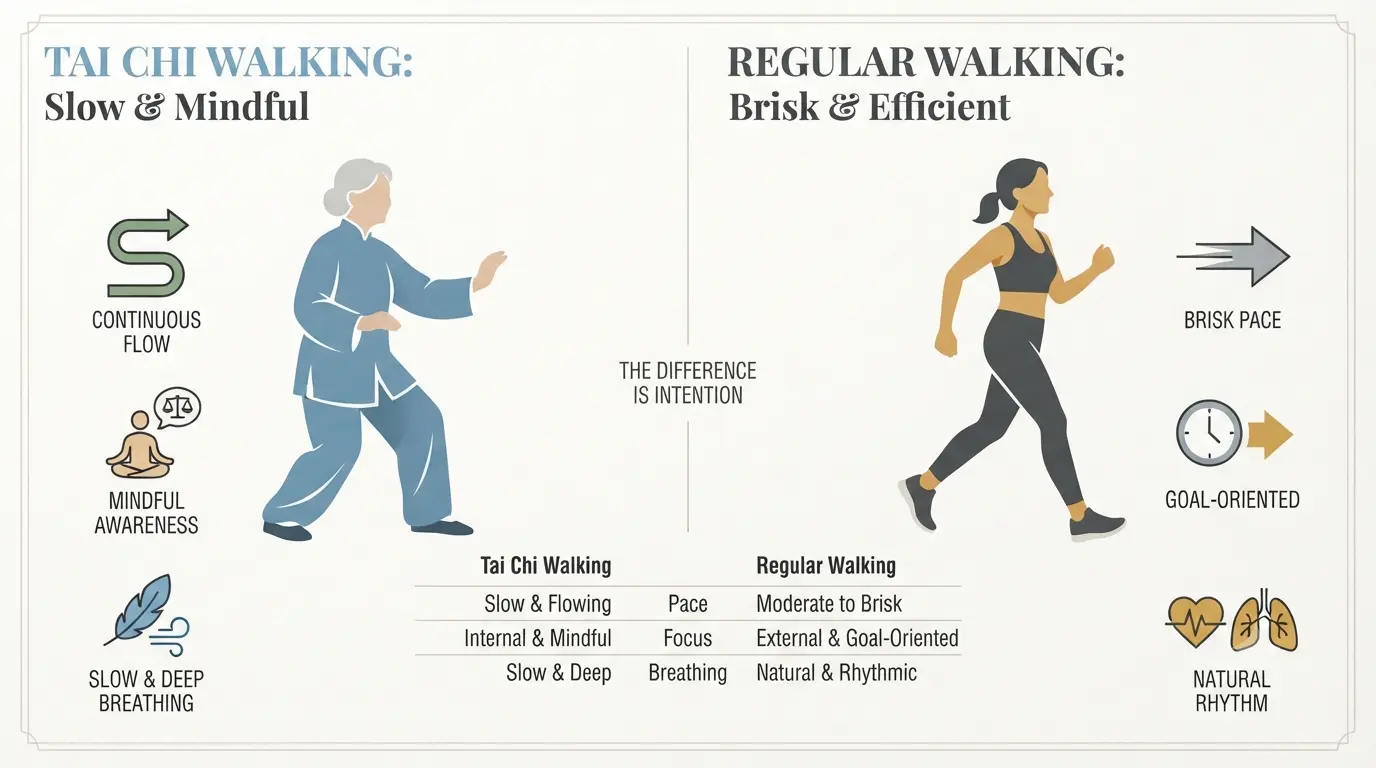
Tai chi walking is better for balance. It is also a better choice for moving smoothly and with control.
Balance
Tai chi walking trains you to hold your weight on one leg. Then you move the other leg. You do this slowly, again and again. This asks your body to stay steady in a way fast walking does not.
Regular walking helps only a little. You are on one leg for a very short time. There is not much chance to train balance.
Flexibility
Neither style is a stretching exercise. But tai chi walking gently moves the hips, knees and ankles through smooth motion. The soft knees and slow steps keep joints moving. That can help you feel looser.
Regular walking also keeps your joints moving. But the effect on flexibility is small.
If flexibility is a big goal, add simple stretches. Calf, hip and hamstring stretches are good choices.
Posture
Tai chi walking asks you to stand tall. Your head is up. Your shoulders are relaxed. Over time, you may notice better posture. Regular walking can also help posture if you stay aware. But most people do not think about it.
Body Control
Slow steps help you notice small habits. You may find you lean forward or lock your knees. You can fix these habits. This control can help in daily life too, like climbing stairs or stepping on uneven ground.
Quick Comparison
| Point | Tai Chi Walking | Regular Walking |
|---|---|---|
| Balance training | Strong | Small |
| Flexibility help | Mild | Very mild |
| Posture awareness | High | Low to medium |
| Body control | High | Low |
Can You Combine Tai Chi Walking and Regular Walking?
Yes. They work very well together. Each one fills the gaps of the other.
Why Combining Works
Regular walking gives you fitness. Tai chi walking gives you balance and calm. Together, you get a fuller routine. You also stay interested because the sessions feel different.
Easy Ways to Combine Them
Option 1: Use tai chi walking as a warm-up.
Do five minutes of slow tai chi steps. This wakes up your feet and legs. Then start your brisk walk.
Option 2: Use it as a cool-down.
Finish your walk with five minutes of tai chi walking. Your heart rate comes down. Your breathing slows. You end the session feeling calm.
Option 3: Use different days.
Do brisk walks on some days. Do tai chi walking on others.
Option 4: Mix in one session.
Walk briskly for 15 minutes. Then do five to ten minutes of tai chi walking.
A Sample Weekly Plan
| Day | Activity | Time |
|---|---|---|
| Monday | Brisk walk | 30 minutes |
| Tuesday | Tai chi walking | 15 minutes |
| Wednesday | Brisk walk | 30 minutes |
| Thursday | Tai chi walking | 15 minutes |
| Friday | Brisk walk plus tai chi cool-down | 30 + 5 minutes |
| Saturday | Longer easy walk | 40 minutes |
| Sunday | Rest or light tai chi walking | 10 minutes |
You can change this plan to match your time and energy.
Tips for Beginners
- Start with five minutes of tai chi walking.
- Keep brisk walks short at first.
- Add time slowly each week.
- Wear flat, light shoes with good grip.
- Practise on a clear, flat surface.
- Keep a wall or chair nearby if you feel unsteady.
Mistakes to Avoid
- Rushing through tai chi steps
- Locking your knees
- Looking down at your feet
- Doing too much on day one
- Skipping rest days
Become a General Fitness Trainer and turn your passion into a Profession!
Conclusion
Tai chi walking and regular walking are both good choices. They are just built for different goals.
Tai chi walking is slow and mindful. It helps balance, posture, body control and calm. It is gentle on the joints and needs very little space. But it burns fewer calories and does little for stamina.
Regular walking is natural and easy. It helps your heart, burns more calories and builds fitness. It is the better pick for weight loss. But it does little to train balance.
So the best answer is not one or the other. If you want fitness or weight loss, choose regular walking. If you want balance and calm, choose tai chi walking. If you want a full routine, use both.
Start small. Try five minutes of tai chi walking today. Then add a brisk walk tomorrow. Notice how your body feels. Keep what works for you.
Turn Your Passion for Fitness into a Profession
Learn practical skills, get certified, and step into the growing fitness industry with confidence.
Join the CourseFrequently Asked Questions
What is the main difference between Tai Chi walking and regular walking?
The main difference is how the body moves during each activity. Regular walking involves moving forward at a steady pace. Tai Chi walking uses slow, controlled steps with careful weight changes. It also gives more attention to posture, breathing, and body balance.
Is Tai Chi walking better than regular walking?
Both forms of walking have different benefits. Regular walking is useful for heart health, stamina, and general fitness. Tai Chi walking focuses more on balance, body control, and gentle movements. The right choice depends on your fitness level and personal goals.
Which burns more calories: Tai Chi walking or regular walking?
Regular walking usually burns more calories because people often walk at a faster pace. Tai Chi walking involves slower movements, so its calorie use is generally lower. The actual amount depends on walking speed, body weight, and practice time.
Can Tai Chi walking improve balance better than regular walking?
Tai Chi walking places more attention on controlled weight changes and steady movements. This may help improve balance and body awareness. Regular walking also supports leg strength and movement, but balance training is not its main focus.
Is Tai Chi walking suitable for older adults?
Yes. Tai Chi walking can be a gentle activity for many older adults. Its slow movements may help improve balance and confidence while moving. Beginners should start carefully and use support if needed. People with health or mobility concerns should seek medical advice before starting.
Can beginners switch from regular walking to Tai Chi walking?
Yes. Beginners can learn Tai Chi walking even if they have never practised it before. Start with simple movements and short sessions. Pay attention to your posture, breathing, and foot placement. You can also include both activities in your weekly routine.
How long should I practise Tai Chi walking compared to regular walking?
Beginners can start with 5–10 minutes of Tai Chi walking and increase the time slowly. For regular walking, even 20–30 minutes can be a useful starting point, depending on fitness and ability. The important thing is to choose a routine you can follow regularly.
Can I practise Tai Chi walking and regular walking on the same day?
Yes. You can include both activities in your daily routine. For example, you can go for a regular walk in the morning and practise Tai Chi walking later in the day. This gives you a mix of general physical activity and balance-focused movements.