


Table of Contents
Tai chi walking is a slow, gentle way to walk. Take each step gently and give yourself time to complete the movement. You shift your weight with care. You keep your body relaxed and your mind calm. It comes from tai chi, an old Chinese practice.
Anyone can try it. You do not need special gear or a gym. You only need a little flat space. Many people use it to improve balance, ease stress and feel steady on their feet.
This blog explains what tai chi walking is and how it works. You will also learn the main rules, a simple method for beginners, common mistakes and how it differs from regular walking.
Key Takeaways
- Tai chi walking is slow, calm and mindful.
- It comes from tai chi, a gentle Chinese practice.
- Before moving forward, you gently balance your body on one leg.
- The heel lands first. The foot then rolls down.
- Slow breathing is part of the practice.
- If you are new to this exercise, try practising for a few minutes each day.
- It is gentle, but it is not a full workout for the heart.
- If you feel dizzy or unsteady, check with a doctor first.
What Is Tai Chi Walking?
Tai chi walking is a style of walking taken from tai chi. In tai chi, people move slowly and smoothly. They pay attention to their movements and breathing while practising. Tai chi walking uses the same ideas, but only for walking.
A Simple Meaning
Think of normal walking in slow motion. You do not rush. You feel each step. Feel how your body weight changes as you move one foot ahead and bring the other along.cc
Where It Comes From
Tai chi began in China many years ago. It started as a martial art. Over time, it became a gentle exercise for health. People now practise it in parks all over the world.
Tai chi walking is one small part of it. Many tai chi forms have a slow, careful step in them. Tai chi walking turns that step into its own practice.
Other Names
You may hear it called:
- Tai chi step.
- Mindful walking, in a similar way.
- Slow walking.
- Cat walk, because the steps are soft like a cat’s.
Who Can Do It
Most people can try it. It suits:
- Beginners.
- Older adults.
- People who sit a lot.
- People who feel stressed.
- Anyone who wants better balance.
It is low impact. That means it is easy on the knees and hips.
What You Need
- A flat, clear space.
- Comfortable clothes.
- Wear comfortable, flat footwear or practise without shoes on a clean, non-slippery floor.
- Five to ten minutes.
Become a General Fitness Trainer and turn your passion into a Profession!
How Does Tai Chi Walking Work?
Tai chi walking works by slowing everything down. A gentle pace helps you become more aware of your body’s movements. Your body learns to move in a steadier way.
Weight Shift First
In normal walking, we often step and fall forward. . Then the other foot lifts. This keeps you steady.
One Leg at a Time
Each step has two parts. One leg holds your weight. The other leg moves. Then you swap. This makes the leg muscles work in a calm, steady way.
Slow Steps Train Balance
When you move slowly, your body must work to stay upright. The small muscles in your legs, feet and core help. Over time, this can improve balance.
The Mind Joins In
Give your attention to each movement and keep your breathing steady throughout the practice. This can help you avoid distractions.
Breath and Movement Match
You breathe slowly and evenly. The breath helps you stay relaxed. A relaxed body moves more smoothly.
What Happens in the Body
- The legs get gentle strength work.
- Your feet and ankles become more aware of the surface beneath them.
- The core stays lightly active.
- The joints move in a smooth way.
- The mind slows down.
What Studies Say
Research on tai chi suggests it can help balance and lower the risk of falls in older adults. Studies on tai chi walking alone are fewer. So treat it as a gentle practice, not a cure.
A Simple Example
Say you stand with your feet together. Let your left leg carry your body weight before moving the other foot. You lift your right foot slowly. You place the heel down first. You roll the foot flat. You shift your weight forward. Follow the same movement using your right leg. That is one full step.
Turn Your Passion for Fitness into a Profession
Learn practical skills, get certified, and step into the growing fitness industry with confidence.
Join the CourseKey Principles of Tai Chi Walking
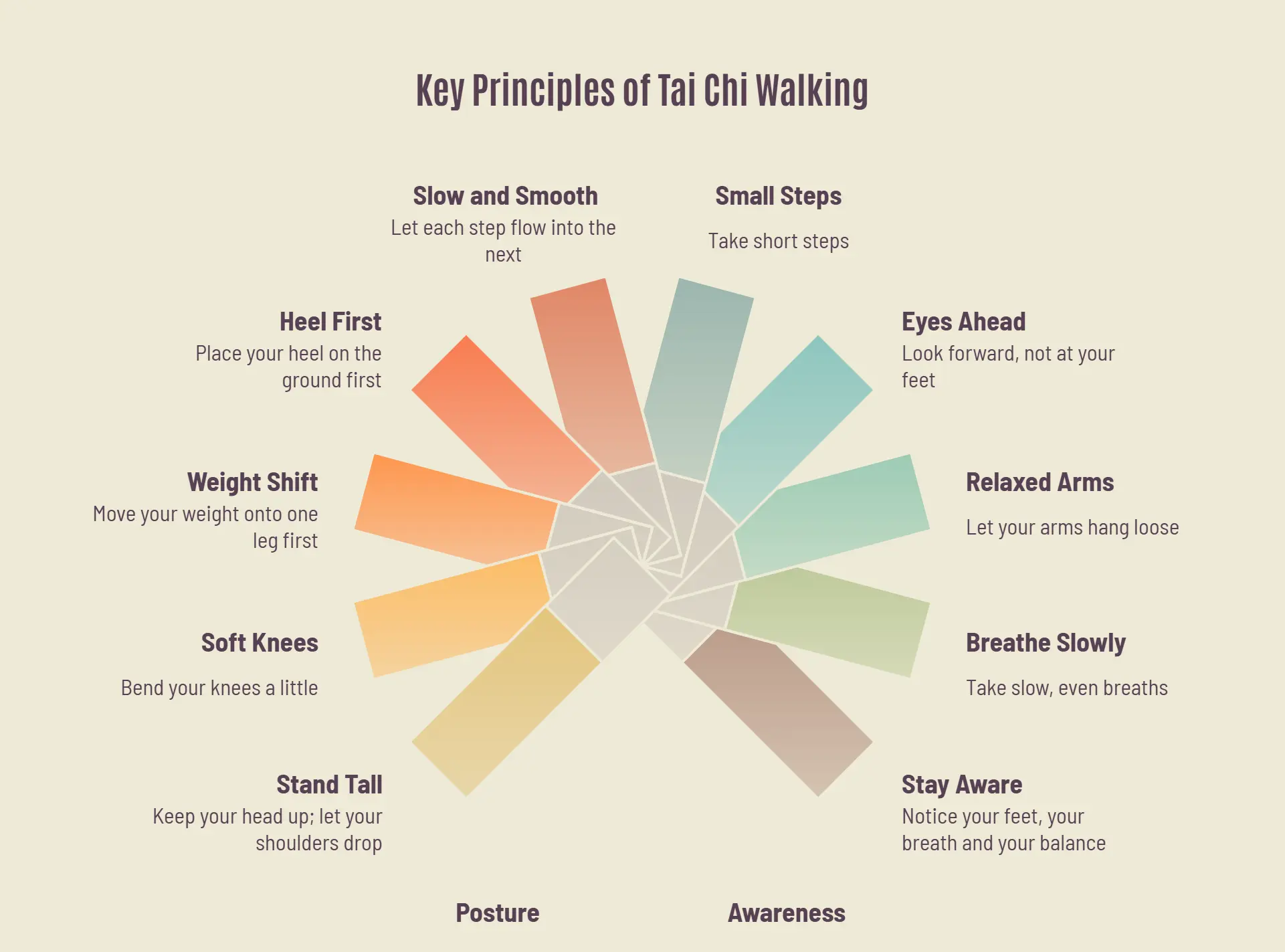
Tai chi walking follows a few simple rules. Keep these in mind each time.
1. Stand Tall and Relaxed
Keep your head up. Imagine a thread pulling the top of your head gently. Let your shoulders drop. Keep your chest soft. Do not stiffen your back.
2. Soft Knees
Bend your knees a little. Do not lock them. Soft knees help you stay steady and protect your joints.
3. Weight Shift Before the Step
Move your weight onto one leg first. Only then lift the other foot. This is the heart of tai chi walking.
4. Heel First
Place your heel on the ground first. Then roll the foot down to the toes. Do it slowly. Feel the ground under you.
5. Slow and Smooth
Move gently. Keep your pace steady. Do not rush or change speed suddenly. Let each step flow into the next one.
6. Small Steps
Take short, easy steps. A long stride can throw you off balance. Keep your feet a little apart as you walk.
7. Look Straight Ahead
Hold your head up and look forward. This keeps your body steady and helps you stay in control as you move.
8. Relaxed Arms
I did not get the text for this point. Please paste it, and I will rewrite it in the same style.
9. Breathe Slowly
Breathe through your nose if you can. Take slow, even breaths. Do not hold your breath.
10. Stay Aware
Notice your feet, your breath and your balance. If your mind drifts, bring it back. This is part of the practice.
How to Practise Tai Chi Walking for Beginners
Here is an easy method. Take your time. There is no rush.
Before You Start
- Pick a quiet, flat spot. A hallway or a garden path works well.
- Clear anything you might trip on.
- Wear flat, comfortable shoes.
- Keep a wall or chair nearby if you feel unsteady.
Step-by-Step Method
Step 1: Stand Still
Stand with your feet about as wide as your hips. Let your arms rest loose at your sides. Breathe in and out slowly, three times.
Step 2: Soften Your Knees
Bend your knees just a little. Drop your shoulders and let them relax. Keep your eyes forward.
Step 3: Shift Your Weight
Move your weight slowly onto your left leg. Notice your left foot pressing into the floor.
Step 4: Lift the Right Foot
Raise your right foot slightly off the ground. Take your time. There is no need to hurry.
Step 5: Place the Heel
Reach your right foot a short way forward. Let the heel touch down first. Keep your toes lifted a little.
Step 6: Roll the Foot Down
Let the foot roll flat, from heel to toes. Do this slowly.
Step 7: Shift Forward
Move your weight onto your right foot. Your left foot is now free.
Step 8: Repeat on the Other Side
Lift your left foot. Place the heel. Roll down. Shift your weight. Keep going.
A Breathing Pattern to Try
- Breathe in as you shift your weight.
- Breathe out as you step.
If this feels hard, just breathe slowly and naturally. Do not force it.
How Long to Practise
| Week | Time | Goal |
|---|---|---|
| Week 1 | 5 minutes | Learn the steps |
| Week 2 | 10 minutes | Stay smooth |
| Week 3 | 15 minutes | Add slow breathing |
| Week 4 and on | 20 to 30 minutes | Enjoy the flow |
How Often
Try three to five days a week. Daily is fine too. Short and regular is better than long and rare.
Where to Practise
- At home in a hallway.
- In a garden or park.
- On a quiet terrace.
- On a flat path with no traffic.
Simple Ways to Make It Easier
- Hold a wall or chair at first.
- Take even smaller steps.
- Walk a few steps forward, then rest.
- Practise in front of a mirror.
Simple Ways to Make It Harder
- Walk slower.
- Close your eyes for a few steps, only when you are safe.
- Walk backwards, with a clear space behind you.
- Add gentle arm movements.
Safety First
Check with your doctor before you start if you:
- Have dizziness or balance problems.
- Have had a recent injury or surgery.
- Have a heart condition.
- Have joint pain that gets worse with movement.
- Are pregnant.
Stop if you feel pain, dizziness or chest tightness.
Common Tai Chi Walking Mistakes to Avoid
Beginners often make a few small errors. They are easy to fix.
1. Moving Too Fast
Tai chi walking is slow. If you rush, you lose the benefits. Slow down until each step feels calm.
2. Locking the Knees
Stiff, straight knees put strain on your joints. Keep a soft bend.
3. Skipping the Weight Shift
If you step without shifting first, you will wobble. Always move your weight onto the standing leg first.
4. Landing on the Toes
Toes-first steps can feel shaky. Land on your heel, then roll.
5. Taking Steps That Are Too Long
Big steps pull you off balance. Keep them short.
6. Looking Down
Staring at your feet bends your neck and rounds your back. Look ahead.
7. Leaning Forward or Backward
Keep your body upright. Do not lean into each step.
8. Holding Your Breath
Many beginners hold their breath while they focus. Keep breathing, slow and easy.
9. Tensing the Shoulders
Tight shoulders make the whole body stiff. Drop them down and relax.
10. Wearing the Wrong Shoes
Thick, heavy or slippery shoes make it hard to feel the ground. Wear flat, light shoes with a good grip.
11. Doing Too Much, Too Soon
Start with five minutes. Add time slowly. Sore legs on day one mean you overdid it.
12. Practising in a Messy Space
Rugs, wires and toys can cause trips. Clear your path first.
13. Expecting Quick Results
Balance and calm take time. Give it a few weeks.
Turn Your Passion for Fitness into a Profession
Learn practical skills, get certified, and step into the growing fitness industry with confidence.
Join the CourseTai Chi Walking vs Regular Walking: What’s the Difference?
Both are good for you. They have different goals. Here is a simple look.
Side-by-Side View
| Point | Tai Chi Walking | Regular Walking |
|---|---|---|
| Speed | Very slow | Normal or brisk |
| Focus | Balance, breath and mind | Distance and time |
| Weight shift | Before every step | Happens while stepping |
| Foot landing | Heel first, slow roll | Heel first, quick roll |
| Step size | Short | Natural or long |
| Breathing | Slow and matched to steps | Natural |
| Heart workout | Gentle | Better, especially if brisk |
| Calories burned | Lower | Higher |
| Impact on joints | Very low | Low to moderate |
| Best for | Balance, calm, control | Fitness, stamina, weight care |
| Space needed | Small | Larger |
What Tai Chi Walking Does Better
- Trains balance.
- Builds body awareness.
- Calms the mind.
- Works in a small space.
- Feels gentle on the joints.
What Regular Walking Does Better
- Raises the heart rate more.
- Burns more calories.
- Covers more distance.
- Is easy to do with friends.
- Fits well into daily errands.
Can You Do Both?
Yes. They go well together. You could walk briskly for 20 minutes. Then do five minutes of tai chi walking to cool down.
Which Should You Choose?
- Pick tai chi walking if you want better balance or less stress.
- Pick regular walking if you want more fitness and stamina.
- Pick both if you want a mix.
A Note for Older Adults
Tai chi walking may be a good fit if balance is a worry. Still, check with your doctor first, and start near a wall or chair.
Not a Replacement
Tai chi walking is gentle. If you want to build heart health, add other exercise, like brisk walking. Health guidelines suggest most adults need regular moderate activity each week.
Become a General Fitness Trainer and turn your passion into a Profession!
Conclusion
Tai chi walking is a slow, mindful way to walk. You shift your weight, place the heel, roll the foot and breathe calmly. It is simple, but it asks for focus.
The main rules are easy to remember. Stand tall. Keep your knees soft. Move slowly. Stay aware. Start with five minutes and build up. Watch out for common mistakes, like rushing and locking the knees.
Tai chi walking is not a replacement for brisk walking. It is a good partner to it. It helps balance, calm and body awareness. If you have health concerns, talk to your doctor first.
Try it for a few minutes today. A quiet hallway is enough. Walk slowly, breathe easily and notice how you feel.
Turn Your Passion for Fitness into a Profession
Learn practical skills, get certified, and step into the growing fitness industry with confidence.
Join the CourseFrequently Asked Questions
What is tai chi walking?
Tai chi walking is a slow, gentle way to walk that comes from tai chi. You shift your weight first, then step heel first. You keep your knees soft and breathe slowly. It helps with balance, calm and body awareness.
How do you do tai chi walking?
Stand tall with soft knees. Shift your weight onto one leg. Lift the other foot and place the heel down first. Roll the foot flat, then move your weight forward. Repeat on the other side. Keep every step slow and smooth.
What are the benefits of tai chi walking?
Tai chi walking can help you feel steadier on your feet. It also builds gentle leg strength and body awareness. Many people find it calming. It is easy on the joints. It does not replace exercise that builds heart health.
How long should a beginner practise tai chi walking?
Start with five minutes a day. Add a few minutes each week. Most people reach 20 to 30 minutes in about a month. Practise three to five days a week. Short and regular sessions work better than long, rare ones.
Is tai chi walking good for balance and older adults?
Research on tai chi suggests it can help balance and lower the risk of falls in older adults. Studies on tai chi walking alone are fewer. If balance is a worry, ask your doctor first. Practise near a wall or chair.
What is the difference between tai chi walking and regular walking?
Tai chi walking is much slower. You shift your weight before each step and breathe in a set rhythm. Regular walking is faster and burns more calories. Tai chi walking suits balance and calm. Regular walking suits fitness and stamina.
Can tai chi walking help you lose weight?
It burns fewer calories than brisk walking. So it is not the best tool for weight loss alone. It can still support a healthy routine by easing stress and building a daily habit. For weight goals, add faster walking or other exercise.
Who should avoid tai chi walking or check with a doctor first?
Check with a doctor first if you often feel dizzy or have balance problems. The same applies after a recent injury or surgery, with a heart condition, or during pregnancy. Stop at once if you feel pain, dizziness or chest tightness.