Table of Contents
Wall pilates is all over social media right now. People post short clips of slow leg lifts, wall squats and gentle stretches. Most of them are done in a living room, with a wall as the only tool.
What is making it a hit with so many? The answer is simple. It is easy to start. It needs no gym and no machine. It feels gentle, but your muscles still work hard.
This blog explains what wall pilates is and why it is so popular. You will also learn its benefits, some easy moves for beginners and a simple way to start at home. We also compare it with traditional pilates and check if it helps with weight loss.
Key Takeaways
- In wall pilates, the wall helps you stay steady and gives your muscles something to push against.
- You need no machine and very little space.
- There is no jumping, so your joints stay safe and calm.
- It builds core strength, balance and flexibility.
- A short daily session of 10 minutes works well for a first week.
- It is not a fast fat burner, but it can support weight loss.
- If you have pain, an injury or a health problem, ask a doctor first.
What Is Wall Pilates?
Wall pilates is a style of pilates done with a wall. You lean on it, press against it or place your feet on it. The wall gives you support. It also gives you something to push against.
Think of pilates, but with a wall as your helper. You still move slowly. You still focus on your core and breath. The wall just makes each move easier to control.
Where Pilates Comes From
Pilates was created by Joseph Pilates many years ago. He built it around core strength, control and smooth movement. Wall pilates is a newer, simpler version. It takes the same ideas and uses a wall instead of a mat or a machine.
What the Wall Does
The wall has two jobs.
- Support: It helps you stay steady. This is useful for beginners.
- Resistance: When you push into it, your muscles work harder.
What You Need
You need very little.
- A clear wall with free floor space
- A mat or a soft rug
- Comfortable clothes
- Socks with grip, or bare feet
- Ten to fifteen minutes
Who Can Try It
Most healthy adults can try it. It suits:
- Beginners
- People who sit for long hours
- Older adults who want gentle movement
- People with little space at home
- Anyone who finds gym workouts hard to start
Become a General Fitness Trainer and turn your passion into a Profession!
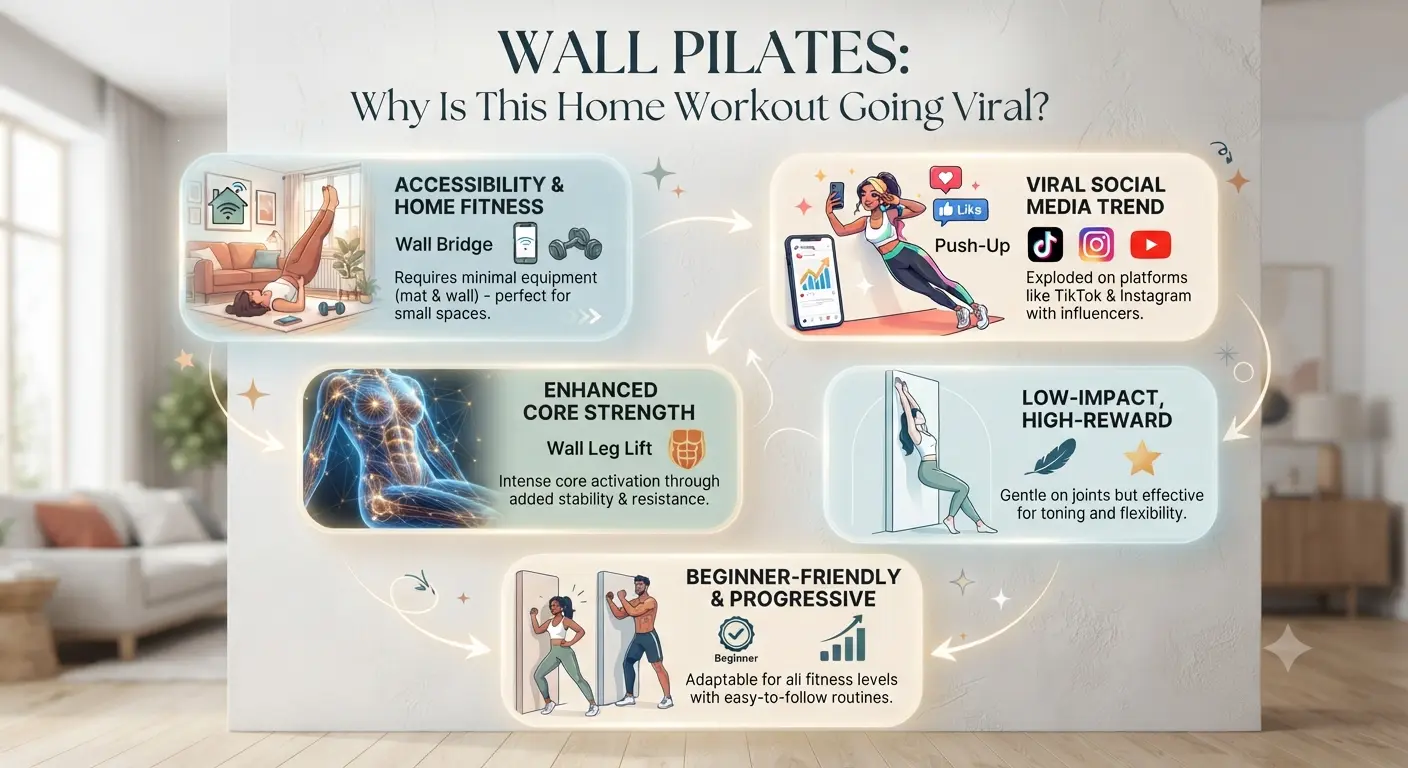
Why Is Wall Pilates Becoming So Popular?
Many things have come together to make this workout a trend. Most of them are about how simple it feels.
1. It Is Easy to Start
No class is needed. No equipment is needed. If you have a wall, you can begin today. This removes the biggest reason people skip exercise.
2. It Fits Small Homes
Many people live in small flats. They do not have room for machines. Wall pilates needs only a patch of floor. A bedroom corner is enough.
3. Short Videos Made It Famous
Wall pilates looks great on camera. The moves are slow and smooth. A short clip can show a full exercise in seconds. This helped it spread fast on social media.
4. It Feels Gentle
Many people fear tough workouts. Wall pilates feels calm. You move slowly. You breathe slowly. But you still feel your muscles work. That mix draws many new people in.
5. The Wall Gives Confidence
When you are new, balance can feel hard. The wall catches you. You feel safe. So you try each move with more confidence.
6. It Suits Busy Days
You can finish a short session in ten minutes. You can do it before work or before bed. It does not need a big block of time.
7. It Is Low Impact
There is no jumping or hard landing. So the knees, hips and back face less strain. This makes it a good choice for people who find high-impact exercise hard.
8. It Is Free or Low Cost
You can find many free guides online. You can start on your own, without a paid trainer. This makes it open to almost everyone.
9. People See Quick Progress
Many people feel more core work after a few sessions. Even small gains can feel good. This keeps them going.
Benefits of Wall Pilates for Strength and Flexibility
Wall pilates offers real value. Here are the main benefits.
Stronger Core
Most moves ask you to keep your belly muscles active. Your core holds your body steady. Over time, this can help you feel stronger in the middle.
Stronger Legs and Glutes
Wall squats, leg lifts and bridges work the legs and hips. The wall adds resistance. This builds quiet, steady strength. It is not the same as heavy lifting, but it helps.
Better Flexibility
Many moves stretch the hamstrings, hips and back. The wall holds you in place. This lets you stretch with more control. Over weeks, you may feel looser.
Better Posture
Many wall exercises start with your back flat on the wall. This teaches you how tall you can stand. Over time, you may notice better posture.
Better Balance
The wall gives support at first. As you grow stronger, you can use it less. This builds balance step by step.
Gentle on the Joints
The pace is slow. There is no jumping. Your joints face little strain. This is why it is popular with older adults and beginners.
Better Body Awareness
You learn how your body moves. You notice if you arch your back or lock your knees. This helps you fix habits that cause strain.
Less Stress
Slow breathing and focused movement calm the mind. Many people feel relaxed after a session. A calm mind can also help you sleep better.
Helps Ease Stiffness From Sitting
Long hours at a desk can make the back and hips tight. Wall stretches and gentle moves can help you loosen up.
Turn Your Passion for Fitness into a Profession
Learn practical skills, get certified, and step into the growing fitness industry with confidence.
Join the CourseBest Wall Pilates Exercises for Beginners
Start with these simple moves. Go slowly. Quality matters more than speed.
Before You Begin
- Clear the floor.
- Use a mat or soft rug.
- Wear socks with grip or go barefoot.
- Keep your breathing steady.
- Stop if you feel pain.
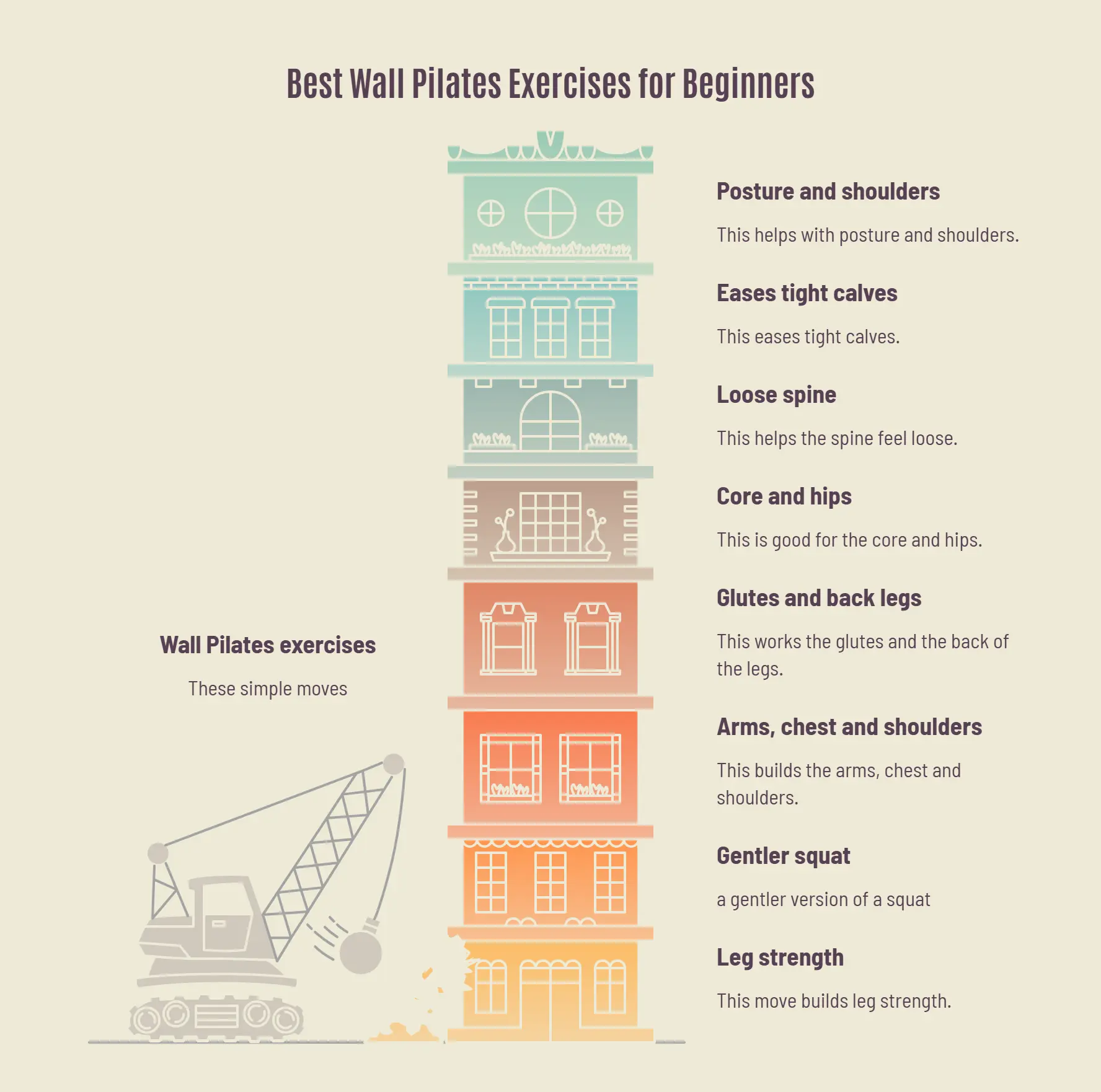
1. Wall Sit
This move builds leg strength.
- Stand with your back against the wall.
- Slide down until your knees bend.
- Keep your knees over your ankles.
- Hold for 10 to 20 seconds.
- Slide back up slowly.
2. Wall Squat
This is a gentler version of a squat.
- Stand with your back on the wall.
- Place your feet a little ahead of you.
- Bend your knees and slide down.
- Slide back up.
- Repeat 8 to 10 times.
3. Wall Push-Up
This builds the arms, chest and shoulders.
- Stand an arm’s length from the wall.
- Place your hands on the wall at chest height.
- Bend your elbows and lean in.
- Push back out.
- Repeat 8 to 10 times.
4. Wall Bridge
This works the glutes and the back of the legs.
- Lie on your back on the mat.
- Place your feet flat on the wall.
- Press your feet into the wall.
- Lift your hips slowly.
- Lower them down with control.
- Repeat 8 to 10 times.
5. Wall Leg Slide
This is good for the core and hips.
- Lie on your back.
- Place both feet on the wall with knees bent.
- Slowly slide one foot up the wall.
- Bring it back down.
- Switch legs.
- Repeat 8 times on each side.
6. Wall Roll Down
This helps the spine feel loose.
- Stand with your back to the wall.
- Tuck your chin gently.
- Roll your body forward, one part at a time.
- Hang for a moment.
- Roll back up slowly.
- Repeat 5 times.
7. Wall Calf Stretch
This eases tight calves.
- Face the wall.
- Place both hands on it.
- Step one foot back.
- Press the heel down.
- Hold for 20 seconds.
- Switch sides.
8. Wall Angel
This helps with posture and shoulders.
- Stand with your back flat on the wall.
- Raise your arms to the side.
- Bend your elbows to make a goalpost shape.
- Slide your arms up and down.
- Keep your back and arms close to the wall.
- Repeat 8 to 10 times.
9. Wall Hamstring Stretch
This stretches the back of the legs.
- Lie on your back near a door frame or wall corner.
- Place one leg straight up the wall.
- Keep the other leg flat on the floor.
- Hold for 20 to 30 seconds.
- Switch legs.
10. Wall Plank
This is a softer plank for the core.
- Place your forearms or hands on the wall.
- Step your feet back.
- Keep your body in a straight line.
- Hold for 15 to 20 seconds.
- Rest and repeat.
How to Start a Wall Pilates Workout at Home
You can start today. Follow these simple steps.
Step 1: Pick Your Spot
Choose a flat wall with no furniture near it. Make sure the floor is not slippery. Check that nothing hangs on the wall behind you.
Step 2: Get Ready
Place a mat or a thick towel on the floor. Wear loose clothes. Keep water nearby.
Step 3: Warm Up
Do a short warm-up for two to three minutes.
- March in place.
- Roll your shoulders.
- Circle your hips.
- Take a few deep breaths.
Step 4: Choose Four to Five Moves
Do not try everything at once. Pick a few moves from the list above. A balanced mix could be:
- Wall squat
- Wall push-up
- Wall bridge
- Wall leg slide
- Wall calf stretch
Step 5: Go Slow
Move with care. Breathe in as you prepare. Breathe out as you push or lift. Keep each move smooth.
Step 6: Cool Down
End with a gentle stretch. Hold each one for 20 seconds. This helps your body relax.
A Simple Starter Plan
| Week | Time | Goal |
|---|---|---|
| Week 1 | 10 minutes | Learn the moves |
| Week 2 | 15 minutes | Stay smooth and steady |
| Week 3 | 20 minutes | Add a few more reps |
| Week 4 and on | 20 to 30 minutes | Build a regular habit |
How Often to Practise
Try three to four days a week. You can go up to five days if you feel good. Short, regular sessions work better than long, rare ones. Rest days help your body recover.
Tips for Beginners
- Start with fewer reps.
- Stop if something hurts.
- Watch your form in a mirror.
- Keep your breath slow.
- Add reps slowly over time.
- Pick a fixed time each day.
How to Make It Harder
- Hold each move a little longer.
- Add more reps.
- Slow down the pace.
- Use a small ball or band, if you have one.
Wall Pilates vs Traditional Pilates: What’s the Difference?
Both come from the same idea. Both focus on the core, control and breath. But the way you do them is not the same.
What Is Traditional Pilates?
Traditional pilates is done on a mat or on special machines. A trained teacher often guides the class. The moves can be simple or very hard.
| Point | Wall Pilates | Traditional Pilates |
|---|---|---|
| Equipment | A wall and a mat | Mat or special machines |
| Cost | Low or free | Often higher |
| Space needed | Small | Medium to large |
| Support | The wall helps you | Less support on a mat |
| Best for | Beginners and home use | All levels, with a teacher |
| Difficulty | Mild to medium | Mild to very hard |
| Guidance | Often self-guided | Often teacher-led |
| Resistance | Wall and body weight | Body weight, springs or machines |
Where Wall Pilates Does Better
- It is easy to start at home.
- It costs little.
- The wall gives support to beginners.
- It needs very little space.
Where Traditional Pilates Does Better
- A teacher can correct your form.
- Machines allow more variety and more resistance.
- It has more moves for advanced users.
- It suits long-term, deeper training.
Which Should You Choose?
- Pick wall pilates if you are new, short on space or want a simple home routine.
- Pick traditional pilates if you want guidance and more challenge.
- Pick both if you want to start at home and then move to a class later.
Turn Your Passion for Fitness into a Profession
Learn practical skills, get certified, and step into the growing fitness industry with confidence.
Join the CourseIs Wall Pilates Effective for Weight Loss?
Wall pilates can support weight loss. But it is not a fast fat burner.
The Simple Truth
Weight loss depends on energy. When you burn more energy than you eat, weight can drop over time. Wall pilates burns fewer calories than brisk walking or running. So by itself, it is not a strong weight loss tool.
How It Can Still Help
- It builds muscle tone, which can support a healthy body shape.
- It makes you more active each day.
- It is easy to keep up, so you stay regular.
- It can reduce stress, which can affect eating habits.
- It improves posture, so you may look more upright.
What It Does Not Do
- It does not burn fat from one body part.
- It does not give fast results.
- It does not replace healthy eating.
You cannot choose where your body loses fat. Doing core moves will not remove belly fat on its own.
Quick Comparison
| Point | Wall Pilates | Brisk Walking |
|---|---|---|
| Calories burned | Lower | Higher |
| Muscle toning | Good | Mild |
| Joint impact | Very low | Low |
| Heart workout | Gentle | Better |
| Best role | Support and tone | Main calorie burner |
Tips to Lose Weight with Wall Pilates
- Do wall pilates three to four days a week.
- Add brisk walking on other days.
- Eat a balanced diet.
- Sleep well each night.
- Drink enough water.
- Be patient and keep a steady routine.
How Soon Will You See Results?
Most people feel more core work after two to three weeks. Posture and flexibility can improve in a few weeks. Weight changes depend on food, sleep and daily activity. Everyone moves at a different pace.
Become a General Fitness Trainer and turn your passion into a Profession!
Conclusion
Wall pilates is popular for good reasons. It is simple, low cost and easy on the joints. You need only a wall, a mat and a little time. It helps with core strength, posture, balance and flexibility.
It is not a quick fix for weight loss. It burns fewer calories than cardio. But it works well as part of a healthy routine. Pair it with walking and good food habits for better results.
If you are new, start small. Try three or four moves for ten minutes. Go slowly and breathe easily. Add more time as you feel stronger. If you have pain or a health problem, speak to your doctor first.
Pick a wall today and try one move. Your body will tell you what it needs.
Turn Your Passion for Fitness into a Profession
Learn practical skills, get certified, and step into the growing fitness industry with confidence.
Join the CourseFrequently Asked Questions
What is Wall Pilates?
Wall Pilates is a simple workout that uses a wall for support. It includes exercises that help improve strength, balance, flexibility, and body control.
Why is Wall Pilates going viral?
Wall Pilates is becoming popular because it is easy to practise at home. It does not need expensive equipment. Many people also like its simple movements and beginner-friendly exercises.
Is Wall Pilates good for beginners?
Yes. Beginners can start with basic Wall Pilates exercises. The wall provides support and helps them maintain balance. It is best to start slowly and increase the difficulty over time.
Can Wall Pilates help with weight loss?
Wall Pilates can support weight loss by keeping the body active and building muscle strength. However, it may not burn as many calories as some high-intensity workouts. A balanced diet and regular exercise also matter.
How many days a week should I do Wall Pilates?
Beginners can start with two or three days a week. As the body gets used to the exercises, they can practise more often. Rest is also important.
Does Wall Pilates help reduce belly fat?
Wall Pilates can strengthen the abdominal muscles. However, it cannot remove fat from only one area of the body. Regular exercise and healthy eating can support overall fat loss.
Do I need any equipment for Wall Pilates?
No special equipment is needed. You only need a clear wall and a comfortable exercise mat. Wear clothes that allow you to move freely.
Is Wall Pilates better than regular Pilates?
Both workouts have their own benefits. Wall Pilates uses a wall for support, while regular Pilates can include mat exercises and special equipment. The better option depends on your fitness level and comfort.