Table of Contents
Work, home, family and a hundred small tasks. For many women, the day is full before it even starts. Exercise often drops to the bottom of the list.
You do not have to spend an hour at the gym. You do not have to run or jump either. Even a short, soft workout can help. Your heart, your muscles and your mood all gain from it.
This blog shows you how. You will learn what low-impact workouts are and why they suit women. You will also get a simple 15-minute routine, home cardio ideas, strength moves, a weekly plan and tips to stay regular.
Key Takeaways
- Low-impact workouts are easy on the joints.
- A short 15-minute workout can still do real good.
- Walking, cycling, swimming, yoga and pilates are great choices.
- Strength training does not need jumping.
- A basic plan for the week helps you stay steady.
- Small, regular sessions beat rare, long ones.
- If you have pain, a health problem or you are pregnant, ask a doctor first.
What Are Low-Impact Workouts?
Low-impact workouts are exercises where at least one foot stays on the ground. Your feet never leave the floor with force. So your knees, hips and back face less strain.
Think of a brisk walk. Your feet remain near the ground. Compare that to jumping rope, where both feet leave the ground. The walk is low impact. The jump rope is high impact.
Low Impact Does Not Mean Easy
This is a common mistake. A workout can be soft on your joints, yet still make you work. You can raise the effort by moving faster, adding weights or holding poses longer.
Low Impact vs High Impact
| Point | Low Impact | High Impact |
|---|---|---|
| Jumping | No | Yes |
| Joint strain | Low | Higher |
| Beginner friendly | Yes | Less so |
| Examples | Walking, cycling, yoga | Running, jump rope, burpees |
| Good for busy days | Yes | Sometimes |
What You Need
- Comfortable clothes
- Supportive shoes
- A mat or clear floor
- Ten to thirty minutes
- Optional: light dumbbells or a resistance band
Who Can Do It
Almost anyone. It suits beginners, new moms, women over 40 and people with sore joints. It is also a good fit if you are coming back after a long gap and want to ease in.
Become a General Fitness Trainer and turn your passion into a Profession!
Benefits of Low-Impact Exercises for Women
Low-impact exercise gives many gains. Here are the main ones.
Kind to the Joints
There is no hard landing. So the knees, hips and ankles stay safe. This helps women whose joints hurt or feel tight.
Easy to Start
No special skill or costly gear is needed. A walk or a few easy moves at home is enough to begin.
Good for the Heart
Many low-impact workouts raise your heart rate. Brisk walking, cycling and swimming are good examples. Health bodies suggest regular moderate activity each week for most adults.
Helps Build Strength
Low-impact strength moves work your muscles without jumping. Strong muscles help you in daily life and keep your bones active.
Supports Bone Health
Women may lose bone density with age, especially after menopause. Weight-bearing and strength exercises can help keep bones strong. Ask your doctor about your own bone health.
Lifts Your Mood
Movement can lift your mood and ease stress. A short walk or a gentle class can leave you feeling lighter.
Helps You Sleep
Regular activity can help you sleep better. A calm evening session helps many people wind down.
Safe at Many Life Stages
Gentle workouts suit many stages of life. This includes the time after childbirth, during perimenopause and later years. Always check with your doctor, especially during pregnancy or after delivery.
Easy to Keep Up
Because it feels good, you are more likely to repeat it. Results come when you keep at it.
Fits Small Spaces
Many moves need only a patch of floor. A bedroom or a hall has enough space for them.
Turn Your Passion for Fitness into a Profession
Learn practical skills, get certified, and step into the growing fitness industry with confidence.
Join the CourseBest Low-Impact Workouts for Women with Busy Schedules
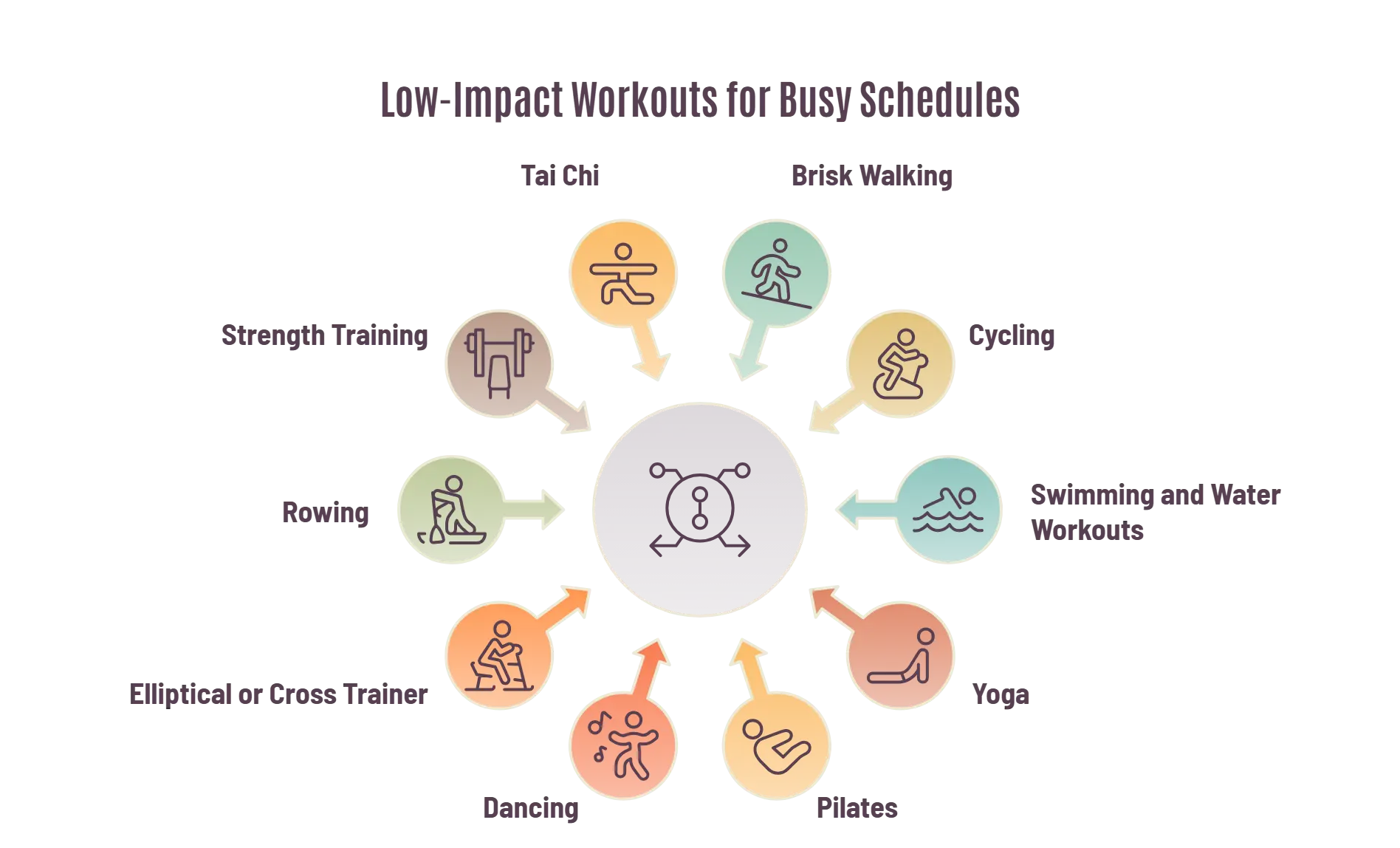
Here are the best options. Choose what fits your schedule and how you feel.
1. Brisk Walking
Walking is simple and free. Walk fast enough that your breathing gets deeper, but you can still talk.
- Walk to the shop.
- Walk during a phone call.
- Take a short walk after meals.
Three short ten-minute walks give you half an hour.
2. Cycling
You can cycle outdoors or on a stationary bike. Your knees stay safe, and your legs get stronger. You can even use it to travel from place to place.
3. Swimming and Water Workouts
Water holds your body weight. So your joints feel light. Swimming works the whole body. Walking in a pool is another good pick.
4. Yoga
Yoga mixes movement, stretching and slow breathing. A short session can ease stiffness and stress. Try an easy class or a simple video first.
5. Pilates
Pilates builds core strength and control. Mat pilates needs little space. Even ten minutes can help.
6. Dancing
Low-impact dance, like slow Zumba or simple steps at home, is fun. It gets you moving, lifts your mood and uses up energy.
7. Elliptical or Cross Trainer
This machine gives a smooth workout with no hard landing. Your arms and legs get a workout at the same time.
8. Rowing
Rowing works the back, arms and legs. It is a good full-body option for gym visits.
9. Strength Training With Light Weights
Use dumbbells, bands or your body weight. Slow, steady moves build muscle without jumping.
10. Tai Chi
Tai chi is slow and calm. It helps balance and reduces stress. It is a great pick for a quiet break.
Quick Guide: Pick by Time
| Time You Have | Good Choice |
|---|---|
| 5 to 10 minutes | Brisk walk, stretching, a few yoga poses |
| 15 minutes | Home circuit, pilates, quick cycle |
| 20 to 30 minutes | Swimming, longer walk, strength session |
| 45 minutes or more | Gym session, class, long swim |
15-Minute Low-Impact Workout Routine for Busy Women
No time? Try this simple routine. You need a mat and a little space. Move at a steady pace and breathe easily.
Warm-Up (2 Minutes)
- March in place for 1 minute.
- Roll your shoulders 10 times.
- Circle your hips 10 times each way.
Main Round (10 Minutes)
Do each move for 40 seconds. Rest for 20 seconds. Go through the list once. Then repeat the first four moves if you have time.
1. Squats
- Stand with feet shoulder-width apart.
- Sit back as if sitting on a chair.
- Stand up slowly.
2. Wall or Counter Push-Ups
- Place your hands on a wall or counter.
- Bend your elbows and lean in.
- Push back out.
3. Reverse Lunges
- Step one foot back.
- Lower your back knee.
- Come back up and switch legs.
4. Glute Bridges
- Lie on your back with knees bent.
- Press your heels down.
- Lift your hips and lower with control.
5. Standing Knee Lifts
- Lift one knee towards your chest.
- Lower it and switch.
- Swing your arms gently.
6. Plank on Knees or Toes
- Rest on your forearms.
- Keep your body in a straight line.
- Breathe slowly.
Cool-Down (3 Minutes)
- Hamstring stretch, 20 seconds on each leg
- Chest stretch, 20 seconds
- Child’s pose, 30 seconds
- Slow, deep breaths
Low-Impact Cardio Exercises You Can Do at Home
You do not need a gym for cardio. These moves raise your heart rate with no jumping.
Before You Begin
- Clear a small space.
- Wear supportive shoes.
- Keep water close by.
1. Marching in Place
Lift your knees to a comfortable height. Swing your arms. Start slow, then pick up speed.
2. Step Touch
Step to the side and bring your feet together. Step back the other way. Add arm swings for more effort.
3. Side Steps With Arm Raises
Step wide to one side while lifting your arms. Return and switch.
4. Shadow Boxing
Stand with feet apart. Throw slow punches forward. Keep your core tight. It is a fun way to move your arms and burn energy.
5. Dance to Music
Put on your favorite songs. Move in any way you like. Keep your feet low and your steps small.
6. Stair Steps
Use a bottom stair or a low step. Step up with one foot, then the other. Step down and repeat. Hold the rail if needed.
7. Walking in Place or Around the House
Walk through your rooms while on a call. It all adds up.
8. Standing Cross Crunches
Lift your knee and bring the opposite elbow to it. Switch sides. This works the core and the heart.
9. Skater Glides Without Hops
Step side to side in a smooth glide. Do not jump. Keep one foot on the floor.
A Simple 12-Minute Cardio Circuit
| Move | Time |
|---|---|
| March in place | 2 minutes |
| Step touch | 2 minutes |
| Shadow boxing | 2 minutes |
| Standing cross crunches | 2 minutes |
| Dance to music | 3 minutes |
| Slow walk and breathe | 1 minute |
Tips for Home Cardio
- Aim for a pace where you can talk, but feel warm.
- Use music to stay motivated.
- Build up time slowly.
- Wear shoes with good grip.
Turn Your Passion for Fitness into a Profession
Learn practical skills, get certified, and step into the growing fitness industry with confidence.
Join the CourseStrength Training Exercises Without High-Impact Movements
You can build strong muscles without jumping. These moves are safe and effective.
Why Strength Matters
Strength helps your bones, joints and posture. It also helps you carry bags, lift kids and climb stairs with ease.
Lower Body
1. Chair Squat
- Stand in front of a chair.
- Sit back until you lightly touch it.
- Stand up.
- Repeat 10 to 12 times.
2. Step-Ups
- Use a sturdy step or low bench.
- Step up with one foot.
- Bring the other foot up.
- Step down slowly.
3. Glute Bridge
- Lie on your back.
- Lift your hips.
- Hold for a moment.
- Lower with control.
4. Wall Sit
- Lean your back on a wall.
- Slide down until your knees bend.
- Hold for 15 to 30 seconds.
Upper Body
5. Incline Push-Up
- Place your hands on a counter or bench.
- Lower your chest.
- Push back up.
6. Dumbbell Row
- Place one hand on a chair.
- Pull a light dumbbell to your hip.
- Lower it slowly.
7. Shoulder Press
- Hold light weights at shoulder height.
- Press overhead.
-
Lower slowly.
8. Resistance Band Pull-Apart
- Hold a band in front of you.
- Pull it apart.
- Squeeze your shoulder blades.
Core
9. Plank
- Rest on your forearms.
- Keep a straight line from head to heels.
- Hold for 15 to 30 seconds.
10. Dead Bug
- Lie on your back with arms and knees up.
- Lower the opposite arm and leg.
- Return and switch.
Sets and Reps
| Level | Sets | Reps | Rest |
|---|---|---|---|
| Beginner | 2 | 10 to 12 | 60 seconds |
| Moderate | 3 | 10 to 12 | 45 to 60 seconds |
Pick a weight that feels hard by the last two reps. Your form should stay good.
How to Create a Weekly Workout Plan with a Busy Schedule
A plan helps you stop guessing. It also saves time and energy.
Step 1: Know Your Week
Look at your week. Note the days that are busy and the days that are calm. Find small gaps, like mornings, lunch breaks or evenings.
Step 2: Set a Simple Goal
Pick one clear goal.
- Walk 30 minutes, five days a week.
- Do strength work two days a week.
- Stretch every night for five minutes.
Step 3: Pick Your Time
Choose a time you can keep.
- Morning: Fewer interruptions.
- Lunch break: A quick reset.
- Evening: Helps you unwind.
Step 4: Mix Different Workouts
A good week has a mix.
- 2 to 3 strength days
- 2 to 3 cardio days
- 1 to 2 days of mobility or yoga
- 1 rest day
Step 5: Start Small
Begin with three days. Add more when it feels easy.
Sample Weekly Plan
| Day | Activity | Time |
|---|---|---|
| Monday | 15-minute routine | 15 minutes |
| Tuesday | Brisk walk | 20 minutes |
| Wednesday | Strength session | 20 minutes |
| Thursday | Yoga or stretching | 15 minutes |
| Friday | Home cardio circuit | 15 minutes |
| Saturday | Longer walk or swim | 30 minutes |
| Sunday | Rest or light stretch | 10 minutes |
A Plan for Very Busy Weeks
| Day | Activity | Time |
|---|---|---|
| Monday | Short walk | 10 minutes |
| Wednesday | 15-minute routine | 15 minutes |
| Friday | Short walk plus stretch | 15 minutes |
| Sunday | Longer walk | 20 minutes |
Tips to Stay Consistent with Your Fitness Routine
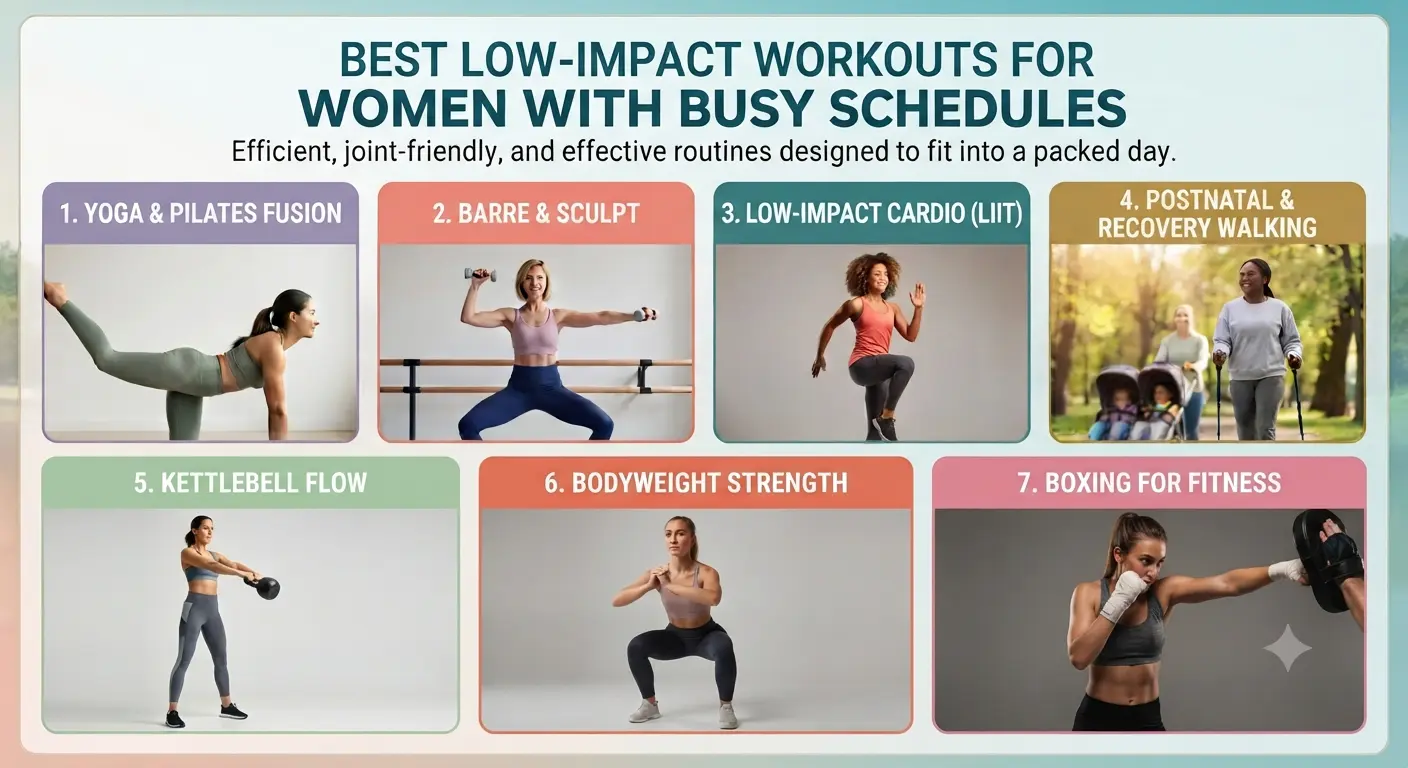
Starting is easy. Staying with it is the hard part. These tips can help.
1. Start Small
Ten minutes a day is a great start. Small wins build a habit.
2. Pick Something You Enjoy
If you hate it, you will not keep going. Try different types until one feels good.
3. Link It to a Habit
Attach exercise to something you already do.
- After brushing your teeth, stretch for five minutes.
- After dropping the kids off, take a walk.
- After lunch, do a short round of squats.
4. Plan It Like a Meeting
Put your workout in your calendar. Treat it like an important appointment.
5. Lay Out Your Clothes
Keep your shoes and clothes ready. This removes one more excuse.
6. Find a Buddy
Walk with a friend or family member. A partner makes it fun and keeps you honest.
7. Track Your Progress
Write down your workouts. Use a notebook or an app. Seeing your progress feels good.
8. Be Kind to Yourself
You will miss days. It happens. Do not punish yourself. Just start again the next day.
9. Mix It Up
Change your routine every few weeks. This keeps things fresh.
10. Reward Yourself
Treat yourself after a good week. A relaxing bath, a new playlist or a nice walk can feel great.
11. Look After Sleep and Food
Good sleep and balanced meals give you energy. Tired days are harder to push through.
12. Listen to Your Body
Rest when you are sick or very tired. Light movement is better than none, but do not push through pain.
Common Mistakes to Avoid
- Doing too much too soon
- Waiting for the perfect time
- Skipping warm-ups
- Comparing yourself to others
- Giving up after one missed day
When to Speak to a Doctor
Check with your doctor before you start if you:
- Are pregnant or recently gave birth
- Have a heart condition
- Have joint or back pain
- Had a recent injury or surgery
- Have dizziness or balance problems
Stop if you feel chest pain, dizziness or sharp pain.
How Soon Will You See Results?
- 1 to 2 weeks: You feel more energy.
- 4 weeks: You feel stronger and move better.
- 2 to 3 months: You see changes in shape and fitness.
Become a General Fitness Trainer and turn your passion into a Profession!
Conclusion
You do not need to jump, run or spend hours at the gym. A short, gentle workout can fit into even the busiest day.
Low-impact exercise is kind to your joints and good for your heart, muscles and mood. Walking, cycling, yoga, pilates and light strength work are all great picks. A 15-minute routine is enough to start.
Plan your week, start small and pick what you enjoy. Do not worry about missed days. Just begin again.
Start today. Take a ten-minute walk or try the 15-minute routine. Your body and mind will thank you. If you have pain or a health problem, speak to your doctor first.
Turn Your Passion for Fitness into a Profession
Learn practical skills, get certified, and step into the growing fitness industry with confidence.
Join the CourseFrequently Asked Questions
Is it possible to build muscle after 40?
Yes. You can build muscle after 40 with regular strength training, a balanced diet and enough rest. Muscle growth may take more time as you age, but consistent exercise can improve strength and fitness.
How many days a week should I work out to build muscle after 40?
You can start with strength training two or three days a week. Give your muscles enough time to recover between sessions. As your strength improves, you can adjust your workout routine.
What are the best exercises to build muscle after 40?
Strength exercises such as squats, lunges, push-ups, rows and weight training can help build muscle. Choose exercises that match your fitness level and focus on correct form.
How much protein do I need to build muscle after 40?
Protein helps repair and build muscles. Many healthy adults doing regular strength training may benefit from around 1.2–1.6 grams of protein per kilogram of body weight daily. Your needs may vary based on health and activity level.
Can I build muscle after 40 without going to the gym?
Yes. You can build muscle at home using bodyweight exercises, resistance bands and dumbbells. Exercises like squats, wall push-ups and lunges are good starting options.
How long does it take to see muscle growth after 40?
It depends on your workout routine, diet, age and fitness level. Some people notice better strength within a few weeks. Visible muscle changes may take several months of regular training.
Is walking enough to build muscle after 40?
Walking is good for heart health and overall fitness. However, it may not provide enough resistance for significant muscle growth. Add strength exercises to your routine to build and maintain muscle.
Why is recovery important when building muscle after 40?
Muscles need time to repair and grow after exercise. Getting enough sleep, eating well and taking rest days can support recovery. Avoid training the same muscle groups too intensely every day.