Table of Contents

Can Ausbildung Salary Cover Living Costs?
Ausbildung salary can cover living costs in some cities. However, the result depends on several factors. Salary, rent, and lifestyle all matter. Accommodation often creates the biggest budget pressure.
The 2026 minimum training salary is €724 monthly. Many Ausbildung positions pay considerably more than this. Salaries also increase during later training years.
For company-based Ausbildung, €822 net monthly is relevant. This figure relates to the livelihood requirement. It should not be treated as an average salary.
A trainee’s actual budget can vary greatly. For example, shared housing reduces monthly expenses. Private apartments can increase expenses significantly.
When Can Salary Cover Expenses?
Ausbildung income can work better when:
- Rent remains below €600.
- Accommodation is shared with others.
- Most meals are prepared at home.
- Public transport is used regularly.
- Personal spending remains controlled.
- Employer accommodation is available.
- The training salary exceeds the minimum.
Affordable cities can therefore offer easier budgeting. Leipzig and Dresden have lower rental estimates. Aachen can also offer moderate accommodation costs.
Expensive cities require more careful planning. Munich is a clear example of this difference. Higher rent can consume much of the salary.
Accommodation Makes the Biggest Difference
Housing usually determines monthly affordability. A WG room can cost much less than private housing. Utilities may also be shared between residents.
Employer-provided accommodation can reduce costs further. Some training providers may offer housing support. Availability depends on the specific employer.
Trainees should therefore check accommodation early. The salary alone does not show affordability.
Example Monthly Budget
Consider a trainee earning around €1,000 net. Suppose monthly expenses total around €950. The remaining amount would be relatively limited.
A higher-rent city could change this calculation. Expenses could exceed €1,200 monthly in some cases. Savings would then become more difficult.
A lower-cost city may provide more flexibility. The same salary could leave more disposable income. This difference highlights the importance of location.
|
Goethe 2026 Exam Dates: Multiple Test Centers |
|
| Trivandrum Goethe Exam Dates | Kochi Goethe Exam Dates |
| Chennai Goethe Exam Dates | Coimbatore Goethe Exam Dates |
How to Reduce Living Costs During Ausbildung
Living costs can be reduced through practical choices. Small monthly savings can create significant yearly differences. Housing usually offers the largest saving opportunity.
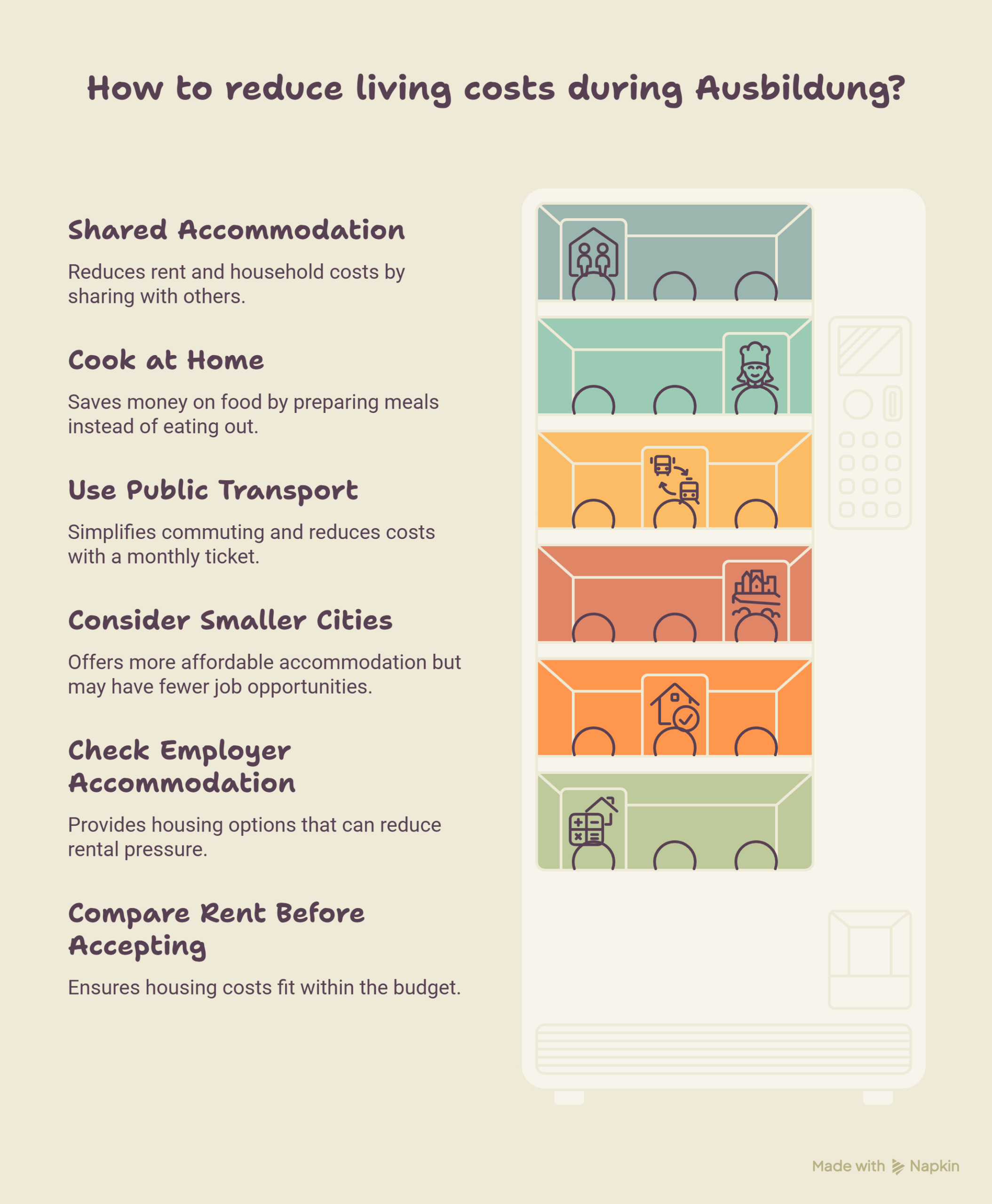
Choose Shared Accommodation
WG accommodation is popular among young trainees. Rent and household costs can be shared. This can significantly reduce monthly housing expenses.
Consider these options:
- WG rooms.
- Shared apartments.
- Employer accommodation.
- Accommodation outside city centres.
- Smaller nearby towns.
The cheapest option is not always practical. Long commuting can create additional expenses. Travel time should also be considered.
Cook More Meals at Home
Food spending can increase through frequent eating out. Cooking at home provides better budget control. Basic meals can also reduce grocery expenses.
Useful habits include:
- Plan meals before shopping.
- Buy supermarket store brands.
- Compare prices between supermarkets.
- Cook larger portions.
- Pack meals for training.
- Limit frequent takeaway orders.
- Use seasonal ingredients.
Meal planning also reduces unnecessary food waste. This can create additional monthly savings.
Use Public Transport
The Deutschland-Ticket costs €63 monthly in 2026. It covers eligible local and regional public transport. This can simplify commuting costs.
Trainees should check their employer benefits too. Some employers may provide transport-related support. Such benefits can lower personal expenses.
Consider Smaller Cities
Major cities often have higher rental costs. Smaller cities can provide more affordable accommodation. This can make limited training salaries easier to manage.
However, location should not be based on rent alone. Training opportunities also vary between regions. Job availability should be checked before relocating.
Check Employer Accommodation
Some employers provide accommodation options. This can be especially useful for trainees. Employer housing can reduce rental pressure.
Before accepting an offer, check:
- Monthly accommodation cost.
- Utility charges.
- Distance from the workplace.
- Furnishing arrangements.
- Contract conditions.
- Transport connections.
These details can change the actual monthly budget.
Compare Rent Before Accepting an Offer
Salary should not be the only consideration. Housing costs can change the overall financial situation. Two similar salaries can produce different outcomes.
Compare:
- Training salary.
- WG rent.
- Utility costs.
- Transport expenses.
- Food prices.
- Commuting distance.
- Expected personal spending.
This provides a more realistic affordability picture.
Free German A1 Mock Tests – Powered by AI!
Test your skills on our interactive platform. Get instant feedback from our AI to help you communicate better and track your progress. Start your free German mock test now.
Test Your German A1 for FreePractical Monthly Budget Example
A trainee living in an affordable city may plan expenses carefully. The following example assumes shared accommodation and moderate spending.
| Expense | Estimated Monthly Cost |
|---|---|
| WG rent and utilities | €500 |
| Food and groceries | €230 |
| Transport | €63 |
| Phone and internet | €25 |
| Personal expenses | €150 |
| Total | €968 |
This is only a planning example. Actual expenses can differ considerably. Private accommodation can increase the total substantially.
A trainee earning above €1,000 net may have more flexibility. A trainee earning closer to the minimum may need tighter budgeting.
Conclusion
Cost of living varies across Germany. Housing creates the largest city-wise difference. Munich and Frankfurt can require larger budgets. Leipzig and Dresden generally offer lower rental costs.
Ausbildung salary can support living expenses in some situations. Affordability depends on salary, accommodation, and lifestyle. Shared housing can make a major difference.
Careful budgeting should begin before relocation. Comparing salary and local expenses is essential. The right budget should include both regular and unexpected costs.
|
Related Articles |
|||||
| TELC Kochi Exam Dates | TELC Exam Centre in Kerala | How to Book the TELC Exam? | |||
Free German A1 Mock Tests – Powered by AI!
Test your skills on our interactive platform. Get instant feedback from our AI to help you communicate better and track your progress. Start your free German mock test now.
Test Your German A1 for FreeFrequently Asked Questions
How much does it cost to live in Germany during Ausbildung?
A realistic budget can range from €950–€1,500 monthly. Housing type, city, and lifestyle strongly affect the final amount.
Which German city is cheapest for Ausbildung?
Leipzig and Dresden generally have lower housing costs. Aachen can also offer relatively moderate accommodation expenses.
Is Munich expensive for Ausbildung?
Munich has particularly high housing costs. Shared accommodation can help reduce the monthly financial burden.
Can Ausbildung salary cover living expenses?
It can cover expenses in some situations. The outcome depends mainly on salary, rent, and personal spending.
How much should I budget for rent?
A WG room may cost around €400–€900. Major cities can have considerably higher rental prices.
Which city is best for affordable Ausbildung?
Affordability depends on training opportunities and personal circumstances. Leipzig, Dresden, and Aachen can offer comparatively lower housing costs.
Is health insurance included in Ausbildung salary?
Health insurance contributions are usually deducted from the salary. The exact amount depends on the trainee’s circumstances and insurance arrangement.
Can I save money during Ausbildung in Germany?
Saving money is possible with careful budgeting. Shared housing, home cooking, and controlled personal spending can increase monthly savings.
Does the city affect Ausbildung living costs?
Yes, city choice can significantly affect expenses. Rent usually creates the largest difference between German cities.
Can employer accommodation reduce Ausbildung expenses?
Yes, employer-provided accommodation can lower housing costs. The exact benefit depends on the employer and accommodation arrangement.