Table of Contents
Introduction
Helicopter parenting means overly controlled parenting. They monitor kid’s daily activities. Important decisions are often made for them. Problems may be solved by parents. Fewer opportunities for independence are provided.
Common concerns include:
- Limited independence.
- Constant supervision.
- Reduced confidence.
- Fear of mistakes.
- Limited choices.
- Excessive protection.
- Reduced responsibility.
- Restricted freedom.
- Family pressure.
- Emotional dependence.
Children’s success is valued by parents. Love and protection are considered important. But one needs freedom as well. Mistakes teach on valuable lessons. Simple tasks built confidence. Personal growth needs healthy boundaries .
Key Takeaways
- Excessive parental control.
- Constant monitoring.
- Limited personal freedom.
- Fear of failure.
- Pressure to succeed.
- Fewer independent decisions.
- Reduced personal responsibility.
- Excessive parental involvement.
- Gradual independence.
- Healthy personal growth.
Unlock your passion for education and shape young minds as a Montessori teacher!
What Is Helicopter Parenting?
1: What is the primary focus of the first plane of development in the Montessori method?
Helicopter parenting is too much involvement from the parent.. Everyday experiences are often managed by parents. Problems are addressed before children can respond. Fewer opportunities for independence are provided.

Common features include:
- Overprotection.
- Frequent interference.
- Constant checking.
- Controlled decisions.
- Limited responsibilities.
- Excessive reassurance.
- Restricted privacy.
- Unnecessary intervention.
- High expectations.
- Reduced independence.
- Constant supervision.
- Limited freedom.
Children are often protected from difficulties. However, valuable learning can be limited. Independence must be developed through practice.
Common Examples
- Schoolwork: Everything is checked.
- Friendships: Friends are selected.
- Appearance: Clothes are chosen.
- Hobbies: Interests are controlled.
- Problems: Immediate intervention is provided.
- Mistakes: Failures are prevented.
- Responsibilities: Tasks are taken over.
- Free time: Activities are planned.
- Career: Future paths are chosen.
- Social life: Invitations are controlled.
- Daily routines: Everything is managed.
- Personal choices: Preferences are rejected.
Helicopter Parenting Across Different Ages
As age differs needs change. Greater independence is needed gradually. As one becomes mature. The responsibility increases.
Early childhood:
- Outfits are chosen.
- Playtime is controlled.
- Exploration is prevented.
- Toys are selected.
- Games are directed.
- Simple tasks are completed.
- Playground activities are restricted.
- Small decisions are controlled.
School years:
- Homework is managed.
- Assignments are checked.
- Teachers are contacted.
- Disagreements are solved.
- Activities are selected.
- Schoolbags are packed.
- Study sessions are controlled.
- Hobbies are chosen.
- Schedules are managed.
- Problem-solving is prevented.
Adolescence:
- Movements are tracked.
- Conversations are monitored.
- Decisions are controlled.
- Freedom is restricted.
- Careers are chosen.
- Responsibilities are managed.
- Preferences are rejected.
- Friendships are controlled.
- Futures are planned.
- Privacy is limited.
Healthy Parenting Versus Helicopter Parenting
Healthy parenting balance both. Guidance and freedom. Children get Responsibilities. It is done gradually. In a very slow pace. Support is provided whenever necessary. Mistakes are treated as learning opportunities.
In helicopter parenting, these experiences are restricted. Unnecessary interference is often practised. Fewer decisions are made independently. Family relationships are strained.
| Healthy Parenting | Helicopter Parenting |
| 1. Helpful guidance. | 1. Constant interference. |
| 2. Personal responsibility. | 2. little/no responsibilities. |
| 3. Respectful boundaries. | 3. Limited/no privacy. |
| 4. Gradual freedom. | 4. Excessive control. |
| 5. Mistakes are accepted. | 5. Mistakes are prevented. |
| 6. Independent thinking. | 6. Decisions are controlled. |
| 7. Supportive conversations. | 7. Unnecessary criticism. |
| 8. Flexible expectations. | 8. Rigid/high expectations. |
Are Helicopter Parents Always Controlling?
It is not always intentional. Parental behavior get influenced by concern.
Possible influences include:
- Fear of failure.
- Safety concerns.
- Social pressure.
- Personal insecurity.
- Family expectations.
- Fear of judgement.
- Difficult experiences.
- Uncertain outcomes.
- Perfectionism.
- Fear of disappointment.
Get Certified & Start Your Montessori Career
Montessori Teacher Training Course by Entri App: Gain expert skills, earn certification, and kickstart your teaching career.
Join Now!Signs of Helicopter Parenting
Some behaviours show high involvement. One must consider their frequency. Also study its intensity. Family circumstances should also be understood.
Constant Monitoring
Children’s privacy can be affected by monitoring. Trust may be weakened through excessive checking.
Possible signs include:
- Messages are checked.
- Locations are tracked.
- Friendships are monitored.
- Updates are demanded.
- Movements are questioned.
- Diaries are read.
- Conversations are watched.
- Devices are checked.
- Immediate replies are expected.
- Online activity is monitored.
- Explanations are demanded.
- Routines are followed.
Difficulty Respecting Boundaries
Personal boundaries are developed during childhood. These boundaries may be weakened by interference.
Possible signs include:
- Permission is ignored.
- Privacy requests are dismissed.
- Private messages are read.
- Conversations are questioned.
- Preferences are dismissed.
- Activities are interrupted.
- Private information is shared.
- Boundaries are rejected.
- Personal space is controlled.
- Emotional needs are ignored.
Controlling Personal Interests
Individual interests develop through personal experiences. Discovery may be restricted through excessive control.
Possible signs include:
- New hobbies are rejected.
- Activities are chosen.
- Interests are criticised.
- Leisure is controlled.
- Ambitions are dismissed.
- Similar preferences are expected.
- Creativity is discouraged.
- Parental interests are prioritised.
- Experimentation is restricted.
- Unusual ideas are rejected.
Difficulty Accepting Mistakes
Important lessons are learned through mistakes. Learning may be discouraged by excessive correction.
Possible signs include:
- Every error is corrected.
- Instructions are repeatedly given.
- Results are criticised.
- Completed work is redone.
- Experimentation is prevented.
- Immediate improvement is expected.
- Alternative methods are rejected.
- Harsh judgement of mistake.
- Perfect results are demanded.
- Prevention of natural consequence.
Excessive Emotional Involvement
Parent’s value kid’s feelings naturally. High involvement affect emotional independence.
Possible signs include:
- Disagreements are taken personally.
- Criticism causes strong reactions.
- Children’s sadness is feared.
- Reassurance is constantly sought.
- Difficult conversations are avoided.
- Emotional agreement is expected.
- Setbacks are overreacted to.
- Responsibility is felt for everything.
- Disappointment is difficult to manage.
- Discussions are avoided.
Overmanaging Future Plans
Children need opportunities to explore. Personal discovery can be limited by excessive planning.
Possible signs include:
- Careers are selected.
- Qualifications are chosen.
- Ambitions are rejected.
- Milestones are planned.
- Family expectations are prioritised.
- Uncertainty is discouraged.
- Decisions are made prematurely.
- Changing interests are dismissed.
- Education is controlled.
- Alternative paths are rejected.
Controlling Social Relationships
Social skills are developed through experience. These experiences may be restricted by interference.
Possible signs include:
- Companions are chosen.
- Disagreements are managed.
- Friendships are criticised.
- Invitations are controlled.
- Friends are contacted unnecessarily.
- Private conversations are prevented.
- Preferences are rejected.
- Misunderstandings are interfered with.
- Social groups are chosen.
- Activities are restricted.
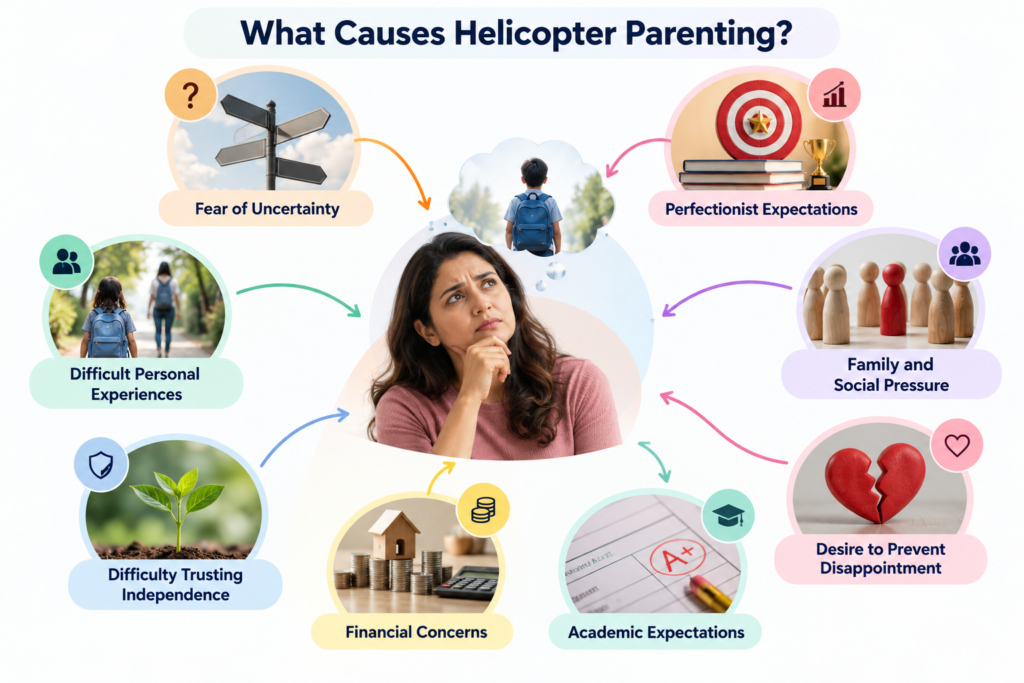
What Causes Helicopter Parenting?
Several factors shape parenting. Personal experiences affect parental confidence. Social expectations increase family pressure.
Common causes include:
- Fear of uncertainty.
- Perfectionist expectations.
- Difficult experiences.
- Social competition.
- Reputation concerns.
- Personal worries.
- Family pressure.
- Financial concerns.
- Academic expectations.
- Fear of failure.
Fear of Uncertainty
Uncertainty make parents uncomfortable. Greater control may then be sought.
Possible triggers include:
- Unpredictable situations.
- Unfamiliar environments.
- Changing expectations.
- Uncertain outcomes.
- Unexpected problems.
- Low confidence.
- Fear of mistakes.
- Difficult decisions.
Perfectionist Expectations
Some parents highly value achievements. Imperfect results may be poorly accepted.
Possible influences include:
- Personal perfectionism.
- High expectations.
- Fear of criticism.
- Competitive environments.
- Recognition pressure.
- Achievement-focused families.
- Unrealistic standards.
- Academic comparisons.
Family and Social Pressure
Parenting choices can be influenced by others. Public judgement may be feared by parents.
Possible influences include:
- Family comparisons.
- Community expectations.
- Academic competition.
- Social reputation.
- Financial uncertainty.
- Cultural expectations.
- Peer pressure.
- Fear of criticism.
Difficult Personal Experiences
Parenting behaviour can be affected by past difficulties. Similar problems may then be prevented.
Possible influences include:
- Previous rejection.
- Childhood instability.
- Academic disappointment.
- Family disagreements.
- Negative social experiences.
- Limited childhood support.
- Past insecurity.
- Difficult transitions.
Difficulty Trusting Independence
Everyday experiences build trust. Releasing control is difficult for parents.
Possible influences include:
- Fear of mistakes.
- Doubts about readiness.
- Previous disappointments.
- Difficulty accepting change.
- Strong protective instincts.
- Unclear boundaries.
- Fear of failure.
- Limited trust.
Desire to Prevent Disappointment
Children’s setbacks may be difficult for parents. Problems may be addressed before they arise.
Possible behaviours include:
- Difficult outcomes are avoided.
- Natural consequences are prevented.
- Hard conversations are managed.
- Obstacles are removed.
- Reassurance is excessively provided.
- Independent challenges are avoided.
Unlock your passion for education and shape young minds as a Montessori teacher!
Effects of Helicopter Parenting on Children
Children’s development can be affected by excessive control. Several difficulties may develop. But, individual experiences vary.
1. Reduced Decision-Making Skills
Independent decisions become difficult. Choices are made by parents.
Common difficulties include:
- Less confidence.
- Frequent hesitation.
- Fear of choosing.
- Constant reassurance.
- Limited problem-solving.
- Reduced independent thinking.
- Poor judgement.
- Decision-making struggles.
- Dependence on guidance.
- Fear of mistakes.
2. Lower Self-Confidence
Self-confidence weaken by constant supervision. Personal abilities may be doubted.
Possible signs include:
- Frequent self-doubt.
- Fear of failure.
- Reduced initiative.
- Negative self-talk.
- Approval seeking.
- Limited self-trust.
- Feelings of inadequacy.
- Difficulty accepting mistakes.
- Fear of criticism.
- Reduced motivation.
3. Increased Stress and Anxiety
Emotional pressure may be experienced by children. Expectations may become difficult to meet.
Possible effects include:
- Excessive worrying.
- Frequent overthinking.
- Emotional restlessness.
- Irritable behaviour.
- Sleep difficulties.
- Fear of disappointment.
- Performance pressure.
- Nervousness during challenges.
- Emotional exhaustion.
- Reassurance seeking.
4. Weaker Problem-Solving Skills
Problems are often solved by parents. Fewer practice opportunities may be provided.
Common difficulties include:
- Limited creativity.
- Reduced initiative.
- Poor decision-making.
- Difficulty handling setbacks.
- Dependence on guidance.
- Avoidance of challenges.
- Trouble finding solutions.
- Reduced adaptability.
- Limited practical experience.
- Fear of uncertainty.
5. Social Relationship Difficulties
Social interactions are closely controlled. Disagreements become hard to manage.
Possible difficulties include:
- Limited conflict resolution.
- Weak personal boundaries.
- Reduced social confidence.
- Difficulty expressing needs.
- Trouble handling disagreements.
- Dependence on adult support.
- Fear of judgement.
- Difficulty making friends.
- Reduced communication skills.
- Limited social independence.
6. Fear of Failure
Mistakes may be treated as serious problems. New challenges may feel uncomfortable.
Common responses include:
- Avoiding risks.
- Seeking perfection.
- Giving up quickly.
- Avoiding unfamiliar activities.
- Fear of criticism.
- Hesitation during challenges.
- Difficulty accepting setbacks.
- Avoiding competition.
- Reduced experimentation.
- Fear of disappointing others.
7. Reduced Independence
Parents handle day to day responsibilities. Independent habits become slow.
Examples include:
- Poor time management.
- Disorganised schoolwork.
- Difficulty managing belongings.
- Dependence on reminders.
- Limited personal responsibility.
- Trouble planning activities.
- Difficulty making choices.
- Weak organisational skills.
- Reduced self-reliance.
- Difficulty managing routines.
8. Possible Academic Difficulties
Schoolwork become a pressure. Independent learning opportunities reduce.
| Area | Possible Effect |
| Homework | – Reduced independent effort. |
| Examinations | – Increased performance anxiety. |
| Projects | – Limited creative thinking. |
| Planning | – Weaker time management. |
| Learning | – Reduced personal responsibility. |
Other difficulties may also be experienced:
- Fear of poor grades.
- Excessive performance pressure.
- Reduced learning motivation.
- Weak study habits.
- Limited independent research.
- Difficulty prioritising tasks.
- Dependence on reminders.
- Reduced academic confidence.
These effects are not experienced universally. Supportive changes may reduce potential difficulties.
Get Certified & Start Your Montessori Career
Montessori Teacher Training Course by Entri App: Gain expert skills, earn certification, and kickstart your teaching career.
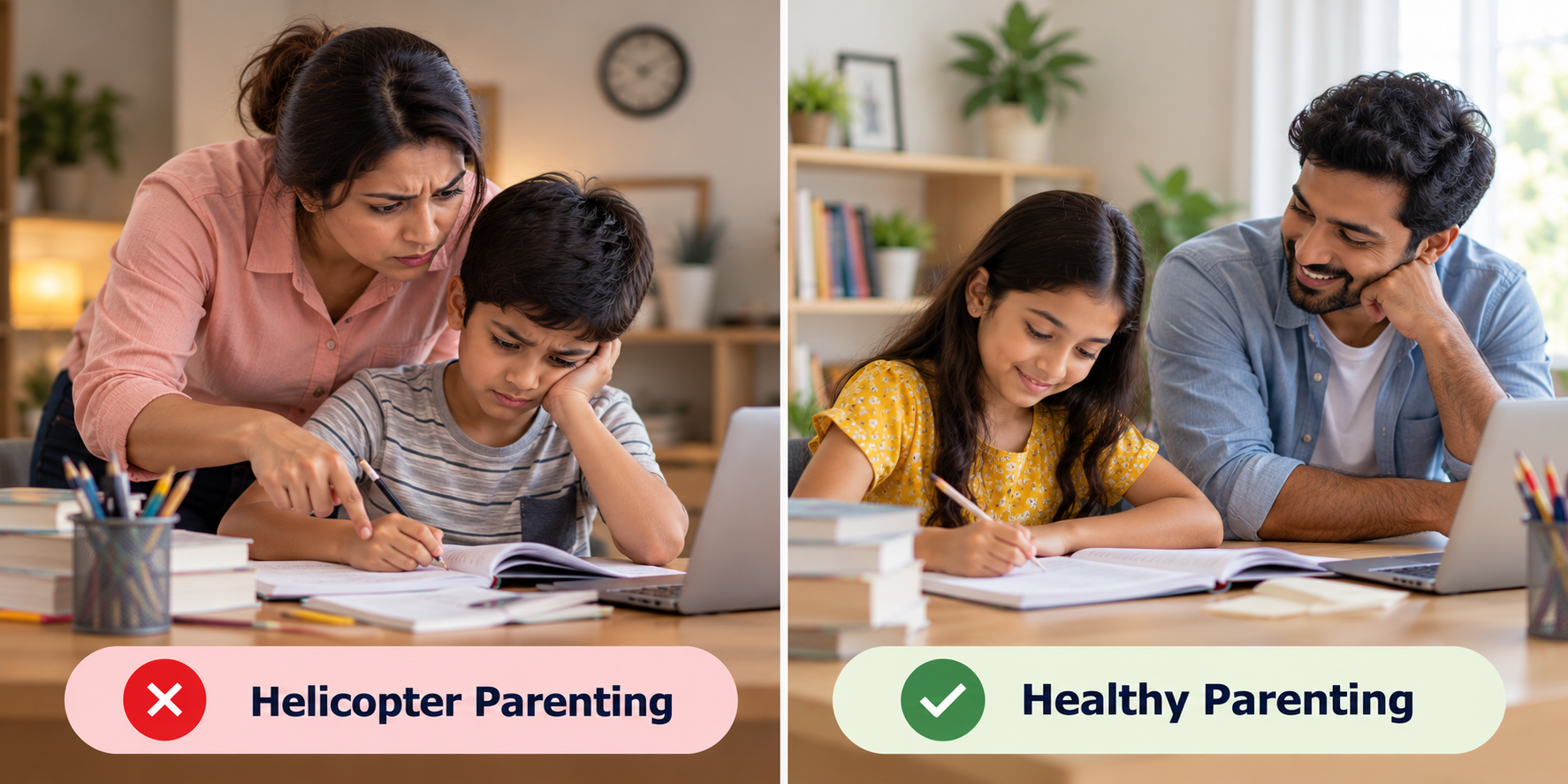
Join Now!How Helicopter Parenting differs from Healthy Parenting
Both parenting styles can involve care. However, independence and control differ.
Key Differences
- Decision-Making.
- Helicopter: Choices are controlled.
- Healthy: Choices are encouraged.
- Problem-Solving.
- Helicopter: Problems are solved.
- Healthy: Solutions are explored.
- Mistakes.
- Helicopter: Mistakes are prevented.
- Healthy: Lessons are learned.
- Responsibilities.
- Helicopter: Tasks are managed.
- Healthy: Responsibilities are increased.
- Personal Boundaries.
- Helicopter: Privacy is restricted.
- Healthy: Privacy is respected.
- Emotional Support.
- Helicopter: Discomfort is removed.
- Healthy: Feelings are acknowledged.
- Personal Freedom.
- Helicopter: Choices remain limited.
- Healthy: Freedom is gradually increased.
- Daily Activities.
- Helicopter: Activities are monitored.
- Healthy: Trust is developed.
Healthy Parenting Practices
Freedom & guidance are balanced. Provide care without excessive control.
Important practices include:
- Active listening.
- Clear boundaries.
- Patient guidance.
- Age-appropriate freedom.
- Respectful communication.
- Consistent encouragement.
- Gradual responsibility.
- Emotional understanding.
- Trust-building.
- Positive reinforcement.
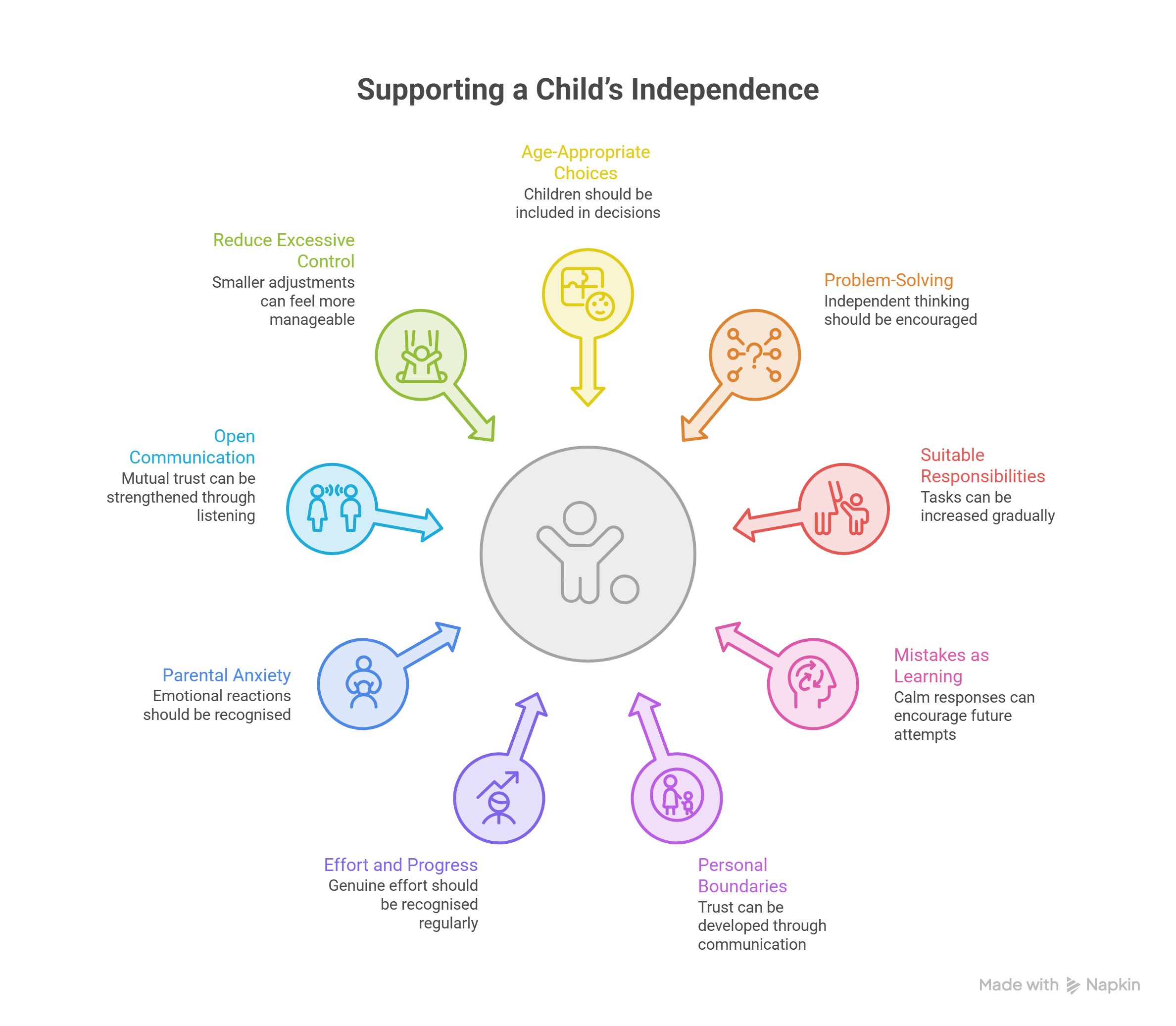
Tips for Supporting a Child’s Independence
Independence can be developed through regular practice. Useful skills can be strengthened through small responsibilities.
1. Allow Age-Appropriate Choices
Confidence can be built through small choices. Children should be included in decisions.
Examples include:
- Choosing clothes.
- Selecting hobbies.
- Planning free time.
- Choosing activities.
- Organising belongings.
- Selecting books.
- Planning simple tasks.
- Choosing study methods.
- Expressing preferences.
- Making everyday decisions.
2. Encourage Problem-Solving
Immediate solutions should not always be provided. Independent thinking should be encouraged.
Helpful approaches include:
- Asking guiding questions.
- Exploring different solutions.
- Discussing possible outcomes.
- Reviewing lessons learned.
- Encouraging creative thinking.
- Allowing independent attempts.
- Discussing mistakes calmly.
- Exploring alternative options.
- Supporting thoughtful decisions.
- Encouraging persistence.
3. Assign Suitable Responsibilities
Responsibilities should match children’s abilities. Tasks can be increased gradually.
Examples include:
- Tidying belongings.
- Organising school supplies.
- Managing schedules.
- Preparing simple meals.
- Planning study sessions.
- Completing household tasks.
- Tracking commitments.
- Arranging personal items.
- Maintaining daily routines.
- Preparing school bags.
4. Accept Mistakes as Learning Opportunities
Mistakes should be treated as learning opportunities. Calm responses can encourage future attempts.
Helpful practices include:
- Discussing what happened.
- Identifying possible solutions.
- Encouraging another attempt.
- Recognising genuine effort.
- Avoiding harsh criticism.
- Praising thoughtful decisions.
- Supporting emotional recovery.
- Allowing natural consequences.
- Encouraging honest reflection.
- Celebrating gradual improvement.
5. Respect Personal Boundaries
Age-appropriate privacy should be respected. Trust can be developed through communication.
Useful practices include:
- Knocking before entering.
- Listening without judgement.
- Respecting personal preferences.
- Discussing safety rules.
- Allowing private reflection.
- Avoiding unnecessary questioning.
- Encouraging honest conversations.
- Respecting personal belongings.
- Supporting reasonable privacy.
- Maintaining appropriate boundaries.
6. Praise Effort and Progress
Genuine effort should be recognised regularly. Personal worth should not depend on results.
Positive qualities include:
- Consistent effort.
- Creative thinking.
- Honest communication.
- Responsible choices.
- Persistence after setbacks.
- Independent decision-making.
- Willingness to learn.
- Thoughtful problem-solving.
- Improved self-management.
- Growing confidence.
7. Manage Parental Anxiety
Parental worries can influence everyday decisions. Emotional reactions should be recognised.
Helpful steps include:
- Pausing before intervening.
- Separating risks from worries.
- Discussing concerns calmly.
- Building trust gradually.
- Avoiding unnecessary restrictions.
- Seeking guidance when needed.
- Practising emotional awareness.
- Accepting reasonable uncertainty.
- Recognising personal fears.
- Encouraging gradual independence.
8. Maintain Open Communication
Children should feel safe sharing concerns. Mutual trust can be strengthened through listening.
Helpful habits include:
- Asking open questions.
- Listening without interrupting.
- Avoiding unnecessary criticism.
- Discussing expectations clearly.
- Respecting differing opinions.
- Encouraging honest expression.
- Offering balanced guidance.
- Validating emotional experiences.
- Discussing problems calmly.
- Maintaining regular conversations.
9. Gradually Reduce Excessive Control
Sudden changes may create confusion. Smaller adjustments can feel more manageable.
Useful changes include:
- Allowing independent decisions.
- Sharing responsibilities.
- Reducing unnecessary reminders.
- Encouraging personal planning.
- Increasing age-appropriate freedom.
- Supporting independent choices.
- Allowing reasonable mistakes.
- Reviewing progress together.
- Celebrating growing independence.
- Maintaining necessary safety rules.
Conclusion
Helicopter parenting often develops from concern. However, independence may be limited by excessive control. Children’s confidence may also be affected.
A balanced approach should be encouraged. Guidance should be offered without taking over. Mistakes should be treated as learning opportunities. Independence can gradually be developed with patience.
Get Certified & Start Your Montessori Career
Montessori Teacher Training Course by Entri App: Gain expert skills, earn certification, and kickstart your teaching career.
Join Now!Frequently Asked Questions
What is helicopter parenting?
Helicopter parenting involves excessive monitoring and control over children’s lives. Decisions, activities, and problems are often managed by parents.
What are the common signs of helicopter parenting?
Constant supervision, excessive interference, and limited privacy are common signs. Children’s decisions may also be controlled, and mistakes may be prevented.
What causes helicopter parenting?
Fear for children’s safety and future success can contribute. Social pressure, perfectionism, and past negative experiences may also influence parenting behaviour.
How does helicopter parenting affect children's mental health?
Excessive control may contribute to stress, anxiety, and self-doubt. Children may also develop a fear of failure or disappointing their parents.
Can helicopter parenting affect academic performance?
Excessive academic involvement may increase pressure and reduce independent learning. Study planning, problem-solving, and decision-making skills may also be affected.
Does helicopter parenting reduce children's independence?
Children may become dependent when everyday tasks are repeatedly handled by parents. Fewer opportunities for independent decisions can also limit practical skill development.
How does helicopter parenting affect social relationships?
Children may struggle with disagreements when conflicts are frequently resolved by adults. Social confidence, communication, and personal boundaries may also be affected.
Is helicopter parenting the same as protective parenting?
Protective parenting focuses on safety while allowing age-appropriate independence. Helicopter parenting involves excessive intervention, monitoring, and control over everyday activities.
How can helicopter parenting be reduced?
Greater independence can be encouraged through small choices and suitable responsibilities. Mistakes should be treated as learning opportunities, while safety boundaries should remain clear.
Can helicopter parenting change into healthy parenting?
Yes, parenting habits can be gradually changed through patience and self-awareness. More trust, open communication, and age-appropriate freedom can support healthier family relationships.