

Table of Contents
Kanchipuram bridal saree trends are changing in small but clear ways. Brides still want real silk, contrast borders and temple motifs, but many now ask for softer colours, lighter drapes and blouses that feel personal.
For a designer, knowing these trends means knowing what to suggest, what to sketch and what to check before a bride spends a large sum on one saree.
Key Takeaways
- A Kanchipuram saree is woven in three parts (body, border and pallu), and the joins (korvai and petni) are what most trends play with.
- Younger customers have been asking for lighter fabrics, pastel shades and even sarees with no zari.
- Classic reds, temple borders and old motifs have not gone away. Many brides mix them with newer colours.
- Zari quality varies a lot, so check it before you design around it.
- The best trend for a bride depends on the ceremony, the season and how long she will wear the saree.
Learn Advanced Designing & Boutique Skills with Experts. Join Now!
What Makes a Kanchipuram Bridal Saree Different?
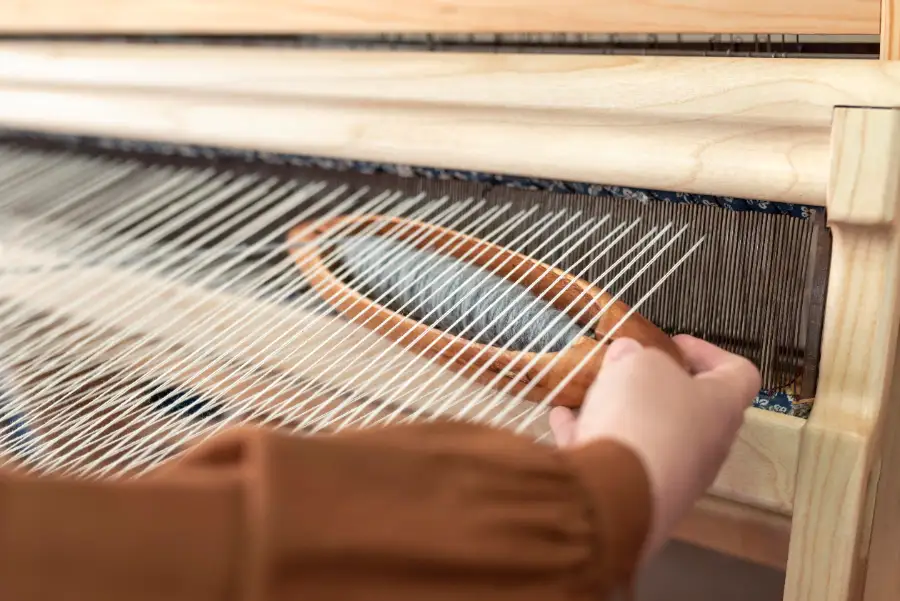
Before you suggest a trend, it helps to know what is fixed and what can change. According to the Impart Encyclopedia of Art, a Kanjivaram saree has three parts woven separately: the body, the border and the pallu. The border and pallu are usually dyed in one colour, while the body is woven in a contrasting colour. The border is joined to the body with the korvai technique, and the pallu is joined with the petni technique.
The same source notes that the embossed zari designs on the pallu use threads that typically contain 57 percent silver and 0.6 percent gold. The Kanchipuram saree received its Geographical Indication (GI) tag in 2005.
A government information portal, Vikaspedia, adds two details that matter for design. These sarees normally use 2-ply silk in the warp and 3-ply in the weft, which explains their weight and body. Today they are also woven with two or three jacquards (one each for the border, body and pallu), with or without korvai.
So when people talk about “new” Kanchipuram trends, they usually mean changes to colour, weight, motif placement, zari and the blouse. The three-part structure stays. If you want the full background on the weave itself, read our guide on why Kanchipuram silk is famous.
Master Fashion Designing and Create Your Signature Style
Unlock your creative potential with our expert-led Fashion Designing course. Build in-demand skills and step confidently into the world of fashion!
Begin Your Fashion Career Today!Kanchipuram Bridal Saree Trends to Know
1. Soft Pastels Next to Classic Reds
Traditional Kanchipuram grounds come in shades of arakku (red) and manjal (yellow), with borders in dark blue, black or gold, as the Impart Encyclopedia describes. Red and gold still lead for the main muhurtham ceremony.
What has changed is the second saree. A Kanchipuram weaver quoted by The News Minute said pastel shades, lightweight fabrics and no-zari silks have become popular among younger customers. In practice, this shows up as lilac, mint, powder blue or blush sarees for the engagement, reception or a daytime ceremony.
Design Tip:
Pastels look flat under warm indoor lighting. Give a pastel body a deeper contrast border (for example, mint with a wine border) so the korvai line still reads in photographs.
2. Lightweight Weaves for Long Ceremonies
A South Indian wedding can mean many hours in one saree. That is why lighter Kanchipuram weaves are being asked for, as the weaver in the same News Minute report pointed out.
Weight comes from three things: the ply of the silk, the amount of zari and the density of the motifs. A designer can lower the weight by keeping the body plain or lightly buttaed, using a narrower border, and keeping heavy zari for the pallu. The trade-off is clear: a lighter saree drapes more easily and pleats faster, but it will not hold the stiff, sculpted look of a heavy traditional piece.
3. Contrast Korvai Borders Back in Focus
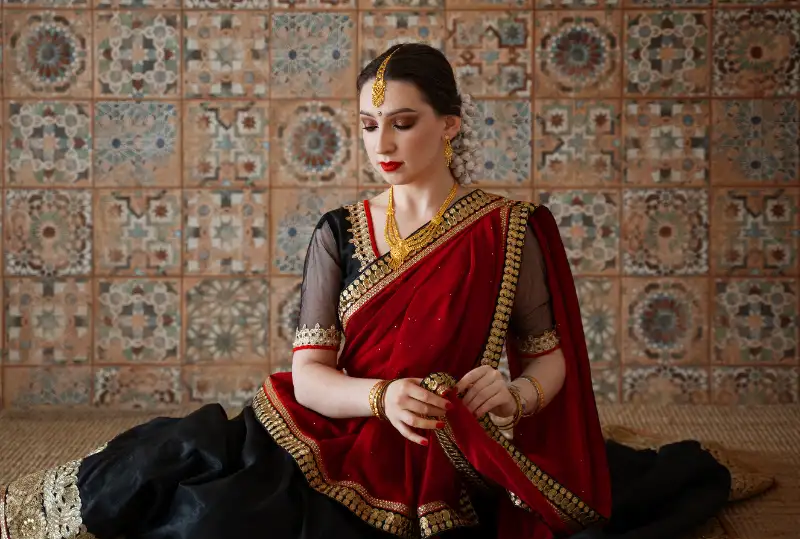
Because korvai joins a contrasting border to the body by hand, it is one of the clearest signs of the craft. For a heritage look, strong contrast pairs such as red and green, mustard and maroon, or purple and pink work well.
For designers, the korvai line is a design tool. A double or triple border frames the body and makes even a pastel saree look bridal. When sketching, show the border width and the colour of the joint clearly, because the weaver will set the loom from your choice.
4. Revived Temple and Nature Motifs
Kanchipuram motifs come from temple architecture and sculpture, and from the pattern of rudraksha beads. Other common motifs include flowers, leaves, fruits, mayilkan (peacock’s eye), swans, parrots and mallinaggu (jasmine), according to the Impart Encyclopedia.
If a bride wants a saree that looks like a family heirloom, these older motifs suit her better than large floral jaals. Small repeating motifs (such as mayilkan checks or rudraksha dots) also work well on lighter bodies, because they add texture without much zari.
5. A Quiet Body With a Grand Pallu
One way to get both comfort and grandeur is to keep the body simple and put the detail into the pallu and border. Since the pallu is woven as a separate section and joined with petni, it can carry a dense zari design without making the whole saree heavy.
This works well for brides who will drape the pallu over the shoulder for most photos. It works less well for a bride who plans a front-pallu or Madisar drape, where more of the body shows.
6. Clear Choices About Zari
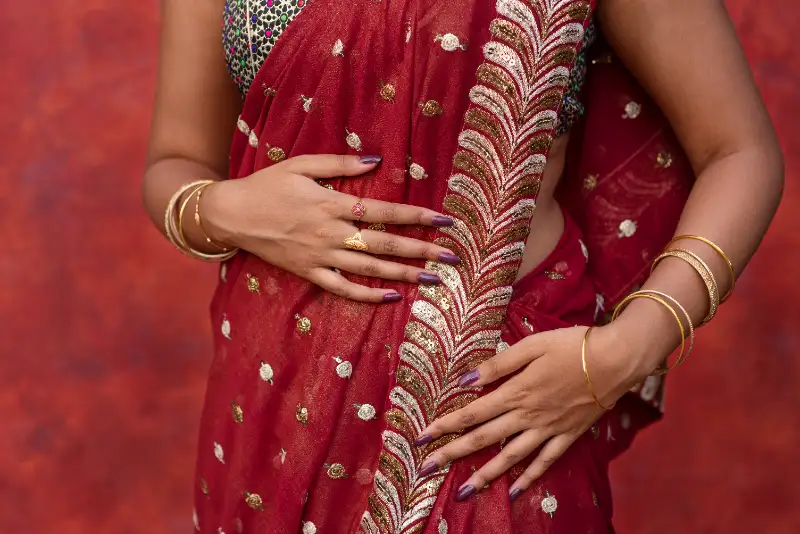
Zari is the most expensive part of a bridal saree, and it is also where quality varies most. The Kancheepuram district administration notes that some weavers now use silk-polyester borders and reduce the gold and silver content of zari to cut costs. To protect buyers, the Tamil Nadu government, TIFAC and Tamilnadu Zari set up a zari testing unit in Kanchipuram that checks gold and silver content for a nominal fee.
For a designer, the sensible approach is to be open with the bride: pure zari for the heirloom wedding saree, and tested or half-fine zari for the reception or pre-wedding saree, where a lower budget makes sense. Write the zari type on the design sheet so there is no confusion at delivery.
7. The Blouse as Part of the Design
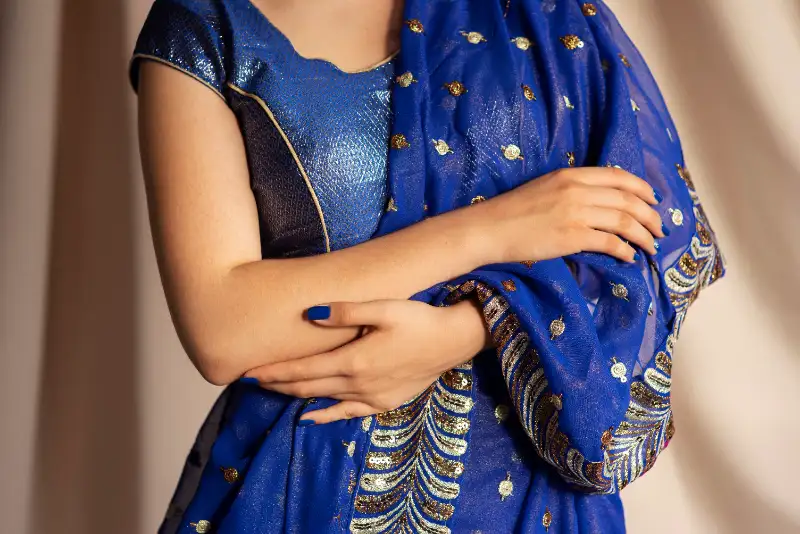
Treat the bridal blouse as part of the design, not an afterthought. Popular directions include a blouse in the border colour with zari motifs on the sleeves, elbow-length sleeves for the muhurtham, and a deeper back or a high neck for the reception. Choosing the neckline is where pattern-making skill shows, so it helps to know the different types of necklines and their names.
Kanchipuram Bridal Trends at a Glance
| Trend | What it looks like | Best for | Watch out for |
|---|---|---|---|
| Pastel shades | Lilac, mint, powder blue or blush bodies | Engagement, reception, daytime events | Can look washed out without a strong border |
| Lightweight weave | Plain or lightly buttaed body, narrower border | Long ceremonies, summer weddings | Less of the stiff, sculpted drape |
| Contrast korvai | Red-green, purple-pink, mustard-maroon pairs | Traditional muhurtham look | Costs more because of the hand join |
| Revived motifs | Mayilkan, rudraksha, swans, parrots, temple borders | Heirloom-style sarees | Needs a weaver who knows the old designs |
| Grand pallu, quiet body | Dense zari pallu, simple body | Brides who want comfort and photos | Less effective with front-pallu drapes |
| Zari choice | Pure zari vs tested or half-fine zari | Balancing budget across several sarees | Must be labelled clearly for the bride |
How Designers Can Check a Saree Before Styling It
A trend only works if the saree is genuine. Before you build a look around a saree, check these points:
- Silk Mark label: The Silk Mark Organisation of India, set up under the Central Silk Board, issues hangtags and sew-in labels with unique serial numbers, holograms and QR codes, so a buyer can trace the silk back to its source.
- Zari test: If the bride is paying for pure zari, the zari testing unit in Kanchipuram can check its gold and silver content.
- The korvai and petni joins: Look at where the border meets the body and where the pallu begins. As Vikaspedia explains, a korvai border shows interlocking threads, and trimmed ends can be seen where the petni pallu is joined.
- Weight and feel: A pure silk saree with real zari feels dense and heavy. A very light “Kanchipuram” with a bright, shiny border may have blended yarn or imitation zari.
If you plan to sell bridal sarees or offer styling as a service, these checks also protect your reputation. Our guide on how to start a boutique business in Tamil Nadu covers sourcing and setting up the business side.
Master Fashion Designing and Create Your Signature Style
Unlock your creative potential with our expert-led Fashion Designing course. Build in-demand skills and step confidently into the world of fashion!
Begin Your Fashion Career Today!Which Trend Suits Which Bride?
There is no single “best” bridal Kanchipuram saree. Use the bride’s priorities to guide the suggestion:
- She wants tradition first: A red or mustard body with a contrast korvai border, temple motifs and pure zari.
- She wants comfort through a long day: A lightweight body with a grand pallu, and the heavy zari kept to the border and pallu.
- She wants something different for the reception: A pastel saree with a deep contrast border and a modern blouse.
- She is working to a budget: Pure zari for the wedding saree, and tested or half-fine zari for the other functions.
- She wants an heirloom: Revived motifs such as mayilkan or rudraksha, with a classic colour pair that will still look right years later.
Learn Advanced Designing & Boutique Skills with Experts. Join Now!
Conclusion
Kanchipuram bridal saree trends are less about replacing tradition and more about giving brides choices within it. The three-part weave, the korvai border and the temple motifs stay. What a designer can shape is the colour, the weight, where the zari goes and how the blouse finishes the look. Learn the structure, check the silk and zari, and then match the trend to the bride’s day.
Want to turn your interest in bridal wear into a skill? Explore Entri’s fashion designing and boutique management course.
Master Fashion Designing and Create Your Signature Style
Unlock your creative potential with our expert-led Fashion Designing course. Build in-demand skills and step confidently into the world of fashion!
Begin Your Fashion Career Today!Frequently Asked Questions
Can a bridal Kanchipuram saree be worn again after the wedding?
Yes. Changing the blouse is the simplest way to restyle it. A plain or contrast blouse in a modern cut makes the same saree suitable for festivals, family functions and temple visits. Lighter and pastel sarees are usually the easiest to wear again.
How should a bridal Kanchipuram saree be stored?
Wrap it in a soft cotton or muslin cloth and keep it away from direct light and damp. Refold it along different lines every few months so the zari does not crack at the creases, and avoid plastic covers or spraying perfume directly on the silk.
Are silk cotton sarees a good option for pre-wedding functions?
They can be, as long as they are sold for what they are. A Kanchipuram weaver told The News Minute that silk cotton sarees are now made to echo the grandeur of Kanchipuram sarees. They are lighter and cost less, but they are not pure silk Kanchipuram sarees, so label them clearly.
Is bridal wear a good specialisation for a fashion designer in Tamil Nadu?
Bridal work combines colour sense, fabric knowledge, blouse pattern making and handwork, so it is a strong niche for designers who enjoy traditional textiles.
Can a Kanchipuram bridal saree be custom-made to a bride's design?
Yes, if you work with a weaver or silk store that takes custom orders. Give them the body and border colours, the motifs, the border width and the zari type in writing, and allow extra time, because the loom has to be set up for your design.
How is a Kanchipuram bridal saree different from a Banarasi bridal saree?
A Kanchipuram saree uses heavy mulberry silk with a border woven separately and interlocked (korvai), so it has a structured, crisp fall. A Banarasi saree from Varanasi uses finer silk with brocade motifs woven into the fabric, so it drapes more softly. Our guide on why Kanchipuram silk is famous has a side-by-side comparison.
Should a bridal blouse for a Kanchipuram saree be lined?
Yes, a soft cotton lining is a good idea. It makes a heavy silk or zari blouse more comfortable over a long ceremony, absorbs sweat before it reaches the silk, and helps the blouse keep its shape.