Table of Contents
The main players driving bulk hiring for electronics engineering freshers this year are semiconductor firms, embedded systems companies, electronics manufacturers, and automation giants.
The Indian electronics ecosystem is growing at breakneck speed. Just look at the numbers as semiconductor design centres alone posted 3459 open roles in Q1 2026. It is expected to see up to 1 million semiconductor jobs spawned by the end of FY26-27.
For ECE and EEE freshers, this hiring climate is arguably the best they’ve seen in a decade.
Key Takeaways
- In the first quarter of 2026, semiconductor design centres in India opened up 3459 job roles.
- Top hirers were Qualcomm, Intel, TI, and AMD.
- VLSI and embedded systems are the areas where we’re seeing the most technical openings.
- India now has 20% of the world’s semiconductor design engineers, which means around 125,000 of them.
- Hiring is mainly being done through campus drives, pooled drives, and GET programmes, apprenticeships.
- The ones with project experience are outperforming their peers who are relying on coursework alone.
- Companies are looking for people with strong communication skills, problem-solving skills, and the ability to clearly explain projects.
- Starting pay for electronics freshers is around 4 LPA to 8 LPA. Semiconductor and Product firms are willing to pay a bit more.
EXPLORE ENTRI JOBS PORTAL NOW!
What is Bulk Hiring in Electronics Engineering?

Bulk hiring is basically a recruitment model where a company throws a lot of similar jobs open in a short space of time – usually through structured drives. In the electronics sector, this looks like campus placements, pooled off-campus drives, graduate trainee programmes, apprenticeships and walk-in interviews.
This approach is a big plus for freshers as it gives them multiple entry points at the same time, rather than having to apply for one job at a time. It’s especially common in companies that need a flow of trained engineers to work on product development, manufacturing, firmware support or test engineering.
Master Embedded Systems Programming!
Launch your tech career with our Embedded Systems Course, designed for hands-on learning and industry readiness.
Know MoreWhy Electronics Engineering Freshers are in High Demand Right Now
Well, the numbers certainly make a compelling case. India’s semiconductor market is forecasted to hit USD 54.3 billion by 2025, and it’s expected to almost double by 2030. We now have more than 250,000 semiconductor professionals, with over 58,000 new roles added in the past year alone.
The government’s Production-Linked Incentive scheme and the India Semiconductor Mission are really pushing the country ahead in terms of fab investments, design centres and ATMP facilities.
But the need for electronics talent gets even bigger when you look beyond chip design. Electric vehicles, industrial automation, IoT, 5G rollout, consumer electronics manufacturing and defence electronics are all creating a hiring frenzy.
Freshers who understand core electronics and can apply that in real life are exactly what companies in all these sectors are looking for.
Top Companies that Hire Electronics Engineering Freshers in Bulk

You cannot find a rigid ranking of the top companies as such. As a fresher, you should understand the major companies by sector with a clear picture of where to target your job search.
Semiconductor and Chip Design Companies
| Company | Common Fresher Roles | Key Skills Needed |
| Qualcomm India | VLSI Engineer, Verification Engineer | RTL, SystemVerilog, UVM |
| Intel India | Physical Design Engineer, Design Verification | Cadence tools, Timing analysis |
| Texas Instruments | Analog Design Engineer, Embedded SW Engineer | Analog circuits, C, MATLAB |
| Micron Technology | Process Engineer, Test Engineer | Semiconductor fundamentals, SPC |
| AMD India | VLSI Trainee, RTL Design Engineer | Verilog, FPGA basics, Linux |
| MediaTek India | Verification Engineer, Software Engineer | C/C++, scripting, SoC basics |
These companies run structured graduate hiring programmes and recruit heavily from top engineering colleges.
VLSI design roles account for 37% to 45% of active openings across semiconductor GCCs in India.
Embedded Systems and Product Engineering Companies
| Company | Common Fresher Roles | Key Skills Needed |
| Bosch India | Embedded Engineer, Hardware Engineer | C/C++, CAN, AUTOSAR |
| Continental | Firmware Engineer, Test Engineer | Embedded C, debugging tools |
| Tata Elxsi | Embedded SW Engineer, ADAS Engineer | RTOS, Python, board bring-up |
| HCLTech | Embedded Developer, Verification Engineer | UART, SPI, I2C, Linux |
| Jabil | Hardware Engineer, Manufacturing Engineer | PCB design, quality tools |
These companies hire freshers for
- Driver development
- Firmware support
- Hardware bring-up
- Product validation
Many offer structured GET programmes with on-the-job training rotations.
Electronics Manufacturing Companies
| Company | Common Fresher Roles | Key Skills Needed |
| Foxconn India | Production Engineer, Quality Engineer | EMS processes, SPC, 5S |
| Samsung India | Process Engineer, R&D Engineer | Circuit design, signal processing |
| Dixon Technologies | Test Engineer, Production Supervisor | Quality assurance, EMS |
| Havells India | Electrical Design Engineer | AutoCAD, power electronics |
| Bharat Electronics (BEL) | Junior Engineer, Graduate Trainee | Core electronics, PSU exam prep |
Manufacturing companies tend to hire at the largest scale. With India’s electronics manufacturing output expanding rapidly under PLI incentives, production and quality engineering roles are consistently available for freshers.
Automation and Industrial Electronics Companies
| Company | Common Fresher Roles | Key Skills Needed |
| Siemens India | Automation Engineer, Controls Engineer | PLC, SCADA, Simatic |
| Schneider Electric | Field Engineer, Automation Trainee | PLC programming, electrical basics |
| ABB India | Controls Engineer, Instrumentation Engineer | DCS, drives, process control |
| Honeywell India | Test & Measurement Engineer | Instrumentation, LabVIEW, sensors |
Kickstart your embedded systems career and turn your tech passion into high-demand skills!
IT and Engineering Services Companies
| Company | Common Fresher Roles | Key Skills Needed |
| TCS | Graduate Engineer Trainee, System Engineer | Core subjects, aptitude, C basics |
| Wipro | Project Engineer, Network Engineer | Electronics or software fundamentals |
| Infosys | Systems Engineer, Test Analyst | Aptitude, communication, training readiness |
| Tech Mahindra | Junior Engineer, Support Engineer | Domain knowledge, basic coding |
| L&T Technology Services | Electronics Engineer, Embedded Developer | Project experience, RTOS, debugging |
These companies offer fresher-friendly entry routes and often deploy electronics engineers in embedded, automotive, telecom, or industrial domains.
Entry-Level Roles Electronics Freshers Can Expect
| Role | What It Involves | Best Suited For |
| Embedded Engineer | Firmware coding for microcontrollers and control systems | Freshers with C/C++, RTOS, and protocol knowledge |
| Hardware Engineer | Circuit design, board bring-up, electronic system testing | Strong in analog/digital design and PCB fundamentals |
| VLSI Trainee | RTL design, verification, physical design basics | Interested in semiconductor and chip-level work |
| Test Engineer | Product validation, reliability testing, debugging | Detail-oriented candidates with troubleshooting skills |
| Production Engineer | Manufacturing support, process operations, quality | Those interested in plant and production functions |
| Automation Engineer | PLC programming, industrial controls, instrumentation | Candidates with interest in industrial electronics |
Master Embedded Systems Programming!
Launch your tech career with our Embedded Systems Course, designed for hands-on learning and industry readiness.
Know MoreSkills that Get Electronics Freshers Hired
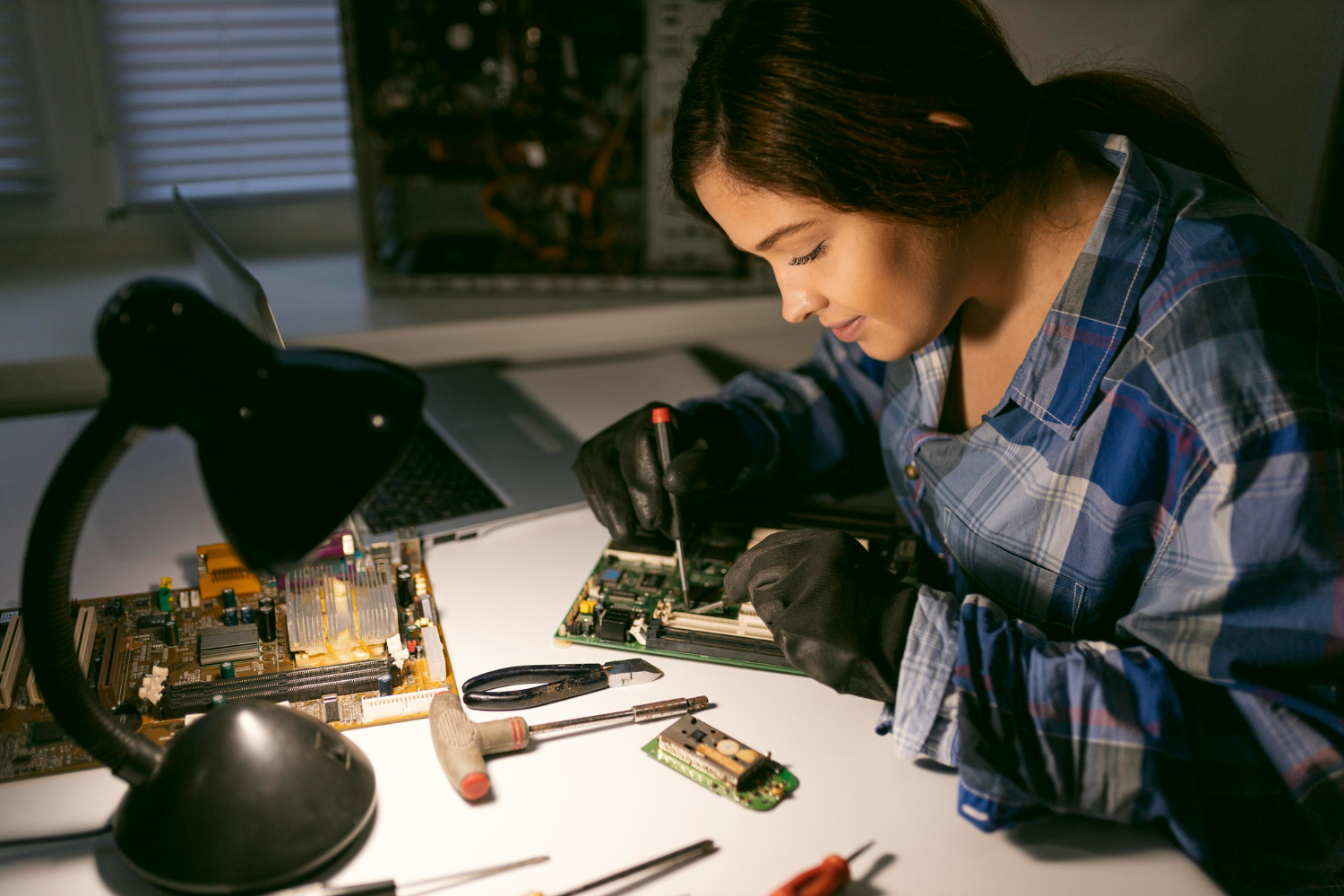
Companies that do bulk hiring are looking for more than just freshers who know their stuff on paper. They want to see if you can put that knowledge into practice. Here’s what matters the most:
Core Technical Skills:
- C and C++ programming – Not just knowing the syntax, but understanding why you’re using it.
- Digital electronics and analog circuit concepts – not just theoretical, but how to apply them in real-life projects.
- Microcontrollers: 8051, ARM Cortex, STM32 etc – you must have used them, not just read about them.
- Communication protocols like UART, SPI, I2C and CAN – the more hands-on experience, the better.
- Basic VLSI concepts like RTL and SystemVerilog, must have a clue about how they fit into the bigger picture.
- PCB design: you need to know EagleCAD or Altium.
- Get familiar with the Linux command line – you never know when you’re going to need it.
Practical and Soft Skills:
- How do you explain your projects? Can you tell a story about it that makes sense?
- How do you go about solving problems? Is it with a load of trial and error or a structured approach?
- Detail is key – Can you pay attention to the little stuff in your designs and testing?
- And can you communicate well enough to tell someone else what you’ve done?
Freshers often underestimate how much interviewers focus on project explanation. Being able to describe what you built, why you made specific component choices, and how you tested the output can leave a stronger impression than textbook answers.
How to Find and Apply for Bulk Hiring Openings
Campus Placement:
You should first check your college placement cell, especially if you are in your final year.
A lot of companies choose to do pooled drives and fresher recruitment programs at Tier-1 and Tier-2 engineering institutions – which may be where you’re studying.
Company Career Pages:
Qualcomm, Bosch, TCS, Tata Elxsi, Infosys and the like all post freshers openings, GET programs and apprenticeship roles directly on their website.
You should definitely set up job alerts pretty early on – these companies get a lot of applications.
LinkedIn and Professional Networks:
A lot of off-campus hiring is now done on LinkedIn. Companies put up freshers drives, internship-to-hire programmes and walk-in announcements on the site all the time.
Government and PSU Recruitment:
Then there’s government and PSU recruitment, which recruit electronics freshers in a pretty structured way – often through exams and trainee programmes. These include places like BEL, ISRO, DRDO, BSNL and NTPC
Resume Tip:
A role-specific resume consistently outperforms a generic one. For an embedded role, lead with your coding and microcontroller projects.
Whereas for VLSI, highlight any HDL experience, simulation tools, and lab work. For production or quality roles, focus on your project execution, troubleshooting history, and attention to detail.
Interview Preparation Tips for ECE Freshers
Build at least one solid project
Having something to talk about on paper (and something to show) can really help get you through the interview. So, get on and build
- a working sensor-based monitoring system
- a microcontroller project with a display, or
- just a simple PCB you designed and tested
Prepare for subject interviews
When interviewing for semiconductor or embedded companies they will likely be drilling you on digital electronics, analog circuits, signals and systems, and microcontrollers.
So, make sure you know your stuff – not just be able to recall the theory, but apply it.
Practice project walkthroughs
Your project is the star of the show. So be ready to explain it in under two minutes,
- what the problem was
- what hardware and software you used
- the challenges you faced
- how you overcame them
Clear aptitude rounds
Most companies have an aptitude screening before they get to the meat of the interview. So, make sure you can handle quantitative reasoning, logical ability and basic verbal comprehension. It’s a barrier you need to clear to get to the good stuff.
Conclusion
The top companies with a real bulge in hiring electronics engineering freshers in 2026 are spread across a variety of sectors including semiconductor design, embedded systems, electronics manufacturing, automation and IT services.
It’s worth noting that India’s semiconductor industry alone added 58,000 jobs in 2024-2025 and the momentum is not dying down. The truth is that the freshers who combine a solid understanding of the core subjects with some real hands on experience, decent communication skills and a resume tailored to the job in question are far more likely to get the call from the bulk hiring drives.
The thing to do is start early, target the right markets, keep a close eye on company career pages and make sure your skills are up to date – and trust us the opportunities are plentiful.
Master Embedded Systems Programming!
Launch your tech career with our Embedded Systems Course, designed for hands-on learning and industry readiness.
Know MoreFrequently Asked Questions
Which companies are the biggest employers of electronics engineering freshers?
To be honest the likes of semiconductor firms such as Qualcomm and Intel as well as companies like Bosch and Tata Elxsi in the embedded/auto sector, manufacturers like Foxconn and Dixon and IT services companies like TCS and Infosys are always on the lookout for fresh talent. Most of them run big recruitment drives every year or have ongoing recruitment programmes.
What kind of jobs can electronics engineering freshers expect to get?
The entry level roles are usually in fields like embedded engineering, hardware engineering, VLSI training, testing, production engineering and automation. Of course the exact role you get will depend on the sector and the specific projects the company is working on.
What skills are required to get hired in electronics?
The key skills are probably C/C++, digital electronics, microcontrollers and protocols like UART/SPI/I2C/CAN. But at the end of the day its not just about theory you need to have some hands-on experience to really stand out. If you’re looking to get into the semiconductor sector then having some basic RTL and SystemVerilog/VLSI knowledge will really give you an edge.
Do electronics companies hire freshers off campus?
Absolutely. Many companies hire through career portals, LinkedIn, pooled drives, apprenticeships and even just off the street. Off-campus recruitment is particularly strong in embedded systems and manufacturing.
Which cities have the most electronics engineering fresher jobs?
It’s pretty clear that Bengaluru, Hyderabad, Pune, Chennai and Delhi-NCR are the top hubs for electronics freshers. Bengaluru is probably leading the way in semiconductor GCCS – while Pune is really excelling in embedded and automotive electronics.
How important are projects for electronics fresher hiring?
They are extremely important – so much so that recruiters often put more emphasis on project work than grades when it comes to freshers. Having a good project walkthrough that shows you can put your skills into practice is a big plus.
Can ECE freshers get jobs in IT companies?
Well actually yes they can. TCS, Infosys, Wipro and Tech Mahindra are all companies that regularly hire ECE graduates through their fresher programs. Electronics graduates typically make up around 20% to 25% of the IT fresher intakes.
Are there any government jobs for electronics engineering freshers?
Yes, of course. PSUs and organizations like BEL, ISRO, DRDO, BSNL and NTPC all hire through exams and trainee schemes. Clearing GATE also opens up opportunities in PSUs and research organizations as well.
What certifications are worth having for electronics engineering freshers?
If you are looking to get hired fast then certifications in embedded systems, VLSI design, PCB design, PLC programming and IoT development are probably worth a look. They show that you’re proactive and willing to learn beyond just what you’ve learned in the classroom.
How should ECE freshers prepare for technical interviews?
You really just need to master the core subjects like digital electronics, analog circuits, signals and microcontrollers – and make sure you have at least one really solid project to talk about. Oh, and make sure you can explain things clearly and concisely – plus practice your problem solving and aptitude skills of course.