Table of Contents
Fashion draping is a creative and practical technique used to design clothing, where materials are carefully placed and immediately shaped directly on a dress form. Instead of starting with the flat sketches or patterns, the designers work with fabric, allowing them to see how it flows, folds, and fits on the body. This method brings designs to life in a more natural and artistic way.
It is widely used within the fashion business to create unique designs, experiment with styles and get the perfect fit. From beginners to the professional designers, draping facilitates knowledge-making and improves creativity.
Fashion draping is where creativity meets material, turning ideas into fashionable and wearable designs.
Learn Advanced Designing & Boutique Skills with Experts. Join Now!
Key Takeaways:
What is Fashion Draping?
Fashion draping is a creative method used for clothing design. This involves placing and arranging fabric directly on a dress form on mannequin. Designers create through pinning, folding, and adjusting fabrics. This helps them to shape and fashion their clothes in a practical way.
Unlike creating flat patterns, draping allows the designer to work with the fabric itself. This makes it easier to understand how the material looks. They can see how the fabric falls, stretches, or fits over the body. It gives a clear idea of the final look before sewing.
This method also allows you to get better fitting. Designers could make minor adjustments while still working on the dress form. It reduces minor mistakes and improves the the overall design quality. It is usually the first step before the making a final pattern.
For beginners, fashion draping is a unique way to learn about fabric and dress design. This improves creativity and practical skills. With regular practice, designers can create distinctive and elegant designs without difficulty
Importance of Draping in Fashion Design
The fashion draping plays an important role in developing stylish and appropriately tailored clothing. It is not only a design method but also a creative process that allows designers to bring their ideas to lifestyle in a practical way.
Better Visualization of Designs
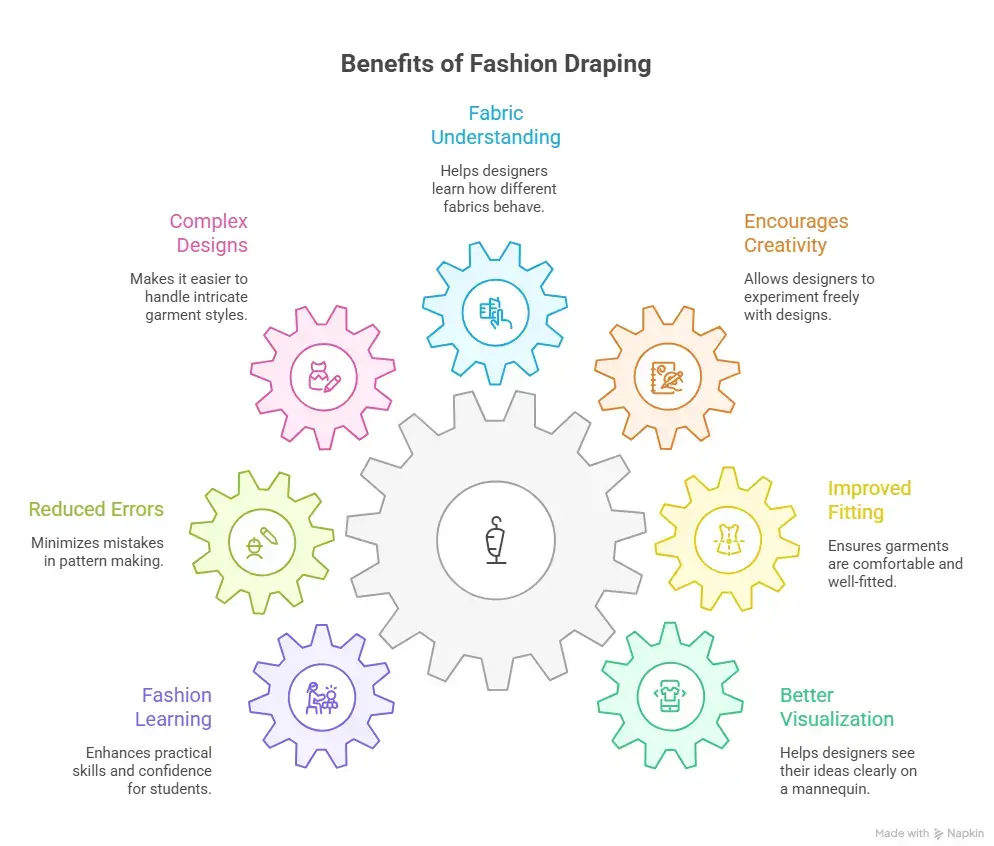
Draping allows the designers to see their entire ideas. Instead of imagining what a design will look like, they can see it on a mannequin. This makes it easier to understand the final shape of the design. Also it facilitates short layout selections.
Improves Garment Fitting
One of the most important advantage of draping is better fitting. The designers can adjust the material at once in the shape of the dress. They can fix issues instantly like tightness or looseness.
Encourages Creativity
Draping allows the designers to experiment freely. They can experiment with unusual folds, shapes, and patterns without external limits. This innovative freedom often results in precise and innovative designs. Many very stylish garments are created with using draping.
Helps Understand Fabric Behaviour
Different fabrics come with unique perspectives. Draping lets designers know how each fabric falls, stretches, or moves. This knowledge is important in deciding the right fabric for each design. Additionally, it helps avoid design mistakes.
Essential for Complex Designs
Draping could be very useful for creating intricate garments. Dresses, wedding dresses, fashion designer dresses, etc. Draping makes it less complicated to address such complicated styles step by step.
Reduces Errors in Pattern Making
Draping often serves as the basis for pattern making. When the design is finalized on the mannequin, it can be turned into a paper pattern. This reduces errors and saves time during designing process.
Important for Fashion Learning
Draping is an important skill for fashion designing students. It improves practical knowledge and gets hands on experiences. It also builds confidence in creating new designs.
Draping vs Pattern Making
Draping and pattern making are important techniques in fashion design. Both are used to make clothing, but the methods and processes are different. Understanding each helps designers choose the right approach for their visuals.
What is Draping?
Draping is a hands-on design process. Clothes are placed directly on on a dress form or mannequin. Designers create fabric using pins and folds. This allows them to see what the clothes look like in real life.
The draping is extra creative and flexible. Designers can easily try new patterns and make changes quickly. It is often used for designer wear, gowns, and complex outfits.
Advantages of Draping
- It helps visualize designs clearly.
- It improves garment fitting.
- It encourages creativity and innovation.
What is Pattern Making?
Pattern making is a technical method. This is primarily about the development of clothing styles on paper. These styles are then used to cut the fabric and stitch the garment.
It requires measurement and accuracy. Designers sfollows a structured process. Patterns are often used in mass production and casual clothing.
Advantages of Pattern Making
- It ensures accuracy in the measurements.
- It is suitable for large-scale production.
- It saves time when making multiple garments.
Key Differences of Draping vs Pattern Making
1. Working Method
- Draping uses real fabric on a mannequin.
- Pattern making starts with paper patterns.
2. Creativity
- Draping allows more creative freedom.
- Pattern making follows a fixed structure.
3. Accuracy
- Draping focuses on visual fitting.
- Pattern making focuses on exact measurements.
4. Usage
- Draping is for high-fashion designs.
- Pattern making is for bulk production.
Which One is Better?
Both methods are important in fashion design. Draping is best for creative and the custom designs. Pattern making is better for the structured and repeated production. Many designers use both methods together for best results.
Tools and Materials Required
Fashion draping requires a set of basic tools and materials. These help designers work easily and create correct designs. Using the right tools also improves the quality of the final garment.
1. Dress Form or the Mannequin
A dress form is the most important tool in the draping. It is a body-shaped model used to place and shape the fabric. The designers use it to create garments that fit properly. Dress forms come in different sizes and shapes based on the body measurements.
2. Fabric (Muslin or Practice Cloth)
For drapping muslin fabric is commonly used. Muslin cloth is plain, very soft, and easy to handle. Mostly every designers use it to create trial designs before using the exact fabric. This helps in testing the design without wasting any expensive materials.
3. Pins and Pin Cushion
Pins are used to hold the fabric in place on the dress form. They help to secure the folds, pleats, and shapes while designing. A pin cushion keeps all the pins organized in a soft cushion and easy to access during the work.
4. Marking Tools
Marking materials such as tailor’s chalk or fabric markers are used to make marks on the fabric. Every designer uses them to mark seams, dartss, and design details. These labels organize the stitching manually afterwards.
5. Draping Tape
Draping tape is used on the dress form to mark the style lines. This makes it easier to highlight the parts like neckline, waistline, and the armpits. This makes it less difficult to follow the design structure.
6. Notepad and Pencil
Every designer usually note measurement and ideas while pattern making. A notepad and pencil will help keep you on track with adjustments and enhancements all while draping.
Master Fashion Designing and Create Your Signature Style
Unlock your creative potential with our expert-led Fashion Designing course. Build in-demand skills and step confidently into the world of fashion!
Begin Your Fashion Career Today!Basic Draping Techniques
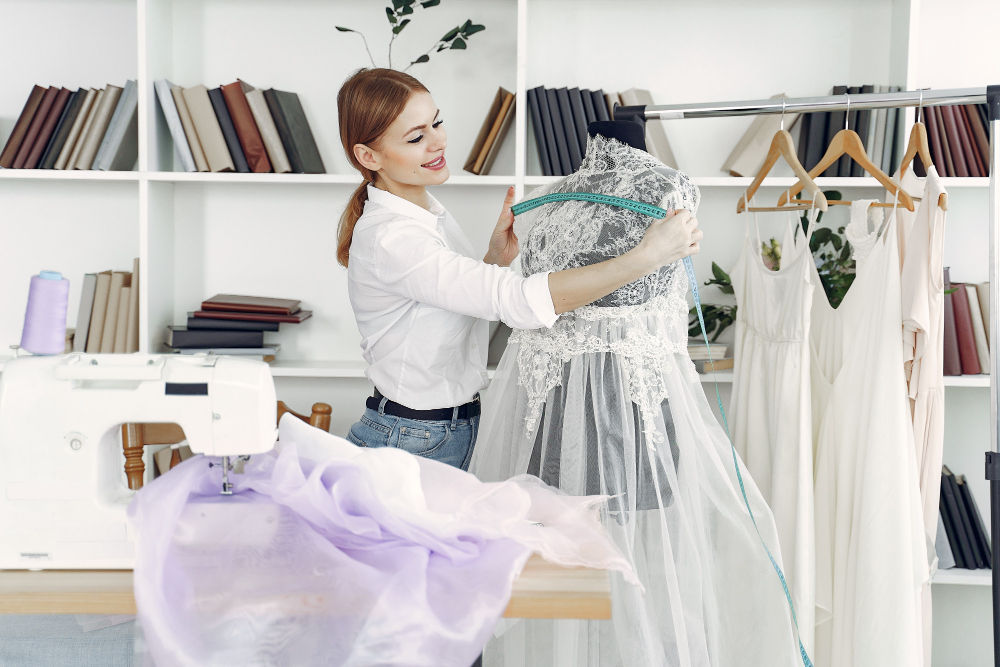
Basic draping techniques are the basis of fashion design. They help beginners understand how to make clothes into garments. Learning those strategies step by step makes the method simpler and more effective.
Preparing the Fabric
Before starting, it is important that you prepare the fabric properly. It should be ironed to remove wrinkles. Then mark the grain lines clearly. This helps in placing the fabric correctly on the dress form. Proper preparation improves accuracy.
Pinning the Fabric
Pinning is the first step in draping. Fabric is placed on the dress form and secured with pins. You should insert the pins neatly and evenly. This keeps the fabric stable while working. Proper pinning helps create clean shapes.
Marking Guidelines
Guidelines are marked on the fabric using chalk or markers. These include lines like the center front, waistline, and neckline. Marking helps maintain symmetry and balance. It also makes it easier to convert the drape into a pattern later.
Creating Darts and Pleats
Darts and pleats are used to shape the fabric. Darts help the garment fit the body better. Pleats add fullness to the design in detail. These are created by folding the fabric and securing it with pins. They play an important role in garment structure.
Shaping the Fabric
Shaping involves adjusting the fabric to match body curves. The fabric is neatly smoothed, folded, and arranged carefully. Designers check how it fits around the bust, waist, and hips.
Trimming Excess Fabric
Extra fabric is removed once the design is set. Trimming helps give a clean and defined shape.
Checking Fit and Balance
After shaping, you should check the design from all angles. Both sides should look balanced and even. You can make small adjustments if needed. This step ensures the garment looks neat and professional.
Final Marking and Removal
Once the draping is complete, you must mark all the important lines clearly. The fabric is then carefully removed from the dress form. These markings are used to create a final pattern for stitching.
Tips for Beginners
Following the simple tips helps build confidence and improve skills step by step.
1. Start with the Basic Fabrics
Beginners start with simple fabrics like muslin. It’s smooth, plain and very easy to handle. Avoid heavy or slippery fabrics in the beginning. A simple canvas helps you to focus on learning the technique.
2. Learn the Dress Form Properly
Before you begin, understand the structure of the get dressed form. Know the important parts of like chest, waist, and hips. This makes it easier to fit the garment properly. A top knowledge improves general outcomes.
3. Practice Pinning Carefully
Pinning is an important part of draping. Use pins neatly and properly. Secure the fabric but not too tight. Careful pinning helps maintain a smooth and precise shape.
4. Focus on Basic Shapes First
Start with easy designs like skirts or primary tops. Don’t use complicated designs in the beginning. Knowing simple shapes builds a strong foundation. Once confident, move to the advanced styles.
5. Observe Fabric Behaviour
Pay attention to how the fabric falls and moves. Each cloth behaves differently. Understanding this allows for better layout decisions. It also improves the fitting and finishing.
6. Mark Clearly on Fabric
Us6.e chalk or a fabric marker to mark the lines. Virtually label seams, darts, and design information. This makes it less difficult when converting the drapes into patterns later.
7. Be Patient and Practice Regularly
Draping takes time to learn clearly. Do not expect the perfect results immediately. Practice regularly to improve your skills. Small improvements will build the confidence over time.
8. Keep Your Work Organized
Organize your tools and materials properly. The prepared workspace makes the work less complicated and faster. It also allows you to focus on a specific point of the draping.
Learn Advanced Designing & Boutique Skills with Experts. Join Now!
Conclusion
Fashion draping is an important skill in the world of fashion designing. With the help of working directly with the fabric, it helps to turn creative ideas into real garments. From dealing with specialized materials to enhancing fitting and the design accuracy, draping plays an important part in the design process.
For beginners, learning the basic draping techniques builds a strong foundation. Over time, it boosts creativity, confidence, and the practical skills. With the right tools, simple practice, and patience, anyone can learn and master this designing as a career.
Master Fashion Designing and Create Your Signature Style
Unlock your creative potential with our expert-led Fashion Designing course. Build in-demand skills and step confidently into the world of fashion!
Begin Your Fashion Career Today!Frequently Asked Questions
Where is fashion draping commonly used?
Fashion draping is used in fashion design studios, bridal wear design, costume design, and fashion education. It is especially useful for creating complex and high-fashion garments.
Can beginners learn fashion draping easily?
Yes, beginners can learn draping with practice and patience. Starting with simple designs and basic techniques makes learning easier. Regular practice helps improve skills and confidence over time.
What are the basic tools required for draping?
Some important tools include a dress form, muslin fabric, pins, scissors, measuring tape, and marking tools like chalk. These tools help in shaping and designing garments accurately.
How long does it take to learn fashion draping?
The basic skills can be learned in a few weeks with regular practice. However, mastering draping takes more time and experience. Continuous learning and practice are important for improvement.
What is fashion draping in simple words?
Fashion draping is a method of designing clothes by placing fabric directly on a dress form or mannequin. Designers shape the fabric using pins and folds to create garments. It helps them see how the design looks in real life before stitching.
Is fashion draping better than pattern making?
Both methods are important and used for different purposes. Draping is more creative and useful for custom or designer outfits. Pattern making is more structured and ideal for mass production. Many designers use both methods together for best results.
What type of fabric is best for beginners in draping?
Beginners should start with muslin fabric. It is soft, plain, and easy to handle. It helps in understanding basic draping techniques without difficulty. Expensive or heavy fabrics should be avoided at the beginning.