Table of Contents
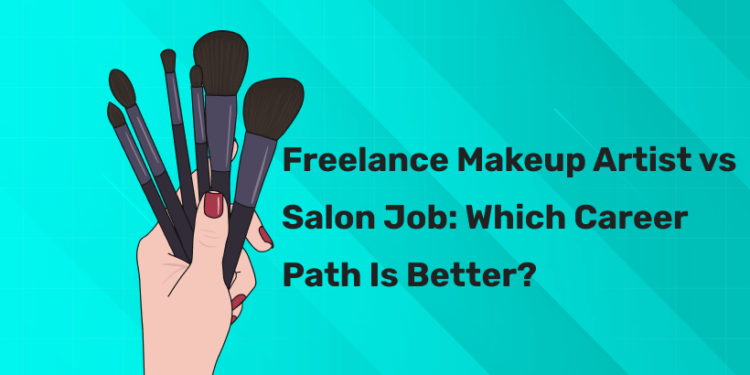
Neither path is universally better. The right choice depends on your personality, financial goals, and work style. Salon jobs offer stability, predictable income, and a built-in client base.
Freelancing offers higher earning potential, creative freedom, and schedule flexibility. Many successful makeup artists start in salons to build skills and then transition to freelance work for greater independence.
Master Certified Makeup Artist Online Course. Enrol Now!
KEY TAKEAWAYS
- Salon jobs provide steady income, benefits, and a built-in clientele but limit creative freedom and earning ceilings .
- Freelance work offers unlimited earning potential and schedule control but requires business management skills and financial planning .
- Salon artists typically earn ₹20,000–₹40,000 per month in India, while freelance bridal specialists can earn ₹50,000–₹1,50,000+ per month .
- Certification and formal training increase credibility and earning potential in both career paths .
- The hybrid model combines salon stability with freelance income for financial security and creative expression .
INTRODUCTION
Youve decided to turn your passion for beauty into a career – Congrats by the way. Now comes the big decision that will set the course for your whole career. Do you build your own independent freelance empire, or do you nail down a chair at a well-established salon?
This is the cross roads that every aspiring makeup artist is faced with. To be honest there is no right answer. Your choice will depend on who you are, what you value and how you want to work. A salon job will give you some much needed predictability and structure, but freelancing offers the freedom and potentially bigger bucks.
This guide is all about breaking down the two career paths in detail. We’ll go over the pros and cons of each, look at the key differences and see which path would be right for you.
Master Makeup, Hair & Skincare to Build Your Beauty Identity
Unlock your creative potential with our expert-led Beauty & Wellness course. Build in-demand beauty skills and step confidently into the world of beauty!
Your Beauty Career Starts Here!FREELANCE MAKEUP ARTIST: A RISKY BUT REWARDING PROPOSITION

The Good Stuff
- You’ve got total control over your earnings , and the sky really is the limit. I mean, top of the line bridal artists are charging up to ₹3,00,000 – that’s some serious cash .
- You get to pick and choose who you work with and what type of projects you take on. Want to specialise in bridal work or fashion shoots? The choice is yours .
- You’re the boss of your own aesthetic – no one is going to tell you how to do your job .
- You get to set your own hours and work from home if that’s what you want , or travel to meet your clients
The Not So Good Stuff
- Earnings can be all over the place – one month you’ve got a steady stream of clients, the next you’re struggling to get by. At least one artist I spoke to said it can be a wild ride. “Some months I do 5-6 bookings a day, others I’m lucky to get one lead”.
- You’ve got to foot the bill for all your own business expenses – kit, insurance, retirement, the lot – no corporate backing here.
- You’re essentially your own marketing department, accountant and social media manager all wrapped up in one.
- As the industry grows, so does the competition – one makeup artist told me that it’s getting harder to make ends meet.
What it Takes to Really Succeed
Succeeding as a freelancer is all about building relationships, having a top-notch portfolio and a clean slate reputation. Having some form of professional certification can really make you stand out – it helps you charge premium rates and attract the right kind of clients . Certified makeup artists earn a whole lot more than the self-taught crowd and get a lot more job opportunities.
WORKING AS A SALON MAKEUP ARTIST: STRUCTURE, STABILITY, AND COMMUNITY
PROS
- The hybrid model requires being super organized – you have to juggle multiple roles and make sure everything runs smoothly.
- A steady income to count on. Salons offer hourly pay, salary or commission, and some places even have guaranteed commission – which is nice for some people. Entry level salon artists typically earn a pretty decent amount, between ₹20,000 to ₹35,000 per month.
- A built-in client base is a real plus. You don’t have to spend your time hunting for new clients; the salon handles all the marketing and even brings in walk-ins for you to work on.
- Structured hours are a definite advantage. You know what your schedule is going to look like each week, which really helps with work life balance.
CONS
- There are downsides, of course. One of them is that you don’t always get to do things your own way. You have to follow the salon’s brand standards and client preferences, which can be limiting.
- Your earning potential can also be capped, depending on how the salon is structured. And if you’re a freelancer, you don’t have to worry about any of that.
- Salons can also be pretty rigid – you may need to work weekend shifts, wear a specific uniform, and follow certain brand values.
- Career growth can also be pretty limited in some salons. Employee reviews have shown that promotions, pay raises, and job security are all pretty subpar.
What it Takes to Succeed
For a salon, speed, stamina and consistency are key because you’re going to be dealing with a lot of clients. Some places also require specific licenses or certifications. A bit of training can really help you get up to speed and learn the ropes .
The Hybrid Model: A Good Compromise?
Some makeup artists find a way to balance both worlds – they work part time in a salon to bring in a stable income and cover their expenses, and then they use their weekends to do high paying gigs like weddings or editorial photoshoots.
How it Works:
- Part-time salon work: Gives you a stable income and benefits to fall back on.
- Freelance weekends: High earning gigs like weddings and editorial photoshoots.
- Transitioning to full-time freelancing: Many people start off working part time in a salon and then transition to full time freelancing once they have a solid client base.
Master Makeup, Hair & Skincare to Build Your Beauty Identity
Unlock your creative potential with our expert-led Beauty & Wellness course. Build in-demand beauty skills and step confidently into the world of beauty!
Your Beauty Career Starts Here!FREELANCE VS SALON: KEY DIFFERENCES
| Factor | Freelance Makeup Artist | Salon Makeup Artist |
| Income | ₹1,500–₹5,000 per session (beginner); ₹10,000–₹50,000+ per bridal booking | ₹20,000–₹35,000/month (entry); ₹40,000–₹70,000/month (mid) |
| Income Stability | Unpredictable, seasonal | Predictable, regular salary |
| Work Schedule | Flexible, self-managed | Fixed shifts, often includes weekends |
| Client Acquisition | You market yourself | Salon provides clients |
| Creative Freedom | Complete control | Limited by salon brand |
| Benefits | None (self-funded) | Potential health, training benefits |
| Earning Ceiling | Unlimited (₹50,000–₹1,50,000+/month) | Limited by salon structure |
| Business Tasks | You handle all marketing, billing, admin | Salon manages operations |
| Career Growth | Unlimited (build your brand) | Limited (promotion within salon) |
Salary estimates based on Indian market data
WHICH MAKEUP CAREER SHOULD YOU CHOOSE?
Choose Freelance if:
- You are self-motivated and comfortable with business tasks.
- You want unlimited earning potential.
- You value creative freedom and flexibility.
- You can handle unpredictable income.
- You enjoy networking and marketing yourself .
Choose Salon if:
- You prefer structure and predictability.
- You want steady income and benefits.
- You enjoy working in a team environment.
- You want to build speed and fundamental skills.
- You value work-life balance and fixed hours.
Choose the Hybrid Model if:
- You want financial security while building your freelance brand.
- You enjoy both salon and freelance work.
- You have excellent time management skills.
- You want to gradually transition to full-time freelancing.
Master Certified Makeup Artist Online Course. Enrol Now!
CONCLUSION
The choice between freelancing and a salon job is not about which path is better. It is about which path is better for you. Freelancing offers freedom, higher earning potential, and creative control. Salon jobs offer stability, predictable income, and a built-in community. The hybrid model offers the best of both worlds.
Both paths require professional training. Certification increases credibility and earning potential. It also helps you stand out in a crowded market . Entri’s makeup artist course prepares you for success in both career paths, covering bridal makeup, HD techniques, salon skills, and the business basics needed for freelancing.
Start with professional training. Build your portfolio. Choose the path that aligns with your goals. The beauty industry is growing, and opportunities are expanding across India, from metro cities to tier-2 towns . Whether you choose a salon or freelancing, the demand for skilled makeup artists is real. Your career is waiting.
Master Makeup, Hair & Skincare to Build Your Beauty Identity
Unlock your creative potential with our expert-led Beauty & Wellness course. Build in-demand beauty skills and step confidently into the world of beauty!
Your Beauty Career Starts Here!Frequently Asked Questions
Which career path pays more: freelance or salon makeup artist?
Freelance makeup artists have higher earning potential, with bridal specialists earning ₹50,000–₹1,50,000+ per month. Salon artists earn ₹20,000–₹40,000 per month on average. However, freelance income is unpredictable, while salon income is steady and reliable.
Is it better to start as a salon artist or freelance?
Starting in a salon is better for beginners because it builds speed, fundamental skills, and confidence with a built-in client base. The structured environment helps you learn quickly. You can transition to freelance later with stronger skills and a professional portfolio.
What qualifications do I need to work as a salon makeup artist?
Most salons require professional certification from a recognized training program. They also value practical skills like speed, consistency, and client handling. Some salons may ask for specific licenses depending on your location. A portfolio of your work is also important.
What qualifications do I need to become a freelance makeup artist?
Professional certification builds credibility and helps you command premium rates. You also need a strong portfolio, business skills for marketing and billing, and a solid professional network. Formal training helps you stand out in a crowded market.
Can I work as a freelance makeup artist while keeping a salon job?
Yes, the hybrid model is very common and successful. You can work part-time in a salon for steady income while building your freelance business on weekends. This approach offers financial security while you grow your independent client base.
How do I build a client base as a freelance makeup artist?
Build an impressive portfolio with high-quality before and after photos. Network with wedding planners, photographers, and venues. Use social media to showcase your work. Offer promotional pricing initially to attract clients and earn reviews. Word of mouth is your most powerful marketing tool.
What are the biggest challenges of being a freelance makeup artist?
The biggest challenges are unpredictable income, handling all business tasks like marketing and billing, and competing in a crowded market. Many artists experience income volatility, especially during the first 12 to 24 months. You also need to fund your own kit, insurance, and retirement.
What are the biggest challenges of working in a salon?
Salon jobs offer less creative freedom because you must follow the salon’s brand standards. Earning is limited by your salary or commission structure. You also have rigid schedules that often include weekend shifts. Career growth opportunities within salons can be limited.
Do I need my own makeup kit if I work in a salon?
Most salons provide professional products and tools for general use. However, many artists build a personal kit over time for freelance work and personal preference. A personal kit allows you to practice at home and take on freelance clients on the side.