Table of Contents
The fitness business provides a wide range of job prospects, and personal training and general fitness training are two of the most popular options for individuals who take pleasure in working out and who are interested in assisting others in accomplishing their objectives. Despite the fact that the phrases are commonly used interchangeably, the two professions can require different responsibilities, various levels of client involvement, and different ways to helping people achieve their fitness goals. For anyone who is thinking about pursuing a career in the fitness sector, it is essential to have a solid understanding of these distinctions.
Generally speaking, the primary responsibilities of a personal trainer include providing individualized assistance, developing individualized fitness routines, tracking the success of clients, and providing coaching either one-on-one or in small groups. Typically, a general fitness trainer is responsible for a wider range of responsibilities, including assisting gym members with equipment, fundamental exercises, fitness routines, and providing overall support within a fitness facility. In this blog post, we will discuss the primary distinctions between personal trainers and general fitness trainers, including the tasks, responsibilities, job options, and income potential of each type of fitness trainer, as well as how to choose which career path may be the most suitable for you.
Become a General Fitness Trainer and turn your passion into a Profession!
Key Takeaways:
- Personal trainers make workouts and lessons unique for each client.
- Fitness teachers in general work with individuals or groups in gyms.
- For both jobs, you need to be fit and have good communication and people skills.
- There are different types of personal training, such as online fitness, customized coaching, and private training.
- General fitness coaches can work with individuals, groups, oversee others, or oversee the whole business.
- Both jobs have salaries that depend on qualifications, experience, area, specialization, and workplace.
- Career decision is based on skills, interests, work environment, and long-term goals.
Personal Trainer vs General Fitness Trainer: What’s the Difference?
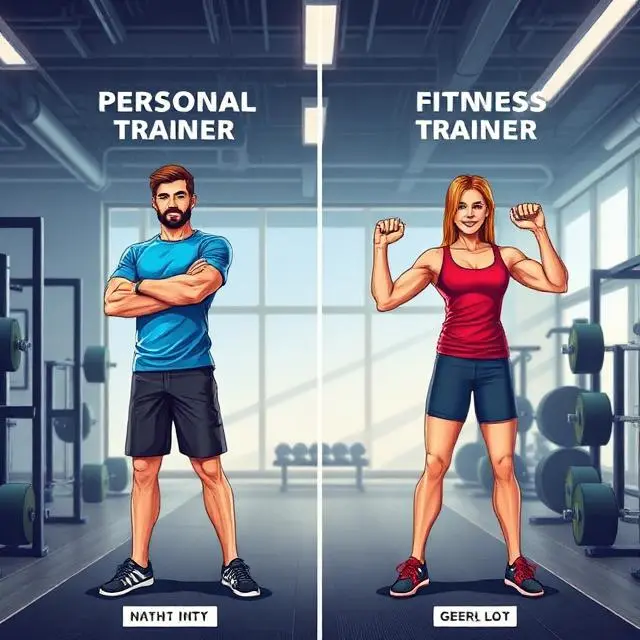
A personal trainer (PT) and a general fitness trainer both assist people in becoming healthier and more physically active, but they may differ in the amount of personalized attention, responsibilities, specialties, and career paths.
Typically a personal trainer may coach customers individually or in extremely small groups. They assess a client’s goals, design individualized fitness regimens, monitor progress, show exercises and change workouts based on the client’s needs.
By contrast, a general fitness trainer typically has a larger scope of work in a gym, fitness facility, studio or community environment. They may oversee the fitness floor, show basic exercises, assist members in using equipment securely, organize group sessions and offer general fitness assistance.
There is no consistent standardization of the distinction. The job names differ between clubs and nations, with some businesses using “fitness trainer,” “gym trainer” and “personal trainer” interchangeably. The title is less important than the job description itself.
Who Is a Personal Trainer?
A professional in the field of fitness who guides clients toward the accomplishment of their fitness goals is known as a personal trainer. The reason for this classification is due to the relationship in question. After establishing the client’s present level of fitness and conducting an analysis of their requirements, they develop structured training programs that are specifically designed to meet the client’s requirements.
Personal training sessions provide clients with the opportunity to improve their fitness, strength, endurance, flexibility, and mobility. These benefits can be gained by participating in these sessions. A demonstration of the exercises is given, the technique is assessed, the progress that has been made is monitored, and routines are altered at the appropriate periods.
A personal trainer is responsible for the following:
- Personal trainers create workouts and lessons for each client.
- Fitness instructors usually work with individuals or groups in fitness facilities.
- Both positions require you to be fit and have good people and communication skills.
- Personal training comes in many flavors, from online fitness to customized coaching to individual training.
- General fitness coaches can work with individuals, groups, other coaches, or the organization as a whole.
- Salaries for both positions depend on qualifications, experience, area, specialization and workplace.
- The choosing of career is influenced by talents , interests , work environment and long term ambitions .
Turn Your Passion for Fitness into a Profession
Learn practical skills, get certified, and step into the growing fitness industry with confidence.
Join the CourseWho Is a General Fitness Trainer?
A “general fitness trainer” is a fitness specialist who supports individuals or groups in engaging in regular exercise and improving their overall fitness level. This type of trainer often works with both individuals and groups. Unlike a personal trainer, who often focuses on highly customized programs, a general fitness trainer typically provides more complete instruction and support within the context of a gym or group training environment. This is in contrast to the activities that a personal trainer typically engages in.
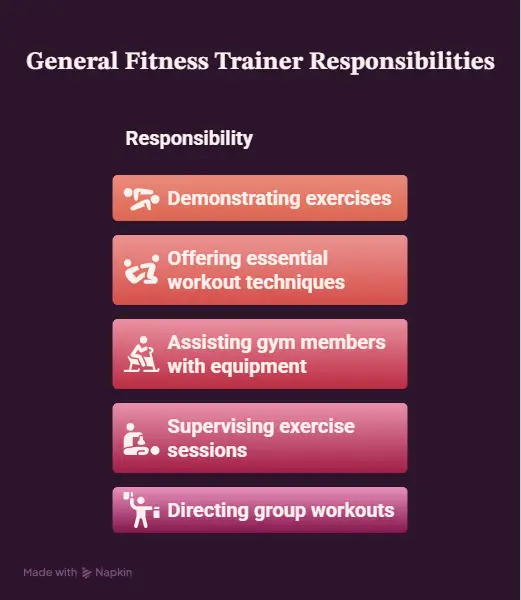
The individual may be responsible for demonstrating exercises, offering essential workout techniques, assisting gym members with equipment, supervising exercise sessions, and directing group workouts as part of their professional responsibilities.
Roles and Responsibilities
Both individuals are in the fitness industry but their day-to-day duties may be different.
1. Evaluation of client
A personal trainer, in contrast, usually has more time to learn about each particular client’s goals and fitness history.
The assessment could include talking about:
- Fitness objectives
- Work experience
- Activity level now
- Training preferences
- Lifestyle factors
- Health factors are important
Depending on the facilities, some general fitness trainers may provide basic fitness instruction.
2. Training Program
A personal trainer often creates customized workout plans for their client’s goals and development.
A general fitness trainer could offer simple workouts, exercise recommendations, or cookie-cutter workouts provided by the gym.
But this depends significantly on the trainer’s credentials and employment.
3. Individual Attention
Personal training usually entails more one-on-one attention.
During a personal training session, the trainer could observe:
- Exercise form
- Quality of movement
- Intensity of training
- Breaks for rest
- Performance (continued)
- Client comments
Then you can tailor the program according to the response of the client.
A general fitness trainer may need to divide their attention among multiple members.
4. Monitoring Progress
A lot of personal trainers keep very extensive notes of development.
They may monitor:
- Exercise capacity
- Repetitions
- Training load
- Presence
- Better fitness
- Program progression
It gives the trainer a chance to make educated modifications.
Depending on their job, general fitness trainers may supervise members in a less formal manner.
5. Drive & Responsibility
Both can entail motivation, but personal trainers usually have longer-term ties with particular customers.
For instance, a personal trainer could see the same client numerous times a week and help them maintain consistency for months.
A general fitness trainer may have more members and provide more frequent, shorter types of encouragement.
6. Securing
Both positions carry a significant safety obligation.
Trainers need to understand their area of competence and be able to identify when a scenario necessitates referral to the appropriate healthcare or other trained expert.
They also should know how to:
- Appropriately demonstrate exercises
- Encourage good technique
- Proper use of equipment
- Follow safety procedures of facility
- Properly respond to difficulties or situations within their training
Salary and Career Opportunities
The salary depends on where the personal trainer works, their education and experience, the company they work for, what their specialty is and if they are self-employed or run their own business out of a gym.
Career Opportunities Available to Fitness Trainers in General
It is possible for a general fitness trainer to advance toward:
The progression of fitness trainers includes senior trainers, fitness supervisors, fitness managers, and facility managers.
Moreover, they might relocate to:
- Group fitness instruction
- Member experience
- Fitness sales
- Wellness programs
- Gym management
- Personal training
- Fitness education
Consequently, a general trainer position can provide useful experience for individuals who are just starting out in the fitness business by allowing them to gain a grasp of how gyms function and how members interact with fitness services.
Which Career Is Right for You?
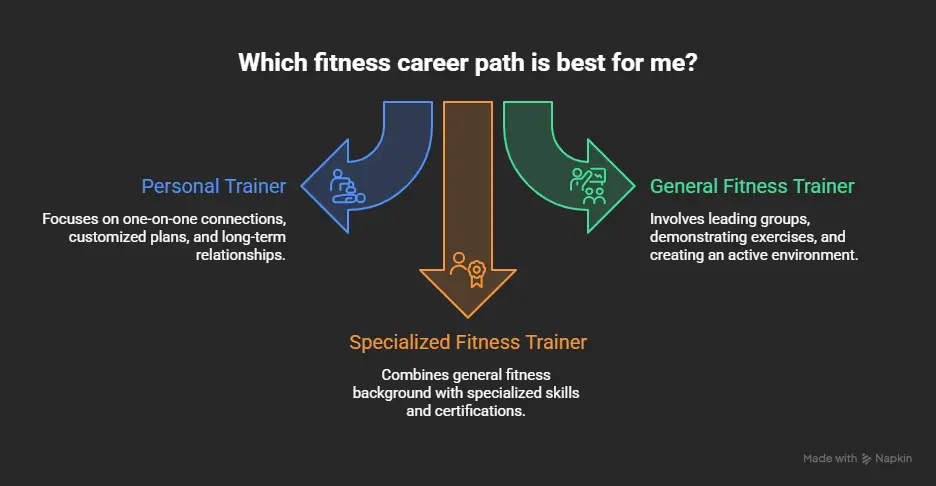
You should consider your personality, the goals you have for your profession, and the type of working environment you prefer before making a decision between personal training and generic fitness training.
Personal Training is the Best Option If You:
- Have fun collaborating closely with different people.
- For example, developing individualized exercise routines
- Take pleasure in monitoring your progress.
- A great ability to communicate is required.
- Want to cultivate long-term ties with your customers?
- Have an interest in specializing in something
- Take pleasure in mentoring and coaching
Personal training can be very rewarding for individuals who take pleasure in observing the progression of an individual’s capabilities over the course of various sessions.
Training in general fitness is the best option if you:
- Take pleasure in interacting with a large number of people
- Choose a more comprehensive fitness role.
- The equivalent of working in a crowded gym atmosphere
- Possess an interest in the management of gyms
Become a General Fitness Trainer and turn your passion into a Profession!
Turn Your Passion for Fitness into a Profession
Learn practical skills, get certified, and step into the growing fitness industry with confidence.
Join the CourseConclusion
When it comes to the quality and kind of individualized coaching that they offer, the primary distinction between a personal trainer and a generic fitness trainer is clear. The primary focus of personal trainers is typically on individualized programs and the achievement of specific client objectives, whereas general fitness trainers typically offer more comprehensive exercise coaching and assistance in the form of group sessions. Your interests, qualifications, preferred work environment, and long-term career aspirations should all be taken into consideration while making a decision amongst these vocations!
Turn Your Passion for Fitness into a Profession
Learn practical skills, get certified, and step into the growing fitness industry with confidence.
Join the CourseFrequently Asked Questions
Is a personal trainer better than a general fitness trainer?
Neither role is automatically better. Personal training may suit professionals who enjoy individualized coaching, while general fitness training can be suitable for those who prefer broader fitness instruction and group environments.
Can a general fitness trainer become a personal trainer?
Yes. A general fitness trainer can pursue relevant qualifications and gain practical experience to move into personal training, depending on the requirements of their location and employer.
Who earns more, a personal trainer or fitness trainer?
There is no fixed answer. Earnings depend on factors such as location, qualifications, experience, specialization, employer, client base, and working arrangement.
What qualifications are needed to become a personal trainer?
Requirements vary by location and employer. Generally, aspiring personal trainers pursue a recognized fitness or personal training certification and relevant practical training.
Which career is better for beginners: personal trainer or general fitness trainer?
The right choice depends on your interests and career goals. General fitness training can provide broad industry experience, while personal training offers a stronger focus on individualized coaching.
What skills are needed to become a successful fitness trainer?
Important skills include communication, exercise knowledge, motivation, observation, organization, professionalism, and the ability to work effectively with different clients.
Is personal training a good career choice?
Personal training can be a rewarding career for people who enjoy fitness, working with clients, teaching exercise techniques, and helping others work toward their fitness goals.