Table of Contents
A Project Controls Engineer is a professional that is responsible for management of the schedule, budget, progress and hazards of a project to guarantee that it is finished on time and within the authorized cost . They work with tools like Primavera P6, MS Project and Excel to measure performance, create reports, forecast expenses and assess potential delays. salaries in India are in the region of ₹6-18 lakh per annum and more. Pay for the same job in the Gulf is AED 8,000-20,000 per month based on the experience and type of project.
Key Takeaways
- A Project Controls Engineer keeps track of a project’s schedule, money, progress, and hazards.
- Notable tools for this position are Primavera P6, Microsoft Project, Excel and Power BI.
- With the necessary skills and knowledge, engineering graduates can have a successful career in project controls.
- Certifications like PMP, PMI-SP, AACE might help you increase the chances of acquiring a job.
- India and Gulf countries provide significant chances for career progression in the construction, oil and gas, infrastructure and engineering sectors.
Study Quantity Surveying With Professional Mentors! Join Now!
Introduction
Big projects such as highways, airports, power plants, oil & gas facilities and commercial structures require large investments, many contractors and tight timelines. Fail to monitor properly and projects can cost more, take longer, have no resources and face unforeseen risks. Project controls assist firms to identify if a project is on track. A specialized Project Controls Engineer gives sound information to project managers to make better decisions and deliver projects successfully.
What Does a Project Controls Engineer Do?
1: What is the main purpose of a Bill of Quantities (BoQ)?
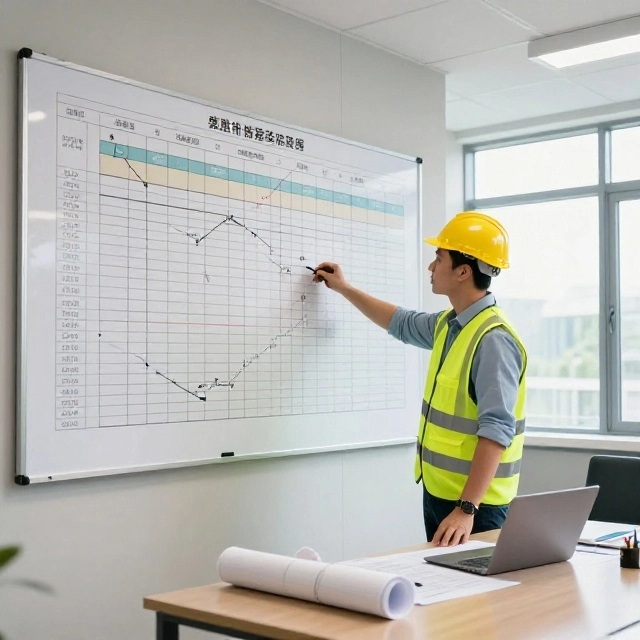
The key responsibilities are:
- Tools such as Primavera P6 and Microsoft Project make it easy to build and update project schedules.
- Control Expenditures: Check actual expenditures against the budget to keep spending in check.
- Measuring Progress: See how you’re doing by comparing what you’ve accomplished to the original plan you made.
- Detection of any dangers for a project including time and money overruns, has become a vital part of risk management.
- Prepare weekly/monthly reports, management dashboards and performance summaries for reporting purposes.
Master Quantity Surveying – Build a Rewarding Career Today!
Gain in-demand skills in cost estimation, project budgeting, and contract management with our Quantity Surveying Course. Learn from industry experts and boost your career in construction and infrastructure. Enroll now and take the first step toward success!
Know MoreHow Do Project Controls Work Across a Project?
Project controls are applied to the whole project.
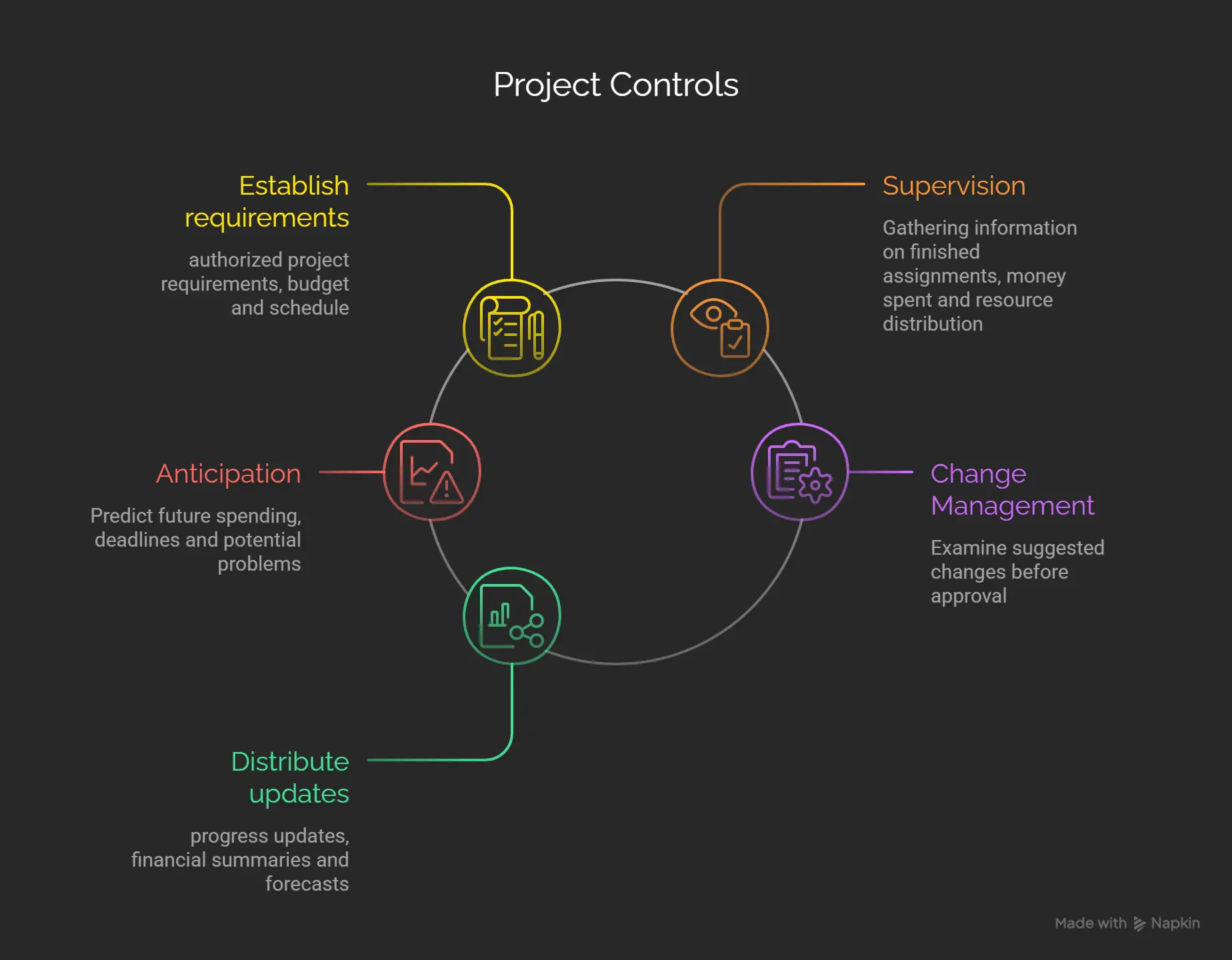
- Establish the authorized project requirements, budget and schedule. This is the benchmark to measure the performance.
- Supervision: Gathering information on finished assignments, money spent and resource distribution.
- Anticipation: Predict future spending, deadlines and potential problems based on present performance indicators.
- Change Management: Examine any suggested changes to the project’s scope, timeline or budget before approval.
- Distribute progress updates, financial summaries and forecasts to project management and stakeholders.
Key Project Controls Concepts
| Concept | Meaning |
|---|---|
| WBS (Work Breakdown Structure) | method that breaks down a major project into smaller, more manageable assignments or work packages. |
| Baseline | Initial project schedule and budget that were authorized and utilized for comparison |
| S-Curve | S-Curve is a graph that displays the cumulative progress, cost, or work of a project over a period of time. |
| Earned Value Management (EVM) | A technique that compares the work that was planned, the work that was completed, and the actual spending. |
| Float | The amount of time that an activity can be delayed without having an impact on the date that the project is expected to be finished or another milestone that has been established. |
Project Controls Engineer vs Planning Engineer vs Quantity Surveyor
The three experts work together although their jobs are different.
| Factor | Project Controls Engineer | Planning Engineer | Quantity Surveyor |
|---|---|---|---|
| Main focus | Overall performance of project | Project schedule and timetables | Cost of project and agreements |
| Key duty | Time, cost and progress monitoring | Develop and revise timetables | Estimate and control construction costs |
| Tools | P6, Excel, Power BI | Primavera P6, MS Project | Excel, cost-estimation software |
| Main output | Performance reports and forecasts | Project schedules | Valuations and payment estimations |
Master Quantity Surveying – Build a Rewarding Career Today!
Gain in-demand skills in cost estimation, project budgeting, and contract management with our Quantity Surveying Course. Learn from industry experts and boost your career in construction and infrastructure. Enroll now and take the first step toward success!
Know MoreTools and Software Used
Project controls engineers use many software tools to track information about projects.
- Primavera P6 is an important software for the management and planning of projects. Large engineering, building, and infrastructure projects are most typically run using this program.
- With Microsoft Project software you may build schedules, assign resources and keep track of project activity.
- Microsoft Excel helps you figure out costs, keep track of tasks, look at data, and produce reports.
- Power BI software makes it simple to create dynamic dashboards and visual reports from project data.
- Candidates interested in construction and engineering project controls will be familiar with Primavera P6 and sophisticated Excel.
Skills Required to Become a Project Controls Engineer
Good professional should have a mix of technical and communication skills.
| Technical Skills | Soft Skills |
|---|---|
| Primavera P6 | Communication |
| MS Project | Teamwork |
| Advanced Excel | Problem-solving |
| Cost control | Time management |
| Scheduling and forecasting | Analytical thinking |
| Earned Value Management | Attention to detail |
| Risk analysis | Decision-making |
Qualifications and Certifications
One of the most typical ways to enter the field of project controls is to earn a bachelor’s degree in engineering. Included in the relevant qualifications are:
- It is customary for employers and industries to accept Bachelor of Technology or Bachelor of Engineering degrees in engineering disciplines such as civil, mechanical, electrical, or other engineering fields.
- PMP stands for “Project Management Professional,” and it is a certification that is provided by the Project Management Institute (PMI). This certification certifies that the individual has knowledge and expertise in project management. In general, it is appropriate for experts with extensive experience.
- Scheduling Professional (PMI-SP) is a specialized certification offered by the Project Management Institute (PMI) for professionals who work in the field of project scheduling and schedule management.
- AACE certificates: The Association for the Advancement of Cost Engineering (AACE) is a professional organization that provides certificates in the fields of cost engineering, planning, and project controls. These certifications include Certified Cost Professional (CCP) and Planning & Scheduling Professional (PSP).
Project Controls Engineer Salary in India and the Gulf
Project controls engineers are paid salaries comparable to other specialists in the construction, oil and gas, infrastructure, energy and engineering consultancy sectors. These include engineering consultancy businesses.
Years of experience, certifications, software expertise, industry and size of the project are some of the elements considered in calculating overall compensation.
Indicative salary ranges for 2026:
| Experience | India (Annual) | UAE (Monthly) | Saudi Arabia (Monthly) |
|---|---|---|---|
| 0–3 years | ₹8–12 lakh | AED 8,000–12,000 | SAR 8,000–12,000 |
| 3–7 years | ₹12–18 lakh | AED 12,000–18,000 | SAR 11,000–16,000 |
| 8–12 years | ₹18–22 lakh | AED 18,000–25,000 | SAR 14,000–21,000 |
| 12+ years | ₹20–25 lakh+ | AED 20,000–30,000+ | SAR 18,000–25,000+ |
Career Path of a Project Controls Engineer
Project controls is an opportunity to move from an entry level technical role to senior management.
| Career Level | Main Responsibilities |
|---|---|
| Junior Engineer in Charge of Project Controls | Scheduling of help, data collecting and progress tracking. |
| Chief Engineer of Project Controls | Coordinate schedules, cost reports and project performance. |
| Senior Engineer in Charge of Project Controls | Forecast and risk analysis and complex project management. |
| The Leader of Project Controls | Manage reporting processes and project controls team coordination. |
| Administrator of Project Controls | Oversee project controls, budgets, timetables and performance across all projects. |
With experience, experts may also advance into project management, planning management, cost management, and project consultation.
How to Become a Project Controls Engineer
To acquire a job in project controls do these things:
- Learn to be an engineer. You can earn a B.E. or B.Tech. in electrical, mechanical, civil or the like by yourself.
- A good project manager knows how to set a timetable, a budget, keep expenses down, and handle hazards.
- Learn how to use Primavera P6 to plan projects, track jobs and assess how things are progressing with a project.
- Excel and Power BI can be used to enhance your skills in areas like mathematics, data analysis, reporting, and dashboard creation.
- obtain an internship or a junior job in project planning / scheduling / project coordinating to obtain real world experience.
- Learn about the business: Discover more about the occupations that need project controls professionals in the oil and gas industry, construction and other sectors.
- You’ve got to have the correct credentials. You might also desire to earn certificates like PMP, PMI-SP, or AACE after some time.
Study Quantity Surveying With Professional Mentors! Join Now!
Conclusion
If you have a degree in engineering or work experience and like to plan, analyze data, and manage the performance of projects, becoming a Project Controls Engineer could be a good job for you. People in India and the Gulf who are good at Primavera P6, Excel, cost control, and project organizing can look forward to well-paying jobs.
Do you want to work as a project controller? Start by learning Primavera P6. This will help you become a better project manager and give you real-world experience. You can get ready for new opportunities in the engineering and construction fields by taking these steps.
Master Quantity Surveying – Build a Rewarding Career Today!
Gain in-demand skills in cost estimation, project budgeting, and contract management with our Quantity Surveying Course. Learn from industry experts and boost your career in construction and infrastructure. Enroll now and take the first step toward success!
Know MoreFrequently Asked Questions
Is a Project Controls Engineer a good career?
Yes. It offers opportunities in construction, oil and gas, infrastructure, energy and engineering industries. Professionals can progress into senior engineering and management positions.
Is Primavera P6 necessary for project controls?
Primavera P6 is widely used for large engineering and construction projects. Knowing it can improve your employment opportunities, particularly in the Gulf.
Can a civil engineer become a Project Controls Engineer?
Yes. Civil engineering graduates can enter project controls by developing skills in scheduling, cost control, project management and software such as Primavera P6.
Is project controls different from project management?
Yes. Project management covers the overall planning, coordination and delivery of a project. Project controls focuses on monitoring and controlling its schedule, cost, progress and risks.
Which industries hire Project Controls Engineers?
Major employers include construction companies, oil and gas companies, infrastructure developers, engineering consultancies, power generation companies and EPC contractors.
What is the difference between a Planning Engineer and a Project Controls Engineer?
A Planning Engineer mainly focuses on project schedules, timelines and activity sequencing. A Project Controls Engineer has a broader role that includes scheduling, cost monitoring, progress measurement, forecasting and reporting.