Table of Contents
Introduction
Hair styling helps create neat looks. It makes one look attractive. It also supports personal grooming. This helps one in self-expression. Beginners can learn many techniques. They go through regular practice. Simple hairstyles are good start. Tools make styling easier. Good hair care is important. It improves styling results.
Master Advanced Skincare, Makeup, Hair, and Salon Management. Enrol Now!
What Is Hair Styling?
It involves arranging hair. Hair is arranged into different shapes. It includes both techniques. Simple and advanced. Each methods create unique appearance.
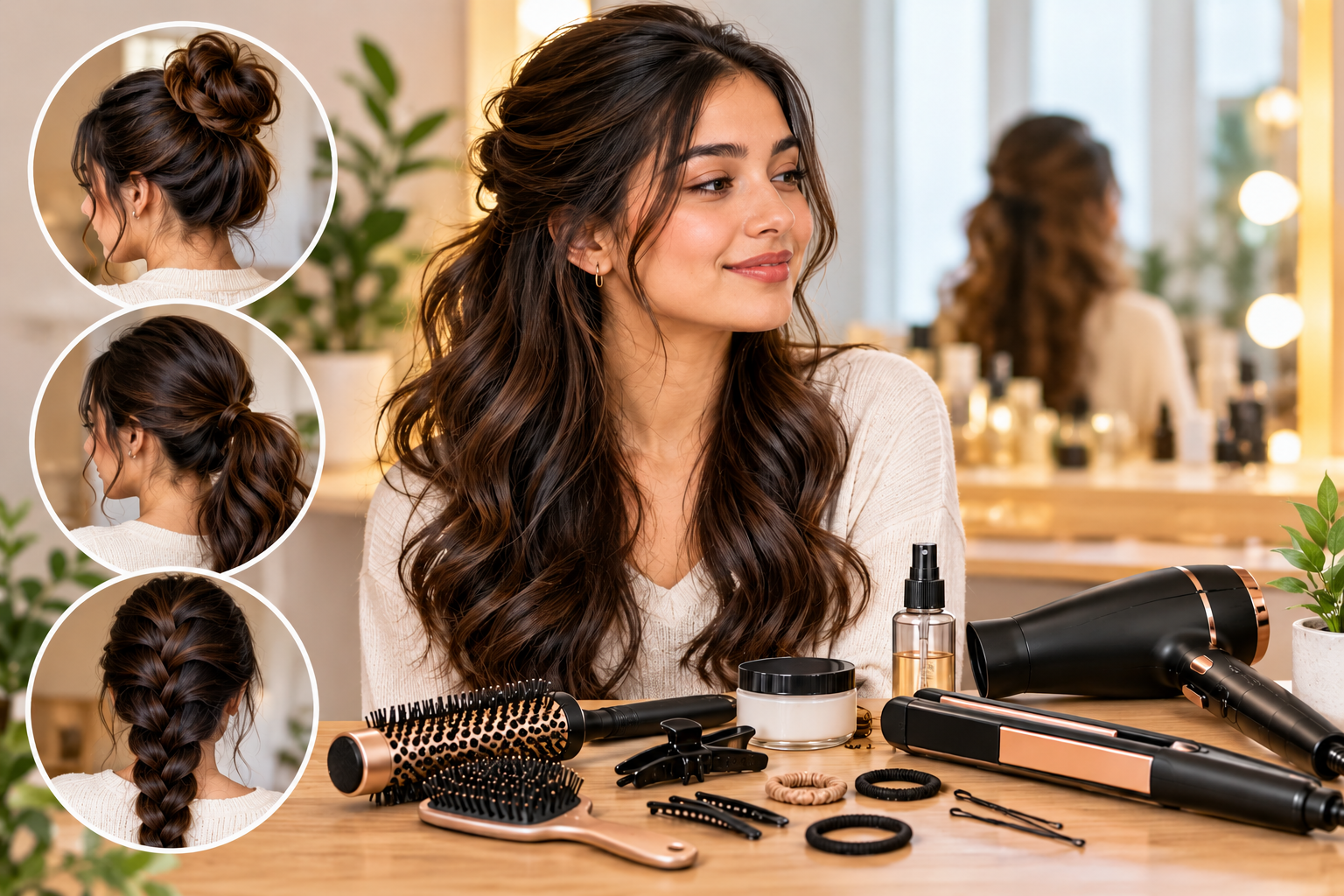
Common Methods
- Straightening:
- Creates smooth hair.
- Curling:
- Adds curls.
- Braiding:
- Creates woven patterns.
- Twisting:
- Forms twisted sections.
- Ponytails:
- Secures gathered hair.
- Buns:
- Creates rounded shapes.
- Blow-drying:
- Shapes damp hair.
- Updos:
- Arranges raised hairstyles.
- Waves:
- Adds soft movement.
- Layering:
- Highlights different lengths.
Benefits of Learning Hair Styling
- Grooming:
- Hair looks neat.
- Creativity:
- Encourages personal expression.
- Confidence:
- Supports individual style.
- Convenience:
- Simplifies daily preparation.
- Versatility:
- Offers different looks.
- Employment:
- Builds practical skills.
- Independence:
- Salon visits reduces.
- Presentation:
- Complements different outfits.
Factors Affecting Hairstyles
- Texture:
- Influences styling methods.
- Length:
- Decides suitable hairstyles.
- Density:
- Impacts how full the hair appears.
- Condition:
- Influences product choices.
- Occasion:
- Guides hairstyle selection.
- Weather:
- Hairstyle durability is affected.
Beginners start simple. One must practice. Then advanced styles become easier.
Master Makeup, Hair & Skincare to Build Your Beauty Identity
Unlock your creative potential with our expert-led Beauty & Wellness course. Build in-demand beauty skills and step confidently into the world of beauty!
Your Beauty Career Starts Here!Essential Hair Styling Skills for Beginners
Basic skills make attractive hairstyles. They also improve control and reduce mistakes.
1. Understanding Hair Types
Different hair types need different approaches.
- Straight:
- Usually lies flat.
- Wavy:
- Forms gentle bends.
- Curly:
- Contains spiral patterns.
- Coily:
- Forms tight coils.
- Fine:
- Often needs lightweight products.
- Thick:
- May require careful sectioning.
Product selection depend on hair texture. They help maintain healthy hair.
2. Detangling Hair Properly
It prepares one’s hair. Especially for styling. One must handle gently. This prevents breakage.
- Preparation:
- Apply suitable detangling products.
- Sectioning:
- Divide hair into sections.
- Starting:
- Begin near the ends.
- Movement:
- Brush towards the roots.
- Tools:
- Choose suitable combs.
- Patience:
- Stop pulling stubborn knots.
Damp detangling benefits curly hair. Handle gently.
3. Sectioning Hair
It makes styling manageable. It also improves neatness. And gives a balance.
- Partings:
- Create clean divisions.
- Clips:
- Secure unused sections.
- Size:
- Keep sections manageable.
- Control:
- Work systematically.
- Consistency:
- Maintain similar section sizes.
This skill help during curling. It is also helps in braiding. One’s blow-drying results improve.
4. Learning Basic Braiding
It creates attractive look. It is a practical hairstyles. Start with 3 strands.
- Divide:
- Part hair into three.
- Cross:
- Move one outer section inward.
- Alternate:
- Move next section in word.
- Continue:
- keep proceeding.
- Secure:
- Tie braid.
- Adjust:
- Loosen if required.
Don’t tighten near scalp. Daily Practice. This improves the braid. It gets consistent.
5. Creating Ponytails and Buns
They are for everyday comfort. They require little accessories.
Ponytail techniques:
- Brush:
- Smooth tangled hair.
- Gather:
- Bring hair together.
- Position:
- Choose the desired height.
- Secure:
- Use a suitable hair tie.
- Finish:
- Smooth loose strands.
Bun techniques:
- Gather:
- Create a ponytail.
- Twist:
- Turn the gathered hair.
- Wrap:
- Circle hair around base.
- Secure:
- Pin it or tie it.
- Adjust:
- Tuck loose strands.
Do not pull excessively. Changing positions reduce tension.
6. Learning Blow-Drying
Blow-drying helps shape hair. It also dries hair. It also add volume.
- Preparation:
- Remove excess water gently.
- Protection:
- One can apply heat protectant.
- Sectioning:
- Divide hair into parts. Making it manageable.
- Distance:
- Keep dryer away.
- Movement:
- Avoid holding heat in same place.
- Brushes:
- Use shaping brushes.
- Finishing:
- Finish with cooler airflow.
Excessive heat damage one’s hair. Follow instructions. Maintain safety.
7. Using Curling and Straightening Tools
Heat tools create different finishes. Beginners should practise careful handling.
Curling skills:
- Dryness:
- Start with completely dry hair.
- Protection:
- Apply heat protectant.
- Sections:
- Work with small portions.
- Wrapping:
- Follow tool instructions.
- Cooling:
- Cool before arranging.
- Release:
- Avoid pulling curls roughly.
Straightening skills:
- Detangling:
- Remove knots beforehand.
- Temperature:
- Choose proper setting.
- Sections:
- Work with tiny portions.
- Movement:
- Move the tool smoothly.
- Repetition:
- Avoid unnecessary repeated passes.
Lower effective heat settings are preferable. Never use ordinary hot tools on wet hair.
8. Choosing Hair Products
Products help manage texture. They provide a hold as well. Each products serve different purpose.
- Mousse:
- Adds volume.
- Gel:
- Provides styling hold.
- Serum:
- Smooths frizz.
- Conditioner:
- For softness.
- Heat protectant:
- Heat damage reduces.
- Hair spray:
- Maintains hairstyle.
- Leave-in:
- For ongoing conditioning.
- Dry shampoo:
- Removes excess oil.
Choose products suitable for one’s hair type. Start with tiny amounts.
9. Creating Volume and Texture
Volume adds fullness to hairstyles. Texture creates movement and definition.
- Roots:
- Lift roots while drying.
- Products:
- Choose lightweight formulas.
- Waves:
- Try gentle overnight braids.
- Brushing:
- Use suitable brushes.
- Layers:
- Highlight natural movement.
- Balance:
- Avoid product buildup.
Methods changes with hair textures. Choose methods that protect hair.
10. Improving Through Practice
Confidence comes with practice. One’s control improves. Newbies’ should be consistent.
- Routine:
- Practise.
- Patience:
- Avoid rushing
- Feedback:
- Identify improvement areas.
- Experimentation:
- Try simple variations.
- Organisation:
- Keep tools in hand.
- Progress:
- Compare results.
Start with one technique. Build skills gradually before attempting complex styles.
Master Advanced Skincare, Makeup, Hair, and Salon Management. Enrol Now!
Basic Hair Styling Tools Beginners Should Know
Basic tools support many hairstyles. Beginners can start with a small collection.
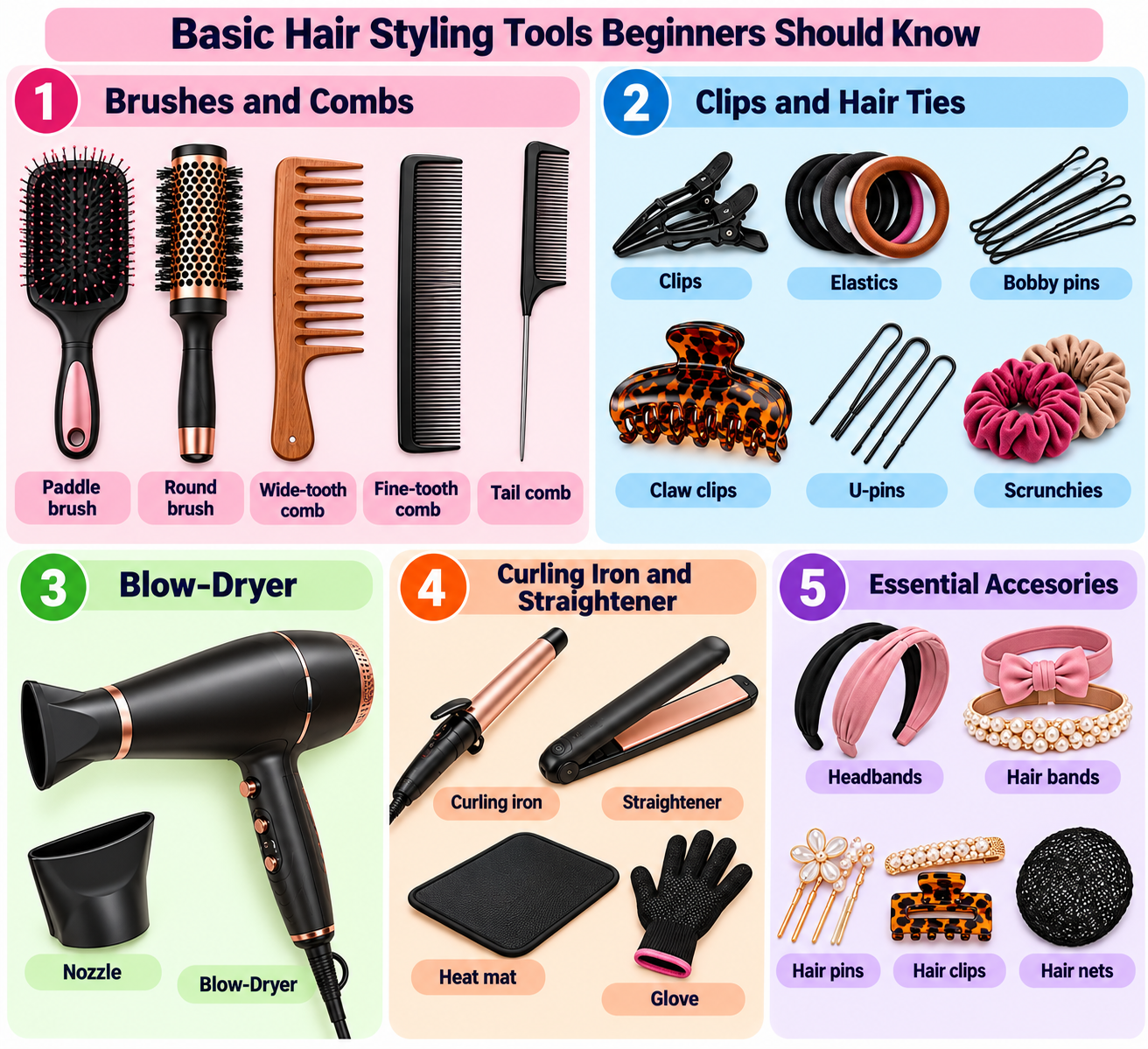
1. Brushes and Combs
- Paddle brush:
- Smooths longer hair.
- Round brush:
- Shapes hair while drying.
- Wide-tooth:
- Helps detangle hair.
- Fine-tooth:
- Creates precise partings.
- Tail comb:
- Supports neat sectioning.
Clean tools regularly. Use gentle brushing movements.
2. Clips and Hair Ties
- Clips:
- Hold styling sections.
- Elastics:
- Secure ponytails.
- Bobby pins:
- Hold loose sections.
- Claw clips:
- Gather hair quickly.
- U-pins:
- Secure buns.
- Scrunchies:
- Provide softer fastening.
Choose accessories that don’t pull. Avoid damaged ties. Don’t use rough hair ties.
3. Blow-Dryer
- Airflow:
- Helps dry hair.
- Heat settings:
- Control temperature.
- Nozzle:
- Directs airflow.
- Cool setting:
- Helps finish styling.
- Maintenance:
- Clean air filters.
Shake dryer continuously. Avoid concentrating at one area.
4. Curling Iron and Straightener
- Curling iron:
- Creates curls.
- Straightener:
- Straightens hair.
- Temperature control:
- Heat levels adjusted.
- Heat mat:
- For surface protection.
- Glove:
- Helps protect hands.
Use them carefully. Unplug after use.
5. Essential Accessories
- Headbands:
- Hold front sections.
- Hair bands:
- Add decorative details.
- Hair pins:
- Secure hairstyles.
- Hair clips:
- Add simple accents.
- Hair nets:
- Help secure certain updos.
Start with basic accessories. Use them for different styles.
Easy Hairstyles Every Beginner Can Learn
New persons can learn several styles. They only need to practice. Simple styles require fewer tools. They also use easier techniques. These hairstyles suit different occasions. It can be applied for any hair length.
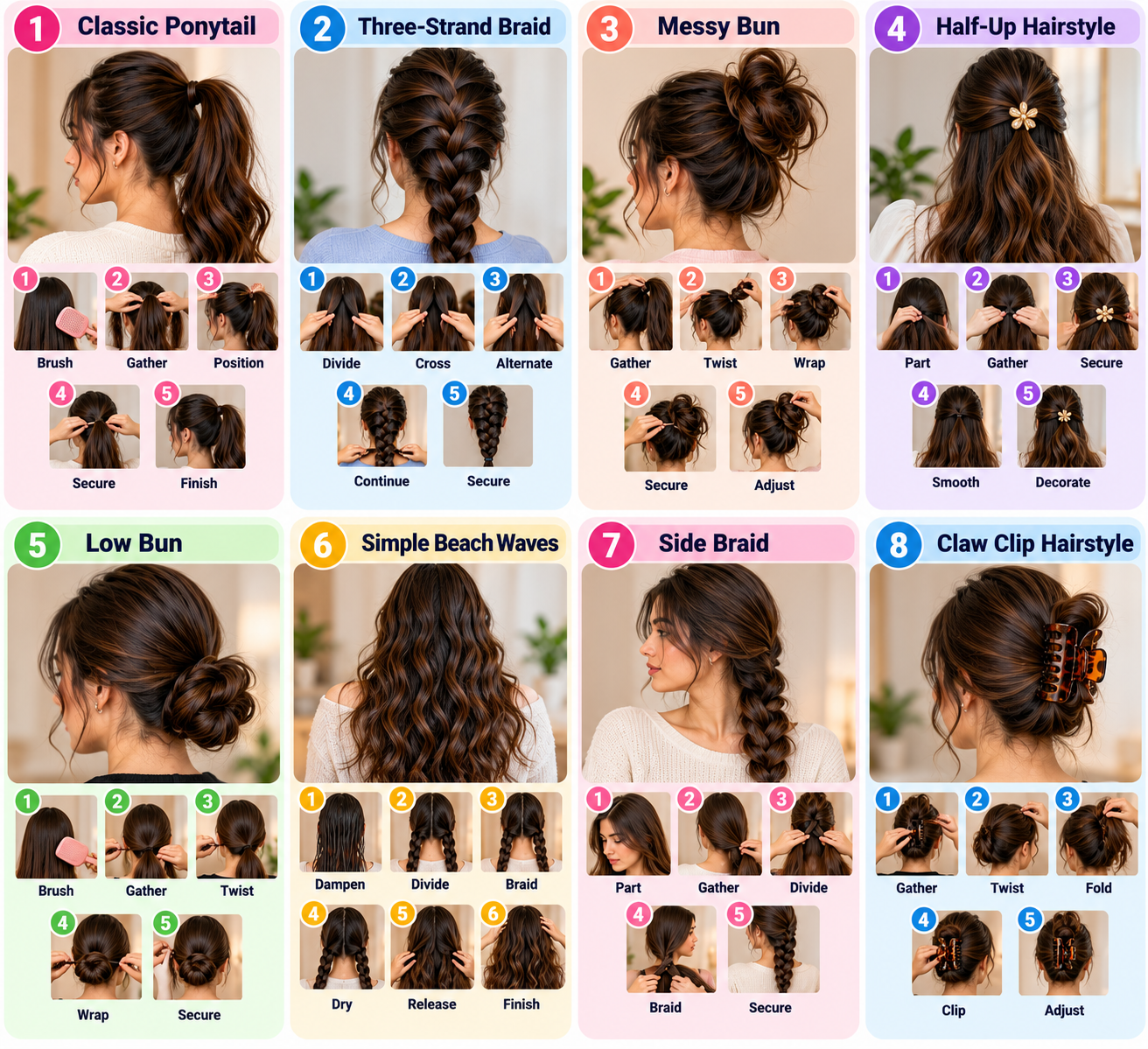
1. Classic Ponytail
A ponytail is simple. It is more practical. It works for daily activities . Ponies also suit outings.
- Brush:
- Remove tangles.
- Gather:
- Collect hair behind the head.
- Position:
- Choose any height.
- Secure:
- Secure with soft tie.
- Finish:
- Smooth loose stands.
2. Simple Three-Strand Braid
Its for daily styling. It also keeps longer hair organised.
- Divide:
- Create three equal sections.
- Cross:
- Move the right section inward.
- Alternate:
- Repeat other side.
- Continue:
- Maintain the pattern.
- Secure:
- Tie the braid’s end.
3. Messy Bun
It gives cool appearance. Its for casual occasions.
- Gather:
- Collect into a ponytail.
- Twist:
- Turn hair loosely.
- Wrap:
- Circle hair around the base.
- Secure:
- Use a pin /a hair tie.
- Adjust:
- Pull out a some strands.
4. Half-Up Hairstyle
This style keeps front sections away. It also leaves some hair loose.
- Part:
- Separate the upper section.
- Gather:
- Collect hair near the crown.
- Secure:
- Use a clip or tie.
- Smooth:
- Arrange the loose hair.
- Decorate:
- Add a simple accessory.
5. Low Bun
It gives a neat appearance. It suits formal wears. They are used in everyday as well.
- Brush:
- Smooth hair.
- Gather:
- Make low ponytail.
- Twist:
- Turn the gathered hair.
- Wrap:
- Form a bun near the neck.
- Secure:
- Use suitable pins.
6. Simple Beach Waves
It create soft-relaxed texture. One can try heatless method first.
- Dampen:
- Dampen hair.
- Divide:
- Create two sections.
- Braid:
- Make loose braids.
- Dry:
- Dry completely.
- Release:
- Undo the braids.
- Finish:
- Separate waves using fingers.
Don’t sleep with wet hair. Handle them gently. This prevents breakage.
7. Side Braid
It creates a softer look. It works with medium hair. Can be tried on long hair.
- Part:
- Create a side parting.
- Gather:
- Bring hair over one shoulder.
- Divide:
- Separate three sections.
- Braid:
- Follow the basic braiding method.
- Secure:
- Use a hair tie.
8. Claw Clip Hairstyle
It gives quick styling options. They work well for casual looks.
- Gather:
- Collect hair at the back.
- Twist:
- Turn hair upwards.
- Fold:
- Fold ends inwards.
- Clip:
- Secure the gathered hair.
- Adjust:
- Check comfort and hold.
Choose the right clip. It should suit hair thickness.
Master Makeup, Hair & Skincare to Build Your Beauty Identity
Unlock your creative potential with our expert-led Beauty & Wellness course. Build in-demand beauty skills and step confidently into the world of beauty!
Your Beauty Career Starts Here!Basic Hair Care and Styling Techniques
Hair care is important. It provides healthier hairstyles. Good habits improve manageability. Beginners should learn basic preparation. One should also learn to maintain.
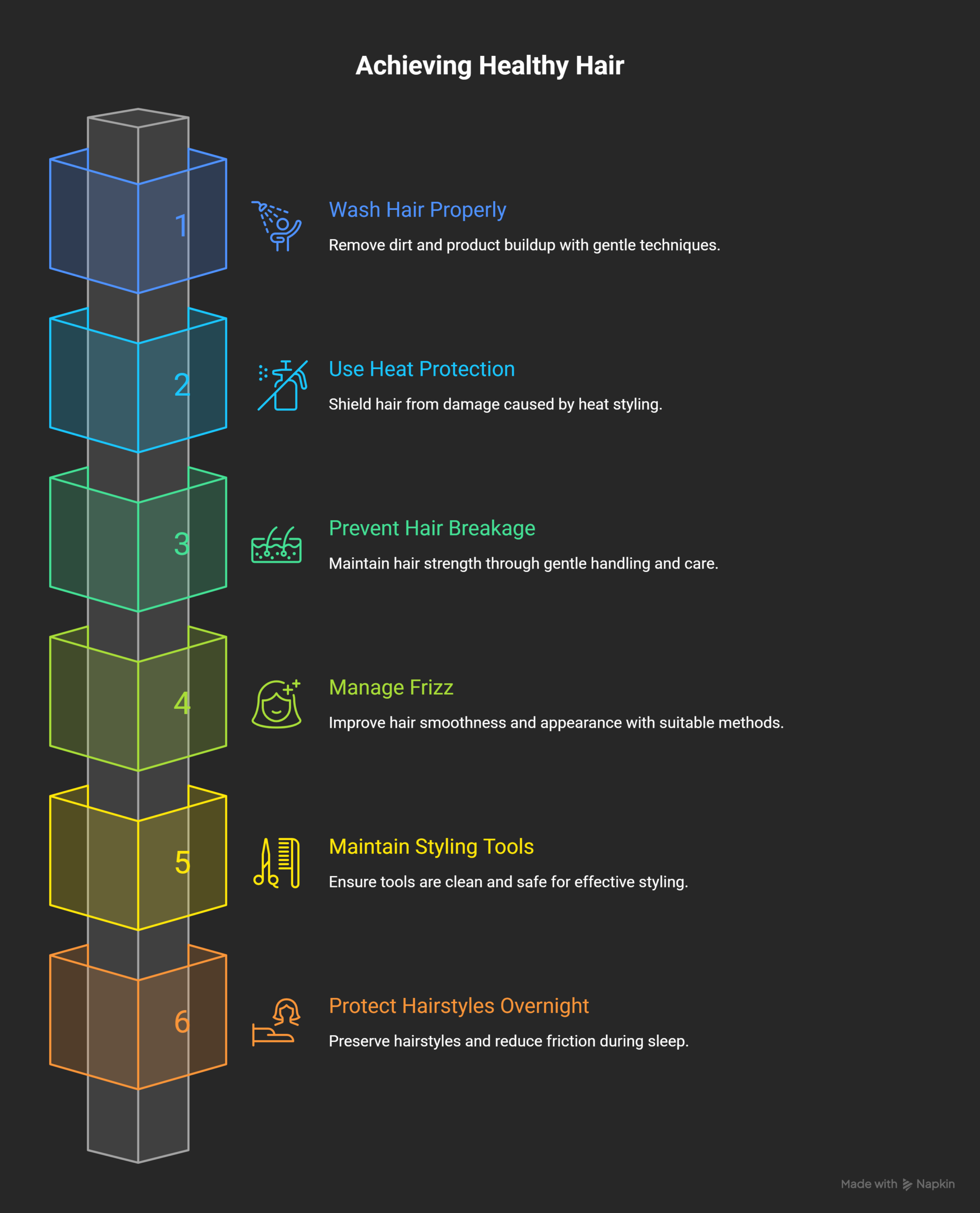
1. Wash Hair Properly
Washing removes dirt. One gets rid of product buildup.
- Shampoo:
- Apply on scalp.
- Rinsing:
- Wash away the shampoo.
- Conditioning:
- Apply conditioner where suitable.
- Drying:
- Pat hair with a towel.
- Frequency:
- Depends on individuals.
Don’t rub with towels. Handle softly. It reduces unnecessary friction.
2. Use Heat Protection
Heat styling damage hair. Damage increases with time. Hence heat protectants are used. They reduce damage.
- Application:
- Follow directions.
- Coverage:
- Distribute product evenly.
- Dryness:
- Check tool requirements.
- Temperature:
- Choose suitable heat settings.
- Frequency:
- Limit unnecessary heat styling.
It cannot prevent all damage. Use hot tools carefully.
3. Prevent Hair Breakage
Follow gentle habits. They help maintain hair strength. Do not handle roughly. It increases breakage.
- Detangling:
- Remove knots.
- Brushing:
- Avoid force.
- Accessories:
- Choose smooth ties.
- Tension:
- Avoid tight styles.
- Wet hair:
- Handle carefully.
- Trimming:
- Maintain ends when needed.
Avoid repeatedly styling the same areas tightly.
4. Manage Frizz
Frizz can affect hairstyle appearance. Suitable care improve smoothness.
- Conditioning:
- Maintains moisture.
- Serum:
- Use tiny amount.
- Drying:
- Avoid rough towels.
- Brushing:
- Choose right tools.
- Humidity:
- Expect changes in damp weather.
- Products:
- Avoid buildup.
Each hair texture behave differently. Choose methods suited to one’s needs.
5. Maintain Styling Tools
Clean tools support better styling. Proper maintenance also improves tool safety.
- Brushes:
- Remove trapped hair regularly.
- Combs:
- Wash away product residue.
- Clips:
- Clean visible buildup.
- Hot tools:
- Follow cleaning instructions.
- Storage:
- Keep tools dry and organised.
- Inspection:
- Check cords for damage.
Never clean hot tools while plugged in.
6. Protect Hairstyles Overnight
Overnight care helps maintain certain hairstyles. It can also reduce friction.
- Pillowcase:
- Choose smooth fabric.
- Braids:
- Keep them comfortably loose.
- Buns:
- Avoid excessive tension.
- Accessories
- : Remove uncomfortable clips.
- Detangling:
- Refresh hair gently in mornings.
Avoid tight hairstyles during sleep.
Career Opportunities in Hair Styling
Hair styling offers various career paths. Beginners develop skills through practice. One may undergo training as well. Career paths depend on experience. It also varies with personal interests.
1. Hair Stylist
Hair stylists create different hairstyles. They may work in salons.
- Cutting:
- Shape hair lengths.
- Styling:
- Create finished looks.
- Consultation:
- Understand client preferences.
- Maintenance:
- Recommend suitable care.
2. Salon Assistant
Salon assistants support daily salon activities. This role can provide practical experience.
- Preparation:
- Arrange styling tools.
- Hygiene:
- Keep work areas clean.
- Assistance:
- Support experienced stylists.
- Organisation:
- Manage basic supplies.
3. Bridal Hair Stylist
They create special occasion hairstyles. Their work often requires detailed planning.
- Updos:
- Create formal hairstyles.
- Accessories:
- Arrange decorative pieces.
- Consultation:
- Discuss preferred looks.
- Practice:
- Prepare styles before events.
4. Freelance Hair Stylist
They provide independent styling services. They may visit clients or work at events.
- Bookings:
- Manage appointments.
- Styling:
- Provide requested services.
- Portfolio:
- Display completed hairstyles.
- Communication:
- Understand client expectations.
5. Hair and Beauty Educator
Experienced professionals can teach styling skills. Training usually requires strong practical knowledge.
- Demonstrations:
- Explain styling methods.
- Guidance:
- Help learners practise.
- Safety:
- Teach proper tool handling.
- Assessment:
- Review learner progress.
Skills Supporting Career Growth
- Communication:
- Understand client needs.
- Creativity:
- Develop attractive hairstyles.
- Patience:
- Handle detailed work.
- Hygiene:
- Maintain clean equipment.
- Practice:
- Improve technical ability.
- Professionalism:
- Respect client preferences.
Formal training can strengthen practical skills. Experience also helps develop professional confidence.
Conclusion
One’s hair styling skill improves with practice. Beginners can start slow. Confidence increases with simple hairstyles. Basic tools make it easier. Gentle care protects hair. Skills improve with patience.
Hair styling offers career options. Creativity helps create new looks. Technique improves with practice. Learn skills one by one. Try new styles. Better results come slowly.
Master Makeup, Hair & Skincare to Build Your Beauty Identity
Unlock your creative potential with our expert-led Beauty & Wellness course. Build in-demand beauty skills and step confidently into the world of beauty!
Your Beauty Career Starts Here!Frequently Asked Questions
What are the basic hair styling skills every beginner should learn?
Beginners should learn detangling, sectioning, braiding, and creating ponytails or buns. They should also practise blow-drying, basic curling, and straightening while following proper safety methods.
Which hair styling tools should beginners buy first?
Beginners can start with a hairbrush, wide-tooth comb, sectioning clips, hair ties, and bobby pins. A blow-dryer and heat styling tools can be added later, depending on individual needs and experience.
How can beginners learn hair styling at home?
Beginners can practise simple hairstyles using mirrors, basic accessories, and online learning resources. Repeating each technique regularly helps improve hand coordination, styling control, and confidence.
Which hairstyles are easiest for beginners to learn?
Ponytails, three-strand braids, messy buns, and half-up hairstyles are suitable starting options. These styles require basic techniques and can be adapted for different occasions and hair lengths.
How can beginners style hair without causing damage?
Beginners should detangle hair gently, avoid excessive pulling, and choose suitable styling products. They should also limit heat exposure, use heat protectants, and avoid hairstyles that place constant tension on the scalp.
Is heat protection necessary before using styling tools?
Heat protectants help reduce damage caused by curling irons, straighteners, and blow-dryers. Beginners should follow product instructions, choose suitable temperatures, and avoid using ordinary hot tools on wet hair.
How can beginners make hairstyles last longer?
Clean preparation, suitable products, and secure styling techniques can help hairstyles last longer. Hair sprays, clips, and pins may provide extra hold, depending on the hairstyle and hair type.
How often should beginners practise hair styling?
Beginners can practise several times weekly, depending on their schedules and hair condition. Short practice sessions focused on one technique can improve consistency without requiring excessive heat or repeated manipulation.
Can hair styling become a career?
Hair styling can lead to careers in salons, bridal services, freelance styling, and beauty education. Practical training, communication skills, creativity, and regular practice can help beginners prepare for professional opportunities.
What is the difference between hair styling and hairdressing?
Hair styling mainly focuses on arranging hair into different shapes, textures, and finished looks. Hairdressing often covers a wider range of services, including cutting, colouring, washing, treatments, and styling, depending on the professional’s training.