Table of Contents
SPF 50 provides little stronger UVB protection. SPF 30 still provides excellent daily protection. The better choice depends on your sun exposure. Application also matters more than the number. Broad-spectrum protection should always remain a priority. Water resistance matter outdoors.
Master Advanced Skincare, Makeup, Hair, and Salon Management. Enrol Now!
What does SPF Mean?
SPF = Sun Protection Factor. It indicates protection against sunburn. SPF mainly measures protection from UVB radiation. UVB rays are strongly linked with sunburn. They can also contribute to skin cancer.
SPF does not describe complete UV protection. UVA rays also affect your skin. UVA contributes to premature skin aging. It can also contribute to skin cancer. Therefore, broad-spectrum protection is important.
It protects against UVA and UVB. Look for it on sunscreen labels. Do not choose sunscreen based on SPF alone.
What does the SPF Number Actually Show?
The SPF number represents tested sunburn protection. Higher numbers generally provide greater protection. However, the increase becomes smaller at higher levels.
For eg: SPF 30 filters 97% UVB. SPF 50 filters little more UVB. This difference can matter during intense exposure. However, it does not mean double protection.
SPF also does not represent exposure time. SPF 30 does not permit thirty hours outside. Similarly SPF 50 does not permit fifty hours either. Reapplication remains necessary during outdoor exposure.
Does SPF Protect against UVA?
SPF measures UVB protection. UVA protection needs a broad-spectrum label. These products protect against both radiations. This matters when choosing sunscreen.
UVA rays penetrate deep into skin. They contribute skin aging. UVB rays cause sunburn. Both can damage skin.
Therefore, SPF should not be considered alone. Always look for broad-spectrum protection.
SPF 30 vs SPF 50: What is the Difference?
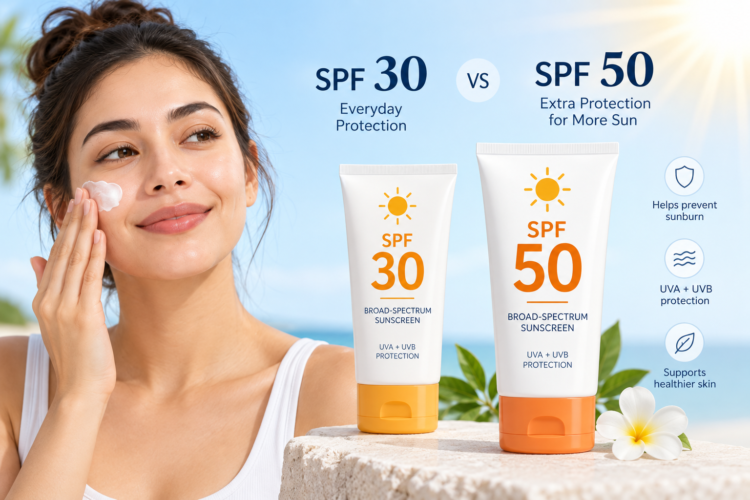
SPF 30 and SPF 50 give strong protection. Little more UVB protection is provided by SPF 50. The difference is smaller than many people expect.
| Sunscreen | Approximate UVB filtered | General use |
|---|---|---|
| SPF 30 | 97% | Everyday protection |
| SPF 50 | About 98% | Stronger protection |
| SPF 100 | About 99% | Very high SPF |
The figures show why SPF can confuse shoppers. SPF 50 does not provide 50% protection. SPF 30 does not block only 30% UVB. The number represents a protection factor. It does not represent percentage protection.
Why is SPF 50 not Twice as Strong?
SPF numbers do not increase protection equally. The protection curve becomes flatter at higher levels. SPF 30 already filters most UVB radiation. SPF 50 filters a little more.
This small difference can still become meaningful. It matters during high-intensity sun exposure. It can also help compensate for underapplication. Many people apply less sunscreen than required.
Does SPF 50 Last Longer than SPF 30?
No, SPF 50 does not last longer. Both require reapplication during outdoor exposure. Higher SPF does not extend application intervals. Sweat and water can also reduce coverage.
The American Academy recommends regular reapplication. Reapply approximately every two hours outdoors. Reapply sooner after swimming or sweating.
Is SPF 30 Enough for Daily Use?
SPF 30 can suit many everyday situations. It provides substantial UVB protection when applied correctly. It can work well during routine activities. Examples include commuting and short outdoor trips.
However, exposure levels can vary considerably. Outdoor workers face longer daily exposure. Athletes also experience prolonged sun exposure. Beach trips can create intense exposure conditions.
In such situations, SPF 50 may be preferable. The Skin Cancer Foundation recommends SPF 50 outdoors.
What Else Matters Besides SPF?
SPF represents only one sunscreen feature. Several other factors affect sunscreen performance.
Consider these features when choosing sunscreen:
- Broad-spectrum UVA and UVB protection.
- Water-resistant formulation for outdoor activities.
- Comfortable texture for regular use.
- Suitable formulation for your skin type.
- Adequate application quantity.
- Convenient packaging for regular reapplication.
- Good compatibility with makeup.
- Minimal irritation for sensitive skin.
The American Academy recommends three essentials. Choose SPF 30 or higher. Look for broad-spectrum protection. Choose water resistance for added durability.
Master Makeup, Hair & Skincare to Build Your Beauty Identity
Unlock your creative potential with our expert-led Beauty & Wellness course. Build in-demand beauty skills and step confidently into the world of beauty!
Your Beauty Career Starts Here!How Much UVB Protection Does SPF 30 Provide?
SPF 30 filters about 97% of UVB rays. This leaves a small fraction reaching skin. That remaining fraction still matters during exposure.
No sunscreen blocks all UVB radiation. Proper application remains essential with SPF 30. Applying too little can reduce actual protection.
Why is SPF 30 Considered Effective?
SPF 30 offers substantial sunburn protection. Dermatologists commonly recommend SPF 30 or higher. It can suit regular everyday use. This includes brief outdoor exposure and commuting.
However, daily exposure can accumulate over time. Consistent sunscreen use therefore remains important. Additional sun protection methods can also help. Shade, clothing, and hats provide useful protection.
Who can Choose SPF 30?
SPF 30 can suit many daily routines. It works well for moderate sun exposure. It can also suit people who reapply consistently.
Consider SPF 30 for situations like:
- Short daily commutes.
- Brief outdoor errands.
- Walking between indoor locations.
- Routine daytime activities.
- Limited outdoor breaks.
- Regular office-based schedules.
A broad-spectrum SPF 30 remains a strong option. The sunscreen should also suit regular use.
What can Reduce SPF 30 Protection?
Incorrect application can reduce practical protection. Applying too little sunscreen remains a common issue. Missing exposed areas can create additional gaps.
Other factors can also affect coverage:
- Sweating.
- Swimming.
- Towel drying.
- Rubbing the skin.
- Forgetting reapplication.
- Applying sunscreen too late.
- Uneven distribution.
Therefore, sunscreen habits matter greatly. SPF 30 works best with proper application.
How Much UVB Protection does SPF 50 Provide?
SPF 50 provides slightly stronger UVB protection. It filters roughly 98% of UVB radiation. This offers an additional protection margin.
The difference may appear small numerically. However, it can become useful outdoors. Higher SPF can provide more protection against UVB. This is especially useful during intense exposure.
When can SPF 50 be More Useful?
SPF 50 can suit prolonged outdoor exposure. It may be useful during high-intensity sunlight. Outdoor sports can also increase exposure.
Consider SPF 50 for situations like:
- Beach vacations.
- Hiking trips.
- Outdoor sports.
- Long-distance running.
- Outdoor work.
- Swimming.
- Extended sightseeing.
- High-exposure travel.
The Skin Cancer Foundation recommends SPF 50 outdoors. Water resistance is also recommended for activities.
Does SPF 50 Eliminate Reapplication?
No, SPF 50 still requires reapplication. Higher SPF does not create permanent protection. Sweat and water can reduce sunscreen coverage.
Apply enough sunscreen before going outdoors. Reapply during extended outdoor exposure. Reapply after swimming or heavy sweating. These steps help maintain consistent protection.
Is SPF 50 Better than SPF 30?
SPF 50 offers slightly stronger UVB protection. However, SPF 30 remains highly effective. The better option depends on your exposure. Application habits also make a major difference. Both options can support daily sun protection.
SPF 50 becomes more useful during intense exposure. It provides an additional protection margin outdoors. This can benefit people with prolonged exposure. SPF 30 can suit moderate daily exposure.
What Makes SPF 50 Different?
SPF 50 filters slightly more UVB radiation. The difference is not as large as expected. SPF 30 filters about 97% of UVB rays. SPF 50 filters about 98% of UVB rays.
This difference represents only one percentage point. However, the remaining UVB exposure differs substantially. SPF 30 allows about 3% through. SPF 50 allows about 2% through.
Therefore, SPF 50 provides stronger protection. It does not provide twice the protection. The numbers should always be interpreted carefully.
When can SPF 50 be the Better Choice?
SPF 50 can suit intense sun exposure. It can also provide greater protection outdoors. This makes it useful for several situations.
Consider SPF 50 during:
- Beach vacations.
- Mountain trips.
- Outdoor sports.
- Long hiking sessions.
- Outdoor work.
- Swimming.
- Extended sightseeing.
- Long road trips.
- High-sunlight environments.
- Activities with limited shade.
Higher SPF can provide an extra safety margin. This can become useful during prolonged exposure.
Can SPF 30 Still be a Good Choice?
Yes, SPF 30 remains a strong option. It provides substantial UVB protection. It can suit many everyday activities.
SPF 30 can work well for:
- Office commutes.
- Short outdoor errands.
- Brief walks.
- Daily travel.
- Indoor workdays.
- Limited outdoor activities.
- Routine daytime activities.
However, proper application remains essential. Reapplication also matters during extended exposure.
Does Higher SPF Make Application Less Important?
No, higher SPF never replaces proper application. Using too little reduces practical protection. Uneven application can also leave exposed areas.
Common sunscreen mistakes include:
- Applying too little sunscreen.
- Missing the ears.
- Skipping the neck.
- Forgetting the hairline.
- Applying only once outdoors.
- Ignoring sweating.
- Ignoring swimming.
- Rubbing sunscreen away.
SPF 50 cannot correct these mistakes completely. Consistent application remains the priority.
Master Makeup, Hair & Skincare to Build Your Beauty Identity
Unlock your creative potential with our expert-led Beauty & Wellness course. Build in-demand beauty skills and step confidently into the world of beauty!
Your Beauty Career Starts Here!Which SPF Should You Choose?
The right SPF depends on your lifestyle. Consider your daily sunlight exposure first. Then consider the sunscreen’s other features.
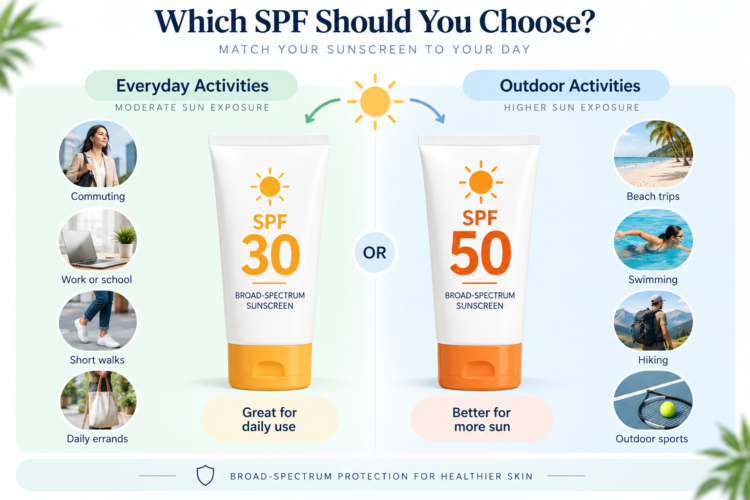
For many people, SPF 30 works well. SPF 50 offers additional protection for higher exposure. Both should provide broad-spectrum protection.
| Situation | Suitable SPF | Important consideration |
|---|---|---|
| Daily indoor routine | SPF 30 or higher | Broad-spectrum protection |
| Short outdoor exposure | SPF 30 or higher | Apply adequately |
| Long outdoor activities | SPF 50 | Reapply regularly |
| Beach activities | SPF 50 | Choose water resistance |
| Outdoor sports | SPF 50 | Reapply after sweating |
| Swimming | SPF 50 | Choose water-resistant sunscreen |
These suggestions are general guidelines. Personal exposure can vary throughout the day. Product instructions should also be followed carefully.
Should You Choose SPF 30 for Everyday Use?
SPF 30 can suit regular daily activities. It offers substantial UVB protection when applied properly. It can also feel comfortable for everyday use.
A good daily sunscreen should encourage consistency. Comfortable textures can make regular application easier. Easy reapplication can also improve long-term habits.
Should You Choose SPF 50 for Everyday Use?
SPF 50 can also work well every day. There is no need to reserve it outdoors. Some people prefer its additional protection margin.
SPF 50 can be especially practical in sunny climates. It may also suit frequent outdoor commuters. People with high exposure may prefer it.
The key is consistent sunscreen application. SPF 50 still needs adequate quantity. It also needs regular reapplication when required.
Does Skin Type Determine Your SPF?
Skin type can influence sunscreen preferences. However, SPF selection involves broader factors. Sun exposure remains an important consideration.
People with sensitive skin need suitable formulas. Oily skin may prefer lightweight textures. Dry skin may prefer moisturizing formulas.
Skin tone also affects sunburn sensitivity. However, every skin tone can experience UV damage. Sunscreen therefore remains important for everyone.
How to Choose the Right Sunscreen
Choosing sunscreen involves more than selecting SPF. Check the label before making your choice. Look for several important features.
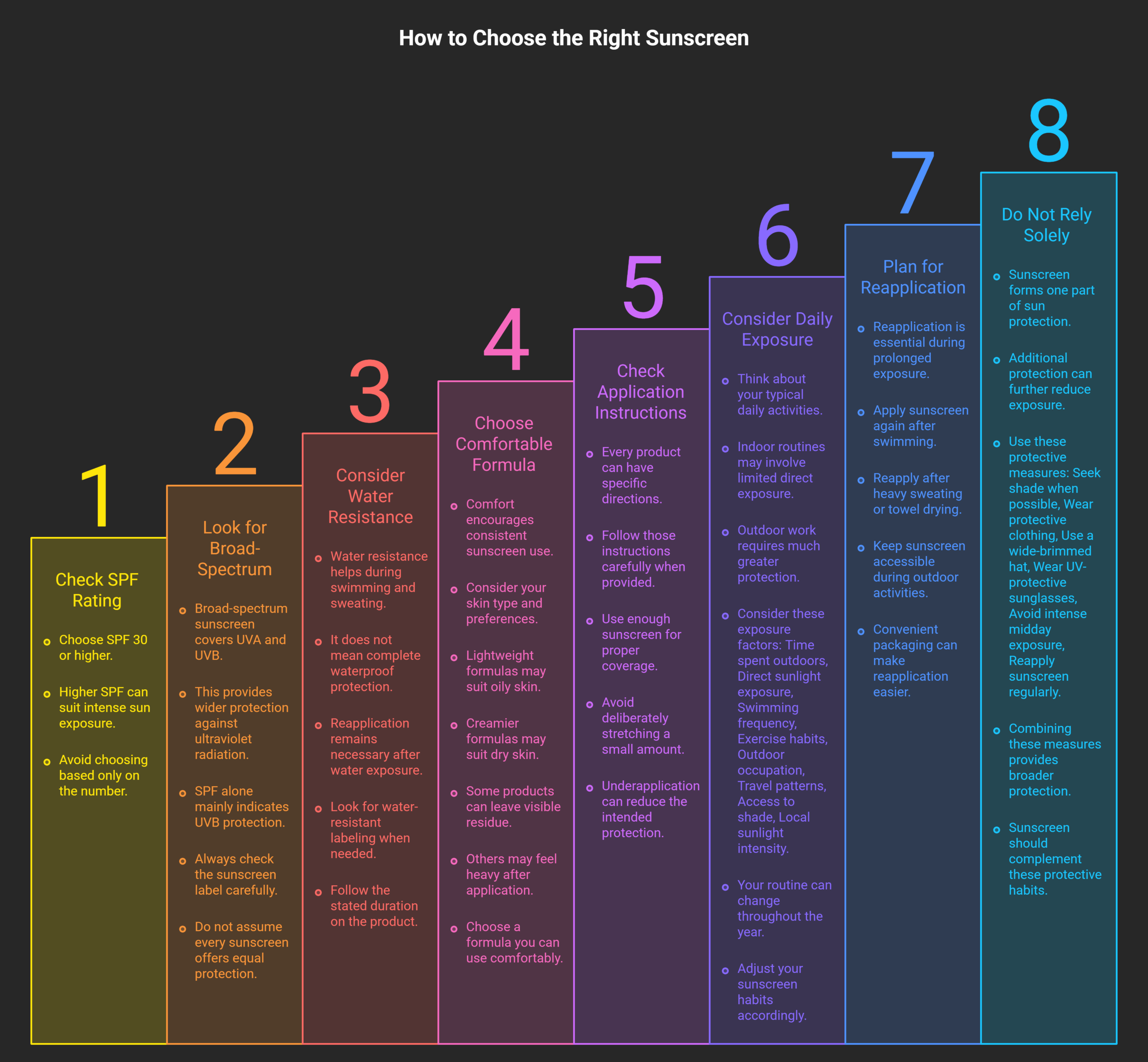
1. Check the SPF Rating
Choose SPF 30 or higher. Higher SPF can suit intense sun exposure. Avoid choosing based only on the number.
2. Look for Broad-Spectrum Protection
Broad-spectrum sunscreen covers UVA and UVB. This provides wider protection against ultraviolet radiation. SPF alone mainly indicates UVB protection.
Always check the sunscreen label carefully. Do not assume every sunscreen offers equal protection.
3. Consider Water Resistance
Water resistance helps during swimming and sweating. It does not mean complete waterproof protection. Reapplication remains necessary after water exposure.
Look for water-resistant labeling when needed. Follow the stated duration on the product.
4. Choose a Comfortable Formula
Comfort encourages consistent sunscreen use. Consider your skin type and preferences. Lightweight formulas may suit oily skin. Creamier formulas may suit dry skin.
Some products can leave visible residue. Others may feel heavy after application. Choose a formula you can use comfortably.
5. Check the Application Instructions
Every product can have specific directions. Follow those instructions carefully when provided. Use enough sunscreen for proper coverage.
Avoid deliberately stretching a small amount. Underapplication can reduce the intended protection.
6. Consider Your Daily Exposure
Think about your typical daily activities. Indoor routines may involve limited direct exposure. Outdoor work requires much greater protection.
Consider these exposure factors:
- Time spent outdoors.
- Direct sunlight exposure.
- Swimming frequency.
- Exercise habits.
- Outdoor occupation.
- Travel patterns.
- Access to shade.
- Local sunlight intensity.
Your routine can change throughout the year. Adjust your sunscreen habits accordingly.
7. Plan for Reapplication
Reapplication is essential during prolonged exposure. Apply sunscreen again after swimming. Reapply after heavy sweating or towel drying.
Keep sunscreen accessible during outdoor activities. Convenient packaging can make reapplication easier.
8. Do not Rely on Sunscreen Alone
Sunscreen forms one part of sun protection. Additional protection can further reduce exposure.
Use these protective measures:
- Seek shade when possible.
- Wear protective clothing.
- Use a wide-brimmed hat.
- Wear UV-protective sunglasses.
- Avoid intense midday exposure.
- Reapply sunscreen regularly.
Combining these measures provides broader protection. Sunscreen should complement these protective habits.
Master Advanced Skincare, Makeup, Hair, and Salon Management. Enrol Now!
SPF 30 vs SPF 50: Which is Better?
SPF 50 provides slightly stronger UVB protection. Where as SPF 30 still provides excellent everyday protection. Neither option completely blocks UVB radiation.
The best choice depends on exposure. SPF 30 suits many routine situations. SPF 50 suits higher exposure and outdoor activities.
More importantly, choose sunscreen with broad-spectrum protection. Apply enough product across exposed skin. Reapply during prolonged outdoor exposure.
A higher SPF cannot fix poor application. Consistent habits remain the most important factor.
Conclusion
SPF 30 and SPF 50 both offer strong protection. A slightly higher protection level is provided by SPF 50. SPF 30 remains suitable for many daily routines.
Choose SPF 50 for prolonged outdoor exposure. Consider it for sports, swimming, and travel. SPF 30 can suit moderate everyday exposure.
Whatever SPF you choose, apply enough sunscreen. Choose broad-spectrum protection whenever possible. Reapply during extended sun exposure. Combine sunscreen with other protective measures.
Master Makeup, Hair & Skincare to Build Your Beauty Identity
Unlock your creative potential with our expert-led Beauty & Wellness course. Build in-demand beauty skills and step confidently into the world of beauty!
Your Beauty Career Starts Here!Frequently Asked Questions
Is SPF 50 better than SPF 30?
SPF 50 provides slightly stronger UVB protection. However, SPF 30 still offers excellent protection.
Does SPF 50 block 50% of UV rays?
No, SPF numbers do not represent percentages. SPF 50 filters roughly 98% of UVB rays.
Does SPF 30 block 30% of UVB?
No, SPF 30 filters about 97% of UVB. The SPF number represents a protection factor.
Is SPF 30 enough for daily use?
SPF 30 can suit many daily situations. Proper application remains essential for effective protection.
Should outdoor workers choose SPF 50?
SPF 50 can provide an additional protection margin. Outdoor workers also need regular reapplication.
Does SPF 50 last longer than SPF 30?
No, SPF 50 does not last longer. Both require appropriate reapplication during exposure.
Should sunscreen provide broad-spectrum protection?
Yes, broad-spectrum sunscreen provides wider UV protection. It covers both UVA and UVB radiation.
Is SPF 50 suitable for oily skin?
Yes, SPF 50 can suit oily skin. Choose a lightweight, non-greasy formulation.
Should sunscreen be reapplied after swimming?
Yes, reapply after swimming and towel drying. Water can reduce sunscreen coverage.
Can sunscreen alone prevent UV damage?
Sunscreen is only one protective measure. Shade, clothing, and hats provide additional protection.