Table of Contents
Choosing the right haircut can change your appearance. It can also improve styling and everyday hair management. Different cuts suit different textures and face shapes.
Hair thickness also affects how cuts look. Some styles add volume and movement. Others create sleek, structured, or defined looks.
Master Advanced Skincare, Makeup, Hair, and Salon Management. Enrol Now!
What are the Different Types of Haircuts?
Haircuts differ based on shape and layering. Each style creates a different overall appearance. Some haircuts focus on length and structure. Others focus on movement, texture, or volume.

The most popular haircut types include:
- Bob cut: Short, structured, and versatile.
- Layered cut: Adds movement through different lengths.
- Pixie cut: Short style with various textured finishes.
- Blunt cut: Creates clean and even ends.
- Step cut: Uses distinct levels throughout the hair.
- U cut: Creates a soft curved shape.
- V cut: Forms a pointed shape at the back.
- Shag cut: Creates textured layers and movement.
The same haircut can look different. Hair texture, density, and styling affect results.
Why does Haircut Choice Matter?
A suitable haircut can make hair easier. It can also complement your natural features. The right cut may improve volume distribution. It can also reduce unwanted bulk or flatness.
Consider these factors before choosing:
- Natural hair texture.
- Hair thickness.
- Hair length.
- Face shape.
- Daily styling routine.
- Desired maintenance level.
- Personal style.
- Workplace requirements.
A professional stylist can assess these factors. They can then adjust the haircut accordingly.
Types of Haircuts for Women
Women can choose from many haircut styles. Some styles suit short hair better. Others work well with medium lengths. Long hair also offers many haircut options.
Popular choices include:
- Bob cut.
- Layered cut.
- Pixie cut.
- Blunt cut.
- Step cut.
- U cut.
- V cut.
- Shag cut.
Each style creates a different silhouette. Your hair characteristics should guide your final choice.

Bob Cut
The bob cut is a timeless hairstyle. It usually falls around the jaw or shoulders. The length can vary considerably.
Popular bob variations include:
- Classic bob.
- Blunt bob.
- Layered bob.
- Angled bob.
- Long bob.
- Side-swept bob.
A bob can create a polished appearance. It also works with many hair textures. Straight hair creates a sleek bob shape. Wavy hair creates a softer appearance.
Bobs suit people wanting manageable lengths. Styling needs depend on the chosen variation.
Layered Cut
A layered cut uses different hair lengths. These layers create movement and dimension. Layering can also reduce excessive hair weight.
It works across various hair lengths. Long layers suit longer hairstyles. Shorter layers create more noticeable movement.
Layered cuts can help with:
- Adding movement.
- Reducing heavy-looking ends.
- Creating texture.
- Supporting natural waves.
- Improving hair shape.
Layer placement should match your hair type. Excessive layering may reduce fullness in fine hair.
Pixie Cut
A pixie cut is a short hairstyle. It usually keeps hair close to the head. Different lengths create different pixie variations.
Popular options include:
- Classic pixie.
- Textured pixie.
- Side-swept pixie.
- Layered pixie.
- Long pixie.
- Undercut pixie.
Pixie cuts can create a bold appearance. They also reduce hair length considerably.
Fine hair can gain visual texture. Thick hair may benefit from controlled layering.
Blunt Cut
A blunt cut has clean, even ends. The haircut creates a strong visual outline. It works especially well with straight hair.
Blunt cuts can make hair appear fuller. This makes them useful for finer hair types.
Popular variations include:
- Blunt bob.
- Blunt shoulder cut.
- Blunt long hair.
- Blunt cut with bangs.
Wavy hair can also wear blunt cuts. Natural texture creates a softer finish.
Step Cut
A step cut uses clearly separated layers. Each section creates a visible level. This creates noticeable movement throughout the hair.
Step cuts are popular with longer hairstyles. They can create volume and dimension.
They may work well for:
- Thick hair.
- Straight hair.
- Wavy hair.
- Medium-length hair.
- Long hair.
Step cuts require careful layer placement. Poor placement can create excessive bulk.
U Cut
A U cut creates a rounded shape. The back gradually curves toward the sides. This creates a softer overall silhouette.
U cuts work particularly well with longer hair. They preserve length while adding subtle shape.
This haircut can provide:
- Softer edges.
- Natural-looking movement.
- Better length distribution.
- Gentle face framing.
- Easy everyday styling.
It suits people wanting minimal layering. It also works well with straight hair.
V Cut
A V cut creates a pointed back shape. The center section remains longer than the sides. This creates a noticeable V-shaped silhouette.
V cuts work best with medium-long hair. They can make long hair appear more dramatic.
They offer:
- Distinctive back shape.
- Visible length.
- Subtle layering.
- Defined hair movement.
The style may suit thick or straight hair. Curly hair can create a softer V shape.
Shag Cut
A shag cut uses multiple textured layers. It creates a relaxed and intentionally messy appearance. The haircut often includes face-framing pieces.
Shag cuts work well with natural texture. Waves and curls can enhance their movement.
Common shag features include:
- Choppy layers.
- Face-framing pieces.
- Textured ends.
- Crown volume.
- Optional bangs.
This haircut suits people wanting effortless texture. Styling can remain relatively casual and flexible.
Master Makeup, Hair & Skincare to Build Your Beauty Identity
Unlock your creative potential with our expert-led Beauty & Wellness course. Build in-demand beauty skills and step confidently into the world of beauty!
Your Beauty Career Starts Here!How to Choose the Right Haircut
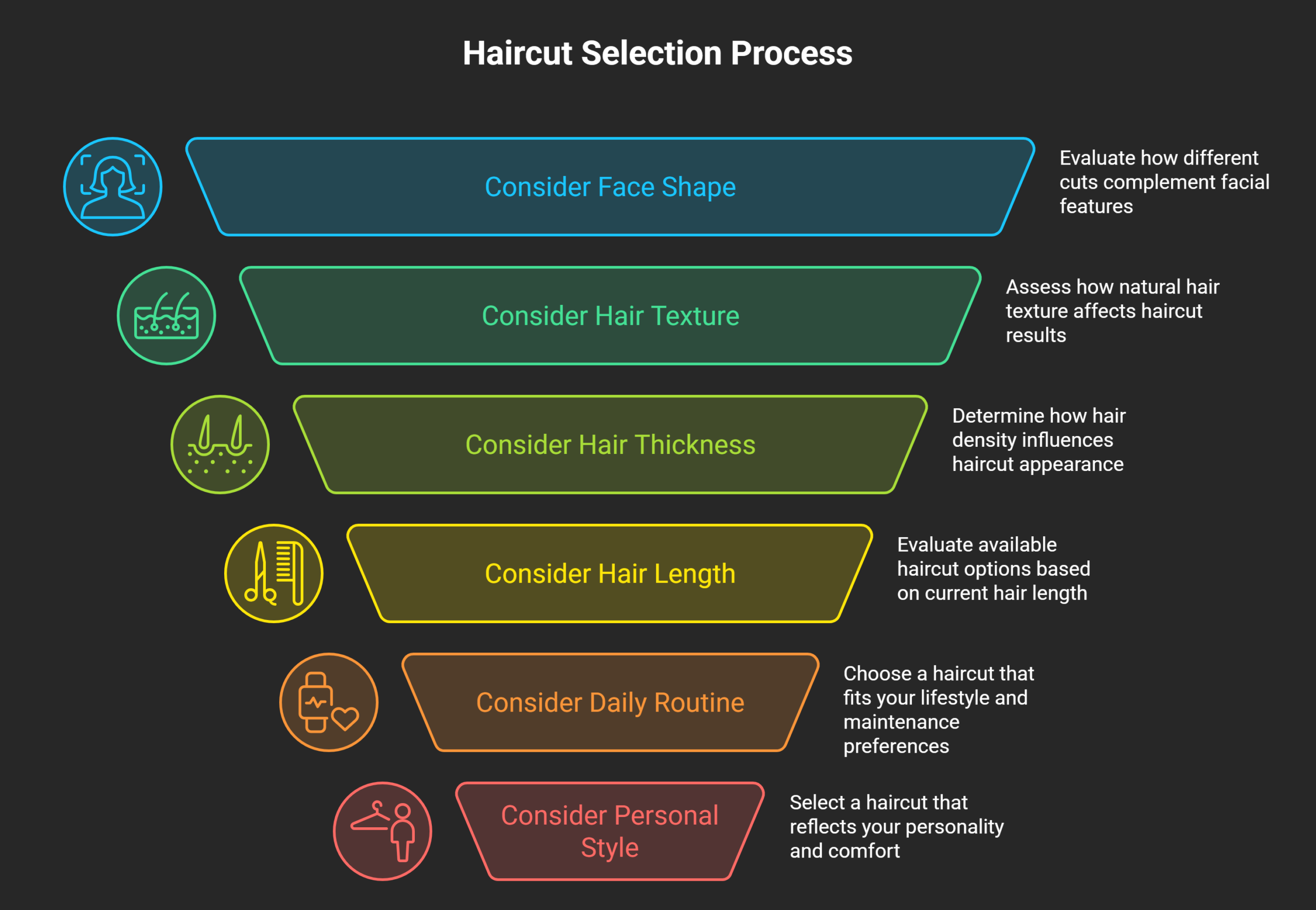
Choosing a haircut requires more than following trends. Your hair should suit your natural features. Your lifestyle should also influence your decision. The right haircut can simplify your daily routine. It can also improve your overall appearance.
1. Consider Your Face Shape
Face shape affects how hair frames features. Different cuts create different visual proportions.
Consider these general recommendations:
- Round faces: Choose layers and longer styles.
- Oval faces: Most haircut styles work well.
- Square faces: Try soft layers and waves.
- Heart faces: Choose chin-length styles and layers.
- Long faces: Try volume and medium-length cuts.
- Diamond faces: Consider layered and side-swept styles.
These suggestions are not strict rules. Personal preference should always remain important.
2. Consider Your Hair Texture
Hair texture strongly affects haircut results. Straight hair behaves differently from curly hair. Wavy hair also creates different shapes.
Consider your natural texture before cutting.
Straight hair
Straight hair shows clean lines clearly. Blunt cuts can create fuller-looking ends. Layered cuts can add movement.
Wavy hair
Wavy hair naturally creates texture and movement. Layered cuts can enhance these natural waves. Shag cuts can also work beautifully.
Curly hair
Curly hair needs careful layer placement. Long layers can control excessive bulk. Suitable cuts can improve natural curl definition.
Coily hair
Coily hair benefits from thoughtful shaping. Layers can create balanced volume and definition. The final cut should respect shrinkage.
3. Consider Your Hair Thickness
Hair density affects how haircuts appear. Thick hair can hold more layers. Fine hair often needs careful weight management.
For thick hair, consider:
- Layered cuts.
- Step cuts.
- Long shags.
- Textured styles.
For fine hair, consider:
- Blunt cuts.
- One-length styles.
- Short bobs.
- Light layering.
Too many layers can reduce fine hair’s fullness. Too little shaping can overwhelm thick hair.
4. Consider Your Hair Length
Your current length affects available haircut options. Some styles require considerable length.
Short hair can support:
- Pixie cuts.
- Short bobs.
- Layered crops.
- Textured cuts.
Medium hair can support:
- Long bobs.
- Layered cuts.
- Shag cuts.
- Step cuts.
Long hair can support:
- U cuts.
- V cuts.
- Long layers.
- Step cuts.
- Long shags.
5. Think about Your Daily Routine
Your routine should influence haircut maintenance. Some hairstyles need regular styling. Others require minimal daily effort.
Ask yourself:
- How much styling time is available?
- Do you use heat tools regularly?
- Do you prefer air-drying?
- How often can you visit salons?
- Do you exercise frequently?
- Do you prefer low-maintenance hairstyles?
Choose practical styles for busy schedules. Choose detailed styles for styling enthusiasts.
6. Consider Your Personal Style
Your haircut should reflect your personality. It should also make you feel comfortable.
You might prefer:
- Classic and polished styles.
- Trendy and textured styles.
- Short and bold styles.
- Soft and feminine styles.
- Simple and low-maintenance styles.
The best haircut should feel natural. It should also suit your everyday appearance.
7. Discuss Your Hair Goals
Tell your stylist what you want. Explain your preferred length clearly. Mention your desired volume and texture.
You can also discuss:
- Desired styling time.
- Preferred haircut shape.
- Bang preferences.
- Layer preferences.
- Maintenance expectations.
Clear communication can improve the final result.
8. Bring Reference Pictures
Reference pictures can help explain your preferences. Choose pictures with similar hair characteristics.
Look for similar:
- Hair texture.
- Hair thickness.
- Hair length.
- Face shape.
- Styling preferences.
One picture may not show everything. Bring several examples when possible.
Best Haircuts for Different Face Shapes
The right haircut can complement facial proportions. Certain styles can emphasize attractive facial features. Others can create better visual balance.

Round Face Shape
Round faces have softer facial angles. Their width and length often appear similar.
Recommended styles include:
- Long layered cuts.
- Long bobs.
- Side-swept bobs.
- Curtain bangs.
- Side-swept bangs.
- Textured pixie cuts.
Avoid excessive volume near the cheeks. Longer layers can create visual length.
Oval Face Shape
Oval faces have balanced facial proportions. Most haircut styles can suit this shape.
Popular options include:
- Bobs.
- Long layers.
- Pixie cuts.
- Shag cuts.
- Blunt cuts.
- Curtain bangs.
Almost any length can work well. Styling preferences can guide the final choice.
Square Face Shape
Square faces usually have stronger angles. The jawline can appear more defined.
Soft hairstyles can balance these features.
Consider:
- Layered cuts.
- Soft waves.
- Long bobs.
- Side-swept bangs.
- Textured shags.
- Long face-framing layers.
Avoid overly rigid shapes when seeking softness.
Heart Face Shape
Heart-shaped faces often have wider foreheads. Their chin usually appears narrower.
Suitable options include:
- Chin-length bobs.
- Layered cuts.
- Side-swept bangs.
- Long lobs.
- Soft waves.
- Face-framing layers.
These styles can balance the forehead and chin.
Long Face Shape
Long faces have greater facial length. Hairstyles can create balance through added width.
Consider:
- Medium-length bobs.
- Layered cuts.
- Curtain bangs.
- Side-swept bangs.
- Wavy hairstyles.
- Shoulder-length cuts.
Avoid excessive height at the crown. Too much vertical volume can lengthen faces further.
Diamond Face Shape
Diamond faces often have prominent cheekbones. Their forehead and chin can appear narrower.
Consider:
- Layered bobs.
- Side-swept styles.
- Chin-length cuts.
- Soft bangs.
- Face-framing layers.
- Wavy hairstyles.
These styles can soften prominent facial angles.
Best Haircuts for Different Hair Types
Hair type determines how a haircut behaves. Texture, thickness, and curl pattern matter. The same cut can look different. Proper customization can improve the final result.

Straight Hair
Straight hair naturally shows haircut lines. Clean shapes often appear especially defined.
Suitable options include:
- Blunt cuts.
- Bob cuts.
- U cuts.
- V cuts.
- Long layers.
- Pixie cuts.
Blunt cuts can make fine hair look fuller. Layers can add movement to longer hair.
Wavy Hair
Wavy hair naturally provides movement and texture. Haircuts can enhance this natural pattern.
Good options include:
- Layered cuts.
- Shag cuts.
- Long bobs.
- Step cuts.
- Long layers.
- Curtain bangs.
Avoid excessive layering with very fine waves. Too many layers can reduce overall fullness.
Curly Hair
Curly hair requires careful haircut planning. Curl patterns can change after cutting.
Consider:
- Long layered cuts.
- Curly shags.
- Rounded layered cuts.
- Medium-length curly styles.
- Face-framing layers.
Layer placement should match curl behavior. Avoid removing excessive length without planning.
Coily Hair
Coily hair benefits from intentional shaping. Shrinkage should be considered during cutting.
Suitable options include:
- Layered cuts.
- Rounded shapes.
- Short tapered cuts.
- Textured crops.
- Medium layered styles.
Moisture and styling routines also affect results.
Fine Hair
Fine hair can benefit from stronger shapes. Excessive layering may remove valuable density.
Consider:
- Blunt bobs.
- Blunt shoulder cuts.
- Short bobs.
- Lightly layered styles.
- Pixie cuts.
Blunt ends can create a fuller appearance. Strategic layers can still add subtle movement.
Thick Hair
Thick hair can handle more structural layering. Layers can help distribute excess weight.
Consider:
- Layered cuts.
- Step cuts.
- Shag cuts.
- Long U cuts.
- Long V cuts.
- Textured bobs.
Proper layering can make thick hair easier. It can also improve movement and manageability.
Short Hair
Short hair requires attention to shape. The haircut becomes highly visible.
Popular choices include:
- Pixie cuts.
- Short bobs.
- Textured crops.
- Tapered cuts.
- Layered short styles.
Choose based on styling preferences and maintenance needs.
Medium-Length Hair
Medium hair offers considerable styling flexibility. Many popular cuts work beautifully here.
Options include:
- Long bobs.
- Layered cuts.
- Shag cuts.
- Step cuts.
- Curtain-bang styles.
- Shoulder-length blunt cuts.
This length works across many hair textures.
Master Advanced Skincare, Makeup, Hair, and Salon Management. Enrol Now!
Long Hair
Long hair provides numerous haircut possibilities. Layer placement becomes especially important.
Popular options include:
- Long layers.
- U cuts.
- V cuts.
- Step cuts.
- Long shags.
- Face-framing layers.
These styles can add movement without sacrificing length.
Master Makeup, Hair & Skincare to Build Your Beauty Identity
Unlock your creative potential with our expert-led Beauty & Wellness course. Build in-demand beauty skills and step confidently into the world of beauty!
Your Beauty Career Starts Here!Conclusion
Different haircuts suit different needs and features. Face shape can guide your haircut selection. Hair texture also affects the final appearance. Hair thickness influences layering and volume.
Popular options include bobs and layered cuts. Pixies suit people wanting shorter styles. Blunt cuts create clean and fuller-looking ends. Step cuts provide visible movement and dimension. U and V cuts suit longer hairstyles. Shags create textured and effortless movement.
The best haircut should feel practical. It should also complement your natural features. Consider your texture, lifestyle, and maintenance needs. A professional stylist can personalize your final haircut.
Master Makeup, Hair & Skincare to Build Your Beauty Identity
Unlock your creative potential with our expert-led Beauty & Wellness course. Build in-demand beauty skills and step confidently into the world of beauty!
Your Beauty Career Starts Here!Frequently Asked Questions
What are the most popular haircut types?
Popular styles include bobs, layers, pixies, blunt cuts, step cuts, U cuts, V cuts, and shags. Each style creates a different shape and finish.
Which haircut is best for thin hair?
Blunt cuts can make thin hair appear fuller. Short bobs and light layers can also add body.
Which haircut suits thick hair?
Layered and step cuts can reduce excess bulk. Shag cuts can also add movement and texture.
Which haircut suits curly hair?
Long layers, curly shags, and rounded cuts work well. Proper layering helps maintain curl definition.
Which haircut suits a round face?
Long layers, lobs, and side-swept styles work well. These cuts can create visual length.
Is a bob suitable for every hair type?
Yes, bobs can suit most hair types. The length and layering should match your texture.
What is a step cut?
A step cut features distinct sections of different lengths. It creates noticeable movement and volume.
What is the difference between U cut and V cut?
A U cut creates a rounded back shape. A V cut creates a pointed center shape.
How do you choose the right haircut?
Consider your face shape, hair texture, thickness, and lifestyle. Maintenance needs should also influence your choice.
How often should you get a haircut?
Frequency depends on your hairstyle and hair growth. Shorter styles generally require more frequent trimming.