Table of Contents
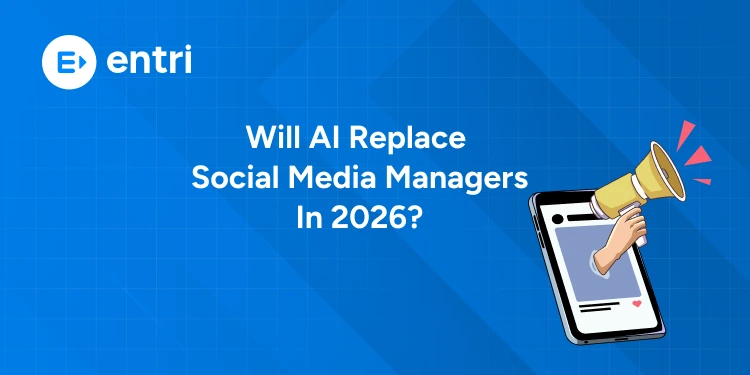
No, AI won’t be replacing social media managers in 2026. But it has already taken over most of the dull, menial bits of the job. The real shift is in what the job actually involves.
These days platforms and AI assistants are cranking out captions in minutes, scheduling posts, and churning out reports in the blink of an eye. But the really tough tasks – like making a brand sound human, diffusing a crisis, and getting the cultural nuances just right – still needs a human touch.
Join Our Online Next Gen AI Digital Marketing Course & Learn the Fundamentals!
Key Takeaways
- 9 out of 10 social media teams are already using AI every day, yet a measly 5% or so have gone all-in on automation.
- Empathy, good old-fashioned judgment, and the creative direction tasks are the ones that still need human beings to get them right.
- Recruiters are now after people who can think on their feet with AI, who can craft a good prompt, and who understand how social media SEO works.
- Learn how your role is evolving – from being a content producer to actually being in charge of what the brand is trying to achieve.
- Companies that can get the most out of AI are the ones that hire up fast and pay their staff a bit better than the competition.
Why this Matters Now
1: What is the primary goal of SEO (Search Engine Optimization)?

The fact is, the social media tools built into the likes of Meta, TikTok, and X, along with all the third-party AI helpers, have completely turned what a ‘normal’ workflow looks like on its head.
Teams that are doing this stuff right can publish more, test in no time at all, and free up hours and hours to get on with the really strategic stuff.
But teams that approach AI with a shrug or a “meh” risk churning out boring, tone-deaf stuff that ends up causing reputational damage. This is especially when you’re operating in places like India, where language, festivals, and local sensitivities can all make or break a post.
Become an AI-powered Digital Marketing Expert
Master AI-Driven Digital Marketing: Learn Core Skills and Tools to Lead the Industry!
Explore CourseWhat AI Already Automates
AI is genuinely useful for repetitive, data-heavy tasks. The general rule is to let AI handle volume and drafts. But keep a human checkpoint before anything brand-facing goes live.
| Task | Automation Level | Human Oversight Needed |
| Caption and post drafting | High | Moderate – tone and brand edits |
| Scheduling and post-timing optimization | High | Low |
| Analytics and performance reports | High | Low – interpretation still human |
| Comment moderation and triage | Partial | High – escalations need a person |
| Visual editing and content repurposing | Partial | Moderate – creative direction |
Where Human Social Media Managers Still Win

Certain parts of the job resist automation because they depend on context AI simply doesn’t have:
- Brand voice and storytelling
Keeping a consistent narrative across months of campaigns takes editorial judgment, not just style guides.
- Crisis and reputation management
Responding to backlash or a PR issue needs real-time context, tone control, and leadership coordination.
- Influencer and creator relationships
Negotiation, trust-building, and reading a creator’s audience fit are relationship skills.
- Cultural and regional nuance
Festival timing, language mixing (like Hindi-English or Malayalam-English), and local sensitivities need a human filter, especially across India’s diverse regional markets.
- Cross-channel strategy
Tying paid, owned, and earned social to actual business goals still requires a strategist connecting dots AI can’t see.
Research on AI-exposed roles backs this up: tasks being ‘added’ to jobs touched by AI are roughly 2.5 times more likely to require empathy, judgment, or creativity than the tasks AI is taking away.
In other words, AI isn’t hollowing out these roles. It is, in fact, pushing them toward the parts only people are good at.
How the Role is Evolving
| Role Type | Typical Tasks | Core Skills Needed |
| Tactical (largely automated) | Post drafting, scheduling, basic reporting | Tool fluency, prompt writing |
| Hybrid (AI-augmented) | A/B testing, campaign execution, community triage | Data literacy, prompt engineering |
| Strategic (human-led) | Brand strategy, crisis management, influencer strategy | Storytelling, negotiation, leadership |
The job title “social media manager” is staying. But this role now spends less time writing individual posts and more time on
- designing the system that produces them
- training AI tools
- interpreting what the data actually means for the business
Become an AI-powered Digital Marketing Expert
Master AI-Driven Digital Marketing: Learn Core Skills and Tools to Lead the Industry!
Explore CourseSkills to Prioritize in 2026
Recruiters are explicit about what is non-negotiable now. This includes
- proficiency with analytics platforms like GA4
- working knowledge of paid social ad managers
- comfort with AI tools for efficiency
- strong data storytelling
Beyond the technical basics, five skills stand out:
- Strategic and cross-channel thinking – Designing campaigns tied to real business KPIs, not just likes and follows.
- Creative direction – Guiding narratives that AI can draft but never originate on its own.
- Data literacy – Reading A/B test results and knowing what actually moved the needle.
- Prompt engineering – Getting consistently better, on-brand output from AI tools instead of generic copy.
- Community and influencer relations – Building the kind of trust that turns followers into advocates.
What this Means for Hiring
The big picture is that large companies are now throwing social media teams into the mix with other functions. Meanwhile job postings are starting to ask for something that sounds a bit like a superpower. This means being super comfortable with AI and also able to come up with really good strategies.
Small businesses on the other hand are just looking for generalists who can handle AI tools from start to finish. Agencies and freelancers are cashing in on services that even AI can’t really replace.
That means things like emergency consulting, coming up with ideas and being in charge of your own creative vision, and handling local campaigns that require a deep understanding of the local scene.
Measuring What Actually Matters
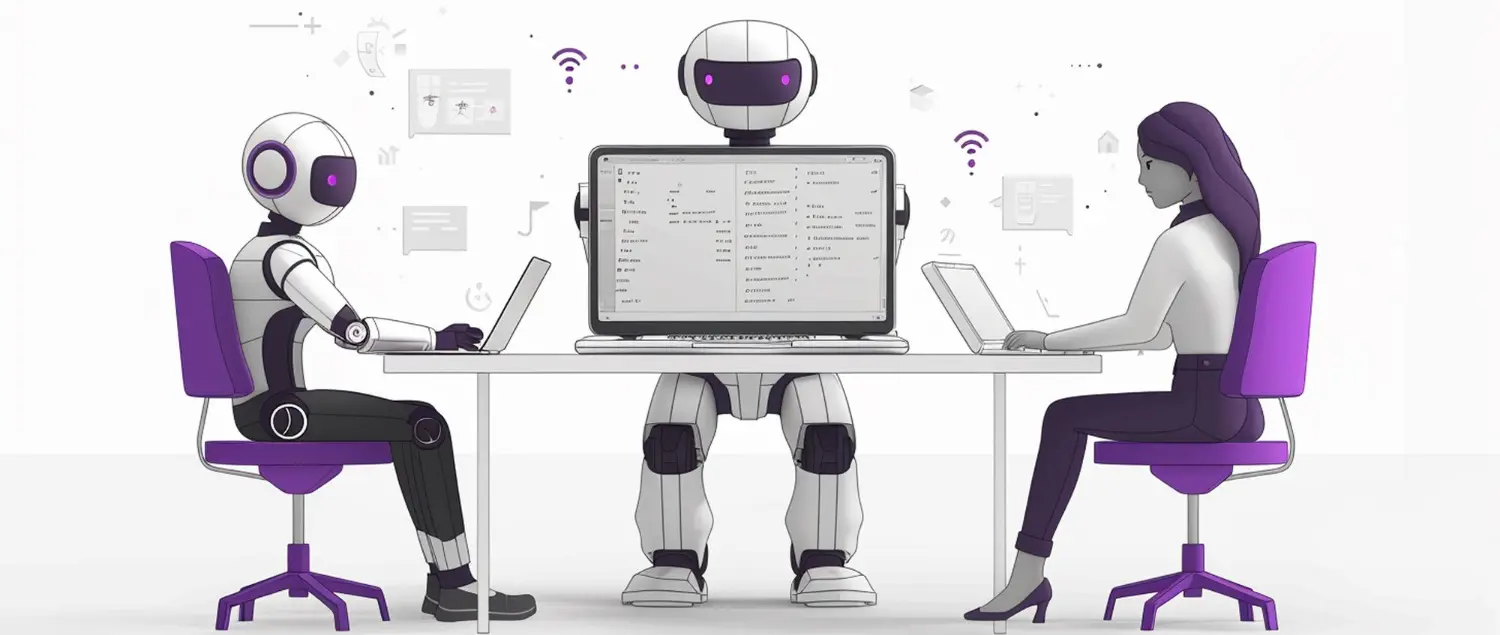
Instead of tracking vanity metrics alone, forward-looking teams are measuring:
- Engagement quality – reply rates, sentiment, and DMs that convert into real conversations.
- Business outcomes – lead quality, click-to-conversion rate, and customer acquisition cost.
- Efficiency – content output per hour and time-to-publish, now that AI has compressed production time.
A simple way to test AI’s real impact is to benchmark your current output and then A/B test AI-drafted content against human-guided content on matched audiences. Also evaluate on business outcomes and sentiment, not just how fast it got published.
Common Myths, Corrected
- “AI writes better posts than humans.”
AI is strong on grammar and structure but has no long-term brand intuition or memory of what’s worked before.
- “AI can handle a PR crisis.”
It can draft a response fast, but nuance, legal risk, and leadership sign-off still need a person in the loop.
- “You need to code to work with AI.”
The core skills are strategic and interpretive. Prompt writing is a communication skill, not a technical one.
- “Agencies will disappear.”
Agencies are pivoting toward strategy, creative direction, and specialised services AI can’t offer.
Join Our Online Next Gen AI Digital Marketing Course & Learn the Fundamentals!
Conclusion
AI has already made a pretty big dent in what a social media manager does from day to day. But it has not changed the overall goal of the job – to keep a brand safe, build genuine relationships with creators, and actually see how social media is helping the business.
What we are left with is that platforms and AI tools can produce a lot at scale. But still, it is the jobs that require human judgment to make sure it all makes sense to people. That is where the real work happens.
So who is going to do well in all this? Not the people who try to fight AI, but the ones who use those tools to free up time to get on with the really important things.
If you’re just starting out in this field, the message is pretty simple. Get up to speed on those AI tools as fast as you can. But at the same time make sure you’re also building the skills that AI just cannot replace.
Frequently Asked Questions
Will AI completely replace social media managers?
No, AI automates routine tasks like drafting and scheduling, but strategy, brand judgment, and crisis handling still require a human. Data shows most teams use AI daily without fully automating the role.
What social media tasks can AI handle today?
AI can draft captions, generate post ideas, schedule content, and produce basic performance reports at scale. It struggles with brand voice consistency, cultural nuance, and real-time crisis judgment.
What skills should social media managers learn in 2026?
Prompt engineering, data literacy, GA4 and paid-ad platform proficiency, and cross-channel strategic planning are now considered essential. Creative direction and community relationship-building remain equally important.
Will junior social media roles disappear because of AI?
Entry-level execution tasks are shrinking, but new roles focused on AI supervision, prompt writing, and data interpretation are emerging in their place. Junior professionals who build strategic and analytical skills early will adapt fastest.
Can AI manage a brand crisis on social media?
AI can draft a quick response, but it lacks the contextual judgment, legal awareness, and leadership coordination a real crisis requires. Human oversight remains essential for anything involving reputation risk.
Are companies hiring fewer social media managers because of AI?
Companies seeing real productivity gains from AI tend to raise hiring and pay faster than companies barely using it. The shift is toward different, more strategic roles rather than fewer roles overall.
What AI tools do social media managers commonly use?
Common categories include AI writing assistants for drafts, scheduling tools with built-in optimization, and analytics platforms that auto-generate reports. Most teams still require a human to review and approve final output.
How can I future-proof my social media career against AI?
Focus on strategic thinking, creative direction, data interpretation, and relationship-building. These are the areas AI consistently struggles to replicate. Pair that with strong AI tool fluency to stay efficient and competitive.
Should small businesses use AI for social media management?
Yes, AI can help small teams produce more content and reports with limited resources, but a human should still review anything customer-facing. Small businesses often benefit most since they rarely have dedicated specialists for every task.
What KPIs matter most for measuring AI's impact on social media?
Engagement quality, business outcomes like conversions and customer acquisition cost, and efficiency metrics like content output per hour are the most reliable indicators. Comparing AI-assisted output against human-guided output on the same KPIs shows real impact.